Russia Invests Heavily in Egypt – Sun City – Nuclear Power


Armstrong Economics Blog/War Re-Posted Oct 23, 2023 by Martin Armstrong
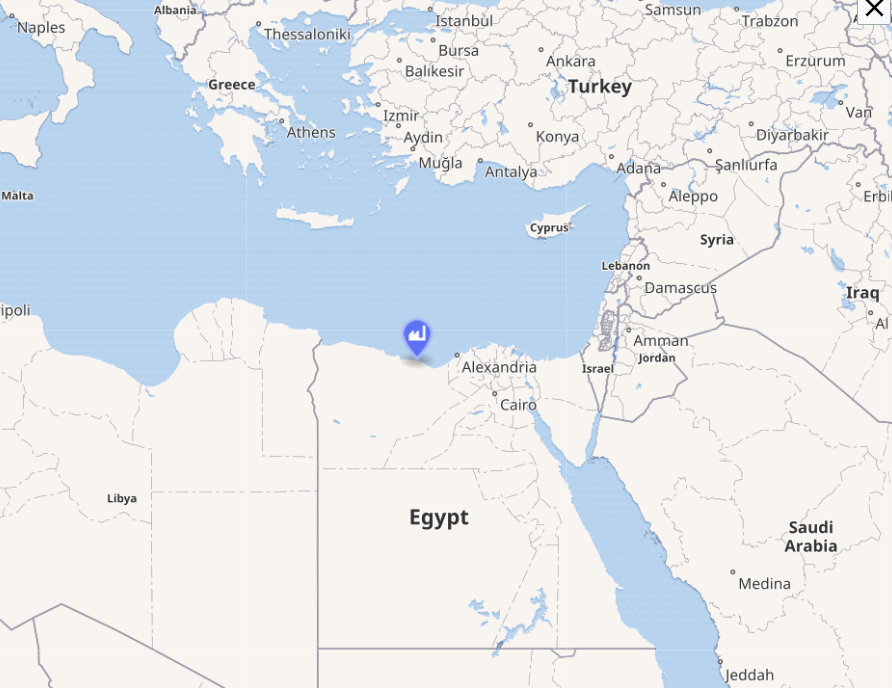
Russia poured $7 billion into Egypt in 2021 to create the Russian Industrial Zone (RIZ), the nation’s first industrial zone outside of Russia. Egyptian President Abdel Fattah al-Sisi developed a relationship with Russia in 2014 amid the Crimea crisis and the Ukrainian Revolution. Russia has been investing heavily in Egypt ever since and is currently pouring $4.6 billion into Egypt’s Suez Canal zone to create “Sun City,” an industrial zone covering 2,000 hectares.

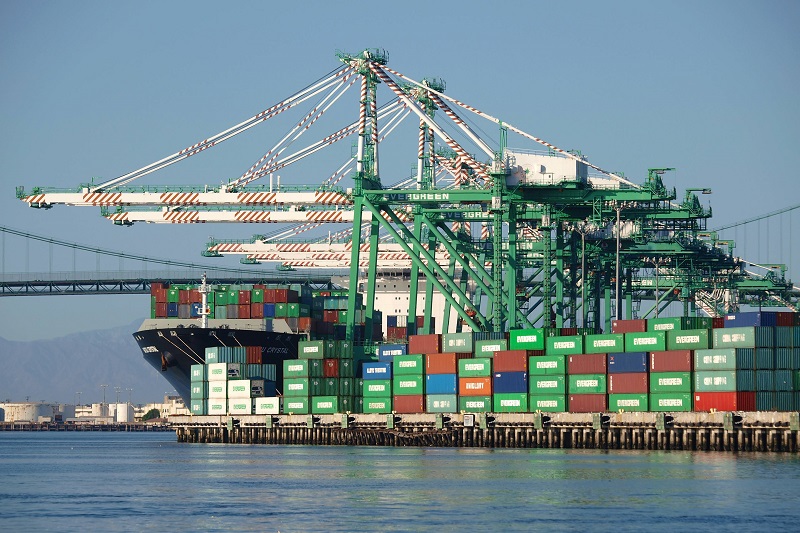
Around 20% of all world trade moves through the Suez Canal. This is extremely strategic for Russian manufacturing and trade, and also explains Egypt’s refusal to support the West in its mission to escalate the Israel-Palestine war. Sun City is expected to bring 35,000 jobs to the Egyptian economy.

Egypt has become Africa’s leading destination for investment. It dethroned South Africa in 2017 to claim the title. The United Nations Conference on Trade and Development (UNCTAD) stated that Egypt “supported by a large increase in Chinese investment across light manufacturing industries and wide-ranging economic reforms, such as financial liberalisation, which is basically the establishment of higher interest rates that equate the demand for, and the supply of savings.” China’s Foreign Direct Investment (FDI) spiked 75% in 2017, providing Egypt with a large boost. The UAE, Qatar, and Saudi Arabia have also invested heavily in Egypt, especially in real estate and development.

There is nothing that the West can provide to Egypt to surpass what Arab and Eastern nations have done for its economy. The Egypt-Russia Trade and Investment Summary (YTD) 2022 indicates that Moscow and Cairo will continue to strengthen its relationship. A key to this report is that Russia is helping Egypt produce its first nuclear power plant, financing 85% of the project. El Dabaa Nuclear Power Plant will be positioned 320 kilometers from Cairo. But this deal initially began in 2015 when Russia promised to finance the project, and signed preliminary contracts in December 2017. The total project is set to cost $28.7 billion. Egypt will repay Russia the remaining 15% in installments with a repayment period of 22 years and an interest rate of 3%.

So basically, the plant will become Russia’s nuclear power in Africa and among the Arab world. They are anticipating completion in 2026 and it is safe to say that the West is going to do everything in its power to prevent this from happening. Look at the map above to see how strategic the positioning of this plant will be for Russia in not just Africa and the Arab nations but a stone’s throw away from Europe as well.

A Strong Possibility Twitter Will IPO and Go Public Again, Here’s Why


Posted originally on the CTH on October 3, 2023 | Sundance 

I wasn’t going to write about this, but so many requests and contacts have come in, and considering that my background conversations with people are leading to actionable positioning, that I feel it is only fair to share publicly what I am analyzing privately.

The predicate for all assumptions is several fold: {Go Deep One} and {Go Deep Two}. Most of the financial groundwork for analysis already exists. In summary, Elon paid $44 billion for the platform. Current valuations are around $15 billion.  Current debt service is $1.5 billion/yr (roughly $100m/mo).  Current expenses include $100m/yr AWS, $100m/yr Goog cloud (both contracts), +payroll and misc.

Approximately 9 months ago, Musk had $1 billion in cash reserve for Twitter.  The burn rate deficit was roughly $100m/month. That put timeline estimates for an inflection point on/around October 2023.  It is now October 2023.

Approximately a week ago, Twitter CEO Linda Yaccarino made a bold statement.  Yaccarino stated that from her review of the current status, Twitter would start to turn a profit in the first quarter of 2024 {link}.  However, with $100 million per month in debt service alone, this statement seemed too far of a stretch.  At pre-musk levels of revenue, maybe; but that $1.5 billion debt service is a heavy nut to carry.

Timing – Remember, it’s October.  Last Friday, the Securities and Exchange Commission (SEC) gave special regulatory approval to Bill Ackman’s firm, Pershing Square (hedge fund), for a new investment vessel called SPARC, whose purpose is to invest in private companies in order to take them public.  As noted by CNBC, “In a SPARC, investors will know what company the financing vehicle would be used to merge with before they have to pledge their investments.”  The financial mechanism avoids some of the issues with typical IPO’s.

•It’s October, inflection time.  •Yaccarino says a strategy is underway for profitability in Q1 2024.  •Ackman gets SPARC approval, and then suddenly:

[…] “The answer is I have a lot of respect for Musk. I think Twitter is a really important platform,” Ackman told CNBC. “I think he’s made tremendous improvements to the platform, and I think it’s a unique, very difficult-to-disrupt, kind of asset and one that could grow.” 

[…] Though Musk hasn’t expressed any interest in working with Ackman to take X public, and despite the $13 billion in debt tacked to the company, Ackman has worked out a loose plan to make it happen, if Musk were interested. 

“What’s interesting here is we could commit $2 billion to a transaction, set the rights price to $121 million, set it at $100 a share and announce a transaction,” he said. 

“And then we tell the story and then the rights holders have a chance to decide whether to invest. As long as the rights have positive value, they’re all going to get exercised, and the IPO raises $13 billion.” (read more)

The heavy nut disappears.

Investors roll the debt into discounted shares of stock.  If Ackman can generate a $17-$20 billion outcome for Twitter, Musk nets $5b and retains 20-25% of shares.  Yaccarino gets well compensated.  It’s a win/win/win.

Critics would say the IPO would mean Musk compromising on the free speech commitment.  However, in reality Musk has already reinstalled many of the control mechanisms of the previous “safety council,” along with the “freedom of speech, not freedom of reach” outlook.  Musk and Yaccarino have also partnered with the Global Disinformation Index.

The compromises are already baked into the platform, and seemingly have been since Yaccarino became CEO.  The 2024 election is next year, and influence is a lucrative business.

Frances Fox Piven vs. Milton Friedman, Thomas Sowell (Video 1980)


Armstrong Economics Blog/Uncategorized R-Posted Sep 30, 2023 by Martin Armstrong

Sunday Trivia – Did You Ever Notice The Lyrics


Posted originally on the CTH on September 24, 2023 | Sundance 

R.E.M is a band from Georgia.  This song was written in 1987.  Did you ever notice the lyrics?

That’s great, it starts with an earthquake,
Birds and snakes, an aeroplane
Lenny Bruce is not afraid.

Eye of a hurricane,
Listen to yourself churn
World serves its own needs,
Regardless of your own needs.
Feed it up a knock, speed,
Grunt no, strength no.
Ladder structure clatter with fear of height, down height.
Wire in a fire, represent the seven games
In a government for hire
And a combat site.
Left her, wasn’t coming in a hurry with the furries
Breathing down your neck.
Team by team reporters baffled, Trump, tethered crop.
Look at that low plane!
Fine then.
Uh oh, overflow, population, common group, but it’ll do.
Save yourself,
Serve yourself.
World serves its own needs,
Listen to your heart bleed. Tell me with the rapture and the
Reverent in the right
Right.
You vitriolic, patriotic, slam, fight, bright
Light, feeling pretty psyched.

It’s the end of the world as we know it.
It’s the end of the world as we know it and I feel fine.

Neuralink Brain Implant Trials Begin


Armstrong Economics Blog/Disease RE-Posted Sep 21, 2023 by Martin Armstrong

Elon Musk’s Neuralink received approval to begin a six-year trial to study the effects of brain-computer interface (BCI). A specialized surgical robot will be used to implant the devices into participants’ brains. The company’s mission: “Create a generalized brain interface to restore autonomy to those with unmet medical needs today and unlock human potential tomorrow.” Participants in the first trial must have a disability such as blindness, quadriplegia, paraplegia, deafness, or major limb amputation. Permitting those with disabilities to live a normal life seems noble, but Musk has stated he dreams of expanding the Neuralink’s availability to everyone.

The non-human trials failed miserably, resulting in 1,500 dead animals since 2018. Some past employees have criticized Musk for rushing his research, but not illegal acts were committed as it is common, if not expected, for at least some animal test subjects to die. Numerous errors could have been avoided if not for human error, according to those familiar with the studies.

“The PRIME Study (short for Precise Robotically Implanted Brain-Computer Interface) – a groundbreaking investigational medical device trial for our fully-implantable, wireless brain-computer interface (BCI) – aims to evaluate the safety of our implant (N1) and surgical robot (R1) and assess the initial functionality of our BCI for enabling people with paralysis to control external devices with their thoughts,” Neuralink states on its website. It would be an unbelievable feat if this device gave someone the ability to walk or see for the first time. It would make all the testing worthwhile. Musk stated himself that the chip will work. “As miraculous as it may sound, we’re confident that it is possible to restore full body functionality to someone who has a severed spinal cord.”

However, Musk has loftier goals and said that the Neuralink will be for everyone. Musk stated that he personally plans to have a brain chip installed once available. Neralink is not beholden to shareholders as Musk owns the company outright. The company claims it will not sell data to third parties. However, Neuralink’s third-party affiliates, regulatory boards, and research partners will have access. Time will tell how this six-year trial goes, as I expect we will hear much more about the new technology once the trial begins.

The Birth of the US Dollar


Armstrong Economics Blog/USD $ Re-Posted Sep 17, 2023 by Martin Armstrong

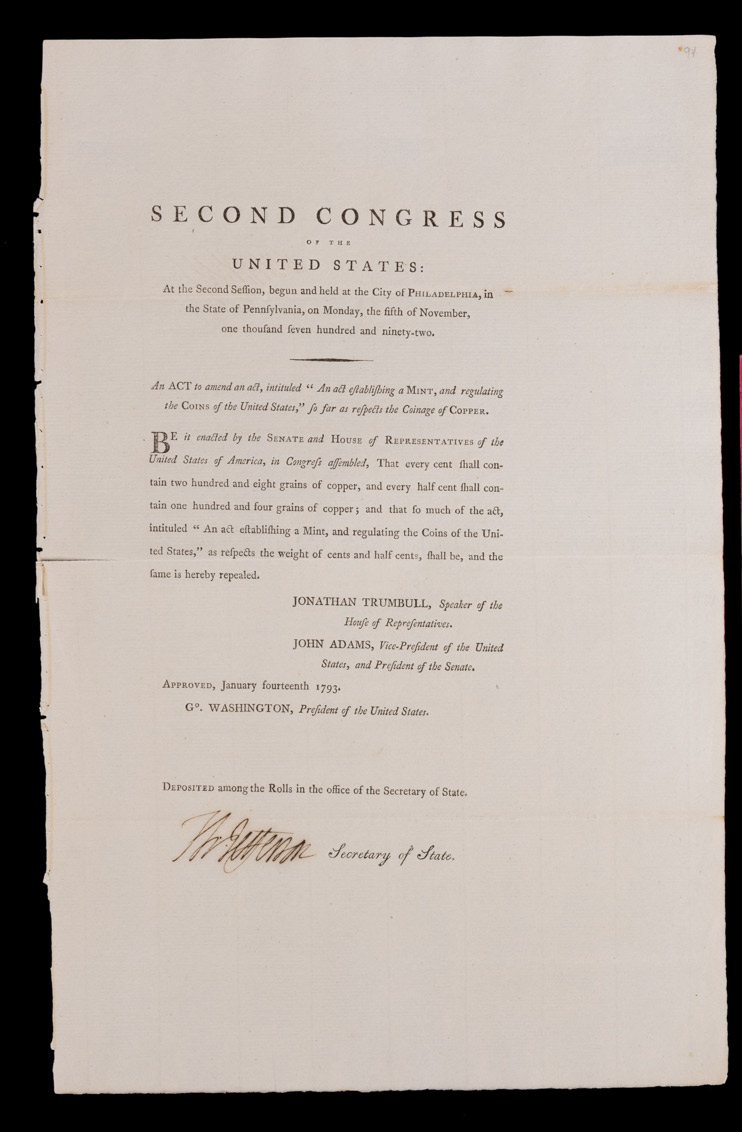
Thomas Jefferson Act of Congress Signed as Secretary of State, January 14th, 1793,

Second Congress of the United States (1743-1826)

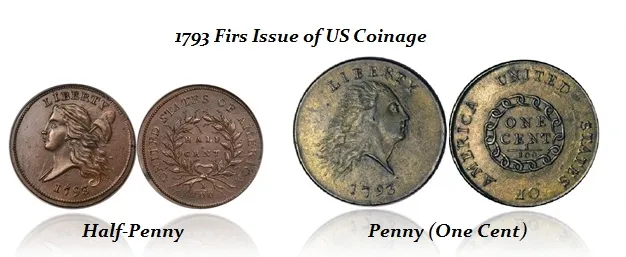
As Secretary of State, Thomas Jefferson amended a previous Act, “establishing a Mint and regulating the Coins of the United States,” establishing the copper weight specifications for the first US coins issued in 1793 – the Cent and Half Cent. This is a document from our collection on the Monetary System of the World, establishes the birth of the US dollar authorizing the first issue of the coinage of the United States. It is unique and of tremendous historical importance.

The first copper coins created by the new United States of America were introduced into circulation in March of 1793. This document is signed “Th’ Jefferson” as Secretary of State and countersigned (in type) by George Washington as President, John Adams as Vice President and President of the Senate, and Jonathan Trumbull as Speaker of the House of Representatives.

“Second Congress of the United States: At the Second Session, begun and held at the City of Philadelphia, in the state of Pennsylvania, on Monday, the fifth of November, one thousand seven hundred and ninety-two. An act establishing a Mint, and regulating the coins of the United States, so far as respects the Coinage of Copper.”

“Be it enacted by the Senate and House of Representatives of the United States of America in Congress assembled, That every cent shall contain two hundred and eight grains of copper, and every half cent shall contain one hundred and four grains of copper; and that so much of the act ‘An act establishing a mint, and regulating the coins of the United States,’ as respects the weight of cents and half cents, shall be, and the same is hereby repealed…. Approved January fourteenth 1793…”

AI – The Reality of Complexity


Armstrong Economics Blog/AI Computers

Posted Sep 2, 2023 by Martin Armstrong

Spread the love

COMMENT: You are always ahead of the curve. Today AI is the buzzword – with most of the AI being machine learning, where you were developing Socrates with real AI in the 70s and 80s.

Lynne

REPLY: I fooled around with neural nets when they first began. The problem with this approach is that you expect a machine to develop a human instinct as if you are playing a poker game. It is a gut feeling you might have about a person to alert you if he is bluffing or real. That cannot be coded, nor will a computer with machine learning be able to acquire such a “gut feeling,” which is an entirely different game than chess.

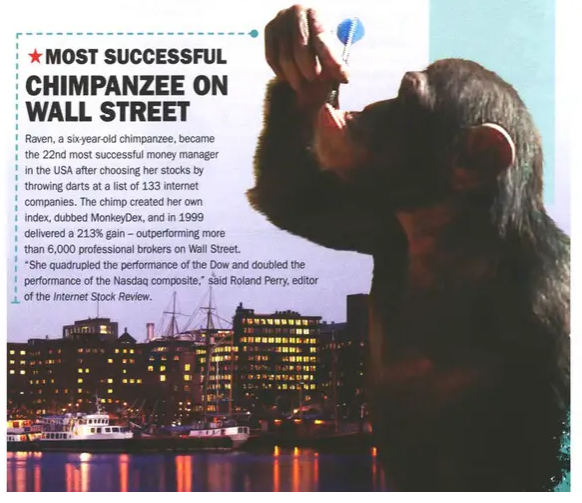
Socrates is NOT a neutral net. I had to teach it how to trade. I put my instincts into the system. Creating a neural net, throwing in all the data, and praying it will learn how to trade is more or less like a monkey throwing darts at the Wall Street Journal regarding what stock to buy in a bull market. Raven, a six-year-old chimpanzee, became the 22nd most successful money manager in the USA after choosing her stocks by throwing darts at a list of 133 internet companies. The chimp created her own index, dubbed MonkeyDex, and in 1999 delivered a 213 percent gain, outperforming more than 6,000 professional brokers on Wall Street.

Attempts to use a neutral net with machine learning have not beaten Raven in funds management. The level of complexity is monumental. On top of all of that, it will never discover the nonlinear structure of the world by dumping in a chunk of data and praying for the best.

Teaching Hedging


Armstrong Economics Blog/Trading Re-Posted Aug 27, 2023 by Martin Armstrong

COMMENT: Marty, I just wanted to thank you. I attended your 1985 World Economic Conference, and you taught me how to hedge. That made my career, and now I am about to retire. Nobody was teaching hedging in the early 1980s. You have impacted the world far more than you realize.

I will be at the WEC this year in my official capacity. Next year, it will be for me personally. I sincerely wanted to thank you, and you should post this. The newbies need to know you were there decades before anyone else.

God bless.

GK

REPLY: George, it has been a long journey. I am glad I helped you in your career. You have always been there for me and I appreciate old friends. BTW, they still do not teach hedging in universities. Just amazing.

Japan Exports Fall in July, Driven by 14.3% Decline in Shipments to China


Posted originally on the CTH on August 17, 2023 | Sundance 

Some economic data released by the land of the rising sun points to a larger global weakness in manufacturing demand.   Within the data year-over-year exports from Japan fell in July by 0.3%, which is the first time since 2021 the contraction was noted.

Digging a little deeper, the weakness in Japanese exports is driven primarily by a decline in exports to China of 14.3% in July, which follows a 10.9% decline in June.  Japan is a component supplier to China, which would indicate the demand for Chinese products globally is substantially less than Beijing has previously admitted.

That said, Japan’s direct export of finished goods to the U.S. actually increased 13.5%, mostly driven by the export of electric vehicles.

However, 13.5% is identical to the overall decrease in Japanese imports.

Essentially, component parts to China are down, but completed finished goods to the U.S. are up.  Overall, the results from Japan point to a soft overall global economic status, the result of continued contraction of Western economic activity.

TOKYO, Aug 17 (Reuters) – Japan’s exports fell in July for the first time in nearly 2-1/2 years, dragged down by faltering demand for light oil and chip-making equipment, underlining concerns about a global recession as demand in key markets such as China weaken.

Japanese exports fell 0.3% in July year-on-year, Ministry of Finance (MOF) data showed on Thursday, compared with a 0.8% decrease expected by economists in a Reuters poll. It followed a 1.5% rise in the previous month.

[…] Japanese policymakers are counting on exports to shore up the world’s No. 3 economy and pick up the slack in private consumption that has suffered due to rising prices.

However, the spectre of a sharper global slowdown and faltering growth in Japan’s major market China have raised concerns about the outlook.

The World Bank has warned that higher interest rates and tighter credit will take a bigger toll on global growth in 2024. (read more)

Meanwhile, I would not bet against Michael Burry.

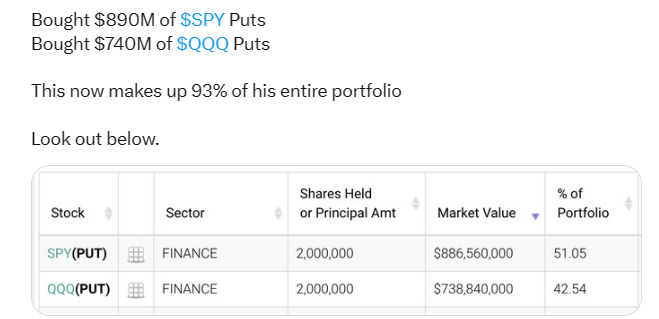
Burry is betting against the S&P 500 and Nasdaq 100 this week, according to his fund’s latest releases. Securities and Exchange Commission filings.  The filing shows that he is now holding options against the S&P 500, hedging $886.6 million against the index.

The filing also revealed that Burry sold his shares in Capitol One, First Republic, PacWest Bancorp, Wells Fargo and Western Alliance after betting on them earlier this year in Trying to make money from the regional banking crisis.  Burry also sold his stakes in Chinese e-commerce giants Alibaba and JD.com.

In addition, he bought $738.8 million in put options against the Invesco QQQ Trust ETF – a fund made up of popular high-tech Nasdaq companies, such as big tech companies Apple and Microsoft as well as Nvidia, Tesla and PepsiCo.

Burry has pulled money out of China investments and U.S. banks and is hedging against tech and the S&P.  He took these positions before the data from Japanese exports to China was released.

AI & Self-Awareness


Armstrong Economics Blog/AI Computers Re-Posted Aug 8, 2023 by Martin Armstrong

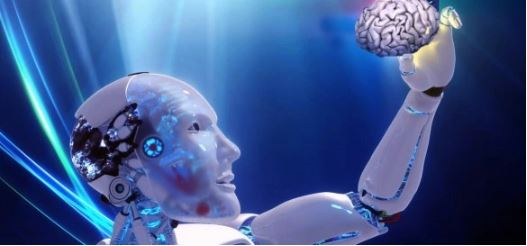
QUESTION: You do not see AI as actually becoming conscious? There are so many claiming that is the future. Are you hiring programmers in machine language?

LK

ANSWER: Let me explain something. Most generative AI models today are being trained and run in the cloud. These models are language-oriented, generating text. They are often at least 10 times to 100 times bigger than older AI models. ChatGPT is learning from the question people are asking. While this is impressive to the average person, there is no real economic value other than adding to the search function. This has resulted in a boom along with an insatiable appetite for running large language models at this point in time.

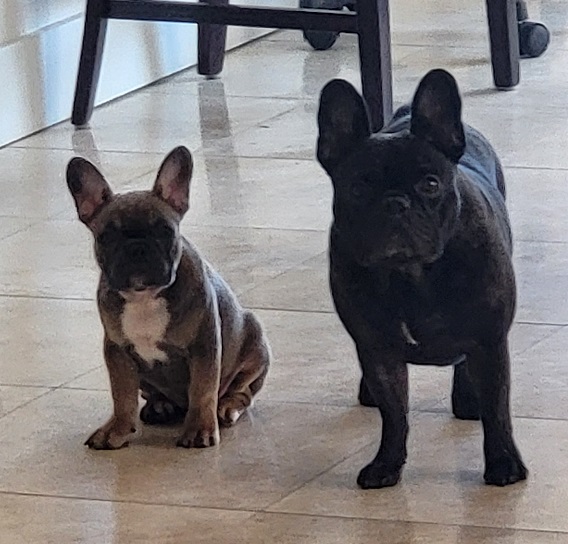
Even dogs have personalities. My little one will take a pill covered in peanut butter. The older one takes the peanut butter and spits out the pill. Just like having two children, they are not the same. What causes one to have a personality that is different from the other? I’m afraid I have to disagree with this theory that if you throw in enough data, suddenly, the computer will become self-aware. My little dog was just 11 weeks old. She is still exploring her environment, displaying curiosity, so she has a distinct personality BEFORE acquiring knowledge of her environment. This PROVES beyond a shadow of a doubt that this theory of a computer becoming self-aware is just nonsense. We do not teach our children how to be self-aware. They are born that way.

There is something there that creates the personality, and it appears from birth in dogs and humans. My dogs clearly think dynamically. If I get up with a coffee cup, they know I am going to the kitchen and heading there. Not all animals have that ability. So why are dogs capable of looking for patterns and anticipating my next move, and a hippo, snake, or alligator is not?

I do not believe we are anywhere close to comprehending those differences, and as such, we cannot create a true cognitive machine that is self-aware when we do not understand what makes us self-aware.

To build Socrates, I had to study intensely how we actually think. Let’s say you met the person who is your soul mate. You went to dinner. Your mind is actually recording every aspect of that evening, and you are totally unaware of what it is recording. Years later, you return to that same restaurant, and that memory involuntarily comes rushing to the forefront of your mind. Or there was music playing that night, and suddenly you hear that same song, and that memory again involuntarily comes to mind. Perhaps it is the food. The point is that memory is stored, but any of our senses can access it. The complexity is enormous.

My oldest dog does not like going to the Vet. She even knows her surroundings. Miles from the place, she knows where I am going and begins to tremble. She is aware of her surroundings miles from home, which astonished me. It was not a capability I assumed a dog would have. A dog stayed with a two-year-old girl who went missing and always protected her.

There is a lot more hidden within us and many animals that cannot be explained or recreated by a computer.

Just be careful with claims suddenly of people coming up with AI trading programs. It took me 17 years to build Socrates. You cannot create an AI trading program in a few weeks. As for hiring, yes, of course. We always have projects under development.