Ben Bergquam: “Illegal Aliens Have Infiltrated Everything And The Only People That Want Them To Stay Here Are People That Abuse Them For Cheap Labor”


Posted originally on Rumble By Bannon’s War Room on: July 7, 2025, at 10:00 pm EST

Steve Bannon: “There Can’t Be Amnesty, Everyone Here Illegally Must Go Home”


Posted originally on Rumble By Bannon’s War Room on: July 7, 2025, at 9:00 pm EST

People Flee Taxation


Posted originally on Jul 8, 2025 by Martin Armstrong 

PopulationOfRome

I have written about how Rome fell, and just by mapping the population of Rome, you can see the fate of many current nations and states operating under poor fiscal policies – people sell and just leave. It is different this time because, under socialism, the government has become abusive. When it came to integration, they sought to implement it by sheer force.

You can’t legislate the poor into prosperity by legislating the wealthy out of prosperity. Jobs are created by the wealthy who become wealthy because of their innovative vision – i.e., Henry Ford, Bill Gates, Steve Jobs, and so on. Henry Ford’s vision created the auto industry. Bill Gates, in bringing DOS to life, created the personal computer industry, as did Steve Jobs. How much employment did just those three men create? Far more than government.

Government creates nothing to advance society or to increase GDP in any positive manner. It is a natural human response not to pay taxes and this is why taxes have been the number one reason for civil war and revolution. It is always resentful to pay taxes, whereas giving money to help someone is rewarding. Taxes tend to support politicians and their pensions. If they must sell some assets to take a government job, it is tax-free. Few leave government without growing their net worth far beyond what one could typically earn through income or investments.

The great welfare state has produced a large segment of fraud and kept many people down since they would rather be taken care of than work to take care of themselves. Even in prison, many people are sentenced to 10 or 20 years, and the first thing they do is commit a crime to get back in, where they do not have to pay taxes, and they are taken care of. You destroy people’s lives for such a long period for non-violent crimes, and then expect them to have a fulfilling life thereafter?

The Evolutionary Cycle of Civilization scaled

In the United States, we have witnessed a significant shift in the population since the COVID-19 pandemic. People are continuing to flee authoritarian states with high taxes like California, New Jersey, and New York in favor of financially friendly states like Arizona, Texas, and Florida.

New Zealand once had a program where if a woman was pregnant and she had no idea who the father was, the government provided everything right down to a free home. They ended up with the highest percentage of women who had no idea who the father of their child was. Naturally, they did know the identity of the biological father, and he would jump out the back window when the social worker visited. They got everything for free then.

Any of these types of programs employ a divide-and-conquer strategy. The government cannot give to anybody anything that the government doesn’t first take from somebody else.  When you reach a state where 50% of the people depend upon the other 50% to pay their bills, you end up with class warfare and bitterness. This is the cycle where civilization rises, peaks, and then crashes when government becomes the enemy of the people.

Fractional Banking v Matched Funding


Posted originally on Jul 8, 2025 by Martin Armstrong 

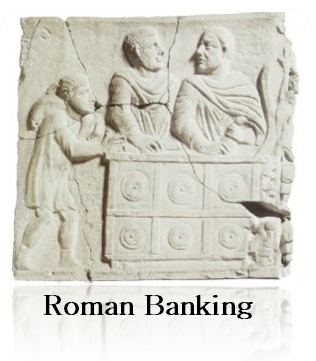
Roman Banker

Banking has existed from the earliest of times and has taken many forms, from safe deposit storage, money changers, merchants with the ability to move money internationally, to money lenders. Some people wrongly assume that they can eliminate the business cycle by eliminating fractional banking. They assume that it will be possible to match lenders and borrowers to maturity contracts. They do not comprehend that this is the line of thinking that always leads to authoritarianism, all the way to communism.

The problem that will emerge from matching lenders and borrowers to a maturity contract is that the boom-bust cycle will still exist. There will always be the perpetual rise and fall in asset values caused by other factors (including human nature), not least of which will be changes in technology, civil unrest, and war that can alter capital flows. History offers a catalogue of solutions. All we need to test such an idea is to open the books.

Athen Akropolis_by_Leo_von_Klenze

People assume the cause of the business cycle is the fractional banking issue, as if that were eliminated, then you would flat-line the business cycle, creating utopia. Be very careful. This was the goal of Karl Marx as well. So the starting point is a basic question. Has fractional banking always existed? NO! Since the answer is no, then did the boom and bust cycle in banking exist even without fractional banking? The stark answer – YES.

In ancient times, financial panics also occurred without fractional banking. In Athens during 354BC, people borrowed money from the Temple unbeknownst to everyone else. They were speculating in real estate. The real estate market collapsed without fractional banking, and then it was exposed that the money was borrowed behind the curtain, so to speak, from the temple. Corrupt priests had all this money donated to Athena. She obviously was very frugal since she never seemed to go on a spending spree to buy shoes, owls, or spears. She wore a helmet so she didn’t need a hairdresser. So the priests could keep their hands out of the treasury. Oops – they were caught lending it out to their buddies for spare change. There was no fractional banking involved. They had the money and lent it to their buddies. The assets collapse because, as always, the mood of people changes with the seasons.

Wisselbank-2

Fast forward to the 17th century, and we find the very same scheme played out by politicians. There was the collapse of Wisselbank in Amsterdam, where people had deposited their money and assumed the bank was strictly a safekeeping facility. They offered no loans and paid no interest. Little did they know, the government was using their deposits to fund its own trading.

Netherlands Provinical - GELDERLAND Provincie 1581 - 1795

The Wisselbank was founded in 1609. Upon first opening an account, a depositor paid a fee of ten guilders, three guilders, and three stuivers for each additional account. Two stuivers were paid for each transaction, except those of less than three hundred guilders, for which six stuivers were paid, in order to discourage the multiplicity of small transactions. A person who neglected to balance his account twice in the year forfeited 25 guilders. A person who ordered a transfer for more than what was upon his account, was obliged to pay three per cent for the sum overdrawn. The bank made further profit by selling foreign coin and bullion, which fell to it by the expiration of receipts, and by selling bank money at five percent and buying it at four percent. These sources of revenue were more than enough to pay for the wages of bank officers and defray the expense of management. (Adam Smith)

In 1602, the United East India Company (VOC) was formed from six trading companies in the Netherlands and granted a trade monopoly over the Indies. The bank was administered by a committee of city government officials concerned to keep its affairs secret. It initially operated on a deposit-only basis, but by 1657, it was allowing depositors to overdraw their accounts, and lending large sums to the Municipality of Amsterdam and the United East Indies Company (Dutch East India Company). Initially, this was kept confidential, but it had become public knowledge by 1790. The City of Amsterdam took over direct control in 1791 as a bailout, before finally closing it in 1819.

There is plenty of history of banking BEFORE fractional banking. Sorry, but that did not stop banking panics nor did it stop the business cycle with the boom and bust events. The Tulip Bubble was not leveraged with fractional banking. No matter what, the boom and bust cycle is driven by human nature. We do have a tendency to change our minds about everything from fashion to money.

The idea of matching lenders and borrowers sounds appealing. However, that will not eliminate the cycle. I can find no instance of such a flat line except during a Dark Age where there was no banking, private ownership, or any real economy. Coinage during the period is rare and is typically confined to the region where it was struck, demonstrating the lack of an economy or circulation due to trade.

Could Bitcoin Replace the Dollar?


Posted originally on Jul 7, 2025 by Martin Armstrong 

Bitcoins

People continue to ask if Bitcoin will replace the dollar. They believe that the recent surge in Bitcoin indicates that it will topple the USD as the world’s reserve currency, but that is merely propaganda. You must understand that Bitcoin is simply a trading vehicle, not a currency. I cannot stress that point enough. My opinion has been unpopular, and clients have walked away due to my stance on crypto. That’s fine, as I am not in this for the money. I can only adequately inform my clients of the unbiased truth and hope that those willing to listen will heed the computer’s warnings.

To begin with, there is much speculation about the founder(s) — Satoshi Nakamoto – who created Bitcoin (BTC) on June 3, 2009. The mystery person or group (or government agency) has been MIA since 2011. Yet 1 million Bitcoins remain in their original account, untouched. His wallet is estimated to be worth over $81 billion at the time of this writing, and if this is indeed an individual, he or she is one of the top 15 richest people in the world. They have never moved a fraction of a BTC from their account. So, one wallet contains 5% of all mined bitcoin. Will this person or entity perpetually hold?

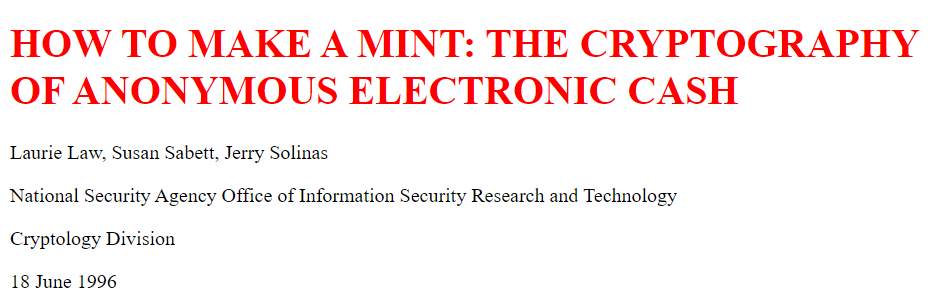
They expect us to believe some mysterious Japanese man created the blockchain technology and simply evaded all world governments. They claim Bitcoin is an anti-government vehicle, but it is a bureaucrat’s dream because it allows them to track where funds are coming from and going. In 1996, the US government released a white paper entitled, “How to make a mint: the cryptography of anonymous electronic cash.” Released by the National Security Agency Office of Information Security Research and Technology, this document explains how a government agency could create something like Bitcoin or another cryptocurrency. They had been attempting to create one for years and then magically Bitcoin came on the scene.

I encourage anyone interested in crypto to read my article regarding this study. Blockchain was created with surveillance at the top of mind.

HowtoMakeaMint2

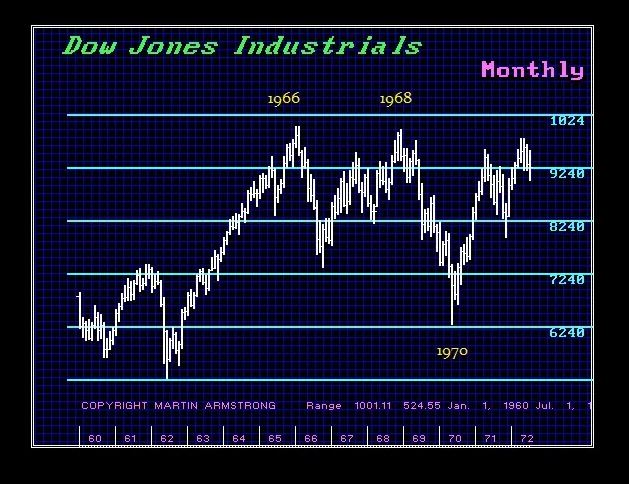
Bitcoin’s price is akin to the problem that existed when the bubble burst in 1966 with mutual funds because they were listed back then. The value can change at a volatility rate of 10x that of the dollar, making it a highly dangerous instrument as a store of wealth. It is solely a trading vehicle until they weigh it and the value is changed.

1966Crash D
DJIND M 1966 1968 1970

In 1966, investors bid the mutual funds up beyond net asset value, so during the crash, people lost everything when they thought it was a secure investment. The net underlying assets may have dropped 20%, but they paid 20% over the net asset value and then sold at 50% of the net asset value. Many mutual funds crashed 70-90%, whereas the Dow drop was 26.5%. Ever since mutual funds have no longer been allowed to be listed. You go in and out at net asset value. Bitcoin must change its structure, or it will never become a valid currency with a stable store of value, which is supposed to be the whole point. It is just an asset class of high volatility.

I have not been bullish on digital currency, as it’s a trading vehicle no different than any other commodity or stock. Sure, a profit could be made, and many have had great success. We do include Bitcoin in our models, and those subscribed to Socrates will see that our arrays are picking up on Bitcoin next year.

Bitcoin is a trading vehicle that is no different from wheat or cattle. It is NOT a store of wealth, as it fluctuates like everything else. It rises and falls no different than any other trading instrument. It is not a “store” of value maintaining some constant value to park your money. We need to get realistic here. The concept of Bitcoin replacing the dollar fails to comprehend what makes something the world’s reserve currency. I will write a piece explaining that aspect since it is crucial to understand.

Deep State vs World


Posted originally on Jul 6, 2025 by Martin Armstrong 

I have stated that I know Bill Kristol. His father, Irving Kristol, founded the Neocons. I had direct conversations, and I can confirm that this has been an agenda dealing with Iran that has always been about regime change. I was told that removing the dictators and overthrowing Iran would somehow bring peace to the Middle East. We drew their borders, and they see themselves more as tribes than as citizens of a state. I agree with Jeffrey Sachs. Our Neocons swear that whoever they oppose at this instant, intends to attack the USA, so they always propose to attack them first, and they act dishonestly and claim their hated opponent wants to do the same. This is no different than if I punch you in the face because I know who really wanted to hit me first, and I call it self-defense.

Elon Musk Announces The Creation of a Third Party


Posted originally on CTH on July 5, 2025 | Sundance

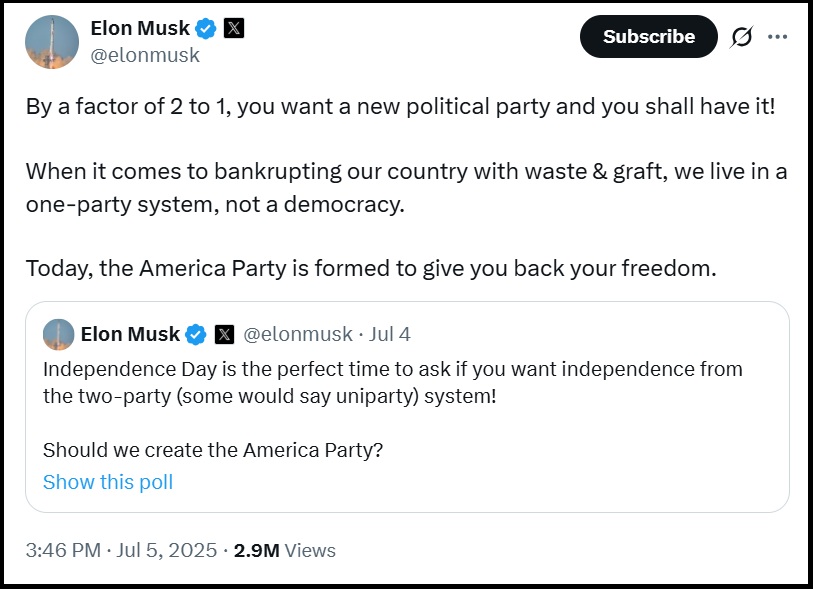
Elon Musk, the richest man with visions of grandeur, has announced the creation of a new political party, “The America Party”.

[SOURCE]

With President Donald Trump capturing the overwhelming majority of middle-America within the new MAGA movement; essentially taking over the Republican party apparatus, I would consider that Musk’s assembly will likely be a collection of never-trumpers, alligator emojis and disgruntled former Republicans.

The impact is undetermined, but the assembly itself was entirely predictable.

Watch Larry Ellison.

When the Drones are Coming, They Turn Off the Internet


Posted originally on CTH on July 5, 2025 | Sundance 

Some thoughts on what I would call ‘modern warfare’ for citizen preppers.  Some of this experience may pertain to urban areas, some perhaps pertinent overall.

Dimitri’s wife is grabbing her purse to go to the grocery store, when he casually says “it’s 5:45.” She just as ordinarily replies, “I’ve got cash.”  Dimitri sees the slightly puzzled look on my face and flippantly notes, “they turn off the internet at six thirty now,” shrugs, and goes back to reading his paper.

Perhaps similar to London life during the blitz. Various municipal govts coordinated the shut down of lights and people wait. Others got about doing what they needed to do, sirens notwithstanding.

There is a familiar life amid modern drone warfare, and with the similar control of electricity comes the need to add internet.

When the drones are coming they turn off the internet.

As I contemplate the contrasts in social resilience, my most familiar reference point is life after a hurricane.  In Florida when we are dealing with the aftermath of a hurricane, no power, no water, no internet, etc., you adapt to life without modern technological conveniences.

If you’ve ever lived amid the aftermath of natural disasters, you understand the need for a plan and quick adaptation. Do it a few times and adaption becomes ordinary. Horrible in ways, yes; awkward, certainly. But you take things in stride; overcome, figure out the optimal solution and keep moving.  However, not everyone is prepared to consider a disruption an ‘inconvenience’ and many people who need consistency to retain stability end up in panic.  I think long term readers well understand the reference.

As Dimitri goes back to the paper my mind shifts to stuff I’ve heard in bits and pieces but never given context before.

I think about this U.S. ‘Space Force’ thing, and now realize there are people who have gamed out modern warfare more than we discuss as a western technological society.

My mind also thinks about those reports I read a few years ago about various western govt offices concerned about the ability of Russia to target U.S. satellites.  Suddenly I realize cell phone and telecommunication is not their concern.

There’s no internet; the problem is bigger than a temporary outage of Uber. I wonder how the commercial air traffic between Kazan, Moscow and St Petersburg is not disrupted.  Old school stuff applies. Meanwhile, the kids, lots of them are playing outside as kids do – apparently life amid modern drone warfare is resilient.  No one is staring at the sky.

It is very odd to see how quickly a non-technology driven society can adapt to no electricity and no internet as an ordinary part of daily life.  An entire nation just figures out the optimal solution, in part because their time between analog and digital has been short.  Russians have a totally different context of dependency.

I’m also starting to realize how the flexibility within a non-technological society is an asset in modern warfare.  Turn off the internet in New York, Chicago, Los Angeles or any major metropolitan area – how would life be impacted?

I can only imagine the reactions from a generation who has never known life without wi-fi.

It would be a very good intellectual exercise to think carefully about what your life would be like without cell phone coverage or internet services.  There are more than a few people who have never learned to read a clock with hands.

In Russia when the drones are coming they turn off the internet and sometimes the electricity.  Stores stay open; people do the ordinary things people do, the trains still run, the busses stay on schedule and you can still get a hot coffee and a sandwich just about anywhere, albeit sans Starbucks.  Private taxis, Uber equivalents, switch seamlessly to line up at pick-up points without issue. Try to duplicate that rapid on/off precision in Boston, Miami or St Louis… see my point?

Then extend those thoughts to Paris, Frankfurt, Warsaw or Helsinki.  Dimitri is thinking about ordering a pizza, while I’m starting to realize why NATO countries are going bananas.

Can Russia beat Europe in modern warfare?

Well, turn off the electricity, turn off the internet and see what happens to social society in Prague, Rome or any region in Europe when the sirens start.  Yeah, NATO is going bananas as Putin’s best non-discussed weapon just looms quietly.

Putin’s strongest weapon is essentially a social infrastructure akin to a nation full of people who can live in the aftermath of a hurricane without needing a digital screen to provide directions to the next six hours of their life.

Again, somewhere, in some office complex deep in the bowels of some agency or bureaucracy, someone has ran models of this and yet I cannot find a reference anywhere to ordinary people talking about it.

In the glovebox of every taxi in Russia you will find a paper map; when was the last time you saw one in the USA?

When the drones come, they always turn off the internet and sometimes the electricity.

How would we deal with that…

Think about it.

“We Lit Up The Senate” Mike Davis Takes Victory Lap On Defeating AI Amnesty 99-1


Posted originally on Rumble By Bannon’s War Room on: July 1, 2025, at 2:00 pm EST