
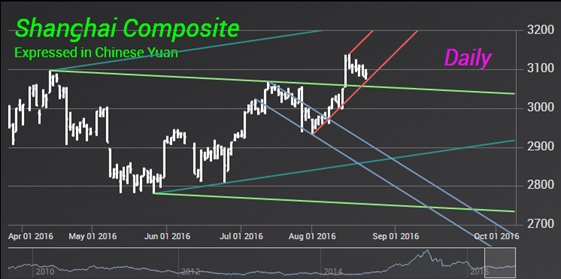
With a total debt of almost 250% of GDP, China’s debt problems are well known. Meanwhile, the government is working on resolving the issue by following the playbook of US investment banks and creating securities structures to offload bad debt (remember CDOs?). The slowing economy has caused rising defaults. Analysts suspect the NPLs ratio to be 30% of bank loan portfolios versus the official ratio of 1.81% as of the end of June 2016.
The corporate bond market is also feeling pressure as 41 companies have defaulted on R25.4bn of bonds since the beginning of the year. In an effort to restore confidence in the banking sector, Bank of China and China Merchants Bank sold off some of its NPLs as securitized products. It seems like an asset swap to other banks with 50-60% of the book being sold to other banks. Furthermore, 95% of the riskiest tranches were sold to a state-owned asset manager. Meanwhile, in an effort to support growth, the Chinese government is promoting lending to small and micro businesses, which carries higher risk and reduces peer-to-peer lending.
Corporate debt is estimated at 145% of GDP with the non-financial state-owned enterprises representing half of the bank credit. Chinese banks have a greater concentration of individual customers with the top customer of Agriculture of China accounting for 7% of its loan book and the top 10 customers comprising 17% of its loan book.
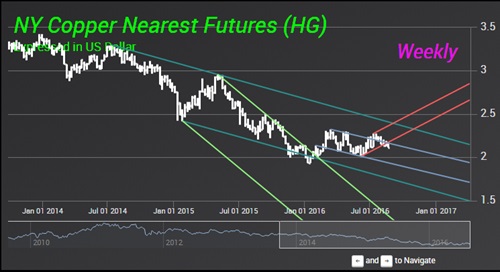
Chinese credit is currently growing at 2x GDP, meanwhile, fixed capital investment growth slowed to 3% during 2015. Watch copper that is used for loan collateral in China and has recently broken weekly technical support with a Directional Change during August and the next turning point in October. A breach of the $2.00 level will indicate further lows.
Categories: China
Tags: China



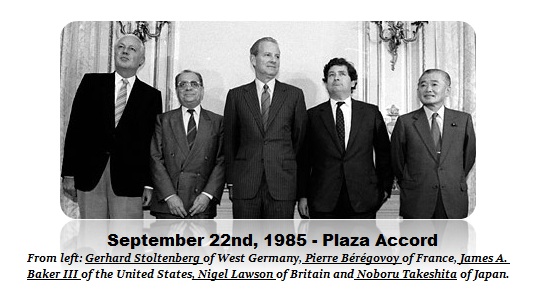
 In the first six months of the year, the raw data has shown that several central banks have been selling US government bonds in an attempt to support their currencies against the dollar. This has come in part at the request of the United States, exactly as took place back in 1985 at the Plaza Accord. The United States has a strikingly different view as to currency value. You even hear Trump calling China a currency manipulator because they have seen a declining currency. He does not view that this has been a global trend. Nonetheless, European central banks see a weak current as a weakness politically and thus want a high valued currency.


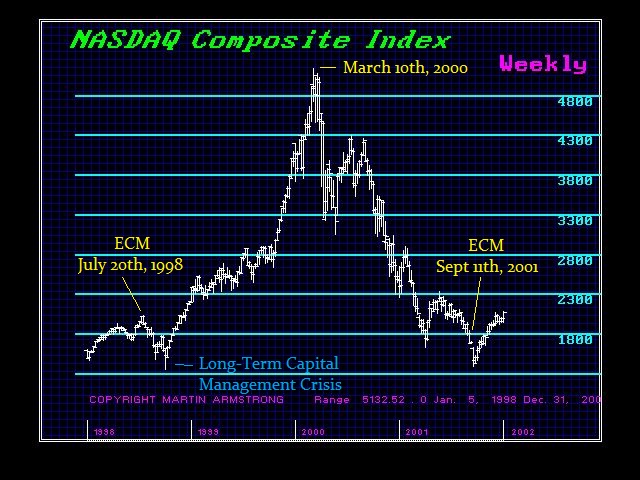
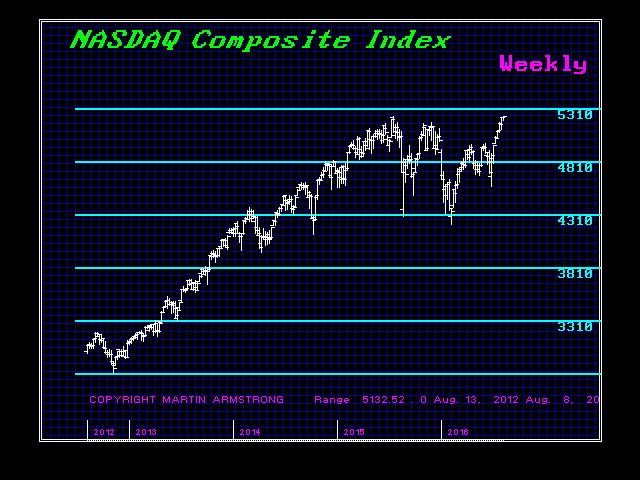
 Finally, the Dow made new highs in the face of constant calls for a crash. This past week, in a horse race we would call it a trifecta where the Dow Jones Industrials, S&P 500,and the NASDAQ all made new record highs. This sent a bunch of analysts to look again and began to proclaim that this was the first time that all three major indices have reached new highs on the same day since 1999. They then look at the charts and pronounce that the 1999 rally lasted only until 2000 and then crashed. Of course that was the DOT.COM Bubble and there was a massive wave of retail investor in the market back then compared to today.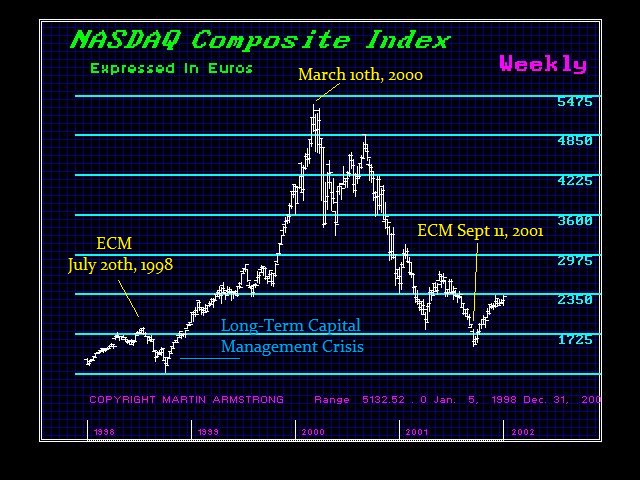

 Centinel2012