The Panic of 1683 Was the First


Panics-168301907

This is the list of panics I discovered in the library at Princeton University. I simply added the period of 224 years from 1683 to 1907 which yield 8.615 as the common frequency dividing that period by the 26 events. I did not expect this to produce events to the day. The mere fact that events would happen precisely to the day as they did in 1981, 1985, 1987, 2001, 2002, and 2007 just to mention a few, beat the odds that this was somehow just coincidence or dumb luck. It has been fascinating discovering how this frequency has dominated history from ancient times to the present.

DecFollis295-348AD

From the collapse of the Roman Monetary System to just 8.6 years or six wave creating 51.6 years intervals like the collapse of the Roman Follis. It is fascinating to say the least that such a calculation has been so powerful throughout nature, humanity, and destiny.

Nevertheless, by dumb luck, this list of Panics was international and not relegated to a single isolated country. With 1683 for a start, that was the financial panic that disrupted Europe for the Ottoman invasion of Europe with the attempt to take the capital of Europe, the seat of the Holy Roman Emperor in Vienna. So where this calculation began, obviously included was as well.

Germany the 800 pound Gorilla


Armstrong Economics Blog

Re-Posted Aug 14, 2016 by Martin Armstrong

800-pound-gorrila

This week, a German cooperative savings bank in the Bavarian village of Gmund am Tegernsee with less than 10,000 in population, announced it will begin charging retail customers to hold their cash starting in September. This will apply to accounts greater than €100,000 euros. This means the bank will charge customers 0.4 percent, which amounts to a direct pass-through of the current level of the ECB’s negative deposit rate. After speaking directly with banking sources, what is happening is that cash is flooding into German banks from around Europe just to park avoiding the negative deposit rate. Now, the banks are starting to pass the negative rates back to the clients. However, much of this flow of capital has also been money fleeing other banks outside of Germany for fear that the euro will break and they will get Deutschemarks.

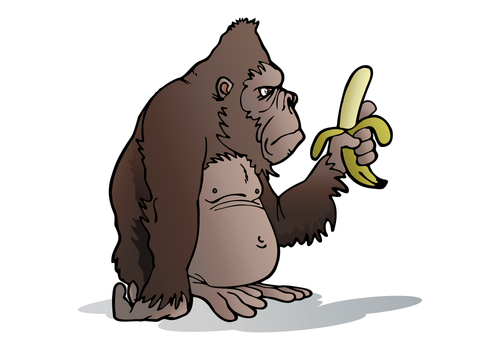
However, THE 800 POUND GORILLA in the corner of the room is Deutsche Bank itself. Rumor has it that its derivative book is 5 times the GDP of Germany. The real issue here is what happens when Deutsche Bank needs more than a banana? This is the largest bank in Germany and thus the most important bank for all of Europe even if you do not bank there. Can Germany really allow the BAIL-IN process to take place? Politically, this would be total disaster economically, politically, and for the stability of the EU itself. The theory which destroyed Cyrus and has wreaked havoc in Greece, if applied to the largest economy of Europe, will destroy all confidence in Brussels.

Does the fate of Europe hinge on the fate of Deutsche Bank? If the Germans blink, what are the ramifications that will reverberate throughout Europe? These are issues we will discuss at the upcoming WEC Institutional Session.

Solar Physicist Sees Global Cooling Ahead


Day AFter Tomorrow

While the government is using the global warming theory to raise taxes, the real danger is global cooling. The significance of being unprepared means that we will face a rising threat of a food shortage in the years ahead. This is the real danger of global cooling.

CRNFOR-Y

It does appear that we are looking at a rise in food prices after 2017. This will, in part, be caused by  weather, but we must also respect that there is rising civil unrest that typically corresponds to a reduction in food supplies.

Productivity unexpectedly drops for third straight quarter…


NOT A GOOD SIGN

IMF & Gold Reserves


IMF

QUESTION: Mr. Armstrong; People are adamant that there is a move to return to the gold standard. They claim various scenarios. Is there any such plot by the IMF and it seems strange that the ECB gold reserves are minimal. Can you explain the truth in this matter?

Thank you

GS

ANSWER: The IMF has actually been jockeying positions for decades to remove gold as a monetary instrument quite to the contrary of these reports. IMF Special Drawing Rights (SDR) was first established with one SDR being equal to 0.888671 gram of fine gold, which was the par value of the US dollar on July 1, 1944. The IMF acquired its gold holdings through four main channels. First, 25% of initial quota subscriptions to join the IMF and subsequent quota increases were to be paid in gold. This represents the largest source of the IMF’s gold. Furthermore, all payments of charges (interest on member countries’ use of IMF credit) were also normally made in gold. The structure was established with Bretton Woods and then a member wishing to acquire the currency of another member could do so by selling gold to the IMF. The major use of this provision was sales of gold to the IMF by South Africa in 1970–1971. Thereafter, member countries could use gold to repay the IMF for credit previously extended.

The IMF has decided to either return gold to member countries or to sell some of its holdings. The reasons for this are varied; between 1957 and 1970, the IMF sold gold on several occasions to replenish its holdings of currencies. The IMF also sold gold to the United States and invested in U.S. government securities to offset operational deficits during this same period.

The Second Amendment was to make the SDR the principle reserve asset in the international monetary system, paving the way to remove gold as the ultimate reserve asset. The Second Amendment to the Articles of Agreement in April 1978 fundamentally changed the role of gold in the international monetary system by eliminating its use as the common denominator of the post-World War II exchange rate system. Gold ceased to be the basis of the value underlying the SDR. The Second Amendment, therefore, abolished the official price of gold and ended any obligatory use in transactions between the IMF and its member countries. Consequently, the Second Amendment of 1978 decreed that the IMF would no longer manage the price of gold or establish a fixed price. This, in part, helped the rally initially to $400 by 1979.

Under the Second Amendment to the Articles of Agreement, the use of gold in the IMF’s operations and transactions was very limited. Furthermore, the IMF may sell gold outright according to prevailing market prices under the 1978 Second Agreement. It may accept gold in the discharge of a member country’s obligations (loan repayment) at an agreed price based on market prices. This officially ended the idea of a gold standard set out at Bretton Woods. If the IMF were to sell gold, it would require Executive Board approval by an 85% majority vote. Therefore, the Second Agreement eliminated any IMF authority to engage in gold loans, gold leases, gold swaps, or use of gold as collateral. The IMF also no longer had the authority to buy gold under the Second Agreement formally ending the gold standard.

So in short, the IMF had been desperate to remove gold as a monetary instrument. From the mid-1960s, the total central bank gold reserved fell by about 25% by 2007. There is no evidence of any intent to return to a gold standard, and if anything, the hope is that the IMF will take on the role of making the SDR the new reserve currency that will replace the dollar when everything crashes and burns.

Germany Raids Healthcare Funds to Support Refugee Crisis


Germany Map 3D

COMMENT: Dear Martin, you always claim that the costs for social security will become unpayable from 2017 onwards. In Germany we have health care system organized by the federal government / the federal state. The government now created a “turbo” to bankrupt this system: The government passed a law that allows them to take 1.5 billion euros from the liquidity reserve of the public health care fund (10 billion euros in total, paid by all members and additionally by the taxpayer) and to give that money to refugees / asylum seekers. What would you call this? Insane?

Thank you for all you do!

Kind regards,

Michael

ANSWER: You are correct. The refugee crisis is rippling through every aspect of the economy. Germany is seeking to pay for the crisis the government created and will not reverse their policy.

Public Sectors devouring the Private Sector


British Protest Note Enlargement

QUESTION: Dear Marty, I understand your general message and totally agree with it. I now see the big picture in a systematic trend and everything moving in the direction Socrates has forecast. I do have a few questions though. Can we call the trend: the public sectors trend to swallow the private sector? In other words, governments desire to “assimilate” the individual? And by trying to do so burn everything including itself to ashes from which hopefully a phoenix (new better system) will rise?

Evil Government

ANSWER: Unfortunately yes. This is really how Empire, Nations, and City States collapse. Government will hunt every dime to try to survive. The unfunded liabilities will drive them toward real dark authoritarian forms of government. This is the crash and burn mode. All we can do is try to educate people who is the real culprit here. They will claim it’s the rich to justify confiscating assets and we already have 65 million people in the USA who have been charged with something. They then can eliminate your right to even vote by simply charging you with something. They then make it a crime for anyone charged with a crime to have a gun even if it is tax evasion.

British Protest NoteThe American Revolution took place because the king had decreed 240 felonies. If you were charged with a felony, the penalty was death. This benefited the king because he got to confiscate all your property and your wife and kids would just be thrown out on the street.

Here is a note where the law was written that anyone in POSSESSION of a forged banknote was a felony subject to death. This protest imitation shows people hanging. They were not the forgers. They merely accepted such a note and tried to spend it. This was highly profitable for the king who was desperate for money to fight wars.

Unfortunately, we do not have a government of the people, by the people, for the people. The people are the victims as they always become under any Republican form of government historically.

History repeats because human nature never changes.

The Mechanism Behind the Rise & Fall of Nations


WorldEconomy

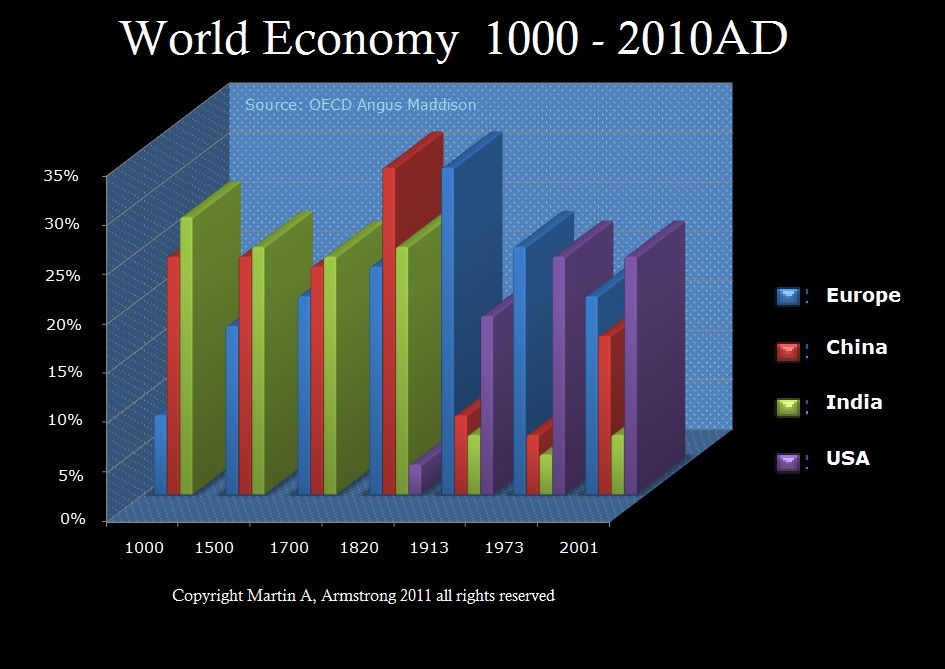
QUESTION: Mr. Armstrong; I recently read a book which claims that the disparity of wealth among nations is something recently unfolding post-Columbus. The thesis claims that before 1500, the income differences between nations were small. It proposes that only since the discovery of America, the interplay between geography, globalization, technological change, and economic policy has determined the wealth and poverty of nations. It claims that the West pioneered new technologies that have made them richer whereas prior to the Industrial Revolution, most of the world’s manufacturing was conducted in Asia. It attributes the Industrial Revolution to the economic reduction of Asia transforming then into underdeveloped countries based on agriculture. The thesis is that a few countries – Japan, Soviet Russia, South Korea, Taiwan, and perhaps China  are catching up with the West through creative responses to the technological challenges. Would you agree with this thesis?

LHG

Hong Kong

ANSWER: No. This is a review of only the post-Dark Age period which is akin to saying the stock market only rises by reviewing just the history back to 1948. Yes, the Industrial Revolution advanced Western society. Creating the steam engine advanced the West greatly. However, what may Lydia great was roads. But those roads were used by Cyrus the Great of Persia to conquer them. Athens rose as a power for banking and insurance. As insurance was invented, shipping expanded transforming it into the next financial capital of the world. The Philip of Macedonia conquered Greece and his son Alexander the Great  took on the world. He tried to conquer India, but was driven back. Rome then conquered the West and it was a single language along with Roman roads that made it the financial capital of the world peaking in 180AD about the same time China peaked under than Han Dynasty.

It was the fall of Rome that send the title of the Financial Capital of the World to Constantinople. When that fell, it moved to India. China then took the title from India and then Britain took the title from the Spanish. It was World War I which sent the title to the United States. Each of these empires saw the same trend moving away from agriculture. Aristotle in Politics wrote about the new market-economy that was emerging. He saw the traders who were men making money from money. This actually influenced Karl Marks.

Aristotle(1)Aristotle did not understand the economic evolution process dynamically which has taken place in ALL societies throughout recorded history. What Aristotle saw was the abandonment of what I have dubbed the Villa Economy of self-sufficiency and the gravitation of both people and capital toward commerce. This part of the economic cycle usually involves people becoming attracted to the big city abandoning the farm life. Every society sees this oscillation both in the concentration of capital as well as people.

Aristotle clearly lamented over the loss of the Villa Economy. The old rural ways were giving way to capitalism. Even at the start of the United States, we will see that Thomas Jefferson and John Adams both shared that view that true wealth was created by the rural farm life. Yet Aristotle’s imperfect understanding of the dynamics at work contributes to centuries of debate and influence, nonetheless, Aristotle tried to draw a line between capitalism that would assist economic growth and that which would fueled these booms and busts driven by speculation in his mind’s eye.

“Now money-making, as we say, being twofold, it may be applied to two purposes, the service of the house or retail trade; of which the first is necessary and commendable, the other justly censurable; for it has not its origin in [1258b] nature, but by it men gain from each other; for usury is most reasonably detested, as it is increasing our fortune by money itself, and not employing it for the purpose it was originally intended, namely exchange.”

(Politics, Chapter X §1258b-1259b translation by William Ellis 1912)

What Aristotle did not comprehend was the concentration of capital.  There is no difference between a landowner who leases his land for a farmer to grow crops and someone who has excess cash to likewise lease it out for a fee known as “interest.” Aristotle thus focused in on this concept of making money from money. He did not quite understand that when a city or a nation becomes the center of the global economy, capital concentrates and the natural evolution process begins.

So the thesis of which you ask is not well established for it merely propagated a theory post-Dark Age. There was the same economic processes that predated our modern era.

Japan – Is this The End of the Govt Bond Rally?


JAP10Yr-D 8-2-2016

BANK-OF-JAPAN-sign

Japanese 10-year bonds have crashed because the government is stopping its bond-buying program, at least for now. Prime Minister Shinzo Abe’s monetary policy is starting to demonstrate the dangerous position we face on a global scale with respect to interest rates and debt.

Japanese 10-year bonds have crashed since the Bank of Japan now holds over a third of the entire nation’s marketable government debt. By comparison, the Federal Reserve holds less than 20 percent of all US Treasuries, and this entire quantitative easing (QE) effort since 2007 to support the economy has utterly failed. The capital markets are demonstrating that the BOJ’s holdings of government debt threaten the world’s third-largest economy. This entire QE effort for these past 8.6 years is coming to an end. The JGBs have crashed and the Bank of Japan has suspended its buying for just now. This will indict the fate of interest rates moving forward.

JAP10Yr-M 8-2-2016

We are looking at this same pattern beginning to emerge in other government bond issues. The entire QE program is wiping out pension funds and savers. With the four elections (Brexit, USA, France, & Germany), the degree of confidence in government debt should begin to decline sharply.

They Are Tracking Duty Free Purchases in Airports, Why?


Duty Free

Did you ever wonder why when you are flying, you have to show your boarding pass to buy something in the shops after security when in fact nobody can be there without a boarding pass? The answer is start to surface. It turns out the government is tracking the destination of travelers who buy anything. With such a database, that means they could take the next step and send that info to your destination to ensure you pay the tax upon landing. The German magazine GMX has pushed to ask this question that would seem stupid to require a boarding pass once you get through security to buy anything. The hunt for money just keeps getting worse.