
Posted Jan 9, 2024 By Martin Armstrong
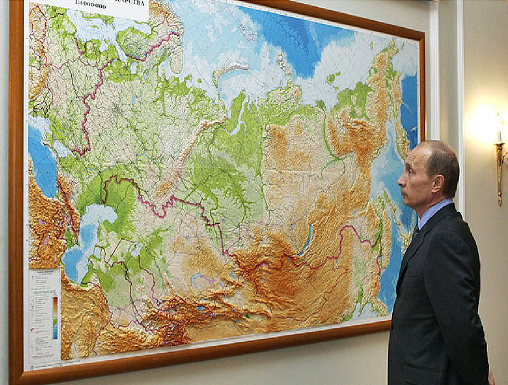
Let’s get something straight. There have been countless attempts to conquer Russia, and they have all failed over the course of 1,000 years – yea – 1,000 years! The invaders encountered different incarnations of Russians as well. There were the Ancient Rus, the Moscow Tsardom, the Russian Empire, and most recently, the Soviet Union. The enemies have also come in different flavors, like ice cream. There has been a Northern military state, an Eastern empire invasion, and the more recent famous invasions of Hitler and Napoleon. Every single one of them has failed to conquer Russia except one – the Mongols.
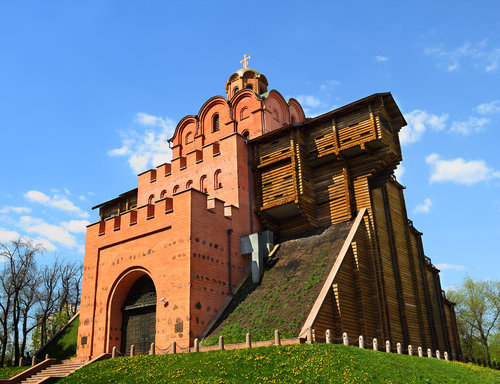
The Mongols invaded under the grandson of Genghis Khan. He invaded Russia around the 1220s-1230s. The Rus were divided into tribes. Like Julius Caesar understood when he invaded Gaul, divide and conquer. The Mongol warriors succeeded because the various Russian princes at that time were competing against one another in a perpetual rivalry for the Kievan throne. Thus, the lands of Rus’ were plundered, and in 1240, Kiev fell. Russian princes were forced to subjugate to the Tatar-Mongol khans. Indeed, there is still a Tatr population living in Crimea to this day. What is left of the Rus fortifications, the Golden Gate, is all that remains standing in Kiev.
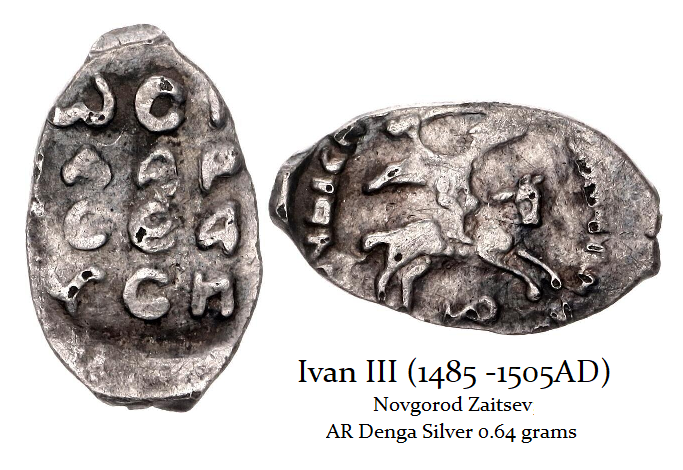
In 1380, Moscow prince Dmitry Donskoy famously defeated the Tatar army at the Kulikovo field. Russia was born one hundred years later in 1480 when they were free of the Mongols, and he became the first Grand Prince of Moscow, Ivan III ( 1440–1505). If I actually listed every failed attempt to invade Russia ever since, I think that would require a book. The Mongols were used to the cold, unlike the Europeans.
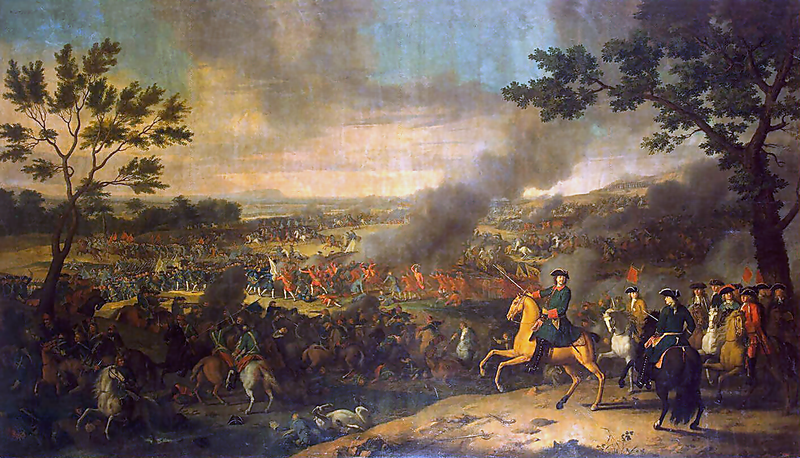
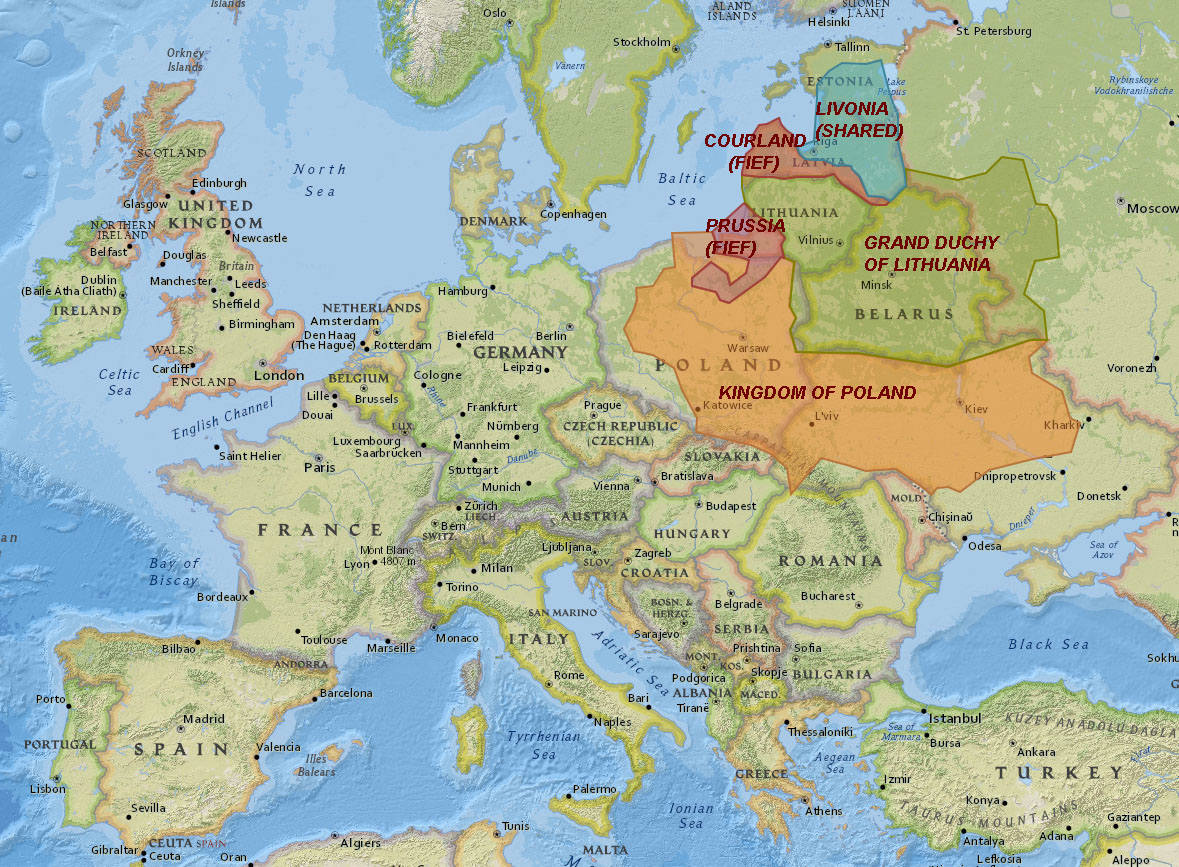
What we call Ukraine today was the territory of Poland back then. The young King Charles XII of Sweden invaded Ukraine, which was Russian territory. Peter the Great (1672-1725) withdrew his army southward. Peter adopted the tactic of a scorched earth, destroying anything along the way that could assist the Swedes. Without food, the Swedish army was forced to halt its advance in the winter of 1708–1709.
When summer arrived in 1709, The Swedes resumed their efforts to conquer Russian-ruled Ukraine. This culminated in the famous Battle of Poltava, which took place on June 27th, 1709. This was THE turning point in Russian history, for this was a battle where Peter the Great and the Russians defeated the Swedish army. This was also a turning point in the war with Sweden. For those who do not know, Peter the Great was Tsar of all Russia from 1682, and he became the first Emperor of all Russia from 1721 until he died in 1725. Peter reigned jointly with his half-brother Ivan V until 1696. Thereafter, Peter became the absolute monarch of Russia.
Poltava is actually in Ukraine. This decisive battle made Russia a significant power on the European political stage. However, Pete was perhaps too overconfident. He then attacked the Ottoman Empire, initiating the Russo-Turkish War of 1710. This time, Peter lost. He was forced into the Treaty of the Pruth, where he had to return the Black Sea ports he had previously seized. The Ottomans called him Mad Peter – not Peter the Great.
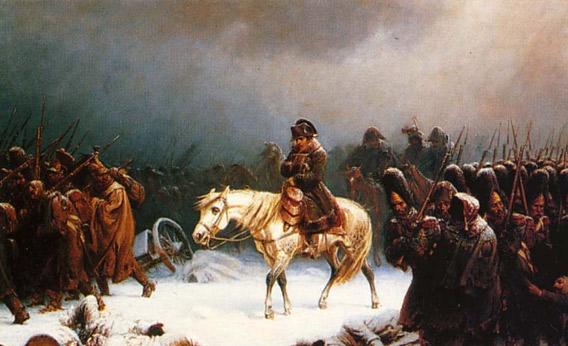
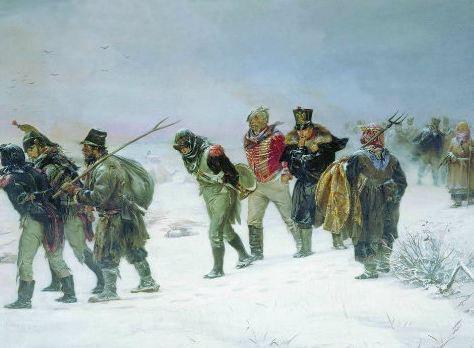
The more modern failed attempts were those of Napoleon and Hitler. Napoleon was said to have been a brilliant military strategist. The French Army, at the time, was considered to be unbeatable. Many have sought to invade Russia, for it is probably the richest nation on earth regarding natural resources. Napoleon began his invasion of Russia on the 24th of June 1812. He was no fool. He waited for winter to be over. He was planning to take the city of Moscow in July. Instead, his army was devasted by winter and global cooling thanks to a volcano. The Russians abandoned Moscow and set it ablaze. When Napoleon entered Moscow by mid-September, he assumed he would get an offer of peace. Nothing came. The Russians abandoned the city, and it was a hallowed victory. After that, there was nothing for Napoleon to do but retreat. Napoleon’s forces suffered staggering losses of between 400,000 and 500,000. He eventually retreated, and that was devastating. Napoleon had invaded with 680,000 men and retreated by November 1812 with only 27,000 effective soldiers remaining.
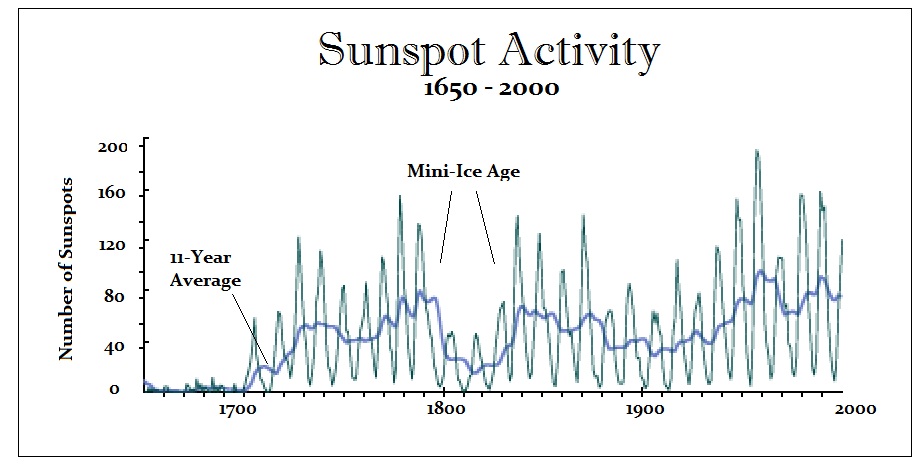
There is no question about it. In creating Socrates, I merely coded myself. How would I look at something as an international hedge fund manager. Also, being a history buff, I knew well the impact of weather. It was the climate change in the North that sent people south and toppled all the civilizations except the Egyptians during the Bronze Age. I knew it was climate change that sent both the Goths and the Huns to invade Europe. When we correlate everything, we see history in a whole new light. These climate change fools are putting humanity at serious risk, for the climate will turn cold in the years ahead, crops will fail, people will starve, and disease will run wild. Thus, I created no rules. Socrates was to seek out the entire world and return the correlations without prejudice.
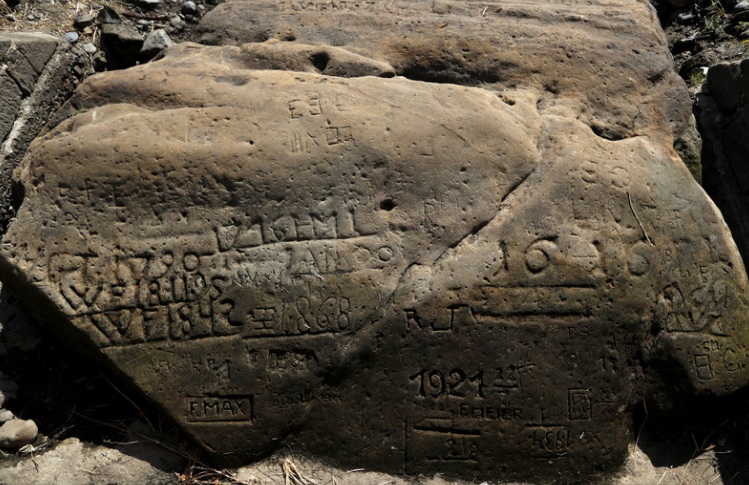
The Mini Ice Age defeated Napoleon. The Hunger Stones also marked the year 1811 as a drought. While this is one year before the eruption in the West Indies in 1812, there is what has been called the 1808/1809 Mystery Volcanic Eruption, which seems to have set in motion a Mini Ice Age during the early 1800s. This was a monumental volcanic eruption in the VEI 6 range, which appears to have occurred in late 1808. This event preceded the 1815 eruption of Mount Tambora (VEI 7), which produced the Year Without a Summer in 1816. Napoleon was defeated really by Volcanoes. This is my concern for the future post-2024. With 50 volcanoes erupting simultaneously around the globe, we must be mindful of this cooling risk.
Russia’s success in the Patriotic War of 1812, defending against Napoleon, was short-lived from June 24th, 1812, to December 14th, 1812. Russian historians attributed their victory to the sophisticated bait-and-switch strategies of Field Marshal Mikhail Kutuzov, in addition to the heroism of Russian troops and the patriotism of the civilian population. They also acknowledge the harsh winter conditions in the final months of the conflict played an important role in defeating Napoleon.
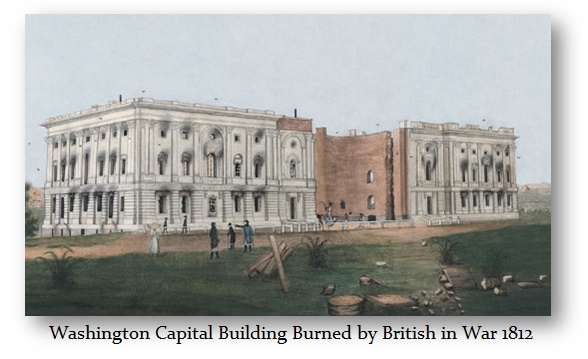
This coincided with the War of 1812 (June 18, 1812 – February 17, 1815) between the United States and the United Kingdom. One of the primary tensions originated in long-standing differences over territorial expansion in North America and British support for Tecumseh’s confederacy, who opposed U.S. colonial settlement in the Old Northwest. These escalated in 1807 after the Royal Navy began enforcing tighter restrictions on American trade with France and press-ganged men they claimed as British subjects, even those with American citizenship certificates.
War often seems to be a CONTAGION. During this period of 1810 to 1814, there were 39 separate wars. To mention a few, there were the Cambodian and Hong Kong Rebellions, the Arakanese Uprising (Burma), the Invasion of Java, and the Punjab War in Asia. In South America, there was the Argentine Civil War, Brazilian slave revolt, Chilean War of Independence, Mexican War of Independence, Paraguayan Revolt, Peruvian War of Independence, Venezuelan War of Independence, US occupation of West Florida, and in the Middle East there was the Afghan-Sikh Wars, Wahhabi War involving Ottoman Empire & Saudia Arabia.
All of South America erupted, and it appeared to be a contagion. A similar contagion swept Europe in 1848. What Socrates has taught me is that, indeed,
WAR IS CONTAGIOUS
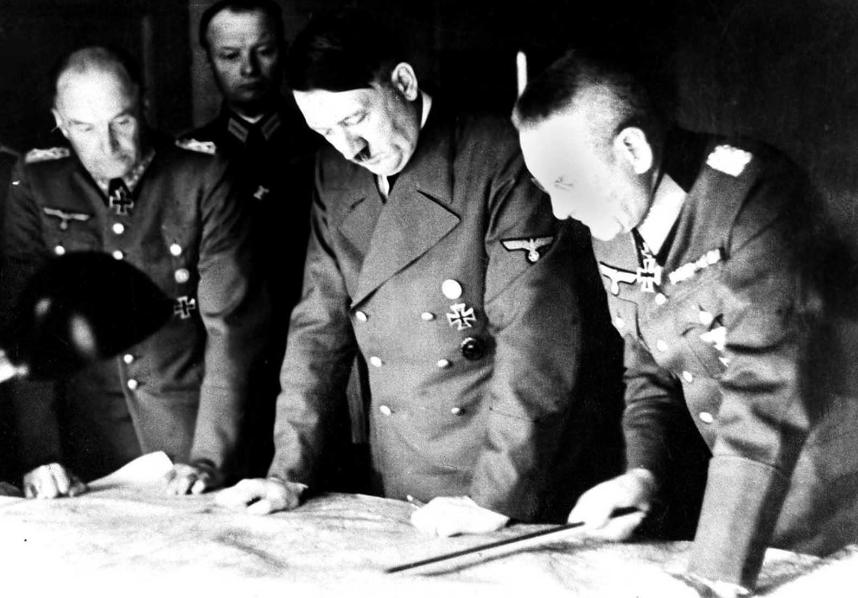
August 7, 1941, Adolf Hitler looking at his war map with General Field Marshal Walter Von Brauchitsch on the right and others
If we look at Hitler’s attempt to conquer Russia again, it was a disaster. NATO should realize their brilliant ideas of engaging Russia will be the third modern attempt, and they, too, will fail. Hitler named his invasion attempt Operation Barbarossa as Hitler’s invasion of Russia June 22, 1941 – January 7, 1942, with the purported goal of conquering the west of the Soviet Union to repopulate it with Germans. The operation was named after the Holy Roman Emperor Frederick Barbarossa (1155-1190) (“red beard”), who was elected King of Germany in Frankfurt on March 4th, 1152. Hitler invaded the Soviet Union on Sunday, June 22nd, 1941. It was the largest land offensive in human history, involving around 10 million combatants.
The failure of Operation Barbarossa proved to be a major turning point that reversed the fortunes of Hitler’s Nazi Germany. At first, Hitler’s German forces achieved significant victories and even managed to occupy some of the most important economic areas. That included Ukraine, where he promised them their own country and the Ukrainian Nazis were so vicious they even appalled the Germans. Hitler probably would have been successful in conquering Europe had he not tried to invade Russia. He sustained heavy casualties, and the German offensive stalled in the Battle of Moscow at the end of 1941. The Soviet winter counteroffensive pushed the Germans about 160 miles back (250 km).
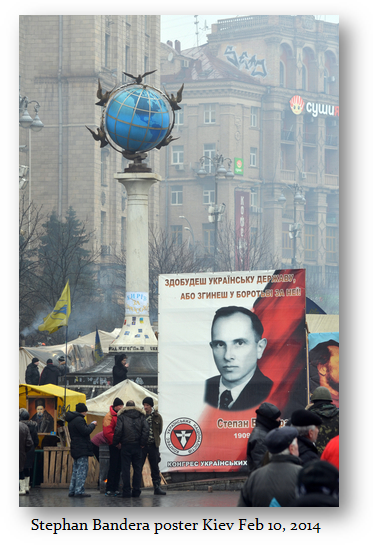
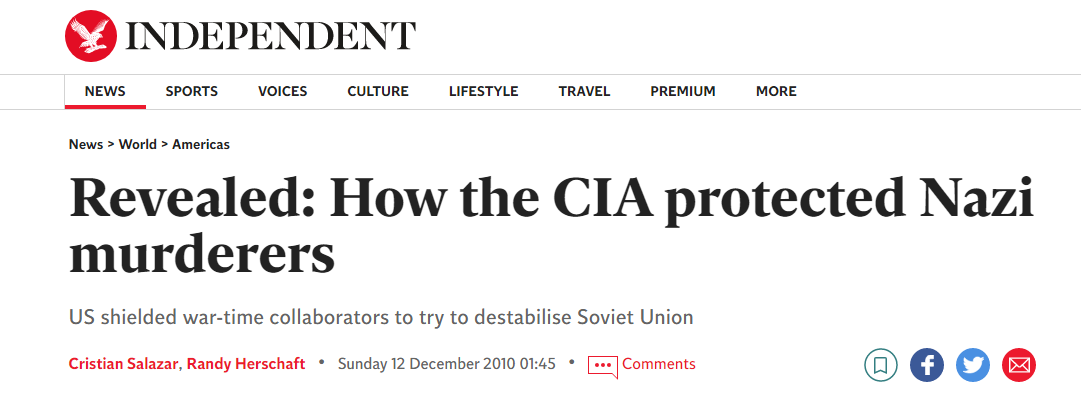
It is important to remember that Ukrainian Nazis collaborated with Hitler and have NEVER been called to account for all their genocides against Polish, Jews, and Russians. They pretended that it was the UPA, a Ukrainian nationalist organization with a long-term plan of establishing a mono-ethnic state that excluded the Poles and was aligned with the Nazis. The Neo-Nazis are dominant in Ukraine, and Bandera’s flags and posters were there at Midian in 2014 all over the place. Because they have never been put on trial for their atrocities that even horrified the German Nazis, they have refused to even apologize to anyone. Even Japan apologized for using Korean women as “comfort girls,” and the Swiss turned over money that was hidden in accounts for Nazis and Jews. Ukraine’s hatred is ongoing, and it is propagated by the government, which is why it never dies.
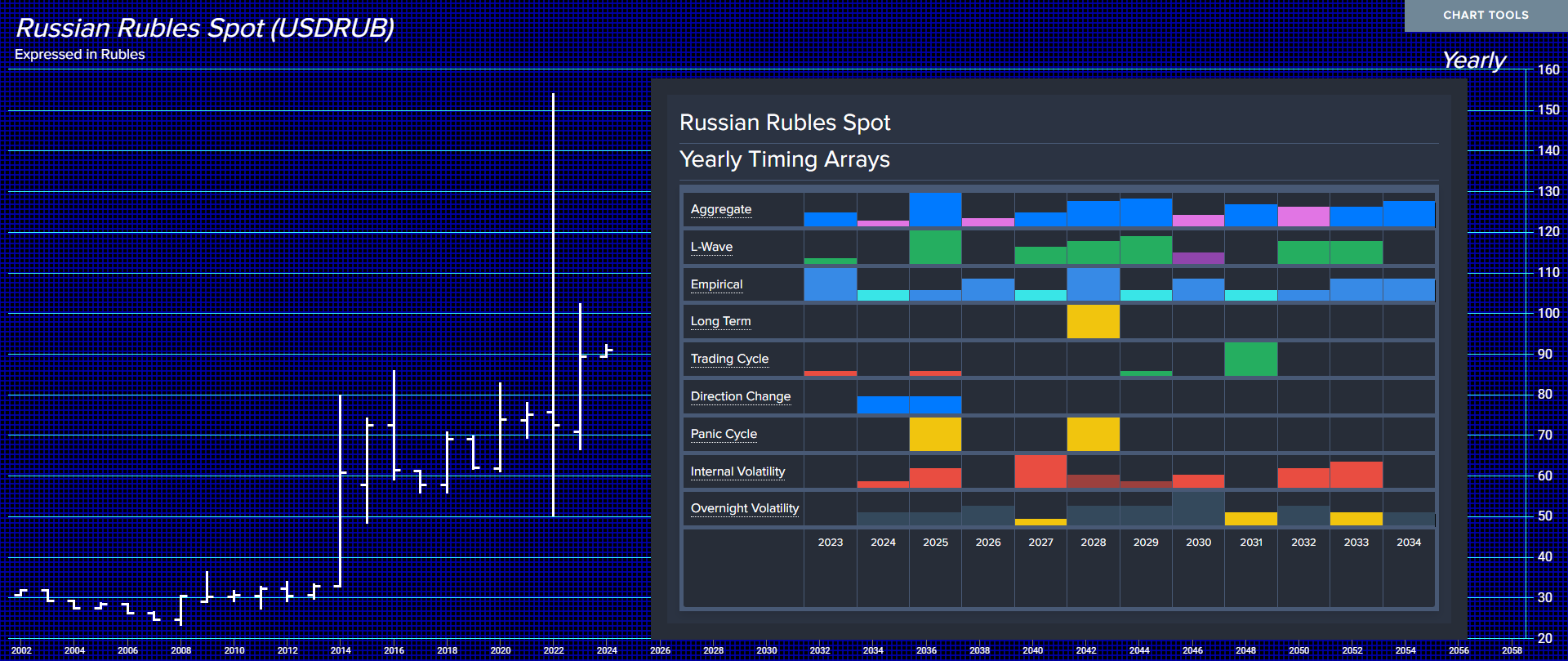
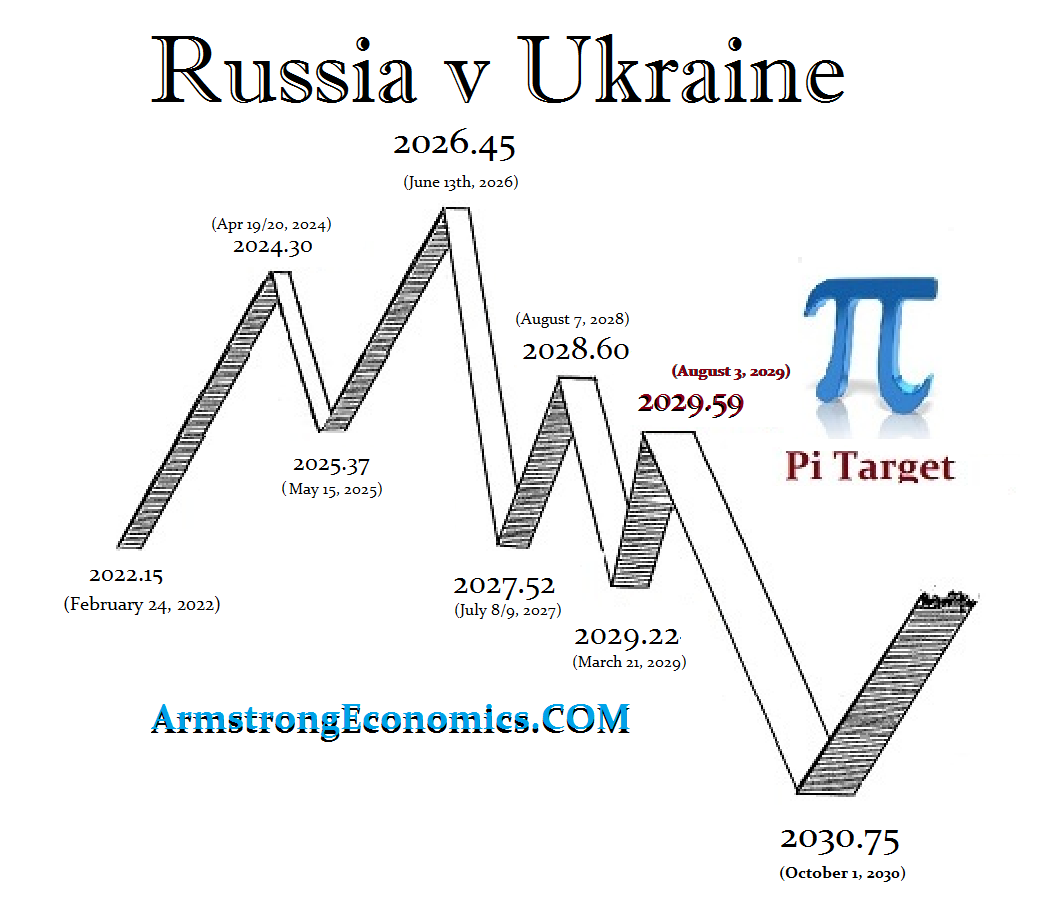
If we look at the time difference between Napoleon’s and Hitler’s invasion of Russia, there were 15 intervals of 8.6 years (129 years). There is no doubt whatsoever the computer is showing war ahead. We have a Directional Change here in 2024, followed by another in 2025, with a Panic Cycle in 2025 and a significant target for a turning point.
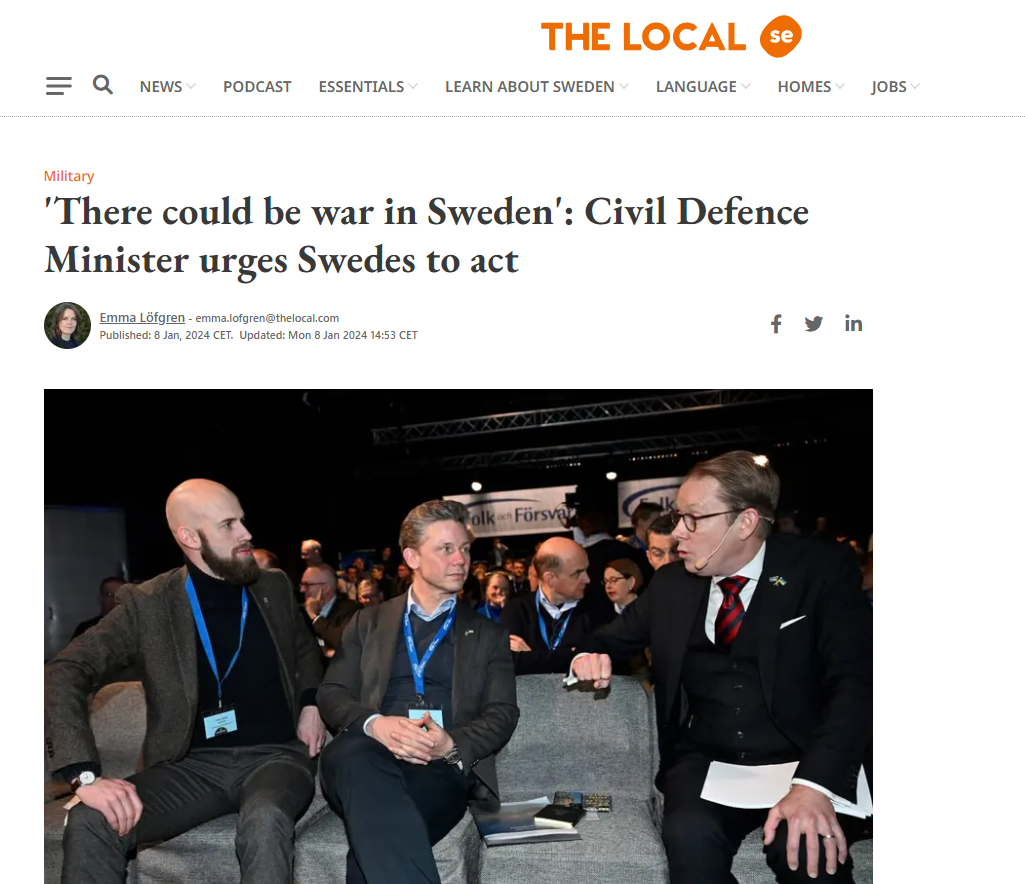
Even Sweden is now preparing for WAR with Russia. Perhaps it’s a way to get rid of all the migrants from Africa. Sweden’s head of foreign affairs is claiming that Sweden is now a target to be attacked by Russia. There is NOBODY who seems even to want to discuss peace. This will be the Great Diversion to allow the sovereign debts to collapse as they blame war.
The West has long drooled over Russia’s wealth. In 1913, foreign investors actually held 49.7% of Russian government debt. They also owned nearly 100% of all petroleum fields, 90% of mines, 50% of chemicals, and 40% of metallurgical industries. This foreign ownership was, to a large extent, used in support of the Communist Revolution. Russia actually had the largest gold reserves in the world prior to the Communist Revolution, but it also had the largest foreign debt in the world. France was actually Russia’s primary lender, and French investors had major ownership in the iron and steel industries and mining operations. In fact, just before the Communist Revolution of 1917, France, a goldbug nation back then, held 80% of the Russian government debt that was supposed to be gold-backed.
Once again, in 1999, I was asked to invest $10 billion to fund the takeover of similar Russian assets, and they would install their puppet as president – Boris Berezofsky. I refused. Many have looked at the riches of Russia, and the excuse always seems to be a war to get their greedy hands on them, much like the Middle East geopolitical events have been over oil.
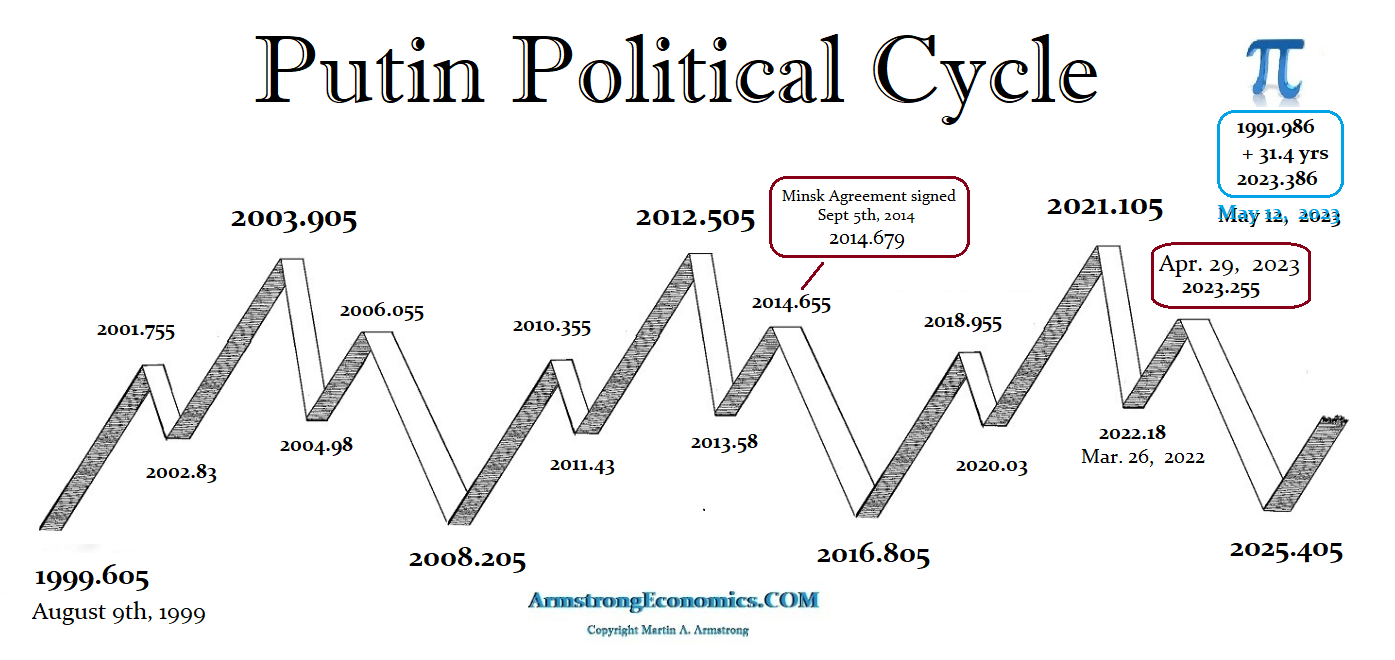




 Centinel2012