Sunday Talks: USTR Robert Lighthizer -vs- Margaret Brennan…


President Trump is the first U.S. President to confront Beijing directly -head on- and the Chinese respect him immensely for it. It is an inherently adversarial relationship; but it is also a conflict where opponents respect their enemy because the outcome is victory or death. Ultimately, this, from the perspective of China, is a zero-sum contest.

President Trump is also the first U.S. President to: (1) understand how the red dragon hides behind the panda mask; and (2) be willing to directly confront that dynamic. That’s where U.S. Trade Representative Robert Lighthizer comes in.

.

Ambassador Lighthizer is willing to go to the mattresses because he knows that ultimately his kids future, and his bosses’ grand-kids future, are entirely dependent on victory.  Freedom or serfdom, those are the alternatives.  Yes, this is that big a deal.  The biggest of all big deals (pun intended) in the last century.

There is also no doubt in my mind that President Trump has a very well thought out long-term strategy regarding China.

President Trump takes strategic messaging toward the people of china very importantly. President Trump has, very publicly, complimented the friendship he feels toward President Xi Jinping; and praises Chairman Xi for his character, strength and purposeful leadership. President Trump knows how to play their panda/dragon games.

Nuance and subtlety is everything in China. Culturally harsh tones are seen as a sign of weakness and considered intensely impolite in public displays between officials; especially amid adversaries. Respect is earned through strength and cunning.

To build upon a projected and strategic message – President Trump seeded the background by appointing Ambassador Terry Branstad, a 30-year personal friend of President Xi Jinping.

To enhance and amplify the message – and broadcast cultural respect – U.S. President Trump used Mar-a-Lago as the venue for their visit, not the White House. And President Trump’s beautiful granddaughter, Arabella, sweetly serenaded the Chinese First Family twice in Mandarin Chinese song showing the utmost respect for the guests and later for the hosts.

Why the constant warm messaging?

What is the purpose?

What does all this have to do with a trade confrontation?


Historic Chinese geopolitical policy, vis-a-vis their totalitarian control over political sentiment (action) and diplomacy through silence, is evident in the strategic use of the space between carefully chosen words, not just the words themselves.

Each time China takes aggressive action (red dragon) China projects a panda face through silence and non-response to opinion of that action;…. and then the action continues.

The red dragon has a tendency to say one necessary thing publicly, while manipulating another necessary thing privately. The Art of War.

President Trump is the first U.S. President to understand how the red dragon hides behind the panda mask.

It is specifically because he understands that Panda is a mask that President Trump messages warmth toward the Chinese people, and pours vociferous praise upon Xi Jinping, while simultaneously confronting the geopolitical doctrine of the Xi regime.

In essence Trump is mirroring the behavior of China while confronting their economic duplicity.

China has no cultural or political space between peace and war; they are a historic nation based on two points of polarity. They see peace and war as coexisting with each other.

China accepts and believes opposite or contrary forces may actually be complementary, interconnected, and interdependent in the natural world, and they may give rise to each other as they interrelate to one another. Flowing between these polar states is a natural dynamic to be used -with serious contemplation- in advancing objectives as needed.

Peace or war. Win or lose. Yin and Yang. Culturally there is no middle position in dealings with China; they are not constitutionally capable of understanding or valuing the western philosophy of mutual benefit where concession of terms gains a larger outcome. If it does not benefit China, it is not done. The outlook is simply, a polarity of peace or war. In politics or economics the same perspective is true. It is a zero-sum outlook.

If it does not benefit China, it is not done !

Therefore the economic battle must be carefully waged to deliver a series of alternative thoughts in the mind of Beijing.  They must view specific action as their best interest.  Any reversal in the current standard of benefit is viewed as a loss; the Chinese will not cede to any losses.

To challenge those who hold this zero-sum position, you must first change the standard.

This means China must lose first before the negotiations can begin.  The baseline within the negotiation must be reset.  Once the baseline position is reset, then negotiation can be viewed by the Chinese as a gain.  This is the only way to get the Chinese to agree to any terms.

If the baseline losses to China are not currently firmed, meaning Beijing and Xi Jinping see their current position as the standard, then President Trump and Bob Lighthizer need to wait longer before engaging.

Big Panda must see their diminished bamboo forest as the natural, current, and diminishing forecast status.  Only then will Panda engage in negotiations.  China must be in a seemingly perpetual stasis of losing before they will contemplate their need to achieve gains.

This is an economic and geopolitical battle that requires nerves of steel and an incredible amount of cunning and strategy.  As Trump resets the baseline, China will make multiple simultaneous moves to counter any potential losses.

President Trump, Secretary Ross and U.S.T.R. Lighthizer must think well ahead of China (they have); and make moves early in the conflict (they have); long before China realizes they are being confronted (they did).   {Go Deep}

As we saw with the DPRK showdown Trump was several moves ahead of Xi, and blocked the counter-offense position of the Red Dragon before it was deployed.

President Trump will not back down from his position; the U.S. holds all of the leverage and the issue must be addressed. President Trump has waiting three decades for this moment. This President and his team are entirely prepared for this.

We are finally confronting the geopolitical Red Dragon, China!

The Olive branch and arrows denote the power of peace and war. The symbol in any figure’s right hand has more significance than one in its left hand. Also important is the direction faced by the symbols central figure. The emphasis on the eagles stare signifies the preferred disposition. An eagle holding an arrow also symbolizes the war for freedom, and its use is commonly referred to the liberation fight of righteous people from abusive influence. The eagle on the original seal created for the Office of the President showed the gaze upon the arrows.

The Eagle and the Arrow – An Aesop’s Fable

An Eagle was soaring through the air. Suddenly it heard the whizz of an Arrow, and felt the dart pierce its breast. Slowly it fluttered down to earth. Its lifeblood pouring out. Looking at the Arrow with which it had been shot, the Eagle realized that the deadly shaft had been feathered with one of its own plumes.

Moral: We often give our enemies the means for our own destruction.

Sunday Talks: Peter Navarro -vs- Wall Street Sales Lead…


President Trump’s MAGAnomic trade and foreign policy agenda is jaw-dropping in scale, scope and consequence. There are multiple simultaneous aspects to each geopolitical policy objective; however, many have been visible for a long time – some even before the election victory in November ’16.

Maria Bartiromo has a view that stems from 30-years of Wall Street economic advocacy. Bartiromo reflects the most common frame of reference for almost all financial punditry. [Orange-Man-Bad-Tariffs] This perspective stems from the era when Wall Street’s economy was sold as the only model possible for the future of the U.S.  In short they were taught that a U.S. manufacturing and production economy was gone, and the only viable economic model was the “service driven economy”.  Bullshit!

In this interview U.S. Trade Council Director Peter Navarro is affirming policy to the benefit of Main Street not Wall Street. There is an inherent disconnect and conflict.

.

The words from Peter Navarro will come as no surprise to any CTH reader who is fully engaged and reviewing the multi-trillion stakes, within the Globalist (Wall St.) -vs- Nationalist (Main Street) confrontation.

For several decades Wall Street, through lobbying arms such as the U.S. Chamber of Commerce (Tom Donohue), has structurally opposed Main Street economic policy in order to inflate value and hold power – “The Big Club”. This manipulative intent is really the epicenter of the corruption within the DC swamp.

U.S. National Trade Council Director Peter Navarro discusses how Wall Street bankers and hedge-fund managers are attempting to influence U.S.-China trade talks. He speaks at the Center for Strategic and International Studies in Washington, D.C.  WATCH:

https://videopress.com/embed/0kCDXSwK?hd=0&autoPlay=0&permalink=0&loop=0Originally outlined a year ago. At the heart of the professional/political opposition the issue is money; there are trillions at stake.

President Trump’s MAGAnomic trade and foreign policy agenda is jaw-dropping in scale, scope and consequence. There are multiple simultaneous aspects to each policy objective; however, many have been visible for a long time – some even before the election victory in November ’16.

If we get too far in the weeds the larger picture is lost. CTH objective is to continue pointing focus toward the larger horizon, and then at specific inflection points to dive into the topic and explain how each moment is connected to the larger strategy.

If you understand the basic elements behind the new dimension in American economics, you already understand how three decades of DC legislative, monetary and regulatory policy was structured to benefit Wall Street and not Main Street. The intentional shift in monetary policy is what created the distance between two entirely divergent economic engines.

REMEMBER […] there had to be a point where the value of the second economy (Wall Street) surpassed the value of the first economy (Main Street).

Investments, and the bets therein, needed to expand outside of the USA. hence, globalist investing.

However, a second more consequential aspect happened simultaneously. The politicians became more valuable to the Wall Street team than the Main Street team; and Wall Street had deeper pockets because their economy was now larger.

As a consequence Wall Street started funding political candidates and asking for legislation that benefited their interests.

When Main Street was purchasing the legislative influence the outcomes were -generally speaking- beneficial to Main Street, and by direct attachment those outcomes also benefited the average American inside the real economy.

When Wall Street began purchasing the legislative influence, the outcomes therein became beneficial to Wall Street. Those benefits are detached from improving the livelihoods of main street Americans because the benefits are “global”. Global financial interests, multinational investment interests -and corporations therein- became the primary filter through which the DC legislative outcomes were considered.

There is a natural disconnect. (more)

As an outcome of national financial policy blending commercial banking with institutional investment banking something happened on Wall Street that few understand. If we take the time to understand what happened we can understand why the Stock Market grew and what risks exist today as the monetary policy is reversed to benefit Main Street.

President Trump and Treasury Secretary Mnuchin have already begun assembling and delivering a new banking system.

Instead of attempting to put Glass-Stegal regulations back into massive banking systems, the Trump administration is creating a parallel financial system of less-regulated small commercial banks, credit unions and traditional lenders who can operate to the benefit of Main Street without the burdensome regulation of the mega-banks and multinationals. This really is one of the more brilliant solutions to work around a uniquely American economic problem.

♦ When U.S. banks were allowed to merge their investment divisions with their commercial banking operations (the removal of Glass Stegal) something changed on Wall Street.

Companies who are evaluated based on their financial results, profits and losses, remained in their traditional role as traded stocks on the U.S. Stock Market and were evaluated accordingly. However, over time investment instruments -which are secondary to actual company results- created a sub-set within Wall Street that detached from actual bottom line company results.

The resulting secondary financial market system was essentially ‘investment markets’. Both ordinary company stocks and the investment market stocks operate on the same stock exchanges. But the underlying valuation is tied to entirely different metrics.

Financial products were developed (as investment instruments) that are essentially wagers or bets on the outcomes of actual companies traded on Wall Street. Those bets/wagers form the hedge markets and are [essentially] people trading on expectations of performance. The “derivatives market” is the ‘betting system’.

♦Ford Motor Company (only chosen as a commonly known entity) has a stock valuation based on their actual company performance in the market of manufacturing and consumer purchasing of their product. However, there can be thousands of financial instruments wagering on the actual outcome of their performance.

There are two initial bets on these outcomes that form the basis for Hedge-fund activity. Bet ‘A’ that Ford hits a profit number, or bet ‘B’ that they don’t. There are financial instruments created to place each wager. [The wagers form the derivatives] But it doesn’t stop there.

Additionally, more financial products are created that bet on the outcomes of the A/B bets. A secondary financial product might find two sides betting on both A outcome and B outcome.

Party C bets the “A” bet is accurate, and party D bets against the A bet. Party E bets the “B” bet is accurate, and party F bets against the B. If it stopped there we would only have six total participants. But it doesn’t stop there, it goes on and on and on…

The outcome of the bets forms the basis for the tenuous investment markets. The important part to understand is that the investment funds are not necessarily attached to the original company stock, they are now attached to the outcome of bet(s). Hence an inherent disconnect is created.

Subsequently, if the actual stock doesn’t meet it’s expected P-n-L outcome (if the company actually doesn’t do well), and if the financial investment was betting against the outcome, the value of the investment actually goes up. The company performance and the investment bets on the outcome of that performance are two entirely different aspects of the stock market. [Hence two metrics.]

♦Understanding the disconnect between an actual company on the stock market, and the bets for and against that company stock, helps to understand what can happen when fiscal policy is geared toward the underlying company (Main Street MAGAnomics), and not toward the bets therein (Investment Class).

The U.S. stock markets’ overall value can increase with Main Street policy, and yet the investment class can simultaneously decrease in value even though the company(ies) in the stock market is/are doing better. This detachment is critical to understand because the ‘real economy’ is based on the company, the ‘paper economy’ is based on the financial investment instruments betting on the company.

Trillions can be lost in investment instruments, and yet the overall stock market -as valued by company operations/profits- can increase.

Conversely, there are now classes of companies on the U.S. stock exchange that never make a dime in profit, yet the value of the company increases. This dynamic is possible because the financial investment bets are not connected to the bottom line profit. (Examples include Tesla Motors, Amazon and a host of internet stocks like Facebook and Twitter.) It is this investment group of companies that stands to lose the most if/when the underlying system of betting on them stops or slows.

Specifically due to most recent U.S. monetary policy, modern multinational banks, including all of the investment products therein, are more closely attached to this investment system on Wall Street. It stands to reason they are at greater risk of financial losses overall with a shift in monetary/fiscal policy.

That financial and economic risk is the basic reason behind Trump and Mnuchin putting a protective, secondary and parallel, banking system in place for Main Street.

Big multinational banks can suffer big losses from their investments, and yet the Main Street economy can continue growing, and have access to capital, uninterrupted.

Bottom Line: U.S. companies who have actual connection to a growing U.S. economy can succeed; based on the advantages of the new economic environment and MAGA policy, specifically in the areas of manufacturing, trade and the ancillary benefactors.

Meanwhile U.S. investment assets (multinational investment portfolios) that are disconnected from the actual results of those benefiting U.S. companies, and as a consequence also disconnected from the U.S. economic expansion, can simultaneously drop in value even though the U.S. economy is thriving.

Sunday Talks: Larry Kudlow -vs- Swamp Guardian Wallace…


CTH cannot emphasize enough that the epicenter of all political motives and intents, as they directly relate to President Trump, comes down to money.  There are trillions at stake within the geopolitical economic system.  Everyone has a vested interest. Every player has a stake in the outcome. Washington DC, in its modern form cannot survive if the larger global economic policies of President Trump are successful.

In other countries the terms “bribery” and “corruption” are used to describe the exact same processes that Washington DC calls “lobbying”.  Underline this fundamental truism. Pin it on your bathroom mirror for a constant reminder. The framework under every domestic policy and legislative agenda initiative boils down to the economics.

.

I’m going to post three or four Sunday interviews surrounding international trade, international finance, and global economics.  As you watch each of them, and contemplate the narrative therein, it is a.b.s.o.l.u.t.e.l.y critical to remember the multinational Wall Street financial agenda is to STOP Trump.

Chairman Bob Goodlatte Discusses James Comey’s Dindunuffin Testimony….


House Judiciary Chairman Bob Goodlatte discusses the testimony of former FBI Director James Comey.

The Coming Political Siege Warfare of 2019


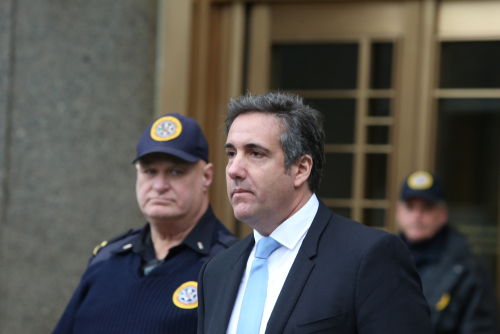
As I have warned, the next two years are going to be an outright political siege warfare. Far more damage will be done to the United States and the world economy in this desperate attempt for the Democrats to retake the White House in 2020. Congress will launch its investigation of Trump’s role in Cohen’s plea that Trump told him to pay hush money to the two women about previous affairs. Claims that Cohen sought to influence the election from the shadows is really petty when they could thereby criminally charge all the board members of Goldman Sachs who banned their employees from donating money to Trump, which is also trying to “influence” the election from the shadows. But that is the problem with the law – it is selective prosecution all the time.

Cohen said the payments to an adult film actress and a former Playboy Playmate were made “in order to influence the 2016 presidential election.” Those are clearly words written by the prosecutor. Those payments, prosecutors say, violated 52 U.S. Code § 30101

(9)

(A) The term “expenditure” includes—

(i) any purchase, payment, distribution, loan, advance, deposit, or gift of money or anything of value, made by any person for the purpose of influencing any election for Federal office; and
(ii) a written contract, promise, or agreement to make an expenditure.

The money was given to the two women loosely falls in the very broad statute as a “gift” and he signed a “written contract” as well. It was Cohen’s words stating “in order to influence the 2016 presidential election” that makes it a crime. If he went to trial, that would be impossible to prove. The two payments were to Playboy Playmate Karen McDougal $150,000 to keep quiet about an alleged 10-month relationship with Trump and Cohen’s $130,000 payment to porn star Stormy Daniels. Cohen could have remained silent.

The theory of how this violated campaign limitations is that the maximum an individual can contribute is $2,700. Since Cohen paid the women, prosecutors made it clear that the payment was a campaign contribution because Cohen was repaid by the Trump Organization after he submitted “sham” invoices for legal work.  Then the question falls to did those in the Trump Organization know they were “sham” invoices? Does that then rise to Trump personally? This is where it takes Cohen to say “Trump directed me to make those payments” in order to impeach Trump. The whole thing is rather strange for Trump would have the power to pardon him. He is clearly cutting that option off by this plea. If what Cohen says is true, Trump conspired to violate campaign finance laws by directing payments to keep the women quiet so as to boost his election prospects. Yet the prosecutors also told the court Cohen tries to save himself by blaming others. That merely clods the issue and calls into question Cohen’s testimony against Trump.

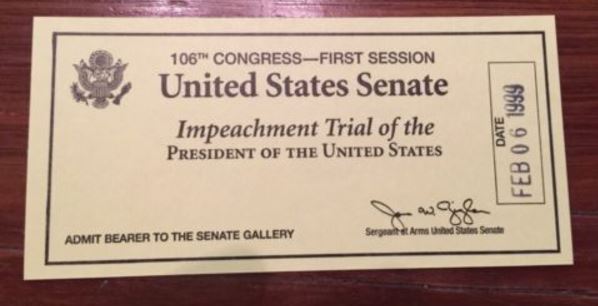
So they also charged Cohen with tax evasion which would be a different issue. To reduce his time, he has to say the words that the prosecutors tell him that will then implicate Trump as a co-conspirator to a felony. This will give the Democrats the foundation to file an impeachment action regardless of the truth. The trial, however, would be in the Senate. Trump would tend to be the type to go to trial.

To start the impeachment process, there must first be drafted the articles of impeachment. Then the 40 members on the House Judiciary Committee vote over whether bring them to the full House of Representatives. A simple majority vote is needed, in this case, which means 21 congresspeople voting yay are needed in this phase. The Democrats can do that assuming they all vote party line as usual.

Once the articles make it out of the judiciary committee, the 435 members of the House of Representatives debate the merits of the articles of impeachment. In this phase, a simple majority is needed again to continue the impeachment process, which means 218 representatives would have to vote yay in order to confirm impeachment.

Assuming the Democrats vote along party line as expected, the articles of impeachment will then move to the Senate for a Trial. By the time the process brings the president before the Senate in order to defend himself, the “impeachment” part is done. What occurs then is a procedure that would see the president prosecuted by a group of “managers” from the House of Representatives, while a Supreme Court justice presides over the trial. The Senate then acts as the jury. In order for the president to be removed from office, in this case, it would require a two-thirds vote among the 100 senators or 67 votes. That means, 20 Republicans would have to vote to remove him from office. Bill Clinton was impeached and it went to Trial but there were not enough votes to remove him and he too committed a felony of perjury that was directly himself.

Elite Republicans hate Trump because he is an outsider. Nevertheless, will 20 cross lines and vote to remove Trump from office? That is not very likely given the indirect charge of pay money to two women. The charges from Mueller will have to be more direct to win a Senate Trial to remove Trump. No president has ever been removed. The process will be more directed to cripple Trump for 2020 so the Democrats can seize the White House and reverse everything Trump has done including raising taxes substantially and imposing a Global Warming Tax.

Interesting Alignment – Trump Makes The UniParty More Visible Than Ever…


An interesting pattern of seemingly disconnected political stories is beginning to show signs of a common continuity.  In the bigger of the big pictures seven words continue to set the baseline: “There are trillions of dollars at stake”.

When the common sense Tea Party movement formed in 2009 and 2010 it contained a monumentally frustrated grassroots electorate, and the scale of the movement caught the professional republican party off-guard. When Donald Trump ran for the office of the presidency he essentially did the same thing; he disrupted the apparatus of the professional republican party.

The difference between those two examples is one was from the bottom up, and the second was from the top down.  However, the commonality in the two forces resulted in the 2016 victory.

It took a few years for the heavily armored old guard of GOP to formulate a plan to retain their control.  In the example of the Tea Party, the republican power structures moved in 2011 through 2014 to co-opt the vulgarian movement and impede their disruptive influence.  Senate Majority Leader Mitch McConnell was at the forefront of those power moves.  {Go Deep} and {Go Deep}  The basic issue for the GOP was retention of power.

McConnell and crew tamped down the fire.  A few years pass and the issues that spurred the Tea Party movement remained unresolved.  In 2015 Donald Trump taps in to that exact same Tea Party frustration toward the control authority within one-half of the DC UniParty; again, the professional republican apparatus was disrupted.  The movement rebranded and now the MAGA movement wins the presidency.

So it should not come as a surprise to see an eerily similar response from within the GOP toward the new threat; the Trump presidency.  After all, there are two constants in an ever changing universe: (1) “NeverTrump” didn’t go away; and (2) the Bush-clan, or GOP old guard, will never accept losing power.

The professional republicans and the professional democrats, ie. “the uniparty”, have a common enemy in President Trump.  The vulgarian leader of the deplorable coalition never asked for permission; never paid the indulgency fees; never attended the necessary cloistered club meetings paying homage; and never offered the indulgent team of political elites terms for his takeover.

Thus Donald Trump, just like the Tea Party, would never be accepted.

Why is this important now?

Current events highlight the resurgence of a never disassembled GOP Bush clan influence. For the past two years it’s been a never-ending game of whac-a-mole as each of the establishment minded embeds surfaces at different times. Within the dynamic, the one commonality within the internecine conflict inside the Trump administration is the establishment GOP -vs- Trump MAGA.

Establishment GOP consultant Alex Castellanos was very open about the best design to getting rid of Donald Trump back in 2015 when he discussed an almost identical strategy for how Mitch McConnell destroyed the threat from the Tea Party a year earlier:

[…]  “The best way to do it is how Brutus killed Caesar. Get real close, snuggle up, and shiv him in the ribs”… (link)

Forgive me for mixing my metaphors here; but as each of the shiv-bearers appears, that’s when Trump is forced to deliver the whac-a-mole hammer.  It’s like having an administration filled with establishment terror cells.  Each cell acts independently, but each cell also acts based on a common objective: retain the UniParty.

The latest whac-a-mole example was Condi Rice’s embed plant and former Secretary of State Rex Tillerson popping his head up.  But there are many more examples all around in various forms; including the self-serving GOP exit of U.N. Ambassador Nikki Haley.

When you think about the actual structure of the Republican state party machines; it’s enough to make you wonder if the mid-term outcome and lack of structural fight was not part of this dynamic.  After all, “their” party was taken over by a new base and a new leader.

The same UniParty dynamic is visible in the way the FBI/DOJ and aggregate intelligence community were weaponized against Donald Trump – with Democrats and Republicans participating in the unlawful processes.   Now, in the downstream consequence phase, we see a UniParty defense approach to block Trump from revealing what happened.

I’m not sure people fully completely understand this dynamic within “spygate”.  It was not a targeting operation by democrats; republicans were just as complicit. The ongoing goal to eliminate candidate and president Trump is *not* partisan.

Which brings me to the current state of the advisers around the executive.  Remember, there are trillions at stake here – and the downstream benefactors are both Republicans and Democrats who make up the UniParty.

Within the UniParty dynamic, in order to retain full financial benefit, the political class need to align with Wall Street priorities.  That alignment means the UniParty needs to eliminate Main Street priorities that are adverse to their interests.

Border controls and immigration enforcement are adverse interests to the UniParty.  Additional cross party alignment to benefit Wall Street surrounds: •budgets and massive government spending; •government controlled healthcare retention; •government controlled education (common core); •and most importantly the removal of any national economic and trade policy that would threaten the structure of the multinationals.

On all of these issues the Democrats and Republicans have an identical outlooks, common interests and mirrored legislative priorities.  It is not coincidental that US Chamber of Commerce President Tom Dohonue also outlined these issues as primary priorities for his massive lobbyist spending.

There are trillions of dollars at stake; and we must never discount how far the Big Club participants will go to ensure the White House counselors are shaping their advice toward those objectives.

There are no MAGA lobbying groups in Washington DC advocating for policies that benefit economic nationalism.  On this objective President Donald Trump stands alone.

We don’t need a third party in Washington DC, we actually need a second one.

(LINK)

Jim Jordan Discusses James Comey Testimony…


Representative Jim Jordan discusses his perspectives on the closed-door testimony of former FBI Director James Comey.

https://www.scribd.com/embeds/395239462/content?start_page=1&view_mode=&access_key=key-mrRcuymxydLx1G9aSbLV

Comey & Lynch Subpoenaed Before Republicans Leave


The Battle is On. The House Republicans issued subpoenas to former FBI Director James Comey and former Attorney General Loretta Lynch before the Democrats take control. House Republicans subpoenaed Comey who had previously refused to testify privately and instead asked for a public hearing. Republicans have been investigating the FBI and Justice Department’s decision-making in 2016 and 2017. They are now after the possibility of a Deep State contending that there existed a very anti-Trump bias among senior officials who led the FBI to exonerate Hillary Clinton’s private email server. They are also seeking an investigation into the allegations of Trump campaign connections with Russia. But Democrats claim that the GOP investigation is political as if their’s has not been and it is intended for the 2020 election.

So get ready for the next two years. All we will hear about is this Russian Conspiracy and effectively they will be planting the seeds for war.

President Trump Attends 2018 Army -vs- Navy Football Game…


President Donald Trump attends the 2018 Army -vs- Navy football game in Philadelphia, Pennsylvania. The president participated in the coin toss.

President Trump Impromptu Press Remarks Departing White House…


President Donald Trump delivers remarks to the media as he departs the White House traveling to the Army Navy football game in Philadelphia, Pennsylvania.