‘Century’ Bond Collapse Continues As Belgian 2116s Crash 30% From Highs


Tyler Durden's picture

While all the headlines have been about 10Y Treasury yields breaking above 2.50% briefly for the first time since September 2014, the bigger news for the world of bond traders is the utter bloodbath in ultra-long duration European bonds.


10Y Treasury yields broke above 2.50% this morning…


But while US 10Y Bonds have lost around 7% of their value fromn the August highs, it is the ultra-long duration bonds issued by various European nations over the summer that are collapsing…


Now back below its issuance price. The question

Global Bond Rout Returns With A Vengeance, Sending 10Y Yields To Highest In Over Two Years


Tyler Durden's picture

The global bond rout returned with a bang, sending 10Y US Treasury yields as much as six basis points higher to 2.53%, the highest level in over two years. The selloff happened as oil prices surged by more than 5% following Saturday’s agreement by NOPEC nations agreed to slash production, leading to rising inflation pressures. At last check, the 10Y was trading at 2.505%, up from 2.462% at Friday and on track for its highest close since September 2014, according to Tradeweb.

“There’s been some pretty decent cheapening across global bond markets,” said Craig Collins, managing director of rates trading at Bank of Montreal in London. The spike in oil prices since OPEC announced a cut in output has led to further cheapening, while in Europe “you had the ECB last week, all contributing to the steepening that we’ve seen.”

Japanese bond yields jumped, while Eurozone bonds were weaker across the board, too, with the yield on 10-year German debt up 0.05 percentage point at 0.392%. Germany’s yield curve, as measured by the spread between two- and 30-year bonds reached the steepest since 2014, based on closing prices, while a similar gauge for Japan widened for a fifth day. U.K. 10-year yields climbed three basis points to 1.48 percent, while those on similar-maturity bunds also added four basis points, to 0.40 percent

Even that bastion of negative rates, Switzerland, saw yields spike, fast approaching the psychological 0% barrier.

“It does seem to be oil-driven, but clearly the bearish sentiment around fixed income prevails,” Mitul Patel, head of interest rates at Henderson Global Investors, told Reuters.

Another fundamental catalyst behind the bond weakness remains uncertainty over Trump’s policies: the rise in oil process adds to a general selloff in government bonds that gathered pace following the election of Donald Trump in November. Investors expect Mr. Trump’s policies of cutting taxes and increasing infrastructure spending to lead to higher growth and inflation. Those policies may also encourage the U.S. Federal Reserve to raise interest rates at a faster clip than previously expected, which would likely hit bonds. The Fed is expected to raise interest rates at its meeting this week for the first time in a year.

Treasurys registered their largest five-week gain in yields for six years on Friday after investors sold. The Treasury bond market will face a further test this week with a series of debt auctions. Sales of three-year notes and 10-year notes are scheduled for later Monday, followed by an auction of bonds with 30-year maturities on Tuesday. That will increase the supply of bonds at the end of the year, a period when some investors are reluctant to put money to work and many have grown wary of rising yields.

Adding to the pressure, hedge funds and other large speculators raised bearish bets on 10-year Treasuries to the highest in almost two years last week, more than doubling them to a net 228,604 contracts, according to the latest Commodity Futures Trading Commission data.

Technical analysts believe that a sustained break in Treasury yields above 2.5% would open up an attempt at 3% according to Imre Speizer from Westpac Banking Corp. Forecasters in a Bloomberg survey see German bund yields climbing to 0.6 percent by end-2017. That said, both JPM and Goldman have warned that 10Y yields approaching or rising above 2.75% is where the equity rally will fizzle as tighter financial conditions from rising rates will overcome the favorable equity momentum. That level is now just 25 bps away and may be hit in the coming days.

Maduro Stunner: Venezuela Eliminates Half Its Paper Money After Pulling Largest Bill From Circulation


Tyler Durden's picture

Having observed the economic chaos to emerge as a result of India’s shocking Nov. 8 demonetization announcement, and perhaps confident it can do better, today president Nicolas Maduro of Venezuela, Latin America’s most distressed economy, mired in an economic crisis and facing hyperinflation, likewise shocked the nation when he announced on state TV that just like India, Venezuela would pull its highest denominated, 100-bolivar bill (which is worth about two U.S. cents on the black market), from circulation over the next 72 hours, ahead of the introduction of new, higher-value notes, as large as 20,000.

“I have decided to take out of circulation bills of 100 bolivars in the next 72 hours,” Maduro said. “We must keep beating the mafias.”

To this we would add “and cue economic chaos”, but since this is Venezuela, that’s a given.

The surprise move, announced by Maduro during an hours-long speech, is likely to worsen a cash crunch in Venezuela, and lead the largely-cash based economy to a state of paralysis. Maduro said the 100-bolivar bill will be taken out of circulation on Wednesday and Venezuelans will have 10 days after that to exchange those notes at the central bank.

Critics immediately slammed the move, which Maduro said was needed to combat contraband of the bills at the volatile Colombia-Venezuela border, as economically nonsensical, adding there would be no way to swap all the 100-bolivar bills in circulation in the time the president has allotted. Indeed, if India is any example, Venezuela – whose economy is far worse than that of India, the world’s fastest growing emerging market – may have just signed its own economic death warrant.

According to central bank data, in November there were more than six billion 100-bolivar bills in circulation, 48 percent of all bills and coins. In other words, Venezuela just eliminated half the paper cash in circulation.

Authorities on Thursday are due to start releasing six new notes and three new coins, the largest of which will be worth 20,000 bolivars, less than $5 on the streets. No official inflation data is available for 2016 though many economists see it in triple digits. Economic consultancy Ecoanalitica estimates annual inflation this year at more than 500%, close to the IMF’s estimate.

Fed to Be or Not to Be This Week – 14th


yellen Janet

Today, any information ahead of something like a rate hike is seen as insider trading. But back during the 1970s going into 1981, things were different. The banks were not big proprietary traders. I would routinely get a call that the Fed would raise rates in 15 minutes. It was not that someone was trying to front-run in those days. They did not want to see anybody get hurt and lose a boat-load for clients.

Back in December 2015, the Fed raised interest rates for the first time since 2006. Nobody was really surprised for instead of giving phone calls, the Fed publicly tries to telegraph its intentions for the same reason we use to get phone calls decades ago. The Fed has been trying to keep telling people it will raise rates and the general expectation is that they will do so on December 14th—almost exactly a year later—with a rate target range of 0.5-0.75%.

Janet Yellen, has confounded predictions including her own. A year ago, the Fed said it foresaw four rate rises in 2016. None has taken place yet. This might seem like deliberate confusion, but the Fed has been lobbied by the IMF and other countries, including Europe, pleading with it not to raise rates when they are trying to still punish people with negative rates. The IMF and emerging markets plead not to raise rates because they borrowed dollars.

csp500-m-12-9-2016

However, the start of the year, stock markets were not booming, but dropped into January on worries about Chinese growth, which everyone has forgotten about as we head into January 2017. Then, in June, Britain voted to leave the European Union, sending markets spinning again for a while and the IMF pleaded for mercy. In September people again expected rate hikes, and again the IMF pleaded. Since June, Yellen has correctly been telling everyone that low rates at best have a modest impact upon the economy.

The Federal Reserve prepares to raise interest rates again, but this time people will be calling this the Trump Rally. However, beside the stock market booming on the expectation of lower corporate rates and deregulation, a year ago unemployment was already low at 5% and the economy has created an average of 188,000 jobs per month throughout the year.This has helped the labor-force participation of prime-age workers to return with jobs. It has been job creation that is pushing unemployment down in the USA, which fell to 4.6%, the lowest rate recorded since August 2007. This gives the needed confidence to raise rates.

Inflation is not yet back at the Fed’s 2% target. However, the surging bond yields, stock market, and a stronger dollar are all combining to put pressure on the Fed to raise rates. Yellen carefully suggests that a rate hike would not alter those trends.

ECB To Extend its Bond Buying Program into End of 2017


ECB European Central Bank

Mario Draghi, extended the European Central Bank (ECB) $ 1.74 trillion bond purchase program to support the economy by nine months to at least the end of December 2017. This is far longer than most economists had expected. However, the monthly volume of currently €80 billion euros will drop to €60 billion euros from April 2017 onwards. In total, a further €540 billion euros will be pumped into the market. However, there is still no indication that thie will have any inflationary influence. All its appears to be doing is slowing the collapse buying bonds the private sector does not want.

According to German newspaper the Frankfurter Allgemeine Zeitung (FAZ), the decision of the ECB to expand its bond purchases was objected to by the Bundesbank President Jens Weidmann. The newspaper reported that Weidmann had expressed objections and not voted. The Bundesbank did not wish to comment on the report, reported Reuters.

US 30-Year Bonds — the Party Is Over


ubcbt-w-12-08-2016

On July 11, 2016, the 30-year bond peaked on the nearest futures at 177110. The 30-year Treasury yield fell to 2.088%, and on that day, the Swiss government actually found some real suckers to buy 50-year bonds at negative yields out to 2076. The buyers will not be around to experience the official default, so why would they really care. This was the end of the bond bubble, and despite all the banter and opinions, this is a major, major, major peak in government. There is NOWHERE to go but down from here on out. If you own any bond fund, you better get out. This is a real game changer, and of course, every bond fund manager will tell you the stock market will crash so buy bonds.

fed-30yr-rate

The yield on the 30-year bonds peaked in 1981 with the precise high in the Economic Confidence Model. This was a perfect 35-year decline (the gap on the chart is when they stopped issuing 30-year bonds). The 2015 closing was 15340. We closed yesterday at 151060. What is the significance of this? A lower closing for 2016 after making a new intraday high will technically be the kiss of death.

ubcbt-y-12-08-2016

Here is the yearly chart of the 30-year using our recreation and extending the data series back to the beginning of the United States. We have important technical resistance at 159610 and 157205 for the closing of 2016.

ubcbt-y-for-12-08-2016

Then 2016 was our target for the high and you can see this was also a Directional Change. We should expect to now see the bonds fall over the course of the next two years going into 2018. This will most likely be accompanied by a rising dollar and stock market with interest rates. We can see that the volatility will start to really become pronounced in 2018.

Freedom of Movement – Four Aspects Under Assault


movement-free

We tend to assume that the freedom of movement is confined solely to migration and travel. There are four aspects to the freedom of movement, and migration or travel is only one. Yes, we warned that the Schengen Agreement would come to an end and the European refugee crisis has enabled that decline. We warned that this agreement, signed in 1985, was reaching the end and would begin to be “overthrown … come 2016.867 or November 12, 2016,” which was pi – 31.415 years from the signing.

There are four facets to the freedom of movement, which people far too often do not look at or understand their vital role in furthering the development of civilization. What truly made Rome a great enduring Empire was more than just might. Roman imperial history cannot ignore the freedom of movement in all four aspects: 1.) translation of texts, practices, and ideas; 2.) communication or the movement of written documents (i.e. today’s internet, phone calls, and texting); 3.) migration (i.e. officials, merchants, students, etc.); and 4.) the free movement of goods and services. The interrelationships among the four aspects of the freedom of movement are critical to the advancement of civilization.

redit-forecaster-banned

1.) The freedom of movement that enabled the translation of concepts and ideas has often been curtailed. For example, Lenin’s book “What is to be Done?” was first published in Germany during 1902, but it was outlawed for publication and distribution in Russia. For my own movie, “The Forecaster,” the distribution rights were bought in the United States and Switzerland, and then they refused to show it. In London, the film was not blocked, but the night of the debut the Evening Standard ran a story about a local headhunter named Martin Armstrong who said the bankers were worth every penny — but they used my picture. The freedom of translation is denied all the time and governments employ such tactics out of their self-interests.

Today, this would include books, movies, and also the internet. Turkey, for example, blocked Facebook, Twitter, and YouTube throughout Turkey on Friday, November 4, 2016. They also blocked the messaging services WhatsApp, Skype, and Instagram. The United States monitors everything through the NSA. Europe has also been looking at restricting the internet (eu-restrict-internet).

2.) The aspect of communication in the freedom of movement involves written documents, phone calls, and texting. The two major inventions that made the Roman empire soar were road and mail service. Yes, the Romans were really the inventors of the pony express. Letters have been discovered at Vindolanda in Britain at Hadrian’s Wall. Discoveries include formal letters of military issue, a letter from Octavius about supplies, the oldest letter from a woman, and even an invite to a birthday party back in Rome. Such letters could be delivered in just seven days.

Restricting this aspect of free movement changes the role of the state as well as relations between individuals and states. The implications of the assault on the free movement of communications are expanding under the pretense that they need to track what people are doing for taxes. This direct assault is altering relations in ways of organizing and thinking among individuals while hampering the expansion of global commerce.

3.) The third aspect of the freedom of movement is migrating one’s actual person. The saying, “All roads lead to Rome” was indicative of Rome’s vast road network that facilitated this free movement of people and trade. This restriction is expanding once again insofar as restrictions on carrying anything of value due to taxes. There are already visa requirements for many states that are typically used when there are concerns of migration.

4.) Finally, the fourth aspect of the freedom of movement is goods and services. The Roman Empire facilitated free trade, which was the foundation of the Roman economy. True, Donald Trump soared to the White House on the back of middle class America who were forgotten when they lost their jobs to foreign imports. Yes, you can put up barriers and tariffs to protect local jobs in every political state. However, this is a losing battle and it only looks at labor in the same manner as Karl Marx who took the position that nothing has value except for the labor to produce it. Keeping overvalued jobs may bring cheers from displaced workers, but it also imposes higher costs to the consumer.

Why are jobs leaving the country? It is not due exclusively to cheaper labor. That is total nonsense. It is the huge cost of regulation and taxes. The higher government raises taxes, the more overvalued the cost of labor. When I helped restructure companies looking to set up plants inside Europe, I had to weigh all costs. I placed manufacturing jobs in Britain because 1.) they had the skilled labor force, and 2.) they had 40% less in taxation from the corporate aspect compared to Germany and certainly France. It they needed the best tax deal without the skilled labor for manufacturing, I placed those companies in Ireland. It was not the cost of labor that was the deciding factor, but the taxation.

The United States is the most unstable country when it comes to taxes. You cannot set out a business plan for 25 years because the tax rates may change every four years. Companies leave the U.S., not because of the price of labor, but to have a safe and secure place to do business without the rules changing. Therefore, restricting the free movement of goods and services denies the ability of the economy to grow and adapt. Shall we ban computers because they can do your taxes faster and cheaper than an accountant? How many accountants were denied a job because of TurboTax?

If government restricts the freedom of movement with respect to people, trade, ideas, communication, and good and services, the world economy cannot possibly survive and this places us at risk of a frightening Dark Age all because governments fear losing power and are desperate to hunt money for confiscation. The first thing we must do to save all four aspects of the freedom of movement is to sharply reduce government’s invasion into every possible aspect of our lives.

All Roads Lead to the Dollar


dollar-all-roads

COMMENT: Marty; I have attended every conference since 2011. You have really opened my eyes and you have to be blind to not see that you have called everything trend from the decline in gold, rally in the Dow, collapse of Europe, the rise in the dollar, and the uptick in war/civil unrest not to mention your political forecasting. You should be hailed from every podium and the reason you are not is obvious. The conclusions you force upon the rest to see is against their own self-interest. All roads lead only to the dollar as you have said.

Thanks for a spectacular conference. You have done far more than just made me money. You opened my eyes, saved my future, and saved my marriage. I feel truly enlightened and see the world as never before.

Thank you so very much

CE

REPLY: It is gratifying that you can see the world in a connected manner. We do not stand a chance of taking a step forward to a new economic reality until the majority sees the world for what it really is. The majority believes the conspiracy that government and big banks have the power to manipulate the world economy to force gold down to create the illusion that gold is not a safe-haven to hide your wealth.

By attributing everything to powerful conspiracies, they are endorsing Karl Marx and John Maynard Keynes who advocated that government could manipulate society. If you cannot see that we are on the brink of a collapse because of central planning, exactly as a communist state, then you will continue to look for conspiracies rather than understanding that the system, which is crumbling before our eyes, cannot be manipulated. This is why BREXIT, Trump, and now Hollande in France are stepping out. The cycle has changed and all of this is beyond government or banks to control the outcome. They are not intentionally doing this, for they cannot even understand human behavior no less manipulate it.

The dollar is on the rise after the victory of Donald Trump in the U.S. presidential election. Investors are betting on an economic boom in the U.S. and rising U.S. interest rates that will attract even more capital to the dollar. This also weighs very heavily on emerging market currencies and commodities prices in dollars. As the dollar rises, those commodities will decline unless there is a real shortage in supply that dips below demand. It is all coming together and you better understand the trend or you will not survive. Indeed, all roads lead to the dollar.

Visualizing The “Tectonic Shift” In The Markets’ Narrative


Tyler Durden's picture

RBC’s head of US cross-asset strategy, Charlie McElligott wants to “bang you over the head in order to expose the tectonic shift being experienced in markets on the narrative / regime shift.”

After a succinct and clarifying commentary:

We’re at a phase in this UST / developed sovereign bond trade where previously acceptable conditioning (‘buy dips’; ‘get long-er duration because it just keeps working’; ‘never-ending bond inflows will always pause selloffs’ etc) are all being reset in real-time, and this behavioral shift is painful.

In the micro, on top of the oil explosion yesterday (taking inflation expectations with it), we saw further pile-on from the incoming administration which idiosyncratically weighed further on the long-end.  Trump’s Treasury Secretary nominee Steven Mnuchin’s “mention” of the possibility of issuing ultra-long bonds (50Y, 100Y) to extend the maturity of the debt certainly isn’t helping the already overwhelmed and under-water duration trade.  RBC Rates Strategist Mike Cloherty with some quality tactical thoughts: “While we think that 50s or 100s would be a uniquely bad idea for the Treasury, we’d assign 50-50 odds on it happening. If we get ultras, we would expect the volatility of that ultra-long to spill down into the 30yr sector. Higher 30yr vol would make extending from 10s to 30s look like a worse trade from a Sharpe ratio perspective. The potential for issuance changes is another thing that makes the recent flattening of 10s30s seem like it has gone too far.”

Haha, I’d say so – look at the USTs curves today, with 2s30s +6bps, 2s10s +5bps.

So add:

1) larger and longer (maturity) sovereign borrowing needs to the list of bond paper-cuts too.  In conjunction with the ‘already in motion’…

2) inflation impulse (energy ‘base effect’ and wage growth in US);

3) global growth ‘pick-up’ (G10 economic surprise index at 3 yr highs, global manufacturing PMI index at 2.5 yr highs);

4) pro-growth domestic US policies from the new administration (tax cuts, deregulation THEN infrastructure in that order);

5) new administration ‘more hawkish’ tilt;

6) general fiscal stimulus shift and data escape velocity driving an accelerated normalization period;

7) the global CB / political shift from monetary policy to fiscal policy (flatter to steeper); and finally

8) outright lazy legacy / crowded positioning (driven by the ‘old CB regime’) which has to be unwound…

And these factors are now forming a ‘fact pattern’ which is helping crystalize the concept of a “paradigm shift” towards a “new normal” markets regime / construct.

The fact that it is ‘getting sticky’ with regards to price-action is obviously ‘spooking’ many in the market who simply are not positioned for said ‘new world order.’  Unfortunately for them, as the aforementioned ‘old conditioning’ ceases to work, the cynicism has come at the expense of portfolio duress.

We have operated in a world since the crisis which saw the narrative set at ‘deflation,’ ‘secular stagnation,’ ZIRP / NIRP and QEternity, which collectively had conspired to drive rates lower / flatter in perpetuity…or so it was assumed.  The lazy positioning we’ve discussed for a year now with regards to ‘long duration,’ or strategy constructs based upon leveraging ‘low volatility’ assets like bonds (when built during a 30-year bond bull market!) are too being reset.  “Slow growth / slow-flation was the reality—how could you own cyclicals / value / high beta equities?” was the muscle-memory.  Retail investors and their wealth management folks lapped-it-up: ‘up’your fixed-income / bond allocation, and lever that up with ‘low vol’ equities—INCOME AT ALL COSTS!

Obviously things went peak insanity this year off the back of the failed NIRP experiment, forcing “the world’s real $”–asset liability managers—to pile into duration for ‘funding survival.’  The whole picture peaked in July with the ‘yield grab’ at its max-bizarro: equities for yield / income, fixed income for capital appreciation.

That is why this is a move that will take longer than weeks to ‘wash out,’ as the slower-moving mega allocators within the global investment community has to position for reflation and growth.  It just happened too violently for them to have moved yet.

This shift in rates—and knock-ons into inflation (under-owned), credit (loans and HY over IG), FX (EM issues but there are carry opportunities) and equities (rotation to cyclicality) has room to run.

McElligott unleashes his chartfest exposing the way the world has changed in the last 3 weeks…

G10 ECONOMIC DATA SURPRISE INDEX AT 3 YEAR HIGHS:

G10 INFLATION SURPRISE INDEX AT 4+ YEAR HIGHS:

REFLATING–GLOBAL MANUFACTURING PMI INDEX AND U.S. 10Y BREAKEVEN YIELDS: This was already in motion before Trump…it’s now just accelerating on top due to the fiscal stim shift.

ATLANTA FED WAGE GROWTH TRACKER = JAMMIN’:

RANGE ON THE BOND BULL MARKET (BACK TO ’86) IS NEARING A ‘TEST’: 10Y UST yield (quarterly) bumping up at the extremes.

EURODOLLAR FUTS 6-10 CURVE BREAKOUT HOLDS:

UST 10Y YIELD TREND LINE GOES ‘BYE-BYE’:

UST 5Y BREAKS FOUR YEAR RESISTANCE:

LONG DURATION GOODNIGHT: From +31% YTD at start of July to now down on the year.

GOLD AND DURATION / ‘REAL RATES’: Gold suffering under the weight of higher real rates / the duration beat-down, which simply makes it an unattractive asset to hold in a world where yield has suddenly reappeared.

YUAN DEVALUATION AND THE DESTRUCTION OF THE 30Y UST GO HAND-IN-HAND: But signs of a decoupling after PBoC potential interventions prior to touching the 7.00 level.

DOW JONES INDUSTRIAL AVERAGE AND EMERGING MARKET BOND ETF:

U.S. EQUITIES THEMES FOR NOVEMBER % RETURN—LOL: Value > Growth, Cyclicals > Defensives, High Beta > Low Beta.  REFLATION.

EQUITY FACTOR MKT NEUTRAL PERFORMANCE SHOWS ENORMOUS DISPERSION AND ACTIVE MANAGEMENT OPPORTUNITIES ABOUND: Make Active Management Great Again!

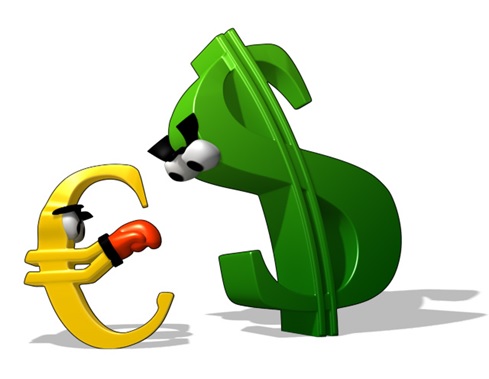
Euro v Dollar for Hoarding


Euro-US$
QUESTION:

Hello Martin,

A year ago or so you said ‘ I highly recommend Europeans to hoard
Dollars instead of Euros.

I suppose that hasn’t changed. Do you see in the meanwhile a risk
for hoarding Dollars here in Europe ?

Are we even facing the Dollar Cash to be cancelled soon ?

Thank you very much for an answer.

Best regards
JB / Germany

ANSWER: The dollar is used globally. When they changed the $100 bill, they took advertisements on international flights to reassure people the old bills were still valid. US currency has never been cancelled so this is a cultural issue. It would be extremely difficult to cancel the dollar because it is the reserve currency. Now with Trump in town, we will see this potential to cancel the currency even less likely in the United States at least until 2018.

So my recommendation has not changed. Anyone hoarding cash should do so in dollars. To be safe, $20 bills would probably be best.