Posted originally on Sep 29, 2025 by Martin Armstrong |
Seasonal retail hiring may plummet to the lowest level since 2009. Job placement firm Challenger, Gray & Christmas expects retailers to add under 500,000 temporary positions in the final three months of the year, an 8% annual decline, and the smallest gain in 16 years. Retail depends on holiday Q4 sales for a bulk of annual revenue and the hiring trend is a glaring sign of a declining economy.
Certain retailers, like Target, stated that they plan to offer overtime hours to existing employees. Yet another sign of the times as people are eager for additional income and companies are not keen to take on additional employees.
A PwC survey from September 2025 indicates that the average person plans to spend 5% less this holiday season, down from $1,638 in 2024 to $1,552 per person. The survey has not indicated a drop in holiday sales since 2020. PwC’s figure translates to ~$413B–$460B total if scaled to ~266M adult consumers. Gen Z notably plans to spend 23% less this year as the cost of living has caused most young adults to live paycheck to paycheck, whereas boomers with sufficient savings plan to spend 5% more.
The National Retail Federation (NRF), however, predicts US retail sales will rise between 2.7% and 3.7% over 2024, reaching between $5.42 trillion and $5.48 trillion for the year. As for holiday spending, the NRF predicts a rise between 2.5% and 3.5% reaching a total between $979.5 billion and $989 billion.
Hiring trends in retail indicate that companies are less than optimistic about overall foot traffic this holiday season. Americans are spending more on less. Discretionary spending has been on the decline as inflation never meaningly waned.
Posted originally on Sep 25, 2025 by Martin Armstrong |
COMMENT: Mr. Armstrong, I just wanted to thank you for your ground-breaking analysis. I was a gold-only bug, and you opened my eyes to capital flows, explaining that gold rises not due to inflation, but geopolitical tensions. You have been forewarned that when Europe is flirting with war, the capital will flee, and it will be on every boat to the USA. We have gold making new highs, and the Dow is also reaching new highs. Something the gold crowd always said the opposite. You said gold could test the $5,000 level due to war as soon as 2026, I believe. At the same time, others continue to claim that the stock market will crash and revise their forecasts with every new high.
I just wanted to say you are honestly making a difference. I know people steal your work and claim it as their own. I discovered some people created channels and pretend to be you on Telegram and elsewhere. I do not understand their game. You do not solicit money. I’m not sure if they are trying to ruin your reputation. I reported what I encountered to your staff.
I know you have more money than God because you don’t raise your prices, you don’t solicit money, and you don’t sell advertising.
Please do not get discouraged.
Cheers
FDS
REPLY: Thank you for bringing that to our attention. I am not sure what is going on with people pretending to be me. I DO NOT RECOMMEND ANY STOCK INDIVIDUALLY, AND I DO NOT MANAGE MONEY. If you want to know about an individual share that is on Socrates. Some funds trade based on Socrates, but sorry, – been there, done that. I am far too busy to manage money. I am honestly working seven days a week, from 7 AM to midnight, and I still can’t get ahead of the workload. Anyone pretending to be me, telling you to buy a specific stock or promising to manage your money, is a fraud. Let our staff know.
As far as the market is concerned, I will do a Private Post this week. There can be a brief correction in the share market after this week. But it still does not appear to be a major long-term bear market or crash. As far as gold is concerned, the key resistance is really $4500 for next year. Gold has to pass that, and then it would test the $5,000 level. Exceeding that level, the expectations will then jump to $10,000. It gets dicey after $5,000.
If I had more money than God, I suppose that means people wouldn’t contribute to any church.
Posted originally on Sep 24, 2025 by Martin Armstrong |
The Federal Reserve should operate independently of Washington. It does not. Stephan Miran was appointed to the Federal Reserve Board of Governors by Donald Trump. Miran, who served as a top economic adviser to Trump and served as the chairman of the White House Council of Economic Advisers, switched from controlling fiscal to monetary policy and now the lines between Washington and the Fed are completely blurred.
Miran believes interest rates should eventually be cut in half. He mistakenly believes the old Keynesian theories that lower rates will result in higher employment. “The Federal Reserve has been entrusted with the important goal of promoting price stability for the good of all American households and businesses, and I am committed to bringing inflation sustainably back to 2 percent,” he said. “However, leaving policy restrictive by such a large degree brings significant risks for the Fed’s employment mandate.”
“The upshot is that monetary policy is well into restrictive territory,” he said. “Leaving short-term interest rates roughly 2 percentage points too tight risks unnecessary layoffs and higher unemployment.”
I’ve explained numerous times why this line of thinking is flawed. Businesses are not eager to take on additional debt, albeit at a lower rate, if they do not see a decent ROI in the future. Not a single client has suggested that they were waiting for rates to drop to expand their business. Look what happened in Japan when they artificially lowered rates to zero for decades. The economy stagnated because confidence was lost.
The reason politicians love low rates is not to help the people but to help government. With the US national debt now spiraling out of control, every uptick in rates increases the cost of debt service. Trump knows this. Biden knew it too. Every administration eventually leans on the Fed to keep rates down because the alternative is insolvency.
Trump appointed Miran for a reason. Powell was unwilling to play into politics, but Miran, a voting member of the FOMC, is an installed loyalist who will ensure the government’s ability to borrow continues.
Posted originally on Sep 19, 2025 by Martin Armstrong |
Coffee prices are the latest grocery item troubling American consumers. The United States is the world’s largest importer of coffee, but produces less than 0.1% of all coffee for domestic consumption, importing over $8.2 billion (1.6 metric tons) of coffee last year alone. The average retail price of coffee spiked 21% in the past year, marking the sharpest rise since the late 1990s.
Tariffs are certainly part of the problem. Brazil produces around 37% of the world’s coffee, but now faces a 50% tariff on coffee beans. The average price of Brazilian coffee now sits around $6 per pound. Brazil also experienced a depleted harvest in 2024-25 due to drought and unfavorable weather conditions. The harvest was 9% beneath traditional levels. Global production rose by 4.3 million bags, but was offset by lower stocks, and prices remained high. The US spent $1.41 billion last year on Brazilian coffee alone, and a 50% tariff in addition to increased prices is causing grocers and retailers to raise prices.
Brazil and Colombia primarily focus on Arabica beans, with Colombia being America’s second-highest importer. In far contrast to Brazil, Colombia’s tariff sits at 10%. Still, the US purchased $1.4 billion in coffee beans from Colombia last year and any levy will be felt by consumers. Colombia’s 2024-25 coffee harvest was extremely robust at 13.2 million bags, a 23% increase from the previous year. Farmers believe production will fall by 5.3% in the coming harvest due to weakening La Nina conditions and heavy rain.
Vietnam supplies 17% of the world’s coffee, but the US mainly relies on South America for imports. Vietnam’s tariff sits at 20% and many roasters have complained that this is affecting their bottom line. Same with Indonesia, which has a 19-32% levy.
Brazilian coffee exports to the US have fallen by nearly 46% since tariffs were imposed. While the US consumed 15% of Brazilian coffee exports, Germany was close behind at 14% and has surpassed the US to become the top buyer. It is undeniable that tariffs on Brazil have caused a spike in US coffee prices, which has been exacerbated by a weak harvest.
Posted originally on Sep 17, 2025 by Martin Armstrong |
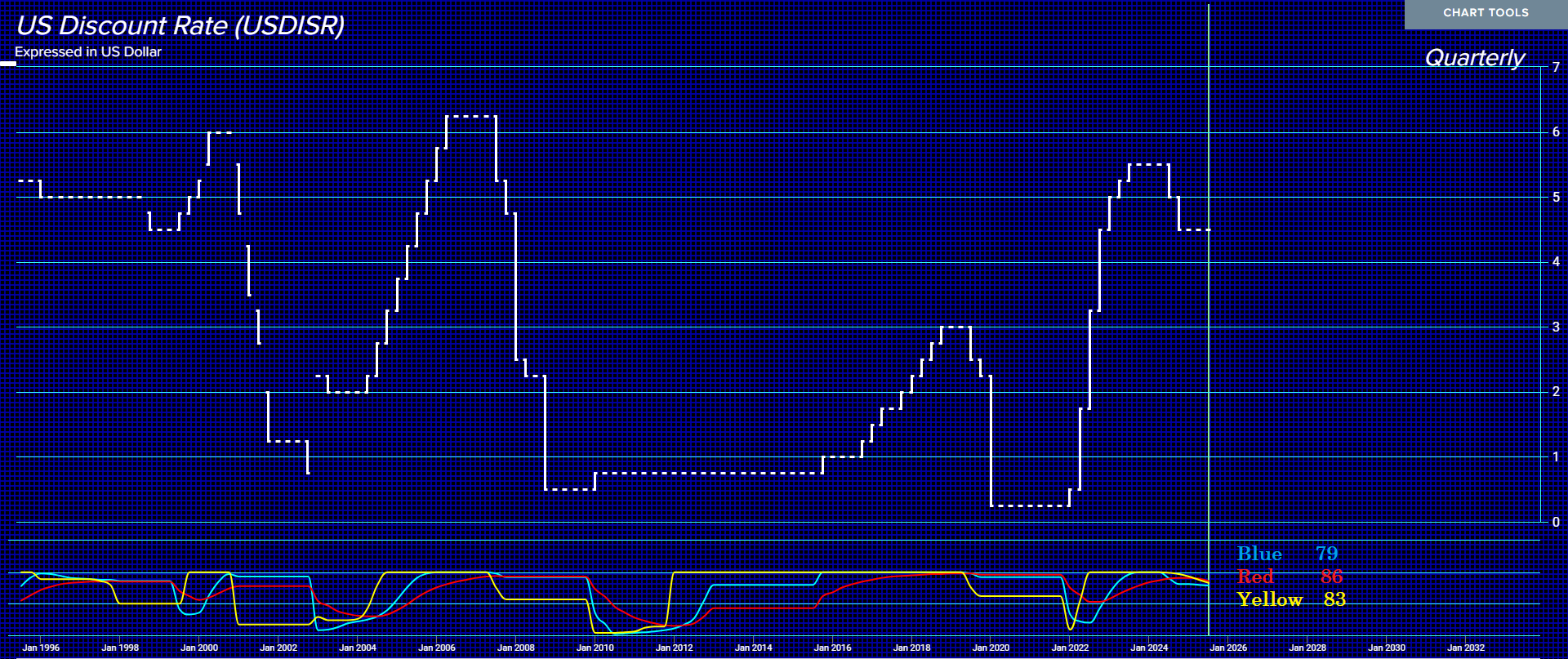
Members of the Federal Open Market Committee (FOMC) voted to reduce the benchmark federal funds rate by 25 basis points, setting the new target range at 4 percent to 4.25 percent. The Fed statement was clear, with one dissenter, Stephen Miran, who recently joined.
“Recent indicators suggest that the growth of economic activity moderated in the first half of the year. Job gains have slowed, and the unemployment rate has edged up but remains low. Inflation has moved up and remains somewhat elevated,” the FOMC said in a statement.
The market was widely expecting a 25 basis point cut in rates, as our computer has been forecasting for months that any cut would be in September, not before. However, there were the typical groups of questionable analysts touting that a 50 basis point cut could lead to a more significant market rally.
With the prospect of war on the horizon and a sovereign debt crisis brewing in the EU, there are realistic expectations for a continued decline. The risk is that Trump will interfere in the Fed, leading to a loss of confidence worldwide, which would result in unrealistic interest policy into early 2026. There remains the risk of another cut during the next quarter.
Posted originally on Sep 16, 2025 by Martin Armstrong |
President Donald Trump believes that companies should cease reporting on a quarterly basis and switch to semiannual reports instead. Trump said that the concept is “subject to SEC approval” and would “save money, and allow managers to focus on properly running their companies.”
JPMorgan Chase CEO Jamie Dimon and Warren Buffett also once voiced support for semiannual reporting. “In our experience, quarterly earnings guidance often leads to an unhealthy focus on short-term profits at the expense of long-term strategy, growth and sustainability,” the pair wrote in an op-ed piece for the Wall Street Journal in 2018.
The SEC currently has a 3-1 Republican voting majority, but why does this seem to be a bipartisan issue? The issue is global, in fact, as Norway’s sovereign wealth fund recently proposed switching to semiannual reporting, and the UK and Europe do not currently require quarterly reports. Providing the consumer and investor with less, infrequent information alludes to bad news. Companies would willingly share praise of quarterly earnings with the public if they were bullish on their future, but in the current stagflationary trend, companies are cautious. Those at the top are losing confidence in their company’s ability to meet or exceed expectations.
Dimon and Buffett argued that the public’s attention should be on the long-term results. That aligns with Buffett’s buy and hold strategy but does not work for most portfolios that require investment strategy changes based on incoming data. In Trump’s personal predicament, the price adjustments due to tariffs are a reason to halt quarterly reporting.
Still, lowering transparency raises market risk, and the markets do not respond well to volatility. Columbia Law Schoolpublished an article that looked at the 2017 regulatory adjustment on the Tel-Aviv Exchange (TASE) when small-cap firms switched from mandatory quarterly reports to semi-annual updates. “The stocks of firms that chose that option dropped an average of 2 percent in price in a window of (-5,+5) days,” the analysis found. “Conversely, the stock of firms that chose to continue quarterly reporting rose an average of 2.5 percent over an immediate window of (-5,+5) days.”
The study also noted that while compliance costs dropped by 19.8% by eliminating two annual reports, the firms that chose to maintain four annual reports did not see a significant change in audit fees. There was a clear trade-off between cost reduction and maintaining investor confidence, the study noted.
The US markets cannot be compared to the TASE, and that 2% reduction in investment would likely rise for US firms, as consumer confidence is absolutely paramount. The proposition of semi-annual reports stems from the belief that companies will be unable to provide optimistic earnings reports. Reducing reporting fees is not the concern, and the repercussions are vast as massive portfolio shifts would ensue as investors and money managers need to reduce risks and would be less likely to take short-term risks if the data is unavailable to them. Reducing transparency would shake up confidence in the markets overall, and as mentioned, capital does not like volatility.
Posted originally on Jul 30, 2025 by Martin Armstrong
The fact that Trump is threatening sanctions against India for buying Russian oil and to hammer Russia to somehow force Putin to his knees and accept whatever terms Europe demands, proves that Trump is now taking advice from Lindsey Grachm, NATO, their puppet EU leaders, and the Neocons with the likes of Cheney in the background witgh a HUGE smile on her face.
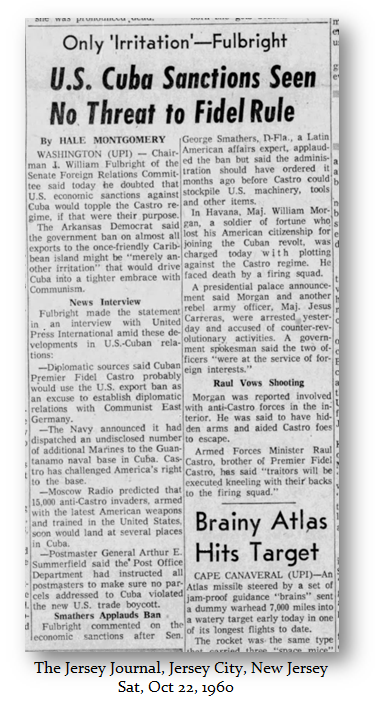
Cuba (1960s-present): U.S. sanctions have failed to topple the Castro regime or force democratic reforms. Despite economic hardship, the government adapted through alternative trade partners and domestic resilience, suggesting sanctions can entrench regimes and slter the world economy, which has taken place with the development of BRICS. The U.S. embargo (blockade) against Cuba remains in place, requiring Congressional action to lift it entirely. While some sanctions have been eased temporarily, no administration has completely ended them. After more than 60 years, this stands as a prime example of how sanctions have NEVER worked even once.
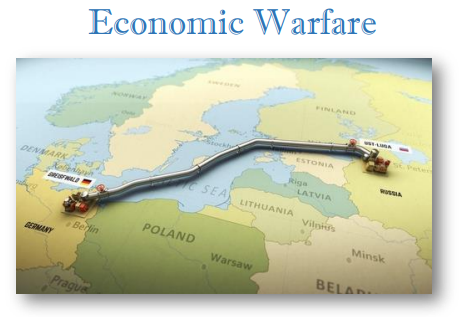
The United States has imposed sanctions on German and other European companies involved in the construction of the Nord Stream 2 gas pipeline, which was designed to transport Russian natural gas to Europe. In 2019–2021, the U.S. sanctioned firms like Swiss-based Allseas (forcing it to withdraw) and later targeted Russian and German entities.
The U.S. imposed sanctions on the Soviet-European gas pipeline in 1982 (under Reagan), targeting Western companies supplying equipment for the Urengoy–Pomary–Uzhhorod pipeline, which supplied gas to Western Europe. The U.S. opposed this project due to concerns over European energy dependence on the USSR. They, too, failed and had to be relaxed under Allied pressure.
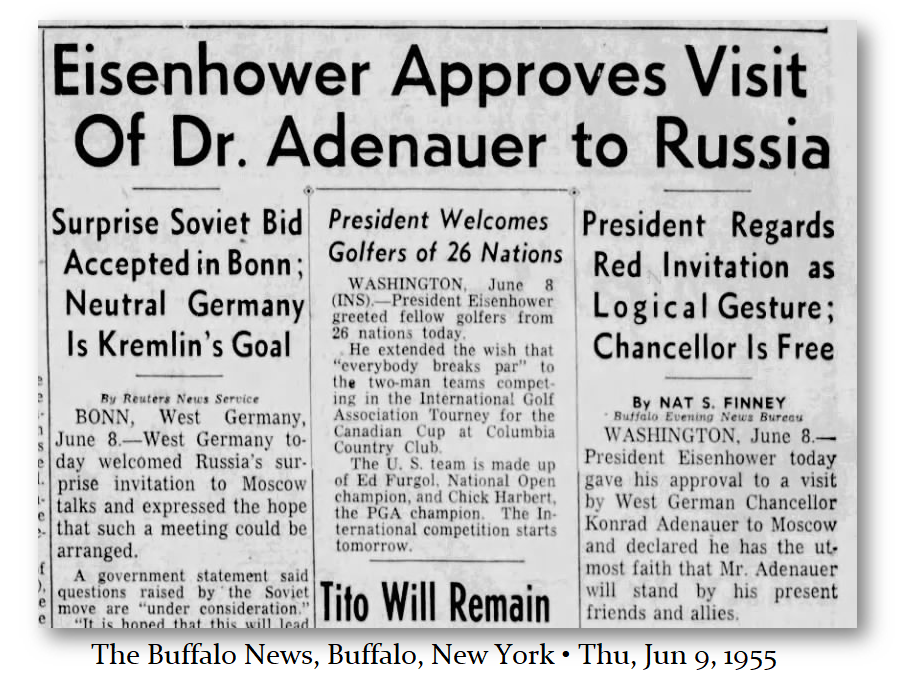
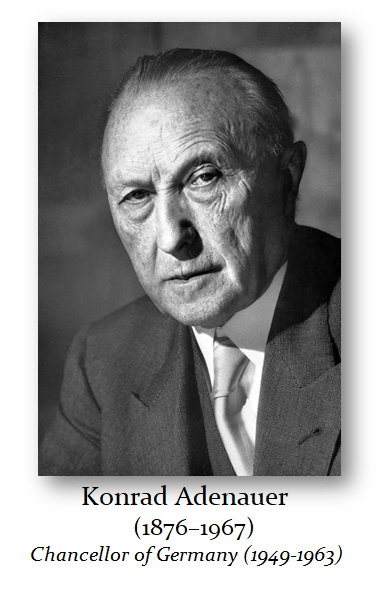
The Neocons, from the outset of any negotiations between Germany and Russia back in the communist days, did everything in their power to deny Germany access to Russian energy. It was 1955 when West German Chancellor Konrad Adenauer (1876-1967) visited Moscow in June and then established diplomatic relations for the first time between the new Federal Republic of Germany and the Soviet Union. The Neocons were outraged, but President Eisenhower saw it as no threat given Adenauer’s oppression by Hitler. The Necons wanted to prevent any meeting but Eisenhower declined.
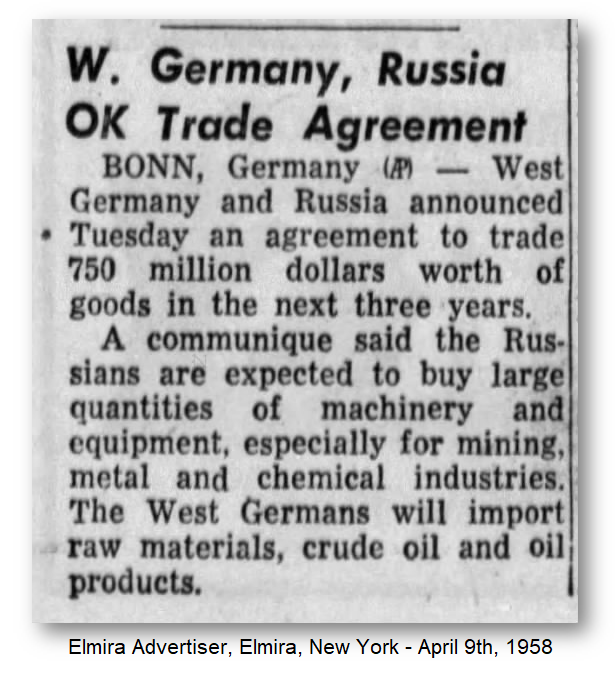
Adenauer was Chancellor from 1949 to 1963. Adenauer was one of the first opponents of the leader of the Nazi Party. Konrad Adenauer helped draft a constitution completed in May 1949. He opened the door for the trade agreement that followed in 1958, and by 1960, bilateral trade between the countries was booming.
The Trade Agreement was reported worldwide by the Associated Press on April 9th, 1958 (1958.271). Even so, from the very beginning, that trade link between Germany and Russia was controversial, to say the least. The United States, at the direction of the Neocons, was always against it and would criticize Germany behind every closed-door session. However, the US intimidation failed because it was necessary for the German people and their future.
While the U.S. did not impose formal sanctions on German pipe producers in 1955–1958, it actively discouraged such trade, setting the stage for the 1960s pipe embargoes. The major crackdown came later, but diplomatic and economic pressure began in the late 1950s.
Iraq (1990s): UN sanctions after the Gulf War devastated the economy, reducing GDP by nearly 50%, but Saddam Hussein’s regime remained intact. Political change only occurred after the 2003 invasion, not sanctions alone, and civilian suffering often strengthened regime propaganda.
North Korea (2000s-present): Decades of sanctions have crippled the economy but haven’t shifted the Kim regime’s policies or structure. Black market trade and Chinese support have mitigated impacts, and the regime uses isolation to reinforce control.
South Africa (1980s-1990s): Comprehensive sanctions, including trade bans and financial restrictions, the Neocons insist, contributed to ending apartheid. However, there was already internal resistance. It still took 14 years before any democratic reforms took place by 1994. Studies estimate that the sanctions reduced South Africa’s GDP only by 1-2% annually.
Iran (2010s): Heavy U.S. and EU sanctions targeting oil exports and banking, which the Neocons insist forced Iran to negotiate the 2015 nuclear deal (JCPOA). Oil revenues dropped by over 50% from 2011 to 2013, and inflation soared, but the regime did not fall. The regime didn’t fundamentally change its political system, showing again that sanctions have NEVER even once overthrown the core governance.
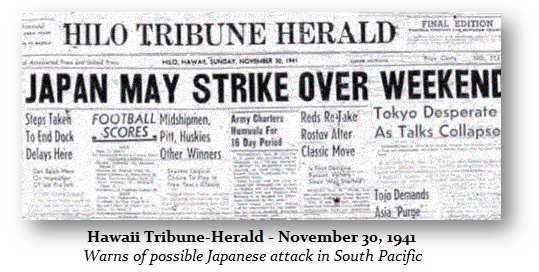
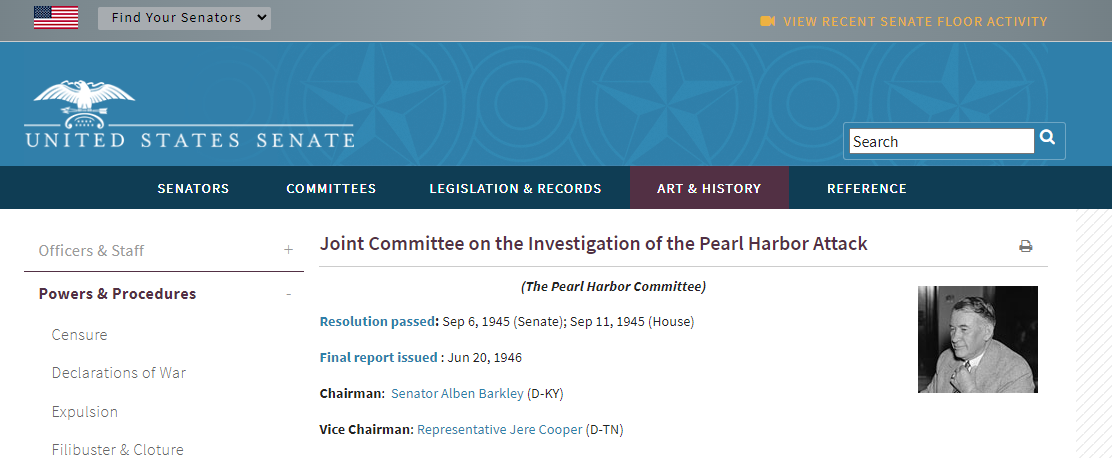
FDR deliberately imposed sanctions on Japan to get them to attack the United States, all because Congress would not authorize joining World War II in Europe. That led to a Senate investigation later because it became so obvious that FDR even knew when Pearl Harbor would take place and deliberately allowed thousands to be killed just so he could enter the war. It came out that US had broken the Japanese code and knew all about the attack. There was even a lead to the press a few days before reporting that they were about to be attacked.
Before the attack on Pearl Harbor on December 7, 1941, President Franklin D. Roosevelt (FDR) imposed a series of escalating economic sanctions on Japan in response to its aggressive expansion in Asia, particularly its invasion of China. These sanctions were meant to pressure Japan into halting its militaristic actions, but ultimately contributed to the tensions that led to war.
In 1938, FDR imposed a “moral embargo” on aircraft and aviation parts sales to Japan following its bombing of Chinese civilians. This was not a formal ban but a strong discouragement of exports. Then in July 1939, FDR announced the termination of the 1911 U.S.-Japan Treaty of Commerce and Navigation, removing legal barriers to future trade restrictions. This took effect in January 1940.
Now that the door was open for sanctions, in July 1940, the U.S. restricted exports of aviation fuel, lubricants, and high-grade scrap metal to Japan under the Export Control Act. That was followed by the September 1940 complete embargo on scrap iron and steel.
Then, FDR, like the West has done to Russia, froze all Japanese assets in the U.S. (July 26, 1941), effectively cutting off trade and financial transactions. That was followed by a complete oil embargo along with Britain and the Dutch government-in-exile. Since Japan relied on the U.S. for 80% of its oil, this was a crippling blow. FDR knew that Japan would take it as an act of war, as they then saw these sanctions as an existential threat, as they crippled its ability to fuel its military and industry.
The oil embargo, in particular, forced Japan to either negotiate a withdrawal from China (which it refused) or seize oil-rich territories in Southeast Asia (which risked war with the U.S.). The sanctions contributed to Japan’s decision to attack Pearl Harbor (December 7, 1941) to neutralize the U.S. Pacific Fleet before invading British and Dutch colonies. These sanctions deliberately pushed Japan toward a desperate military confrontation, culminating in the attack on Pearl Harbor and the U.S. entry into World War II, which was the objective of FDR from the outset. The outrage was so intense that in 1945, after the war, the Senate was forced to investigate FDR’s action and whitewashed the affair, claiming they were unsure if FDR had been fully advised of the Pearl Harbor attack in advance, even though leaks made the papers in advance.
There is NOT a single incident to demonstrate that sanctions have EVER worked. Nevertheless, the Neocons constantly advise heads of state to impose sanctions, hoping that they will bring about the collapse of that government. They will not work this time either and the real risk is that they will lead to war as we saw in FDR’s actions against Japan.
I have created this site to help people have fun in the kitchen. I write about enjoying life both in and out of my kitchen. Life is short! Make the most of it and enjoy!
This is a library of News Events not reported by the Main Stream Media documenting & connecting the dots on How the Obama Marxist Liberal agenda is destroying America



 Centinel2012