This Is What Happened The Last Time Yellen Hiked Into “Quad Witching”


Tyler Durden's picture

As The Fed and quad-witch looms (and Dow 20k is within reach), the relationship between US equity and volatility complex appears to breaking down again…

Just as we saw last week, VIX and stocks are rising together…


But, here’s a reminder what happened the last time The Fed hiked into Quad Witch…


The Dow was down 700 points from post-Yellen exuberance… Nasdaq broke 5,000; Dow nears 17,000; and S&P 2,000 was defended with valor…


Leaving everything Red for the week…


It’s different this time though.

Peak Euphoria: Dow Shy Of Record Overbought


Tyler Durden's picture

With the Dow Jones less than 100 points away from 20,000, it is moot to say that the only sentiment driving the market here, with the S&P trading at 25x actual GAAP P/E, is adrenaline and pure euphoria.

Just last night, we showed that the Dow was the most overbought in the past 20 years, while options traders have never been more bullish. Today, following the Dow’s surge right out of the gates, it is safe to say that the “Industrial” average, where Goldman Sachs has been the star performer, and which as of last night, was more overbought on just 4 previous occasions in the past century, is at record euphoria.

Putting similar RSI levels in comparison: August 1927, June 1944, July 1955, November 1996, and now December 2016… after each of the previous spikes, stocks fell back 4 to 5% within days.

India’s Gold Confiscation & Turkey’s War on Currency


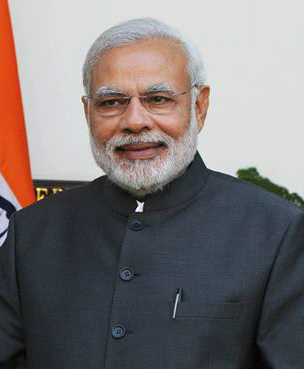
modi

QUESTION: Marty; You have been emphasizing not to buy gold bullion but US gold coins such as the $20. You have said that the last time they confiscated gold coin collections were exempt. With the drastic action in India, and the war on currency in Turkey, is this why you have said stocks and collectibles are a safer bet?

ANSWER:There are no safe bets. However, we are in the collapse of socialism. The left is always the most dangerous because they see themselves as victims. Narendra Damodardas Modi is proving to be a very dangerous radical who is extremely misguided. His demonetization of the currency was carried out without even asking the Reserve Bank. His BJP party advocates social conservatism and a foreign policy centered on nationalist principles. Generally, Modi has focused on a largely neoliberal economic policy prioritizing globalization and economic growth over social welfare. In sum, he is subjugating the people to his goal of globalization.

China and Russia saw their revolutions from the left led by the youth. India is trying to eradicate the underground economy. They first eliminated cash, which is preventing small businesses from paying employees. Unemployment will now soar. They are now attacking gold and this is all about creating a forced above ground economy so it can be regulated and taxed. People are reduced to using rice for money.

turkish-lira-1960-2015

Turkey is doing the same thing. Recep Tayyip Erdoğan has begun his war on foreign currency because the Turkish lira is being devastated in international markets. His dream of recreating the Ottoman Empire will fail. He has lost the confidence of the people as well as the world. He is saying anyone who has $1 bills is a traitor. He is telling the population to convert their foreign currency to Turkish lira out of patriotism.

Lobbying Moves into High Gear Against Fed Rate Hike


reserve-bank-india-rbi

The lobbying is off and running is super-high gear to stop the Fed from raising rates once again. Governments all over the world have a very myopic view and focused only on the next quarter, or the next election. The Reserve Bank of India also fears that the US Fed’s impending interest rise would affect the external value of the rupee. Again the IMF behind the curtain is on its needs. Any depreciation of the rupee as a result of capital outflows would only worsen the balance of payments for India and expose the insane policies of Modi who did not even consult the RBI before demonetizing the currency.

Anyone with half a brain in economics knows that the worst thin you can do to create a depression is cause the velocity of money to decline. If people hoard and do not spend, the economy implodes. Modi is trying to end the cash economy, but he has ensured unemployment will now soar because small businesses cannot pay their people.Expect at least another 400,000 people to lose their jobs and people are forced to use rice as money.

Additionally, a rate hike in USA will send the rupee down and that will be feeding inflation due to rise in prices of imported commodities. Inflationary expectations are real keeping food prices high posing a threat to domestic price stability and external value of rupee. The RBI declined to lower rates looking at the prospects that the USA may raise rates so high rates are necessary to try to stem the outflow of capital.

Goldman President Gary Cohn Accepts NEC Director Role


Tyler Durden's picture

As reported last week, Trump had offered Goldman Sachs president and COO the job of his top economic advisor, as Director of the National Economic Council Director. Moments ago CNBC reported that, as expected, Cohn has accepted the role.

From CNBC:

  Goldman Sachs executive Gary Cohn is expected to accept the directorship of the National Economic Council “at any moment,” a source told CNBC on Monday.

President-elect Donald Trump last week offered the key economic advisor position to Cohn, Goldman’s 56-year-old president and chief operating officer, sources told NBC News. Cohn has been at Goldman for 25 years and previously worked in commodities.

Cohn taking the post would add to Trump’s administration another veteran of the powerful firm he bashed during his campaign. Trump Treasury secretary pick Steven Mnuchin and senior advisor Steve Bannon also worked at Goldman Sachs, which Trump repeatedly attacked on the campaign trail.

He cited Goldman as evidence that corporate and financial interests have influence over politicians and criticized former opponent Sen. Ted Cruz for taking a loan from the firm.

The National Economic Council, which Cohn would lead, is meant to “coordinate policy-making for domestic and international issues, to coordinate economic policy advice for the president, to ensure that policy decisions and programs are consistent with the president’s economic goals, and to monitor implementation of the president’s economic policy agenda,” according to the office’s website.

 While we have no reason to doubt Cohn’ patriotism, we are confident that another motivating factor was the ability to sell some his $210 million or so in Goldman shares tax free, saving approximately $80 million in taxes simply for becoming officially a part of the US administration, instead of merely running the country from the shadows.

‘Century’ Bond Collapse Continues As Belgian 2116s Crash 30% From Highs


Tyler Durden's picture

While all the headlines have been about 10Y Treasury yields breaking above 2.50% briefly for the first time since September 2014, the bigger news for the world of bond traders is the utter bloodbath in ultra-long duration European bonds.


10Y Treasury yields broke above 2.50% this morning…


But while US 10Y Bonds have lost around 7% of their value fromn the August highs, it is the ultra-long duration bonds issued by various European nations over the summer that are collapsing…


Now back below its issuance price. The question

Global Bond Rout Returns With A Vengeance, Sending 10Y Yields To Highest In Over Two Years


Tyler Durden's picture

The global bond rout returned with a bang, sending 10Y US Treasury yields as much as six basis points higher to 2.53%, the highest level in over two years. The selloff happened as oil prices surged by more than 5% following Saturday’s agreement by NOPEC nations agreed to slash production, leading to rising inflation pressures. At last check, the 10Y was trading at 2.505%, up from 2.462% at Friday and on track for its highest close since September 2014, according to Tradeweb.

“There’s been some pretty decent cheapening across global bond markets,” said Craig Collins, managing director of rates trading at Bank of Montreal in London. The spike in oil prices since OPEC announced a cut in output has led to further cheapening, while in Europe “you had the ECB last week, all contributing to the steepening that we’ve seen.”

Japanese bond yields jumped, while Eurozone bonds were weaker across the board, too, with the yield on 10-year German debt up 0.05 percentage point at 0.392%. Germany’s yield curve, as measured by the spread between two- and 30-year bonds reached the steepest since 2014, based on closing prices, while a similar gauge for Japan widened for a fifth day. U.K. 10-year yields climbed three basis points to 1.48 percent, while those on similar-maturity bunds also added four basis points, to 0.40 percent

Even that bastion of negative rates, Switzerland, saw yields spike, fast approaching the psychological 0% barrier.

“It does seem to be oil-driven, but clearly the bearish sentiment around fixed income prevails,” Mitul Patel, head of interest rates at Henderson Global Investors, told Reuters.

Another fundamental catalyst behind the bond weakness remains uncertainty over Trump’s policies: the rise in oil process adds to a general selloff in government bonds that gathered pace following the election of Donald Trump in November. Investors expect Mr. Trump’s policies of cutting taxes and increasing infrastructure spending to lead to higher growth and inflation. Those policies may also encourage the U.S. Federal Reserve to raise interest rates at a faster clip than previously expected, which would likely hit bonds. The Fed is expected to raise interest rates at its meeting this week for the first time in a year.

Treasurys registered their largest five-week gain in yields for six years on Friday after investors sold. The Treasury bond market will face a further test this week with a series of debt auctions. Sales of three-year notes and 10-year notes are scheduled for later Monday, followed by an auction of bonds with 30-year maturities on Tuesday. That will increase the supply of bonds at the end of the year, a period when some investors are reluctant to put money to work and many have grown wary of rising yields.

Adding to the pressure, hedge funds and other large speculators raised bearish bets on 10-year Treasuries to the highest in almost two years last week, more than doubling them to a net 228,604 contracts, according to the latest Commodity Futures Trading Commission data.

Technical analysts believe that a sustained break in Treasury yields above 2.5% would open up an attempt at 3% according to Imre Speizer from Westpac Banking Corp. Forecasters in a Bloomberg survey see German bund yields climbing to 0.6 percent by end-2017. That said, both JPM and Goldman have warned that 10Y yields approaching or rising above 2.75% is where the equity rally will fizzle as tighter financial conditions from rising rates will overcome the favorable equity momentum. That level is now just 25 bps away and may be hit in the coming days.

Maduro Stunner: Venezuela Eliminates Half Its Paper Money After Pulling Largest Bill From Circulation


Tyler Durden's picture

Having observed the economic chaos to emerge as a result of India’s shocking Nov. 8 demonetization announcement, and perhaps confident it can do better, today president Nicolas Maduro of Venezuela, Latin America’s most distressed economy, mired in an economic crisis and facing hyperinflation, likewise shocked the nation when he announced on state TV that just like India, Venezuela would pull its highest denominated, 100-bolivar bill (which is worth about two U.S. cents on the black market), from circulation over the next 72 hours, ahead of the introduction of new, higher-value notes, as large as 20,000.

“I have decided to take out of circulation bills of 100 bolivars in the next 72 hours,” Maduro said. “We must keep beating the mafias.”

To this we would add “and cue economic chaos”, but since this is Venezuela, that’s a given.

The surprise move, announced by Maduro during an hours-long speech, is likely to worsen a cash crunch in Venezuela, and lead the largely-cash based economy to a state of paralysis. Maduro said the 100-bolivar bill will be taken out of circulation on Wednesday and Venezuelans will have 10 days after that to exchange those notes at the central bank.

Critics immediately slammed the move, which Maduro said was needed to combat contraband of the bills at the volatile Colombia-Venezuela border, as economically nonsensical, adding there would be no way to swap all the 100-bolivar bills in circulation in the time the president has allotted. Indeed, if India is any example, Venezuela – whose economy is far worse than that of India, the world’s fastest growing emerging market – may have just signed its own economic death warrant.

According to central bank data, in November there were more than six billion 100-bolivar bills in circulation, 48 percent of all bills and coins. In other words, Venezuela just eliminated half the paper cash in circulation.

Authorities on Thursday are due to start releasing six new notes and three new coins, the largest of which will be worth 20,000 bolivars, less than $5 on the streets. No official inflation data is available for 2016 though many economists see it in triple digits. Economic consultancy Ecoanalitica estimates annual inflation this year at more than 500%, close to the IMF’s estimate.

Fed to Be or Not to Be This Week – 14th


yellen Janet

Today, any information ahead of something like a rate hike is seen as insider trading. But back during the 1970s going into 1981, things were different. The banks were not big proprietary traders. I would routinely get a call that the Fed would raise rates in 15 minutes. It was not that someone was trying to front-run in those days. They did not want to see anybody get hurt and lose a boat-load for clients.

Back in December 2015, the Fed raised interest rates for the first time since 2006. Nobody was really surprised for instead of giving phone calls, the Fed publicly tries to telegraph its intentions for the same reason we use to get phone calls decades ago. The Fed has been trying to keep telling people it will raise rates and the general expectation is that they will do so on December 14th—almost exactly a year later—with a rate target range of 0.5-0.75%.

Janet Yellen, has confounded predictions including her own. A year ago, the Fed said it foresaw four rate rises in 2016. None has taken place yet. This might seem like deliberate confusion, but the Fed has been lobbied by the IMF and other countries, including Europe, pleading with it not to raise rates when they are trying to still punish people with negative rates. The IMF and emerging markets plead not to raise rates because they borrowed dollars.

csp500-m-12-9-2016

However, the start of the year, stock markets were not booming, but dropped into January on worries about Chinese growth, which everyone has forgotten about as we head into January 2017. Then, in June, Britain voted to leave the European Union, sending markets spinning again for a while and the IMF pleaded for mercy. In September people again expected rate hikes, and again the IMF pleaded. Since June, Yellen has correctly been telling everyone that low rates at best have a modest impact upon the economy.

The Federal Reserve prepares to raise interest rates again, but this time people will be calling this the Trump Rally. However, beside the stock market booming on the expectation of lower corporate rates and deregulation, a year ago unemployment was already low at 5% and the economy has created an average of 188,000 jobs per month throughout the year.This has helped the labor-force participation of prime-age workers to return with jobs. It has been job creation that is pushing unemployment down in the USA, which fell to 4.6%, the lowest rate recorded since August 2007. This gives the needed confidence to raise rates.

Inflation is not yet back at the Fed’s 2% target. However, the surging bond yields, stock market, and a stronger dollar are all combining to put pressure on the Fed to raise rates. Yellen carefully suggests that a rate hike would not alter those trends.

ECB To Extend its Bond Buying Program into End of 2017


ECB European Central Bank

Mario Draghi, extended the European Central Bank (ECB) $ 1.74 trillion bond purchase program to support the economy by nine months to at least the end of December 2017. This is far longer than most economists had expected. However, the monthly volume of currently €80 billion euros will drop to €60 billion euros from April 2017 onwards. In total, a further €540 billion euros will be pumped into the market. However, there is still no indication that thie will have any inflationary influence. All its appears to be doing is slowing the collapse buying bonds the private sector does not want.

According to German newspaper the Frankfurter Allgemeine Zeitung (FAZ), the decision of the ECB to expand its bond purchases was objected to by the Bundesbank President Jens Weidmann. The newspaper reported that Weidmann had expressed objections and not voted. The Bundesbank did not wish to comment on the report, reported Reuters.