Is it Safe to Store Gold in a Safe Deposit Box?


NYT- 1933 Bank Holiday

QUESTION:  Martin,
Love your blog, especially your historical perspective.
You recently responded to a viewer that we should take precious metals out of safety deposit boxes. Is there a reason for this? To my understanding the bail-in rules for banks in N.america put deposits and bonds at risk only?
Thanks.
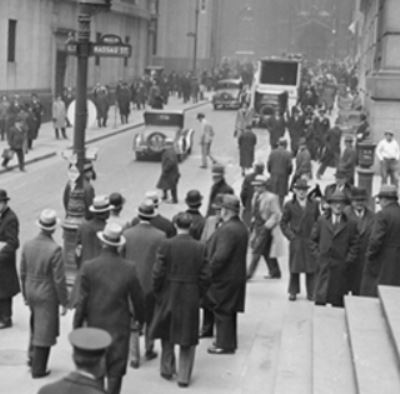
1933 Bank HolidayANSWER:  The contents of a safe deposit boxes are not covered by FDIC insurance. Never store a passport or any document you might need to get a hold of in emergency in a safe deposit box. The government can simply close all banks as they did in 1933 in a “Banking Holiday”. At 1:00 a.m. on Monday, March 6, President Roosevelt issued Proclamation 2039 ordering the suspension of all banking transactions, effective immediately. He had taken the oath of office only thirty-six hours earlier.

From March 6 to March 10, banking transactions were suspended across the nation except for making change. Roosevelt presented the new Congress with the EMERGENCY BANKING ACT at this time. The law empowered the President through the TREASURY DEPARTMENT to reopen banks that were solvent and assist those that were not. The House allowed only forty minutes of debate before passing the law unanimously, and the Senate soon followed with overwhelming support.

Banks were divided into four categories. Surprisingly, slightly over half the nation’s banks were deemed first category and fit to reopen. On the Sunday evening before the banks reopened, Roosevelt addressed the nation through one of his signature “FIRESIDE CHATS.” Roosevelt assured sixty million radio listeners that the crisis was over and the nation’s banks were secure. The bank run was over. On June 16, 1933, Roosevelt signed the GLASS-STEAGALL BANKING REFORM ACT, and also created the FEDERAL DEPOSIT INSURANCE CORPORATION.  Keep in mind the the government can close all banks for there is precedent. Whatever you have in a safe deposit box can also be seized and inspected.

safety-deposit-boxesThere is no precise law against storing metal or cash in a safe deposit box. But law is malleable in the hands of any judge. He can seize the money or gold under the pretense of money laundering hiding it from the government. Under Civil Asset Forfeiture, they can assume the money is guilty of a crime being even tax evasion. It then is your burden to fight in court to get it back if you can hire a lawyer.

On April 1st, 2015, Chase bank in the US advised clients who rent safe deposit boxes from them that there would be some changes in their policies. Of particular interest is the following condition:

“Contents of box: You agree not to store any cash or coins other than those found to have a collectible value.”

This is why I recommend buying $20 common date gold coins and not modern bullion. You need to be in a position to say these are collector coins – not bullion. Gold is a HEDGE AGAINST government in the midst of a crisis. Gold does NOT rise with inflation. The 1980 high adjusted for inflation is about $2300. So if gold is a HEDGE, it is during a crisis. The risk of being able to get to a safe deposit box in a crisis diminishes greatly.

EU Bailout of Portugal Has Failed


Lisbon


This year, 2017, is the beginning of the Sovereign Debt Crisis. While Greece is popping up on the financial radar, the Euro rescue in Portugal has also completely failed to reverse the trend of the country. There has been no effective relief from the debt crisis in Southern Europe. The debt in Portugal is also once again as high as before the crisis of 2010. The 78 billion euros of the European taxpayers money did nothing to reverse the economic trend, but in fact the funds simply went to save the banks.

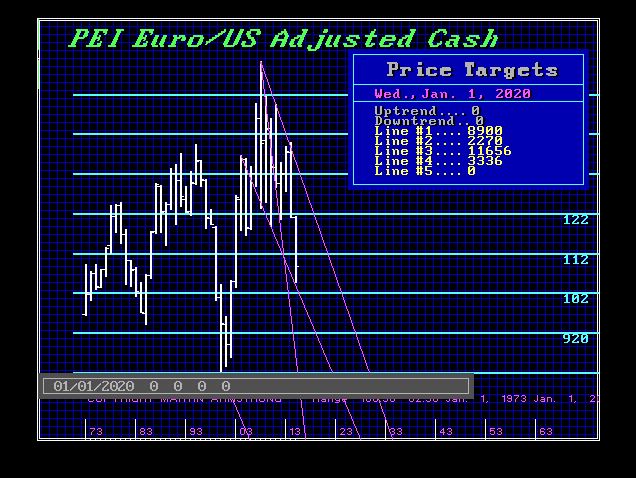
IBEUUS-Y TEK TO 2020 1-22-2016Politicians really should be criminally prosecuted for trying to manage an economy. They have no experience and their own political careers always come first. As I have stated before, when the Euro was being planned, the commission in charge attended our World Economic Conference in London. I warned them that the Euro would fail unless the plan consolidated all the debts of member states. They said they understood the problem, but that the European people would never vote for that plan and so they wanted to get the currency through first and deal with the debt later.

That Phase II never came and as a result, as the euro then rallied from 80 cents to the dollar to about $1.60, all PREVIOUS debt of  member states DOUBLED in real cost. Joining the euro effectively destroyed Southern Europe and the politicians still cannot figure this out. It is as simple as you borrowed a foreign currency to buy your house and then that currency double in price. You now owed twice the amount in your home currency.

Crisis-AheadMeanwhile, the new US government wants to put US first returning to the age of mercantilism. Donald Trump also fails to grasp that forcing Americans to buy manufactured products in the USA, is forcing the consumer to subsidize inefficient American labor. You cannot tinker with the free markets. Trump’s concept of world trade and jobs falls short of reality of what free markets are all about exactly why the Eurozone is collapsing.

Welcome to the world financial crisis. We can make it better – but we have to PREVENT politicians from playing with the economy.

There’s Nothing Free


I do hate to disagree with Walter E. Williams but there is a problem with this argument which is since everything can be made cheaper in sweat shops overseas then it must follow that everything must be made overseas. The extension of that is that all work will be done somewhere else and all consumption will be done here; obviously that can not work; for there is no one working and and therefore there is no money to buy anything and the system collapse.

Larry Summers – Who Admits He Cannot Forecast – Forecasts Trump


QUESTION: Marty; Did you see Larry Summer’s comments on Trump. Is this guy completely insane? He says Trump is proposing things off the planet. Wasn’t it Summers who came up with the negative interest rates and supported repealing Glass Steagal?

ANSWER: Larry Summers is a classic example of how a PHD means absolutely nothing compared to real life experience. He had the audacity to say, “The vast majority of the companies who have large overseas cash also have substantial amounts of domestic cash.” Obviously, Summers has never advised a real company. If Trump makes it a 10% tax, any company who does not bring their cash home would be a short. EBay had two companies it wanted to buy domestically. It backed out of the deal because it would have to bring in cash from overseas and pay too much tax to make it worthwhile. That’s how much Larry Summers knows about the world.

Summers went further, “The reality is that cash that is brought home will be used to pay dividends, to buy back shares, to engage in mergers and acquisitions, to rearrange the financial chessboard, not to invest in large amounts of new capital. It is a chimera to suppose that there will be large increases in capital investment as a consequence of that repatriation.”

First of all, paying dividends and buying back shares will put money DIRECTLY into the hands of investors who will redistribute the funds. Summers tries to “stimulate” by handing banks billions with no strings attached in hopes that they will lend the money to people who want to borrow. Then he wants to impose negative interest rates to punish people for not spending or investing.

Larry Summers has publicly admitted he is incapable of forecasting the economy, so where does he get off saying this nonsense? Quite frankly, those who are watching their pension funds go bankrupt should sue this guy for his non-conventional idea of negative interest rates to “stimulate” the economy. He gave us the 2007-2009 crisis by repealing Glass-Steagall and supporting the bankers, and he set the pension crisis in motion with negative interest rates. Thank God Hillary lost because this clown would be in charge of screwing up the economy even more.

Norway Insane Property Boom or Capital Flight from Eurozone?


Oslo

QUESTION: Hello Martin, I was wondering if you could write a piece on the Norwegian real estate market? The market has gone complete mad the last couple of years with salaries declining, and housing prices booming. Over 40% of Oslo is now owned by people not leaving there. A lot of apartments are empty because people don’t care to rent them out, it is just for speculation. Will this continue or will the Sovereign debt crises drag the market down with it? Love your blog, and hope you can spare some time for little Norway!

HG

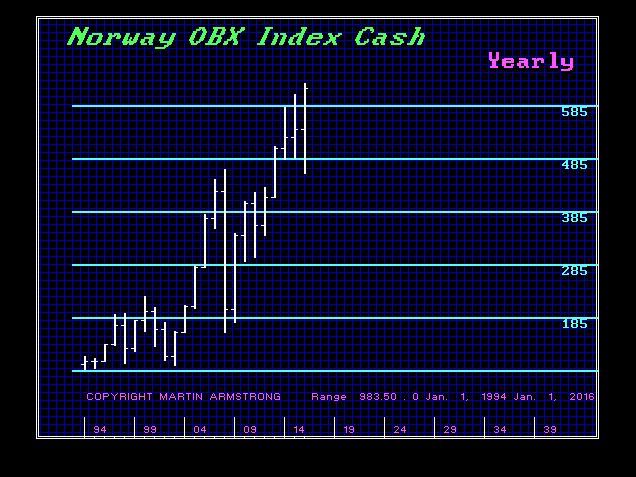
Norway OBX-Y 2-20-2017

ANSWER: Actually, I will be speaking there in Norway in a few weeks. Most of this “speculation” is really parking money. They are not trying to actually make a profit, which is why they are not renting these properties out. This is about parking money outside of the Eurozone. This has been a bet against Brussels and the collapse of the Euro. When we look at the share market, we see an outside reversal to the upside in 2016 as our model warmed with a Panic Cycle. This too is money trying to get off the grid.

Norway-Krone-Y - 2-20-2017

The is a picture of the Krone expressed in US dollars since 1927. Here also, the dollar is positioned to rally against the Krone and we should see a new high above that of 1985, but at the very least a rally to retest that level for the third time.

Norway-Krone-Y -Euro- 2-20-2017

In the case against the Euro, the Yearly Bullish Reversal stood at 87125 and we closed 2016 at 86450 after reaching intraday for the year 89940. To have exceeded the Yearly Bullish for the Euro intraday yet failed to close above it warns that the rally in the Euro against the Krone is most likely coming to an end.

The Total Lack of Common Sense


Pension-Crisis

QUESTION: Martin – Given your compelling elucidation of the business cycle (which remains ineluctable even with central bank and regulatory distortion of money and markets), the avg annual return targets set by pension and retirement plans seems absurd. CalPERS had an annual bogey of 8% to meet via its active management. Even in a rapidly-growing economy whose markets were free from distortions, it seems that any fixed number could only rationally be set as a target if the investment horizon spanned several business cycles. This would allow at least some averaging over bull and bear phases to enable a fixed average return target like this to have any meaning.
This is not exotic – it seems commons sense. Do professional asset managers (or central bankers for that matter) make up nice-sounding goals that they know they cannot meet, or do they just not know what they are doing?

ANSWER: The fund managers are not really very professional. The majority of pension funds based their returns upon the standard 8% yield of long-term 30 year bonds. They have never actually adjusted their return expectations and thus the majority remain under-funded.

Do not apply this to all pension funds. We have helped many make the transition to the real world. When you have CALPERS where the decisions come often from the board, which is not professional, but political, therein lies the problem. The Social Security system is likewise a disaster. I tried to convert it into a wealth fund almost 20 years ago. The Democrats blocked it for anything to do with the free markets to them was risky. Thus, they stuff it with their own debt and then lowered interest rates. The fund is broke and you will see demands to raise taxes to cover the losses the politicians have created, yet they will of course blame someone other than themselves.

Someone who has simply managed a pension fund for the government is typically not qualified to be a private fund manager. If they were hired from the private sector to then clean up a public pension fund, then we have a different type of person. It will depend at that point on the board of directors and if they will allow the fund manager to make market decisions or will they still be overridden by politics.

Keep in mind that I often appear to be the lone analyst on many issues. This is ONLY because those with experience must sign confidentiality agreements to work for a fund or bank. They are not allowed to make comments for whatever they say would be attributed to their employer. I get tons of emails cheering often what I say because they are silenced. You really have to peek behind the curtain to comprehend what goes on because it really does defeat COMMON SENSE! It is like everything else. Nobody would have sat down and designed a financial or political system as we have today. This whole mess is just total insanity. It does not take a conspiracy, it takes stupidity. These people attribute such knowledge to people that is not justified. Some of these decisions do not make even the basic common sense tes

“Seriously Delinquent” Auto Loans Surge


We never learn do we … so sad!

Trade v Banking – The Real Issue


world-globe
While CNN and ABC news have turned really vicious against Trump, they are failing to report the real impact of world events that can undo everything. As we head into April/May, we are looking at a real crisis emerging that is beyond contemplation. The prospect of the breakup of the European Union because Brussels refuses to consider that their dream of ruling all of Europe is coming to an end. Yes, Juncker has said he will stand down while Draghi tries to threaten member states, saying they have to pay up in order to leave.

Last September, the International Monetary Fund (IMF) has warned at the G20 summit in Hangzhou, China, that in the face of crises, the refusal to reform how things are functioning will lead to economic weakness in the global economy. “The latest data shows subdued activity, less growth in trade, and a very low inflation, suggesting an even weaker global economic growth this year,” the IMF told G20 leaders.

The real crisis behind the curtain remains not TRADE, but BANKING. The EU hired over 20,000 people to regulate the European banking system. They have been installing bail-ins after that worked in Cyprus. They have been moving toward instant banking transfers by September 2017 with the design of eliminating cash. All of this becomes a major risk and the European Central Bank holds 40% of all government debt in the Eurozone. The cracks in the foundation of the EU are tremendous and the ramifications will ripple through the entire global economy. The seriousness of this crisis is being ignored by mainstream media because they are too busy trying to undermine Trump because their own ratings have collapsed. Newspapers are for the 50+ generation. The youth go to the internet and really do not watch the news of mainstream media. They are rapidly becoming sidelined and they hate Trump’s tweets because he is going directly to the people much as FDR did with his fireside chats.

Norway Central Banker Warns Of Massive 50% Drop In Wealth Fund Assets To Cover Budget Deficits


Tyler Durden's picture

Back in August, we noted that, for the first time since it’s creation in 1996, the Norwegian government had started raiding its sovereign wealth fund in 2016 to cover government deficits.  Then in October the Nordic country revealed plans to massively increase withdrawals by over 25% in 2017, to $15 billion, to cover a budget hole that was expected to be roughly 8% of GDP.

That said, Norway’s ultimate GDP potential, and therefore budget deficits, are heavily dependent on oil prices so any further weakening of crude could result in even more withdrawals.  Moreover, given the substantial YoY increase, it’s important to recall that there are fiscal limits imposed on fund withdrawals equal to 4% of assets, or roughly $36 billion, which could come into play at some point in the future if oil prices remain “lower for longer.”

Norway

Of course the withdrawals accelerated just as the heavily oil-dependent economy of Norway started to absorb the impact of lower oil prices.

Norway


And what do you do when you depend on portfolio returns to fund everyday living expenses but are faced with extremely low returns courtesy of artificially depressed international bond yields?  Well, you just buy more equities, of course.  Which, as we noted back in December, was exactly the motivation behind a decision to increase the fund’s equity allocation from 60%, to a staggering 75%, all while funneling another $130 billion to the global equity bubble.

The central bank’s board, which oversees the fund, on Thursday recommended an increase in the equity share to 75 percent from 60 percent. That will raise the expected average annual real return to 2.5 percent over 10 years and to 3.5 percent over 30 years, compared with 2.1 percent and 2.6 percent, respectively, under the current setup

The world’s largest sovereign wealth fund said that it expects an annual return of only 0.25 percent on bonds over the next decade and that the expected “equity risk premium,” or return on stocks over government bonds, will be just 3 percentage points in a cautious estimate.

“In our analyses, this is clearly evident in global data: internationally, growth in firms’ cash flows and equity returns are correlated with growth in the global economy,” Deputy Governor Egil Matsen said in a speech Thursday in Oslo. “Global economic growth in the coming years is expected to be below its historical level. This ‘pessimism’ is partly related to the driving forces behind the low level of the real interest rate.”

But despite their best efforts to protect the principle balance of Norway’s sovereign wealth fund through statutory spending caps and buying more and more equities, Norway’s central bank governor Oystein Olsen warned earlier today that increasing reliance on the fund to cover budget deficits could result in a “sharp reduction” in the fund’s capital over the next 10 years.  Per Bloomberg:

Governor Oystein Olsen said that the continued rise in oil cash spending, which now accounts for about 20 percent of the budget and 8 percent of gross domestic product, must now be halted to protect the $900 billion fund, the world’s largest sovereign pool of cash.

“With a high level of oil revenue spending, there’s a risk of a sharp reduction in the fund’s capital,” Olsen said in the traditional Annual Address in Oslo Thursday. “This could, for example, happen if a global recession triggers both a decline in oil revenue and low or negative returns on the fund’s capital.”

In fact, in some of the more dire scenarios, Olsen warned that 50% of the fund’s $900 billion in assets could be wiped out over the next 10 years in the event of a global recession that kept oil prices low while also driving equity valuations down.

While the fund, which is overseen by the central bank, so far has said it’s more than able to handle outflows without selling assets, Olsen’s speech did lift the lid to reveal some of the worst case scenarios being calculated by the investor.

For example, it sees a 1 percent chance of a 50 percent decline over 10 years if spending is kept at the current level of about 3 percent of the fund. If spending is raised to 4 percent that probability rises to about 5 percent. If the fund’s allocation to stocks is boosted to 75 percent from 60 percent, which is currently being discussed, the probabilities rise even further to about 2 percent and 6 percent, respectively.

“This shows what you may risk if you increase oil spending from today’s level,” Olsen said in a separate interview. “This helps us to strengthen the message.”

“It must be recognized, however, that the longer-term challenges facing the the Norwegian economy can’t be resolved by spending more oil revenue and keeping interest rates low,” he said in the speech, arguing the Norwegian economy needs more legs to stand on.

That said, we wouldn’t be too worried because equity prices never go down, right?  Silly Central Banker…

Some Good News For Active Managers: First Weekly Mutual Fund Inflow In 12 Months


Tyler Durden's picture

Finally some good news for active managers. After one year of consecutive outflows, last week saw the first inflows into long-only equity mutual funds going back to last February, as according to BofA there finally was a $0.5 billion cash inflow, “a sign of rising investor confidence & broadening participation in equity rally.” However, to put this number in context, at the same time inflows to ETFs amounted to $17.2 billion, some 35 time more.

BofA’s Michael Hartnett summarizes the latest fund flows in two words: “Risk-on.”

The details: largest equity inflows in 9 weeks ($17.7bn), 8th consecutive week of bond inflows ($6.7bn), precious metals inflows in 4 of past 5 weeks ($1.2bn), largest EM equity fund inflows in 6 months ($2.7bn); largest financials inflows in 3 months ($2.3bn); 14 straight weeks of inflows to bank loan funds; inflows in 11 of past 12 weeks to HY bond funds. However, European equity fund flows remain lackluster.

Looking at credit, BofA notes “IG dissonance” with chunky $37bn IG bond fund inflows past 4 months even though US IG bonds are down 3% over that period. Harnett warns that further IG underperformance
could lead to bout of IG bond redemptions

According to BofA’s proprietary fund flow indicator, private clients are also in reflation mode with the past 4 weeks have seen big buyers of credit (HY, bank loans, IG, EM debt) and inflation-plays (financials, materials, precious metals) at the expense of defensives (low-vol, staples, utilities) and yield-plays (dividend-income, REITs, munis)

Going back to Hartnett’s favorite topic, the so-called “Icarus Trade” profiled previously, he says “we remain long risk until Positioning turns dangerously bullish. Our Bull & Bear Indicator of investor sentiment now up to 6.8 (most bullish since Jul’14)…”sell” when indicator reaches euphoric territory of >8.0. Sustained inflows to EM equity, EM debt & HY bond funds and FMS cash falling toward 4.0% over next 6-8 weeks would trigger contrarian “sell” signal.”

Finally, some more fund flow details broken down by asset class:

Asset Class Flows

  • Equities: 7 straight weeks of inflows (big $17.7bn) ($17.2bn ETF inflows and $0.5bn mutual fund inflows) (first weekly mutual fund inflows in 12 months!)
  • Bonds: 8 straight weeks of inflows ($6.7bn)
  • Precious metals: $1.2bn inflows (inflows in 4 of past 5 weeks)
  • Money-markets: $11.2 outflows

Fixed Income Flows

  • Inflows to HY bond funds in 11 of past 12 weeks ($1.0bn)
  • Inflows to EM debt funds in 6 of past 7 weeks ($1.3bn)
  • 8 straight weeks of IG bond inflows ($4.1bn)
  • 14 straight weeks of inflows to bank loan funds ($1.0bn)
  • 10 straight weeks of inflows to TIPS funds ($0.5bn)
  • $1.2bn outflows from govt/tsy funds (largest in 8 weeks)

Equity Flows

  • EM: largest EM equity fund inflows in 6 months ($2.7bn) (mostly via Global EM funds)
  • Japan: 6 straight weeks of inflows ($0.9bn)
  • Europe: tiny $73mn inflows (4 straight weeks)
  • US: $8.6bn inflows (largest in 9 weeks)
  • By sector: strong $2.3bn inflows to financial funds (largest in 13 weeks); largest inflows to consumer funds in 2 years ($1.1bn); inflows to materials in 14 of past 15 weeks ($0.8bn); inflows to energy in 10 of past 11 weeks ($0.5bn)

Source: BofA