Hidden Order Inside the Chaos or “Noise”


QUESTION: Martin, I have been reading about machine learning recently and have come across a concept that I believe you might have figured out that no one else has. To quote Max Welling “The information we receive from the world has two components to it: there is the part of the information which does not carry over to the future, the unpredictable information. We call this “noise”. And then there is the information that is predictable, the learnable part of the information stream.” Have you through Socrates figured out a way to filter noise entirely from the system or something of this nature?

Kind regards,

Andrew

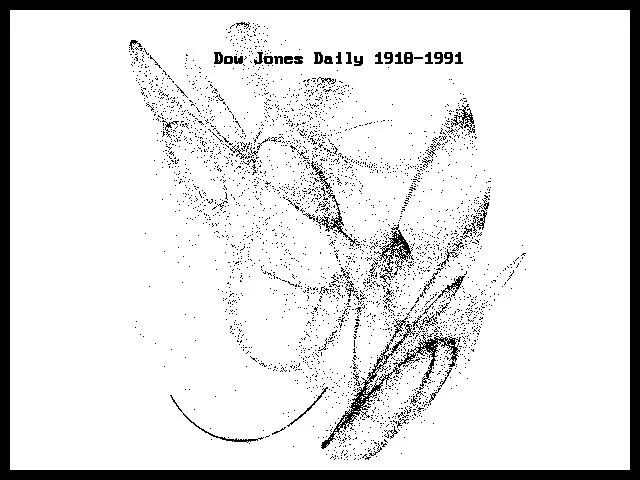
ANSWER: No. That statement is based upon the idea that the “noise” is just chaos. They cannot see behind the surface and look deep within. There is ALWAYS order to the “noise” and 99.9999% of the problem is that people do not understand how to deal with chaos. Here is a plot of a daily file of closing in the Dow Jones Industrial Index from 1918 to 1991, which we published long ago. There is a hidden order within that “noise” if you understand how to extract it

Interesting Way to Increase Sales During the Great Depression


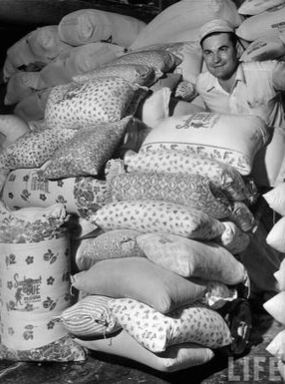
How bad did it get in some segments of the population during the Great Depression? Actually, during the Great Depression, women began reusing the fabric from flour sacks to make dresses. When the flour companies woke up and suddenly realized the purpose their flour bags were providing, they began to print their bags with various floral and other designs to make them more attractive to consumers who would buy flour to be able to use the cloth for clothing. Interesting way to increase your sales.

Oldest Version of Homer’s Iliad and The Odyssey was Just Discovered


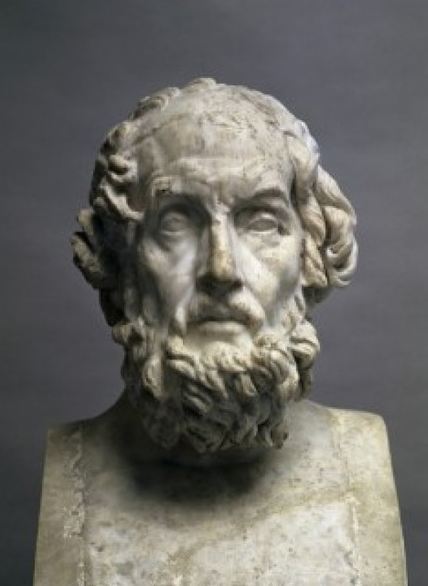
A remarkable discovery has been made and reported by the BBC. A clay tablet recording the story of Odysseus after the fall of Troy by Homer who is the famous Greek poet who was born sometime between the 12th and 8th centuries BC. He is believed to have possibly been born somewhere on the coast of Asia Minor in Turkey rather than the mainland Greece. He is famous for the epic poems The Iliad and The Odyssey, which have had an enormous effect on Western culture, but very little is known about their author.

This latest discovery of a clay tablet was found near the ruined Temple of Zeus in the ancient city of Olympia, during an excavation which has taken three years. The tablet has been dated to Roman times generally and was engraved with 13 verses from the poem The Iliad and The Odyssey. It has been argued that Homer was simply a tale for children because it was handed down in an oral tradition for hundreds of years before the tablet was inscribed. Far too often ancient history is disregarded as myth.

SchliemannHeinrich Schliemann (1822 – 1890) was a German businessman and a major pioneer of field archaeology. He believed in the historical accuracy of Homer’s Iliad and The Odyssey and Virgil’s Aeneid and that they recorded stories that reflected actual historical events. Of course, all the academics pronounced Homer’s writing was a story for children. Schliemann was an amateur archaeological excavator. He took Homer at face value and believed it was history. To this day people still diminish his contributions because he dared to challenge the academics. Many hate his guts for proving them wrong since they pontificated Homer was a story for children without any proof because they never set foot out into the field to prove that statement was even correct.

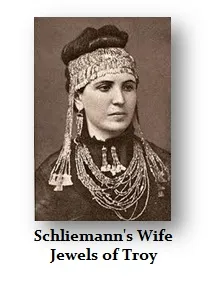
This picture of Schliemann’s wife wearing the jewels discovered in Troy was accused of being fake by academics while Schliemann called it Priam’s Treasure. The treasure was smuggled out of Turkey and the official assigned to watch the excavation was sent to prison as a result. The Ottoman government revoked Schliemann’s permission to dig and sued him for its share of the gold. Schliemann thereafter went on to Mycenae where he discovered another part of the Homer epic.

Eventually, Schliemann traded some treasure to the government of the Ottoman Empire in exchange for permission to dig at Troy again. That is located in the Istanbul Archaeology Museum. The rest of his discovery was acquired in 1881 by the Royal Museum of Berlin where it remained until 1945 when it disappeared from a protective bunker beneath the Berlin Zoo. The Russians seized the Treasure yet denied they had it until September 1993 when the treasure turned up at the Pushkin Museum in Moscow. Germany’s request to return it was rejected as Russia asserted that was compensation for the war destruction by Germany. Whether this Treasure was Priam’s is doubtful for it appears to be actually a thousand years older than Homer’s King Priam of Troy.

Lions-Gate

Schliemann not merely discovered Troy, he discovered much of ancient Greece including the Lions Gate pictured here as the entrance to Mycenae. disagreed. He was not an archaeologist, just a history enthusiast with money. He discovered Troy and most of the Greek cities of the Heroic Age, including Mycenae with its Lion’s Gate, described by Homer, not to forget the gold death mask of Agamemnon where Homer said he was buried.

This latest discovery of a clay tablet recording Homer’s tale is the oldest so far. This further demonstrates that the story was part of Greek history and not merely just a legend

Are Central Bankers Directing the Flow of Money without any Checks or Balances?


QUESTION: Do you think that the central bankers influence has triggered a massive shift in the world order? Do you think the IMF and the BIS have gone beyond their mandates? Are central bankers directing the flow of money without any checks or balances? Do you also think that there is an open door between private and central banking that creates endless manipulation of the economy with government support?

These are some big questions. Do you care to tackle them?

PV

ANSWER: At the base of all your questions is the ASSUMPTION that they know what they are doing and that they conspire to create a specific outcome. With that assumption, I disagree. If that were true, nobody would ever want to talk to me. The mere fact that they do demonstrates that they are NOT in absolute control. They say if God did not exist, man would create him. This applies to markets as well. They assume that there is some dark force that lurks behind every event with the intent to create it. They would rather believe that this is the product of an intentional design for that means they can also intentionally reverse it. The far worse reality is that NOBODY is in control and this is simply the product of reaction and counter-reaction.

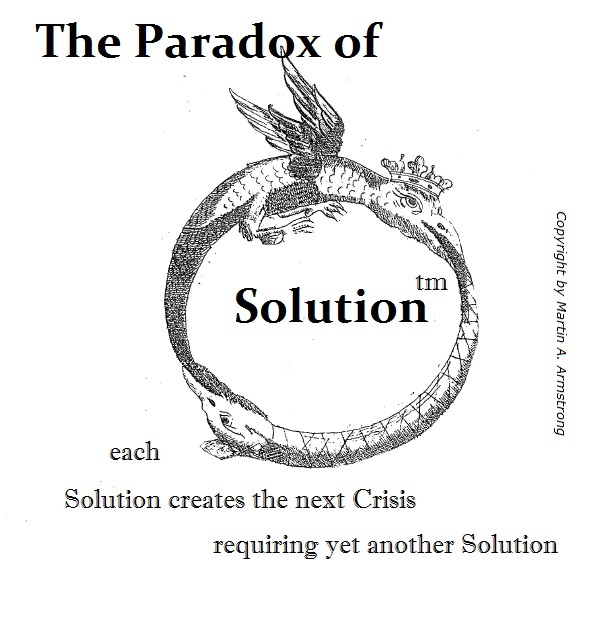
I have stated before that every crisis is met with an immediate solution which sets the stage for creating the next crisis. There is no master plan, for if there was then the USA would remain the Financial Capital of the World. Nobody has ever accomplished that feat permanently. The existence of a business cycle clearly establishes that the best plans will never conquer reality. Socialism is dying BECAUSE they made promises they cannot keep and they will default in the end. That was never the intent from the outset. It is simply that in a representative form of government as a Republic, politicians will say whatever it takes to win the next election. There is NO LONG-TERM plan and that proves there is also no such dark force lurking behind events in absolute control.

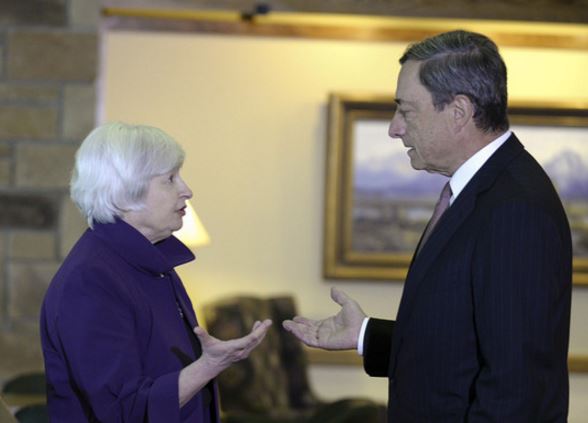
You ask if the central bankers triggered a massive shift in the world order. That is kind of ambiguous. Have they disrupted the world order? That is probably a better question. The answer to that must be yes because the European Central Bank (ECB) has created an absolute nightmare that endangers the entire world economy. Yellen was, in fact, yelling at Draghi for his stupidity in moving to negative interest rates. He assumed it would force people to spend and reinflate the economy. It backfired and furthered deflation, causing people to hoard their money. The ECB has not stimulated the economy, but instead it has kept governments on life support. Eventually, interest rates will rise exponentially because the ECB has destroyed the European bond market. No private investor will buy 10-year bonds at under 3%. Pension funds need 8% to break-even.

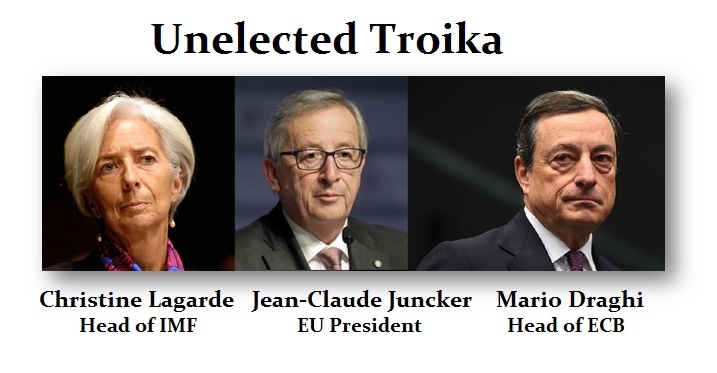
You then ask, “Do you think the IMF and the BIS have gone beyond their mandates?” The IMF has overstepped its authority and has interjected itself into the economic policies of Europe. This had made the IMF part of the unelected Troika. This is directly beyond its mandate and it has become an unelected entity that has influential power over policy – not dictatorial. The IMF disagreed with the actions of the EU against Greece. It did not have the power to overrule Brussels.

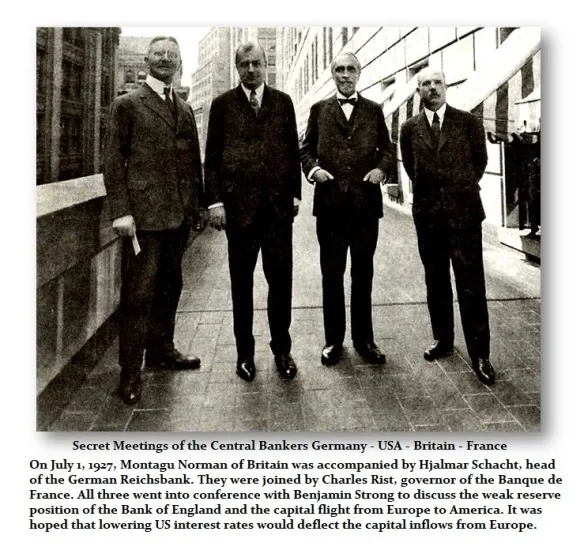
Your next question: “Are central bankers directing the flow of money without any checks or balances?” Central banks have been trying to accomplish that since 1927. They have utterly failed in actually altering the capital flows on any permanent basis. Their influence has been fleeting at best and only temporary.

There was the attempt to alter the capital flows back in 1927 to deflect the capital back to Europe. The USA lowered it interest rates hoping that would send capital migrating back to Europe. It actually had the opposite effect and from that period onward, the US share market doubled in value and capital poured into the USA. Europe eventually defaulted on most of its national debts in 1931. Clearly, the attempt to influence the capital flows failed and it did not prevent the shortage of capital in Europe which resulted in the Sovereign Debt defaults of 1931.

Your last question:  “Do you also think that there is an open door between private and central banking that creates endless manipulation of the economy with government support?” No, that is absurd. Just look at the LIBOR scandal and huge fines for allegedly manipulating interest rates by the private banks v central banks which is their power wirth short-term rates. The central banks at best try to prevent bank failures, but that has never succeeeded long-term.


Is Britain Committing Suicide?


QUESTION: Mr. Armstrong, I thought you would be wrong on the pound. I will yield to your forecasts. I do not know how you do it forecasting so many things around the world and getting them right no less. Reading between the lines who have written, on the one hand, you have said that Brexit was critical to save Britain, yet at the same time you said the pound would drop sharply. It seems as though you were forecasting the collapse of Brexit. My question now is, will the Tory Party even survive?

PF

ANSWER: The first thing you have to come to grips with is a computer is VOID of human emotion. Virtually all human forecasting has an inherent bias, for people will forecast what they want to see even if they do not realize they are doing so. To be correct, it requires extracting ALL human judgment and emotion from the subject matter. This is why I say people ask me what SOCRATES has to say – NOT me! That is the way it should be.

I have to say that Boris Johnson’s comment that Britain is headed for the status of a “colony” is absolutely correct. There are “remainers” who have simply ignore ALL the economic data and will seriously end Britain as any sort of viable economy. Britain has ALWAYS been treated as a second-class European culture and it will end up subservient to that of the EU. It may simply be too much to expect rational political leadership any more from Britain. Instead of the cabinet stabbling the PM in the back as they did with Thatcher to also try to join the euro, this time it is the PM who is stabbing her cabinet and the people in the back trying to keep in by pretending she is leaving.

It may be just time to play the traditional funeral song and remove our hats.

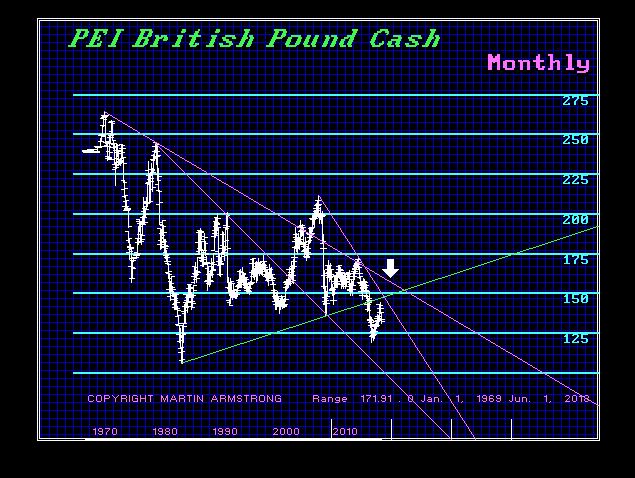
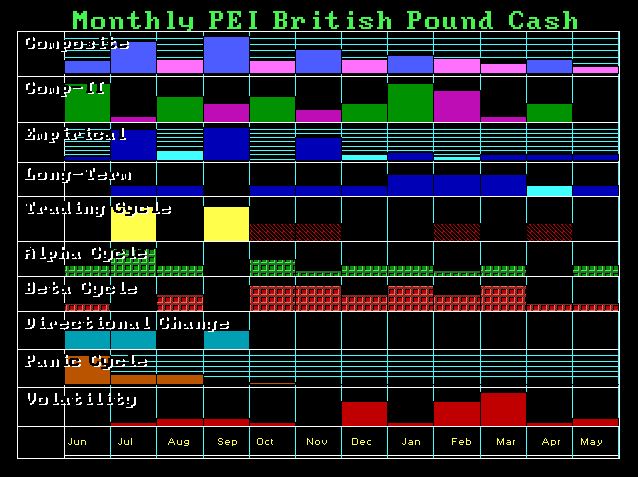
Let us look at the arrays. Here we can see that July has been the target in the pound. The next one will be in September. Now look at the Weekly Array – it picked this week. So how does the computer pinpoint these political events that align with the top people in BREXIT resigning? I “think” we have to flip the question. In other words, it is not the computer forecasting the resignation of David Davis, who was the top negotiator for BREXIT, and  Boris Johnson. There are people now calling for Nigel Farage to return. Quite frankly, Nigel is probably the ONLY hope for Britain. Unless they cut the umbilical cord to the EU, Britain cannot possibly survive.

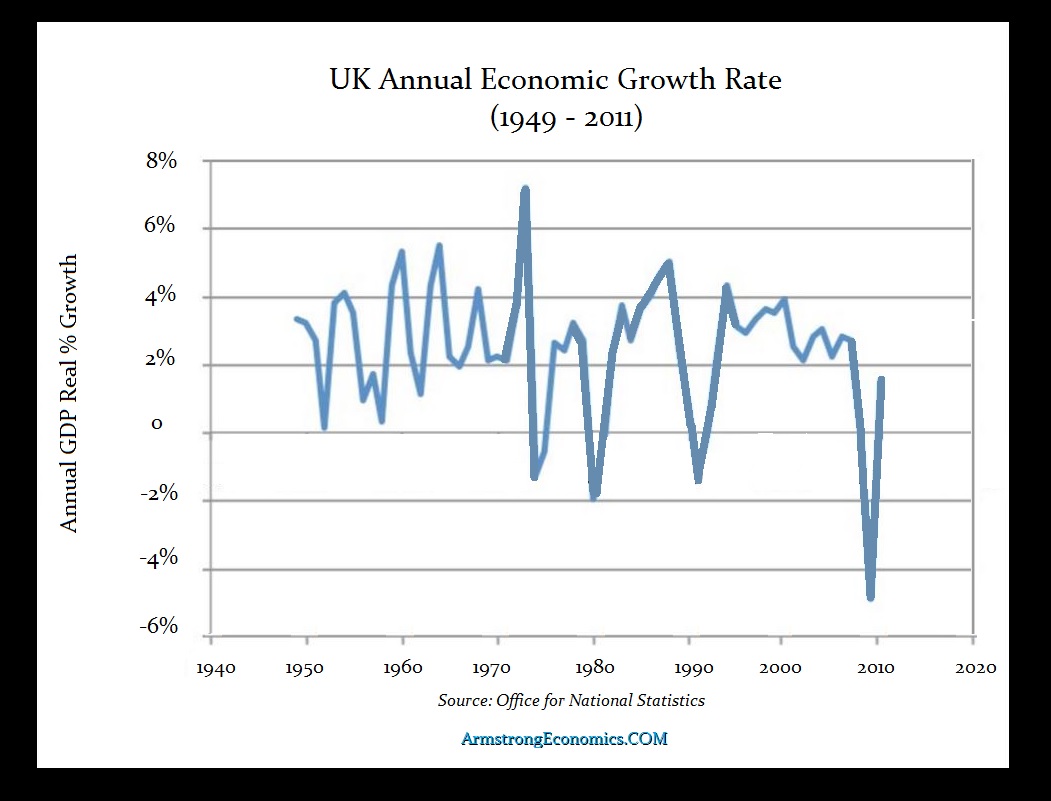
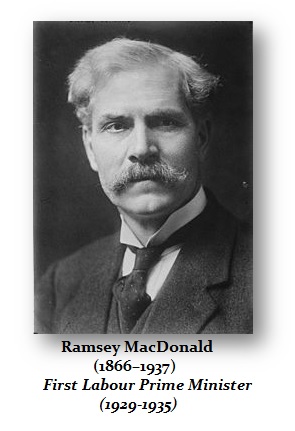
This is the government’s own data. The economic growth of Britain peaked before it joined the EU and has declined steadily ever since. Britain loses EVERY trade argument in the EU Court. It is baffling how and why anyone would still think that staying in the EU is better. Since 1832, the two major parties have been the Conservatives (Tory) and the Liberals/Liberal Democrats. The Labour government emerged in the 1890s following Karl Marx. James Ramsay MacDonald (1866–1937) was the first British statesman to found the Labour Party, preaching Marxism, and he eventually became Prime Minister. His appointment lead to minority Labour governments in 1924 and in 1929–31. MacDonald then headed a National Government from 1931 to 1935 that was dominated by the Conservative Party which was supported by only a few Labour members.

MacDonald presided at the world economic conference in London in June 1933. Nearly every nation was represented, but no agreement was possible. American President Franklin D. Roosevelt refused to stabilize the depreciating dollar. The failure marked the end of international economic co-operation for another decade. MacDonald was deeply impacted by the rising anger and bitterness caused by the fall of the Labour government during the 1935 election. He increasingly became an isolated figure. The collapse of free trade initiatives led to the resignation of a leading Labour figure, Philip Snowden, in 1932 following the introduction of tariffs after the Ottawa agreement. MacDonald was later expelled from the party he had helped to found.

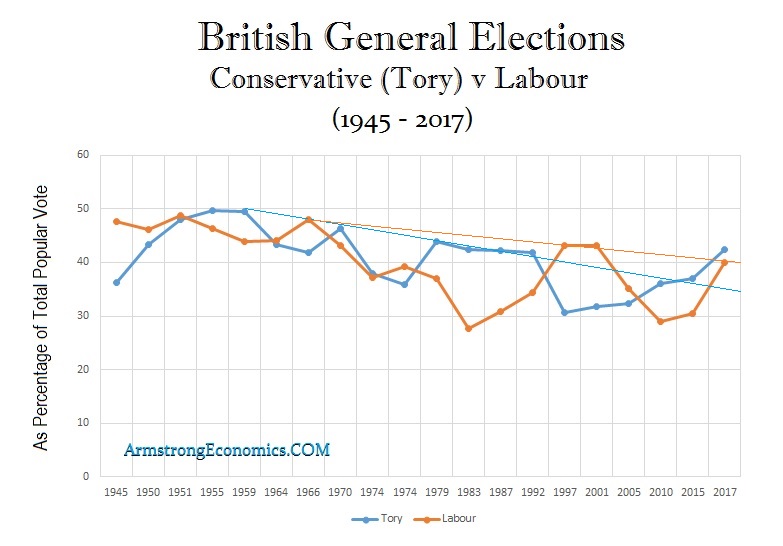
Since 1918, British elections have been dominated by the Conservatives and Labour. In 16 out of 26 general elections since 1918, the Conservative Party won most seats, while Labour won most seats on the other ten occasions. In all general elections between 1918 and 1945, the Conservatives received more votes than any other party (only in 1997 did they get less than 35% of the vote).

Yes, there has been a conflict whereby the political models have shown that support for the Conservatives was beginning to decline. While Labour was rising, it appeared to be more of a reactionary trend. Even technically speaking, Labour retests the Downtrend Line whereas the Conservatives appeared to rally after the coup against Margaret Thatcher to take the pound into the euro. This is not the END of the Conservatives, but the PM has to realize that any concern about leaving the EU is absolutely stupid. Europe is tearing itself apart. Nigel Farage should step back in, but he has paid a high price personally for trying to save his own country.

Doom & Gloom v Optimism – Is there a Middle Ground?


COMMENT: Dear Mr. Armstrong, The weather, politics, and life in general is getting a little more skewed month by month on the planet—and like everyone else in history who has experienced cyclical highs and lows, I sure wish I’d been able to skip this cycle altogether— I’m 64 and really trying to keep realistic and not succumb to Doom Porn, when trying to imagine my life when I am in my 80’s. There’s a lot of days those efforts don’t work, frankly, but I persevere—reading your blog helps so much, I needed to again say THANK YOU-thank you, thank you for being online every single blessed day- it means so very much to so many of us out here, struggling to try and make a plan to survive what’s coming.

Peace and good wishes to you and your family

C

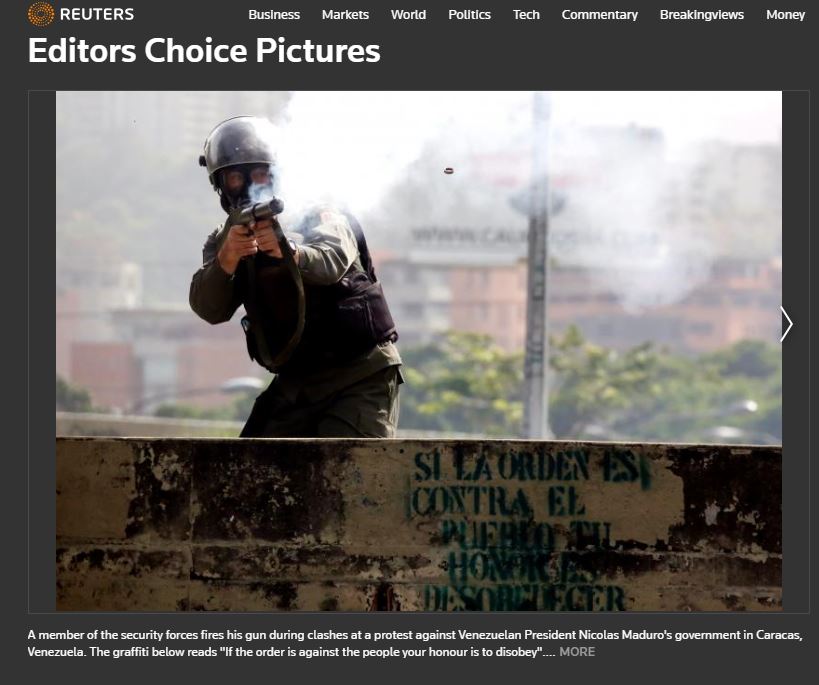
REPLY: I look at this as Joseph forecasting 7 years of plenty and 7 years of drought. If we understand there is a cycle, then we can prepare for it and survive. Britain was the Financial Capital of the World up until World War I. It went through some hard times but it survived. We are in the eye of the storm coming out the other end. When we do, the turmoil will begin. While I would hope that at some point the political powers at large will listen, the likelihood of that is nil until the crisis happens. Government will never surrender power which is like a drug addiction. The question becomes how far they will go to retain that power. Will they be so blind like the government of Venezuela whose army continues to support a failed economic model by killing their own people to force submission? The longer the government wages war against its own people to retain power, the greater the fall into economic oblivion.

Rome fell because its army fragmented and troops would support one general v another, all for money. They then used that excuse to be paid and began sacking Roman cities who supported as rival general. Curiously, there were 31 emperors (not including their sons) during the course of 40 years between 244 AD and 284 AD when Diocletian comes to power. That astonishingly lined up with the number of pi.

I am off to Europe in August to shoot another documentary film on this very subject of a solution. Hopefully, this will establish a record in time of crisis as a viable solution to help reduce the volatility. We need the people to apply pressure for it will never comes from government.

Economic Confidence Model – When One Nation Peaks Another Bottoms


QUESTION: Martin,

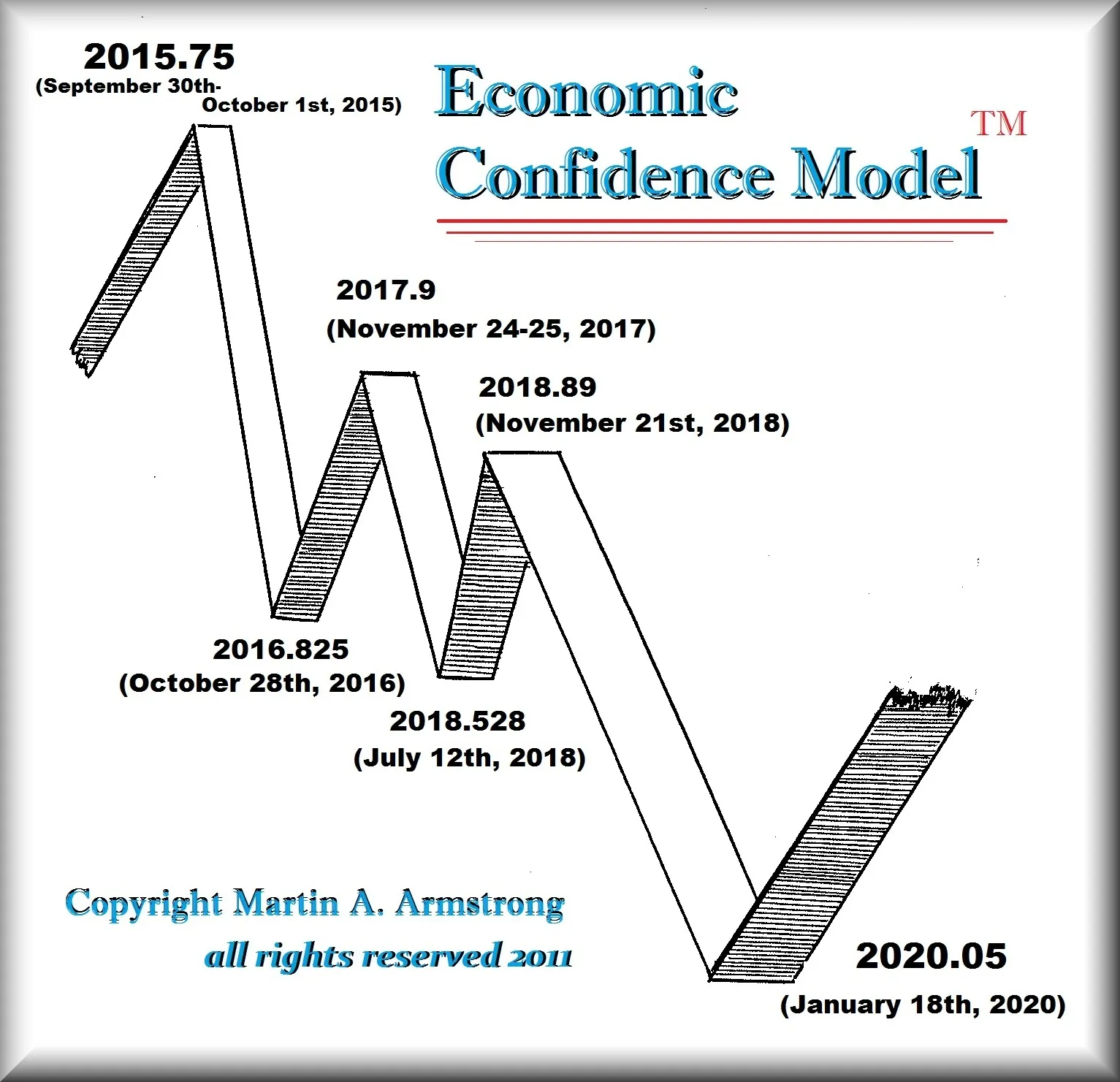
I know that the basic ECM cycle’s 4.3 year decline subdivides into a 1.075 year decline, 1.075 year rise, and 2.15 year decline. However, if I remember correctly, the 2.15 year decline also includes the Pi cycle turn 3.14 years from the top.

If I remember correctly for this ECM cycle, the 2.15 year decline began 2017.9, should turn up about July 12, top with the Pi cycle 2018.89, and finally bottom 2020.05.

I have always wondered, (1) what is the basis of determining this turn up into the Pi cycle, and (2) is this turn up ever significant, or simply a setup for the major event, the November 22 (2018.89) Pi cycle?

Of course, please feel free to correct any of errors in my interpretation of your ECM.

Thanks,
-DB


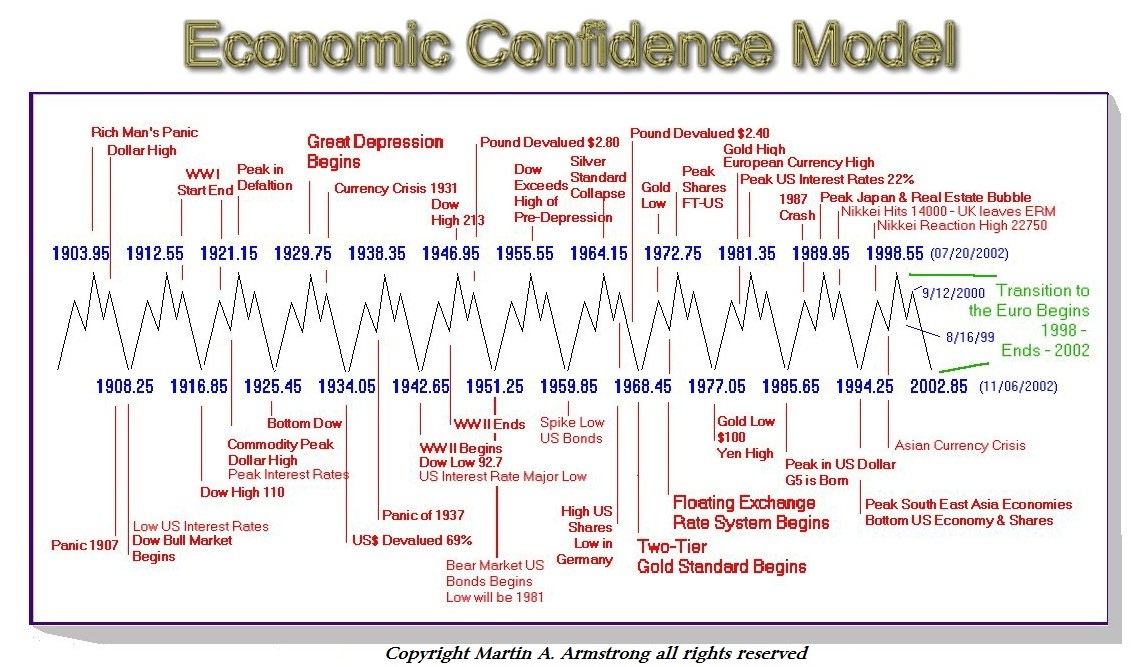
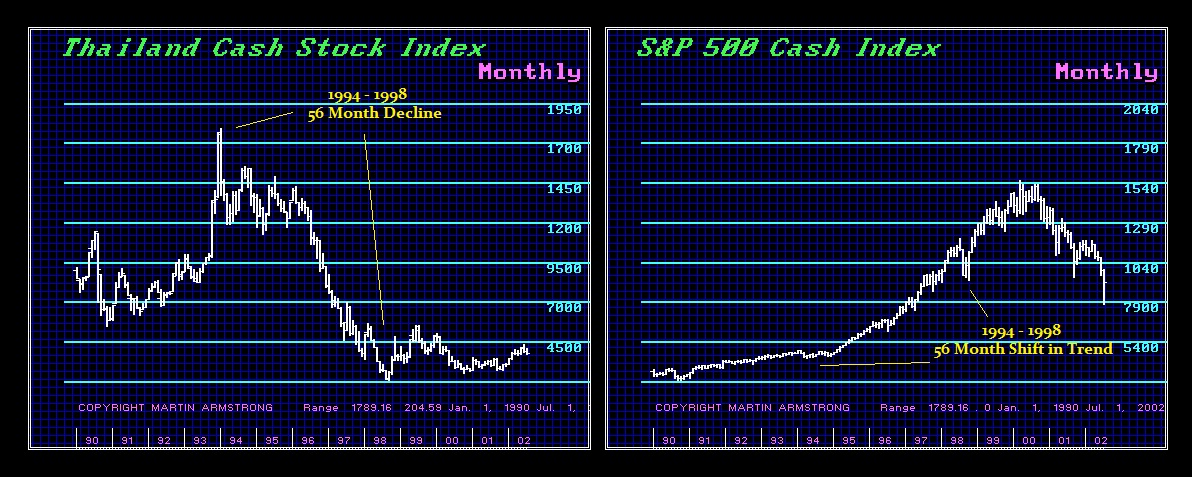
ANSWER: Keep in mind that this is the global business cycle and not based an individual country. Therefore, we have peaks in one country and bottoms in another on the same turning point. For example, the 1994.25 turning point was the peak in the economies of Southeast Asia. Even when things do not line up precisely to the day with the ECM, the trend changes regardless. The turning point was March 1994 and here we turned in February. The correction at the end of 1998 was the Long-Term Capital Management collapse that was instigated by the loss in emerging markets, namely Russian bonds. I warned them that emerging markets peaked in 1994 and the capital flows shifted. They would not listen, invested in Russia because they assumed they bought the IMF, and when it all blew up they blamed me.


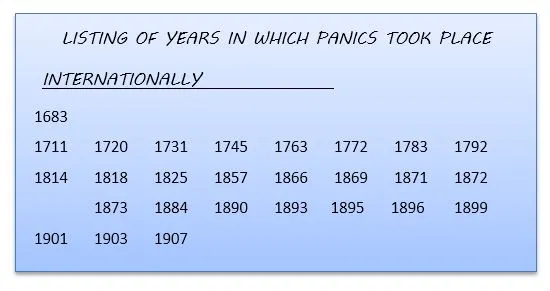
I have published this list of panics that I had discovered while doing research in the Firestone Library at Princeton University. Note that the first one listed was 1683, which was the Turkish invasion to conquer Veinna (the capital of the Holy Roman Empire at that time). It ended Austria as a financial center. Note 1720, which was the South Sea Bubble in Britain and the Mississippi Bubble in France. The list that led me to the discovery of the Economic Confidence Model was international. Therefore, the business cycle I discovered was INTERNATIONAL, and by that very nature it means that when one nation peaks, another bottoms.

Did the Swiss Reject the Same Idea Behind Cryptocurrency?


COMMENT: Mr. Armstrong; As you know, we rejected the proposal to eliminate banks from creating money by lending or the Sovereign Money Initiative. What you did not report is that the very same reasoning behind that movement has been used for the cryptocurrencies. In fact, they were using Bitcoin as proof that their idea should pass. Every Canton here in Switzerland rejected their proposal. I think that is really a vote against the idea of cryptocurrencies.

GWH

ANSWER: Very interesting. I suppose you are not far off base. Cryptocurrency has further to go than gold before it gains the overwhelming majority of support among the people at large to become a safe haven for the average person. They are finding it very difficult to even eliminate paper currency in places like India and Sweden. Not to say that will not happen eventually, but it is not ready in a matter of days, weeks, or months as many have pitched. After 2032, we may be in for such a change, but remember such changes will take place as the power shifts from one generational group to the next. The Supreme Court just finally overruled Korematsu. The current power generation just overruled the previous generation. That is the way of economic evolution. I believe that governments will probably adopt the blockchain technology or a derivative thereof and each country will end up with its own cryptocurrency. But there is a segment of society that will never have a bank account or a laptop. We may still be a couple of decades away from that.

Did Tariffs Cause Great Depression?


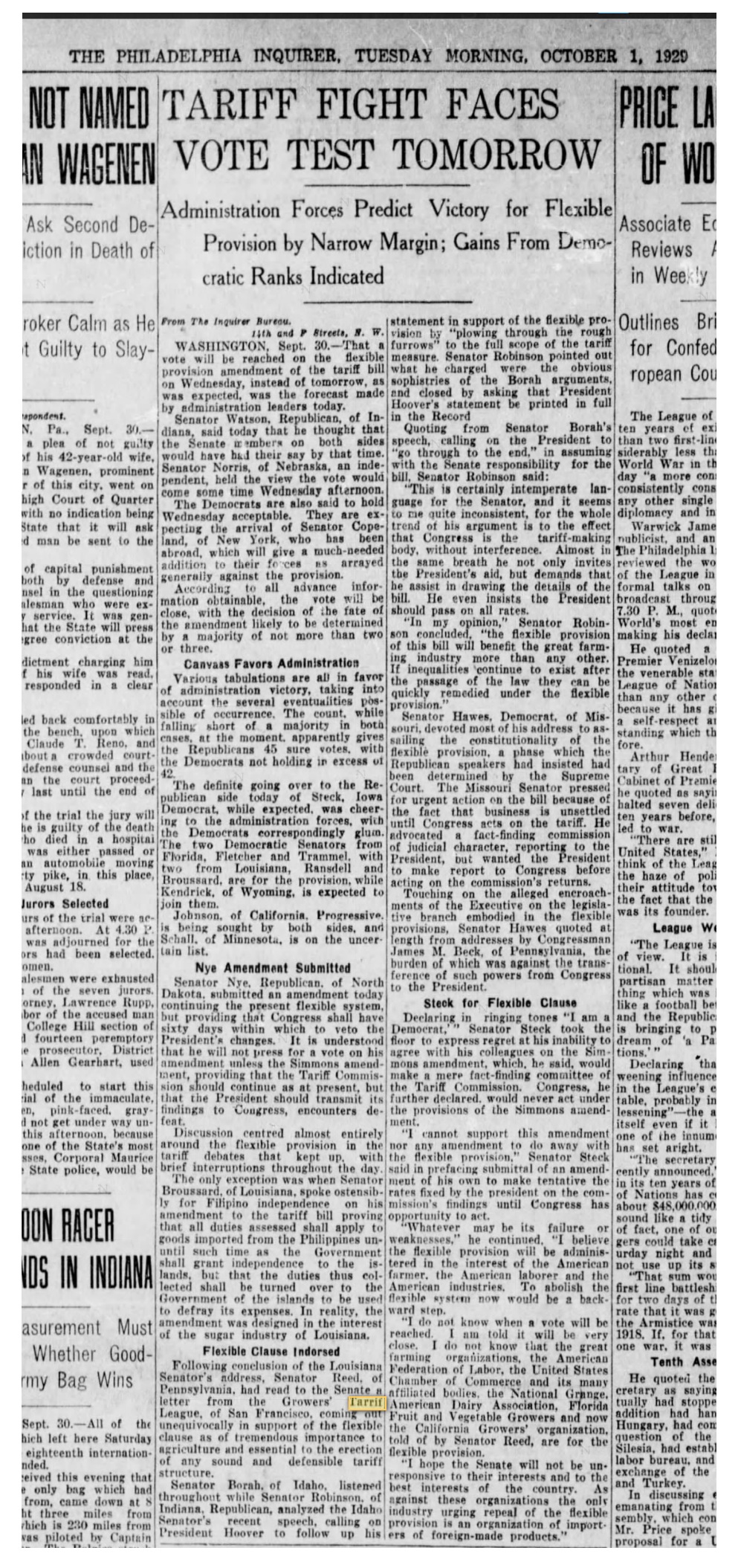
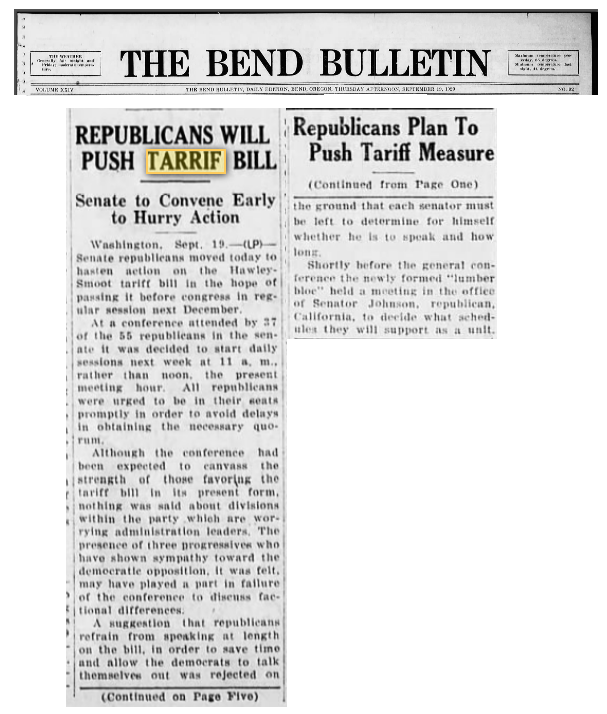
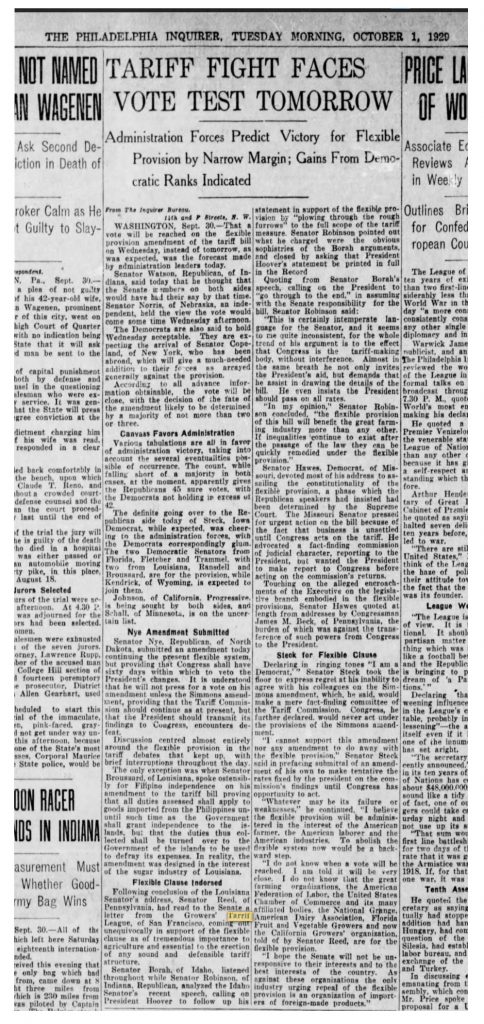
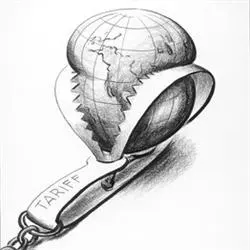
The causes of the Great Depression have been debated for decades. The problem with all of the analysis is this same attempt to reduce the cause to a single event. In school, we read the Great Crash by Galbraith. He was a socialist so he blamed the corporations and never bothered to ever even mention the Sovereign Defaults of 1931 for that would have put blame on government instead of the private sector. The argument that the tariffs at least “contributed” to the Great Depression. Smoot-Hawley wasn’t signed into law until June 17th, 1930, when stocks had already taken a nose dive from 1929 peaks. Cato Institute’s Alan Reynolds argued that Smoot-Hawley was an ongoing drag on the economy and that it was, in fact, a substantial contribution to the stock market arguing that traders saw it coming and acted in anticipation. The argument on the one hand correctly states that traders acted in anticipation, but it incorrectly adopts the position that BUT FOR the tariff issue, the stock market would have continued higher anyway?

Moreover, the pretense that someone the Smoot-Hawley Tariff created or contributed to the Great Depression ignoring the European Sovereign Debt Crisis, is really a specious argument. This ignores the entire issue of tariffs that predate Smoot Hawley. The Emergency Tariff Act of 1921 was a stopgap tariff measure which was rushed out and put in place until Congress could deal with the issue. The Republican Party wanted to quickly reverse the low rates of the Underwood-Simmons Tariff of the Wilson administration prewar. Protectionism had never died-out but remained merely dormant on the back-burner during World War I. After the war, the supporters of tariffs based their arguments on both economics and nationalism. They argued that the economic prosperity which occurred during the war as America produced the food for Europe and goods, unfolded because there was no competition from imports and therefore it was the abundance of exports that created the economic boom. While on the surface this was correct, they overlooked the problem that Europe could not produce in the midst of war and therefore American production sustained Europe. Now that the war had ended, European imports would increase and this would threaten the current economic prosperity.

The protectionists further argued using nationalism stating that Americans would now suffer economic hardship after sending our boys to fight in a war that America did not start. They argued that America should remain in isolationism as a policy staying out of international affairs. Nationalism was on the rise in the United States, as the Senate, in the last days of the Wilson administration voted against joining the League of Nations. Isolationism, nationalism and the concern for continued prosperity merged and gave support to the protectionists to push their arguments for higher protective tariffs. These trends led to the passage of Emergency Tariff in 1921 and then to the Fordney-McCumber Tariff a year later. The rates of these tariffs rivaled the protectionist Payne-Aldrich Tariff of 1909 and were considerably higher than the Underwood-Simmons Tariff passed in 1913. Tariffs were in place throughout the 1920s. Smoot-Hawley has been criticised as a major cause of the Great Depression with no mention of the tariffs that predated the 1930 legislation.
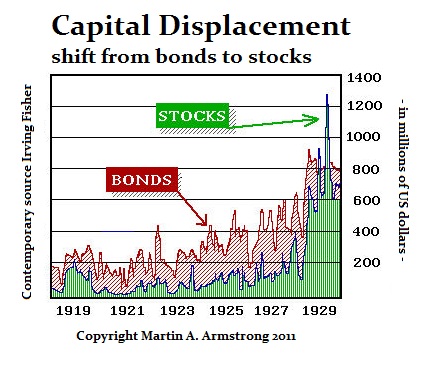
The tariff issue was by no means something that was scaring the stock market. The trend from 1927 into 1929 was one of a major shift in assets from bonds to equities. The smart money began to see that the real crisis was debt. This is a serious problem for even today the debt to equity ratio has varied from 7:1 to 10:1. When only a small portion of smart money begins to shift to equities, this becomes a bottle-neck and what happens is prices rise exponentially in what I have labeled a “Phase Transition” meaning that prices at least DOUBLE. This is a not really Asset Inflation where assets merely rise in proportion to the decline in the currency. A “Phase Transition” typically marks a shift in capital whereby it concentrates into one sector and often one country.

Irving Fisher was a prominent economist of the day who lost his credibility when he came out and said the market had reached a new plateau and thus it would not crash. Part of his reasoning was this shift in capital from bonds to equities. I did not realize that this is a phenomenon I call a Phase Transition signals the end of a trend and not the beginning. The shift from bonds to equities can lead to a new plateau PROVIDE it takes place gradually as a trend. When it erupts short-term and causes a doubling in price, this is a warning sign that we are dealing with a bubble rather than a broad ban shift in the investment trend as was the case following the turn of the Economic Confidence Model back in 1985. That case, when the Dow Jones Industrials were at the 1,000 level, we forecast we would see 6,000 in a few years. That was the shift in trend for cyclically the new wave was beginning not ending and we would move into a Private Wave (shift to equities) and were concluding the end of a Public Wave (when bonds are the #1 investment strategy).

To understand the entire Smoot-Hawley Tariffs which are blamed by most economists for contributing to the Great Depression, we must look at the whole economy both globally and domestically. It was in 1927 when there was not merely a secret meeting of the four main central banks that conspired to lower US interest rates in hope of deflecting the capital flows back to Europe, but also there was the League of Nations’ World Economic Conference which also met at Geneva that year, which concluded “the time has come to put an end to tariffs, and to move in the opposite direction.”

The resentment toward Germany was really too great, particularly for the French. The reparation payments imposed on Germany led to the revolution in 1918 and the overthrow of the Germany Emperor. These payments could only be made through gold, services or goods. The Germany people were being punished for the action of the political leaders. France broke ranks and began in 1928 enacting a new tariff law and quota system. This really was targeted at Germany and if they could not sell goods internationally, then they could not make reparation payments. This would eventually lead to proposals to allow Austria and Germany to merge in 1931 to which the French began shorting German bonds in the marketplace.

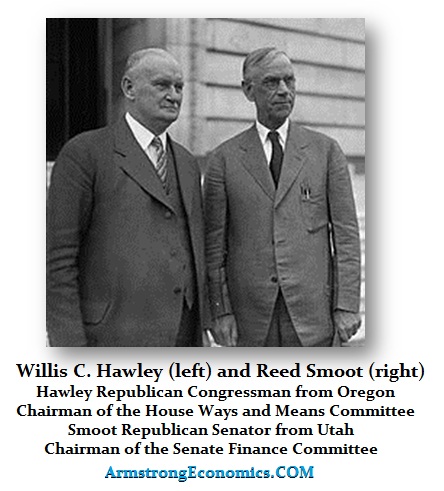
Additionally, the economic shift in trend due to the innovation of electricity combined with the combustion engine had drastically altered the economy. In 1900, about 40% of the civil-workforce was employed in agriculture. By the late 1920s, the United States economy has changed remarkably. There were exceptional gains in productivity due to electrification, which increased production of goods and the combustion engine which profoundly altered agricultural production. With tractors replacing horses and mules, previously, up to 25% of the agricultural land had been used to feed horses and mules. This land suddenly became available to produce crops. The ability to produce food soared and exceeded market demand creating what was called overproduction and underconsumption. This is what Senator Reed Smoot, who was a Republican from Utah and chairman of the Senate Finance Committee, and  Congressman Willis C. Hawley, who was a Republican from Oregon and chairman of the House Ways and Means Committee, were focused on listening to farmers who wanted high tariffs to prevent competition. Neither Utah nor Oregon were industrial states.

Nonetheless, because of World War I and the wholesale destruction of the European economy, the United States was still running a trade account surplus as manufactured exports of goods were rising rapidly. Therefore, Smoot was looking primarily at the food exports which had been declining as Europe found it easier to restore agricultural production than manufacture goods requiring the construction of plants.  The actual value of food imports was a little over half that of manufactured imports and thus the farmers were crying for help in an industry that was changing forever. It was NOT true that the markets were so concerned about the tariffs issue when the industrial production was in a trade surplus and profits were rising.

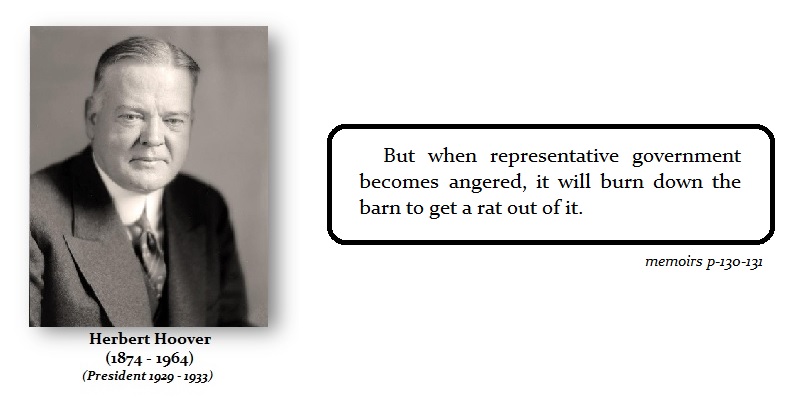
Senator Reed Smoot, was a Republican from Utah and chairman of the Senate Finance Committee, championed a tariff increase in 1929, which became the Smoot–Hawley Tariff Bill. In his memoirs, Smoot made explained: “The world is paying for its ruthless destruction of life and property in the World War and for its failure to adjust purchasing power to productive capacity during the industrial revolution of the decade following the war.”
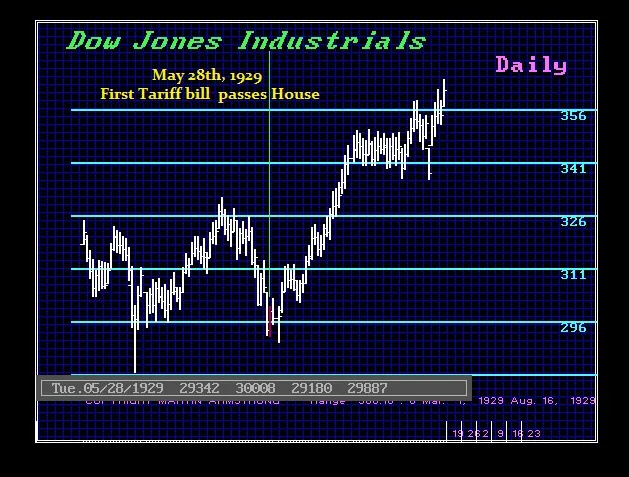
The 1928 Presidential election saw Herbert Hoover promise to help the farmers by increasing tariffs on agricultural products. Upon winning the election, Hoover did ask Congress for an increase of tariff rates for agricultural goods and a decrease of rates for industrial goods. He saw this as a balancing act to appease trading partner nations. Indeed, the House passed a version of the act in May 1929, increasing tariffs on primarily agricultural products. Those who have blamed Smoot-Hawley as a major cause of the 1929 Crash argue that when the House passed the bill on May 28th, 1929, which was the first version, the stocks were battered. This is simply not true. The bill was passed on Monday 28th which was a low and it was not attributed to the tariff bill. On May 3oth that week, the British elections took place and ended in a hung Parliament, which was regarded politically as a crisis. The following day, the Ford Motor Company signed a nine-year contract with the Soviet Union. The Soviets agreed to purchase $30 million worth of Ford products within four years while Ford agreed to provide technical advice and help build an automobile factory in Nizhny Novgorod. To say the market responded negatively in May 1929 in “anticipation” of the tariffs was simply not true.
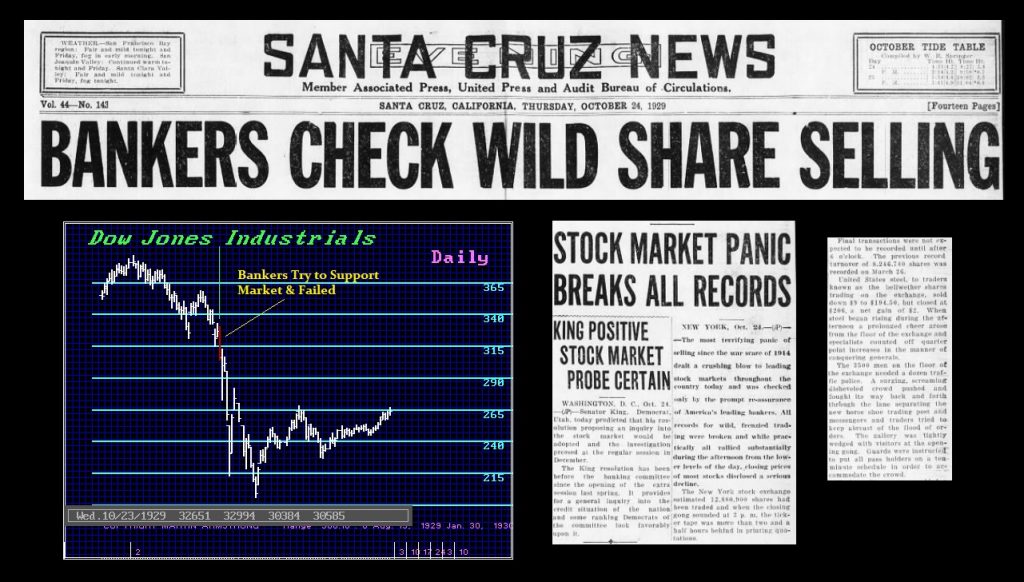
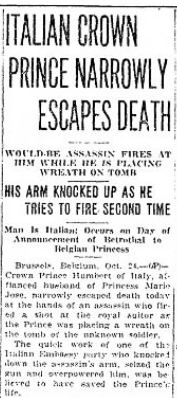
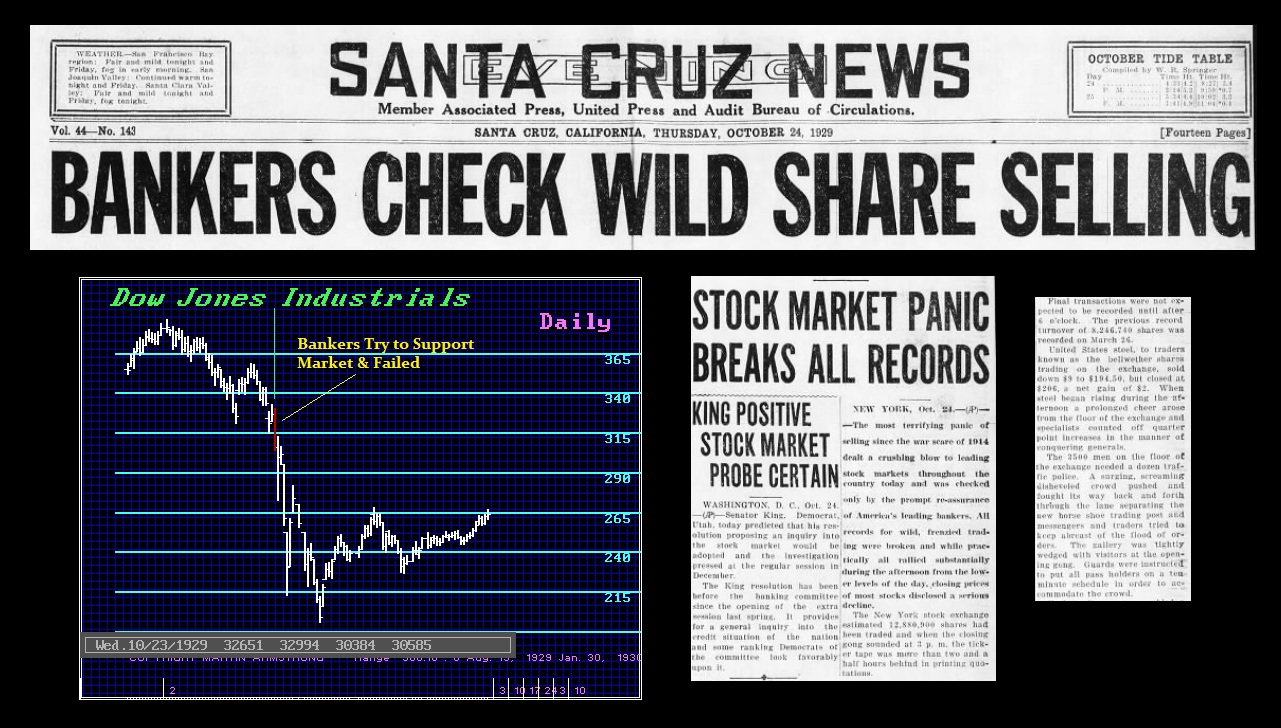
They further argue that on October 23rd, 1929, a Wednesday, it became clear the tariffs would be much broader than first believed. Again they portray the tariffs as the reason for the crash. I found no headlines to support that interpretation, which appears to be predetermined. In fact, that very day of the 23rd the bankers attempted to support the market. The downside of such intervention is when it fails, then confidence collapses completely.  Also on that day, there was an assassination attempt on the Italian Crown Prince. He narrowly escaped with his life.

This focus on tariffs as the culprit for creating the crash was an argument from the Democrats as they did against Reagan with “trickle-down” economics. Along with such tariff proposals, some of the senators advocated a detailed investigation of the Federal Reserve Banking system, as put forth in the pending resolution of Senator William Henry King (1863 – 1949) who was also a Democratic representative from Salt Lake City, Utah who served in the Senate from 1917 until 1941. Senator Carter Glass (1858 – 1946) of Virginia, who one of the authors of the Federal Reserve banking act and then the Glass-Steagall Act, also in the midst of the October crash the time to add to the crisis pushing his bill providing for the imposition of a 5% excise tax on sales of stock which had not been held over sixty days. It was his present plan to offer the bill as a “rider” to the pending tariff bill. To say that people feared the tariffs, which really did not impact the industrial stocks, is absolutely absurd. They were concerned about a 5% tax on stock investment the Democrats were trying to stuff into the tariff act. The Democrats contributed to created the crash in 1929 with these proposals arguing against the rich.

There was also talk of an investigation into the stock market decline to blame someone. Eventually, this would take place and lead to the creation of the Securities & Exchange Commission (SEC). Herbert Hoover in his memoirs apologized for the investigation into the stock market. On top of that, two men were arrested for placing a car on the train track which would have wrecked the coming train carrying President Herbert Hoover. No headlines I found covered tariffs as some dark omen for the economy.

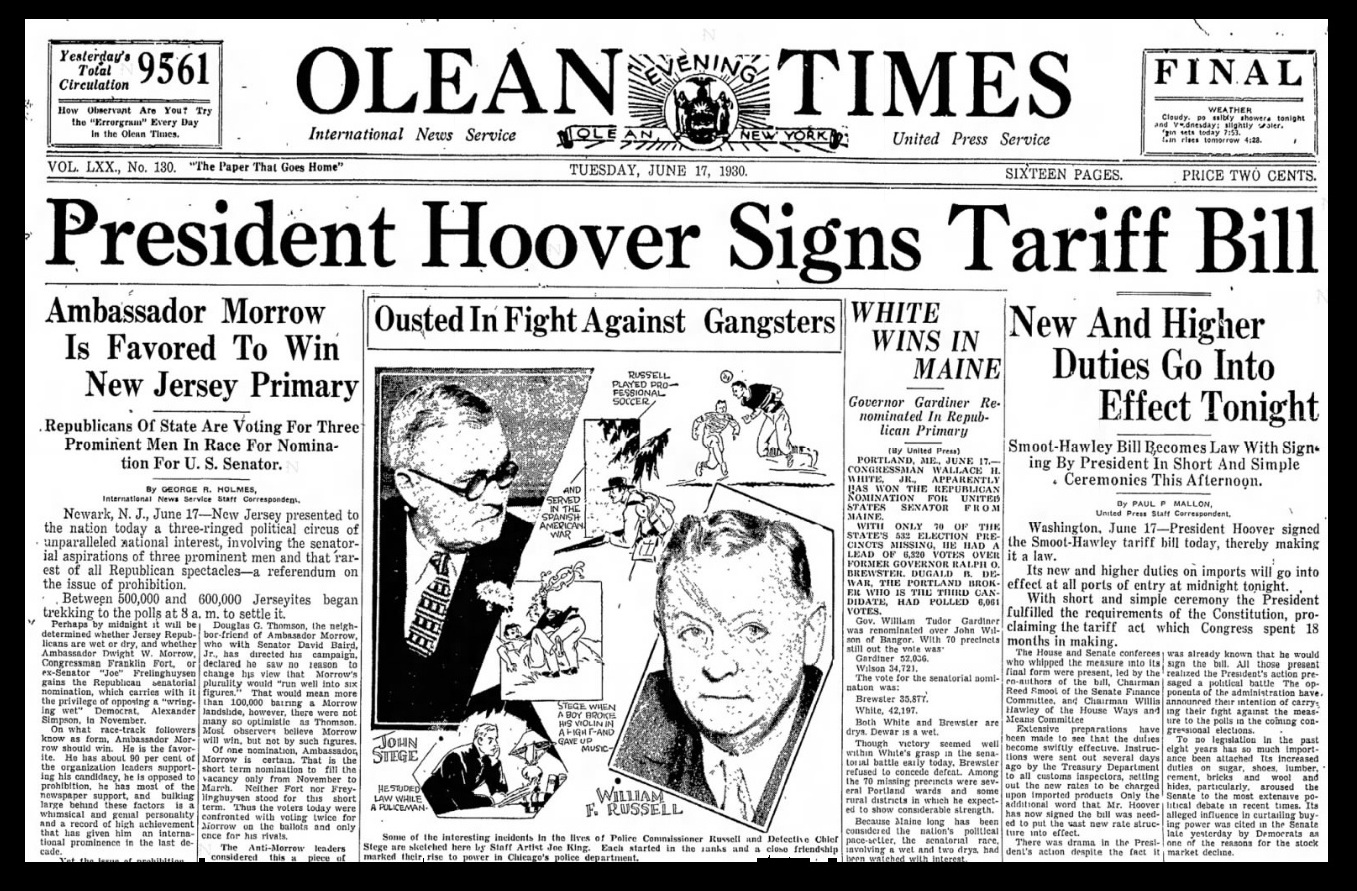
The Senate debated its tariff bill until March 1930, with many Senators trading votes based on their states’ industries. It was not purely supported by Republicans. The Senate bill passed with 39 Republicans and 5 Democrats voting in favor of the bill. The conference committee then aligned the two versions, largely by moving to the greater House tariffs. The House passed the conference bill on a vote of 222 to 153, with the support of 208 Republicans and 14 Democrats. The Democrats who voted for the bill were primarily influenced by the farmers. The Tariff Act of 1930 (codified at 19 U.S.C. ch. 4), commonly known as the Smoot–Hawley Tariff or Hawley–Smoot Tariff, implementing what would be called “protectionist” trade policies was signed into law on June 17th, 1930. Once again, when Smoot-Hawley was passed, I found no damning headlines how this would end the economy.
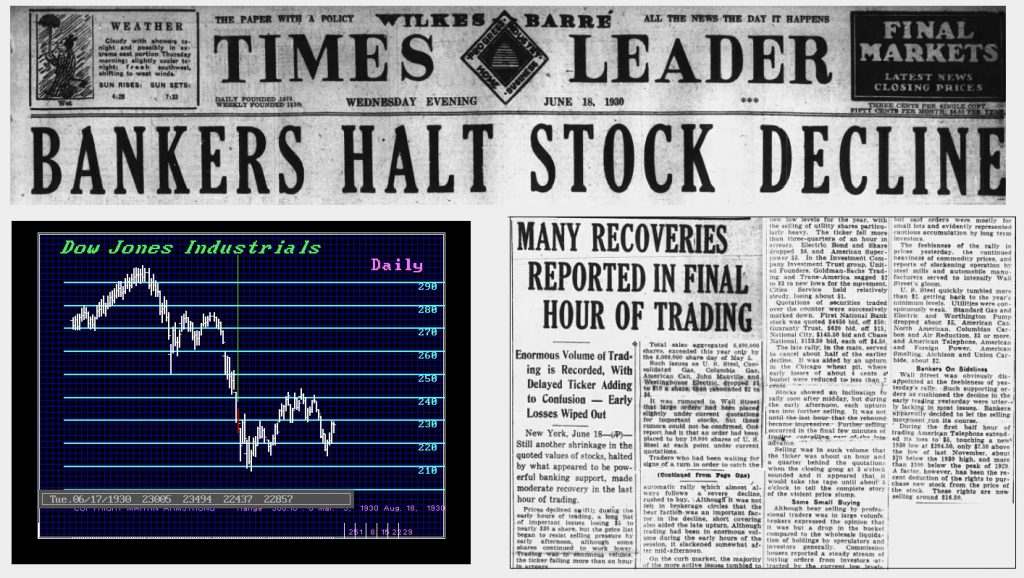
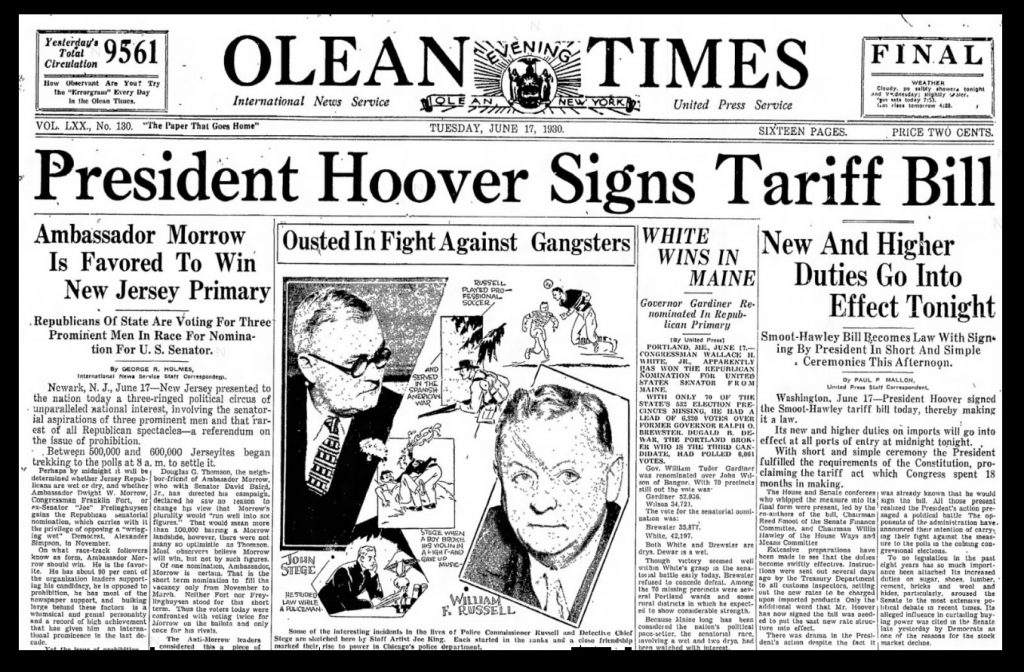
 

The bankers were in once again attempting to manipulate and save the market on the very day that Smoot-Hawley was enacted. I found no commentary that attributed the decline to the tariff issue. The day the bill was signed, the Democrats argued that the crash was because of the tariff act, which completely ignored everything else and was used simply as a political criticism of the Republicans. As the press wrote: “It increased duties on sugar, shoes, lumber, cement, bricks and wool and hides, particularly, aroused the Senate to the most extreme political debate in recent times.” Sadly, because the Democrats kept trying to blame the Great Depression on the Republicans, we have the entire tariffs issue still a present view of creating the crisis.
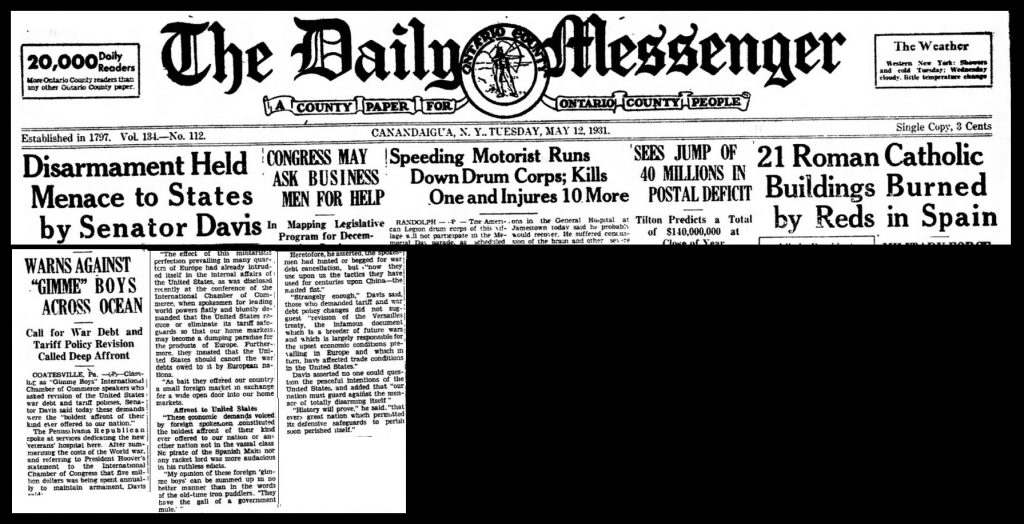
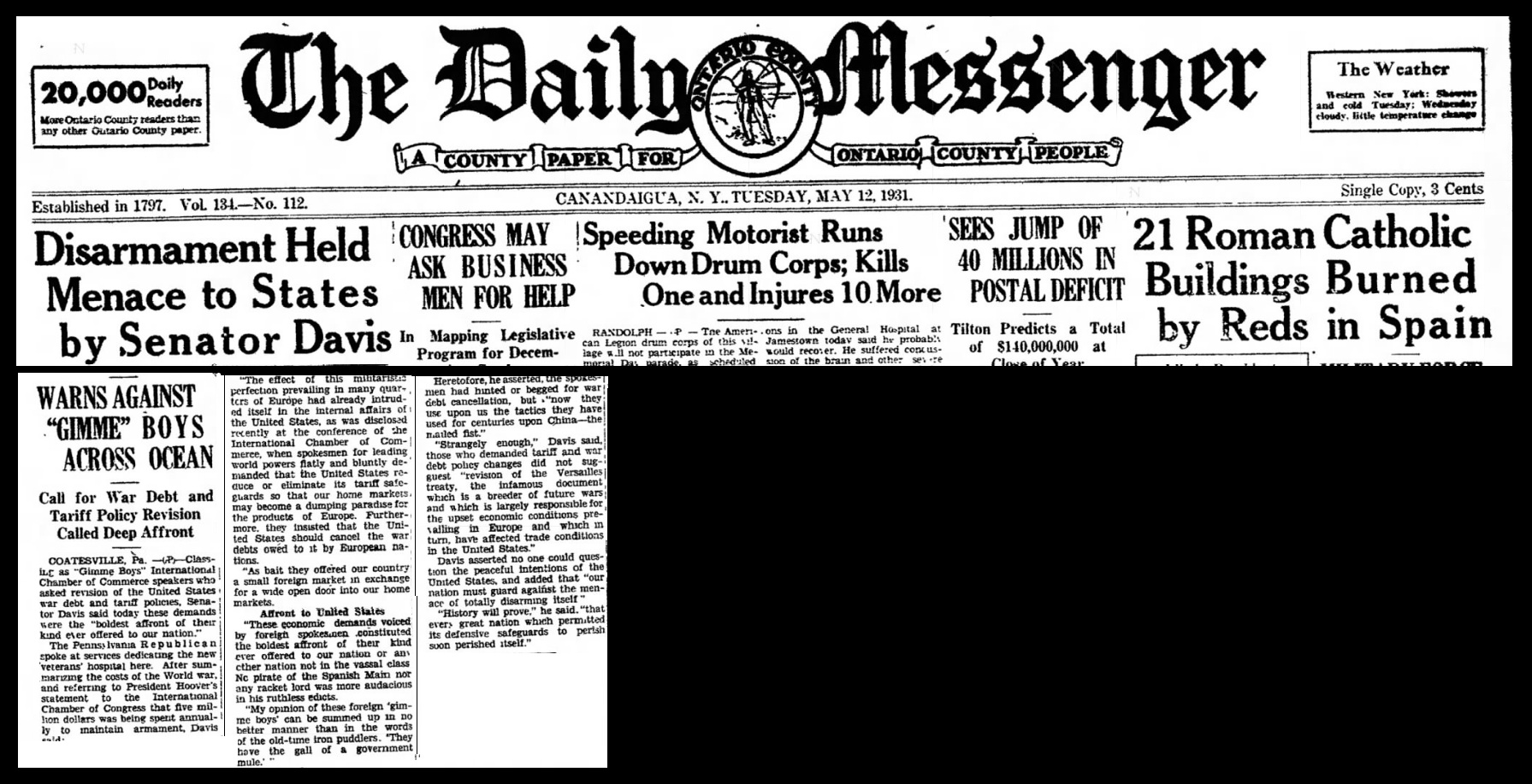
Spending was being cut especially to the military. The debated was thus really focused on the cut in spending and the tariff issue on top of aid to Europe. Many in Congress began to consider the Europeans calling them the “GIMME BOYS” for they wanted free access to the US market, blocking access to their markets to rebuild their economies.

We have to understand that the entire tariff issue began because of the overproduction of agriculture and that this had been 40% of the entire civil-workforce. The economy was transforming from an agricultural based system to one of industrialization. This economic transformation was NOT understood by politicians.

Then in 1931, the rug was pulled out of the world economy. With the bankers’ attempts to support the market always failing, the confidence level kept declining. Government and the bankers were suddenly cast in a light of total incompetance. Survival became one dependent upon oneself.

The Creditanstalt Bank in Vienna failed on May 11th, 1931, leading to a national currency crisis as investors began pulling their funds from Austrian banks and moving them to other countries. Meanwhile, Germany was in the political throes leaning toward fascism. It was on May 8th, 1931 that same month when the prosecution of Adolf Hitler by Hans Litten (1903-1938) for complicity in manslaughter committed by members of the Sturmabteilung at the Tanzpalast Eden (“Eden Dance Palace”) in Berlin in 1930 was dismissed. Litten was eventually arrested on the night of the Reichstag fire along with other progressive lawyers and leftists. Litten spent the rest of his life in German concentration camps, was tortured and constantly subjected to grueling interrogations. Finally, after five years of this treatment, cut off from all outside communication, he committed suicide. His attempt to stop Hilter’s rise was admirable, but it came at such a personal cos

Were the Crusades just for Plunder & Money?

QUESTION: Where the Crusades inspired by economics? You mentioned how Venice looted Constantinople.

Thank you for making history interesting

KR

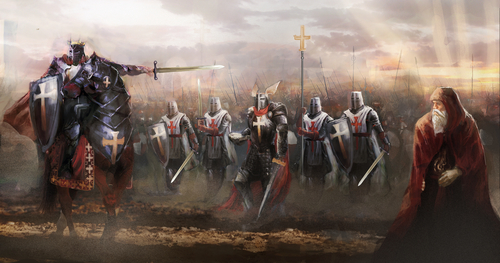
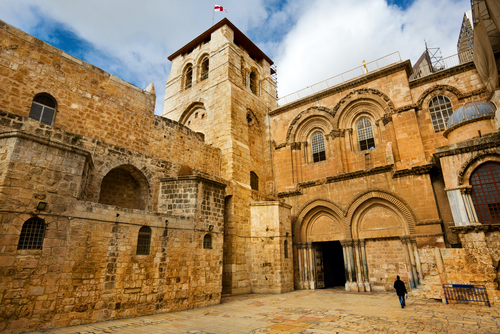
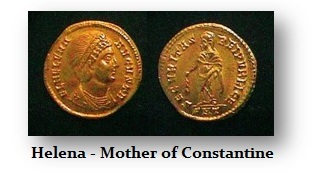
ANSWER: To understand the Crusades, we have to first look at what was the original justification. The Catholic Church encouraged pilgrimages from the 4th century, but they began really during the 1st-2nd century and built in intensity. Pilgrimages became very popular once Constantine the Great became emperor. Contemporary historians reported that Roman Emperor Hadrian (117-138 AD) built a temple dedicated to the goddess Venus in order to hide the cave in which Jesus had been buried in hopes of ending early Christian pilgrimages. Constantine ordered during 325/326 AD that the temple of Venus be replaced by a church which has become known as the Church of the Holy Sepulchre. It was during the construction of this church that Constantine’s mother, Saint Helena, is believed to have rediscovered the tomb.  Socrates Scholasticus gives a full description of the discovery in his Ecclesiastical History. In her final years, Helena made a religious tour of Syria Palaestina and Jerusalem, during which she allegedly discovered the True Cross.


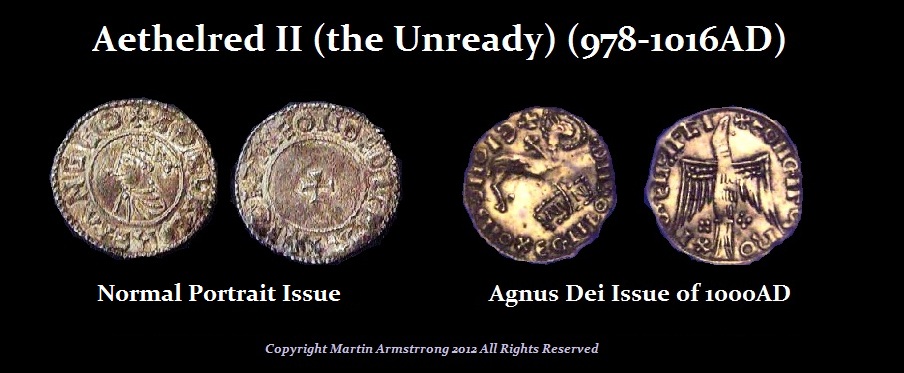
The pilgrimages to the Holy Land really began to rise in mass going into the year 1000. As the year 1000 approached, the doom and gloom was pervasive. Everyone assumed that the world would end and this would be last judgment. It became so common that the King of England removed his own portrait from the coinage and placed the Christian symbol of the lamb on one side and the Holy Ghost on the reverse. When the world did not end, he promptly restored his portrait to the coinage the following year.

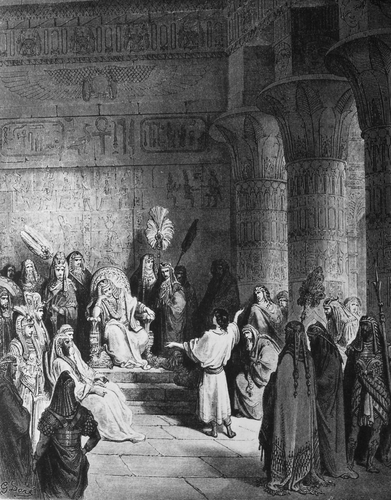
This belief in the end of the world prompted people to make pilgrimages to the Holy Land. This is when they were being robbed on their travels which became known as highway robbery. Political relationships between the Muslim caliphates and the Christian kingdoms of Europe had remained in a state of somewhat state of suspended truce. The Muslims allowed the continuation of Christian pilgrimages into Muslim controlled lands generally, but as with all political leaders, policies change with the change of regimes. During the reign of Fatimid Caliph al-Hakim bi-Amr Allah (996-1021 AD), because of this view that the world was going to end, a massive wave of pilgrims flocked to the Holy Land. His policies proved to be arbitrary and extremely harsh and at times sheer madness. He ordered the killing of all dogs because their barking annoyed him. He banned various kinds of vegetables and shellfish that he personally disliked. He also engaged in religious persecutions of Sunnite Muslims, Jews, and Christians. He appears to have been insane for he held that he was the incarnation of divinity. Al-Ḥākim in response to the pilgrims from Europe ordered the destruction of the Church of the Holy Sepulchre, which in part inspired the Crusades. Nevertheless, only to have his successor, Abū’l-Ḥasan ‘Alī al-Ẓāhir li-I’zāz Dīn Allāh (1021–1036), allow the Byzantine Empire to rebuild it. Al-Ḥākim was overthrown for he mysteriously vanished while taking a walk on the night of February 13, 1021, never to be heard from again. It was his actions that formed much of the basis for the Crusades. The four main crusader armies left Europe around the appointed time in August 1096. The Seljuk Turks also systematically disrupted Christian pilgrimage routes, which also became a major factor triggering the crusades.

So while the Crusades began as a religious quest of a Holy War, eventually they turned into profit ventures. The Venetian Empire finally saw the opportunity to conquer Constantinople. So while the Crusades did begin over religious issues, once there was money to be had, they became the means to pillage the old capital of the Roman Empire and carry off the loot back to Europe.

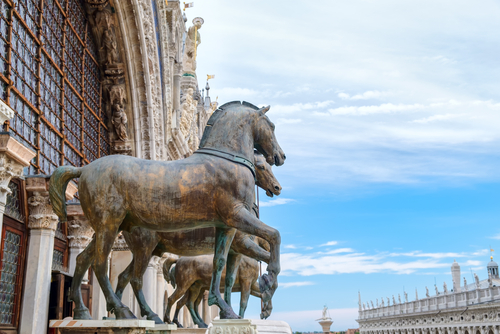
The Venetians stole the body of Saint Mark (one of the apostles of Christ) from Egypt and built a church in what is now known as Saint Mark’s square. On the facade of the Church stand four bronze horses, which are really 96.7% copper because copper melts at a higher temperature than bronze making it more difficult to work with. These were stolen from Constantinople in 1204 when the Venetians sacked the city. Their origins are not actually known. They may be the horses that were long displayed at the Hippodrome of Constantinople where chariot racing took place. They were perhaps the “four gilt horses that stand above the Hippodrome” as mentioned in the 8th- or early 9th-century contemporary historians. While the Venetians looted them in 1204 during in the Fourth Crusade, the collars that appear around the necks of the horses were added in 1204 to obscure where the fact that the heads had been severed for transport. Then in 1797, when Napoleon conquered Venice, he had the horses removed and sent to Paris. After the defeat of Napoleon, the horses were return to Venice in 1815.

So yes, whatever “good” deed is done, when there is money to be had, it appears that we should then just follow the money to reach the truth.