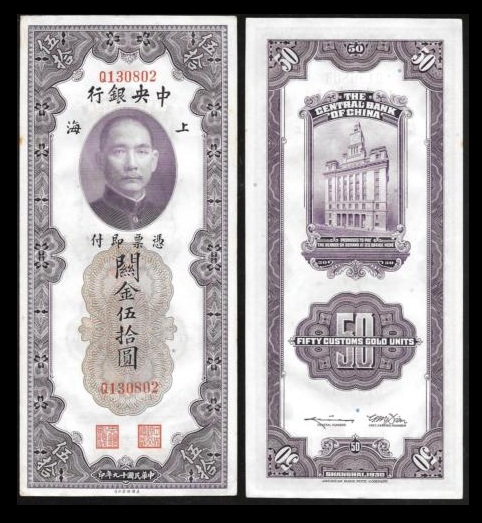
Shanghai 1930 Gold Backed Currency


QUESTION: Mr. Armstrong, what were the gold custom units issued by the Bank of China with the image of Sun Yat-sen.

PHR

ANSWER: The Customs Gold Unit (CGU) was a currency issued by the Central Bank of China between 1930 and 1948. On May 1, 1930, the Central Bank of China put in circulation notes in denominations of 0.10, 0.20, 1, 5, and 10 Customs Gold Units. These notes were printed by American Bank Note Company and dated 1930. CGU notes were originally issued by the Central Bank of China for payment of import duties. These notes were backed by U.S. dollars until 1935.

During and after WWII, the large-size CGU notes were issued for general circulation in China. The vertical face depicts Sun Yat-sen, who was the first president of the Republic of China. The reverse side features the Customs House in Shanghai, which was the commercial and financial hub of Chin

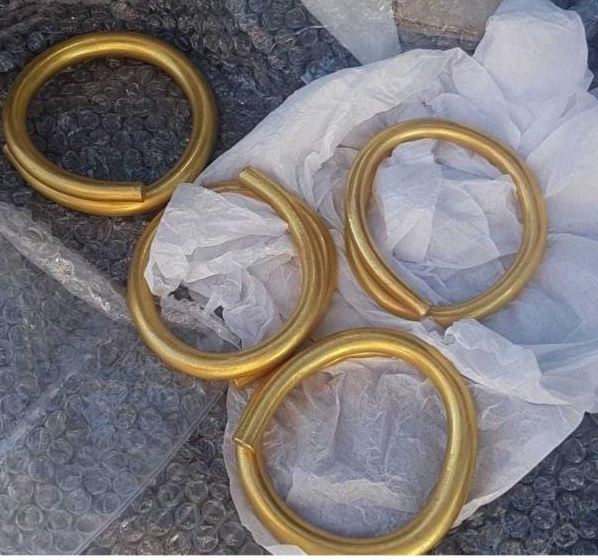
Celtic Gold Ring Money Discovered in Ireland


Gold rings were discovered in Ireland and they seem to be uncertain about their original use. The Celts did not create their own coins for many centuries. They used ring money which is commonly found throughout Europe, north of Italy. Celtic ring money is typically bronze. However, it is known that the Minoians sailed into the Atlantic and traveled to England where they traded to obtain tin, which when mixed with copper created bronze. However, the Celts were not the first people to inhabit Ireland for it was inhabited by humans since 6000 BC. There was no Celtic invasion but rather some Celts migrated only arriving in 500 BC. Nevertheless, ring money was probably known to the Irish prior to 500 BC.

The ancient Irish learned how to make bronze from the French Celts who settled in Ireland and brought the materials needed for casting simple bronze objects like arrows and taught the Irish the trade. The technology had already been in place for quite some time on the continent.  Ireland did have abundant copper deposits, which actually inspired the Irish to search the entire island looking for copper. They found it in Mount Gabriel in county Cork and Ross Island in county Kerry, two of the few known Bronze Age mines in all of Europe.

The gold rings recently discovered were handed over to the Donegal County Museum. The curator Caroline Carr told the BBC that: “This is a once in a lifetime find for our county…” Ireland was out-of-the-way even for the ancient Celts. When St. Patrick visited Ireland during the 5th century AD, he wrote that the monetary unit of account was slave girls. That did not mean you went shopping dragging slave girls with you to pay for things. Everything else was valued in terms of slave girls, so they were the “unit of account” which St Patrick said he had spent money valued at the price of several humans.

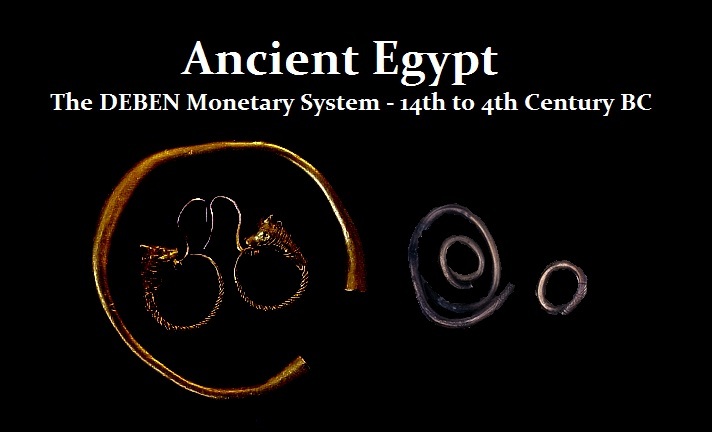
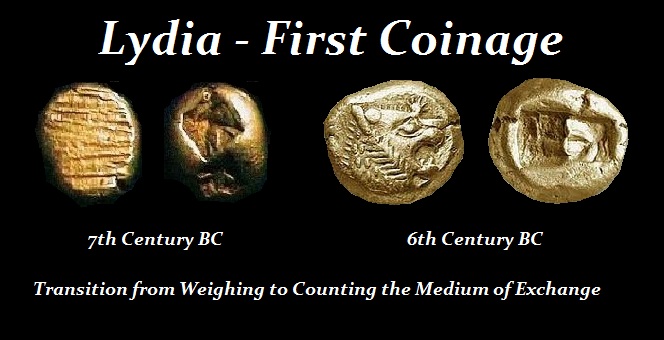
Nonetheless, Eqypt also did not strike coins until they were conquered by Alexander the Great in the autumn of 332 BC, thereby beginning the Greek period in Egyptian history. The Egyptians also used ring money. Coins were not invented until the 7th century BC in Lydia, located in modern day Turkey. They began as simply modules of a standardized weight. Later they were stamped with the seal of the king, a head of a lion. This effectively certified the first “official” monetization by any state.

The gold rings discovered in Ireland are money, not jewelry. There were areas in Ireland where gold was deposited that were known to inhabitants of Ireland in 2500-500 BC. Most people would never guess, but in fact, there are more Bronze Age gold hoards that have been found in Ireland than anywhere else in Europe! So the gold rings do not necessarily reflect international trade. Ireland was largely isolated.

Milton Friedman: The Rise of Socialism is Absurd


Published on May 15, 2017

Milton Friedman, recipient of the 1976 Nobel Prize for Economic Science, was one of the most recognizable and influential proponents of liberty and markets in the 20th century, and the leader of the Chicago School of economics. In this video from the grand opening of the Cato Institutes’s headquarters in Washington, D.C. in 1993, Milton Friedman gives a talk about popular political aphorisms, one of his favorites being the one he helped popularize in the title of his 1975 book, “There’s no such thing as a free lunch.” Complete Video quoted under fair use: https://www.youtube.com/watch?v=77fdR… This channel aims at extracting central points of presentations into short clips. The topics cover the problems of leftist ideology and the consequences for society. The aim is to move free speech advocates forward and fight against the culture of SJWs. If you like the content, subscribe to the channel

The Origin of Contagions lies in the Common Reserve Currency


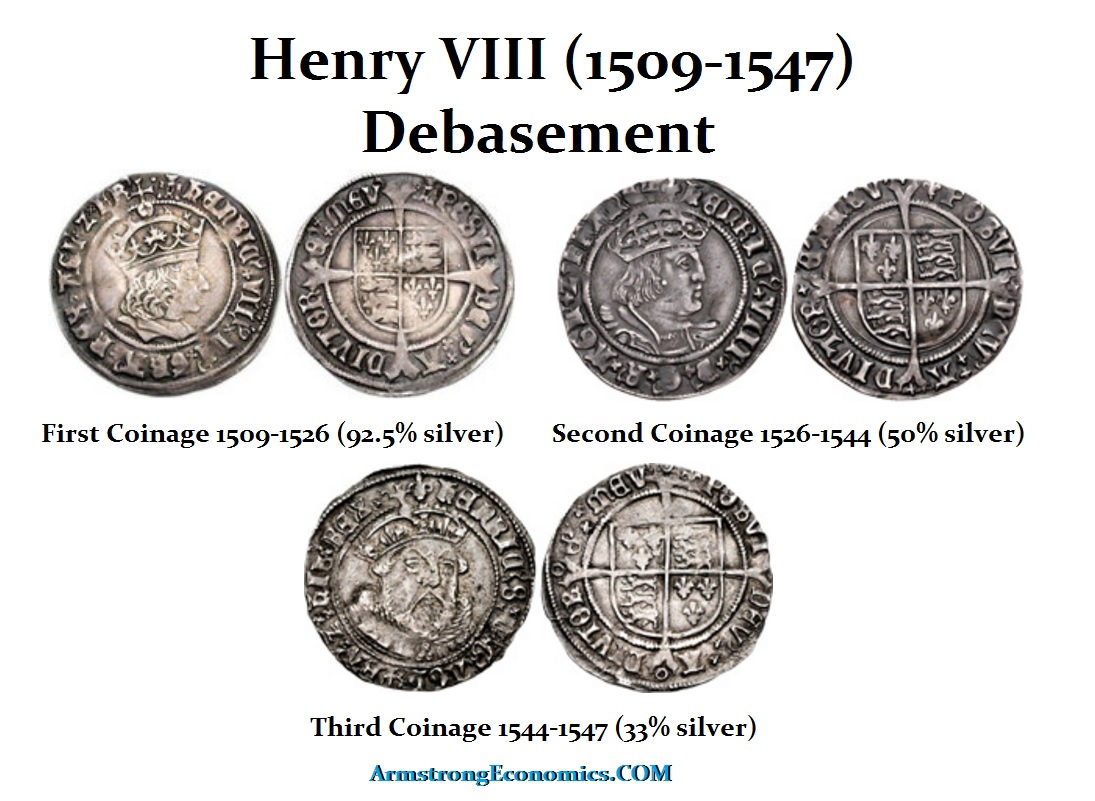
The question of money supply and inflation has been erroneously been set in stone predominantly by the debasement of Spain and Britain during the period of Henry VIII. This was really a period where there were various countries and their currency completely relied on the exchange market in Amsterdam, which was based entirely upon their metal content. This period was far less judgmental insofar as we have today where currencies rise and fall purely on anticipation of political events. During the middle ages, this influence of anticipating future value based upon possible political decisions was not readily dominant and the coins of one nation were compared entirely on their metal content.

For example, because of the French at war with Britain, they created a wave of inflation that spread like a contagion to other nations, namely Spain and Italy, because money was commodity based using gold and silver. In this way, there was really a single currency base among nations and the problems of one would be exported to all others by their debasement.


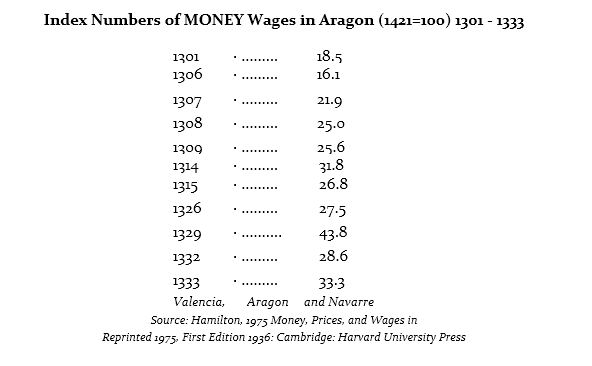
We can see that wages more than doubled even in Spain as inflation became a contagion. To cover the cost of war, France began debasing their gold and silver coinage. There was clearly economic pressure for in 1305, the French Crown issued a restored monetary system. The gros now appears at 12d fine and the denier are also returned to a sound MONEY standard. These were now worth 300% greater than the debased coinage in circulation. The gros was now worth 10.5 deniers for with the end of the war, precious metals fell in value for a marc of silver collapsed back to 56s 8dt. Despite the end of the war, gold demand remained strong in all countries. By 1311, the coinage once again was debased as precious metals rose in value. A new gold coin was issued known as the angel d’or that was valued at 20 st. The silver to gold ration now jumped to 15:1. Silver begins to disappear being hoarded and gold becomes more commonly struck in France and England. Yet the volatility seems to have been incredible for the times. Gold prices crashed in value and the agnel d’or dropped from 20st to 15st. Silver collapsed falling 25% in value at this time, yet the silver to gold ratio remained at 15:1.

Silver began a three-year rally reaching a ratio of 12:1 in 1316. This rally coincided with the death of Philip IV, but his successor, Louis X (1314-1316), appears to have struck no silver gros whatsoever. The only coins struck in his name are the gold angel. The coinage reflects a surge in inflation as reflected in wages going into 1329. We see bullion prices rising again starting in 1322 whereby in October that year, there appears to be a significant debasement whereby the fineness collapses to about 47%. The debasement continued in 1323 and again into 1326.

The Capetian dynasty dies with the three sons of Philip IV, none of whom had produced a male heir and thereby the line passed to the Valois Dynasty. We come now to a Monetary Reform of 1330, with a major effort to restore sound MONEY once again. They did learn that one could not simply return the MONEY supply to a sound footing overnight. They tried to phase it in more gradually, for it has the tendency to lead to the new MONEY merely being hoarded. Nevertheless, this monetary reform under the new Valois Dynasty was short-lived, for, in 1337, there was the start of the Hundred Years War with England and the invasion of Edward III (1327-1377).

Their accounting books of Peruzzi Company, one the main Florence bankers, covering the period of 1335 to 1343 have survived to provide us with the detailed footnotes to the history of this period. For by 1330, the Peruzzi Company was the second largest banking house in Europe, just behind the Bardi, with 15 branches covering the Middle East all the way up to London. They were not just a super-rich merchant-banking firm they were one of the earliest truly international companies to emerge. Their capitalization stood at 100,000 gold florin in 1330 and they had a staff of about 100 people. The Peruzzi had made a fortune on taking English wool and turning it into fine cloth in Bruges, and selling luxury products to Avignon, London, Paris, and Naples to mention a few. They also dealt in spices, silk, drugs, and other luxury items from the East. They emerged as a great wholesaler supplying credit to the lesser merchants and creating a vast sales network. They became dealers in large quantities of commodities that even included grain from Italy. Yet with the defaults of Edward III, the Peruzzi collapsed in 1343 and were driven into bankruptcy by 1345.

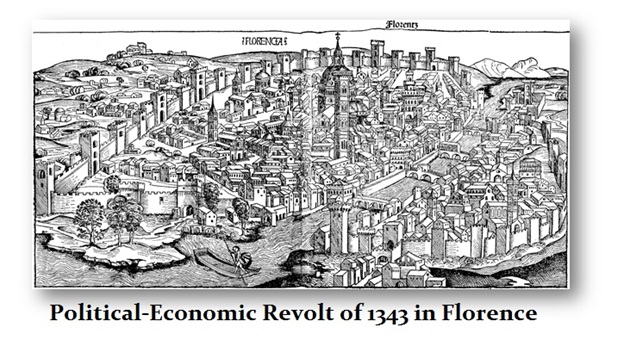
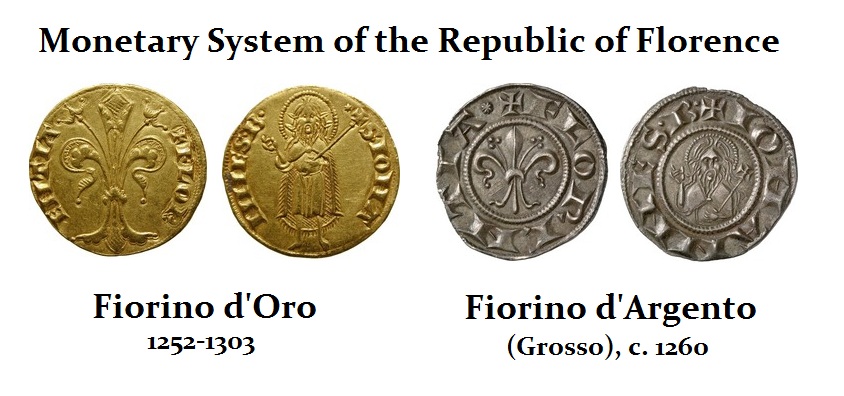
Because of the French/English war, the French drove the price of silver up dramatically. In Florence, they utilized a two-tier monetary system with silver used as the domestic coinage for wages and gold for international transaction much as Bretton Woods after Roosevelt’s confiscation of gold in 1934 domestically. Because of the French debasement, the price of silver rose and this disrupted the economy in Florence. Companies could no longer pay wages in silver and businesses failed. As unemployment rose, the people, not understanding the real cause, stormed the palaces of the banks and burned them to the ground. The bankers were blamed for the action of kings.

Therefore, the precious metal monetary system was by NO MEANS a good stable system where money was tangible. It also allowed for contagions that people did not understand. If we are going to create a new monetary system, the “reserve” currency cannot be one of any single nation. It must be a basket at best for this is the ONLY way to prevent contagions. Currently, with the dollar as the reserve currency, because we still use Demand Economics, then the raising or lowering of interest rates sets in motions contagions that will either export inflation or deflation to other countries. We need to understand how contagions take place and their origin.

Russian Summit Lining Up with ECM


QUESTION:

Hello Martin,

Hope this finds you well.

Long time follower of your site. Though I don’t always agree with your conclusions, I value your site as a great source of ideas that challenge my conceptions of how things work. Keep up the good work.

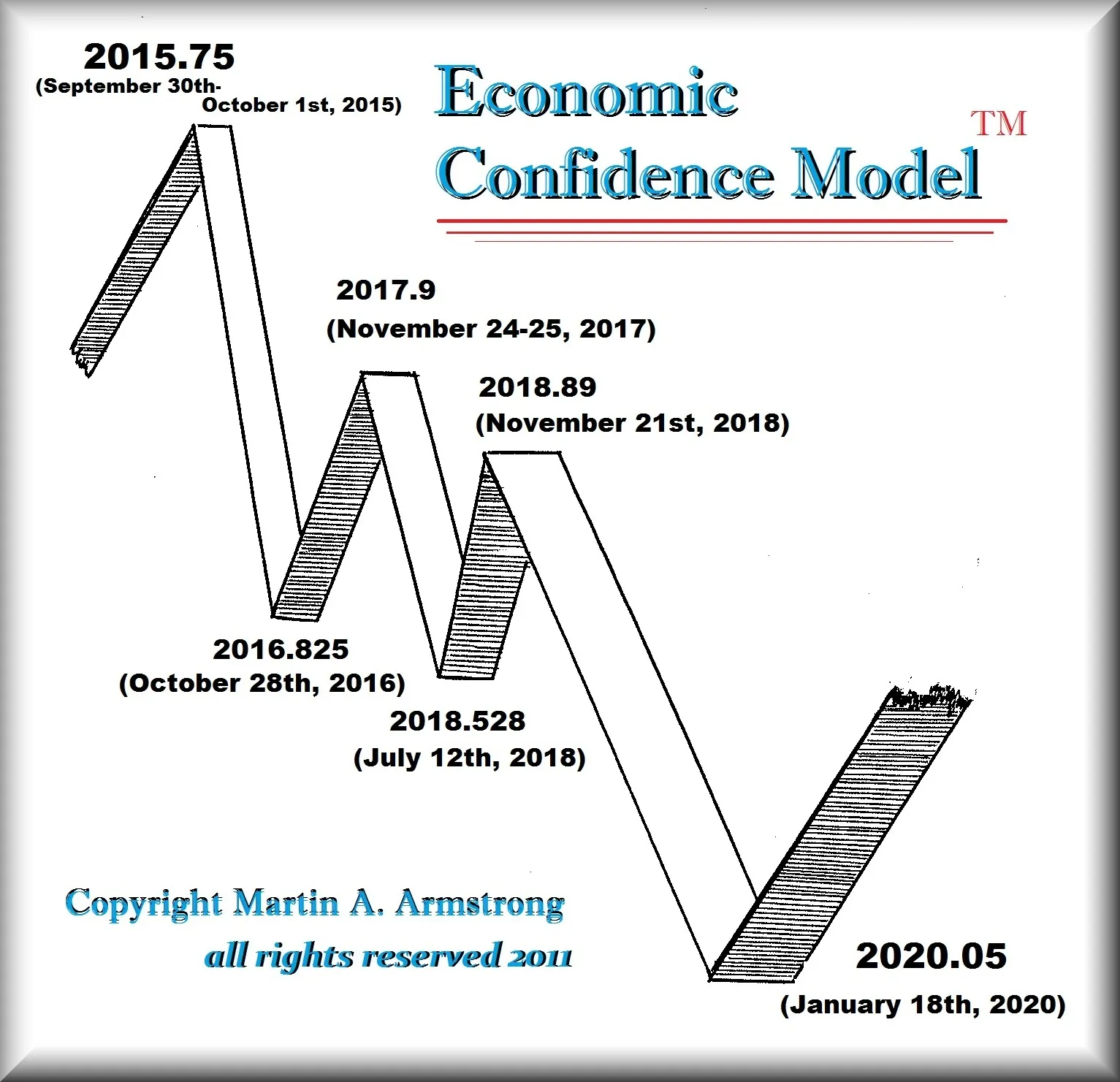
Having just read the story on the front page of the NY times about the upcoming Trump-Putin summit, I was curious as to wether you think there is any connection between the just confirmed summit on July 16 and the July 12th ECM turning point.

I know that a few of the previous turning points coincided with key events in Russia’s intervention in the Syrian Civil war. I remember you stating on your blog at the time that the alignment of key events in that conflict with the ECM suggested an important connection. Given events on the ground in Syria currently pointing to a conclusion in that conflict (with Russia, Iran and Syrian as the victors and the USA, KSA and Israel as losers), I wonder if you would care to speculate what July 12 ECM might bring with regards to that conflict.

Best regards,

JM

REPLY: This turning point is not the big one insofar as politics is concerned. However, events seem to gravitate around these points in time. This is war is building, but it is not really between Trump and Putin personally. The bureaucracy in the USA seems to want war. Perhaps as a diversion for economic problems with social programs. But the greater risk is a religious war between Iran and Saudi Arabia and we are seeing a rise in Shiites in Iraq. Taking Saddam Hussein out was really stupid. Both he and Qaddafi helped to keep the religious factions in check. With both gone, this is building into a religious confrontation. You even have the leadership in Turkey that is desperate to reestablish the Ottoman Empire also as a diversion for economic chaos at home.

What is interesting is that the quarterly arrays are lining up with the ECM for the first quarter turning point. It definitely looks very interesting for the remainder of this ECM wave.

Is Conversational AI Here?


IBM has been working on what we call Conversational AI. When I was working on developing Socrates’ Natural Language, I was not interested in creating a machine to debate me. I was interested in creating a machine that I could at least have a conversation with. I teamed up with Dragon Systems back then when it was still hardware. I built a system and gave it to my children so that the computer could learn how to keep a conversation going. It would remember what they spoke about, so the next time they came back its knowledge base grew. I came home one day and found my daughter by the computer with all her girlfriends, for apparently they did not believe she could communicate with the computer. No doubt all her friends ran home and demanded a talking computer from their fathers. Needless to say, it taught me a lot about how to create a machine to have a conversation with and this was back in the 1980s.

IBM has been trying to take this to the level of debating humans. They call it Project Debater. They carried out their first such public debate. The IBM Debater managed to score points for it certainly has a knowledge base that would be unprecedented. It can easily retrieve facts and information to mount evidence for its arguments in a rapid short period of time. However, the answers it provided did tend to ramble a bit and lack the human understanding of finesse in how to deliver it with a punch. All said and done, the technology definitely demonstrated that this is just in the primitive stages for now but the future will certainly improve.

Cryptocurrency Crash – Has it Done Long-term Damage?


QUESTION: Mr. Armstrong; I am impressed with your computer system for without historical data depth, it still manage to correctly forecast the high in Bitcoin. The BIS had come out against cryptocurrencies as has our central bank here in Switzerland calling them crude and unlikely to become a world currency without impressive advancement in the technology. With Bitcoin off more than 70% from the high, I am amassed that people keep calling for new highs. They did the same on gold. It appears to be some sort of emotional drug that these people get addicted to or are they just frauds?

Thank you

PVC

ANSWER: The Global Market Watch is best on the higher levels. There are over 100,000 different patterns and it is still learning. It is matching patterns it discovers and when it discovers a new one, it records it and tests against it in the future. So it was able to forecast Bitcoin correctly from a pattern recognition perspective alone. That does not require heaps of historical data. It is a very interesting tool which completely evolves with time. I find it funny when people try to argue against it pointing their finger at me personally when it is the computer that is doing that job – not my personal opinion. The daily level is the most volatile for the complexity is off the charts. The reliability increases as we rise through the timing levels.

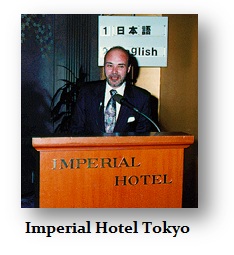
Nevertheless, there are some people who miss the high and refuse to admit that they are wrong. You had people constantly calling for gold to take off for a 19 year decline. Even after the 2011 high, I got intense hate mail blaming me for the decline from these same type of people. They prefer to blame me rather than admit that they were investing emotionally, which is the worst strategy of all. I have stated before that when I was doing an institutional conference in Tokyo at the Imperial Hotel, a guy bribed his way in just to ask me what to do. He bought the Nikkei the very day of the high with $50 million and it was his very FIRST attempt at investing in stocks. He still had the position despite being down some 40% at the time.

There is a basic rule that I have come to determine. A market can survive as long as the correction on a monthly level does not closed beyond 43% down from the high (8.6 /2). The next stage is 51.6%. Move beyond that and you cross into Meltdown Mode. Bitcoin crossed the 43% decline mark so that was a warning this was not a short-term correction from which new highs were possible. Moving beyond 51.6% meant that new highs are not likely for quite some time.

The Swiss National Bank has come out and stated it is not looking at cryptocurrencies and the blockchain technology for they consider them “far too crude” to support a digital franc. The Bank for International Settlements (BIS), the central bank to the central banks, has also come out with devastating prespective of the cryptocurrencies. They have highlighted the hacking and a number of perceived technical flaws as a major deterent to them advancing to a digital currency among nations. The BIS flat outright made it clear that they are too unsuitable to serve as a new global currency.

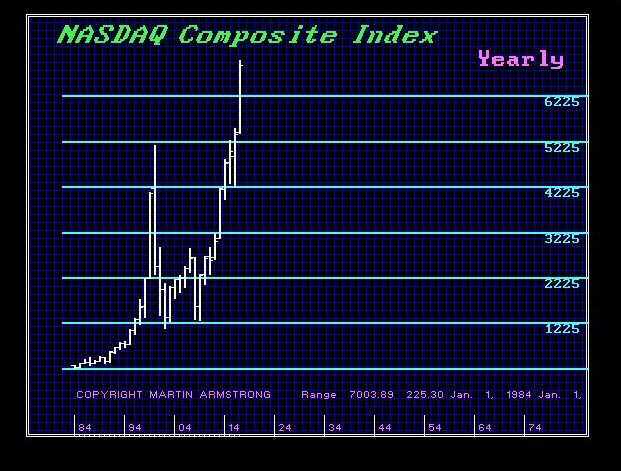
Of course, those who are the new crypto-believers will never yield. They believe what they WANT TO believe and close their minds to anything else. They analyze, forecast, and invest purely on emotion. Whenever emotions are involved, decision will NEVER be prudent, wise, or successful. This seems to be some strange human flaw for it is by no means confined to cryptocurrencies. As I have stated before, this same type of pattern appears throughout history in everything from tulips, stocks, gold, silver, and DOT.COMs just to mention a few. However, like the DOT.COM Bubble, there is valid shifts in technology that will advance in the years ahead.  The NASDAQ decline was 78.4% in two years 2000 to 2002 bottoming with the ECM turning point back then. BitCoin dropped 69.06% in the first two months. June made a new low bringing the correction to 69.83%. It took the DOT.COM Bubble 18 months to reach that same percentage decline. It took the Japanese Nikkei 106 months to reach that percentage decline. For the 1929 Crash, it took 24 months to reach that same percentage decline. Therefore, it is abundantly clear that the losses in cryptocurrencies have dwarfed most other bubble declines and it reflects the skepticism inherent within as smart money realizes this is not going to circumvent central banks and bring governments to their knees

Trade War with China


QUESTION: What is your “opinion” on the Trump tariffs dispute with China?

ANSWER: Years ago, an old friend from high school was in the Philadelphia Steam Fitters Union. They went on strike for a very long time. He finally came to me and asked for a job. I gave him one and all I ever heard was how if he stayed 15 minutes longer, he would be paid double time. I sent him to New York and everyone always came back by the end of the day besides him. When I asked what happened, he said it was 3 o’clock and there was no point to come back to the office for just a couple of hours. This was the 70s. He drove a Toyota. When I asked why he was driving a foreign car he said it was cheap and reliable. I asked what about the union jobs he was bypassing. He did not answer. Needless to say, I had to fire him.

It’s always comical to me how people always want the cheapest price they can buy, and then they want the highest possible wages to work. I believe in free trade. Tariffs are only forcing consumer subsidized high wages. If someone can produce the same product at a better price, that is the benefit of the consumer. Those people should move on and retrain to an industry that is higher paid rather than demanding excessive wages for jobs other can do for a lot less.

The United States really has a trade surplus of about $1.4 trillion when trade is allocated to the flag a company flies. The USA is moving more into the high-tech areas. Lawyers are a dying profession and medical is slowing by overpricing itself and there too we will see real price shocks. Let the free markets decide the future. That is what they are good at

What are Ancient Coin Hoard so Vital to History


QUESTION: Sir; I have noticed that the Roman and Greek hoards of coins you have offered are silver. You do not offer hoards of bronze coins. I have two questions. First, are broze hoards less common? Second, why have you been a buyer of large hoards to begin with?

Thank you

LW

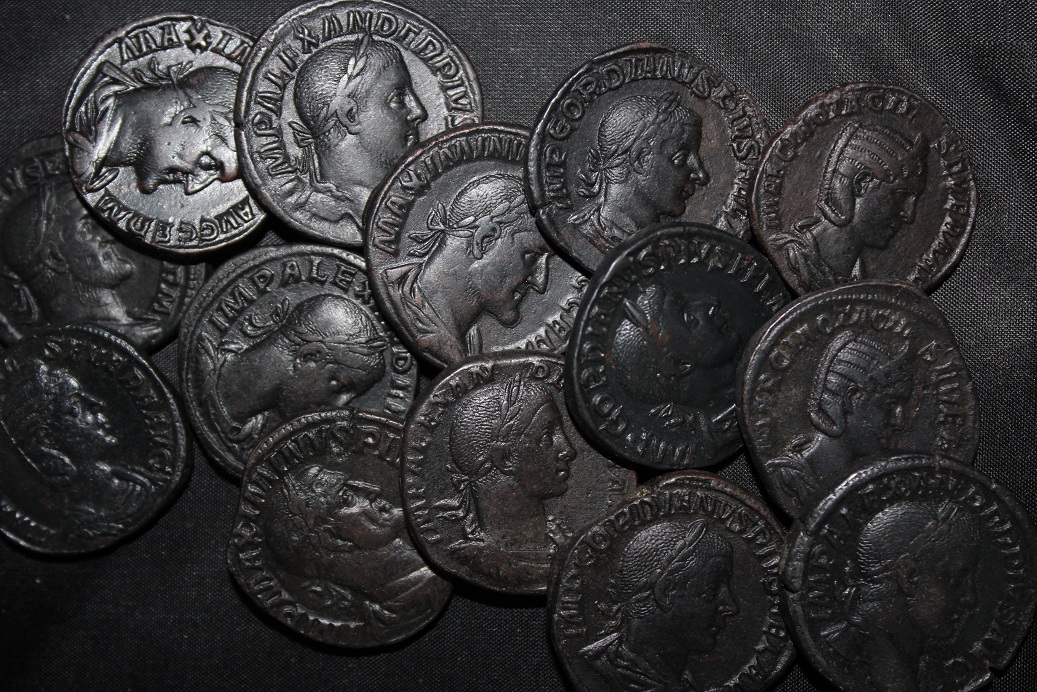
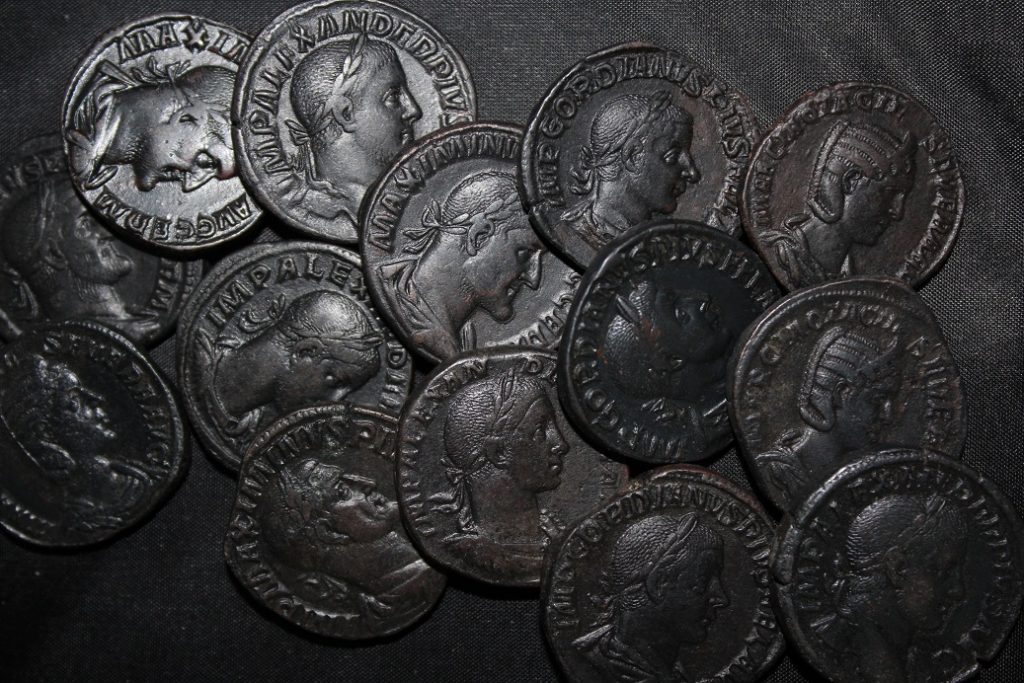
ANSWER: There are hoards of bronze coins from the 3rd century that are found. However, bronze corrodes easily. Therefore, the hoards that do exist are far too often not really salable because the condition is typically quit poor. I do have one small hoard from the early 3rd century that begins with Maximinus I (235-238AD) who really begins the major decline of the Roman Monetary System when he targeted the rich and simply declare that everything they owned belonged to the Empire, a very early version of Marxism. I will make this available, but there are only about 100 bronze sestertius that was the main unit of account. The condition is excellent for bronze since there are not corroded.

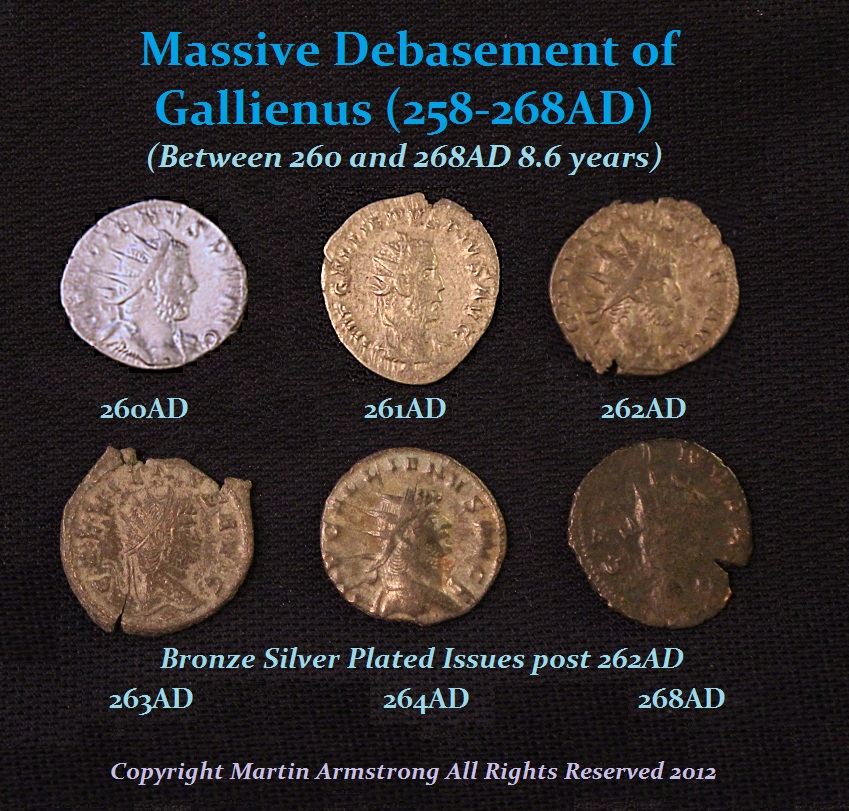
I also have a later 3rd century hoard of antoninianius which were once silver and had been debased to bronze silver plated. This was a hoard I purchased back in the late 1980s with over 10,000 coins. However, the salable coins were probably less than 3,000.
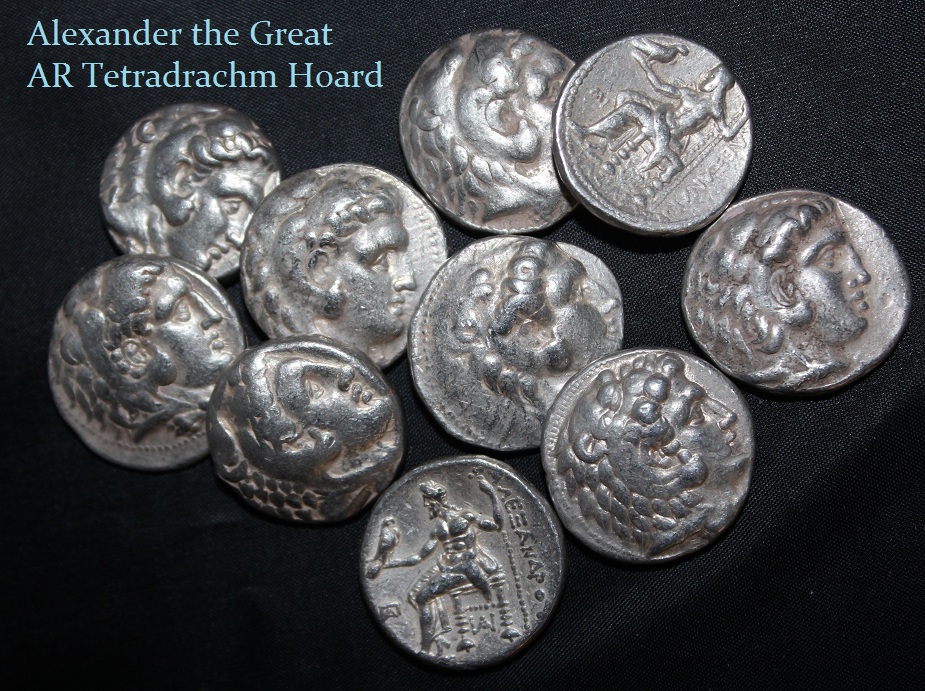
I have the other part of the Alexander the Great silver hoard. This was mostly drachms, but there are some tetradrachms as well perhaps about 100. Now, as to why I have purchased hoards over the decades is simply that they provide a snapshot of the economy at that point in time. This demonstrates what was in circulation and a hoard can be dated by the last coin included and this has correlated with periods of economic stress.

Now, in the case of this Alexander hoard, intermixed you find contemporary imitations that are struck on the outskirts of the empire. Here are contemporary imitations that were inside the hoard. They are generally of the proper weight, but you will notice that there is some small parts that are corroded. This reflects that the silver was not properly refined.
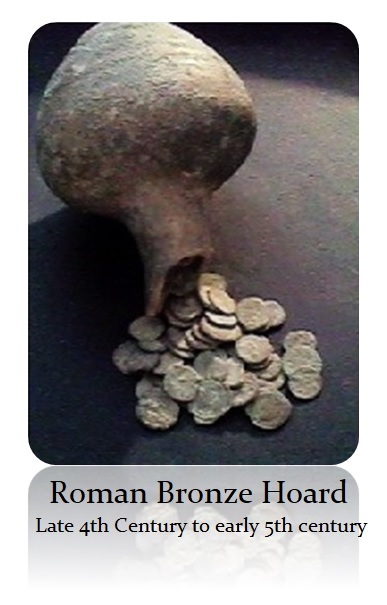
 Here is a jug I purchased also back in the early 1990s. It contained the small reduced bronze coins toward the collapse of the Roman Empire. Despite the fact that they were inside a jug, you will notice that they we covered in corrotion to varying degrees. Therefore, the find was more valuable as a snapshot of the economy rather than as a hoard of salable coins.
In 2007, there was a huge hoard disovered in England with over 50,000 coins. Again, they were bronze and it was a mixed find where some of the coins in the center were salable and others were interesting snapshots, but corroded.

These type of hoards from the 3rd century exist because of the stressful period both politically as well as economically. This is also when the barbarian invasions were beginning and as I have stated before, it was Aurelian who constructed the wall around Rome to protect it from the barbarians in 270AD, which was not needed previously.

Large hoards are typically found burried in pottery. In a southern Spanish park, construction workers dicovered a 1,300-pound hoard of Roman coins. A Viking hoard, the second such large hoard discovered in Sweden, has been unearthed revealing that the majority of the coins are from the Arab world. Hoard of this nature demonstrate how the trade routes fundctioned. Hoards are discovered in Asia and the Middle East. A hoard was disovered in Israel with Greek tetradrachms from the 2nd century BC. Roman coins have even been discovered in Japan. This has opened a lot of questions as to how did 4th century Roman coins end up in Japan.
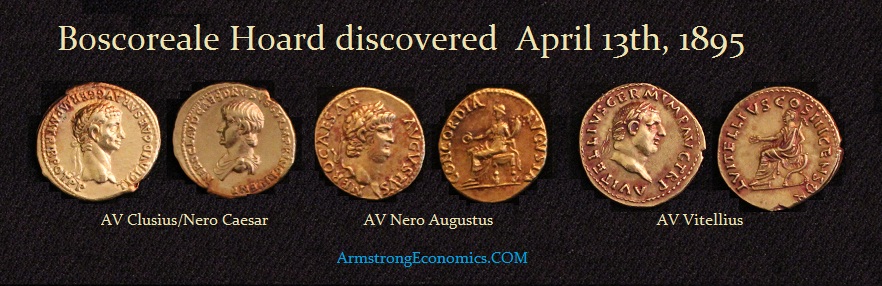
Not all hoard have been because of economic stress. One of the most famous hoards was stashed away because of a volanic eruption. The Boscoreale Treasure/Hoard is the name for a large collection of Roman gold coins along with exquisite silver and gold Roman objects discovered in the ruins of an ancient villa at Boscoreale, near Pompeii, southern Italy. Consisting of about the 1,350 gold aurei, which included 637 gold coins of Nero alone. This one hoard was worth 135,000 sesterces, which was more than half the tolal value of coins discovered in Pompeii itself. There were also over 100 pieces of silverware, as well as gold jewellery. The disovery of objects is now mostly kept at the Louvre Museum in Paris, although parts of the treasure can also be found at the British Museum. The coins were sold over time to collectors.

Caecilius-Jucundus-NaplesThe precious metal objects from the Boscoreale Treasure were illegally exported from Italy and were purchased on the black market by Baron Edmond de Rothschild (1845-1934), who donated it to the Louvre Museum in 1896. It appears that the objects were deliberally hidden in the storehouse prior to the eruption of Mt. Vesuvius. The name written on many of the containers was Maxima. A woman was found dead in the ruins, but we do not know if she was Maxima or a servant who stayed behind. The villa appears to have been owned by Maxima’s father L. Caecilius Jucundus, who was a banker from Pompeii. This one hoard was a substantial cash reserve of the banker. That makes sense given the vast wealth in coins discovered. He also seems to have inherited the wealth of the Julio-Claudian dynasty in Campania. Jucundus had a villa in Pompeii as well and his banking records have survived.

Boscoreale is well known to Roman numismatists as the find spot of a hoard of about 1,350 gold aurei, the latest of which dates to 78AD whereas the volcanic eruption from Mount Vesuvius on August 24, AD 79 burried the villa in ash. The villa remained undisturbed until 1876. The coin hoard lay undiscovered for almost another 30 years. Unfortunately, there was no formal study of the Boscoreale coins made before they were dispersed into the market. There was a list pubished 1909 which included material from other finds as well.

Nonetheless, thre three coins illustrated above all have a very distinctive feature that identifies them from Boscoreale. This is their deep-red toning. The Boscoreale Hoard was discovered in the water cistern of a villa, where the owner had hidden it fearing an impending catastrophe. Perhaps, the hoard was stashed when the eruption began. However, what killed the people was the deadly pyroclastic cloud which engulfed the region. It was the resulting intense heat of which imbued all the gold coins with the beautiful red toning that we now see almost 2000 years later.
The coins were sold and there was often written tages noting their origin such as an aureus of Nero from the A. J. Fecht bequest to the American Numismatic Society from 1948 which had an original tag that noted: “ex Boscoreale find, Pompeii, 1898”. We should not underestimate the total currency stock or supply held by non-aristocrats living in the Pompei. The fugitives who died in room 10 of the Villa in Oplontis carried with them over 18,000 sesterces worth in cash. Life in Pompeii did not stop instantaneously when Vesuvius erupted. Fugitives took valuables and money with them. The coins found with skeletons are a mix of savings, daily earnings, and pocket money. The coins found in the shops and houses reflect what fugitives left behind. Looting and salvaging after the eruption further complicate the picture.

The average size of the hoards is six times the yearly subsistence for an adult at that point in time yet the number of persons depending on this money or the time span over which the hoards were formed is unknown. Therefore, the discovery of the hoards from pompei are more complicated than the hoards discovered elsewhere in times of economic and political uncertainty. These type of hoards reflect generally one person which is different from the hoards of Pompeii itself as distinguished from the banker’s hoard or cash reserves reflected in the Boscoreale discovery.

I will prepare some of the coins from hoards for clients to select. It just takes time to ensure which coins are of sufficient grade to offer in the first place.

Another Volcano Erupts in Indonesia


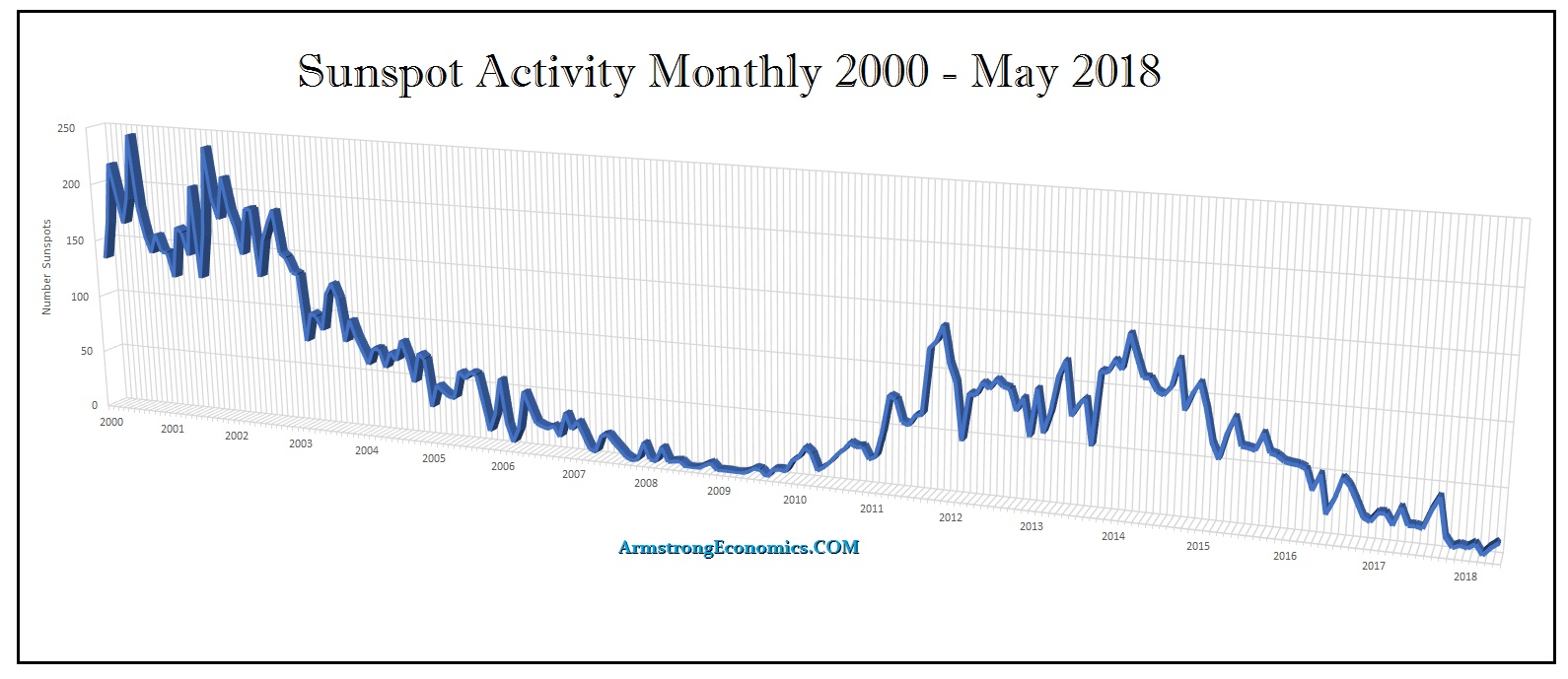
We now have another volcano erupting in the Pacific. The second one happened in Indonesia. Mount Agung on the Indonesian island began to erupt on Thursday forcing evacuations. More than 400 flights had to be cancelled because planes cannot fly through volcanic eruptions. I have been warning that simply correlating all the data illustrates that when the energy output of the sun declines moving into solar minimum, this is when we historically see a sharp rise in volcanic eruptions. The exact cause is not my job to figure out. It probably has some link to gravity.

Nevertheless, the greater the number of volcanic eruptions, the greater trend we will see toward global cooling and that can lead to crop failures and famine. This has NOTHING to do with my personal opinion or some theory I have concocted to support a predetermined conclusion. This is simply the correlation, plain and to the point. I will leave it to someone else to explain the cause. I am merely pointing out what has come out of our computer model that is tracking everything. This is NOT me making some opinion or lucky guess. It is what it is, not me personally. It is also NOT something I would enjoy being correct on. I just report what comes out of the computer.

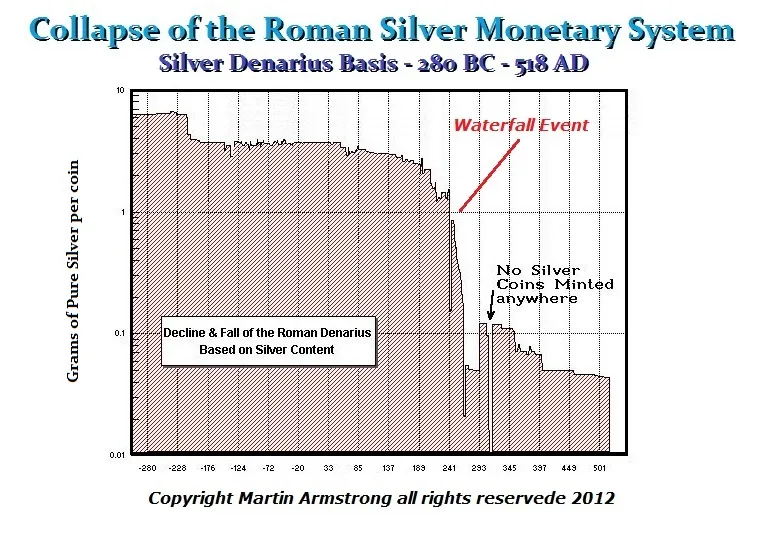
People have tried to see if they can duplicate our model. I really get a chuckle out of that. They expect to do it on the cheap by getting free data. Good luck on that one. I had crews go to the Royal Newspaper Library in London to work for more than a year to collect price quotes back to inception because most of the data required for long-term forecasts does not exist in public databases. I had to assemble the massive collection of monetary history to actually track the economy back into ancient times. The scope of the data to even test such correlations is massive. This stuff cannot be accomplished by free downloads. I discovered what I have called a Waterfall Event by putting the Roman monetary system together to answer a simple question: How did Rome fall? Was it gradual or abrupt?

I have been fortunate in life. I was able to make enough money to fund a research project that no one else seems to have been willing to spend the same time or money on. It was simply a passion of mine because I enjoy history. I was also not married so I had the time to do what my passion inspired me to do. Everyone always asks when will I get married. I respond, 1) when I meet the right person, and 2) when I grow up.

Until then, I simply follow my passion. Life is a journey or a quest for the pursuit of knowledge. When there is nothing left to learn, it is time to be beamed up. Just my personal philosophy. So enjoy the pursuit of knowledge. You never know where it will lead us.