Protectionism & Trade Wars


While Trump is being portrayed and the insane President hellbent on destroying world trade, the truth is the tariffs on steel and aluminum account for 0.2% of GDP or just 2% of actual trade flows of $2.4 trillion. On top of that, every president at least since Jimmy Carter has imposed protectionist tariffs on some portion of trade flows. Indeed, Trump has an old-world view of trade as just about every world leader. They look at trade only from a job perspective and NEVER from the viewpoint of the consumer. Anytime a country imposes a tariff to stop what they think is “unfair” competition, in reality, they are creating unfair competition. Why pay $3 for a head of lettuce if you can import it for 25 cents? This only makes the consumer pay more reducing their standard of living. Nobody ever looks at that side of the coin.

Proposed Monetary Reform in Switzerland would Destroy the Country


In Switzerland, we have the perfect example of the old saying – a little bit of knowledge is dangerous. We have activists who are clearly living in a world they comprehend no less than the financial system. These people have managed to get a referendum on changing in the financial system with the same promises of Karl Marx that this will end all financial crisis to come forever. The referendum is scheduled for June 10th, 2018 after they got 100,000 signatures. The organizers are calling this the Full-Money Initiative. They understand that the bulk of the money is actually created by banks through lending. Their solution is to bar private banks from lending on any leveraged basis by setting limits on lending. They will be unable to lend money beyond what they actually have on deposit. They cannot create money by new loans. This is the most stupid Idea I think I have ever heard. They have no idea what the Full-Ramifications will be of such a proposal.
The promoters are advertising this will make the monetary system more secure and preventing financial crises. “Now we are stepping up our efforts to explain to people where their money really comes from and what the risks are in the old system,” said Emma Dawnay, a member of the organizing team, according to Reuters. They are promoting this Sovereign Money Initiative to stop the financial crisis cycle that they have no idea of how such events are even created.

According to their plan, banks will only grant loans to the extent that they have previously received funds from savers, other institutions or the central bank. For the creation of money then only the central bank would be responsible. However, she rejects that their initiative will create an economic upheaval introducing tremendous uncertainties. Clearly, she is qualified for government service because this is the precise attitude which creates the very thing she is pretending to prevent.

Obviously, she may have a Ph.D. in other fields, but that does not qualify her for anything else. She thinks that banks lending money which leverages the system is the CAUSE of a financial crisis so she wants to hand the power to create all money to the government – the very people who are incapable of balancing a budget or managing even a bubblegum machine. When they are out of bubblegum, they just go steal some more and open shop again since they spent all the money they took in before.

Government is the single biggest borrower in society. So how will they sell their debt without creating more money?  Then we have the problem that if the government has to create the money and approve all loans, then politics will enter the scene and you will be unable to borrow if you are part of the opposition. Andrew Jackson destroyed the Bank of the United States BECAUSE they lent money to the opposite political party to defeat him. There was no magnanimous effort to save the country.
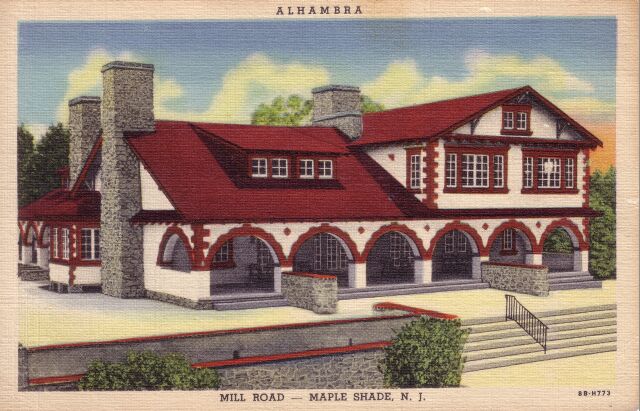
Barlow Mansion Maple ShadeThen this idea shows truly their underlying ignorance for if you cut off lending, well guess what! They will be unable to sell their homes and the value will crash because the only buyer will be someone with cash. The town I grew up in, Maple Shade, New Jersey, was once the suburb of Philadelphia. The real estate developer was Barlow who built his mansion (pictured here) in town where my parents met before World War I.

One of my father’s friends had cash during the Great Depression. He bought most of Main Street back then for pennies on the dollar for there was a shortage of money with no bank lending. This is precisely the outcome of this Sovereign Money Initiative if it actually passed. Switzerland would be the greatest short of all time. No bank would survive and the government would suddenly find NO BID for its new debt.

These people are dangerous for they are just like those who want to shut down the Federal Reserve with simply stupid ideas that demonstrate they too fail to understand even how the world economy functions. The first world financial crisis took place in the Panic of 1857. This was the first Panic to appear as a global contagion. The 1720 collapse of the Mississippi Bubble in France and Southsea Bubble in England was a contagion set in motion within Europe. However, the 1857 Panic was set in motion by the declining international economy because of the interconnectedness of the world economy during the 1850s. The financial Panic began in late 1857 in Britain when the Palmerston government circumvented the requirements of the Peel Banking Act of 1844, which required gold and silver reserves to back up the amount of money in circulation. In that instance, the government lifted restrictions because the banks were in trouble.
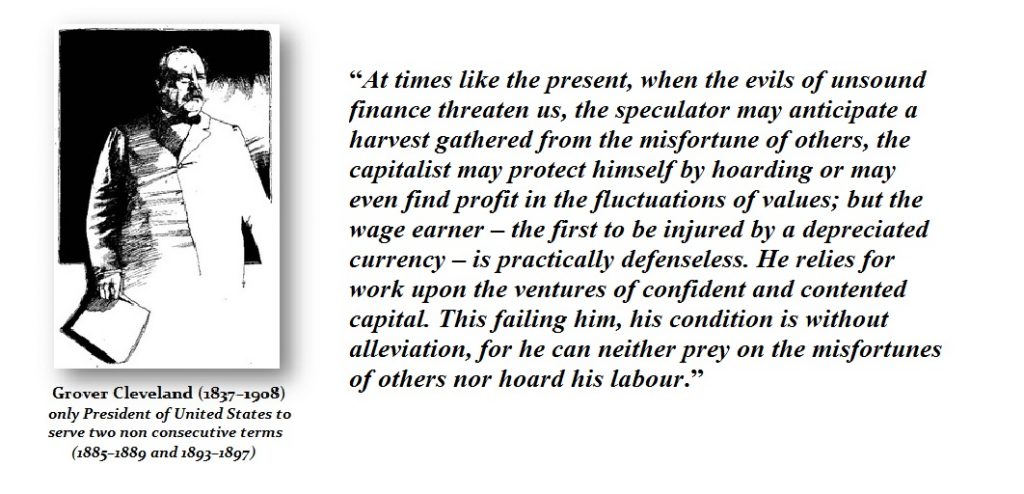
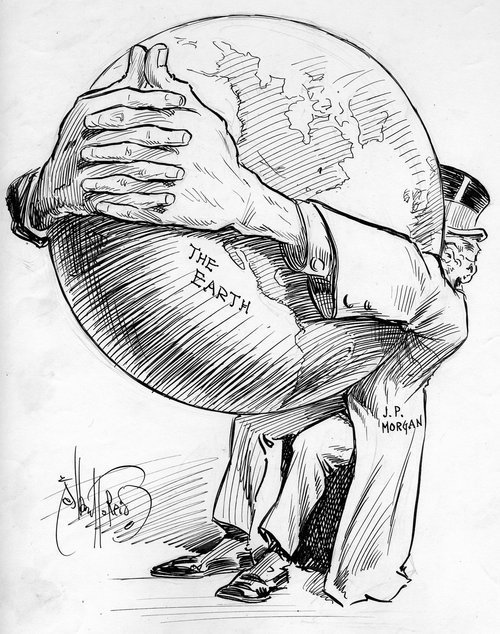
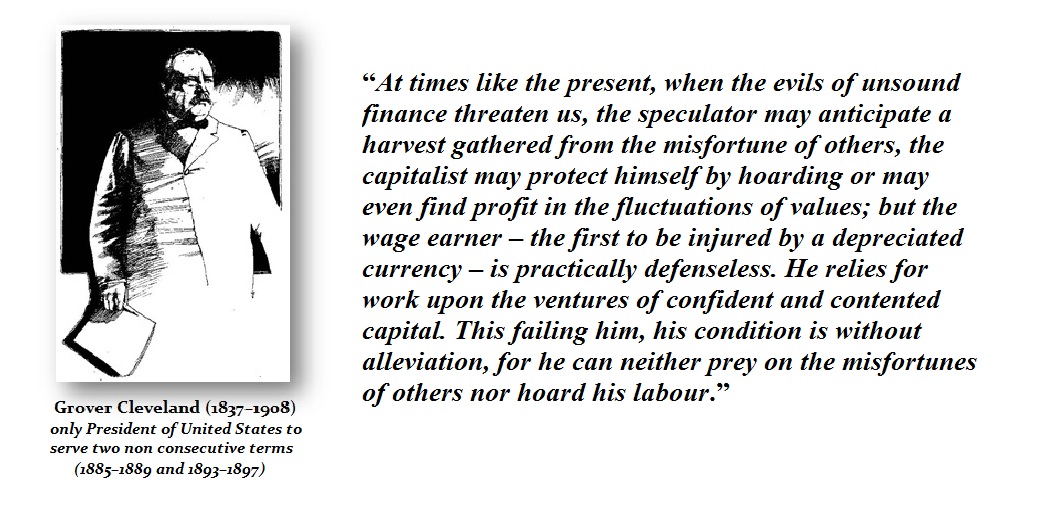
Of course, then there is the example of the Silver Democrats. They thought that they could raise the price of silver about world levels thanks to the silver miners who bribed them. They soon discovered that people were bringing their silver to the States where it was over-valued and used it to buy gold and export it back home. They kept this arbitrage up and then the Panic of 1893 began and by 1896, J.P. Morgan organized British banks to lend the USA $100 million to prevent it from complete bankruptcy in 1896. President Cleveland was a Democrat and he warned that his own party had imposed unsound finance. The same type of people who could not understand the world monetary system accused Morgan of making a profit on the deal. They refused to see that their ideas were brain-dead back then as well. They preferred to blame Morgan for their own stupidity.
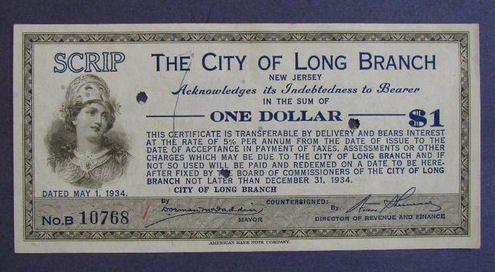
Financial Panics are global contagions. This movement is Switzerland would destroy the country and the depth of the depression would be far worse than the Great Depression. There was such a shortage of money back during the 1930s, that cities began to issue their own scrip to try to save the economy and allow people to economically carry on, which they could not due to the contraction in the money supply. Contracting the money supply as these people propose, would send asset values to virtually zero in Switzerland. They reject any such criticism because they just do not want to believe this solution is completely brain-dead.

History proves one thing – stupid people really mess up the world and then blame others. I keep warning, we are all connected. No country can move counter-trend for their will rapidly find their crisis comes from a contagion outside their control. Even communism failed despite its attempt to maintain isolation. Economics wins at the end of the day. Both Keynes and Marx have seriously inflected the world.

 

German Hyperinflation – The Undiscovered Truth – Do Coins Survive?


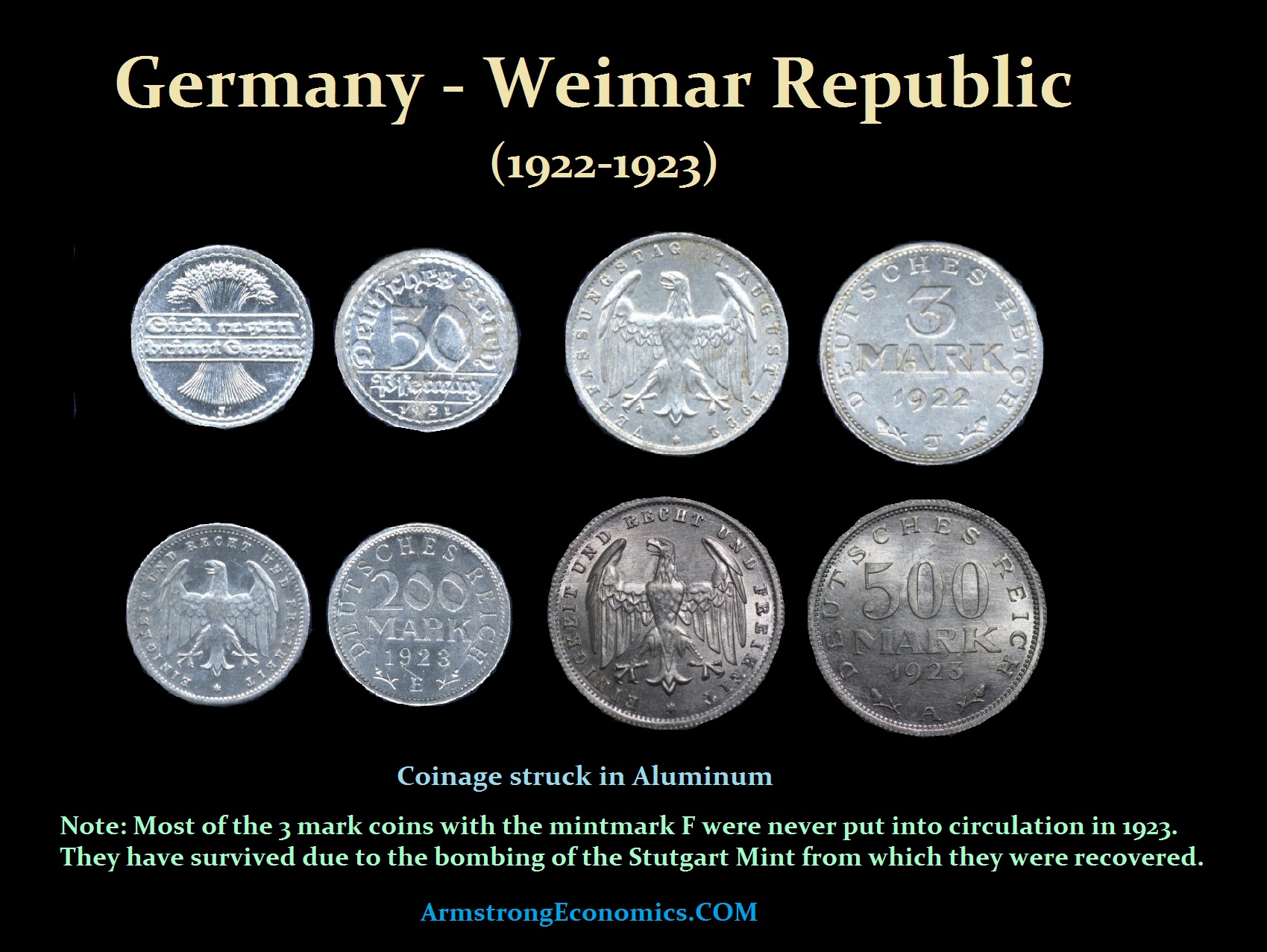
When the Weimar Republic first began following the 1918 Communist Revolution, they issued coins assuming they were now in control. The 50 pfennig coins were struck between 1919 and 1922. There were no precious metal or even bronze coins struck during the hyperinflation that began from August 1922 to November 1923. The coinage of the Weimar Republic between 1922 and 1923 were all struck in aluminum.

During a hyperinflation, the only real currency to hold on to some value is the coinage. The price of raw materials rises and as such, the coins become worth more as scrap metal than they so as coins from a legal tender perspective, but this is AFTER the hyperinflation – not during. The stories that people saved their copper coins and were able to spend them with a higher value than paper are really just stories. The coinage of the Weimar Republic was aluminum, not even copper.

I do know that AFTER the event when confidence returns to the economy, then the base metals will start to rise in value because the economy is expanding once again.

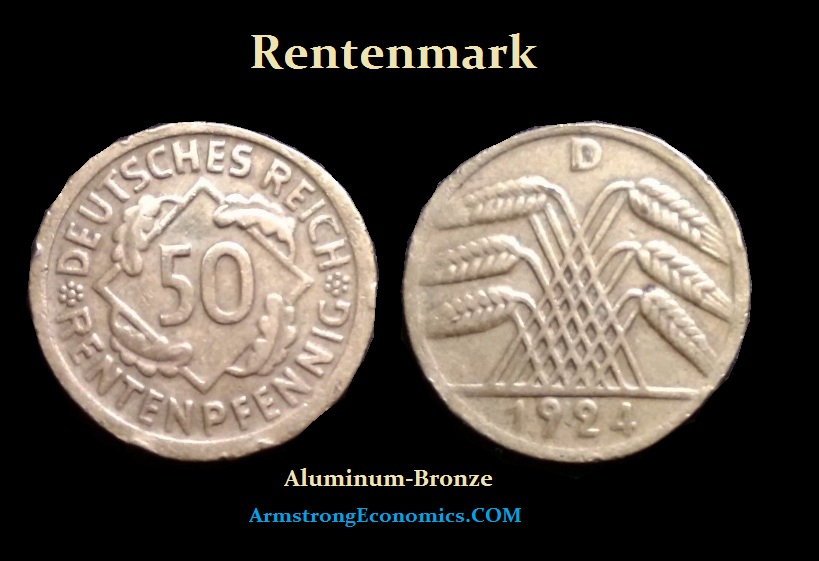
The Rentenmark was a currency issued on October 15th, 1923 to stop the hyperinflation of 1922 and 1923 in Weimar Germany. The largest denomination was just 50 pfennig. It was struck in Aluminum-Bronze.

Those who ask about coins surviving the hyperinflation, the answer is NO. You can save them from the pre-hyperinflation, but during such an event, not even the old coins will buy you a cup of coffee

The Lighter Side of Currencies


Are Cycle Inversions a Precursor to a Change in Trend


QUESTION: Dear Martin

In my own study of cycles, I have observed that cycle inversions occur more often than not at a time when the trend in that time frame is starting to change.

Have you observed the same?

I look forward to your trader service.

Best Regards
HH

ANSWER: Correct. Cycle Inversions unfold routinely when trends are shifting. The fact that we are getting these cycle inversion now is definitely a precursor of what is coming between 2018 moving into 2021. When the same cycle has been producing alternate events and suddenly it begins to produce just highs, look out – for it is warning that the foundations are changing. This is what we are witnessing currently. We can taste it. With interest rates at historic lows, and you have the Japanese central bank buying 75% of the government bond market and the ECB owning 40%+ of all government debt, an uptick in interest rates is going to make the world economy simply go completely nuts

Is their a Social Cycle in Attitudes?


QUESTION: Mr. Armstrong; I read your article of the whole issue of prostitution. The entire problem is that some western women assume that all prostitutes engage in the profession unwillingly. That is just so biased. What about the women who marry not for love but for money. They are not forced. When the Iron Curtain fell, many Western European men married Eastern Europeans. They were shocked to realize that Eastern women saw life in a different culture. They looked for men who could support them and they saw this as a tradition they stayed home and raised the children. Their attitudes were pre-sixties. You are correct, culture is different around the world. It is stupid to judge everything by only your own standards. Indian and Thai food is spicier than European, American, and certainly Italian. Even food differs greatly around the world as do attitudes and culture. To a West European or American woman, staying at home is subservient. They have not been to the Middle East. I just read that Saudi Arabia is allowing women to drive for the first time.

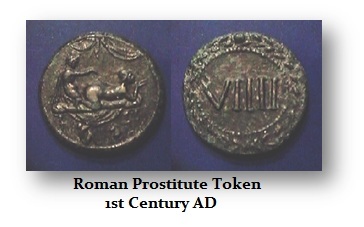
I recall you even showing a Roman prostitute token used to circumvent laws back then. Have you ever investigated a cycle in attitudes in the battle of the sexes? It appears we seem to have emerged from the sixties with hippies, free love, and some women who just hate men blaming them for everything. I am not even sure where the whole virgin thing came from but assume that is probably in there as well. That was so obvious with Hillary thinking all women should vote for her just because she was a woman. That really offended the younger girls in our office. If there is a cycle in everything, then is there one in this battle as well?

UT

Pompei-Lupanar Brothel

ANSWER: Yes there is a cycle to everything. Yes, the Emperor Tiberius (14-37AD) attempted to ban prostitution by making it illegal to pay a prostitute with a coin that had the emperor’s portrait of which they all did. The solution was to issue tokens (pictured above) you bought and paid the prostitute and she would redeem them later. These were widespread throughout the empire – not just Rome. One was recently found in the Thames River in London back in 2012. Here is a picture of the brothel in Pompeii. There were various prices that depended upon the sex act, but then there was also a two-tier price level over privacy. If you wanted a private room, that was the most expensive. If you wanted to save money, then you could have the room at street level where people could watch.

The Roman post-Civil War promiscuous period is very reminiscent of the 1960s with the whole free love and the women’s liberation movement. This trend in attitudes also appears throughout history on a cyclical basis. It is linked to the business cycle and as the economy booms, this trend will emerge coinciding with a decline in the birth rate. Perhaps the most famous period was the economic boom during the reign of Augustus (27BC-14AD) following the civil war that ended in 30BC with the deaths of Marc Antony and Cleopatra.

It was Augustus who passed his famous family laws that were designed to (1) ban intermarriages with none Latins, (2) compel men to be married. Augustus banished of Ovid (43 BC–17/18 AD) because he believed that his writings were creating an age of immorality. Augustus had his own daughter, Julia, banished for adultery. While her husband Tiberius was often away, Julia searched for love and sexual gratification outside her marriage and sex parties. Augustus heard of her infidelities, and he threatened her with death. Instead, he sent her to an island prison from which she was never to return, and he spoke of her as a disease of his flesh.

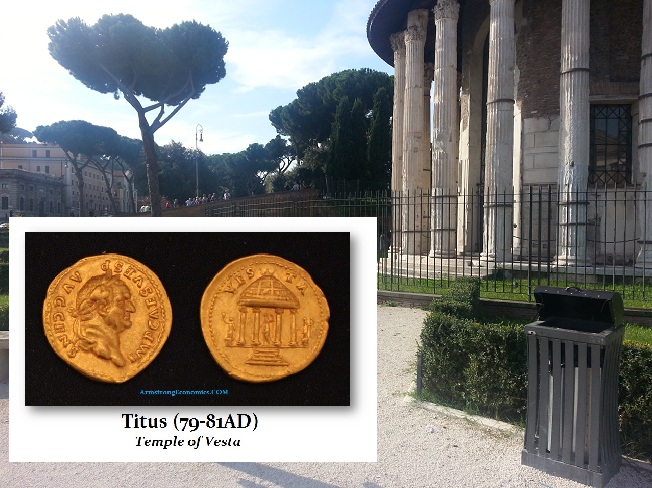
As far as the subject of virgins, in Western culture, this too can be traced to Rome. In ancient Rome, the Vestals or Vestal Virgins were priestesses of Vesta, goddess of the hearth. The historians Livy, Plutarch, and Aulus Gellius, all attribute the creation of the Vestals as a state-supported priestesshood to the beginning of the Roman Republic. The Vestals were regarded as fundamental to the continuance and security of Rome. They maintained the sacred fire that was not allowed to go out. This tradition to this day can be seen as the eternal flame at the grave of John F. Kenney. The Vestals were to take a vow of chastity in order to devote themselves to the study and correct observance of state rituals that were off-limits to the male colleges of priests. When Christianity began, the role of women serving God was taken from this Roman religious position and they too were to take a vow of chastity but were married to God.

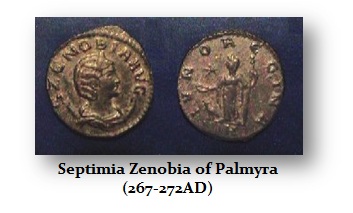
The Romans were shocked by the roles of women outside their culture. When they were fighting the British, their leader was a woman named BoudicaIn the East, women were also rulers not just in Egypt. Septimia Zenobia (240–274AD) was Queen of Palmyria who rebelled and split the Roman Empire.

Romans definately held their women in high regard. The various Roman Emperors would routinely show their wives on coinage and some would even show their fathers, sons, daughters, as well as family portraits as did Septimius Severus.

The family seems to be sacred to the Romans. This idea of virgins in the West clearly shows the link back to ancient Roman. Where exactly it traces to in Asia culture I have not investigated. Nonetheless, there are distinct cycles in social attitude throughout time. Promiscuity rises with economic booms and declines with economic hard times. It seems to be linked in that manner to when you have no economic concerns about the future, then anything goes. When economic hard times take place, then the family unit returns and the birth rates rise because children are your retirement. When you think the state will take care of you, you need fewer children.

Why Are Dollar Bulls Almost Extinct?


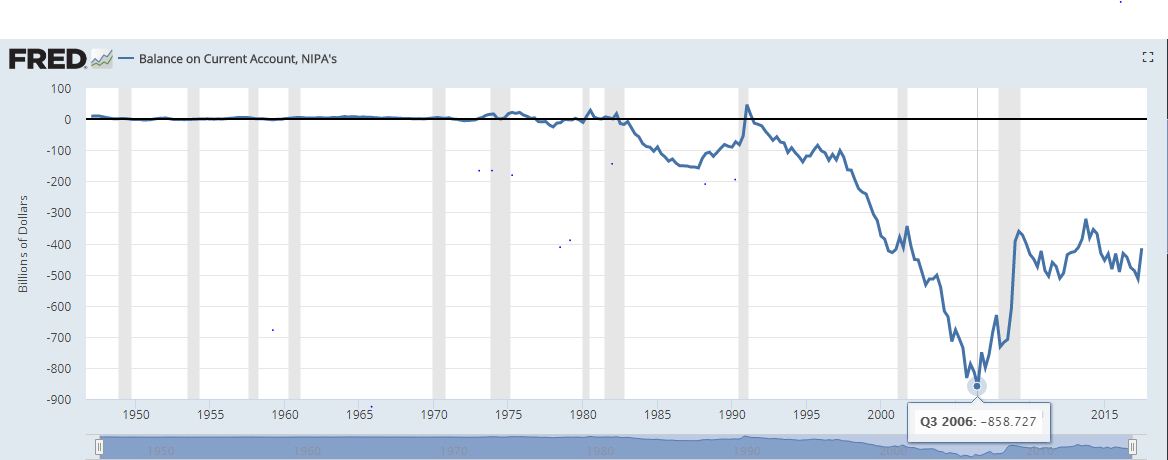
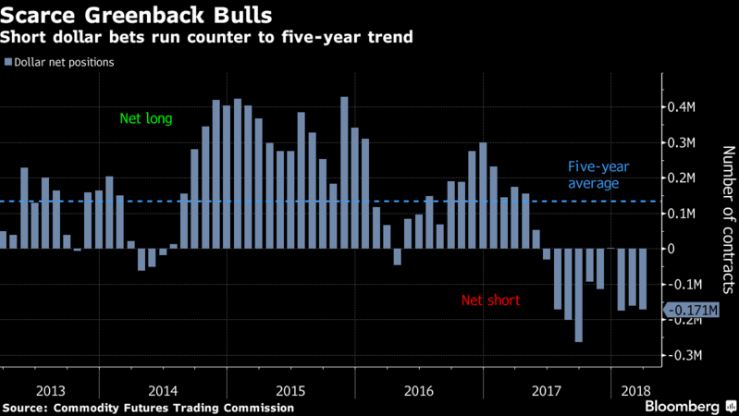
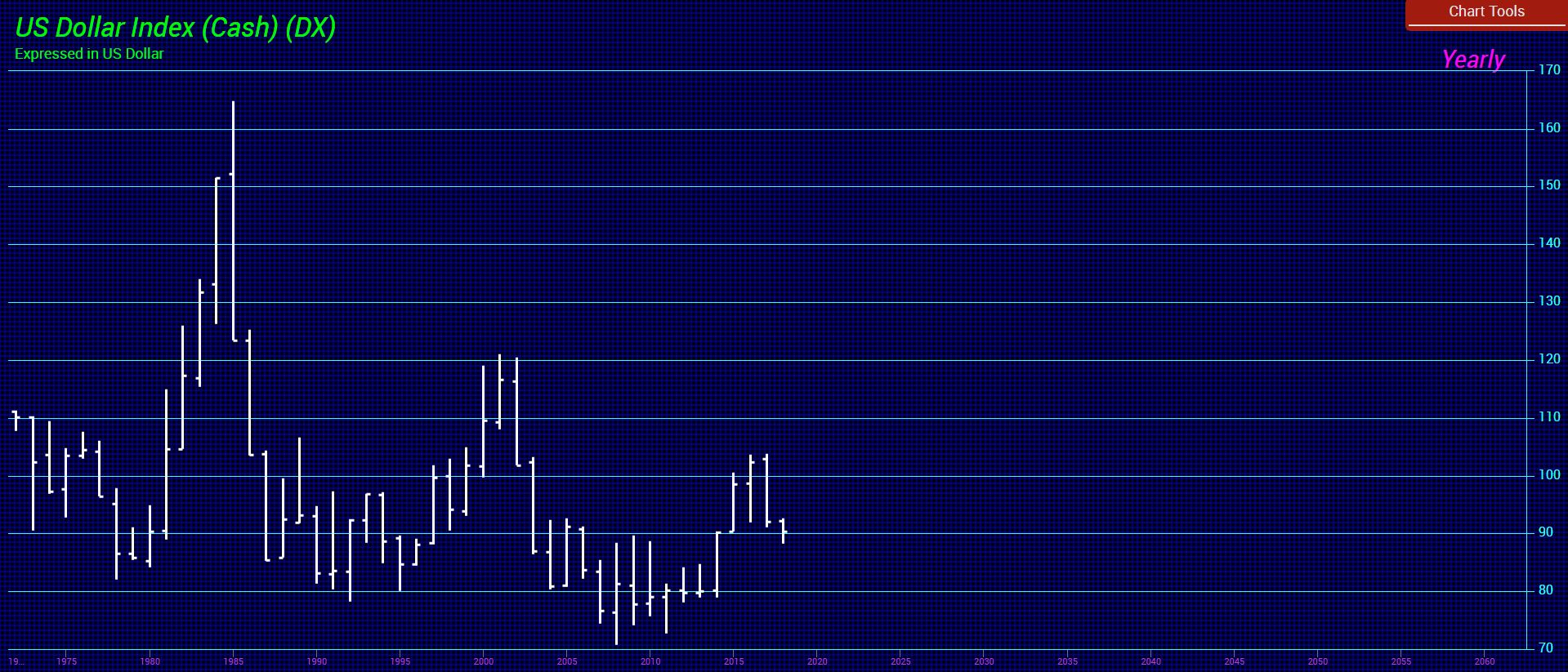
Bloomberg has reported that dollar bulls are nearly extinct down to just 2.3 %. The majority, which is always wrong, are all focused on the nonsense of the budget and the current account deficits. The record high for the dollar was 1985 when even the British pound fell to $1.03. So the balance of payments went negative from 1980 to 1986 and the dollar rose. OMG! How was that possible? When you actually correlate the Balance of Payments with the dollar, something amazing emerged. The dollar rises with the balance of payments going negative. Gee whiz! That is against all perpetual bear’s reasoning.

Perhaps this magical logic is just sophistry because they use their theory and don’t bother to check if it holds up over the course of time. I have been warning countless times that the Balance of Payments is by no means simply TRADE. It includes all flows of capital outward. That includes interest. The biggest trade deficit of the USA is not with Europe, but China, who just so happens to be the LARGEST investor in US government bonds. That means they collect the lion share of interest expenditures. The days of buying just pick umbrella for your cocktail are long gone.

The Balance of Payments bottomed in 2006 and began to rise from that 3rd quarter low. When did the dollar bottom? In 2008 as the Balance of Payments was improving. Strange! Guess that logic does not hold up.

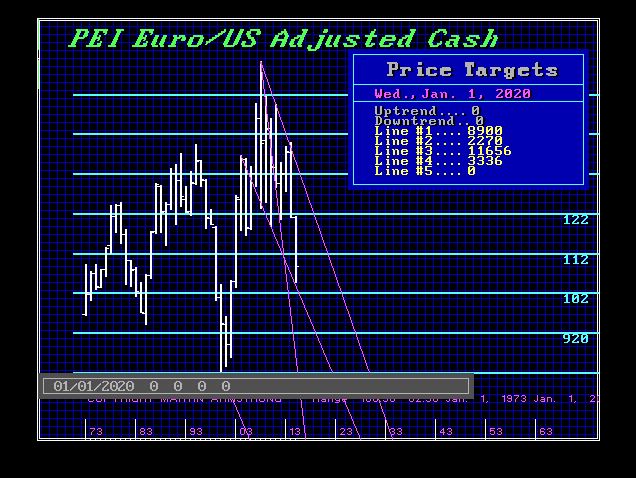
Most people look at the Dollar Index for a guide as to being bullish or bearish. What they do not realize is how it is constructed is not really relevant. Currently, the index is calculated by taking the exchange rates of six major world currencies the Euro, Japanese yen, Canadian dollar, British pound, Swedish krona and Swiss franc. Then they apply a weight which is arbitrary. The Euro, for example, has a weight factor of 58%. The Japanese yen has a weight of about 14%. From a trade flow and capital flow perspective China is at the top of the list. The trade deficit with China (with includes interest expenditures that flow to China) stands at 123,676 billion compared to 343,078 billion for the entire European Union with Germany coming in at 49,363 billion. Japan now is still more in capital flows than Germany coming in at 67,117 billion. The weights that make up the Dollar Index are not truly reflected in either trade or capital flows. Furthermore, the index was created only in 1973. It shows the high in 1985 and the low in 2008, which really does reflect Europe rather than trade or even capital investment flows.

When Timing is Everything – The Failed Graf Zeppelin Venture


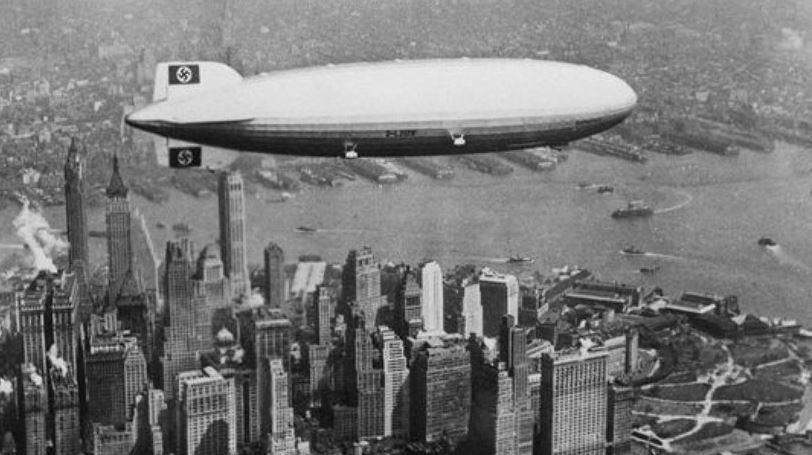
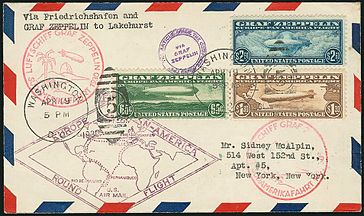
Timing is everything. When an economy turns, big projects that looked like they were going to be winners suddenly lose big time. That was the case when a world tour had been planned for the world’s biggest airship, the Graf Zeppelin, in 1930 just months after the 1929 Crash. In May 1930, the Graf Zeppelin floated over the Cape Verde Islands and slowed down stopping at the Porto Praia post office. When the ship had maneuvered to just the right spot, its crew threw a big sack of mail. To fund the voyage, they struck a deal to carry mail around the world which would be the first international air mail.

Over the next several weeks, the 775 feet from nose to tail Graf Zeppelin completed its first Pan-American tour stopping in New Jersey, Ohio and flying to Rio de Janeiro and then back over the Atlantic to Spain and its home country, Germany. A lot of publicity and fanfare accompanied the airship’s journey which was funded by carrying sacks of mail. This was the largest flying machine the world had ever seen. Its operating costs were proportionate, clocking at about $4 per mile back then which was a lot of money. Passengers paid very high ticket prices, but the ship could only hold about 20 people at a time. Passenger travel was not a lucrative venture. The Hindenburg ticket prices across the Atlantic was the price of a car about US$400.00 one-way and a round trip was US$720.00.

They also tried to charge admission fees to view it on the ground. That did not prove to be a winner either. The timing was very bad for the Great Depression was just getting started.

Instead, the Graf’s parent company, German Zeppelin Airship Works, decided to recoup costs by commissioning special stamps from the countries on the tour route. Only letters with these stamps on them would be accepted onto the airship, or so they announced. They promised to deliver these letters to their destinations around the world.

This was the only commercial transatlantic airmail option available at the time and was days faster than sending a letter by boat. Brazil, Bolivia, Germany, and Spain all made the Zeppelin stamps, and 93% of the proceeds from each stamp was funneled back into German Zeppelin Airship Works. Finally, after considerable debate, the U.S. Post Office decided to get in on the hype. They assumed that stamp collectors would want the stamps and they would never be used so they would pocket a fortune. The agreed to proceed and they went to designing and printing a run of Graf Zeppelin stamps all in a matter of just weeks. They called this a gesture of goodwill toward Germany, which was the new Nazi government. The pledged to also contribute 93% of all the revenue collected on stamps “used” on the flight to the Airship Works. They cleverly qualified the agreement expecting American stamp collectors would buy up most of the stamps for collections and that would go to the Post Office.


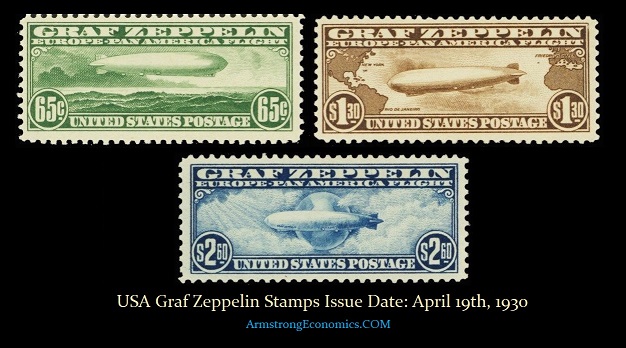
So on April 19, 1930, the Post Office issued three stamps, The  65-cent stamp covered the cost of a postcard one-way. The $1.30 stamp covered the cost of a letter one-way. The final stamp, the $2.60, it covered the cost of a letter being postmark over to Europe and then back again. However, because of the deepening Great Depression, collectors could not afford the $4.55 when a loaf of bread sold for just 9 cents. The Post Office printed 1,000,000 sets of stamps expecting a mad rush. They sold only about 227,000 zeppelin stamps total, and most of that actually did end up on mail delivered by the Graf Zeppelin and the lost an expected big windfall.

The worsening Great Depression undermined the entire trip of the Graf Zeppelin. It was a fantastic idea and it was a show of power for Germany after the hyperinflation of the ’20s and losing World War I. Timing is everything. A great idea foiled by the business cycle.


Noah Ark Commemorated on Roman Coins


QUESTION: I found your article on Noah and the flood interesting. However, are there any other sources in the West besides Gilgamesh that it seems many sites point to for the same reason?

EY

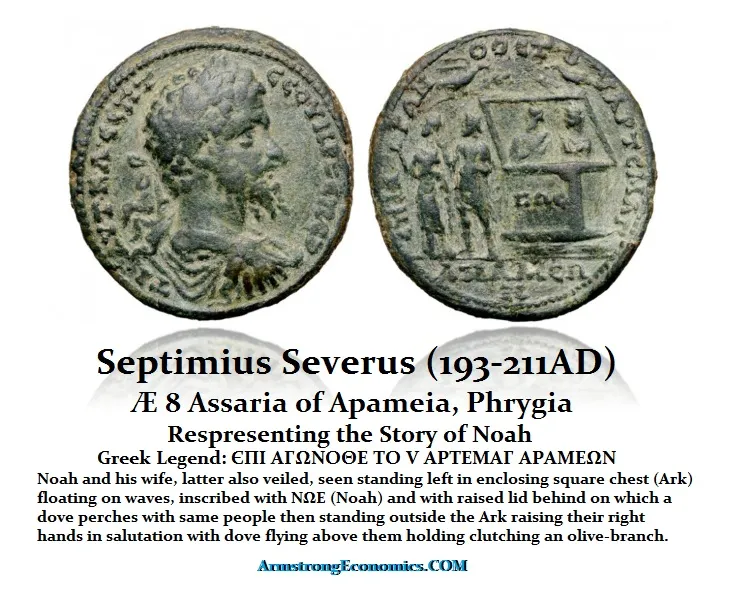
ANSWER: This story of Noah even appears on a Roman coin struck by Septimus Severus (193-211AD) long before Christianity became really a growing religion in Rome. The story is illustrated and even the name Noah appears on the Roman coin. This tends to verify that the story was well known outside of the Bible

The Way to Survive Hyperinflation


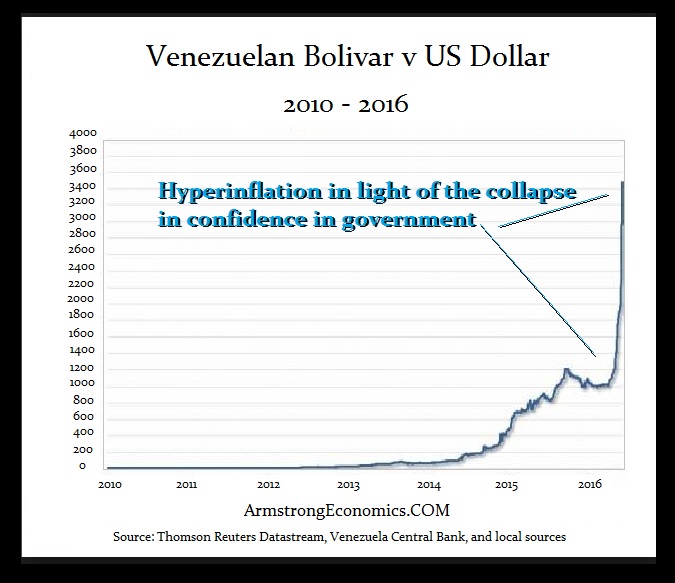
COMMENT: Mr. Armstrong; I just wanted to comment that I am from Venezuela. My father came here to visit me in Florida where I live with a Green Card. Everything he saved in life for his retirement is now worthless and it does not even pay to travel back to collect his pension. The hyperinflation is a collapse in the confidence of government as you have explained. Those who saved for their retirement and had pensions, lose everything. They will be paid the amount that they were promised, but it will not even buy a single night’s dinner and soon a beer.

Thank you for your contribution to society. I wish more people would listen to you. Experience is the root of knowledge. Opinion is the root of bias. You have proven that

JE

REPLY: To survive hyperinflation requires the holding of tangible assets and never cash or pensions. The way pensions can be devalued is through inflation over the course of time and circumstance. What I paid into Social Security will never come back to me in terms of real purchasing power and that is without hyperinflation. I have stated before, I met with the Treasury back during the Reagan Administration and said these insane levels of interest rates will triple the national debt in less than 10 years. They simply responded; Yes but we will be paying back with cheaper dollars.

All promises of government are simply eroded with inflation. That is why Southern Europe fell into such chaos. The currency doubled instead of declining when they joined the Euro. That is why Europe has been a failure under this political-economic philosophy. The Euro first crashed, and then doubled in value. Southern Europe was used to inflation always reducing their debts. Suddenly, their debts doubled and deflation ruled. And people cannot figure out why the Euro is in such trouble?

I do like your saying though. It is spot on.