US Economy Grew 1.9% In Q4, Unexpectedly Missing Expectations Despite Stronger Consumer Spending


Tyler Durden's picture

Following a series of better than expected GDP-feeding prints, consensus had expected Q4 GDP to tick higher in the first revision released today, rising from 1.9% to 2.1%. However, that did not happen and instead, the revised print came in unchanged at 1.9%. Notable underlying revisions include: an upward revision in consumer spending, both in services and goods; a downward revision to business investment, mostly in intellectual property products and equipment; and a downward revision to state and local government spending, primarily in structures.

Despite the headline miss, the revised data showed a solid rebound in Personal Consumption Expenditures, which rose 3.0%, higher than the 2.6% expected; furthermore, printing at 2.05% annualized, Consumption alone was higher than the overall GDP of 1.86%.

The reason for the miss was a decline in Fixed Investment which slid from 0.67% to 0.51% as initial CapEx reads appear to have been weaker than expected, coupled with a negative revision to both Private Inventories, down from 1.00% to 0.94% and the contribution from Government, which subtracted another 0.15% point.


Net trade remained flat, and was the biggest detractor from Q4 growth, taking away some 1.7% as the Q3 surge of exports to China was offset.

Of note: PCE prices failed to hit the expected 2.2% increase in the quarter, rising 1.9%, after increasing 1.5% in Q3, thus giving the Fed some more breathing room before hiking. Additionally, core PCE rose 1.2%, after rising 1.7% in the prior quarter, suggesting to Janet Yellen there is still some price slack, and the possibility of a rate hike may be more remote.

For the year 2016, real GDP increased 1.6% , compared with 2.6% in 2015. The increase in real GDP in 2016 reflected increases in consumer spending, residential investment, state and local government spending, exports, and federal government spending. These contributions were partly offset by declines in private inventory investment and business investment. Imports increased.

Q1 GDP At Risk As Trade Deficit Balloons Near 9 Year Highs


Tyler Durden's picture

On the heels of a disappointing revised Q4 GDP print, the US trade balance for January printed a $69.2 billion deficit. This is the second largest deficit since August 2008 (slightly smaller than the March 2015 plunge) as the dollar surge has not helped.

The biggest driver the deficit increase was  4.8% MoM increase in Consumer Goods (notably Auto exports rose 9.3%)

The $69.2bn deficit is considerably worse than the $66.0 billion expectations, and is lower than the lowest analyst expectation.

Certainly not a good sign for Q1 GDP expectations.

As BofAML notes, combining trade data with inventories for January, this slices 0.2pp from Q1 GDP tracking, leaving us at 1.8% for the quarter.

The USD strength has not helped…


So time for another rate hike to reverse that recent drop in the USD and stymie the US economy even more via its trade d

China CIPS v Western SWIFT System


Dollar-Yuan-Transfer

COMMENT: Marty; Some people are trying to claim that China in bypassing the Swift System, they are undermining the dollar. The latest absurd statement is that Japan will bypass the dollar and SWIFT System to transact using China’s CIPS system in inter-bank settlement. I really had to laugh at how ignorant this statement is for it would mean Japan will no longer sell anything in the USA. It seems that these people so desperate to kill the dollar clutch at anything and we just laugh in the trading rooms. I think you should address this statement for the naive people out there who are clueless as to real international trade.

RPD

REPLY: Yes, I agree, You are right. The average person out there may read these headlines that are written by people without a single day of real world experience. They seem to confuse clearing and investment and their analysis is always against the dollar. They try to create a myth that somehow the Yuan will kill the dollar, which is what they said about the Euro. CIPS v SWIFT is about clearing – not investment money and it has no impact about parking money. The The crisis in BitCoin has been created by more that 90% of the volume has been in China as it was being used to get money out of China into dollars. Let’s set the record straight – SWIFT (Society for Worldwide Interbank Financial Telecommunication) is by no means a U.S. dollar exclusive system. Visa International supports approximately 180 transaction currencies, thus enabling the processing of international transactions – NOT exclusively dollars all through the SWIFT system! Twenty-six currencies can be used in the net settlement between Visa International and the participating members, the choice of currency being decided by each member involved in the settlement.

Ever since China began to set up a competition to the Western financial institutions back in 2013, there have been countries in the East dealing with China who have begun to use the CIPS System. That makes perfect sense when you are dealing with China. However, that does not mean that CIPS can compete with the SWIFT System with regard to trade in the West. Japan joining CIPS is by no means to the exclusion of SWIFT.

The SWIFT is an industry-owned limited liability cooperative society set up under Belgian law – not US Law. It is controlled by its member banks (including central banks) and other financial institutions. SWIFT’s business is to supply secure messaging services contributing to greater automation of financial transaction processes and to provide a forum for financial institutions to address issues of common concern in the area of financial communication services.

SWIFT was founded in 1973 by 239 banks from 15 countries. Since then, there has been a steady increase in the number of financial institutions and countries connected to SWIFT. By the end of 2002, more than 7,400 financial institutions from 198 countries were connected. There are three categories of SWIFT users: members (shareholders), sub-members (ie subsidiaries controlled by members) and participants. Members can benefit from all the services offered by SWIFT, whereas participants only have restricted access to a range of services that relates to their business.

SWIFT participants include securities brokers and dealers, investment management institutions, fund administrators, money brokers and various other institutions, mainly from within the securities business. By the end of 2002, SWIFT provided services to 2,203 members, 3,079 sub-members and 2,183 participants. The average daily value of payment messages on SWIFT is estimated to be above €6 trillion. National Bank of Belgium (NBB), which is the central bank of the country in which SWIFT’s headquarters are located, acts as lead overseer of SWIFT, supported by the G10 central banks. The NBB is responsible for the day-to-day oversight relationship with SWIFT – not the Federal Reserve.

Visa International operates through SWIFT and it is a private association owned by 21,000 financial institutions worldwide. It consists of six regional divisions: Asia-Pacific; Canada; Central & Eastern Europe, Middle East & Africa (CEMEA); European Union; Latin America & Caribbean; and United States. Membership is limited to deposit-taking financial institutions and to bank-owned organizations operating in the bank card sector, such as Carte Bleue in France and Servizi Interbancari in Italy. The Visa International Base II system clears transactions and facilitates settlement. Visa International supports approximately 180 transaction currencies, thus enabling the processing of international transactions – NOT exclusively dollars! Members can choose to receive their transaction reports in any of these currencies.

Twenty-six currencies can be used in the net settlement between Visa International and the participating members, the choice of currency being decided by each member involved in the settlement. The necessary foreign exchange operations are executed with two banks, one located in London (Barclays) and one in New York (Citibank).

The attempt by China to set up CIPS to compete with the SWIFT System is political and not purely economic. This idea that Japan and China will not participate in SWIFT is absolutely absurd. That would mean even credit cards would not be valid in the West.

Gold for the Close of February


GCNYNF-M March Targets

QUESTION: Marty, you said towards the end of the bear market in gold, it will start to align with the stock market. Are we approaching that period since this has been gold and stocks both rising opposite of what the goldbugs have been forecasting?

LWR

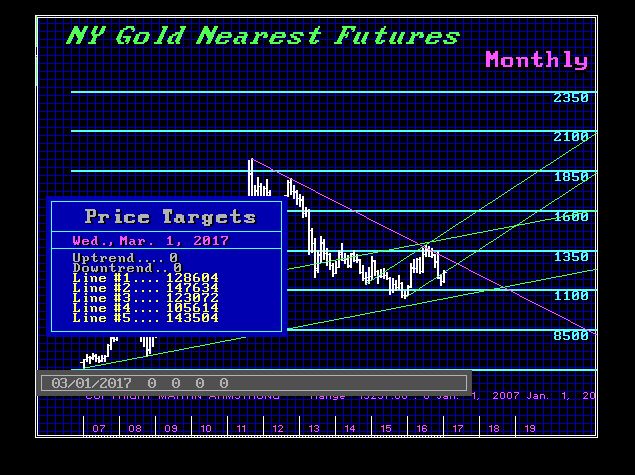
ANSWER:  Yes. We are running out of time for the downside in gold. This does not say we are breaking out right now. In fact, the next Benchmark was the February 27th, which we published in the 2016 Gold Report. We would need to close February above 1306 to imply that a breakout is unfolding and a closing below 1255 today will still be bearish. Gold is moving into a tight range where technical resistance stands at 1286 area and support at 1230.

The rise in gold is unfolding despite the rise and expected rise in interest rates. Likewise, gold has been rising with the US share market. This is part of the tangible asset rally as capital begins to drift away from public sector debt. A collapse in confidence means ALL tangible assets rise – not just gold.

However, we are still basing. The rally does not yet appear to be sustainable. A closing today below 1255 after trading above that right on the Benchmark day no less, warns that we are preparing to change trend, but it is just not right now. Let’s see the closing for February.

Greek Government is 40% of GDP


athens-acropolis

QUESTION:  Hello, I do not understand what Martin say about the fact that the Greek debt doubled when it changed into euro. Indeed, if the currency is twice the value of the old one then all your debt will double as Martin said. However all your assets will double in value too. So it is the same situation as before. I may miss something, could you please explain me what I am missing ?

Best regards,

ANSWER: Yes, private assets rose in value in Southern Europe as the euro rose from 80 cents to $1.60. However, this tended to produce deflation, not inflation as prices rose eliminating competition for tourism etc. reducing sales. The point about the public debt doubling was the fact that this was previous debt, not current, and government has no real performing assets. To service the debt that doubled, they also then began to raise taxes more aggressively and this then was much like strip-mining the economy. Servicing the previous debt increased dramatically reducing the ability to continue spending on various sectors as previous debt servicing was increased.

Germany benefited from the Euro because they were manufacturing products and selling them into Europe and did not have to worry about currency fluctuations. I helped the Japanese to sell their products globally by showing them that they had to price their products in the local currency and then take the FX risk home to manage. They beat the Germans who were pricing their cars always in Deutsche-marks so a Porsche doubled in value in dollar terms between 1970 and 1980 just due to currency – not inflation. The movement of creating a euro was to eliminate currency risk so the German manufacturers could sell their products throughout Europe.

Greece’s top three main industries are tourism, shipping, and industrial products. By joining the Euro, Greece lost the attraction of a cheap holiday for tourists and shipping prices rose. Greece is nowhere near attaining those manufacturing characteristics, and is often one of the smallest in this regard compared to Germany, Japan, and China. However, the Greek-owned fleet of ships remains where it has been for a very long time, at the TOP of the global ranking of shipowning nations. Joining the Eurozone has hurt Greek shipping increasing its cost and opening the door to competition. China is moving upwards rapidly in shipping, and potentially could overtake both Greece and Japan (the second largest) to become number one shipowner within a decade. Greece has not benefited from joining the Eurozone and this has been the greatest myth which has hurt the Greek people tremendously.

European tourism began to move outside the Eurozone for vacations because it was cheaper. Greece has an economy with a public sector accounting for about 40% of GDP and with per capita GDP about two-thirds that of the leading Eurozone economies, this has contributed greatly to its debt crisis. Tourism provides 18% of GDP, so joining the Euro was a complete disaster for tourism and when the government is 40% of GDP and produces nothing to export, the debt crisis simply escalates. The likelihood of Greece have to exit the Eurozone is growing tremendously by the day.

Global Market Watch – Knee Jerk Events


GC-GMW-Knee Jerk Low

QUESTION: Marty; The GMW was saying it was a knee jerk low the day before the week closed. Do you have to wait for the week close?

KW

ANSWER: Technically yes. The comment is as of the close of that time level so in the case of Knee Jerk Events, it is forecasting in reality that the event (high or low) will hold. It also depends upon how the event unfolds on the Weekly to Yearly level. You can get that Knee Jerk low show up early in the week and then rally into the close of that week with all the time it saying it is a Knee Jerk event. The important aspect is that the event is being identified as a Knee Jerk rather than a capitulation and change in trend. That is very important.

What we have been building is a database of the GMW whereby each pattern number is recorded with the event that follows. We are then running systems on that to see if it is possible to produce a highly accurate forecast of say when event #10550 takes place #11870 follows.

We are always looking at more in-depth means of analysis that is testing the boundaries of forecasting.

French Government to Track Everyone, Everywhere


French Cafe

COMMENT: Martin, it happens now, as you wrote,  all of each french citizen will be registered, fingerprints, adress, Job, banking account..they want to own us..Hell on earth

ANSWER: Yes. As of Tuesday, February 21st, the registration requirement that they said were only to be applied to Yvelines and Brittany, it will be extended to all of France by the end of March.
Friedman-14I have stated many times, as government enter this phase of the Sovereign Debt Crisis, they will be looking for ways to get more aggressive in extracting revenue from us. This is simply what they do. It is always our fault – NEVER THEIR’S – when they go broke. My old friend Milton Friedman, said it best:
“If you put the federal government in charge of the Sahara Desert, in 5 years there’d be a shortage of sand.”
When you put people in charge of government, their livelihood then is dependent upon extracting money from you and this is why we call them “Public Servants” for they produce nothing.
The only possible way to solve our crisis is to consult History. That reveals a plain and simple fact. No person should rule in government for more than ONE TERM. There should be absolutely NO POLITICAL DONATIONS.
Lobbyists own politicians because they must run term after term to keep their jobs. They need money for that so they are corrupt prostitutes and sell themselves to the highest bidder. This is why they, and the Press, hate Trump. He did not have to beg for any money so he owes nobody. That is dangerous to them so the press will paint him as a madman to help maintain the corrupt system that they have become the pillar propping up the whole thing.
We must eliminate career politicians, end political donations, and criminalize journalists who engage in propaganda to undermine our freedom.

Knee Jerk – Reaction – Temp Events


GC-GMW-Knee Jerk Low

QUESTION: Hello, could you explain the differences between “Knee Jerk v Spike v Temp v Reaction Events” ? They are all Timing indications I guess? regards.

Knee Jerk Low

ANSWER: When the computer is classifying something as a Knee Jerk high or low, it means it is a one-time-unit event. A Reaction High or Low has not penetrated the previous event and is at least a three-time-unit event. A Temp High or Low is normally a brief trend greater than three-time-units.

Here is the Global Market Watch on gold. You can see it correctly forecast two Knee Jerk lows, which proved to be correct. It is the GMW which eliminates personal opinion and is based solely upon pattern recognition. This is neither technical nor cyclical based. This is something altogether unique and represents true Machine Learning Intelligence.

Is it Safe to Store Gold in a Safe Deposit Box?


NYT- 1933 Bank Holiday

QUESTION:  Martin,
Love your blog, especially your historical perspective.
You recently responded to a viewer that we should take precious metals out of safety deposit boxes. Is there a reason for this? To my understanding the bail-in rules for banks in N.america put deposits and bonds at risk only?
Thanks.

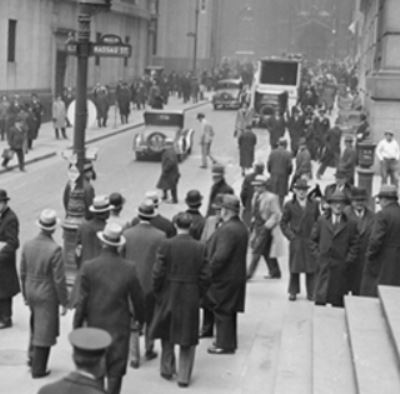
1933 Bank HolidayANSWER:  The contents of a safe deposit boxes are not covered by FDIC insurance. Never store a passport or any document you might need to get a hold of in emergency in a safe deposit box. The government can simply close all banks as they did in 1933 in a “Banking Holiday”. At 1:00 a.m. on Monday, March 6, President Roosevelt issued Proclamation 2039 ordering the suspension of all banking transactions, effective immediately. He had taken the oath of office only thirty-six hours earlier.

From March 6 to March 10, banking transactions were suspended across the nation except for making change. Roosevelt presented the new Congress with the EMERGENCY BANKING ACT at this time. The law empowered the President through the TREASURY DEPARTMENT to reopen banks that were solvent and assist those that were not. The House allowed only forty minutes of debate before passing the law unanimously, and the Senate soon followed with overwhelming support.

Banks were divided into four categories. Surprisingly, slightly over half the nation’s banks were deemed first category and fit to reopen. On the Sunday evening before the banks reopened, Roosevelt addressed the nation through one of his signature “FIRESIDE CHATS.” Roosevelt assured sixty million radio listeners that the crisis was over and the nation’s banks were secure. The bank run was over. On June 16, 1933, Roosevelt signed the GLASS-STEAGALL BANKING REFORM ACT, and also created the FEDERAL DEPOSIT INSURANCE CORPORATION.  Keep in mind the the government can close all banks for there is precedent. Whatever you have in a safe deposit box can also be seized and inspected.

safety-deposit-boxesThere is no precise law against storing metal or cash in a safe deposit box. But law is malleable in the hands of any judge. He can seize the money or gold under the pretense of money laundering hiding it from the government. Under Civil Asset Forfeiture, they can assume the money is guilty of a crime being even tax evasion. It then is your burden to fight in court to get it back if you can hire a lawyer.

On April 1st, 2015, Chase bank in the US advised clients who rent safe deposit boxes from them that there would be some changes in their policies. Of particular interest is the following condition:

“Contents of box: You agree not to store any cash or coins other than those found to have a collectible value.”

This is why I recommend buying $20 common date gold coins and not modern bullion. You need to be in a position to say these are collector coins – not bullion. Gold is a HEDGE AGAINST government in the midst of a crisis. Gold does NOT rise with inflation. The 1980 high adjusted for inflation is about $2300. So if gold is a HEDGE, it is during a crisis. The risk of being able to get to a safe deposit box in a crisis diminishes greatly.

EU Bailout of Portugal Has Failed


Lisbon


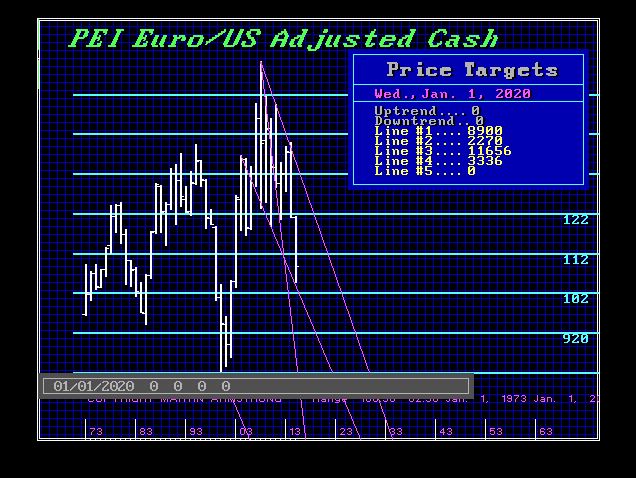
This year, 2017, is the beginning of the Sovereign Debt Crisis. While Greece is popping up on the financial radar, the Euro rescue in Portugal has also completely failed to reverse the trend of the country. There has been no effective relief from the debt crisis in Southern Europe. The debt in Portugal is also once again as high as before the crisis of 2010. The 78 billion euros of the European taxpayers money did nothing to reverse the economic trend, but in fact the funds simply went to save the banks.

IBEUUS-Y TEK TO 2020 1-22-2016Politicians really should be criminally prosecuted for trying to manage an economy. They have no experience and their own political careers always come first. As I have stated before, when the Euro was being planned, the commission in charge attended our World Economic Conference in London. I warned them that the Euro would fail unless the plan consolidated all the debts of member states. They said they understood the problem, but that the European people would never vote for that plan and so they wanted to get the currency through first and deal with the debt later.

That Phase II never came and as a result, as the euro then rallied from 80 cents to the dollar to about $1.60, all PREVIOUS debt of  member states DOUBLED in real cost. Joining the euro effectively destroyed Southern Europe and the politicians still cannot figure this out. It is as simple as you borrowed a foreign currency to buy your house and then that currency double in price. You now owed twice the amount in your home currency.

Crisis-AheadMeanwhile, the new US government wants to put US first returning to the age of mercantilism. Donald Trump also fails to grasp that forcing Americans to buy manufactured products in the USA, is forcing the consumer to subsidize inefficient American labor. You cannot tinker with the free markets. Trump’s concept of world trade and jobs falls short of reality of what free markets are all about exactly why the Eurozone is collapsing.

Welcome to the world financial crisis. We can make it better – but we have to PREVENT politicians from playing with the economy.