What About Collectibles?


SilverCoins

QUESTION: Hi Marty! I would like to have your thinking about one important thing: the exit of this mess. I was in the last two WEC with my friend Mark and enjoy them a lot and we will be on the next one for sure.The two months that follow the last one in November 2016, I really connect all the dots for the first time even if I read you since 2008. So, I realize what we face to 2032,95 and after. The actual private wave of 51,6 is going to push money flow to the privates assets and end the confidence in government. This wave is the last one of the 309,6 years cycle that will end socialism. If we put in perspective that this 309,6 cycle is the last one of the mega cycle of the 1857,6 years (6 x 309,6), we know without question that what is coming to 2032,95 and after, will be epic and horrible time for the world. If you add the war cycle and the maunder minimum cycle to that, it’s become even worst. I Know that the private assets are suppose to improve in value to 2032,95. I know that the government will do whatever he can to tax us to death and in some cases, confiscate our assets.

So, even if I know all that, I feel trap. With the increase in interest rate, the debt bubble, the increase of taxes on houses thank to the fund pension crisis plus the real estate cycle that go down until 2033, I am sure that real estate is not the good place to protect our money. Physical gold and cash will be probably be chased by gouvernement. The blue chips are a good choice only if your broker or your bank stay alive during this crisis. Like you see, we are trapped.

So my question is, what do you think about the rare collection items, like old coins, old sports cards, or other smalls things collection that have a big value and can be move easily to an other country, even by plane. Thank so much for what you do for people! You help me a lot to open my eyes and see the world like he is. I will always grateful for that.

See you in november at the WEC!

Thanks,

GL


China Cowry Shell Evolution

ANSWER: Collecting is instinctive within humanity. Everyone has formed a collection of something, no matter how small. From childhood, we all have accumulated objects in different categories, be it matchbox cars to collections of Barbie dolls. Their questionable usefulness is only second to the fascination of playing with them. The first coins used in China were cowrie shells. They were beautiful and rare since they could not be found everywhere. The first attempt to expand the money supply, and make bronze appealing and acceptable, involved making the money into the image of a cowrie shell.

Rembrandt father

I got the bug when I bought my first Roman coin for probably $5 when I was 10 to 12. I would recommend ancient coins, for their market is global. Canadian coins are salable in Canada just as the best market for the U.S. coins is in the United States. Yet, ancient coins cross all borders. The Chinese and Russians are big buyers these days. Cars are too hard to store. Fine art is also something I have collected over the years. I can more than quadruple my investment in things like Rembrandt etchings (the one pictured is of his father).

I have collections of rare books and autographs as well. There are collectors for every category of object. There was the Villa of the Papyri, a private house in the ancient Roman city of Herculaneum, who collected art and books. This tremendous collection has fascinated visitors beyond belief. Collectors have existed throughout history.
FDR Stamp CollectorHunt-Decadrahm

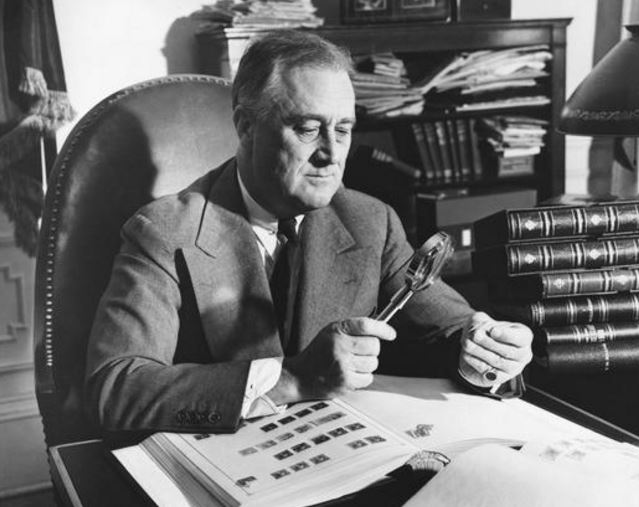
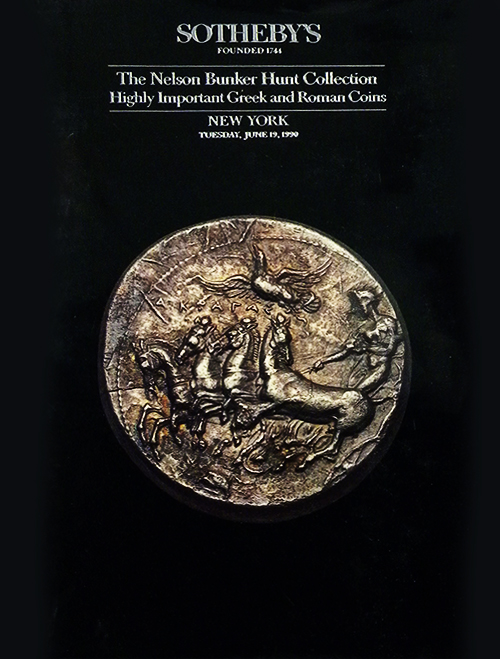
Franklin Roosevelt was a stamp collector, and Teddy Roosevelt was an ancient coin collector. Then there was the ancient coin collection of the Egyptian King Farouk. There was also the fabulous ancient coin collection of Nelson Bunker Hunt – yes, of the silver market.

Other famous coin collectors included Thomas Jefferson, John Quincy Adams, King George III and King Louis XIV. Pope Boniface VIII was also an ancient coin collector. The first major collector of ancient coins was the first Roman Emperor Augustus (27BC-14AD) according to Suetonius.

DBLEDIECollectibles are always a hedge against government. They survive the great monetary crash that sweeps through the world economy every so often. Money is ONLY a medium of exchange – it is NEVER the store of value. That is true even when gold is used as money for whatever might be used as money is then on the opposite side of everything else. So small collectibles are always a good bet. Keep in mind the scope. So ancient coins are salable worldwide while a 1955 Double Die penny will find its best market in the United States. Hence, you can hop on a plane with a Double Die with no problem. However, the sale value in a foreign land may be 20% less than in the States.

Bonds v Shares


Bonds v Stocks

QUESTION: Dear Mr. Armstrong
As a long time reader I rarely see you mention the possible long term benefits of also holding corporate bonds. I understand the obvious down side to government bonds and the reason for stocks to move higher, but since bond holders get paid before stock holders when things go bad would corporate bonds not be a lower risk investment.
Thanks for sharing your work.
TG


Corp-Treas%

ANSWER: Corporate bonds of blue-chip companies will eventually move to a premium over government. We can easily see that when government was the place to run, the premium shifted to governments and then declined after 1932. If you are looking at high grade corporate bonds, towards the end of this bull market in shares, you would shift to corporate bonds – not government.

Int%Sprd-MA

We can see historically, no relationship is ever solid or fixed. You can see that 90-day commercial paper was at a huge premium during the 1840s when banks were collapsing during the State Sovereign Debt Defaults.  Then during 1930s you see 90-day commercial paper drop below government. This particular cycle you want to avoid municipal, state, and federal debt issues.

Bitcoin – Is it Sustainable?


bitcoin

QUESTION: Dear Mr. Armstrong: I have been to the Orlando conference and probably read every single one of your blogs since about a year ago and now wanted to ask you about Bitcoin and/or other alternative currencies. If I am not mistaken, this topic is not something that you have really touched upon. Recent spike in the price of Bitcoin appears to be, at least in part, to be driven by certain countries such as China and Venezuela where people use it to bypass their country’s currency restrictions. Would be it fair to say the more restrictions that we will see by various countries and governments the more Bitcoin or other alternative currencies will be poised to increase in price? Would it also be reasonable to expect this same result if, as you alluded to, governments around the world continue to limit and/or eliminate cash, similar to what we see in India? Your thoughts would be greatly appreciated!

I personally thank you for everything that you are doing!

ANSWER: We must be realistic. Governments are fighting for their very existence. The BREXIT and Trump elections are direct attacked upon government that are rising among the ranks of the silent majority. I do not believe that Bitcoin can survive against governments trying to shut down the flight of capital. Countries like Venezuela are in a state of chaos. China is something different. The flight of cap[ital out of China threatens the continued weakness of the yuan and Trump will misread that as a trade war.

Long-term, the safe haven may become stocks as was the case in Germany during the 1920s. Yes there were people who used the gold coins of foreign countries just as the Japanese turned to Chinese coins when they did not trust their government. But gold you cannot ship between countries without a trace and you cannot hop on a plane with a suitcase full of gold. What did survive were  things such as blue-chip shares and real estate. But the real estate is not movable.

As far as gold is concerned, I have recommended old common date coins rather than bars and bullion. I have recommended that because you can then claim it is a collection and historical rather than bullion that can be remelted. That worked before, but it may not in the future. You can mail it around with the country, but trying to send it to a foreign land is not so easy anymore.

The higher the price, the more likely government will look at Bitcoin. It is a very sharp doubled-edge sword. We have to be concerned that the government simple do not declare it illegal and all guilty of money-laundering. Then it could become worthless overnight. The whole reason for Bitcoin is the distrust of government. Why would you trust them to also turn a blind-eye to Bitcoin?

Understanding Performance – Socrates v Medallion?


medallion

QUESTION: Marty; I invested in your Deutsche Bank hedge fund and the performance was about 3 times that of even the Renaissance’s Medallion fund. Your employees said for the public fund you closed positions early because you were making too much in 1998. Yet that was still about 3 times what Medallion produced in 1998. Medallion is closed since 2005 and nobody has been able to duplicate their returns no less your’s. You said at the WEC you had no interest in returning to managing funds. Why is it that the only two quantitative funds to be successful, you and Renaissance, do not take on more clients?

Thanks for a great conference. Will see you in Hong Kong

HS


1998-ltcm-contagion1998-yen-long-term-capital-management-crashANSWER: To set the record straight, yes I had to close out positions early in 1998 in the public fund because we made way too much money. That may sound nuts, but in a public open fund you cannot post gains in the hundreds or percent for a two months. It would upset the entire industry cause all sorts of problems even with regulators. The model correctly forecast the Long-Term Capital Management Crash. I sold $1 billion worth of Japanese yen at 147 against the Yearly Bullish Reversal in addition to numerous other markets. They began calling me Mr. Yen for that trade.
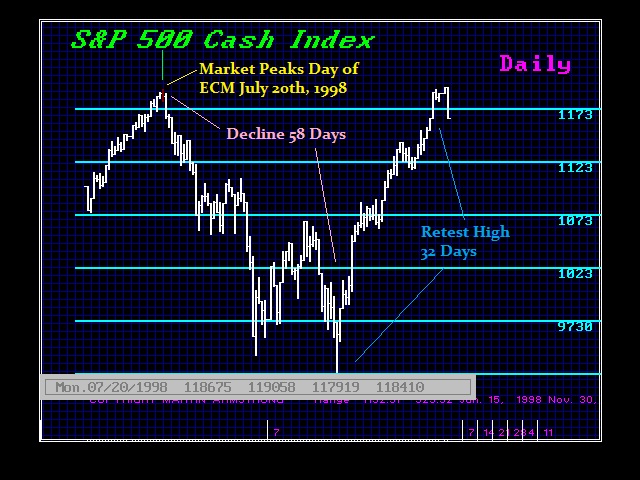
1998-sp500-july-20In the share markets, I had even sold the S&P500 on the very day of the Economic Confidence Model peak – July 20th, 1998, which was the precise high in that market. Getting so many markets precisely correct presents a problem because most people do not comprehend that markets are (1) interlinked, and (2) precise. They immediately want to say you manipulate markets since the vast majority do not understand how the world economy functions and go back to instantly assuming manipulation. I was accused of manipulating the world economy because that is easier to assume than perhaps things do not work the way people believed.

ft-1998

Add to all of the markets we traded precisely for that move, the fact that the London Financial Times put on the front page of the second section the story that we had forecast the Russia was about to collapse at our London World Economic Conference that summer brought in even the CIA. When they called, it was in the middle of the panic and wanted me to go to Washington to build this model for them.

case-shiller-20-city

The Case-Shiller real estate index peaked precisely to the day of the Economic Confidence Model in 2007. With the Economic Confidence Model peak in 2007.15 (February 26th, 2007), that turning point marked the very day of the high in the Case-Shiller Real Estate Index. However, it also marked the precise day of the infamous sale at the top of Goldman Sachs’ notorious ABACUS 2007-AC1 $2 billion Synthetic CDO, for which they were charged with fraud. How many times does this model have to pinpoint turns precisely to the day (even 1987 Crash), before people concede perhaps its works and it is not me waking up with a premonition. There are people who pour over everything I write desperately trying to prove me personally wrong rather than looking at the reality that maybe there is something very important lurking behind the appearance of randomness.

You have to understand that performance will decline with any fund the larger the fund grows. Yes our track record with Deutsche Bank outperformed the Medallion Fund back then. However, to be fair, the Medallion Fund began only in 1988 where as our model was already being used for more than 15 years before that so we had much more experience. Comparing one to another may be interesting, on the surface, but it really comes down to the scope of the trading. We used the entire world even during the 1980s. This is why we have created the Global Market Watch to reveal how everything is connected to help take that giant leap forward for humanity.

Strategy is very important in trading. This is the core purpose of the World Economic Conferences. It is not that you trade every specific market we cover. They key is you can see how the world is unfolding and then focus your attention on the market sector you prefer, yet draw confidence from watching the strategy from the whole. It is not that the strategy fails, but you cannot execute an unlimited amount of trades of the same position.

Performance will not remain the same by simply throwing limitless amounts of money at the same market. There is not enough depth to any market whereby it can absorb an endless supply of positions or even if it were confined to a limited group of markets. This is why Medallion is a closed fund. If they accepted more money, their performance would decline. It is not a one for one relationship. Yet it is also why I developed the Global Market Watch to expand the strategy to the entire world without limitations. This is also why we have had the largest and most diverse client base from around the entire world. We are not just forecasting the United States or a single market. Those who focus on just forecasting a single market, like gold, typically hate us and only try to disprove whatever we do because they have nothing else to offer.

The Medallion Fund is the ultimate black box. They really do not report what they made money on and they are also renown for having just quants and not fund managers from Wall Street. Why? Once you interject human reasoning, performance declines. Some will claim to be managing money based upon our model, but in reality they will fail because it is simply their interpretation and human emotion will intervene.

1987-Crash-D1

Funds have long tried to mimic myself as well as Medallion. They have never been able to because they are not really quantitative and human decisions, including emotions, override things. The Brady Commission investigated the 1987 Crash. They assumed at first it was computer trading. What surfaced was that most computer models said sell when our Double Weekly Bearish Reversals were elected. However, the fund managers did not sell because they did not believe their systems. When the market gaped down, panic set in and people sold BECAUSE they had no idea what was going on.

Personally, I have learned over the years that the very best trades are when the computer projects the outcome and it makes me feel like this has to be wrong. For example, BREXIT and Trump are examples of that situation. The computer will beat anyone – including me. We are all infected with emotions. They are the hardest thing to overcome.

The comparison is not whether Socrates would beat Renaissance Medallion, but why is it that the only two systems that are not based upon human decisions are at the top of the heap? How many times does the ECM alone have to work for decades before it is no longer a coincidence?

Monetary Devaluations & Cancellations


500-rs-note

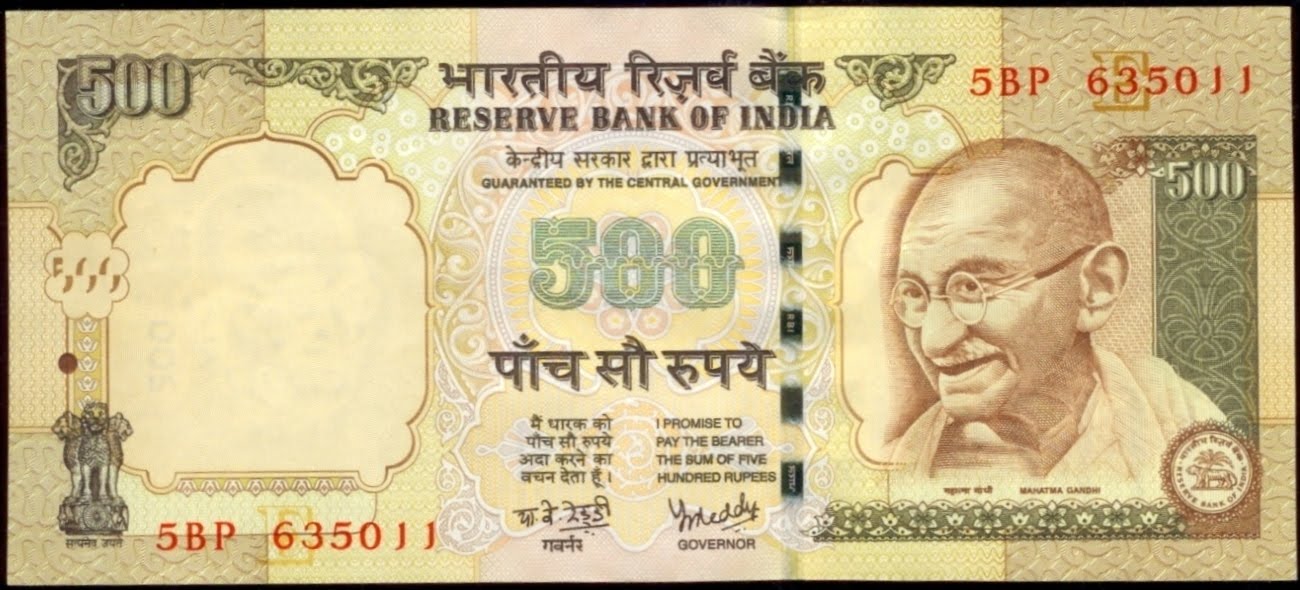
QUESTION: Mr. Armstrong; What Modi has done here in India is far worse than what the press reports. I read your piece that this is part of a larger plan discussed at the G20 meetings. Is there any historical precedent for such actions that would provide some guidance for the future?

R

ANSWER: Since ancient times, many times those in power have cancelled their money supply to make a profit or collect taxes by force. It is rather absurd to think gold or silver coins could somehow exempt one from these types of actions by tyrants for they pulled off such maneuvers even in ancient times. Governments have recalled all coinage and demonetized silver and gold coins, declaring them not acceptable in payment for anything. Despite their metal content, the coins were still declared worthless. This is one of the simple truths that demonstrate not even a gold standard will save the day.

lydia-debasement

persia-darius-xerxes-coinageThe first debasement or reduction in weight too place in Lydia, which was the first city-state to invent coinage stamped by the King. Kroisos fought against the Persians and as expenses mounted, he reduced the weight of the gold stater from 10.75 grams to 8.08 grams – a reduction of nearly 25%. Cyrus the Great won the battle and then retained the invention of coins minting the same designs. Eventually, Darius I of Persia place himself of the coinage and they then became known as a Daric denomination.

There is no evidence that Kroisos recalled the older coinage ti reduce the weight and make a profit. However, others to follow did adopt that tactic which is effectively what Modi has done replacing the currency with electronic deposits. Over the centuries, governments have routinely replaced worn coins or worn paper currency with new issues. However, not all coin recalls were about reminting old and worn coins or paper notes with new ones. Three literary passages from antiquity identify the reminting of coinage in ancient Greece that had nothing to do with recycling of worn coinage. The government did what India did, but instead of moving to electronic money, they devalued outstanding coins and recalled them for restriking regardless of their condition, specifically as a means of raising revenue for the state.

hippias-the-tyrant-528-510bc

The 6th century BC Athenian tyrant Hippias recorded, “[H]e also made the coinage existing among the Athenians legally invalid (adokimon), and, having fixed a price, ordered them to bring it to him; and after they had come together for the purpose of striking another type (character), he gave back the same silver money (argurion).” (Aristotelian Oeconomica 1347a8–11)

It is unlikely that Hippias the Tyrant (528-510 BC) simply returned the coins unchanged. He would not have carried out such a monumental task without making some profit by demonetizing and devaluing all of the coinage in the state, thereby requiring it be exchanged for the legally acceptable (dokimon) coinage that he issued at a higher value. This is similar to the actions of Modi in India.

We also find similar passages that are notable for their overvaluations of the new replacement coinage. During the 4th century BC, Dionysios I of Syracuse (405–367 BC) and Leukon I (389-348 BC) of the Cimmerian Bosphoros pulled off similar mass recalls of coinage. Dionysios, we are told ([Arist.] Oec. 1349b27–33), and Leukon (Polyaenus, Strat.6.9.1), recalled in the existing coinage and restruck (or countermarked) it with a new type (character), thereby doubling its original value. This was an effort to cover the expenses of the state by increasing the money supply. Dionysios recalled the coinage and imposed the penalty of death for noncompliance. Leukon followed Hippias and simply demonetized all existing coinage.

Japanese-Debasement 760-958AD

Various Japanese emperors engaged in similar tactics but did not recall the existing coinage. Each new emperor just devalued all outstanding coinage to 10% of its value and issued their own coinage for profit. This practice led the population to use Chinese coins and rice. Eventually, nobody would accept a Japanese coin because of this practice. Thus, the end result was that Japan lost the ability to issue coins at all for 600 years after 958 AD.

This is why, as we move forward, it will be best to hold assets out of banks and out of currency. They can even declare gold a criminal act to possess, which is why I suggest genuine old coins rather than bullion. Just another layer of protection. Whether that would be the case, as it was under Dionysios I of Syracuse, is not unthinkable. The safest asset may simply be blue chip stocks for they would never make it illegal to own corporations unless you had a full-fledged leftist revolution that seized all private assets as in a communist revolution. That risk would naturally alter everything once again.

The Overview


djind-m-1-8-2017

The Dow made a new high on Friday, but we failed to closed above the 2016 high. We still see the next major resistance level in the 21000-23000 area. A Phase Transition is only likely exceeding that level.

Gold has bounced but the resistance stands at 1197 level with support at 1130 zone. The lowest closing remains 2015 on an annual basis. We need a weekly closing back above 1222 to suggest any short-term sustainability.

Most markets, including the dollar, are really holding waiting to see what the Trump Administration looks like. The tax reform will clearly bring cash moving back to the States despite the leftist economist desperately saying it will not. Any company who does not take advantage of a 10% one-time tax compared to 40% would be one giant short illustrating that their management must be brain-dead. Nevertheless, we are on a wait and see alert for tax reform.

January is still a risk of a turning point in many markets. So you want to be careful with rallies in currencies or commodities at this particular time. The big turning point seems to be shaping up for April/May.

The EU Precedent also Lies in the Athenian Empire


athens-series

QUESTION: Mr. Armstrong; I read your work on the euro from the nineties and how it would fail. Everything you laid out unfolded over the the subsequent 20 years. I assume you have discovered historical attempts to create a euro type system before aside from Napoleon. Can you point to any other references?

HF

ANSWER: History repeats because the human emotions and passions of humanity NEVER change. Without going into all the numerous attempts of trying to create standards, which in fact was the root idea behind the euro to combine the European currencies to compete with the dollar, let us turn to Greece, which was the first state to crack in the Eurozone.

The Athenian coinage decree standardized currency among all the city-states that were allied with Athens. Between the years of 450 and 447 BC, the use of Athenian silver currency and Athenian weights and measures was made MANDATORY in all allied states of the Athenian Empire. This established the Athens Owl as the currency at the time making it the ancient equivalent of the US dollar on the one hand and imposed a single currency such as the euro. Section XII of the decree reads:

“And if anyone proposes or puts to vote concerning [these matters that it is possible] to utilize foreign coinage or put out a loan, let him immediately be haled before the Eleven. The Eleven should punish him with death, but if he disputes his guilt, let them bring him before a dicasteric court.”

athens-reservecurrency

The Athenian Owl became the world currency that was imitated even in India. It was not that these imitations were counterfeit insofar as reducing the metal content. To the contrary, imitations were simply created because the Athenian Owls carried a premium over the silver content similar to the US dollar in peripheral economies today as many peg their currency to the US dollar such as Hong Kong or Saudi Arabia.

athens-emergency

The resentment of this Athenian decree that made the Athens Owls the “reserve currency” of the ancient world, contributed to the Peloponnesian War (431–404 BC) fought by Athens and its Empire  positioned against the Peloponnesian League led by Sparta. Athens had the naval supremacy, but in the end, it fell to Sparta. Today, we have resentment against the dollar being the reserve currency coming from China and Russia. But what backed the Athenian Owls to the point that they carried a premium over their metal content was the fact that Athens was the financial capital of the world due to its dominance in trade. Even shipping insurance emerged in Athens along with banking.

The Athenian Empire emerged following its defeat of the Persians much as governments now share information and hunt people for one another under the claims of terrorism. The Delian League was founded in 477 BC as an association of Greek city-states under the leadership of Athens for the purpose of continuing the defense against the Persian Empire after the end of the Second Persian invasion of Greece. The name is derived from its original meeting place, which was the island of Delos where the ancient central bank stood. Pericles moved it to Athens in 454 BC. This was similar to the design of the European Union.

Athens used the League’s navy to further its trade much as Germany has done to eliminate currency risk for its exporters. This conflict of interest often led to disputes between Athens and the less powerful members of the League creating tension over the single currency created by the Athenian Coinage Decree. By 431 BC, Athens’ authoritarian control led to the outbreak of the Peloponnesian War, which ended the League in 404 BC under the direction of Lysander, the Spartan commander upon the defeat of Athens.

Troika-Unelected

The authoritarian attempt to rule Europe by the EU is leading to the same disruption in commerce. The unelected Troika are also like the tyrants of Athens who were overthrown and replaced with democracy. Southern Europe has not benefited from the single currency any more that the various city-states among the Delian League. The single currency benefited the northern manufacturers within Europe at the expense of the less industrial Southern European member states. The failure to consolidate the debts of all members in the EU burdened their economies causing their past debts to be converted to euro which then doubled in real value. Nobody understand this very basic problem in political circles. Talk about being brain-dead!

Larry Summers – Who Admits He Cannot Forecast – Forecasts Trump


QUESTION: Marty; Did you see Larry Summer’s comments on Trump. Is this guy completely insane? He says Trump is proposing things off the planet. Wasn’t it Summers who came up with the negative interest rates and supported repealing Glass Steagal?

ANSWER: Larry Summers is a classic example of how a PHD means absolutely nothing compared to real life experience. He had the audacity to say, “The vast majority of the companies who have large overseas cash also have substantial amounts of domestic cash.” Obviously, Summers has never advised a real company. If Trump makes it a 10% tax, any company who does not bring their cash home would be a short. EBay had two companies it wanted to buy domestically. It backed out of the deal because it would have to bring in cash from overseas and pay too much tax to make it worthwhile. That’s how much Larry Summers knows about the world.

Summers went further, “The reality is that cash that is brought home will be used to pay dividends, to buy back shares, to engage in mergers and acquisitions, to rearrange the financial chessboard, not to invest in large amounts of new capital. It is a chimera to suppose that there will be large increases in capital investment as a consequence of that repatriation.”

First of all, paying dividends and buying back shares will put money DIRECTLY into the hands of investors who will redistribute the funds. Summers tries to “stimulate” by handing banks billions with no strings attached in hopes that they will lend the money to people who want to borrow. Then he wants to impose negative interest rates to punish people for not spending or investing.

Larry Summers has publicly admitted he is incapable of forecasting the economy, so where does he get off saying this nonsense? Quite frankly, those who are watching their pension funds go bankrupt should sue this guy for his non-conventional idea of negative interest rates to “stimulate” the economy. He gave us the 2007-2009 crisis by repealing Glass-Steagall and supporting the bankers, and he set the pension crisis in motion with negative interest rates. Thank God Hillary lost because this clown would be in charge of screwing up the economy even more.

Bringing All the Sources Together


Tiberius-Bust - R

Panic 33AD

QUESTION: Hi Martin!

I have been enjoying readings in your rich (in knowledge) website and writings in my vacations here in Southern South America. Between one coffee and another I printing articles and writings in order to “connect de dots” as you use to say. That is being a pleasure.

My question is on your article from 9th November in 2013. That’s outstanding, by the way, I really liked that. It makes me happy once you make connections throughout history of human civilization. I do appreciate that.

The name of the article is “Deflation – The Great Equalizer – Now Greece? Was There a Different TESTED Response in History? YES!”

Was astonishing to me the initiatives form the Emperor Tiberius (14-37 AD) and the fact that it worked as you said!

Therefore, I am wondering on the following points:

a) Where can I find (book references) more about these initiatives to fix the economy made from Emperor Tiberius? Which book you would recommend on Roman Empire focusing in this economics view?

b) Where can I find some source with regard “call money rate” of the countries around the world or at least from some of them?

Thank you very much for your attention and hard work!!

All the best!

Warm regards,

RS

ANSWER: There is no single source from which I can draw everything. “The Decline and Fall of the Roman Empire” by Edward Gibbons is probably the best single source, but this does not focus upon the economics. I put together the Panic of 33 AD from various sources using Tacitus as well as the coins themselves. You will find some of the the digital versions on this site under “books.” I prefer contemporary historians to modern ones who interject their interpretations. I also recommend “Historia Augusta.” You can also see how I have brought together all the key sources from ancient times by recording the economic crisis of the first Roman Civil War.

Plutarch (c. 46–120), recorded the personal lives of important Greeks and Romans
Gaius Cornelius Tacitus (c. 56 –c. 120), early Roman Empire
Suetonius (75–160), Roman emperors up to Flavian dynasty
Appian (c. 95–c. 165), Roman history
Arrian (c. 92–175), Greek history
Lucius Ampelius (3rd century AD?), Roman history
Dio Cassius (c. 160–after 229), Roman history
Herodian (c. 170–c. 240), Roman history

Forecasting Economic Numbers – Do They Matter?


adp-private-sector-jobs

QUESTION:  Hi Martin, You have mentioned on numerous occasions, that the Socrates has inputs from around the world to come to very accurate conclusions. I assume, it has plenty data from within the USA as well. Can it also predict the NFP? ADP?. (few days BEFORE.)

Don

ANSWER: We have put in such information from the NFP (Non Farm Payrolls) and ADP Private Sector Jobs data and the interesting result demonstrates that human emotion rules — not numbers. Yes, any data series develops patterns including lottery numbers. Forecasting the direction of such numbers is not really that difficult. The stunning realization, as I have said plenty of times regarding fundamental analysis, is that the reaction of the market is driven by the trend. Therefore, you can obtain a good number but the market will respond in the opposite direction and the news will say it was not good enough. The overall trend being bullish or bearish will color the response to the numbers. Forecasting the number does little good from a reality perspective.