Australian Police Want a New Law to Covertly Turn All Phones into Listening Devices


In picturesque Australia, the Queensland police are proposing new laws that would allow them to turn your internet connected products into listening devices to spy on your conversations. Of course, they are claiming they need this legislation to fight terrorism. The extent of terrorism in Australia has been minimal at best and it has not been the target as is the case in Europe or the United States. This amounts to:

  • Sydney Yugoslav General Trade and Tourist. Agency bombing (1972)
  • Sydney Hilton bombing (1978)
  • Sydney Israeli consulate and Hakoah Club. bombings (1982)
  • Turkish consulate bombing (1986)
  • French consulate bombing (1995)
  • Endeavour Hills stabbings (2014)
  • Parramatta shooting (2015)
  • Minto stabbing attack (2016)

The proposed legislation of the Queensland Police is for anything but terrorism. This is turning into big brother and it will be really used for tax evasion – the real target of such legislation.

The Phillips Curve No Longer Works


QUESTION: Mr. Armstrong; Thank you for coming to Frankfurt. Nobody gets that big of an audience here ever. What you illustrate with the three faces of inflation means that the Philips Curve no longer functions. Was this something like Kondratieff’s Wave that it was based upon a period that is outdated?

Thank you once again. I hope you do more of these type events.

BC

ANSWER: Yes. The Phillips curve is a graph describing the relationship between wage changes and price level changes on the one hand and the unemployment rate on the other.  The basic assumption was a fixed exchange rate so there was no issue of currency inflation. The Phillips curve was published in 1958 by the English statistician and economist Alban William Housego Phillips in the magazine Economica. It has been modified several times since. Paul A. Samuelson and Robert Merton Solow in 1960 expanded the Phillips curve. They created a link between unemployment and the change in the inflation rate but this was again under Bretton Woods and a fixed exchange rate system. The Phillips curve  assumptions are simply irrelevant today and yet central banks have continued to try to manipulate society based upon these antiquated theories. Every assumption they make to manage the economy is dead wrong right down to the Quantity of Money Theory

The Month-End Closing for July 2017


The dollar correction for this Year from Political Hell is still in motion, but there is no major change in trend that is at hand. In the British pound, the Monthly Bullish Reversal stands at 13485 level on cash.  In the Euro, the Monthly Bullish remains up at 12885 with a Minor Monthly Bullish at 12570. In the Canadian dollar futures the Monthly Bullish stands at 88360 with a Minor Monthly Bullish at 80040.

In gold, the number has not change and is still 1362. We have a Minor Monthly Bullish at 1358. In Silver the Monthly Bullish remains at 2310 with a Minor Monthly Bullish at 2024.

In the Dow, support lies at 2099400 and only a monthly closing beneath that would signal a short-term correction is at hand of any importance. Meanwhile, our key resistance level remains intact at the 23000 level. Despite the reactionary rally in the Euro, the European share markets are in a bit of trouble. The high in the DAX took place on June 20th, 2017 at 1295154. Here we have already elected two Weekly Bearish Reversals and we look to 1185000 as the next critical weekly level for any support. On the monthly level, the DAX did an Outside Reversal to the Downside on a monthly level leaving the May target as indeed the highest monthly closing. This warns that the critical support lies at 1147975 on a monthly closing basis.

This Year from Political Hell has actually been extended probably into February 2018. The Italian elections should have come in during this September. However, if they took place then, the MPs who were elected would not be eligible for their pensions for the timing would be too short. Therefore, the elections will most likely be extended into February. It will be Italy that could still break with the Euro. The Italians do not share the same concerns about preventing European war as is the case in France and Germany. The Italians have been on both sides whereas the fight has been three times in a row between Germany and France. The Italians are more along the lines of what are you doing for me lately. The Greeks may have just given up all hope of breaking away right now and will have to suffer even more before they rise up. What may bring Greece to its knees is actually the Refugee Crisis. Where Greece was the popular spot for vacations for the Northern Europeans, because of the refugees the hot spot has shifted to Portugal. Greece needs tourism and so does Italy. In both cases, the refugees are deterring tourism which both countries need desperately.

The Monetary Crisis still seems ready for its turn, but most likely following the first quarter 2018. We intend to update the Monetary Crisis Cycle report in the months ahead.

Britain to Raise Retirement Age to 68 to Try to Save Pensions


The Work and pensions secretary David Gauke have revealed that parliament proposes to raise the pension age to 68. The pension crisis that is brewing throughout Western culture reflects the insanity of lowering interest rates to try to “stimulate” the economy. This policy has set the stage for the next great crisis brewing, which will expose the postwar Socialism is just a total failure.

The rise in government on average to about 40% of GDP means that this is consuming the wealth of every nation and suppressing the economic growth. This is forcing people to work longer to survive and hence they do not retire quickly into the sunset holding on to jobs that then in turn cause higher unemployment in the next two generations. There is not much we can do about this because politicians will never act to prevent a crisis, they perfect to act only when a crisis emerges. Consequently, the Pension Crisis is simply unavoidable.

Martin Armstrong ✹ Why The Next Major Economic Collapse Is Rapidly Approaching? (MUST LISTEN)- upda


Published on Jul 17, 2017

Martin Armstrong ✹ Why The Next Major Economic Collapse Is Rapidly Approaching? (MUST LISTEN)- update .
Please click above to subscribe to my channel
Thanks for watching!

China – A Different Central Bank Altogether


QUESTION: Mr. Armstrong; I believe you once said at your conference that you were surprised when you were asked to fly to Beijing to meet with the central bank because you were not an academic, but a trader. I think you said when you got there they were traders working in the bank, not academics. Did I recall that story correctly?

ANSWER: Yes. The central bank had sent staff to work on trading desks around the world in Tokyo, New York, and London. They then returned to run the bank. When the 1997 Asian Currency Crisis hit, I was very surprised that they asked me to come and not some academic. When I got there, I discovered that they were traders and we spoke the same language.

When I returned to the States, people I knew in the Fed and in Treasury called to ask me my opinion after these meetings with the Chinese government. I responded: It was great. They only hired people with experience!

I understand so many people think China does whatever I say. I think the real story is they may take what I say, but they see it through the eyes of a trader rather than an academic. Hence, they adopt it quickly but never blindly. They have a good nose for trends themselves.

Google’s Antitrust Case in Europe


QUESTION: Mr. Armstrong; Is Google really violating European antitrust laws to warrant such a huge fine or is this really a trade war?

KQ

ANSWER: It’s a trade war. Granted, the EU hit Google with a record-breaking fine of €2.4 billion ($2.7 billion, £2.1 billion) by European regulators who accused the California-based technology giant of abusing its dominant position and promoting its own shopping service in its search results over those of its competitors.

The European Union Commission claims this is the culmination of a multiyear investigation into Google’s business practices dating back nearly a decade. This in itself proves this is nonsense for the past decade has witnessed a dramatic change in how products are being sold. Amazon has been growing tremendously in sales putting many stores out of business like Sears.

Things are changing. The beginning of this whole antitrust violation took place with the Sherman Antitrust Act passed in the USA back in 1890. The theory was you had all these small railroad companies and they were merging into large regional railroads. The politicians called this a monopoly that put people out of jobs as companies merged and eliminate duplication.

Once again we have dramatic changes to the retail industry. The politicians behind this nonsense of fining Google are just (1) greedy and (2) ignorant. Amazon is already starting to create showrooms where you can go at look at products and then it will be delivered to you in days. This is the way retail is changing. Here is a search I entered for a Sony Laptop. Yes at the top it come up with Google shopping and it says sponsored. However, it shows competitive brands. At the bottom of the page is Amazon. Yes they are competing against Amazon. Does that warrant a huge fine or are politicians just trying to come up with creative means to get more money because they are dead broke?

Multinational Corporations and The Export of American Wealth…


To understand the larger objectives of the global and financial elite it is important to understand the three-decade global financial construct they seek to protect. Global financial exploitation of national markets:

♦Multinational corporations purchase controlling interests in various national elements of developed industrial western nations.
♦The Multinational Corporations making the purchases are underwritten by massive global financial institutions, multinational banks.
♦The Multinational Banks and the Multinational Corporations then utilize lobbying interests to manipulate the internal political policy of the targeted nation state(s).
♦With control over the targeted national industry or interest, the multinationals then leverage export of the national asset (exfiltration) through trade agreements structured to the benefit of lesser developed nation states – where they have previously established a proactive financial footprint.

Since initially explaining this modern import/export dynamic some have asked for specific examples in order to gain a better understanding.  There are a myriad of interests within each sector that make specific explanation very challenging.  However, here’s an attempt.

For three decades economic “globalism” has advanced, quickly.  Everyone accepts this statement, yet few actually stop to ask who and what are behind this – and why?

People with vested financial interests in the process have sold a narrative that global manufacturing, global sourcing, and global production was the inherent way of the future.  But what’s brutally missed in the discussions is the fundamental truth that advocates selling this “global” message have a vested financial and ideological interest in convincing the information consumer it’s just a natural outcome of progress.

It’s not.

It’s not natural at all.  It is a process that is entirely controlled, promoted and utilized by large conglomerates and massive financial corporations.

Again, I’ll try to retain the larger altitude without falling prey to the esoteric weeds.  I freely admit this is tough to explain and I may not be successful.

Bulletpoint #1: ♦ Multinational corporations purchase controlling interests in various national elements of developed industrial western nations.

This is perhaps the most challenging to understand.  In essence, national companies expanded their influence into multiple nations, across a myriad of industries and economic sectors (energy, agriculture, raw earth minerals, etc.).

Think of these multinational corporations as global entities now powerful enough to reach into multiple nations -simultaneously- and purchase controlling interests in a single economic commodity.

A historic reference point might be the original multinational enterprise, energy via oil production.  (Exxon, Mobil, BP, etc.)

However, in the modern global world, it’s not just oil; the procurement extends to virtually every possible commodity and industry.  From the very visible (wheat/corn) to the obscure (small minerals, and even flowers).

Bulletpoint #2 ♦ The Multinational Corporations making the purchases are underwritten by massive global financial institutions, multinational banks.

During the past several decades national companies merged.  The largest lemon producer company in Brazil, merges with the largest lemon company in Mexico, merges with the largest lemon company in Argentina, merges with the largest lemon company in the U.S., etc. etc.  National companies, formerly of one nation, become “continental” companies with control over an entire continent of nations.

…. or it could be over several continents or even the entire world market of Lemon/Widget production.  These are now multinational corporations.   They hold interests in specific segments (this example lemons) across a broad variety of individual nations.

National laws on Monopoly building are not the same in all nations.  But most are not as structured as the U.S.A or other more developed nations (with more laws).  During the acquisition phase, when encountering a highly developed nation with monopoly laws, the process of an umbrella corporation might be needed to purchase the interests within a specific nation.  The example of Monsanto applies here.

Bulletpoint #3  ♦The Multinational Banks and the Multinational Corporations then utilize lobbying interests to manipulate the internal political policy of the targeted nation state(s).

With control of the majority of actual lemons the multinational corporation now holds a different set of financial values than a local farmer or national market.  This is why commodities exchanges are essentially dead.  In the aggregate the mercantile exchange is no longer a free or supply-based market; it’s now a controlled market exploited by mega-sized multinational corporations.

Instead of the traditional ‘supply/demand’ equation determining prices, the corporations look to see what nations can afford what prices.  The supply of the controlled product is then distributed to the country according to their ability to afford the price.  This is how the corporation maximizes it’s profits.

Back to the lemons.  A corporation might hold the rights to the majority of the lemon production in Brazil, Argentina and California/Florida.   The price the U.S. consumer pays for the lemons is directed by the amount of inventory (distribution) the controlling corporation allows in the U.S.

If the U.S. harvest is abundant, they will export the product to keep the U.S. consumer spending at peak or optimal price.  A U.S. customer might pay $2 for a lemon, a Mexican customer might pay .50¢, and a Canadian $1.25.

The bottom line issue is the national supply (in this example ‘harvest/yield’) is not driving the national price because the supply is now controlled by massive multinational corporations.

The mistake people often make is calling this a “global commodity” process.  In the modern era this “global commodity” phrase is particularly BS.

A true global commodity is a process of individual nations harvesting/creating a similar product and bringing that product to a global market.   Individual nations each independently engaged in creating a similar product.

Under modern globalism this process no longer takes place. It’s a complete fraud.  Currently, massive multinational corporations control the majority of product inside each nation and therefore control the entire global product market and price.

In highly developed nations this multinational corporate process requires the corporation to purchase the domestic political process, the approval, within individual nations allowing the exploitation.  As such, their lobbyists pay hundreds of millions to politicians for changes in policies and regulations one sector or industry at a time.

EXAMPLE:  The Committee on Foreign Investment in the United States (CFIUS)

CFIUS is an inter-agency committee authorized to review transactions that could result in control of a U.S. business by a foreign person (“covered transactions”), in order to determine the effect of such transactions on the national security of the United States.

CFIUS operates pursuant to section 721 of the Defense Production Act of 1950, as amended by the Foreign Investment and National Security Act of 2007 (FINSA) (section 721) and as implemented by Executive Order 11858, as amended, and regulations at 31 C.F.R. Part 800.

The CFIUS process has been the subject of significant reforms over the past several years.  These include numerous improvements in internal CFIUS procedures, enactment of FINSA in July 2007, amendment of Executive Order 11858 in January 2008, revision of the CFIUS regulations in November 2008, and publication of guidance on CFIUS’s national security considerations in December 2008 (more)

Bulletpoint #4With control over the targeted national industry or interest, the multinationals then leverage export of the national asset (exfiltration) through trade agreements structured to the benefit of lesser developed nation states – where they have previously established a proactive financial footprint.

The process of charging the U.S. consumer more for a product, that under normal national market conditions would cost less, is a process called exfiltration of wealth.

It is never discussed.

To control the market price some contracted product may even be secured and shipped with the intent to allow it to sit idle (or rot).   It’s all about controlling the price and maximizing the profit equation.   To gain the same $1 profit a widget multinational might have to sell 20 widgets in El-Salvador (.25¢ each), or two widgets in the U.S. ($2.50/each).

Think of the process like the historic reference of OPEC (Oil Producing Economic Countries).  Only in the modern era massive corporations are playing the role of OPEC and it’s not oil being controlled, it’s almost everything.

Individual flower growers in Florida out of business because they didn’t join the global market of flower growers (controlled market) by multinational corporate flower growers in Columbia and South America, who have an umbrella company registered in Mexico allowing virtually unrestricted access to the U.S. market under NAFTA.

Agriculturally, multinational corporate Monsanto says: ‘all your harvests are belong to us‘.  Contract with us, or you lose because we can control the market price of your end product.  Downside is that once you sign that contract, you agree to terms that are entirely created by the financial interests of the larger corporation; not your farm.

The multinational agriculture lobby is massive.  We willingly feed the world as part of the system; but you as a grocery customer pay more per unit at the grocery store because domestic supply no longer determines domestic price.

Within the agriculture community the (feed-the-world) production export factor also drives the need for labor.  Labor is a cost. The multinational corps have a vested interest in low labor costs. Ergo, open border policies.  (ie. willingly purchased republicans not supporting border wall etc.).

This corrupt economic manipulation/exploitation applies over multiple sectors, and even in the sub-sector of an industry like steel.   China/India purchases the raw material, ore, then sells the finished good back to the global market at a discount.  Or it could be rubber, or concrete, or plastic, or frozen chicken parts etc.

The ‘America First’ Trump-Trade Doctrine upsets the entire construct of this multinational export/control dynamic.  Team Trump focus exclusively on bilateral trade deals, with specific trade agreements targeted toward individual nations (not national corporations).  ‘America-First’ is also specific policy at a granular product level looking out for the national interests of the United States, U.S. workers, U.S. companies and U.S. consumers.

Under President Trump’s Trade positions, balanced and fair trade with strong regulatory control over national assets, exfiltration of U.S. national wealth is essentially stopped.

This puts many current multinational corporations, globalists who previously took a stake-hold in the U.S. economy with intention to export the wealth, in a position of holding contracted interest of an asset they can no longer exploit.

RELATED:

♦The Modern Third Dimension in American Economics – HERE

♦The “Fed” Can’t Figure out the New Economics – HERE

♦Proof “America-First” has disconnected Main Street from Wall Street – HERE

Next up: How the Stock Market is disconnected and why that matters.

The Hunt for Money – “the more things change, the more they stay the same.”


QUESTION: 

Dear Mr Armstrong, with great compliments on your work I now see a chance to do something back. …
On the topic of government hunger for money, they are now using speedtraps for boats here in Amsterdam. Just 2 miles over the limit will cost already cost you €90. Yes they have laserguns for such low speeds… This only a few years after they tripled the tax on boats. There is also a raging debate on “erfpacht”, the soil many houses here are built on is owned by the city – you can imagine how potentially disastrous that can be if you’re an owner.
I would be interested if you see governments around the world not practicing this, or not so much. Or are they all the same?
Thank you.
Sincerely,
DvdP
ANSWER: Unfortunately, the problem we have with government is historic and of epic proportions. They always abuse their power of taxation and consequently, governments always fall by their own hand. They will never reform and constantly raise taxes because they are incapable of restraint. It is just the way everything functions throughout history. There is NOTHING we can do. This must simply run its course. When the crash comes, then perhaps we can offer real reform. The question becomes – how long can that survive before it starts all over again?
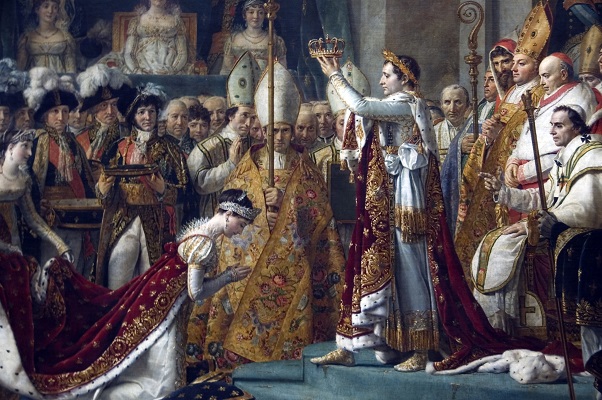
There has never been a revolution that ever resulted in true change. Even Napoleon crowned himself “Emperor” rather than “King” so you just change the title but you end up with the same thing. It was Jean-Baptiste Alphonse Karr (1808 – 1890) the French critic who said: “the more things change, the more they stay the same.”

Spain & the Rise & Fall of Empires, Nations, City States & Feudalism


QUESTION: Mr. Armstrong; I suppose when you said that the marriage of Isabella and Ferdinand the the final stage of unifying Spain rather than the beginning. Correct?

ANSWER: Yes. The idea of a nation state began to emerge in Europe during the 10th century. This is reflected even in the coinage which to a large extent move from feudal to city state and then finally into nation states.

For example, the nation state concept was taking place in Scandinavia and in England before it really emerged in France and Spain. The first king in England to become dominant was Alfred the Great (871-899). Yet he was still really just the king of Wessex. In the early 10th century the Anglo-Saxon kingdoms, united by Æthelstan (927–939), but then England was conquered and became part of the North Sea Empire of Cnut the Great, a personal union between England, Denmark and Norway.

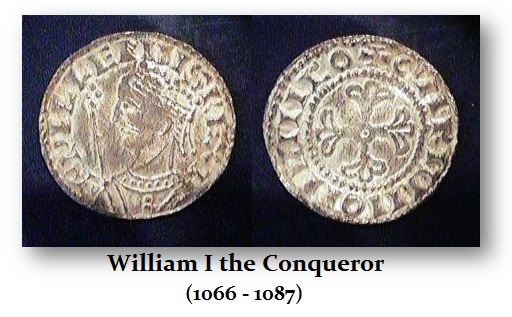
The Norman conquest of England in 1066 led to the transfer of the English capital city and chief royal residence from the Anglo-Saxon one at Winchester to Westminster, and the City of London was established as England’s largest and principal commercial centre. This was the beginning of England as a nation state.

During the 13th century, Aragon controlled Barcelona before there was a nation state. In the case of Spain, Ferdinand I was the first Castilian monarchs whose reign began in 1037. The list of separate regions and kingdoms of Spain were

Kings of the Visigoths
Kings of Asturias
Kings of Navarre
Kings of León
Kings of Galicia
Kings of Aragon
Kings of Castile

You must understand that we moved from Provinces under the Roman Empire, to feudalism, then city states, and then back to nation states. There is a cycle to everything.