Daniel’s Interpretation of Nebuchadnezzar’s Dream


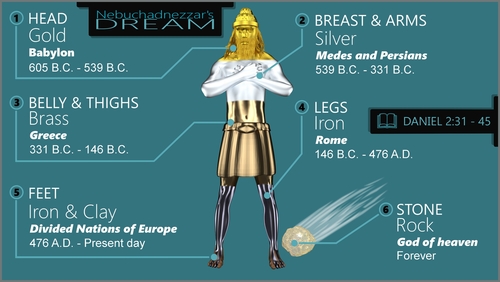
QUESTION: You have previously said that the Persian monetary system was based on gold, the Greeks used silver and the Romans began with bronze. That actually described the Biblical story of the dream of Nebuchadnezzar’s Statue interpreted by Daniel. Do you think your research into the world Monetary System confirms that interpretation?

WK
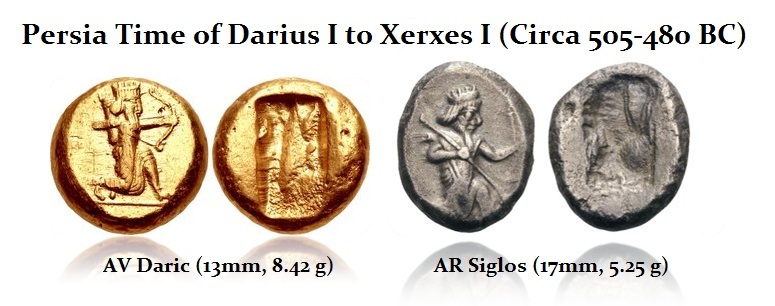
ANSWER: I have been asked that question before. Perhaps I have never answered it on this blog. The history of the world monetary system does appear to provide an accurate interpretation of that dream. However, I have my differences. The Persians had plenty of gold from Anatolia. The foundation of their monetary system began with gold. The first coins were actually issued by the Greeks who occupied Anatolia, (Turkey) which was conquered by the Persians who adopted their monetary system. The first coins were gold electrum, a natural alloy of gold and silver mixed. They eventually refined the electrum into gold and silver coins. That was the birth of the bimetal monetary system.
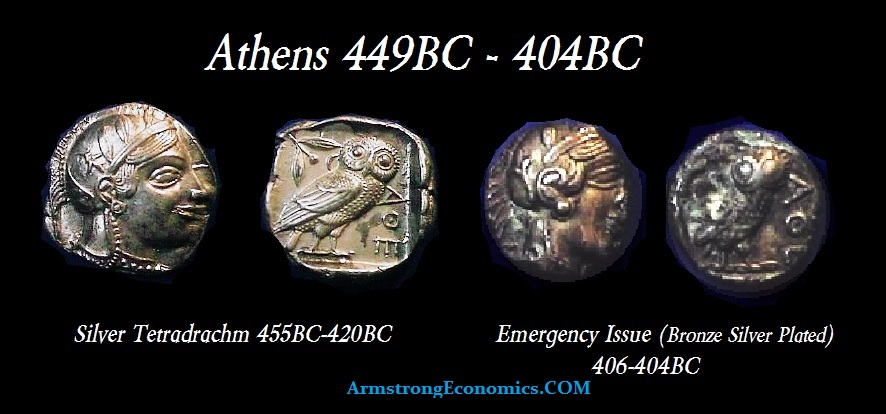
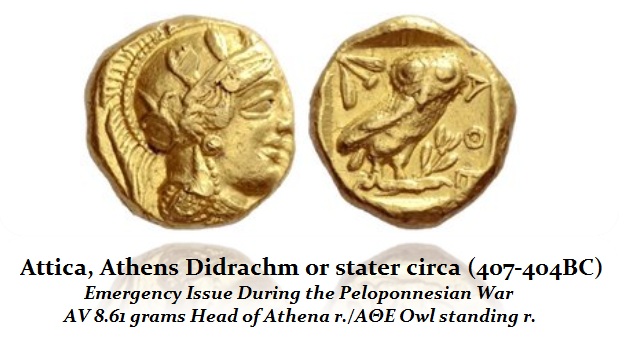
 

Mainland Greeks possessed silver mines. Athens was famous for its Athenian Owls. The only time we see Owls struck in gold was as an emergency issue during the Peloponnesian War. This is when we see the first debasement of the silver coinage. It was against this backdrop of war in a desperate fight for survival an emergency coinage was issued in gold.  Gold was scarce in the Greek world which relied upon silver. Athens in the last decade of the fifth century was surrounded by the Spartans who cut off their supply of silver by denying them access to their silver mines.

Athens was brought to its knees in the midst of military defeat. At first, Athens survived the by tapping into a reserve treasury of some 1,000 talents of silver. This enabled them to produce about 1.5 million silver tetradrachms. Then by 407BC or 406BC, Athens was no longer able to issue silver coinage. This was when they were forced to coin silver plated tetradrachms.  Aristophanes’ Frogs (718-33) indicate that the gold coins were struck in 407/406BC, and that silver-plated coins were struck in the year as well. The coinage confirms Aristophanes’ account. Some have argued that the Spartan forged the Athenian Owls to undermine their currency as a war tactic.

As for the rare gold coinage of Athens, the Athenians turned to the offerings stored on the Acropolis and the gold-covered statues of Nike. Perhaps this is when one of the Seven Wonder of the ancient world was stripped of her gold – Athena Parthenos. Most people have no clue that the famous Parthenon means ‘house of Parthenos’ meaning the house of Athena the Virgin. The Statute is said to have been taken during the 5th century AD. Some claim it was removed to Constantinople.

Athens had possessed an immense treasury, but it was completely depleted to defend in the war. These emergency funds were used to build and outfit a new fleet that in 405BC was defeated at Aegospotami in the Hellespont by the Spartan general Lysander. The Athenian gold from the war is uncommonly well documented for an ancient coinage. The bullion was stripped from seven of the eight golden Nikai on the Acropolis. Each statue was covered in about two talents worth of gold in the form of removable plates which perhaps could have produced 100,000 drachms weight in gold or 50,000 of the coin pictured here – Didrachm. What happened to this production is not known. Very few of these coins have survived and are worth up to $500,000 each. Perhaps the Spartans just melted down everything they could find.
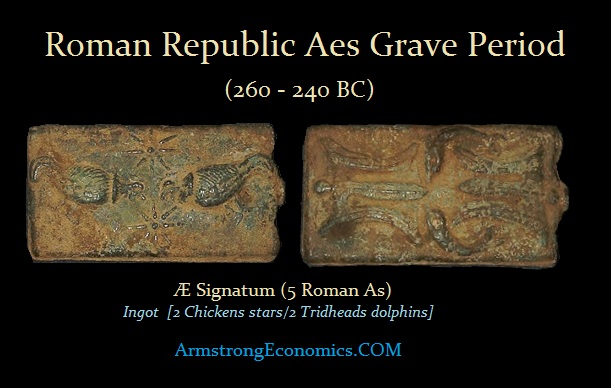
Nero presenting giftsThe Monetary System of Rome began with bronze which traded at first in clumps known as Aes Rude and then took form in ingots and round coins all cast at first rather than struck from dies. The “brass” is Orichalcum which was a rare natural alloy. It was first introduced by Augustus (27BC-14AD).  Nero (54-68AD) made use of Orichalcum to give higher value to certain denominations as the Sestertius and Dupondius.
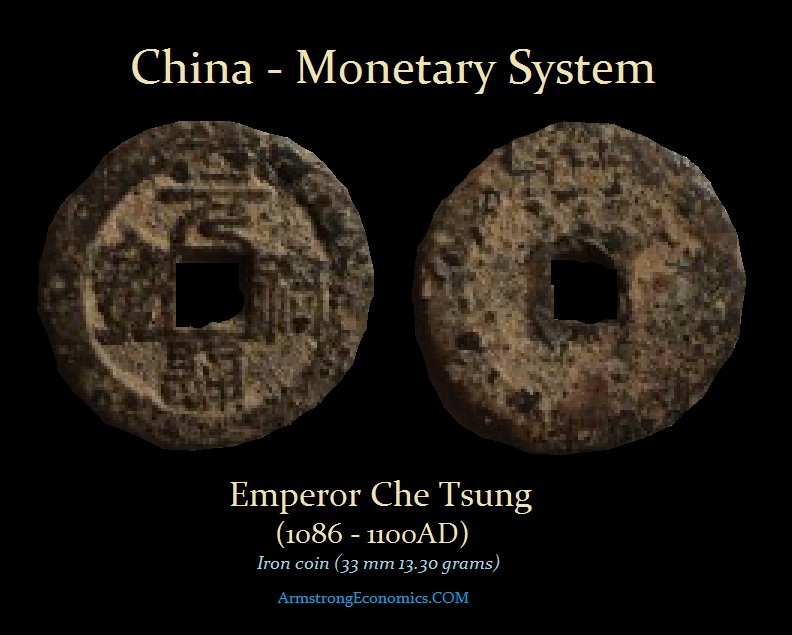
If we are to address the legs of Iron, sorry that does not fit the monetary description of the Roman Empire. The only monetary system to use iron for coinage was China – not European. Here is an Iron coin made during the period of Emperor Che Tsung (1086 – 1100AD)(33 mm 13.30 grams). After the fall of Rome/Constantinople, the Financial Capital of the World migrated to Asia. So I fail to see where the legs of Iron can be fairly interpreted to be a European Empire.

As far as part clay and part Iron, there is such a use of clay in the production of paper. It was known as China Clay Paper. Even the United States used it in the production of postage stamps for a brief period. It tended to have a bluish cast or tint to the paper.
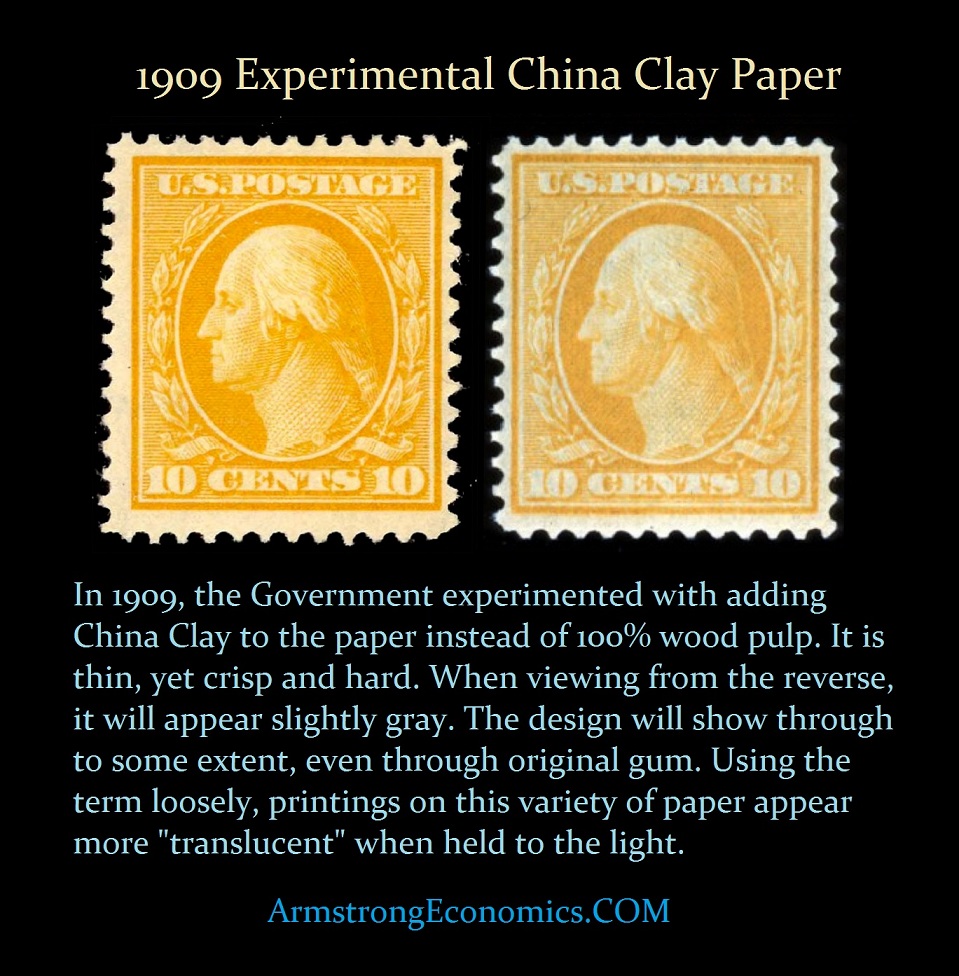
In 1909, the United States briefly experimented with printing stamps on paper with 20% China Clay added to the otherwise 100% wood pulp used to make paper. The paper had a faint grayish tone, and the stamps printed on it are known as “China Clay” stamps.
While many know that paper money was invented in China, what they usually do not know is that paper itself was invented in China. Ever since the invention of writing, people had been trying to come up with something easier to write on than clay tablets, sheep skins (parchment), or papyrus or. However, it actually took a very long time – some 3000 years to be closer to the notch in the timeline of human society. Paper was invented around 100 BC in China. In 105 AD, under the Han Dynasty emperor Ho-Ti, a government official in China named Ts’ai Lun was the first to start a paper-making industry. He made paper by mixing finely chopped mulberry bark and hemp rags with water. He then mashed pounding it flat. After pressing out the water and letting it dry in the sun, he discovered paper. To be fair, for centuries before people used the mulberry bark to make cloth. Consequently, Ts’ai Lun’s paper was a derivative of that process and turned out to be a huge success. With paper available, Buddhist monks in China began to work on ways of mass-producing prayers. By 650 AD they were block-printing prayers. Tang Dynasty (618-907AD) marks the birth of paper money.

Consequently, I believe that the prevailing interpretation of Nebuchadnezzar’s Dream seems to be biased toward Western culture. There is no known use of iron being used for money outside of China in Europe. If we are going to use the monetary system to explain the empires, we should not omit China.

Singapore WEC & The Conspiracy Begins


The emails have started with the conspiracy accusations that this is the second WEC when President Trump will be there in the same place. True, he was in the same hotel in 2016 in a meeting a couple doors away. This time he has announced the meeting with Kim will take place in Singapore. A couple of emails put it that once is a coincidence – twice is a conspiracy. Perhaps true in some instances. However, I do not advise Trump and I have nothing to do with North Korea. If they want to sit in the back of the WEC and learn something, no problem. We will be glad to provide the seats. Otherwise, maybe the rule should be three-times is a conspiracy and twice is still just a coincidence.

What Really Causes Inflation & Deflation?


QUESTION: why national debts eventually default Martin to answer this question you said:

we need to introduce currency. France and Germany were less impacted by converting to the Euro than Greece, Italy, Spain, and Portugal. Why? Currency Inflation!

My question is if it is not the quantity of money that is making $1 million buy fewer Cadillacs, then what is the trigger?

Is it the national debt, being devalued by a lower dollar?

What then is causing that dollar to go lower and purchase less if not a quantity of money causing fewer goods to be chased by more money?

d

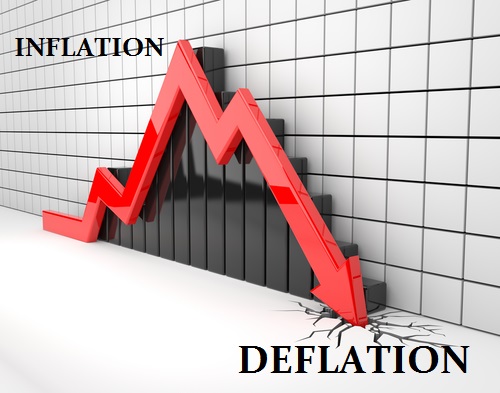
ANSWER: It is a combination of many trends. The idea of inflation is caused by an increase in money supply has been the one-dimensional answer. It may sound logical, but it is far from the actual cause. Inflation and Deflation are more directly impacted by the credit cycle than the creation of money by the state.


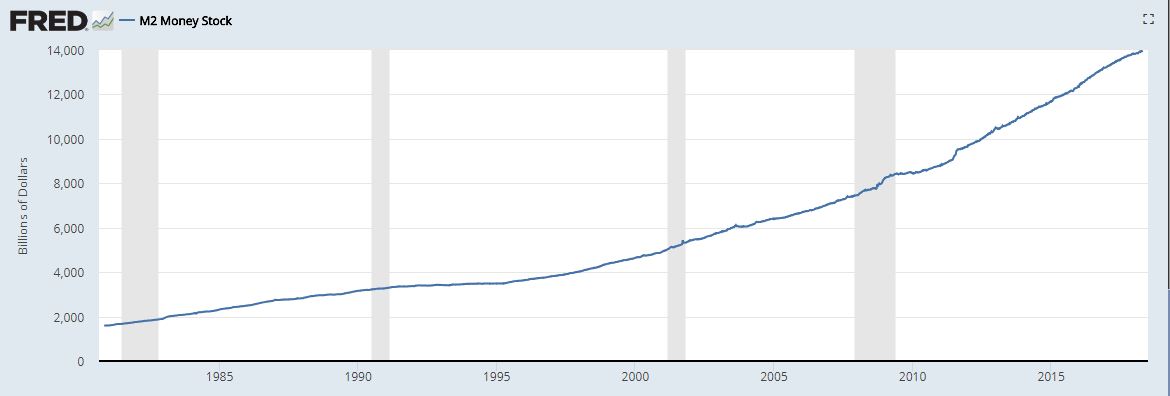
Here is a chart of M2, which includes a broader set of financial assets held principally by households. M2 consists of M1 plus: (1) savings deposits (which include money market deposit accounts, or MMDAs); (2) small-denomination time deposits (time deposits in amounts of less than $100,000); and (3) balances in retail money market mutual funds. If we look at money supply, then inflation should always exist without end. Clearly, money supply is not the only factor involved.

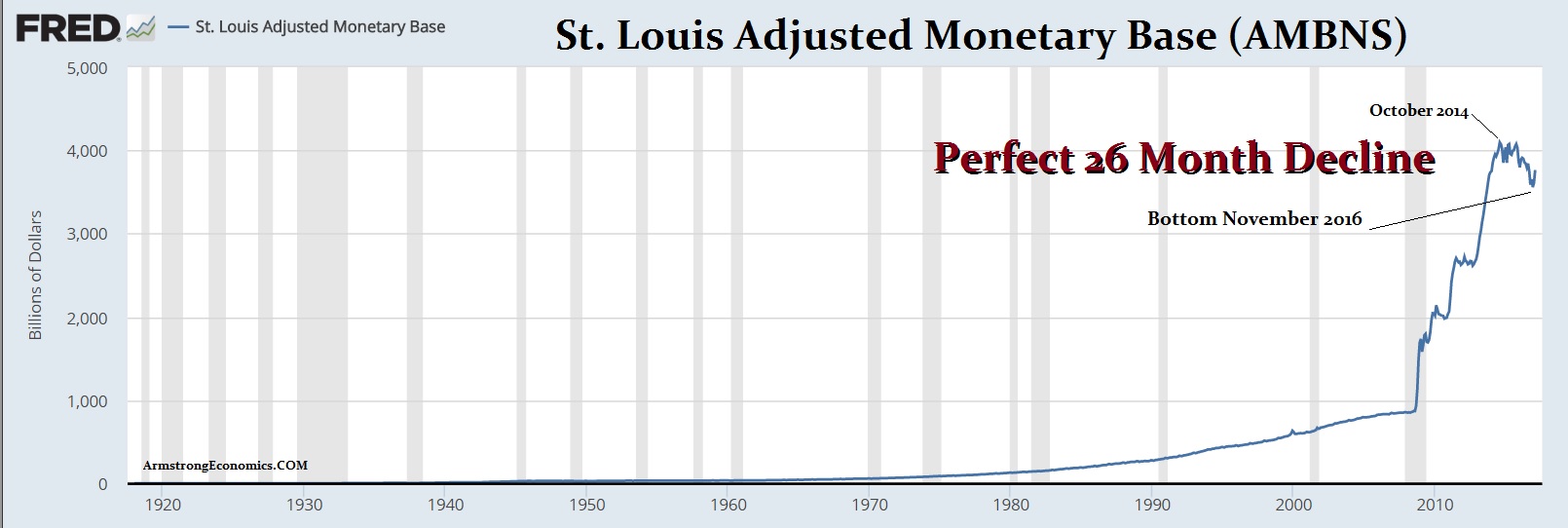
Here is what is known as the adjusted monetary base, which equals the sum of the monetary source base and an appropriate RAM adjustment. The adjusted monetary base is composed of the adjusted total reserves and adjusted nonborrowed reserves. When we redefine the money supply looking at the entire monetary spectrum, you get to see the Quantitative Easing and it peaked in line with the ECM.


Now let see if the money created actually made it into the economy. The Fed also created Excessive Reserves because the banks did not want to “stimulate” the economy by lending. This is why I have said the QE was an utter failure for the banks just parked the money and it was not lent out.

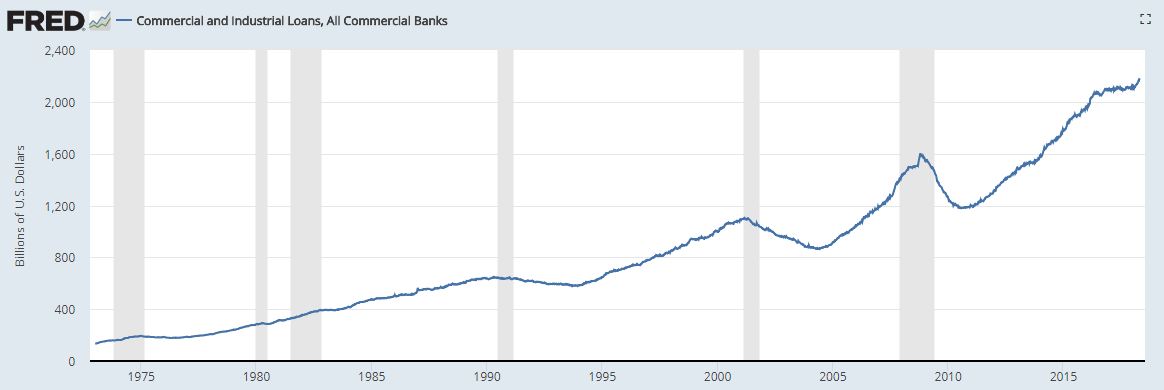
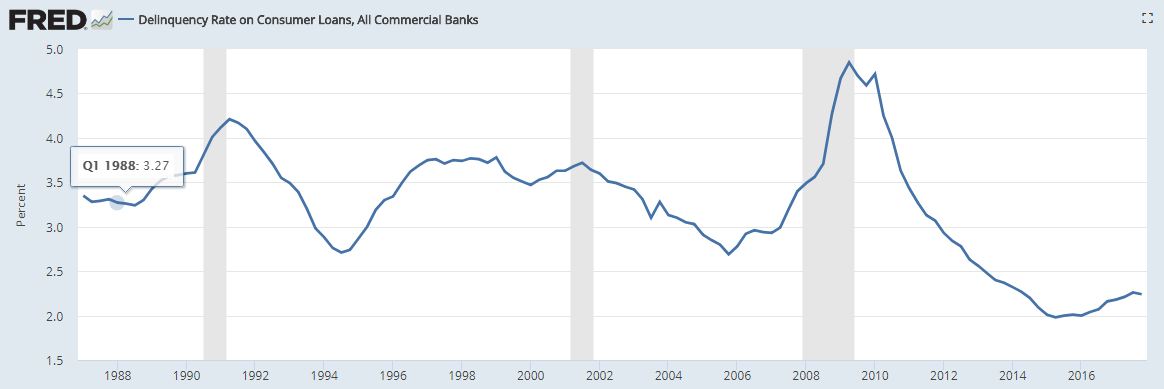
Now let us look at the decision making of banks. Here we can see why the banks simply parked the money at the Fed. The credit cycle comes into play and this is what more directly impacts inflation or deflation that the simple quantity of money.

We can see that the consumer delinquency rate on Consumer Loans is really the key. The idea that the Fed can stimulate the economy by handing banks more money is the most stupid idea I have ever heard. The very design of the Federal Reserve was that they would BUY commercial paper when the banks WOULD NOT to stimulate the economy directly. Then Congress instructed the Fed to buy their debt for World War I and never restored the design of the Fed. So now the Fed buys only government paper and it has lost its ability to “stimulate” the economy for this is the credit cycle which dictates inflation and deflation far more than any quantity of money theory.

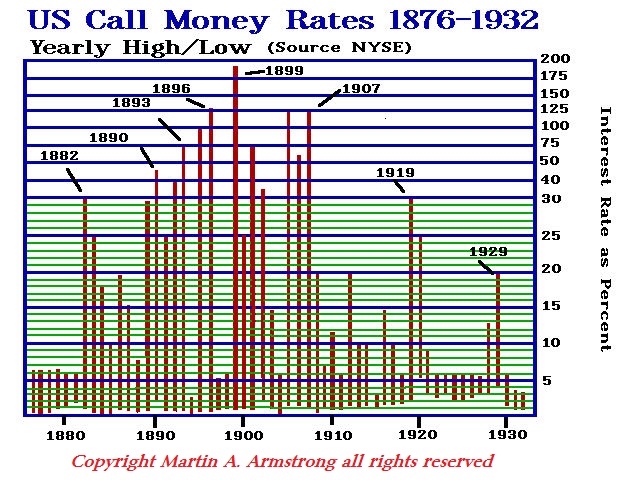
When I conducted studies of interest rates relative to the stock market, I quickly discovered that the stock market ALWAYS rallied with rising rates and decline with falling rates. More importantly, it was critically influenced by international capital flows. If money was turning away from the United States, then the interest rate would move to the highest level as in 1899. When the capital flows pouring into the USA in hiding from World War I, you find the Greatest Bull Market in History with the lowest level of interest rates because the capital flowed into the USA increasing the real money supply by credit.

I have stated also many times that the domestic money supply of any nation can be increased and decreased by international capital flows. If the Chinese come and buy a piece of real estate, they bring in money for a dead asset. The seller now has money that did not exit domestically before the sale. If two Canadian sell and buy a home, nothing changes domestically. But a foreign buyer must import the cash to buy the home and thereby the available cash domestically increases with the state doing nothing. The Chinese buys dollars perhaps somewhere else which the banks create in the swap market. The government never “officially” printed anything nor did they expressly increase the money supply.

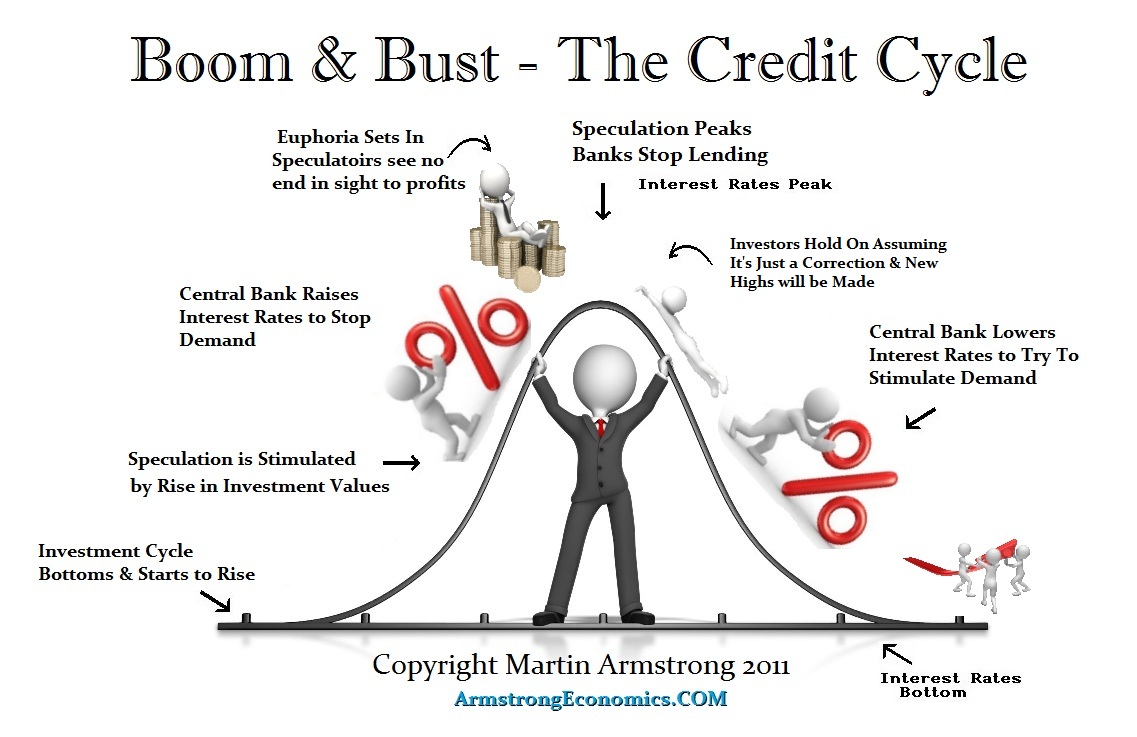
When we try to actually create a theory that one thing is the source of any effect, we always end up with egg on our face. It simply cannot be done. It is always a dance of many factors and how they come together in what combination and in what order. The Boom & Bust Cycle is far more directly impacted by the Credit Cycle than by money supply. You can create all the money you want, but if the banks will not lend and consumers will not borrow and prefer to hoard because they do not trust the future, you will be in a deflationary cycle.

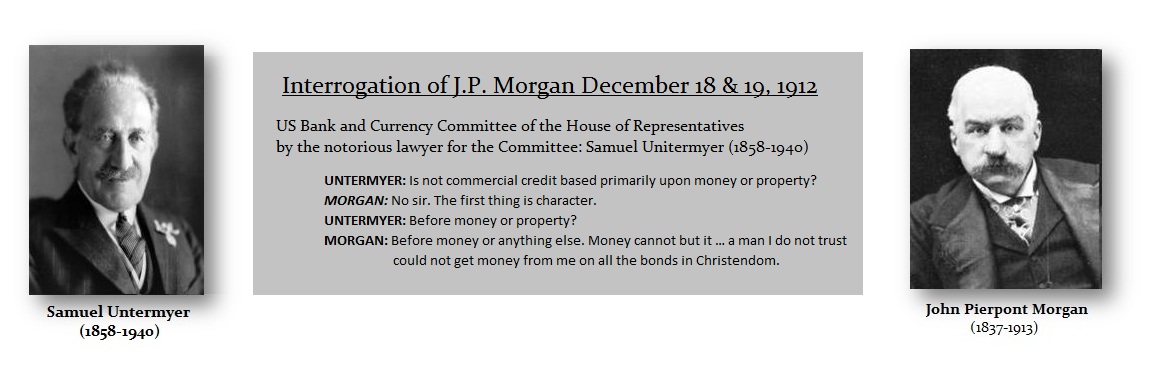
When J.P. Morgan was being interrogated by the ruthless Samuel Untermyer in the Senate, the exchange showed that the government NEVER understood finance or banking. Morgan express the way banks really operate. They will not lend you a dime if they think you will default even if you have the collateral to back the loan. If you do not have faith in the borrower, you do not do business.  Remember one thing. The actual money supply is a tiny fraction of the real money supply which is created by lending. Some people BELIEVE gold is money. Other believe Bitcoin is money. So what is the definition of money? It is the broad spectrum of assets that include real estate and equities. All the studies show that if real estate is rising, spend SPEND more freely because they “feel” richer. When real estate declines, they contract in their spending.

This is why I have made it clear many times. The 2007-2009 Crash was far more devastating than the numbers show. This is why liquidity remains about 50% of 2007 level. The vast majority of homes are still worth less than they were in 2007. The average consumer does NOT “feel” richer. The youth have turned to renting and see the dream of owning your own home as a joke after property taxes for which you get no credit when you sell a house.

BIG BANG is Here and Ticking


QUESTION:  Dear Marty,
due to 5,000-year lows in interest rates, in 2011 the US was able to triple the debt but keep the payments the same as in 1998. With interest rates rising (but still historically low) in 2017 the US paid the highest interest payment on the debt in history. Could you please elaborate on that?

Thank you for sharing your wisdom.
Kind regards,
M

ANSWER: This is going to be a major topic at the WEC. This is a major time bomb that amazingly nobody seems to be paying attention to. Rates are going higher for they need that to help the pension crisis. The USA is nowhere as bad as it appears in Europe from a debt perspective. This whole mess is going to explode in our face and this is going to be the serious trend going into the next ECM turning point.

The debts of governments around the globe are going to move up exponentially. This is very serious for some will raise taxes to try to keep the game going but that will cause even more deflation. I cannot express how SERIOUS this is. While everyone is looking at the stock market, others at the dollar and gold, they are missing the greatest threat to civilization since the 12th century.

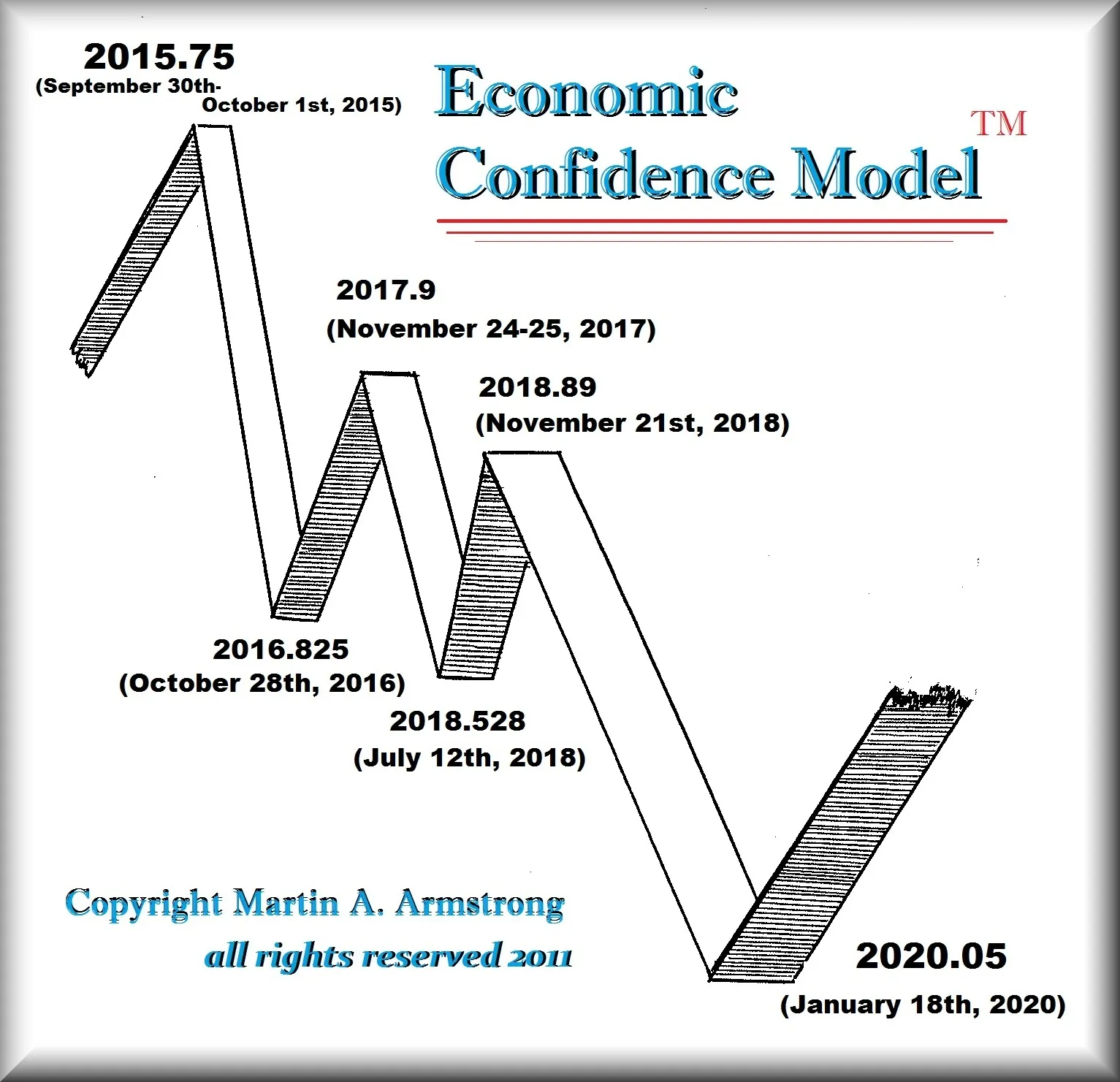
Interest rates began to rise as soon as we passed the peak in this 8.6-year was – 2015.75. The Fed raised interest rates for the first time once the ECM turned.

The number of institutions calling and governments has been rising ever since the ECM turned. This is not going to get better and it is not going to just fade away. Sorry, if we keep our eyes closed and even hide under the bed, it will not matter.

Why National Debts Eventually Default


QUESTION: If governments have been borrowing without limit since world war 2, are you saying that there is some line that is cross in debt to GDP that results in default?

Thank you

JU

ANSWER: No. The debt to GDP ratio is interesting. The USA is at about 103% and China is at 250%. The ratio is at 180% for Greece and France is at 96.5%. If we used exclusively these numbers, China should be worse than Greece. If France’s debt is less than the USA, then why is the French economy doing so badly? So what is the real issue that causes defaults?

To answer that question we need to introduce currency. France and Germany were less impacted by converting to the Euro than Greece, Italy, Spain, and Portugal. Why? Currency Inflation! Southern Europe had always issued debt and over time you were paying back with cheaper currency. The USA is insulated in that manner. $1 million in 1930 could buy 1,666 Cadillacs. Today, financed for 39 months, the cost of a Cadillac is $26,700, which means that $1 million will only buy 37.4 cars. The debt issued in 1940 has been devalued over time. This is how debts have escaped the theory that a national debt has some limit.

Then countries like Germany worry about the debt so they raise taxes to keep the ratio down below 70%. In taking that approach, they lower the standard of living of their population to support the government. The government spending as a percent of GDP in Germany has run on average about 46.5% of GDP compared to the USA average at  36.57%. The higher that ratio the lower the standard of living. It also warns that there is a limit to taxation before you reach the threshold of revolution – remember No Taxation without Representation?

The debt crisis we are currently in has been accelerated by two factors:

  1. deflation making past debt more expensive and
  2. artificially low interest rates

Greece converted its past debt to Euro which then doubled in value as the Euro rallied from 80 cents to $1.60. That meant the past debt was now double in real terms and there was no possible way Greece could pay such a load. In real terms, the debt rose relative to its GDP because you converted the currency base.

The crisis we face globally is that as interest rates rise, the servicing of the debt will rise exponentially. This will impact everyone around the world. Now, if the dollar rallies sharply because of the structural crisis in Europe and the turning down of the economies elsewhere, then the past debt of the USA will rise in real terms as was the case with Greece. Then add to this Cauldron and stir gently rising interest rates.

Shabam! You reach the threshold of a debt crisis!

Has Draghi Just Lost It?


QUESTION: Why are long-term yields on risky European debt below that of US Treasuries? Is this the European bubble madness?

HN, Frankfurt

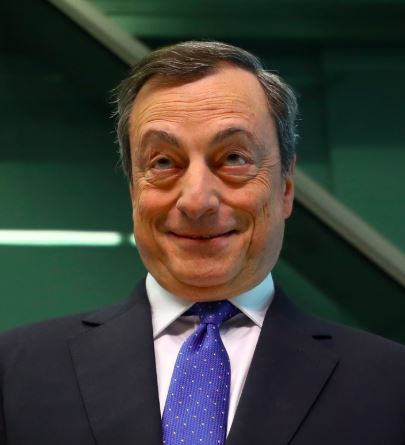
ANSWER: This is unquestionably a bubble, but the buyer has been the ECB (European Central Bank). Yields on risky European bonds have been driven below the yields of long-dated US securities. The financial system may appear to be riddled with anomalies, distortions and erroneous prices, but all of those labels assume it is the madness of crowds rather than the government.  Mario Draghi has created the worst possible financial nightmare perhaps in modern history since governments began borrowing in the 12th century. These are not driven by a free market, but one that is manipulation of a central bank gone absolutely mad.

The average return on European junk bonds is below “risk-free” US government bonds. This is completely driven by the insanity of the ECB. In fact, Draghi purchased around $ 2.6 trillion in securities since his Quantitative Easing began in March 2015. He assumed that this would stimulate the economy. However, all it has done is kept the member states on life-support.  He is trapped and has no way out, which is why he has come out and said that the ECB will reinvest when the bonds they hold mature. There will be no end to this madness and he has single-handedly wiped out the bond markets. There is no free-market remaining so the question becomes – how will governments ever sell its debt in the future?

Has the Dollar Turned?


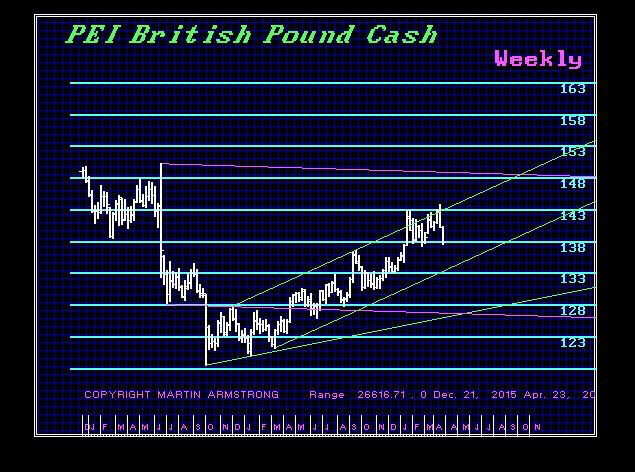
QUESTION: You models called for a rally in the pound sterling into April and it seems like that is spot on. We did bound off of the 144 level.  In your year-end report, you said the resistance in the pound for 2018 was at the 14500-14600 level throughout 2018. Living here in Britain, I really get a laugh out of these people who keep saying the dollar is in a bear market forever. They are clueless about what is going on outside the United States. I know you are not, but the view of Americans from across the pond is they are ignorant of anything outside the States particularly the Goldbugs who are notoriously wrong for decades. So has this begun to turn?

PHN

ANSWER: Granted, there are a lot of Americans who see the world only in dollars and the United States. They usually hate my guts because they have been wrong. Yes, we came close to the resistance level, but we still did not reach it. This is part of the consolidation period that was broader than just the stock market. Capital as a whole has been confused and trying to figure out which direction everything is going.

Gold has run up and then runs down. It too has been unable to breakout out. This is yet another confirmation of the entire overall consolidation pattern our computer saw for early 2018.

People have to get their head around interest rates. Will rising rates be bearish for stocks, bonds, and everything else? So much opinion and propaganda have been spilled out for decades that people cannot see clearly.

In the pound, we elected 3 of the four Weekly Bullish Reversals – not the fourth. We elected only ONE Monthly Bullish at the next one stands at 14775 level, which we have been unable to reach. So how anyone can claim that the dollar is in some long-term bear market is just bias because that is what they WANT to believe usually so their gold will rise. They seem to be the only people who refuse to open their eyes and just peek at the other markets and political trends outside the USA.

They will never be able to survive what is on the horizon because they are too biased to be objective. They cannot even understand that a weak dollar helps everything and a strong dollar creates the deflation and collapse in debt.

Greece got in trouble BECAUSE they joined the Euro, the Euro then doubled in value and their previous national debt then cost twice as much deal with. Hello? Why can’t they get this through their heads? Probably because their mortgages are in dollars. In Canada, Europe, Australia, they alone understand when you borrow in a foreign currency, and the currency rises, you lose money.

I Helped some of the takeover boys during the 1980s to converting debt into a PERFORMING asset. We would borrow in a currency that would depreciate against the asset. We made more money on the currency than on the asset. Such things are just over their heads.

Can US Russian Sanctions Start A Financial Crisis?


The US sanctions against Russia are pointless and are placing the West at risk the politicians are too stupid to even comprehend. Already, some Russian companies have asked the government for liquidity injections of up to $2 billion. Even the world’s second-largest aluminum producer Rusal has asked for help. Nevertheless, the impact of sanctions goes beyond the internal borders of Russia for they also impact the international financial markets.

For example, Rusal had previously made clear that the US sanctions are threatening their ability to even meet debt obligations. They carry $7.7 billion of debt in US dollars of which about $1 billion in debt is maturing within five years. In terms of US dollars, Rusal cannot even pay the debts because it would have to do so through US banks. That means, under the sanctions, they would have to default on their bonds. Now let’s turn to Polyus, which is Russia’s largest gold producer. Here they have also $5 billion in US debt. Those US dollar bonds maturing in 2024.  doubles as sanctions become known.

The same story applies to many Russian companies for they still have to conduct business in US dollars regardless of the sanctions. For example, let’s look closer at Rusal. Here the company conducts over 60% of all its business in US dollars. The US sanctions prohibit Americans from doing business with the affected Russian companies or individuals. This is really crazy. Any Russian state-controlled bank cannot step in as an intermediate because they could then become the target of sanctions itself.

Western investors are actually the ones who will be punished by the US sanctions if the Russian companies cannot pay their debts under the law. They cannot even go to an intermediary in Europe for they too could then be targeted by the US for violating the sanctions. The US sanctions would actually justify Russian defaults on all their debt. Will the US then bail out the Western bondholders?

This may end up simply as a 1931 event where one default starts a panic and the entire house of cards comes crashing down.

Is the Vertical Market Over or Just Beginning?


QUESTION: Thanks for the update. So it looks like the Vertical Market in the Dow will extend into the end of this cycle 2032 as you warned it could do. Correct?

EK

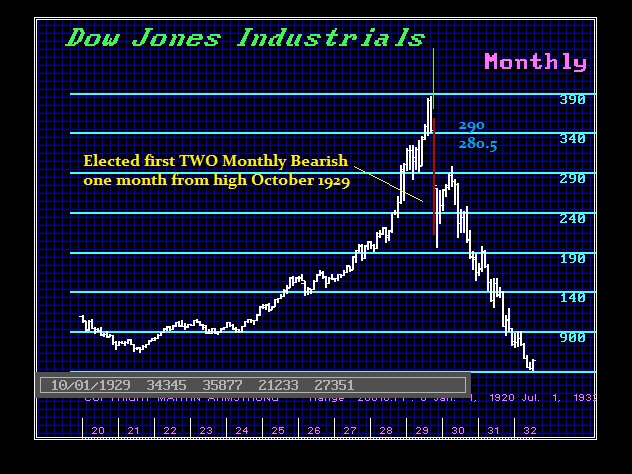
ANSWER: It appears to be shaping up that way. The consolidation has been shallow and nothing to get excited about. If the January high was it, then you should have made a major thrust downward by now certainly electing Monthly Bearish Reversal within the first three months. To judge the extent of a potential decline, the key is to watch HOW FAST does a market elect Monthly Bearish Reversals or Bullish for that matter. This is how to gauge the tone of a market. If we look at 1929, it elected the first TWO Monthly Bearish Reversals in just one month from the high. That was obviously a signal that this was going to be a protracted decline of MAJOR importance.


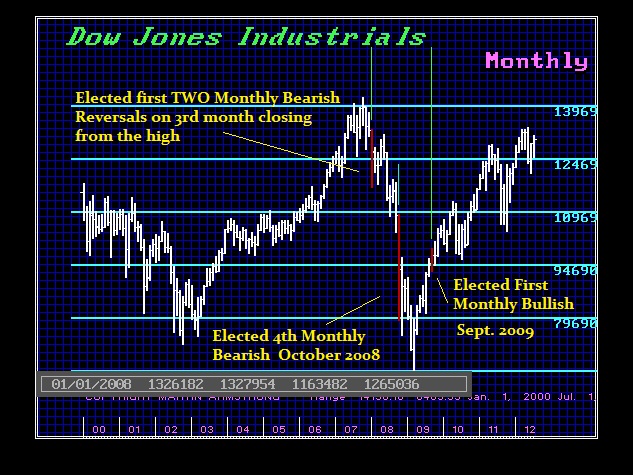
Now, let us compare 1929 to the 2007 Crash which was dramatic, but not anything close to 1929. We did elect ALL FOUR Monthly Bearish. Here we also elected the first TWO Monthly Bearish at the same time 3 months from the high. We have not elected anything on this consolidation no less even reached the Monthly Bearish. Then coming out of the low, it took 6 months to elect the first Monthly Bullish Reversal.


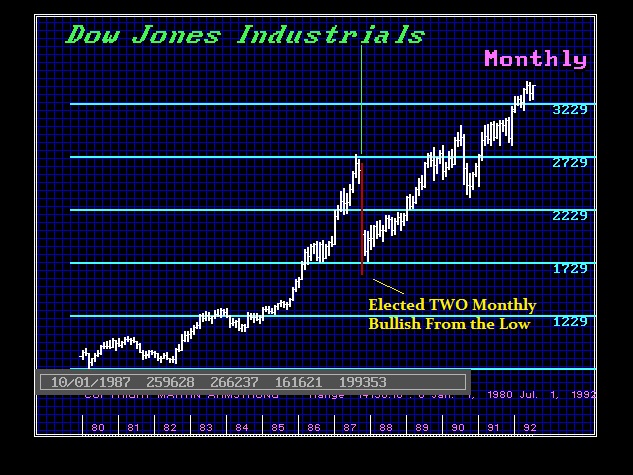
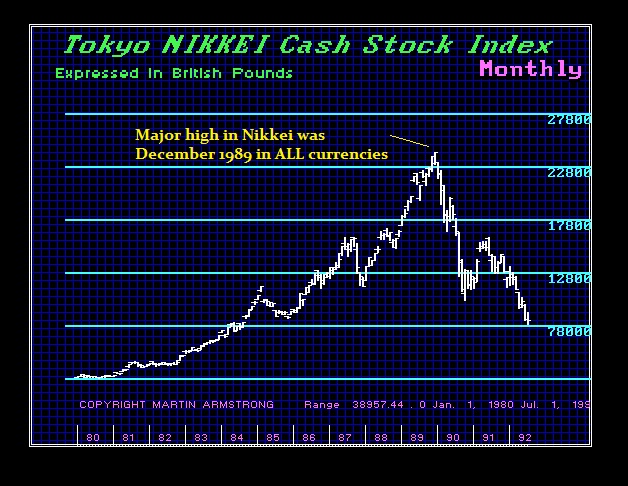
Now let us look at the 1987 Crash. People thought I was nuts when the very day of the low I came out and said that was it, the low was in place, and we would make new highs by 1989. Yes, this was all confirmed by the Economic Confidence Model. The low was precisely that day of the ECM and the next target was 1989.95 which was the Bubble top in the Nikkei. But this was NOT THE ONLY confirmation. We elected TWO Monthly Bullish Reversals at the close of October 1987. Hopefully, you can see that this was NOT a personal opinion call. We can see that we elected the Monthly Bullish right then and there. This is what I mean by how fast reversals are elected determines the type of trend move we get.

I love the idiots who so immediate are always trying to find something they can claim I am wrong about. They try to attack me like 99% of the analysts out there that offer just their opinion. The mere fact that they say – oh you are wrong, the Vertical Market is over, demonstrates that this type of person is INCAPABLE of every learning anything because they are desperate to prove me personally wrong. We are on a journey here to understanding how everything moves. These people are obsessed with trying to disprove something because they are not capable of understanding the free markets in the slightest. This is not about me being right or wrong. Nobody is every right personally in life all the time. We only learn from our mistakes – never our victories. So such comments simply reveal they are not really worth talking to.

The model is objective. That is the best way to approach this. The forecast was for a January high following be “consolidation” which is what you call this. We have not declined to test the Monthly Bearish and we would have to close BELOW 21600 on the Dow on a Monthly Basis to imply a short-term correction will be sustained even briefly.

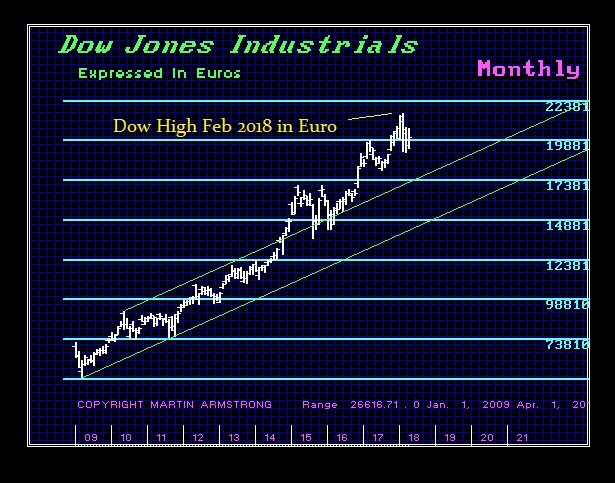
What these type of people are obvious to have always been the global economy. Here too, usually major highs are highs in terms of ALL currencies. Here we have a divergence once again. The high in the Dow in Euros took place in February – not January.

Clearly, is the Vertical Market over? No way. There is no other choice for capital but to move to equities when (1) bonds crash, (2) confidence in government decline, and (3) the rise in interest rates send everyone’s budgets into high gear for automatic expansion.

Obviously, the people who are incapable of comprehending what is at stake will be the source of profits for the rest of us. That is simply the way it goes. So smile, shake their hand, say oh you are right and thank you for being there when I need to trade against someone

The Dollar is Not Dead After All?


CLICK ON CHART

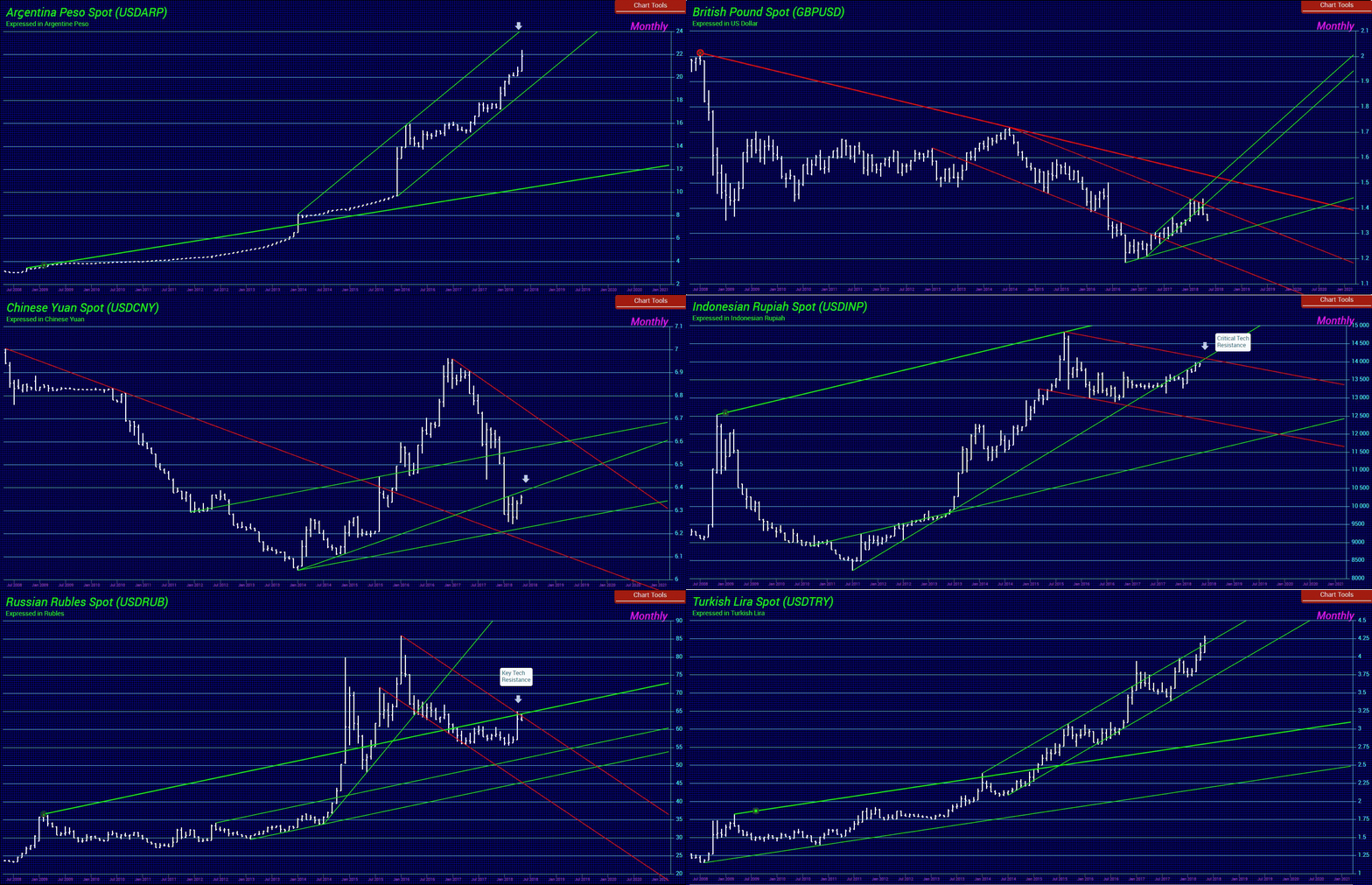
It is amazing how people have simply declared that the dollar is in a perpetual bear market as if the USA is the only nation with a debt. They judge the entire future by a few weeks of price action. That is what is so dangerous – emotional trading. I have been warning that ONLY a dollar’s resurgence would create a monetary crisis. The entire world is free to issue debt in dollars and emerging market have done so. As interest rates were manipulated to a 5,000 historic low by central banks, they never thought about what would happen to pensions. So many pensions ran into the open arms of emerging debt which doubled its issue in less than 8 years. The foolish fund managers ran headstrong into emerging markets seeking HIGH YIELD!

The dollar rally is now rippling through emerging markets, sparking steep falls in stocks, bonds, and their currencies wiping out whatever gains they thought were guaranteed.  We are looking a devastation around the globe with the Turkish lira falling almost another 6%. Argentina’s peso is also in trouble as the central bank raised the interest rate to 40% trying to support the currency.

The MSCI Emerging Markets Index, which measures stock performance, is also down 1.5%. Then there is the JPMorgan index for emerging-market government bonds in their respective local currencies has also dropped almost 4% in the past month. These declines illustrate that there is rising uncertainty about the outlook for emerging-market assets among fund managers. Many have been showing that 2018 would be a Directional Change following the surge many saw during 2017. Since January 2018, this turning point which made many call a bear market in the US shares has also marked the beginning of a shift in worldwide trends.

Complexity. You have to Love the interconnections. Keeps the brain awake.