Vaccination of vulnerable groups against monkeypox virus (MPV) in a highly C-19 vaccinated population will drive adaptive evolution of MPV and ignite


Geert Vanden Bossche, DVM, PhD General Manager at Voice for Science and Solidarity | The biggest challenge in vaccinology: Countering immune evasion posted originally on TS New on Aug. 1, 2022
Exposure of a highly C-19 vaccinated population to monkeypox virus (MPV) spilling over from an animal reservoir promotes asymptomatic human-to-human transmission in susceptible sexual minority communities (SMCs). MPV infection in SMCs could therefore evolve more infectious viral variants that spread to all parts of a highly C-19 vaccinated population and thereby prevent establishment of herd immunity 

Increasing numbers of outbreaks of human monkeypox have been reported from across central and west Africa over the last 3-4 decades. Zoonotic infection with MPV in the current setting of limited smallpox vaccination and little orthopoxvirus immunity[1] in several parts of the world renders human populations more susceptible to contracting monkeypox disease. MPV has therefore been considered a well-suited candidate for a global epidemic. 

As productive poxvirus infection is mostly symptomatic and viral transmission almost exclusively occurs through close contact with an infected animal or person or via virus-contaminated objects, such as bedding or clothing, it has been generally acknowledged that natural epidemic outbreaks in humans can largely be contained through basic infection-prevention measures (including good hygiene practices). Unless the viral infection rate is high  (e.g., in densely populated areas and poor [environmental] hygiene conditions), it is difficult to imagine how MPV could evolve to adapt to the human population, let alone how it could ignite a multi-country epidemic or even a pandemic in countries where MPV is not an endemic zoonosis. Pandemics typically occur with pathogens that cause so-called acute self-limiting infection, meaning that they have the potential to spread asymptomatically before inducing a type of natural immunity that prevents productive infection upon subsequent exposure and, therefore, generates herd immunity. Whereas until recently many still tended to believe that the threat of a globally spread MPV was a myth, cases are now being reported globally (at least in all highly C-19 vaccinated parts of the world) to the extent that WHO has now declared MPV a health emergency of international concern—all of this has happened within just a few months. This does not provide enough time for population-level innate immunity to become sufficiently trained to turn MPV infection, which is typically symptomatic (so-called ‘acute self-limiting viral disease’, ASLVD) into an infection that is predominantly asymptomatic (so-called ‘acute self-limiting viral infection’, ASLVI) and can therefore much more easily spread between people. On the other hand, adaptation of a virus to a new host population never implies natural selection of less infectious viral variants, on the contrary. If neither viral evolution nor immune training is responsible for shifting symptomatic into asymptomatic viral transmission (thereby allowing MPV to spread more efficiently from person-to-person and eventually become a pandemic), other non-evolutionary disease-mitigating influences must be considered. As spread of MPV is now particularly expanding in countries with high C-19 vaccine coverage rate and as ASLVD-enabling viruses that are predominantly transmitted through close contact do not spread rapidly, there must be a link between the type of population-level immunity in highly C-19 vaccinated populations and the rapid expansion in prevalence of MPV cases. It’s also important to note that—so far— MPV disease symptoms in these populations have been rather ‘mild’ and predominantly manifest in individuals from the gay and bisexual male community. This already suggests that sexual contact, especially when the latter is at risk of traumatizing the skin or mucosa (e.g., in case of anogenital intercourses), facilitates symptomatic MPV infection. 

While I cannot unambiguously prove this, I strongly believe that the sudden emergence of a significant number of (mild) cases of MPV in highly C-19 vaccinated countries is not purely coincidental but related to enhanced activation of broadly reactive, MHC-unrestricted CD8+ T cells in vaccinees. I have previously reported on how a universal CTL (cytotoxic T lymphocyte) epitope can facilitate elimination of host cells infected with ASLVI- or ASLVD-enabling glycosylated viruses and thereby allow recovery from disease, however without inducing immunologic memory (https://www.voiceforscienceandsolidarity.org/scientific-blog/epidemiologic-ramifications-and-global-health-consequences-of-the-c-19-mass-vaccination-experiment). More specifically, MHC-unrestricted CD8+ T cells that now increasingly prevent C-19 disease in healthy vaccinees are the same as those required to abrogate productive infection with other glycosylated viruses that have evolved reduced susceptibility to our innate immune system[2], including poxviruses (https://www.frontiersin.org/articles/10.3389/fimmu.2021.740223/full).

Given the enhanced immune activation of pathogen-nonspecific CTLs[3] in C-19 vaccinees, MPV infection in C-19 vaccinees is likely to become abrogated at an early stage of productive infection, thereby dampening productive MPV infection and potentially causing asymptomatic/ mild infection in sexual minority communities (SMCs) of a highly C-19 vaccinated population. Consequently, MPV infection may even fail to induce MPV-neutralizing antibodies (Abs) in vulnerable[4], C-19-vaccinated individuals that are immunologically naïve to MPV (i.e., today persons younger than 45 to 55 years of age, depending on the country). However, it is reasonable to assume that asymptomatic MPV infection may elicit short-lived, low affinity anti-MPV Abs in these individuals (as has, for example, been reported in case of asymptomatic infection with SARS-CoV-2 (SC-2; https://www.medrxiv.org/content/10.1101/2020.06.22.20137141v2.full.pdf). As asymptomatic infections promote viral transmission within these minority communities, the infection rate of MPV in this vulnerable subpopulation is likely to grow over time. This rise in viral infection rate will subsequently increase the likelihood for previously asymptomatically infected persons from SMCs to become re-infected while titers of their short-lived, low-affinity anti-MPV antibodies are still relatively high. Binding of such low-affinity, non-neutralizing Abs to the virus is thought to enhance viral infectiousness and could thereby cause a disease outbreak in these communities. It is, therefore, reasonable to expect that the proportion of vulnerable individuals who develop virus-neutralizing Abs (i.e., upon their recovery from MPV disease[5]) in the C-19 vaccinated part of the population will increase over time. However, in vulnerable, non-C-19-vaccinated individuals, trained innate immune cells (i.e., NK cells) are likely to prevent MPV from breaking through this first line of immune defense and would therefore largely prevent priming of virus-neutralizing Abs. For the time being, symptomatic manifestations in highly C-19 vaccinated populations are predominantly mild and mostly occurring in SMCs. This suggests that even in cases of symptomatic infection, viral clearance via innate or adaptive cytolytic immune cells (in the case of non-C-19 vaccinated or C-19 vaccinated, respectively) is still effective enough to prevent more problematic symptomatology in most cases.

Rising virus-neutralizing Ab titers can only prevent monkey disease but not viral infection. Hence, re-exposure to MPV of C-19 vaccinated individuals who are in the process of seroconverting promotes natural selection of more infectious MPV immune escape variants while fostering asymptomatic transmission and thereby contributing to a further rise in viral infectious pressure. Due to the steadily growing infection rate in SMCs of highly C-19 vaccinated populations, the overall MPV-neutralizing Ab response in these communities is likely to exert suboptimal immune pressure on viral infectiousness and can therefore be expected to drive dominant circulation of naturally selected, more infectious MPV immune escape variants.  Based on all the above, the enhanced infection rate mediated by asymptomatic transmission of MPV in SMCs of highly C-19 vaccinated populations is likely to increase the probability of adaptive evolution of MPV in these communities. It is, therefore, critical to monitor the selective landscape of MPV as unfolded in SMCs of highly C-19 vaccinated populations in order to verify whether the evolutionary trajectory is shifting towards promoting natural selection and expansion of immune escape variants that are more infectious (as is smallpox virus, for example).

Vaccination of vulnerable groups (SMCs) against MPV is likely to accelerate adaptive evolution of MPV in highly C-19 vaccinated populations and could thereby raise the incidence of (severe) MPV disease in vulnerable subsets of non-C-19-vaccinated individuals and ignite multi-country epidemics of MPV in non-C-19-vaccinated animal and human populations that are immunologically naïve to orthopoxvirus  

Several countries are now about to start vaccination campaigns targeted at people who are at risk of contracting monkeypox disease using live attenuated, replication-incompetent smallpox vaccine. Both, individuals from SMCs engaging in high-risk sexual behaviors for MPV infection and close contacts of monkeypox cases (including very young children, pregnant women, elderly or immunocompromised individuals) are eligible for MPV vaccination (https://www.ecdc.europa.eu/sites/default/files/documents/Monkeypox-multi-country-outbreak.pdf). Live attenuated, replication-incompetent orthopox (e.g., smallpox) vaccines prime virus-neutralizing Abs in the vast majority of both vaccinated and non-vaccinated individuals (i.e., individuals < 50y). However,  unlike live attenuated replication-competent orthopox vaccines[6], they do not train cell-based innate immunity. There can be no doubt that vaccination in the context of more infectious circulating MPV variants will further promote natural selection and dominant propagation of even more infectious immune escape variants and thereby allow MPV to evolve into a human pathogen exhibiting an even higher level of infectiousness (comparable to smallpox?). This situation is reminiscent of that which has been responsible for driving adaptative evolution of more infectious SC-2 (SARS-CoV-2) variants following C-19 mass vaccination campaigns. The evolutionary dynamics of MPV will only be expedited when vaccine coverage rates grow; they could eventually modify the current mode[7] and course of chain of MPV transmission such as to asymptomatically spread to all parts of a homogenously mixed, highly C-19 vaccinated population. This would increase the risk for C-19 unvaccinated subjects to contract MPV disease, especially for those who are particularly vulnerable to MPV disease because of Ab-mediated enhancement of viral infectiousness or enhanced susceptibility to MPV infection due to risky (sexual) behavior (see further below). Because of asymptomatic transmission, highly C-19 vaccinated populations would serve as a human reservoir of more infectious MPV immune escape variants. 

Spill-over of more infectious MPV variants to populations that are immunologically naïve to orthopoxvirus is likely to trigger epidemics of MPV in poorly C-19 vaccinated countries

It is reasonable to assume that populations which do not ‘benefit’ from hyperactivation of cytotoxic CD8+ T cells will become more susceptible to productive infection with new, more infectious MPV variants (https://www.voiceforscienceandsolidarity.org/scientific-blog/epidemiologic-ramifications-and-global-health-consequences-of-the-c-19-mass-vaccination-experiment). This applies, for example, to several different animal populations as well as to human populations in poorly C-19 vaccinated countries (e.g., in Africa). Asymptomatic infections in highly vaccinated C-19 countries are likely to promote spill-over events involving transmission of more infectious MPV variants from these highly C-19 vaccinated human reservoirs to vertebrate animals (possibly even including livestock) and poorly C-19 vaccinated human populations that are immunologically naïve to orthopoxvirus.
Asymptomatic transmission of more infectious MPV variants can also become problematic for the C-19 unvaccinated in highly C-19 vaccinated countries, particularly for C-19 unvaccinated children and vulnerable people (e.g., part of SMCs) who are immunologically naïve to orthopoxvirus. 

In young children, rapid re-infection subsequent to previous asymptomatic MPV infection by more infectious MPV variants is likely to entail a rise in cases of Ab-dependent enhancement of MP disease[8] whereas risky sexual behavior renders individuals from SMCs more susceptible to viral infection. One can therefore expect the incidence rate of monkeypox disease to increase in both, non-C19-vaccinated children and SMC members. 

Previous vaccination with smallpox (i.e., cowpox) vaccines will likely improve protection from MPV disease in the non-C-19-vaccinated but not in the C-19 vaccinated. 

While recall of Abs induced by vaccination against smallpox virus in the past will provide an additional layer of natural immunity in the unvaccinated, repetitive recall of Spike (S)-specific infection-enhancing Abs[9] in C-19 vaccinated individuals by circulating SC-2 variants will allow the latter to outcompete other glycosylated pathogens for internalization into mucosa-resident dendritic cells, thereby reducing or potentially even preventing recall of previously smallpox vaccine-induced Abs. This would imply that older (> 45-50y) C-19 unvaccinated individuals are likely to benefit from their smallpox-vaccination in the past whereas their C-19 vaccinated peers may not. However, as already mentioned, the infection can be expected to be largely asymptomatic/ mild in the vast majority[10] of vaccinated and unvaccinated individuals in highly C-19 vaccinated populations, even in the absence of previous smallpox vaccination. 

No child should be vaccinated against monkeypox during this C-19 pandemic

Vaccination with replication-incompetent orthopoxvirus-based vaccines of highly C-19 vaccinated (sub)populations is not only going to drive the expansion of more infectious MPV variants but will also have the same detrimental effect as C-19 vaccines in children: the continuous recall of vaccinal anti-MPV Abs (by circulating, more infectious MPV variants) will keep the innate Abs on the sideline and could thereby predispose the child to immunopathologies[11] (https://www.voiceforscienceandsolidarity.org/scientific-blog/epidemiologic-ramifications-and-global-health-consequences-of-the-c-19-mass-vaccination-experiment). 

But even replication-competent smallpox vaccines can put the child’s health at risk. Akin to all other live attenuated & replication-competent vaccines (e.g., childhood vaccines), these vaccines are known to come with a risk of side-effects:  

Health complications can occur after receiving the vaccine, and the risk of experiencing serious side effects must be weighed against the risk of experiencing a potentially fatal smallpox infection. The vaccine may cause myocarditis and pericarditis, which are inflammation and swelling of the heart and surrounding tissues and can be very serious. Based on clinical studies, myocarditis and/or pericarditis occur in 1 in 175 adults who get the vaccine for the first time” (https://www.fda.gov/vaccines-blood-biologics/vaccines/acam2000-smallpox-vaccine-questions-and-answers).

“Potentially life-threatening reactions could occur in 14-52 cases out of every million. According to CDC it is estimated that 1 to 2 people out of every 1 million people vaccinated could die” https://www.cdc.gov/smallpox/vaccine-basics/vaccination-effects.html).  

The risk of severe disease may significantly increase when these live attenuated, replication competent orthopoxvirus-based vaccines are administered to C-19-vaccinated children. S-directed Abs are thought to sideline the child’s innate immune Abs and thereby prevent NK cell-mediated innate immune recognition of host cells infected by glycosylated viruses (including pox viruses) [https://www.voiceforscienceandsolidarity.org/scientific-blog/intra-pandemic-vaccination-of-toddlers-with-non-replicating-antibody-based-vaccines-targeted-at-aslvi1-or-aslvd2-enabling-glycosylated-viruses-prevents-education-of-innate-immune-effector-cells-nk-cells]. This may enable live attenuated, replication competent orthopoxvirus (e.g., vaccinia virus) comprised within the vaccine to blow through the child’s first line of immune defense and cause (severe) monkeypox disease. 

Stated bluntly, vaccination of young children against MPV is at risk of provoking life-threatening disease. 

Overall conclusion 

The vast majority of C-19 vaccinees and C-19 unvaccinated individuals in highly C-19 vaccinated populations develop asymptomatic (or very mild) infection upon exposure to MPV. However, close and disruptive physical contact may promote viral entry through broken skin/ mucosa and is therefore more likely to cause symptomatic infection. Whereas strong training of cell-based innate immunity is likely to prevent productive infection of C-19 unvaccinated persons in highly C-19 vaccinated populations and contributes to herd immunity, hyperactivated cytolytic CD8+ T cells in C-19 vaccinated individuals can only enhance abrogation of productive infection, resulting in substantial mitigation of disease symptoms. 

Due to the current advanced stage of the evolutionary trajectory of the C-19 pandemic in highly C-19 vaccinated SMCs, MPV is likely to evolve more infectious/ pathogenic variants. Public health authorities in several highly C-19 vaccinated countries have now started rolling out MPV vaccination campaigns targeted at SMCs. MPV vaccination in the ‘at risk’ groups typically use live attenuated, non-replicating smallpox vaccines. Although these vaccines are much less problematic in terms of vaccine-induced side effects (they have even been approved for use in immunocompromised or immunodeficient people), they can only prevent orthopox (including smallpox) disease—not productive infection. As the type of protection conferred by these vaccines is solely based on the induction of antigen-specific, virus-neutralizing Abs, MPV vaccination programs using this type of vaccines will inevitably expedite adaptive evolution of MPV and hence, further promote dominant circulation of more infectious immune escape variants. Consequently, even small-scale deployment of live attenuated, non-replicating orthopox vaccines targeted at preventing  disease in vulnerable individuals are highly problematic in that they have the potential to rapidly turn highly C-19 vaccinated populations into a human reservoir for asymptomatic transmission of more infectious MPV variants to poorly C-19 vaccinated populations that are immunologically naïve to orthopoxvirus. Viral transmission from these reservoirs is therefore at risk of igniting multi-country epidemics in poorly C-19 vaccinated countries while increasing the risk of Ab-dependent enhancement of disease in young C-19 unvaccinated children and individuals at  high risk of exposure to MPV (due to risky behavior) living in highly C-19 vaccinated countries. 

Given the current epidemiologic situation, mandatory vaccination against monkeypox cannot be justified, regardless of C-19 vaccination status. In C-19 vaccinated populations, current vaccination campaigns will only promote further expansion of more infectious MPV variants. But even in non-C19-vaccinated countries, vaccination is not a reasonable option. This is because poxvirus epidemics do not generate herd immunity sensu stricto[12] and prevention, therefore, of world-wide poxvirus epidemics is only possible when the virus can be eradicated. However, eradication is only feasible provided there are no asymptomatic reservoirs and a global mass vaccination program is conducted with vaccines that are capable of preventing productive infection. The first condition is obviously not fulfilled since highly vaccinated countries now serve as asymptomatic reservoirs for MPV. The second condition cannot be fulfilled either since this would require usage of replication-competent vaccines, ideally in a pre-exposure prophylactic setting (or at least within a few days after suspected exposure). However, even replication-competent smallpox vaccines would not enable protection from productive infection by more infectious MPV immune escape variants for the latter will not be a good match for the vaccinal Abs and could, therefore, expedite propagation of more infectious variants in non-C-19 vaccinated populations too. Furthermore, side-effects caused by the existing replication-competent smallpox vaccines may raise additional concerns in regard of vaccine safety. 

Finally, no child should be vaccinated with any of the current C-19 vaccines (https://www.voiceforscienceandsolidarity.org/scientific-blog/intra-pandemic-vaccination-of-toddlers-with-non-replicating-antibody-based-vaccines-targeted-at-aslvi1-or-aslvd2-enabling-glycosylated-viruses-prevents-education-of-innate-immune-effector-cells-nk-cells) and no non-C-19-vaccinated young child should be vaccinated with any type of smallpox vaccines. This is because the replication-competent vaccines may cause (severe) MPV disease in these young children whereas the replication-incompetent vaccines put them at risk of contracting immunopathologies. 

In conclusion, no C-19 unvaccinated person should engage in sexual behavior that is at risk of enhancing MPV infectiousness (e.g., anogenital intercourses) or be vaccinated with zoonotic orthopoxvirus types once human-to-human transmission of antigenically shifted (i.e., more infectious) MPV variants is occurring!  

The current MPV pandemic is to be considered an indirect consequence of the unfortunate C-19 mass vaccination program and does not yet constitute a public health emergency of international concern. However, each vaccination program that uses non-replicating vaccines targeted at immunologically naïve ‘at risk’ communities to fight ASLVI-enabling glycosylated viruses[13] will expedite the expansion in prevalence of more infectious immune escape viral variants. This is why the MPV vaccination campaigns  that are currently kicked off are not only likely to have a detrimental impact on individual health (particularly in C-19 unvaccinated children and vulnerable people) but should also be considered at risk of provoking a true public health emergency of international concern

However, as far as highly C-19 vaccinated countries are concerned, the evolution of MPV towards establishing an asymptomatic reservoir of more infectious MPV variants is merely a ‘side-effect’ of the ongoing evolutionary trajectory of SC-2 in these countries. I therefore predict that the imminent detrimental health consequences of the C-19 mass vaccination program will soon obviate the need for further speculation on how the MPV pandemic/ multi-country epidemic is going to evolve in industrialized countries and, therefore, in third-world countries.   

POSTSCRIPTUM

Vaccination of vulnerable groups against zoonotic influenza virus (MPV) in a highly C-19 vaccinated population will drive adaptive evolution of zoonotic influenza virus and ignite multi-country epidemics in C-19 unvaccinated countries 

The immunological mechanisms underlying asymptomatic transmission of MPV from highly C-19 vaccinated populations to immunologically orthopoxvirus-naïve, C-19 unvaccinated individuals or poorly C-19 unvaccinated populations also largely apply to a zoonotic influenza virus. This is to say that vaccination (with a non-replicating zoonotic flu vaccine) of a C-19 vaccinated subpopulation that is at high risk of contracting zoonotic influenza infection is prone to further promoting the expansion of zoonotic flu virus and causing (severe) influenza disease in vulnerable people from the C-19 unvaccinated part of the population.

Which individuals are to be considered vulnerable to zoonotic influenza virus?

Whereas orthopoxviruses originating from various animal species induce cross-neutralizing Abs, influenza viruses from animal species do not induce broadly cross-neutralizing Abs. Individuals who received smallpox (i.e., cowpox-based) vaccines in the past are therefore not prone to developing Ab-dependent enhancement of viral infectiousness upon subsequent exposure to MPV. However, asymptomatic human-to-human transmission of an antigenically shifted influenza variant spilling over from an animal reservoir (e.g., birds) may become particularly problematic in individuals who have previously recovered from productive infection with a common seasonal influenza virus type or who have previously been vaccinated against predominantly circulating influenza virus types (i.e., primarily the elderly and people with co-morbidities are who are otherwise immune suppressed). Zoonotic infection of these individuals with an antigenically shifted viral variant (most likely avian influenza) will likely lead to more and more cases of Ab-dependent enhancement of influenza disease[14] in humans. However, severe disease is unlikely to occur due to trained cell-based innate immunity (in C-19 unvaccinated persons) or cell-based adaptive immunity (in C-19 vaccinated persons). Should public health authorities recommend vaccination of this vulnerable group against the zoonotic influenza virus (most like, avian influenza virus), we will undoubtedly witness circulation of more infectious variants in highly vaccinated populations, resulting in enhanced rates of disease predominantly in C-19 unvaccinated children (because of a higher chance of re-infection shortly after previous exposure) and individuals who have previously been primed with common (seasonal) influenza virus types.

Similar to the epidemic predictions made for MPV, asymptomatic transmission of zoonotic influenza (most likely avian influenza) from highly  C-19 vaccinated populations will likely give rise to multi-country epidemics of zoonotic influenza in poorly C-19 vaccinated populations that are immunologically naïve to the transmitted zoonotic influenza virus.    

Similar also to the risks associated with MPV vaccination of young children, immunization of young children with any type of zoonotic influenza vaccine is at risk of causing (severe) zoonotic influenza disease (i.e., in the case of replication-competent vaccines) or  immunopathologies (i.e., in the case of replication-incompetent vaccines). 

In conclusion, no C-19 unvaccinated person should be vaccinated with common (seasonal) or zoonotic influenza virus types once human-to-human transmission of antigenically shifted (i.e., more infectious) influenza variants is occurring!  

References

1. Populations aged < 50y have not been vaccinated in the past against smallpox. The smallpox vaccine uses live attenuated, replication-competent  cowpox (vaccinia) virus and largely protects against monkeypox disease.

2 Infections with these viruses typically cause acute self-limiting viral disease

3 As the current SC-2 variants are further strengthening their infectiousness, presumably as a result of stronger
binding to the infection-enhancing Abs (https://www.voiceforscienceandsolidarity.org/scientific-blog/epidemiologic-ramifications-and-global-health-consequences-of-the-c-19-mass-vaccination-experiment),
more SC-2 virions are internalized into migrating dendritic cells and thereby contribute to activation of cytolytic
CD8+ T cells

4 For the purpose of this manuscript, ‘vulnerable’ refers to individuals from sexual minority communities (SMCs),
wherein SMCs refer to gay and bisexual male communities engaging in high-risk sexual behaviors for MPV infection
(e.g., anogenital intercourses)

5 Disease in vulnerable, C-19 vaccinated individuals occurs when the virus breaks through the cytolytic immune defense provided by the hyperactivated CTLs

6 Regardless of safety concerns about potential side-effects, live attenuated, replication-competent orthopox
vaccines will not be effective when used in highly C-19 vaccinated populations. This is because elimination of MPV-
infected cells by cytotoxic innate or adaptive immune cells (i.e., trained innate NK cells or CTLs in the non-C19-
vaccinated or C-19 vaccinated, respectively) will largely prevent ‘vaccine take’.

7 Enhanced intrinsic infectiousness could even enable airborne transmission (e.g., via particle/ droplet aerosol) as
in the case of smallpox

8 Re-infection with MPV in the presence of non-neutralizing, low-affinity anti-MPV Abs enhances viral
infectiousness and, therefore, disease in young, C-19 unvaccinated children

9 These Abs are currently making C-19 vaccinees more and more susceptible to productive re-infection with SC-2
https://www.ncbi.nlm.nih.gov/pmc/articles/PMC8351274/

10 The additional protective effect of past vaccination with smallpox vaccines might predominantly benefit the
elderly (&gt; 65 y) and vulnerable people.

11 Because of deficient or insufficient education of NK cells to sense virus-associated self-mimicking peptides
expressed on the surface of host cells infected by said ASLVI- or ASLVD-enabling glycosylated viruses
(https://www.voiceforscienceandsolidarity.org/scientific-blog/intra-pandemic-vaccination-of-toddlers-with-non-
replicating-antibody-based-vaccines-targeted-at-aslvi1-or-aslvd2-enabling-glycosylated-viruses-prevents-
education-of-innate-immune-effector-cells-nk-cells ).

12  Herd immunity sensu stricto relates to a level of naturally induced, protective immunity that has been established in the majority of the population and is high enough to protect the remainder of that population by virtue of diminished infectious transmission.

13  Although monkey pox is an ASLVD, it can be considered an ASLVI when spreading in a highly C-19 vaccinated population at this stage of the C-19 pandemic (i.e., due to hyperactivation of cytolytic CD8+ T-cells)  

14 This is because the antigenically shifted immune escape variant from the animal reservoir will not properly match
the vaccine-induced Abs.

Multisystem inflammatory syndrome in children (MIS-C) does NOT justify (at all!) their vaccination against SARS-CoV-2


Geert Vanden Bossche, DVM, PhD General Manager at Voice for Science and Solidarity | The biggest challenge in vaccinology: Countering immune evasion originally published on TS News on Aug. 5, 2022

MIS-C is a disease that may occur in school-age children two to six weeks after infection with SARS-CoV-2 (SC-2) virus. MIS-C is a post-infectious inflammatory condition which typically occurs after asymptomatic/mild SC-2 infection. Some children may need hospitalization because of inflammatory reactions in different organs. While the syndrome can be serious, the absolute risk for MIS-C is very low (about 6.5 per 100 000 person-years) and known to be increased in boys aged 5-11 years with foreign-born parents, asthma, obesity, and life-limiting condition (https://www.thelancet.com/action/showPdf?pii=S2666-7762%2822%2900137-5). 
MIS-C mostly resolves within a few days after timely and adequate (immunosuppressive) treatment. As the pandemic evolves and more infectious Omicron (sub)variants are now dominating the scene, MIS-C is occurring less frequently and with diminished severity of disease (https://jamanetwork.com/journals/jama/fullarticle/2792718). This evolution cannot be entirely explained by C-19 vaccination of young children as vaccine coverage rates in this age group are still very low (15% and 3% as recently reported in studies from Israel and the US, respectively; https://jamanetwork.com/journals/jama/fullarticle/2792718https://academic.oup.com/cid/advance-article/doi/10.1093/cid/ciac471/6605071).
It is therefore tempting to speculate that enhanced viral infectiousness and transmission significantly contribute to dampening the incidence rate and severity of MIS-C in young children. This suspicion is supported by a previous study in which the authors speculated that some of the risk factors they identified for MIS-C could be associated with enhanced disease transmission (e.g., in children with foreign-born parents or explaining the shift in age from 12-15 years down to 5-11 years amongst children with MIS-C throughout the pandemic (https://www.thelancet.com/action/showPdf?pii=S2666-7762%2822%2900137-5). 

To better understand the origin of the disease, and why children in particular are susceptible to contracting MIS-C, it is important to understand how the child’s innate immune system is educated and trained to combat infections with glycosylated viruses causing acute self-limiting viral infection (ASLVI; e.g., SC-2) or acute self-limiting viral disease (ASLVD).

The child’s innate immune system first learns to discern relevant pathogen-derived molecular patterns and discriminate them from self-derived motifs. Once the child’s natural killer (NK) cells have been  ‘educated[1]’ (pre-primed) to adequately sense and distinguish pathogen-derived self-mimicking peptides (PSMPs) from  self-derived self-mimicking peptides, presentation thereof in high density patterns may trigger epigenetic changes that imprint these NK cells with memory (so-called ‘training’ of NK cells). 

In young children who have cleared their maternal antibodies (around the age of 6 months), abundantly produced innate (sometimes called ‘natural’) antibodies (Abs) play a critical role in initiating active use of their own immune system. In these children, innate Abs are tasked with recognizing and binding free-circulating self-derived glycan motifs (e.g., decorating foreign-derived  [including pathogen-derived] or self-derived proteins) to potentiate[2] the presentation of repetitive patterns of foreign- or self-derived self-mimicking peptides on the surface of autologous somatic cells or antigen (Ag-)presenting cells (APCs). Glycosylation of self-proteins is an important mechanism for inducing T cell-mediated peripheral tolerance[3] and, not surprisingly, mimicked by several pathogens (e.g., glycosylated viruses) as a strategy to subvert the host immune system. As they decorate themselves with self-mimicking patterns of self-glycans, glycosylated viruses (e.g., corona virus [CoV], influenza virus, respiratory syncytial virus [RSV], measles, mumps, rubella, varicella virus,…) can be recognized and captured by innate Abs and thereby contribute to educating the child’s innate immune effector cells (i.e., NK cells).

As the child grows up, the functional capacity of their innate Abs gradually declines so that their immune system can progressively replace the ‘self’-sensing innate Ab capacity by a pool of pre-primed NK cells that can recognize pathogen-derived self-mimicking (i.e., ‘altered self’) motifs on virus-infected or otherwise pathologically altered host cells such as to kill those cells.
For as long as a child possesses an abundant functional capacity of innate Abs, glycosylated pathogens and self-ligands will be complexed by innate Abs to educate NK cells on how to distinguish ‘self’ from ‘non-self’.  This is how the innate immune system of the young child is thought to ‘adapt’ to the early-life extra-maternal environment where it must learn to rapidly sense peptide motifs that differ from self-peptides. This would enable NK cells to target and kill autologous host cells that are decorated with such ‘altered self’ peptides (e.g., infected, or otherwise pathologically altered host cells). 

Once NK cells are educated, the NK cell training process dictates their functional re-programming (https://www.frontiersin.org/articles/10.3389/fimmu.2018.01869/full). Training is thought to result from epigenetic alterations that are triggered by changes in the SC-2 infectious landscape and generate ‘adaptive’ or ‘memory-like’ NK cells. Adequate training of its first line of immune defense enables the child to mount protective natural immunity against SC-2 (and other glycosylated viruses/ pathogenic agents sharing the same PSMPs[4]) upon future exposure. This can already explain why prophylactic childhood vaccinations using live attenuated virus are very efficient at inducing natural immunity against measles, mumps, rubella, varicella and generating herd immunity−it’s only when they become infected with an antigenically ‘shifted’ (i.e., very different) variant that individuals who acquired natural immunity can still contract disease due to ADEI.  

However, depending on viral infectious pressure, it is perfectly possible, even for a young and healthy child, to become susceptible to productive infection upon exposure to glycosylated, ASLVI-enabling viruses that do not normally cause symptomatic infection in young children.

When young and healthy children become infected during an outbreak of a virus with a relatively low reproduction number (R0; e.g., infection with common cold coronavirus [CoV] or seasonal Flu; R0 < 2.5), they almost always develop asymptomatic or very mild infection. However, dominant circulation of more infectious CoV or Influenza virus variants can occasionally provoke cases of severe disease in children. It is reasonable to postulate that enhanced viral infectiousness raises the chance for a person to become re-infected shortly after a previous course of asymptomatic infection. This will increase the likelihood that immature, short-lived Ag-specific Abs[5] of relatively low affinity, which typically develop after asymptomatic/ mild infection, will still be present when that person becomes re-exposed to the virus. Because of their Ag-specificity, these Abs may outcompete the child’s innate polyspecific IgM Abs, which have an even lower affinity for the protein Ag that is responsible for initiation of infection (i.e., spike [S] protein in the case of CoV). Depending on their titer, these non-neutralizing, Ag-specific Abs can therefore prevent or at least diminish binding of innate Abs to the virus. Although these short-lived Abs cannot neutralize the virus, they can bind to it and enhance its infectiousness.

This is particularly problematic in young children as insufficient training of their NK cells prevents effective immune targeting of SC-2-infected cells expressing virus-derived self-mimicking peptides on their surface. NK cells that are largely ‘pathogen-inexperienced’ together with enhanced SC-2 infectiousness would entail enhanced susceptibility of young children to SC-2 infection (i.e., so called ‘Ab-dependent enhancement of viral infectiousness’; ADEI). Hence,  re-infection shortly after previous asymptomatic exposure will likely allow the virus to break through the cell-based innate immune system of young children and could potentially cause (severe) disease (https://pubmed.ncbi.nlm.nih.gov/33391280/).
However, as these post-infectious Abs wane rapidly (they are no longer detectable at about 8 weeks), only a limited number of children will become re-exposed to the circulating virus shortly after their previous productive exposure. This already explains why most cases of MIS-C occur between 2 and 6 weeks (on average 4 weeks) after the previous asymptomatic/ mild infection, presumably depending on the titer of the infection-enhancing Abs at the timepoint of re-exposure. It is therefore not surprising to also observe high variability in the severity of MIS-C disease. 

More infectious SC-2 variants may enable stronger stimulation of NK cells and thereby readily prime NK cell effector responses in young children; alternatively, more infectious SC-2 variants could increase the likelihood for viral re-exposure to occur in the presence of a relatively higher titer of infection-enhancing anti-S Abs. Both phenomena are likely to reduce the risk of MIS-C in young children

After many years of NK cell vaccine research (which I was unable to publish for intellectual property  reasons), I determined that the recruitment on MHC class I molecules of PSMPs into ‘non-self’ high-density arrays (situated outside of the MHC class I peptide-binding groove!) is what allows for activation and epigenetic imprinting (i.e., training) of cytotoxic NK cells that are capable of killing host cells that present such PSMPs on their surface (for example as a result of viral infection).
I postulate that strong stimulation by enhanced viral infectiousness could even obviate the need for cumulative triggering of NK cells (so-called ‘training’) in order for NK effector cells to become imprinted with memory. NK cells that have acquired a memory-like phenotype could readily eliminate host cells that are infected with relevant glycosylated pathogens. Enhanced viral infectiousness in the young child could allow productive SC-2 infection even in the presence of innate Abs and thereby enable ‘power training’ of pre-primed NK cells. Even though symptoms could still be mild, productive infection would have the capacity to substitute a single ‘power training’ event for regular, incremental training of functional NK cell responsiveness to pathogen-derived ligands. 
As full-fledged NK cell ‘priming’ towards PSMPs would therefore improve with enhanced viral infectiousness, C-19 unvaccinated children (and even some adolescents) who recently contracted mild disease would be equipped with innate immune memory while no longer developing infection-enhancing anti-S Abs (as shown in fig. 1). Alternatively, enhanced viral infectiousness leads to higher viral infection rates and thereby shortens the average time window for a person to become re-exposed after a previous asymptomatic SC-2 infection. A shortened window for re-exposure makes it more likely that the latter occurs in the presence of a relatively high titer of infection-enhancing Abs. It is not unreasonable to assume that the mechanism of naturally induced infection-enhancing Abs is similar to the one previous described for vaccine-induced anti-S Abs−a high enough concentration of these Abs would allow a subset of these Abs to bind to SC-2 virions tethered to dendritic cells and thereby exert a disease-mitigating effect (https://www.voiceforscienceandsolidarity.org/scientific-blog/predictions-gvb-on-evolution-c-19-pandemic + fig. 2).  

Based on the rationale explained above, one could easily understand how the prolonged C-19 pandemic and the enhanced frequency of repetitive waves of more infectious variants (e.g., Omicron) is likely to have a ‘power training’ effect on relevant NK cells of young C-19 unvaccinated children developing mild primary infection (i.e., overlapping with abundant functional capacity of innate Abs) or to provide a strong disease-mitigating adaptive immune response in those who recently contracted asymptomatic SC-2 infection. The latter would be protected from severe and even moderate disease by virtue of infection-enhancing Abs and cytotoxic CD8+ T cells, respectively (as illustrated in fig. 2). A further increase in viral infectiousness would not make young, previously asymptomatically infected children more susceptible to disease but rather increase their likelihood to develop productive SC-2 infection and generate effector memory NK cells or further expand those (as shown by the arrows in green in fig. 1).
With this understanding, it is not surprising that the advent of Omicron (sub)variants has led to a rapidly regressing incidence rate and severity of MIS-C (https://jamanetwork.com/journals/jama/fullarticle/2792718).

How does mass vaccination affect the child’s susceptibility to SC-2 infection?

As the mass vaccination program during this pandemic has led to the dominant circulation of more infectious SC-2 variants, it is not surprising to find that a few, young (C-19 unvaccinated) children contracted MIS-C and even needed hospitalization—this was an extremely rare event at the beginning of the pandemic. However, the mass vaccination program has provided immune escape variants characterized by a higher level of intrinsic viral infectiousness (e.g., of the delta variant) with a competitive advantage. The ensuing higher infection rate in the population (and in households!) therefore came with an additional likelihood for young children to become re-infected shortly after their previous asymptomatic infection. As previously described, the incidence rate of MIS-C is now waning as a result of enhanced innate immune training and mitigation of (severe) disease by more and more infectious SC-2 variants that have now become dominant. 

Vaccinating children against SC-2 is a colossal scientific blunder with potentially disastrous health consequences 

Parents should be adequately briefed about early signs and symptoms of MIS-C (https://www.hopkinsmedicine.org/health/conditions-and-diseases/coronavirus/misc-and-covid19-rare-inflammatory-syndrome-in-kids-and-teens) as the prognosis is very favorable upon timely and adequate treatment. However, the consequences of vaccinating young children with these replication-incompetent C-19 vaccines will be an unforgivable sin that will only lead to hospitalization and mortality rates that dwarf those highest observed for MIS-C (https://www.trialsitenews.com/a/intra-pandemic-vaccination-of-toddlers-with-non-replicating-antibody-based-vaccines-targeted-at-aslvi1-or-aslvd2-enabling-glycosylated-viruses-pr-66e8b959https://www.trialsitenews.com/a/epidemiologic-ramifications-and-global-health-consequences-of-the-c-19-mass-vaccination-experiment-a212bb47).

Notwithstanding the fact that these vaccines may–FOR NOW (!)–still protect against (severe) disease from SC-2 as well as from other ASLVI- or ASLVD-enabling glycosylated pathogens (https://www.trialsitenews.com/a/vaccination-of-vulnerable-groups-against-monkeypox-virus-mpv-in-a-highly-c-19-vaccinated-population-will-drive-adaptive-evolution-of-mpv-and-ignite-2db3eac6), enhanced adsorption or internalization of more infectious Omicron (sub) variants (e.g., BA.4, BA.5 and BA.2.12.1) onto or into tissue-resident dendritic cells dampens presentation of other, pathogen-derived antigens by these professional APCs while exhausting CD8+ T cells (as illustrated in fig. 2). This is highly likely to diminish the child’s immune defense against a multitude of microbial glycosylated pathogens and prevent peripheral tolerance, thereby putting them at higher risk  of contracting immunopathologies (https://www.trialsitenews.com/a/epidemiologic-ramifications-and-global-health-consequences-of-the-c-19-mass-vaccination-experiment-a212bb47).

More importantly, the currently circulating Omicron (sub)variants are already endowed with higher intrinsic virulence that–for now–is still kept in check by the virulence-inhibiting activity of infection-enhancing anti-S Abs (as reviewed in: https://www.voiceforscienceandsolidarity.org/scientific-blog/predictions-gvb-on-evolution-c-19-pandemic). We have already witnessed how more infectious variants developed resistance to potentially infection-neutralizing Abs induced by C-19 vaccines and there is little doubt that more virulent SC-2 lineages will manage a similar ‘trick’ to develop resistance to potentially virulence-‘neutralizing’ Abs (especially since repeated exposure to more infectious circulating Omicron (sub)variants will recall these vaccinal S-specific Abs and thereby ensure sustained immune pressure). When this happens, vaccinated infants and toddlers will be left with an adaptive immune system that does no longer protect them from severe C-19 disease and with NK cells that have not been trained due to prolonged suspension of their education (https://www.trialsitenews.com/a/intra-pandemic-vaccination-of-toddlers-with-non-replicating-antibody-based-vaccines-targeted-at-aslvi1-or-aslvd2-enabling-glycosylated-viruses-pr-66e8b959). Prolonged sidelining of the child’s innate Abs is thought to hamper the functional capability of cytotoxic NK effector cells to sense and target virus-derived, molecular self-mimicking peptides that are expressed on virus-infected host cells. As already reported, lack of innate immune education could dramatically impede the child’s capacity to generate natural immunity to SC-2 in particular as well as other ASLVI- or ASLVD-enabling glycosylated viruses in general (https://www.trialsitenews.com/a/epidemiologic-ramifications-and-global-health-consequences-of-the-c-19-mass-vaccination-experiment-a212bb47).

On the other hand, diminished complexation of foreign glycosylated ligands by innate Abs could render NK cells that lack self-MHC-I inhibitory receptors hyporesponsive to stimulatory receptor activation as a result of their chronic low-level stimulation by self-derived peptides. Because of the resulting diminished threshold of NK cell activation in the periphery, young C-19 vaccinated children would be prone to developing immunopathologies.
However, in the likely event that resistance to potentially virulence-‘neutralizing’ Abs develops, it can be expected that−given the high SC-2 infection rate− C-19 vaccinated infants and toddlers will primarily succumb to Ab-dependent enhancement of severe C-19 disease rather than to severe disease from any other circulating ASLVI or ASLVD or from immunopathology.   

Conclusion

Increased SARS-CoV-2 exposure results from dominant expansion of more infectious SC-2 variants, a phenomenon undeniably caused by the C-19 mass vaccination program. As suggested by the results from earlier studies, increased exposure to SC-2 together with a number of predisposing factors renders very few young children susceptible to developing MIS-C following a recent asymptomatic infection (https://www.thelancet.com/action/showPdf?pii=S2666-7762%2822%2900137-5).
There is no doubt that vaccinating children against SC-2 is a colossal blunder and merely places the child at high risk of severe health damage. MIS-C has not only a low incidence (which is further declining) but can also be successfully treated using conventional drug therapy. This contrasts with the protective effect of C-19 vaccination against MIS-C, which is temporary and leaves the young child at high risk of contracting Ab-dependent enhancement of severe disease upon future exposure to new SC-2 variants (which will dominantly emerge as a result of the current population-level immune pressure on viral virulence).
It is critical to understand that the high viral infection rate in highly C-19 vaccinated populations due to mass vaccination, rather than a lack of C-19 vaccination, is responsible for this phenomenon. There is therefore no single scientific rationale for vaccinating children against SC-2−exactly the contrary is true: C-19 vaccination of young children is highly likely to not only provoke a soaring incidence of severe disease and mortality due to immunopathology and other microbial diseases but ultimately also due to SC-2. 
Public health authorities are creating the illusion for parents that C-19 vaccines will protect their children, instead of educating them how to recognize early signs and symptoms of MIS-C in order to seek highly effective treatment for their child in due time. In addition, they seem to ignore that preserving natural immunity in young children is critical as it is the key pillar of herd immunity to ASLVIs, including SC-2.

Figures

Fig. 1: Upon exposure to more infectious SC-2 variants, young children may develop MIS-C as a result of re-exposure shortly after previous asymptomatic infection. However, as their infectiousness increases, new SC-2 variants may break through the child’s innate Ab-mediated protection and thereby cause mild infection that imprints its NK cells with memory and therefore dramatically boosts the child’s first line of immune defense. Alternatively, more infectious variants enable re-exposure in the presence of higher titers of short-lived infection-enhancing anti-S Abs. In the latter case, young children are protected from severe disease presumably because a subset of anti-S Abs can bind to SC-2 virions tethered to dendritic cells (see fig. 2), thereby inhibiting severe/systemic disease whereas sustained activation of CTLs (as a result of the infection-enhancing capacity of these Abs upon their binding to free virions) further mitigates C-19 disease. Both scenarios may be responsible for the observed reduction in the incidence rate and severity of MIS-C as the pandemic continues to evolve (indicated by “–“ and arrows in blue). Since the pandemic has now evolved highly infectious SC-2 variants (i.e., the new Omicron [sub]variants), viral exposure of young children is more and more likely to readily cause mild infection resulting in NK cell ‘power training’ and further expansion of effector memory NK cells upon a further increase in viral infection rates (indicated by “+” and arrows in green). This may ultimately prevent young children from developing MIS-C all together.  

Fig. 2 (from https://www.trialsitenews.com/a/epidemiologic-ramifications-and-global-health-consequences-of-the-c-19-mass-vaccination-experiment-a212bb47):
Acute, self-limiting viral infections that don’t lead to systemic/severe disease (and possibly death) are terminated by M(ajor) H(istocompatibility) C(omplex)-unrestricted, cytotoxic CD8+ T cells that have no memory and the activation of which is triggered by a universal, pathogen-nonspecific Tc epitope comprised within the spike (S) protein. Unless an infected person progresses to developing severe disease, this is what allows a fairly rapid recovery from disease after primary productive infection (and certainly before fully functional virus-neutralizing Abs peak) [according to 2a-2b-2c-2d pathway]. However, rather than stimulating de novo generation of new neutralizing Abs towards variants that escaped the neutralizing activity of vaccine-induced Abs, exposure of vaccinees to these immune escape variants will rapidly boost their declining titers of non-neutralizing, infection-enhancing Abs (those are directed against an antigenic site that is conserved within the N-STD of all SC-2 variants and has therefore a license to commit ‘antigenic sin’ once it has primed the host’s immune system).

In vaccinees with poor experience in fighting productive infection (and hence, poor training of their innate immune defense according to pathway 1a-1b-1c) prior to C-19 vaccination, infection-enhancing Abs[6] that are responsible for preventing severe disease by binding to DC-tethered virus (according to 3a-3b-3c-3d pathway) can synergize with strongly activated cytotoxic CD8+ Tc-mediated killing (3c’) to even prevent C-19 disease all together and hence, render vaccinees asymptomatic despite their high susceptibility to re-infection (B + C ?  D). As prevention of disease is not due to prevention of productive infection but to accelerated abrogation of infection, these vaccinees will continue to shed and transmit SC-2 upon re-infection.  Whereas innate immune effector cells are MHC-unrestricted and polyspecific (i.e., NK cells) and, therefore, don’t drive immune escape, the infection-enhancing-Abs are Ag-specific (i.e., S-specific) and – if produced at high enough titers and with high enough affinity by a large part of the population – will promote natural selection of immune escape variants that can resist  the virulence-inhibiting capacity of these Abs. This is because vaccinees cannot prevent productive viral infection; consequently, the immune pressure they exert on viral virulence is suboptimal in that it cannot prevent the expansion in prevalence of immune escape SC-2 variants that have the capacity to overcome this immune pressure. Resistance of viral variants to the virulence-inhibiting activity of infection-enhancing Abs will inevitably cause Ab-dependent enhancement of severe disease (ADESD).  


1.  Education of NK cells that lack self-MHC-I inhibitory receptors but are endowed with germline-encoded NK cell activation receptors dictates their functional capability to recognize self- or pathogen-derived self-mimicking ligands and mediate innate effector functions; https://www.frontiersin.org/articles/10.3389/fimmu.2018.01869/full

2.  Besides their neutralizing activity, natural/innate Abs can, indeed, serve as immune potentiators (‘natural
adjuvants’) to upregulate the presentation of antigens on cell surface-expressed MHC class I molecules
https://pubmed.ncbi.nlm.nih.gov/14502281/)

3.  https://onlinelibrary.wiley.com/doi/full/10.1038/icb.2008.48;
https://www.ncbi.nlm.nih.gov/pmc/articles/PMC3966069/

4.  Enveloped glycosylated viruses are critical to educate the child’s innate immune system in ways that allow
recognition and elimination of somatic cells expressing PSMPs (as a result of viral infection or other pathologic
alteration) which may otherwise induce tolerance (e.g., cancer cells) or provoke autoreactive or immune
inflammatory responses (i.e., causing autoimmune or hyperinflammatory disease, respectively).

5.  i.e., ‘spike protein-specific’ in case of SC-2

6.  As previously explained, the non-neutralizing, infection-enhancing Abs are currently hampering trans infection at the level of distant organs such as the lower respiratory tract; this is what’s currently exerting population-level immune pressure on viral virulence: https://www.voiceforscienceandsolidarity.org/scientific-blog/predictions-gvb-on-evolution-c-19-pandemic).

COVID Vaccine Lawsuits Begin


Armstrong Economics Blog/Disease Re-Posted Aug 5, 2022 by Martin Armstrong

NorthShore University HealthSystem in Chicago was sued by a nonprofit religious organization called Liberty Counsel. The group claims that NorthShore violated workers’ religious autonomy by dismissing religious exemptions and forcing all workers to receive the COVID-19 vaccine. NorthShore was in the wrong and decided to settle for $10,337,500.

Over 500 current and past employees will receive a payout, and the group will notify others of the lawsuits and give them the option to submit a claim. “NorthShore will also change its unlawful ‘no religious accommodations’ policy to make it consistent with the law, and to provide religious accommodations in every position across its numerous facilities,” Liberty Counsel stated.

Other groups will follow suit. They may have granted the pharmaceutical companies immunity, but there was a grey area for employers. Countless people lost their jobs due to the vaccine mandate, which likely was a violation of the Constitution.

Lawsuits may begin with large corporations, but if the Republicans regain control, health agencies and government officials may be investigated as well. This lawsuit is a major win for medical autonomy as companies will be less likely to comply with government mandates as they now know they could risk legal retaliation.

Joe Biden Announces White House Monkeypox Response Team to Deliver “Health Equity to all Monkeypox Stakeholders”


Posted originally on the conservative tree on August 2, 2022 | sundance

I was unaware that monkeypox was an issue for the White House. However, today the Biden administration is proud to present a team of government officials tasked for the purpose of handling the whole of government response to the U.S. outbreak of monkeypox.

Additionally, I’m not exactly sure what a “stakeholder in monkeypox” is, but this team is in charge of making sure they have “health equity.”

WHITE HOUSE – “Today, President Biden named FEMA’s Robert Fenton as the White House National Monkeypox Response Coordinator and Dr. Demetre Daskalakis as the White House National Monkeypox Response Deputy Coordinator. Fenton and Daskalakis will lead the Administration’s strategy and operations to combat the current monkeypox outbreak, including equitably increasing the availability of tests, vaccinations and treatments.

[…]  “Bob Fenton and Dr. Daskalakis are proven, effective leaders that will lead a whole of government effort to implement President Biden’s comprehensive monkeypox response strategy with the urgency that this outbreak warrants,” said Anthony Fauci, Chief Medical Advisor to the President. “From Bob’s work at FEMA leading COVID-19 mass vaccination efforts and getting vaccines to underserved communities to Demetre’s extensive experience and leadership on health equity and STD and HIV prevention, this team will allow the Biden Administration to further accelerate and strengthen its monkeypox response.”

Fenton and Daskalakis will coordinate and manage response efforts across the White House and all Federal departments and agencies. They will work with local, state, national, and international stakeholders on tracking and fighting the spread of monkeypox, with state and local partners to ensure they have adequate supplies to test, treat and vaccinate at-risk individuals, with clinicians and providers on available testing, treatment and vaccination options, and with stakeholder communities on building public understanding of the virus and how to address it most effectively.

[…] Over the coming weeks, under the leadership of Fenton and Daskalakis, the Administration will advance and accelerate the United States’ monkeypox response to mitigate the spread of the virus, protect individuals most at risk of contracting the virus, and care for those who have been afflicted with it.” (read more)

White House Covid Vaccine Summit: A Good Day for Big Pharma


Arnie Mazer Writer at TrialSite News where it was originally posted on Jul. 26, 2022, 6:30 p.m.

Opinion Article

The White House hosted a “Summit on the Future of the Covid-19 Vaccine” on Tuesday featuring a combination of administration officials, scientists, and executives from the pharmaceutical industry. The summit was chaired by Dr. Ashish Jah, the White House Covid-19 Response Coordinator. Attendees included Dr. Anthony Fauci, the director of the National Institute of Allergy and Infectious Diseases (NIAID), as well as Dr. Francis Collins, the former head of the National Institutes of Health (NIH). Also in attendance were the representatives of pharmaceutical companies, including Moderna and Pfizer. There is no question the advent of vaccines blunted the complete force of the Covid-19 pandemic as Fauci pointed out in his address to the group. He said that “vaccines have saved over 2 million lives and prevented 17 million hospitalizations” even though the World Health Organization pointed out, initially, the vaccines were not distributed equitably among poor nations while the pharmaceutical companies were reaping profits. But the emphasis of the Summit was on how vaccines will be developed and distributed.  

Big Pharma at the Summit

In his opening remarks, Dr. Jah extolled vaccines, saying they are “truly a miracle of human ingenuity and 70% of Americans are now vaccinated.” But Jah also said vaccines “need to be better.” Fauci talked about science and manufacturing working together to make sure vaccines are distributed equally and the private sector and science are working together to advance vaccine technology. Additionally, it was pointed out the Biden Administration is committed to the development of new vaccines. Fauci then presented slides of the projects the NIH was funding and developing with vaccine manufacturers. 

Included in this was a “Mosaic Approach,” a new form of vaccine that takes on multiple parts of the virus and could help protect against future Covid variants. Participating in the summit were Paul Burton of Moderna and Angela Hwang of Pfizer. Fauci’s presentation of the future of vaccines included the idea that vaccines need to be updated because the Covid virus is continually mutating.  

He emphasized the partnership between academia and the private sector. As effective as Fauci’s speech was, it also seemed as if he was giving free advertising to the drug companies with the idea of maximizing the benefits of the partnership of science and technology.  The transformative power of the new generation of vaccines continued to be pointed out and regional manufacturing of vaccines was repeatedly pointed to as a way to get more shots in arms. This point came from both Ashish Jah and Angela Hwang. Regional manufacturing and licensing is a way for pharmaceutical companies to increase profit. Moderna’s Paul Burton said manufacturing is a key part of the future, and the company had recently made deals to build new plants in Australia, the United Kingdom, Canada, and Kenya. In the future, vaccines will be administered through nasal sprays and patches. Angela Hwang pointed out that “probably two and a half billion people have received the Pfizer vaccine. That’s an incredible wealth of real-world evidence that we’re sitting on… I think that we have a great opportunity to also help us to understand, how can we design new therapies.” Hwang added Pfizer is “happy to be on this journey.”

mRNA Vaccines Originated with the Department of Defense

The summit gave a history of the mRNA vaccine and said the potion originated through a part of the Department of Defense known as the Defense Advanced Research Projects Agency (DARPA). The development of the vaccine came as a result of research to help American troops if they’d been exposed to biological warfare on the battlefield. Through that program and others, DARPA had been doing the groundwork for the United States to produce a rapid cure for a pathogen like Covid-19 for years. The pharmaceutical companies capitalized on developed technology and took it further. 

Transparency Emphasized

Summit panels continually talked about the fact not enough of the population has been vaccinated, and Dr. Francis Collins claimed the pandemic exposed the vulnerability of the American health care system. Collins said there was a need to build public trust even though, initially, the vaccines were not “distributed with equity.” This included the fact that the World Health Organization’s (WHO) Covid-19 Vaccines Global Access (COVAX) has to do a better job of vaccine distribution through what was termed an “allocation framework”.  In closing, Dr. Ashish Jah emphasized, again, the importance of public and private partnerships. The summit was, overall, informative and a great day for the pharmaceutical companies. 

The impact of such governmental backing of just a few companies most certainly reinforces the market brand. The presenters didn’t do much reflection as to what they could have done better during the pandemic. Rather, industry and government collaboration on more advanced vaccines suggests the government will increasingly be involved in helping fund the few winners of the vaccine and drug development business.

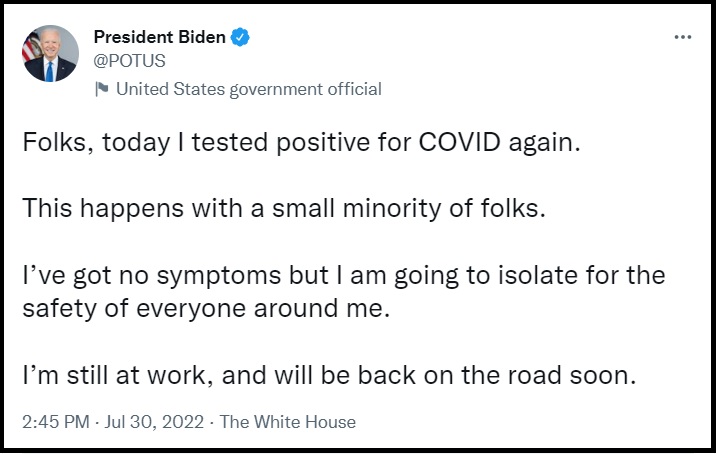
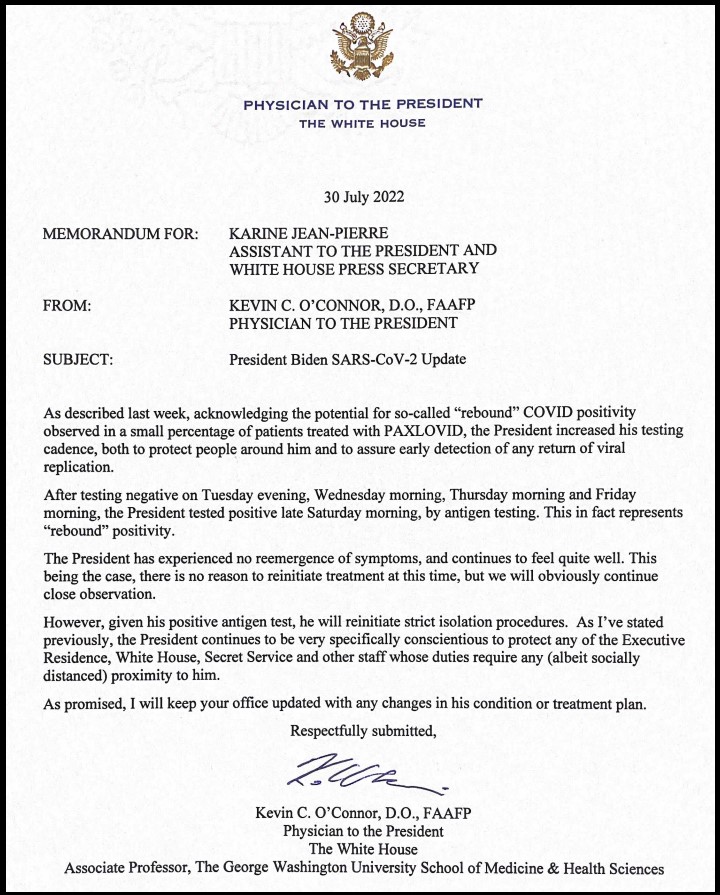
Double Vaxxed, Double Boosted, Loaded with Paxlovid, Joe Biden Gets COVID Again


Posted originally on the conservative tree house on July 30, 2022 

Well, isn’t that convenient.   Sorry folks, I can’t come out and take questions, I’ve got the Rona again.

[SOURCE]

Only the second thing that has been positive during his tenure.

[Source Link pdf]

Intra-pandemic vaccination of toddlers with non-replicating vaccines may prevent education of innate immune effector cells


Geert Vanden Bossche, DVM, PhD General Manager at Voice for Science and Solidarity | The biggest challenge in vaccinology: Countering immune evasion

Posted originally on TS New on Jul. 22, 2022, 9:00 a.m.

Opinion Article

Intra-pandemic vaccination of toddlers with non-replicating antibody-based vaccines targeted at ASLVI[1]– or ASLVD[2]-enabling glycosylated viruses prevents education of innate immune effector cells (NK cells).

by Geert Vanden Bossche and Rob Rennebohm

Key message:

Antibody-based vaccines teach the immune system to produce high levels of antibodies that are directed against the surface protein that is responsible for initiation of viral infection. Due to their high specificity and strong binding capacity, these vaccinal antibodies (Abs) outcompete the child’s innate antibodies for binding to the virus[3]. This not only sidelines virus-neutralization by the natural innate immune system but also hampers the ability of innate antibodies to educate the innate immune system’s NK cells (Natural Killer cells) regarding NK cell recognition of (and appropriate response to) molecular self-mimicking patterns that are expressed on virus-infected host cells. This is particularly problematic when mass vaccination campaigns are conducted during a pandemic as those drive natural selection and dominant expansion of more infectious immune escape variants.

Strong immune priming as induced by vaccines elicits long-lived Ab titers. Even in the absence of further booster shots, repeated exposure to more infectious circulating variants will recall these vaccinal antigen (Ag)-specific Abs and thereby sustain high-titer antibody responses. When immature, low-affinity Abs become exposed to the virus, (which may occur when vaccines are administered during a pandemic), these Abs may bind to the virus without neutralizing it. This in its own right could already provoke Ab-dependent enhancement of infection (ADEI) by the target virus. Vaccinated toddlers are particularly at risk of ADEI as their innate immune system has not yet been trained. Consequently, young children who are vaccinated during a pandemic with non-replicating viral vaccines (directed at ASLVI- or ASLVD-enabling glycosylated viruses[4]) are at high risk of developing severe disease.

In addition, boosting of vaccinal Abs as a result of repeated exposure to more infectious immune escape variants will lead to prolonged suspension of NK cell education in these vaccinated toddlers. When, for a prolonged period of time, NK cells are prevented from being sensitized to pathogen-derived self-mimicking peptide patterns that are expressed on infected or otherwise pathologically altered cells, they may end up becoming tolerant to these patterns, which are typically shared among several different glycosylated pathogenic agents (G. Vanden Bossche, former provisional patent application). That is, the NK cells become hyporesponsive or desensitized to these pathogenic agents[5].  This opens the door to recognition by B and T cells of traditional antigens that are naturally expressed later on in the process of infection or pathologic alteration. Recognition by these ‘foreign-centered’ effector cells may enable abrogation but not prevention of infection (i.e., in the case of infectious pathogens) or lead to immune pathology (e.g., in the case of pathologically altered autologous host cells evolving towards expression of foreign proteins).

So, when the normal NK cell responsiveness to the patterns expressed on the surface of a specific glycosylated virus-infected cell (e.g. a SARS-CoV-2 infected cell) is downregulated, so is the NK cell response to largely homologous patterns on cells infected by other glycosylated viruses. That is how – in young children- vaccinal antibody-mediated interference with the education and response of NK cells regarding one particular ASLVI- or ASLVD-enabling glycosylated virus also interferes with the education and response of their NK cells regarding other glycosylated viruses causing ASLVI or ASLVD. This renders the vaccinated young child less able to handle not only the virus it got vaccinated against but also other glycosylated viruses (of course, unless that child got previously vaccinated with childhood vaccines comprising live attenuated glycosylated viruses such as measles, mumps, rubella, varicella, rotavirus). That is why/how vaccinated young children become more susceptible to other glycosylated viruses (besides the one they got vaccinated against).

The above-mentioned prolonged suspension of NK cell education, and the associated repetitive desensitization of NK cells, will not be ‘diluted’ by a “sporadic” sensitizing event (from an intercurrent influenza infection, e.g.).

The earlier this prolonged suspension of NK cell education occurs after the maternal Abs have waned, the more detrimental the effect will be. This is because it is during early childhood, when children have their greatest and most important capacity for education and practice of their innate immune system, that they ought to exploit this opportunity to actively kick off their own immune defense against ‘foreign’ while ensuring tolerance towards ‘self’. This opportunity occurs only once in a person’s life-time! Once the functional capacity of innate Abs wanes, the instructions conveyed to ‘self-centered’ innate immune cells (i.e., NK cells) on how to recognize self-mimicking patterns associated with ‘foreign’ as opposed to ‘self’ proteins may not be strong enough to prevent irreversible priming of ‘foreign-centered’ antigen-specific B and T cells. Once such priming has occurred, the child’s immune system will have irrevocably missed that small window of opportunity to draw the thinnest possible line between ‘self’ and ‘foreign’, enabling the immune system to discriminate ‘self’ from ‘self-mimicking’ (or ‘altered self’). If one leaves it up to the adaptive immune system, a line that thin will not be drawn as the adaptive immune system has only been conceived to distinguish ‘foreign’ from ‘self’. Deficient or insufficient education of ‘self-centered’ NK cells will therefore inevitably predispose the young child to immunopathologies (ranging from allergies over inflammatory diseases up to autoreactivity).

On the other hand, once their pre-priming has been properly established, ‘training’ of NK cells can take place at any later time. Training consists of imprinting immunological memory on pre-primed NK cells following their epigenetic reprogramming. Such functional reprogramming provides these cells with sufficient plasticity to establish an “adaptive” phenotype to meet the demands and challenges of altered environmental conditions (e.g., enhanced viral infectious pressure). However, innate immune effector cells cannot be trained unless they first got educated on how to recognize potential changes/ alterations they may need to adapt to. It goes, therefore, without saying that any intervention in this delicately evolving ecosystem cannot even be considered without an in-depth understanding of the mechanisms at play and the impact thereon of the targeted immune intervention.  

[1] ASLVI: Acute self-limiting viral infection

[2] ASLVD: Acute self-limiting viral disease

[3] For the purpose of this manuscript, ‘virus’ relates to an ASLVI- or ASLVD-enabling glycosylated virus

[4] Examples of glycosylated viruses [other than SARS-CoV-2] causing ASLVI or ASLVDs: seasonal influenza, RSV, dengue virus and viruses responsible for vaccine-preventable infections: measles, mumps, rubella, varicella, rotavirus or other more virulent glycosylated viruses such as zoonotic influenza (e.g., avian influenza virus), parapox virus (e.g., smallpox virus),  Ebola virus, Marburg virus

[5] The biological mechanism for this fine regulation of the NK cell response is due to downregulation of germline encoded “activating receptors” on NK cells, and/or upregulation of “inhibitory receptors” on NK cells, and/or hypo-responsiveness to “activation signaling.” More details on the underlying mechanisms of this fine regulation of NK cells can be found in the literature as , for example, published by Orr, Mark T., and Lewis L. Lanier. “Natural killer cell education and tolerance.” Cell 142.6 (2010): 847-856 and Perera Molligoda Arachchige AS. Human NK cells: From development to effector functions. Innate Immunity. 2021;27(3):212-229.

https://www.sciencedirect.com/science/article/pii/S0092867410010007

https://journals.sagepub.com/doi/pdf/10.1177/17534259211001512

Midterm Elections Could Lead to Fauci Prosecution


Armstrong Economics Blog/Corruption Re-Posted Jul 22, 2022 by Martin Armstrong

Fauci plans to retire as soon as Biden leaves office as he knows he will no longer be protected. He mistakenly believes that he is above the law and will not be prosecuted for his crimes against humanity. Rand Paul, Fauci’s longtime foe, made it very clear that Republicans will subpoena Fauci if they take back the House or the Senate. Paul is not afraid to come off as a “conspiracy theorist” and plainly stated he wanted to know if there was a cover-up involved.

Paul said while speaking to Fox News:

“I do fully believe this virus, this pandemic that killed 6 million people around the world, leaked from the lab. But I think there was a concerted effort by him and his colleagues to cover this up and make sure it didn’t come to light, that the NIH was funding that lab and that there was reasonable scientific evidence that suggests that it came from the lab. So he’s going to be made to testify under oath. And I hope he sticks around because we do have some questions.”

Paul is not alone in his desire to investigate Fauci. Rep. Madison Cawthorn (R-N.C.) vowed to prosecute Fauci is the House gains control during the midterm elections. “We want to prosecute this guy to the full ability of the law. And I’ll tell you, to lie to the American people just to get your name in the news, just to get your face on the cover of books, just to get fame and fortune. I’ll tell you, Dr. Anthony Fauci does not deserve either fame or fortune,” he continued. Cawthorn also accused Fauci of being a “pawn of the Chinese Communist Party” and lying under oath about his knowledge on gain-of-function research.

Rep. Marjorie Taylor Greene introduced the “Fire Fauci Act” in April 2021 which brings to light many valid questions. Why is Dr. Fauci the highest-paid government employee, surpassing even the income of the president? How much did he profit from the pandemic? Why did he claim herd immunity would require up to 85% of the population to be vaccinated when there is no proof or study to support this idea?

If the Republicans takeover during the midterm elections, expect Dr. Anthony Fauci to face a trial. The public at large will then learn the lies being pushed as science and will realize that the entire pandemic was a manufactured event. This will lead to civil unrest on a widescale spanning far beyond America.

Double Vaxxed, Double Boosted Joe Biden Has COVID-19 Again, Will Work in Isolation


Posted originally on the conservative tree house on July 21, 2022 | Sundance

Suspicious Cat remains, well, suspicious…

[White House Press Release] – This morning, President Biden tested positive for COVID-19.  He is fully vaccinated and twice boosted and experiencing very mild symptoms.  He has begun taking Paxlovid. Consistent with CDC guidelines, he will isolate at the White House and will continue to carry out all of his duties fully during that time.  He has been in contact with members of the White House staff by phone this morning, and will participate in his planned meetings at the White House this morning via phone and Zoom from the residence. 

Consistent with White House protocol for positive COVID cases, which goes above and beyond CDC guidance, he will continue to work in isolation until he tests negative.  Once he tests negative, he will return to in-person work.

Out of an abundance of transparency, the White House will provide a daily update on the President’s status as he continues to carry out the full duties of the office while in isolation.

Per standard protocol for any positive case at the White House, the White House Medical Unit will inform all close contacts of the President during the day today, including any Members of Congress and any members of the press who interacted with the President during yesterday’s travel.  The President’s last previous test for COVID was Tuesday, when he had a negative test result. (read more)

CDC Stops Reporting Cruise Ship COVID Outbreaks


Armstrong Economics Blog/Corruption Re-Posted Jul 21, 2022 by Martin Armstrong

The Centers for Disease Control and Prevention (CDC) will no longer report COVID outbreaks on cruise ships. Per the CDC’s website:

“As of July 18, 2022, CDC’s COVID-19 Program for Cruise Ships is no longer in effect. CDC will continue to publish guidance to help cruise ships continue to provide a safer and healthier environment for passengers, crew and communities going forward.”

Clearly, this is an attempt to hide the fact that the vaccinated are spreading and contracting COVID, possibly more frequently than the unvaccinated. Nearly all cruise liners have required staff and passengers to be “fully vaccinated” before boarding. Yet, there are countless stories of COVID outbreaks on ships with 100% vaccination rates. So the cruise industry lost over $63 billion between 2020 and 2021 for absolutely no reason.

The CDC still recommends that vacationers take a COVID test before boarding and adhere to all their guidelines. The agency now claims that the liners simply have access to their guidance and they no longer need to control the situation. In reality, they cannot explain why ships containing fully vaccinated passengers and staff are experiencing outbreaks. Answer: THE VACCINE DOES NOT WORK!