Understanding The Dollar Strength


It is fascinating to watch how the bias in people just ensures not just that a sucker is born every minute to replace the one that wises-up, but there are suckers who never learn from experience and cling to their ideas no matter how much it costs them. The U.S. dollar has been climbing against major currencies for several months, with the dollar index .DXY up is trading up about 2.84% for the year. It is true that the dollar has strengthened since late 2015 as the Federal Reserve began raising interest rates against a background of steady economic growth, slowly rising inflation and the lowest U.S. unemployment rate since the 1960s. But the strength in the dollar is more than just interest rates. It is the prettiest of the three ugly sisters as they say – US – Europe – Asia.

The Fed has raised rates twice this year and is expected to raise rates a couple more times by year end which may attract more foreign capital into the U.S. dollar with monetary policy remaining loose to very insane in Europe and Japan. We have the ECM, which has destroyed the European bond market, frozen like a deal in headlights. It is trapped and it realizes that it has been buying the debt of member states who are now addicted to excessively low-interest rates. If the ECB actually stops buying, we are looking at a major debt crisis in Europe as interest rates explode exponentially. However, their policy of austerity has really oppressed the Greek economy and now they have their eyes set on Italy which will more likely create a revolution before the Italian accept going the way of Greeks – quietly into the night.

In Japan, there to they have wiped out the bond market. The government actually bragged that they bought 97% of the government debt auction. Hellow? That’s a good thing? The Bank of Japan has reduced debt purchases for a third time in June 2018, taking advantage of the recent stability in bond yields and the yen. At least Japan is reducing its purchases whereas the ECB talks a good game, but cannot actually do anything. The attempt to force austerity by the EU upon southern Europe is tearing the system apart.
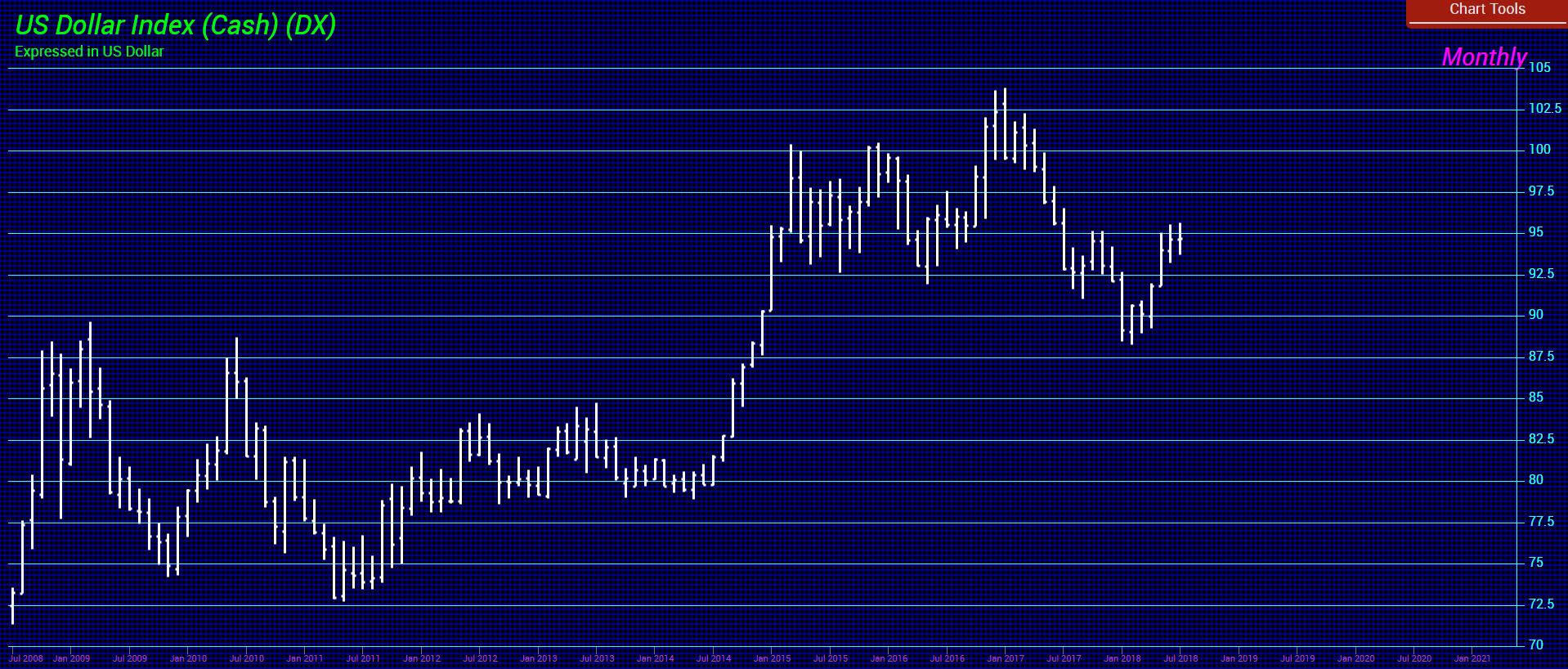


The dollar bottomed in February 2018. It has yet to elect a Monthly Bullish Reversal. Trump has been unusually vocal about the dollar, unlike most Presidents, following more in the footsteps of Treasury officials. Trump has publicly been criticizing the dollar’s strength several times. He obviously thinks a lower dollar is better for trade. But the markets are going against Trump. You cannot “Make America Great Again” without also strengthening the dollar especially when we still have insanity in Europe economically and Japan still in never-never-land.

In a CNBC television interview, Trump said he was concerned about the potential impact of a stronger dollar on American exports. He also broke tradition by criticizing Federal Reserve policy on raising interest rates, saying it takes away from the United States’ “big competitive edge”. Trump has had no problem with deficit spending hoping it would reduce the dollar to support trade and therefore jobs. While investors and traders have been concerned about the spending, they have been forced to attribute some of the gains to the Trump administration’s tax cuts which are bringing capital home. On the other hand, they see the tax cuts as widening the fiscal deficit, and that they expect leads to borrowing more on the government’s part. Then Trump’s imposition of import tariffs against China, Europe, Mexico and Canada, they generally think will contribute to inflation. But they fail to grasp that Trump is using Tariffs to force a better trade deal.

So hang on to your hat. The strength behind the dollar CANNOT be analyzed simply by looking at the domestic situation. We are in a position of capital flight on a global scale. All these arguments add up to nothing when capital begins to flee from one economic crisis to another. Remember Herbert Hoover’s words from 1931. When we begin to see the first crack in Sovereign Debt, both in Emerging Markets and inside the EU, it will be Kattie-bar-the-door!


Why Marxism Cannot Work


Published on Apr 28, 2016
Marxist Feminsm, Marriage & MGTOW: https://www.youtube.com/watch?v=LY7No… Support my work on Patreon: http://ow.ly/3ymWFu PayPal Donations Welcome. Click here: http://goo.gl/NSdOvK Help Support My Channel. Buy Computing Forever Merchandise, Mugs, Hats, T-Shirts: http://ow.ly/3v3TWq Images in this video sourced are royalty free, creative commons, public domain from Wiki images & http://Pixabay.com Sign up to our Monthly Newsletter to receive exclusive FREE Computing Forever video and blog content: http://goo.gl/YKq7ZK SUBSCRIBE TO THIS YOUTUBE CHANNEL: https://www.youtube.com/user/LACK78 KEEP UP ON SOCIAL MEDIA: Twitter : http://twitter.com/lack78 Facebook : https://www.facebook.com/ComputingFor… Google+ : LACK78: http://goo.gl/k4gWsg Google+: Computing Forever: http://goo.gl/Q8gZpY ALL MY TECH BLOGGING NEWS CONTENT:http://computingforever.com MORE VIDEO AWESOMENESS: http://youtube.com/daveknowsstuf

Concern About Influencing Markets


QUESTION: Thank you very much for your blog and all the knowledge that you pas on.
You are well known in many circles and I would think have great influence in the inner circles and behind the curtain. Now then your computer forecasts can sway a lot of people because of that. If you were to advice in advance of a major market crash you could be accused of starting a panic or worse. So my question is would you do it or sit on it and explain later?
Retired in Canada.

AW

ANSWER: No. We have ALWAYS provided forecasting regardless of the consequences. The Computer itself is writing the analysis on over 1,000 instruments daily. Everyone knows that there is no human writing these reports. Besides that, there are those behind the curtain who want the real forecast even though it may be against them. I have been on the phone with central banks during a crisis when they have asked me does it look like they will need to intervene. So you will be surprised. Even they want the truth when it counts.

I am not doing mainstream media interviews that would ever appear as a headline that the market will crash tomorrow or something like that. ONLY is such information appears in the mainstream media does it raise a red flag.

Fed Upgrades Economy to Strong


The talk behind the curtain remains that the Fed is still under pressure to PLEASE don’t raise rates. The lobbying continues from the IMF, ECB, and Emerging Markets. Meanwhile, the Fed leaves rates unchanged, but it upgraded its view of the US economy to ‘strong’ which remains a signal that the Fed is still prone to raise rates if the stock market continues to rally.

The Federal Open Market Committee voted unanimously to keep the target range for its benchmark rate at 1.75 percent to 2 percent. Still, the committee said that “economic activity has been rising at a strong rate,” which is a more bullish view than the June characterization of “solid” growth. Consequently, this statement also noted that household spending has “grown strongly.”

The bottom-line remains clear. The US economy is holding up the entire world and lowering taxes has helped to bring capital home and attract foreign capital as the USA remains actually a tax haven outside of the world reporting system agreement

European Banks Lending in USA Rather than Europe?


European banks have been lending in the United States quiet aggressively because (1) the economy is doing good so there is a demand for loans contrary to Europe, and (2) the behind the curtain view that the euro will decline and the dollar will rise. During the first half of 2017, European banks have lent about $53 billion in US dollars taking the currency risk which they have benefited from as the euro declines. According to Bloomberg, Europeans’ combined market share in the United States rose to nearly 24%.

The concern of some has been that the loans are going into leverage structures once again. In total, banks and other companies issued $494 billion in new leveraged loans 2017, which has been the largest amount since 2011. The European banks at the top of the list are the British Barclays Bank, which bought Lehman Brothers Holdings’ US businesses after the collapse. Barclay’s now controls more than 6% of the market for new loans and is the third largest leveraged loan arranger in the US this year. Barclay’s is also big in issuing credit cards in the United States. The second on that list is Credit Suisse Group AG. Then we have Deutsche Bank, which on the one hand wants to withdraw from US markets, has also been looking at lending in dollars for the same reason of gaining on the currency in the face of a collapsing euro. We see similar policies being adopted in the British HSBC, Swiss UBS, French BNP Paribas, Dutch ING Groep and Credit Agricole.

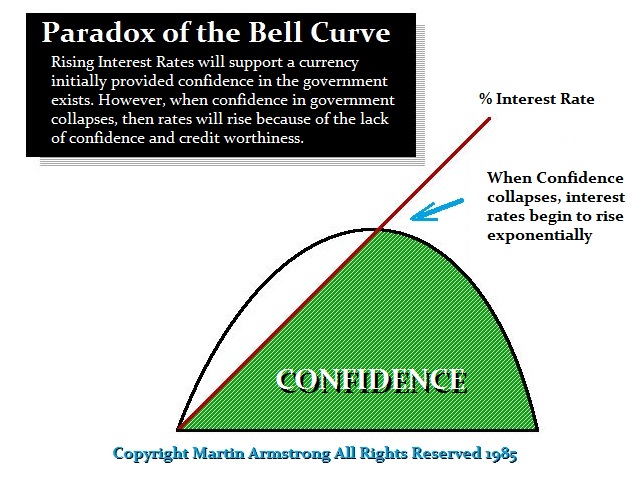
While many believe that as major central banks continue to push ahead with monetary policy normalization of raising interest rates, they wrongly think that raising rates will hurt the credit market and create a downturn. What they fail to grasp is that rates can rise with no impact provided the economy is expanding, but rates can also rise because there is no demand and government is forced to keep offering higher rates to find buyers of their debt in the real world. It all depends upon what people believe. This is why low rates in Europe have FAILED to stimulate demand when people lack confidence in the future, they will NOT borrow at any rate. Expectations of profit MUST exceed the level of interest rate before people will borrow. They function differently than governments which are addicted to debt and borrows all the time with no cyclical expectation

World Trade & Who Needs the Flash Cards?


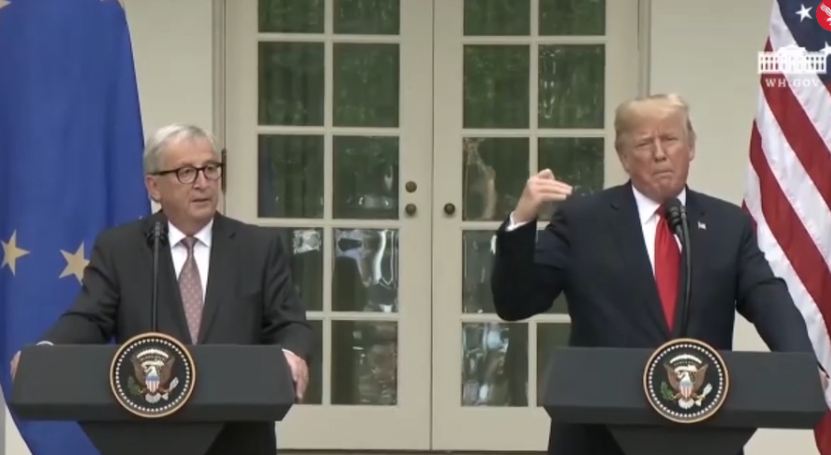
The Independent reported that an EU Official said that Juncker used ‘‘brightly coloured, simple flashcards” to explain trade to Trump during the meeting. The EU official said ‘each card had at most three figures about a specific topic. While these remarks are deeply offensive, what they really reveal is how much EU officials prefer to promote propaganda as well and create their own FAKE NEWS to distract people from reality. It has been Europe that delayed the TTIP deal and made it completely unworkable. What they are NOT explaining to people is that there is another MAJOR PROBLEM with the EU structure being exposed by trade negotiations and why Britain who run as fast away as possible.

All 28 EU countries have a common external tariff, which is collected by the national customs authorities. This is then paid into the EU budget. This tariff produces around €20 billion euros per year. Now enters the great disparity of economics. Germany produces 25%+ of that tariff – some €5 billion. It was true that the goal of the EU was to eliminate tariffs and champion free trade among member states as takes place in the USA. This is where we get this slogan of the “single market” for the more than 500 million EU citizens.

That all sounds very nice. The dirt is always found swept under the rug. Creating a “single market” was beneficial primarily for Germany who has an export-economic model. Germany’s car business is its lifeblood. It survives by selling cars to the world. So naturally, the euro was a dream come true for Germany. The euro and single-market eliminated FOREX risk for its customers and German producers which would result in more sales. That was a win-win for Germany, as the sales pitch went.

However, the creation of a single government has introduced a lot more problems that nobody bothered to consider. Germany clearly dominates the foreign trade of the EU. It exports to the world beyond the EU. Without Germany, the EU would flounder and be saddled with trade deficits. However, now we introduce the EU government. Suddenly, Germany cannot conclude its own trade treaties outside the EU. Everything must be negotiated by Brussels through the customs union.

Now we begin to look beyond mere currency. I have warned that one-size does not fit all as people had expected would emerge from creating a federalized EU. The second largest player in the EU is France. Because of crazy unions and socialism that has dominated France, the French are not the bastion of production and instead have a perpetual foreign trade deficit. Its socialistic policies have produced chronic protectionist policy that results in higher wages and higher costs of production that are simply uncompetitive even within the EU. Therefore, France is always at odds with Germany when it comes to trade deals for the EU.

In actual negotiations under the Obama Administration on the TTIP deal with the EU, the process dragged on from 2013 to 2017. Each of the 28 member states had their own protectionist issues. This delayed negotiations endlessly and it demonstrated that the EU structure really did not work. Each country wanted its own deal, but it had to negotiate collectively. So France could prevent Germany and likewise other members could block France. This is the reality of what President Trump walked into. The audacity that Juncker had to explain trade to Trump with flash cards was probably the most arrogant statement I have ever read from a government that is clueless. Trying to negotiate trade with the EU when its own 28 member states fight with each other is impossible. Already, Trump offered to eliminate all tariffs. Germany licked its lips. France said NO WAY!!!! Who needs the flashcards?

The only possible tactic that Trump could take to break this deadlock was to threaten wholesale tariffs. The Europe-wide tariffs were the only possible way to deal with the situation that probably still will not lead to some universal commitment to real free trade on either side of the Atlantic. It is Europe that is burdened with protectionism that has for decades put up a significant renaissance against free trade.

Trump’s favorite slogan, “America First,” has gained all the headlines and people PRESUME he is starting some protectionist war. In reality, there is NO free trade whatsoever and this issue of trade is like someone who punches you in the face, but the police charge you with assault for hitting the person in retaliation and ignores any evidence that they hit you first. TTIP was a complex mess and by no means would it actually create free trade. It was all about protectionism simply labeled free trade. The EU structure is hopeless. It wants to pretend it is a “single market” but it cannot negotiate any trade deal because it is 28 members who have to unanimously agree and that took 4 years to reach TTIP and a complete mess.

Of course, the media generally at large just like to bash Trump. Why bother explaining the real nightmare of tariffs and duties which are merely tariffs in sheep’s clothing.

What is a Superposition Event


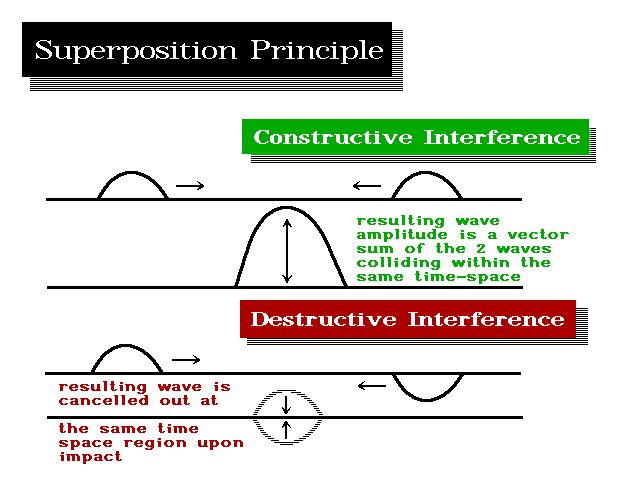
Socrates wrote about a Rare Superposition Event took place last week in the Dow. They can take place at all levels of time and can be on a closing basis or on an intraday basis. This is the 43rd such event on the weekly level in the Dow since 1914. You can read more about them in our Research section.

The IMF’s SDR & Monetary Reform – Another Crazy Idea?


QUESTION: Hi Martin,
I am a long time reader of your blog and a big fan of the tools that you have developed for investors. Thanks for all that you do and I wanted to reach out and ask about your opinion of the thesis that ——-  outlines for the IMF implementing SDRs as world money during the next downturn? This type of scenario seems to make sense considering the current balance sheets of central banks and the current lack of demand for EU debt.
Nicky

ANSWER: I was in a discussion about that back in the 1980s (see the response from the White House rejecting SDRs). That was a day before the IMF became so corrupt. That was rejected countless times. The entire problem still stems from the cross-currency borrowing by nations. Even if the emerging markets borrowed in SDRs instead of US dollars, it really would not alter the world money system nor prevent a crash at the hand of a Sovereign Debt Crisis. What it would do is simply relieve the dollar marginally. The problem would emerge on how do you manage such a system. As long as governments issue debt, then once they issue that debt in ANY currency other than their own, RISK enters the game.

Even if we switched the reserve currency from the dollar to the SDR, the ONLY way to enforce it would be to restrict currency. For example, I could issue a bond in Japanese yen for years and sell it to you in Canada without it being approved by the Japanese Ministry of Finance. China still has currency controls where its people have to ask permission to send money out of the country. The only way to enforce an EXCLUSIVE SDR reserve currency would be for all debt to be denominated in SDRs. However, then every country would still have the risk of their currency fluctuating against the SDR.

The only way to practically reduce the risk is to prohibit governments from issuing debt in any currency but their own. That introduces yet another problem. Many pensions bought emerging market debt to get the higher yield, but they did so because they issued that debt in dollars to attract foreign buyers. As the dollar rises and rates rise, the value of emerging market debt declines and the risk of default rises as the US dollar rallies.

So you see, if we are really talking about revising the world monetary system, it is going to be far more complicated than simply replacing the dollar with SDR, gold, or clamshells as they issued during currency crisis of 1933.

Trade Wars & Rising Interest Rates – The Top Concerns of Fund Managers


The interesting fact is that the majority of fund managers today have reduced their equity allocation to their lowest level since November 2016 according to Reuters. The reason for this is their focus of trade and their assumption that the Great Depression was caused by a PROTECTIONISM. According to yet a recent monthly report by Bank of America Merrill Lynch (BAML) where they conducted a survey of fund managers, the majority, some 60%, now fear a trade war. Clearly, the biggest concern out there is a trade war poses the greatest risk to the stock market. Another 19% fear excessively higher interest rates by the Federal Reserve. These two perceptions are the dominant reason we see consolidation.

However, our computer forecasted the consolidation for 2018 at the start of the year. This has sparked a number of emails asking how was it possible for the computer to forecast consolidation before the fundamentals? What I have noticed over the years in working with this model has been that trends will last ONLY for a specific amount of time. Like being cold all winter and suddenly the sun shines with Spring, we call it “Spring Fever” and everyone runs out at starts doing things when the weather changes. We respond similarly to cycles in markets. They will last only for so long and we get tired. It is NOT that specific fundamental that comes into play and causes the consolidation. Instead, the market trend shifts and people begin to look for explanations to explain it.

I have shown charts that demonstrate that rising interest rates are a market myth. The stock market has risen with higher rates and when the market crashes, demand-side economic means they lower rates trying to “stimulate”  demand under Keynesianism which has never worked. The ECB has kept rates so low for nearly 10 years and they have destroyed the European bond market as reduced Europe to an economy that is ranked even below China. And as far a trade is concerned, I have shown that Trade Tariffs were a response to the currency and the collapse in agriculture due to the invention of tractors and electricity during the early 20th century. Like the internet today is displacing jobs, electricity reduced the jobs in the manufacture and the combustion engine expanded to tractors reducing employment in agriculture from 40% of the civil workforce to 3% by 1980.

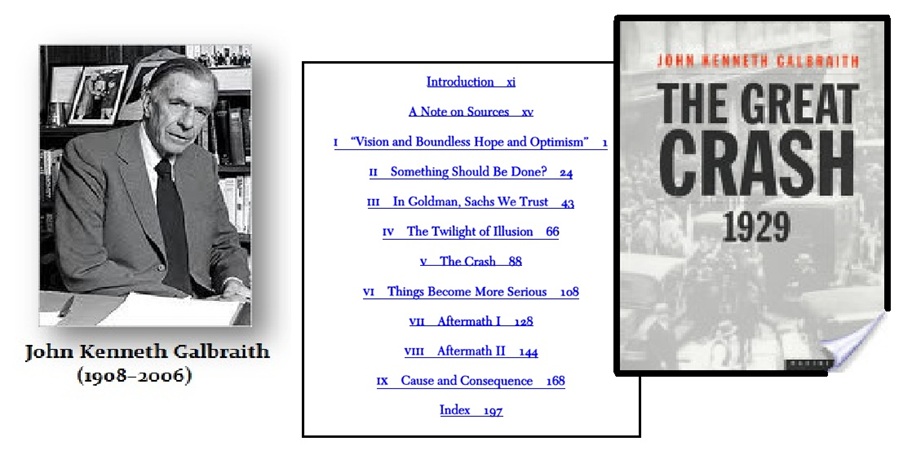
Consequently, the computer is forecasting the trend. People try to explain the change in trend and fit the fundamentals to try to explain what took place. I have written before that the book I had to read in school on the Great Crash by Gailbraith, never mention the Sovereign debt crisis of 1931 because he was a socialist who wanted to blame corporations EXCLUSIVELY. Others actually claimed that Hoover embraced the rise of Nazis in Germany because he wanted to trade and ignored Russia. Hitler came to power in 1933 and Hoover lost the election in 1932. They will even alter timelines to support a predetermined conclusion.

The trend changes due to cycles for we can only endure a trend for so long before we just want a change as we do in politics. The cycles are not altered by the fundamentals. Commentators fit the fundamentals to explain the cycle. The sharp decline in asset allocation to equities has not been met with a collapse in market prices. This is a very interesting development for the majority NEVER manages to sell the high.

Russia Dumps US Bonds – Is it Politics or Yield?


QUESTION: Mr. Armstrong; It appears that Putin also follows your model. He has been selling all debt significantly for it seems he is listening to you forecast that interest rates will rise sharply so get out of government bonds. Do you see his selling because of rate or politics as some are trying to say?

Thank you

KE


ANSWER: Putin is selling off debt very rapidly because of interest rates. The political bashing of Russia has been going on since the 2016 presidential election. It has contributed somewhat to the decision to sell, but honestly, if it were only political, then they would have sold their holdings by the end of 2016. The spin will be political, but the trend toward higher rates is the real driving force. Many countries/corporate/institutions that our clients, we have been advising to shorten maturity.

The crisis is building in debt rapidly. Even the ECB came out and said it would stop its bond-buying program and only a fool would expect rates to stay the same. I seriously doubt, based on my sources, that the ECB can stop buying bonds without a major global crisis. Draghi will keep buying until he is out the door come October 2019. I seriously question if Draghi will be able to hold it together beyond the First Quarter 2019.

Russia sold nearly all of its US Treasury holdings in May. It was an impressive sale reducing their holdings to almost zero in just two months. According to our sources, the Russian government reduced its US bond holdings from $ 96 billion to $ 48.7 billion during April and then down to $14.9 billion by the end of May. At the end of 2017, Russian holding of US debt stood at about $102.2 billion. That was not actually huge. They were in the top 33 countries holding US debt.  They are certainly no longer in that list at all. The Russian sales pushed the yield slightly higher to 3.11%.