Interest Rates Lock & Load or Stay Nimble?


QUESTION:  Hi Marty,
I continue to read your blog and if I understand correctly, interest rates are going up.
My question is, can one profit from higher interest rates such as buying CD or bank stocks like Wells Fargo?

ANSWER: The one thing you do not want to do is buy CD with maturity. As rates go higher, you will be locked in and unable to take advantage of the rising rates. Bank stocks will not benefit from higher rates in general. So that is not a valid reason to buy bank stocks. The safest thing would be to buy US TBills or agency paper no more out than 90 days and keep the cash rolling in that area until we reach a point when the rates are peaking. Toward the end, the yield curve will invert so that means the short-term rates will exceed long-term when confidence is shaken.

In an upward cycle for interest rates, never lock & load – always stay nimble.

Until We Understand the Real Wealth of a Nation Progress Cannot be Achieved


QUESTION: Mr. Armstrong; Do you have any comment on the latest excuse for the decline in gold is because Trump is forcing it down so he can buy it up and move to gold-backed bonds like Nevada? This is the latest coming from the fringe which just seems so unrealistic any more. I am not sure why these people ignore the past.

Thank you;

PF
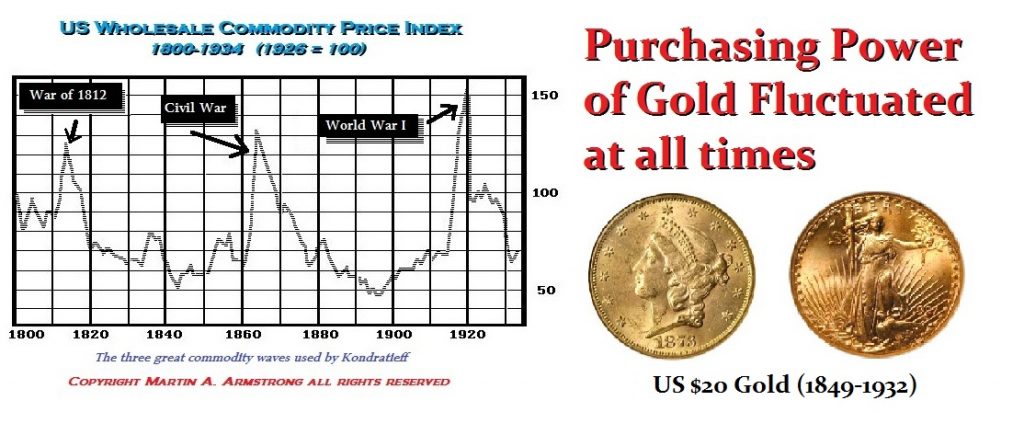
ANSWER: The entire issue at its core is this endless desire to eliminate the business cycle. They pitch that ONLY gold is money and if we return to a gold standard that every evil will be cured. They believe that money must be “tangible” and as such, they fail completely to comprehend the true nature of the economy. If ONLY gold was money, then how did Germany, Japan, and China rise to the economic giants without gold and Russia has floundered ever since 1991 when they had the gold, oil, and diamonds?

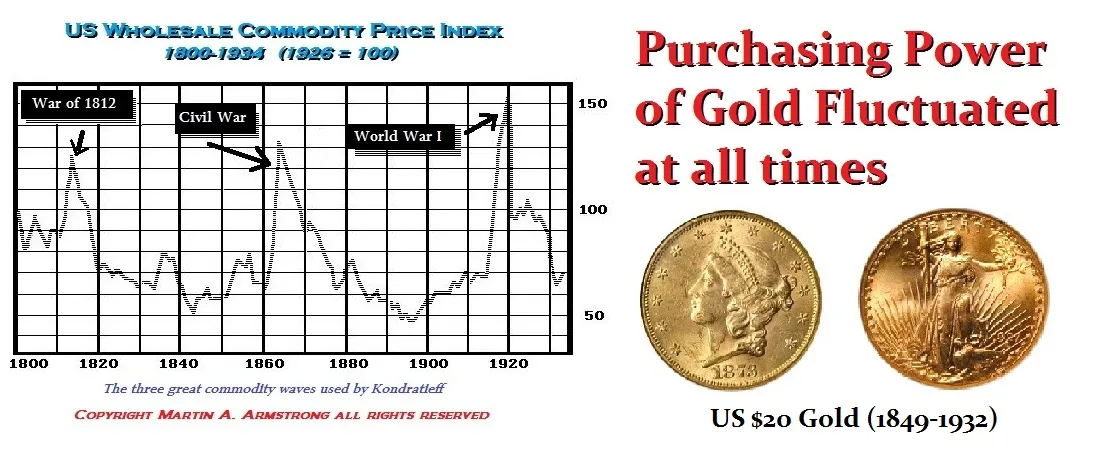
Kondratieff’s long-wave study observed that the rise and fall of the business cycle existed during the 19th & 20th centuries when the world was on a gold standard. The existence of a gold standard FAILED to eliminate the business cycle and it proved that a “tangible” based monetary system did not make money more valuable than a paper money system. Ironically, ever since 1776, we are still arguing over what is money? Should it be any commodity, paper, some fixed-exchange rate, or is the real wealth of a nation its people and their total capacity to produce? Is this why skilled labor forces and education raise the standard of living of a country than merely farming to grow food to sustain yourself?

Julius Caesar said: Divide and Conquer. If the people come together and form interconnected economic bonds, the economy expands because the synergy of everyone collectively is greater than the individual sum of the parts. Changing the monetary system to one back by gold has NEVER eliminated the business cycle. So this idea that a gold-backed bond will somehow retain its value constantly is like believing in Santa Claus of the promises made by every politician when running for office.
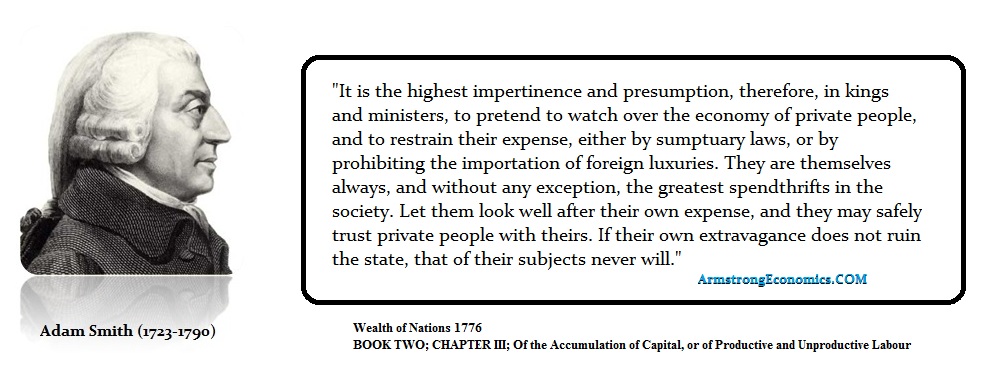
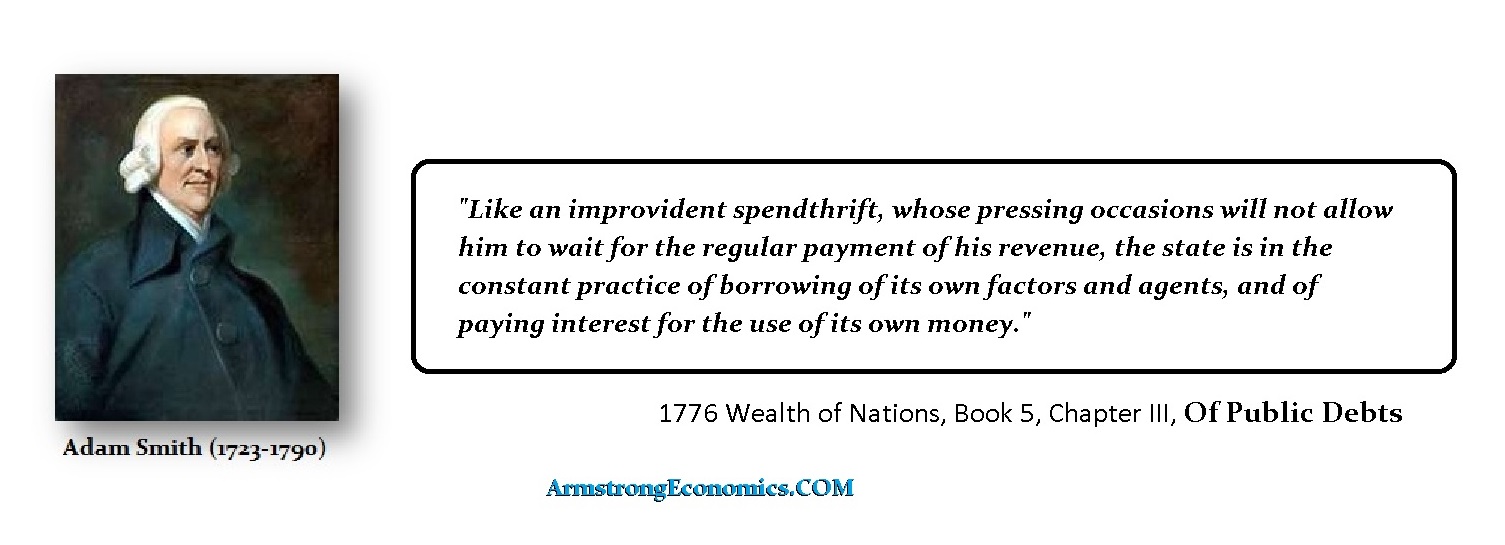
The true Wealth of a Nation was observed and expressed by Adam Smith in 1776 and nobody has been able to demonstrate anything to the contrary. “Money” is by no means some tangible object or a commodity regardless if it has been gold, paper, cattle, slaves, or seashells. The true WEALTH OF A NATION is its people! China, Germany, and Japan lacked the natural resources but their people were its wealth and they produced manufactured goods which they sold to the world and were paid for in return. Russia had the natural resources but it moved from communism to an oligarchy. You cannot open a restaurant in Moscow and compete for you will be dead. A country can have tremendous natural resources like Russia, but unless its people are free to develop the economy in their own self-interest, they will never rise to the top ten list of nations. All the gold, oil, and diamonds of Russia did not propell it to the number one economy. There are plenty of third world nations with natural resources that are being mined yet they remain as third world nations because their people are not educated and their is no domestic economic synergy among the people.
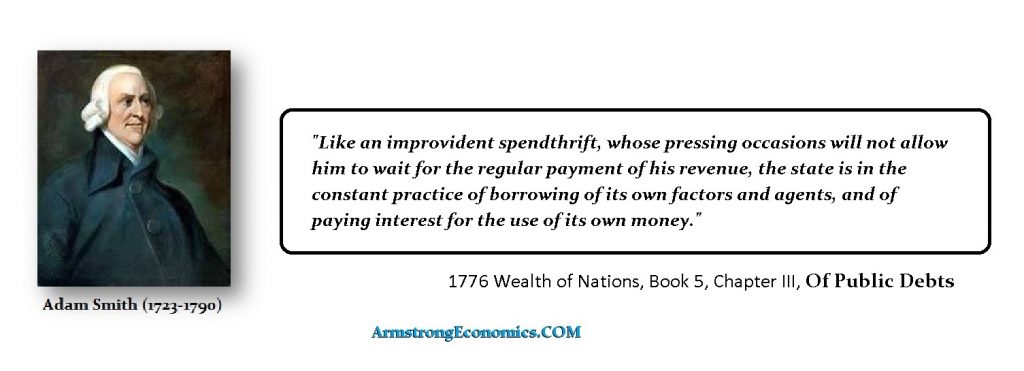
Spain was the classic example. They discovered all this gold and silver in South America. They exploited it, brought it back to Europe, but NEVER developed their own economy. They spend the money lavishly. Unloading the ships was a job for important labor because it was beneath them. The gold joke was that as Spain got rich, everyone else got richer. They used Frenchmen to unload the ships overall.
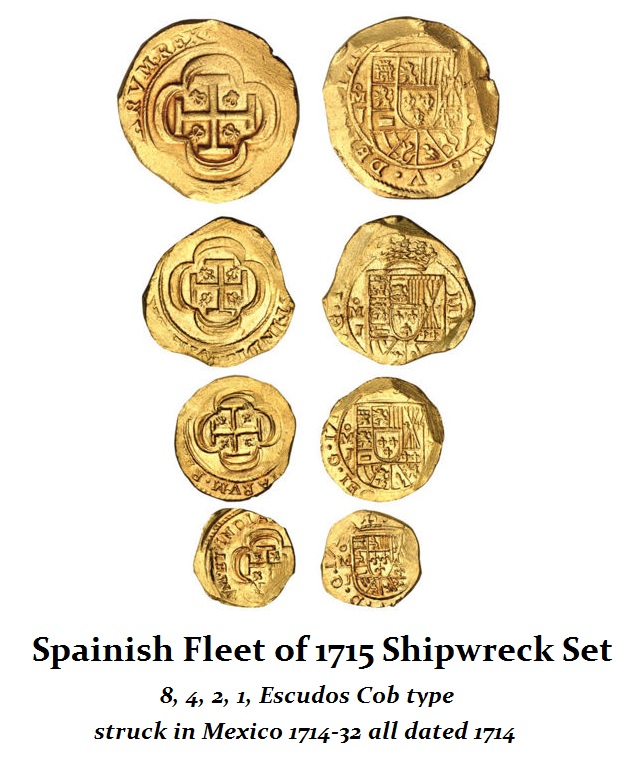
Spain could not wait to spend its money coming in on the next fleet. When fleets sank in hurricanes, they could not pay their debts. Spain became a serial defaulter moving from the richest nation in Europe to a 3rd world status. They defaulted in 1557, 1570, 1575, 1596, 1607, and 1647.

So this latest excuse is just absurd. They are unwilling to look at their old theories so they spin wild tales to justify being wrong. Trump is by no means forcing metals to decline so the US government can buy it and issue gold-backed bonds like Nevada. Assemblyman Jim Marchant announced the Nevada Gold and Silver Enabling Act on July 2, 2018. He claimed that gold-backed bonds would avert financial armageddon, retire debt, ensure all creditors are paid in full in nominal terms and begin the process of gold circulation. Here is the argument they use:

“The Federal Reserve has a policy of two percent per annum debasement of the US dollar. Other central banks around the world have similar targets, for example, both the Bank of England and the European Central Bank set their targets at two percent. Creditors should prefer gold assets over dollar-, pound, and euro-denominated assets because gold is not subject to this debasement. The 10-year Treasury yields 2.9% as I write this. Assuming that the Fed hits its target without overshooting it, then the central bank is robbing the investor of most of their return.”

The entire argument assumes that somehow a gold-backed bond will eliminate inflation. Even if we assumed that was correct, you can see what this type of policy would create by creating a money supply that was fixed – it is called deflation. This is what has driven unemployment among the youth in Southern Europe to 60%. Germany has been focused on eliminating inflation because of their experience during the 1920s. This policy of austerity cripples economic growth and will only lead to revolution and civil unrest.
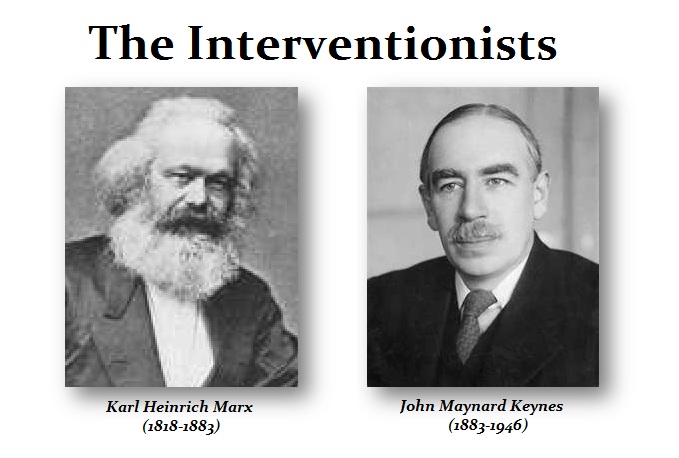
Gold-backed debt has existed for hundreds of years. There was still the business cycle, periods of inflation and deflation, as well as revolutions. This theory that someone a gold-backed bond will eliminate the business cycle is actually the same goal of Karl Marx and John Maynard Keynes. Marx proposed Communism and the elimination of all private tangible wealth would produce the perfect world. That failed. Keynes argued that the government could manage the economy by focusing on demand and raise or lower interest rates to also eliminate the business cycle. That failed and even Paul Volcker came out and called it the Rediscovery of the Business Cycle back in 1978.
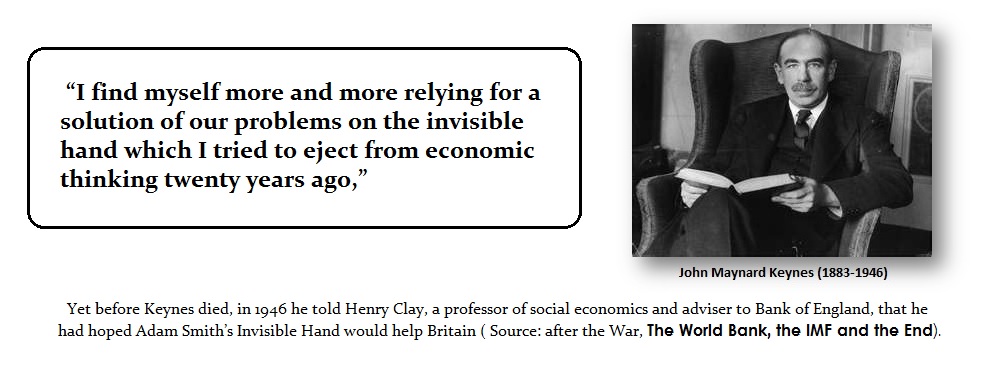
Even Keynes was honest enough to comment before he died that he had been wrong. Smith’s observation of how the economy works remains the only answer. What all of these theories have in common is the assumption that to create money with a tangible value and eliminate the business cycle, the answer lies in manipulating DEMAND side economics rather than the SUPPLY side. In other words, we eliminate all tangible assets or we manipulate interest rates and the supply of money in hopes of influencing the DEMAND of the people.
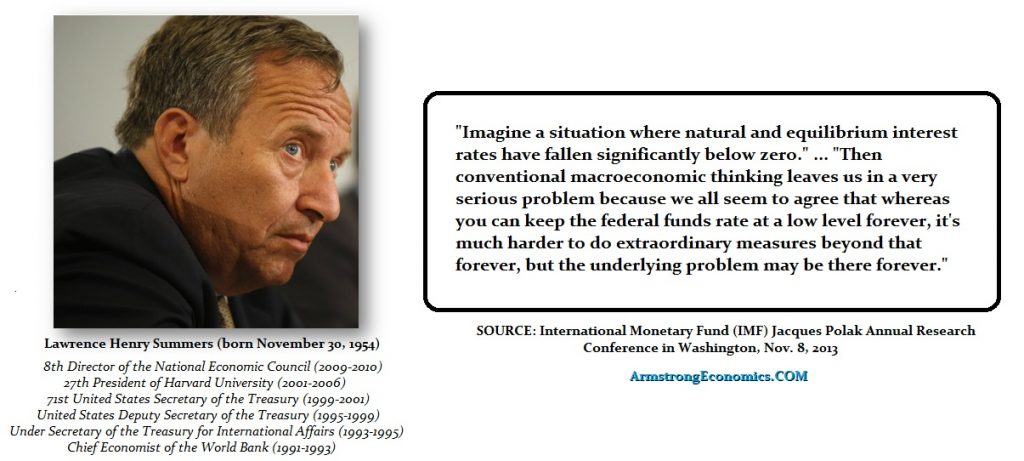
 

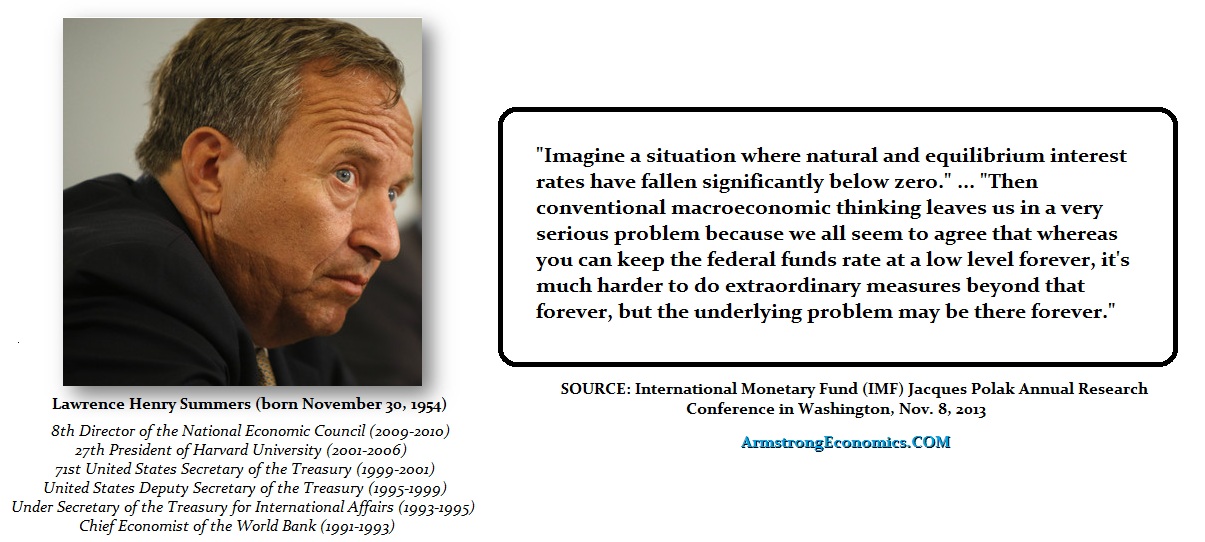
Gold-backed bonds will no more eliminate the business cycle than any other attempt to date. Not even Larry Summer’s NEGATIVE INTEREST rate policy has been successful in stimulating the economy by compelling people to spend rather than save. His theory has merely created the next crisis as pension funds, who needed 8% interest to remain solvent, cannot function with historically low rates of interest and will default bringing socialism into crisis.

You must always ask: What is the end goal?  It is always the same – ELIMINATE THE BUSINESS CYCLE.

First Corporate Bankruptcy in China & How the Central Bank is Addressing the Problem


The the first debt bankruptcy of a major corporation in China has now taken place here on schedule in 2018. This first bankruptcy of a major corporation was due to over-indebtedness which occurred in the current year. The South China Morning Post reported that coal company Wintime Energy has been forced to cease operations after failing to repay a central government bond. The company had recently accumulated a debt of 72.2 billion yuan (about US$10.8 billion). The company’s debt had quadrupled over the past five years.
This failure is attributed to difficulties at Wintime Energy with respect to a change in corporate governance strategy that was announced by the central government in Beijing back in 2016. Since then, the authorities have been trying to prevent excessive borrowing by the corporations fearing a debt crisis was building. As a direct result, the previous excessing lending in the shadow banking market came to a virtual standstill. Previously, the government had actively encouraged companies to raise fresh capital by issuing corporate bonds. The Chinese bond market doubled in size within a few years going into 2016. Today, there is about $12 trillion US dollars outstanding, which makes Chinese corporate debt the third largest bond market in the world. This certainly casts a cloud over all the forecasts that have claimed the death of the dollar and the rise of the yuan.

With the encouragement of the government to sure-up capital, a massive borrowing process became increasingly out of control without the management skills necessary to understand that there is such a thing as a business cycle. Additionally, the buyers of corporate debt lacked information and experience with debt. There was precious little credit analysis experience in China, which is still maturing, and local rating agencies also did not have the competence to understand debt and currency fluctuations particularly when debt is issued in dollars. Consequently, many fear that there was virtually no due diligence until the government allowed bankruptcy for the first time in 2014 and many see this as a parallel for the crisis in bad debts held by Italian banks that also lacked proper analysis of their books.

China’s economic growth has been exploding led by corporate expansion and debt accumulation. This is the concern over the next two years and how the economic engine of China can experience its first real recession moving into the bottom of the Economic Confidence Model in 2020. The Central Bank has been injecting liquidity into the markets on a large scale. The government is thereby injecting cash, but this will still need to be repaid in one year at about 3.3% interest rate. The Central Bank is dealing with the issue directly unlike that central banks in the West who indirectly attempted the stimulus through banks just hoping they would lend out the funds, which they did not. Medium-term notes were first offered directly by the Central Bank to the country’s companies and commercial banks back in 2014. The collateral used is securities pledged by the borrowers. I have pointed out that this is the PROPER way to manage a central bank. The Federal Reserve was originally set up to “stimulate” through buying corporate paper DIRECTLY. That structure was altered by Congress whereby the Fed was directed to buy US government debt exclusively. Therefore, the Fed bought US government bonds hoping the money would find its way into the economy. That effort failed. The Central Bank of China is actually managing the crisis in the proper manner and this will not prevent the downturn, but it will moderate the damage

Has 95 become the New 65 for Retirement?


One of the more interesting downsides of the collapse in socialism is the impact upon the elderly. The data now shows that since the 2007-2009 recession, about twice as many elderly are still working. When interest rates decline, income from savings collapsed. So while the theory was to lower interest rates to “stimulate” the economy, the central banks have discovered a dark hidden secret — demand-side economics has utterly failed. Saving for retirement has failed. Your house has failed to provide a savings account and states are broke so they keep raising property taxes. Government pensions keep demanding higher taxes to exploit the public so government unions survive. In many states, the promises handed to union workers are bankrupting everything as one of the main benefits was free healthcare for life for the members and their spouses.

Today, a record number of folks aged 85 and older are still working. Most are just trying to supplement losses from tax increases and decreased interest income. States make no accommodation for people when they retire. The property taxes keep rising and that is forcing many to sell their homes even in down markets to try to make ends meet. The youth are finding that their degrees are worthless. More than 60% cannot find employment in what they have worked to get a degree in these days. Even those with a law degree are often waiting on tables. When I was looking for office space in Florida, nearly 100% of the vacant spaces were former law firms. So 85 may be the new 65, but it appears that might be 95. Justice Kennedy is 81 so even he did not retire at 65. As the Washington Post reported, some 255,000 Americans who are 85 years old or older were working over the past 12 months.

Our Journey Through Life


QUESTION:  Hello Martin. Over the years I have read so much of your adventurers (if you could call them that =) and some of the great masters you
quote from time to time.

I know you have done a massive amount of research on your own. I was wondering about some of the unknown people in your early days. Like when you first started programming on wall street. People who shared things with you that gave incite… or steered you in the right directions knowledge wise. People who keyed you in on trading, markets and so forth.

It would be interesting to hear if you could share.

Alright, Nice evening to you sir.

N

ANSWER:  Life is a math equation. Life = Sum(x + y + z). Everything we do accumulates and the sum forges our character-defining who we are. Experience = knowledge. Nobody is ever born knowing everything. We learn ONLY from our mistakes so cherish them well for they are what make us who we are. When there is nothing left to learn about this world, then it is time to leave. Never be afraid to question for unless we have questions, we will never arrive at answers.

People often ask me why I am not bitter for the injustices I have fought against in New York. They have been absorbed and contribute to my understanding of life. In our natural habitat, we tend to judge others by ourselves. We need to be confronted by the opposite to understand its very nature. I have seen the corruption of the Judicial system from the inside out and am so glad I did not become a lawyer as my father wanted. You learn that there are truly evil people who know what they do is wrong, so they try to oppress and even kill those who would expose them. They deny all wrong-doing and pretend to be so upright, but someone who really is upright never pretends to be because they do not have to. The fact that they must act in this manner demonstrates that they themselves know they are evil or they would stand in the light of day. Just mind-blowing how people can act so corruptly and then sleep at night. There was one kid they were charging with conspiracy for murder because someone asked him where a person was he pointed to him and they killed him. The wanted the death penalty. The prosecutor refused because the kid had no priors and was 23. He quit and the next prosecutor had no problem trying to kill this kid for a conspiracy all because they wanted to win the first death penalty case in New York City regardless of who it was they would kill. Some of the evilest people in the world go to the Justice Department.

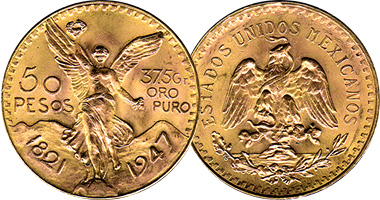
My father pushed me into computers because I was probably a natural trader which he disapproved of and I decided I did not want to become a lawyer. I was also not motivated by the education system. I suppose I began to see that those teaching did not have actual experience in what they taught. The ancient Romans had the best school system. You have the basic reading, writing, math, as well as history. However, you would decide what you wanted to do in life and left what would be called grade school to seek an apprenticeship. My father was going to take us to Europe for the summer, I believe, in 1964. I wanted to earn some money for myself and got a job in a coin/bullion store. Yes, you could buy gold before 1975 in coin form. There were countries who produced restrikes to be able to sell gold. Hungary issued coins data 1908 and Mexico kept the date 1947 on 50 pesos. Gold coins were legal for “collectors” as long as they were dated 1947 or earlier.

That was my apprenticeship for I began to see markets and observed the daily fluctuations. Silver was rising in price and President Kenney signed in 1963 the Executive Order 11110 on June 4th, 1963 to remove silver from the coins starting in 1965 before he was assassinated. Just about every country soon followed by 1965-1966. They two years later is when Bretton Woods began to crack in 1968 and a two-tier market in gold began – private and official. Gold begab to trade in London. It didn’t trade in the USA until 1975.

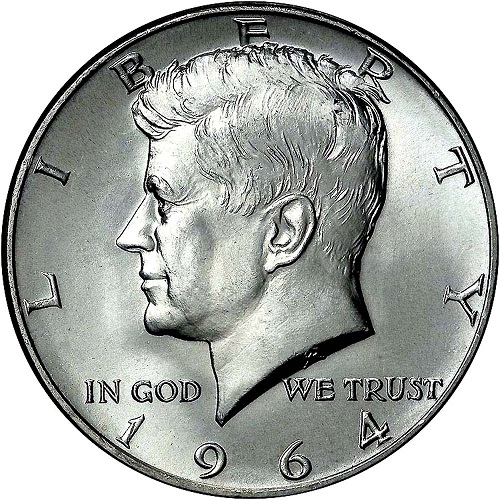
Going to Europe, we traveled the entire summer driving from Sweden down to Naples to visit Pompeii. I became the navigator but it also was a quick introduction to foreign exchange. We would have to exchange money at each border. I have a few 1964 Kennedy half-dollars. Whenever I would pull one out, whatever the bill was if $10 to $25, they just wanted that coin instead. It taught me early lessons about arbitrage. I remember telling my father we should have come to Europe with a bag of them and we would have paid for everything.

Every door we open in life leads to another. I have never been one to be afraid of trying something new. Failure is how we learn and success is our reward. Had I not gotten a job in that coin store where I bought my first Roman coin for $10, I would not be here today writing this. That is what I mean that we are the sum of our experiences. I was in history class and the high school professor brought in an old film The Toast of New York. It was a film about the Panic of 1869 and the attempt of Jim Fisk to corner the gold market. In this clip, you will see what sparked my imagination and sense of curiosity given my exposure to reality by working. Jim Fisk is at the ticker-tape, and he then turns to his girlfriend and quotes gold at $162. Now I knew from working that gold was $35. Suddenly, I was confronted with an anomaly. I was being taught that everything was linear. So how was it possible that gold could be $162 in 1869 and $35 today in the 1960s?

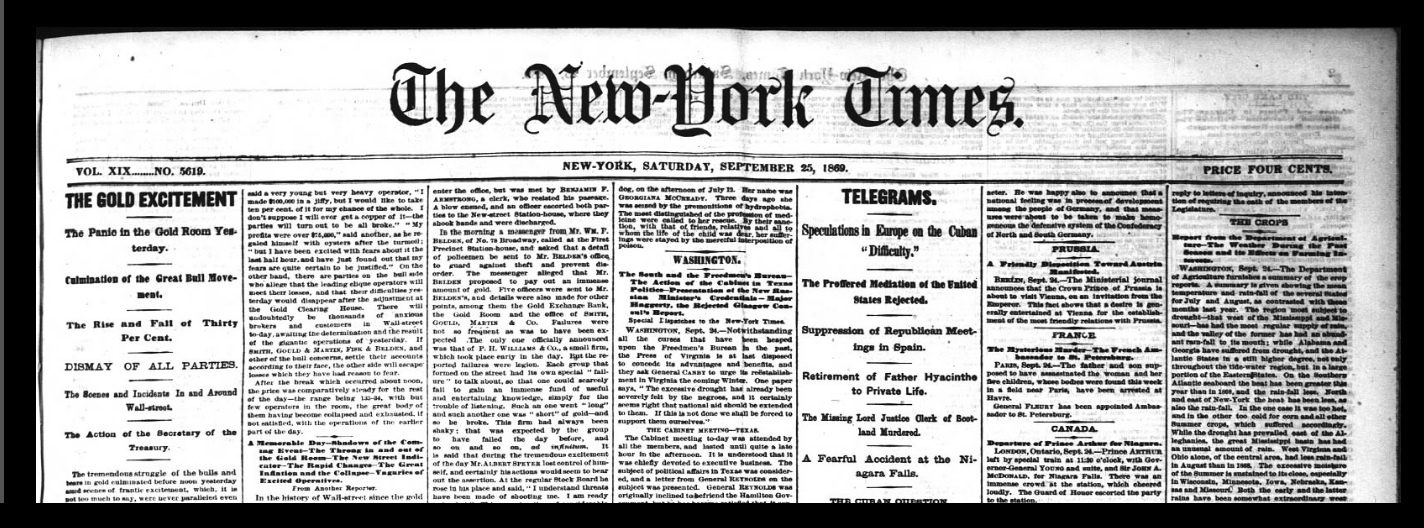
At first, I assumed it was just a movie. But it bothered me. There was a QUESTION in the back of my mind that would not be answered. I went to the library and looked up the price of gold in the microfilm copies of The New York Times. There it was, the quote, $162. It was real. It profoundly shook my belief system to the very foundation.

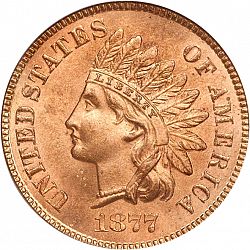
Countless questions were running around my mind like a pack of wild animals being chased. I began to ask questions in economics class. The answer was even more disturbing. Well, there was this thing that they once called the business cycle, but the government has eradicated that I was told.  It was a real bull market in everything going into 1966. Rare coins peaked. I remember an 1877 Indian Head Penny was sold for $700. It crashed by 50% in months and never saw that price again for at least a decade. Pennies were the hot thing back then. I was buying and selling and it taught me how to trade. I made so much money my father convinced me to invest in mutual funds. I did, and then the stock market collapsed and the mutual fund dropped from $54 to about $5. I asked my father if this was the way conservative people made money? My speculating in commodities was much more profitable than stocks I knew nothing about at that time.

I began to notice that there were certain things that were hot and others that were cold. The pennies were soaring but not ancient coins or many other denominations of American coins. Collectibles market crashed with the 1966 stock market crash as did mutual funds. The Crash of 1966 was followed by another in 1968 when the two-tier market in gold began with the crack in Britton Woods. The real estate crashed in 1970 as well. But even more confounding, gold actually fell BELOW $35 in 1970 – the old Bretton Woods fixed rate that everyone assume would hold.

There was no mentor back then. You had to learn from observation. Bretton Woods was collapsing and nobody knew what would even happen no less forecast what would come by 1971. I was finished with high school, but the nagging questions only multiplied. Clearly, there was some sort of a cycle. It did not matter if it was stocks, bonds, coins, collectibles, foreign exchange, or real estate. It was obvious that everything went through the same boom and bust cycle.

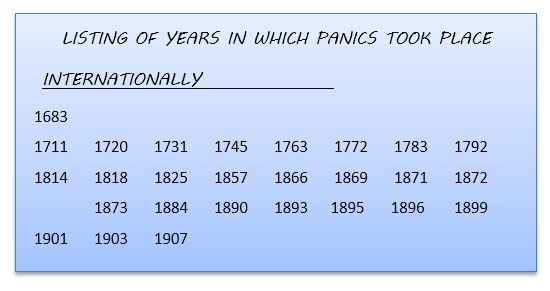
I was doing my own research now in the Firestone Library at Princeton University. I was searching old newspapers, looking for previous prices of booms and busts that I had been confronted with in gold. That’s when I stumbled upon an article that listed previous panics between 1683 and 1907. This was an old article published even before the 1929 Great Depression. That is why the list stopped with 1907. It was even pre-World War I.


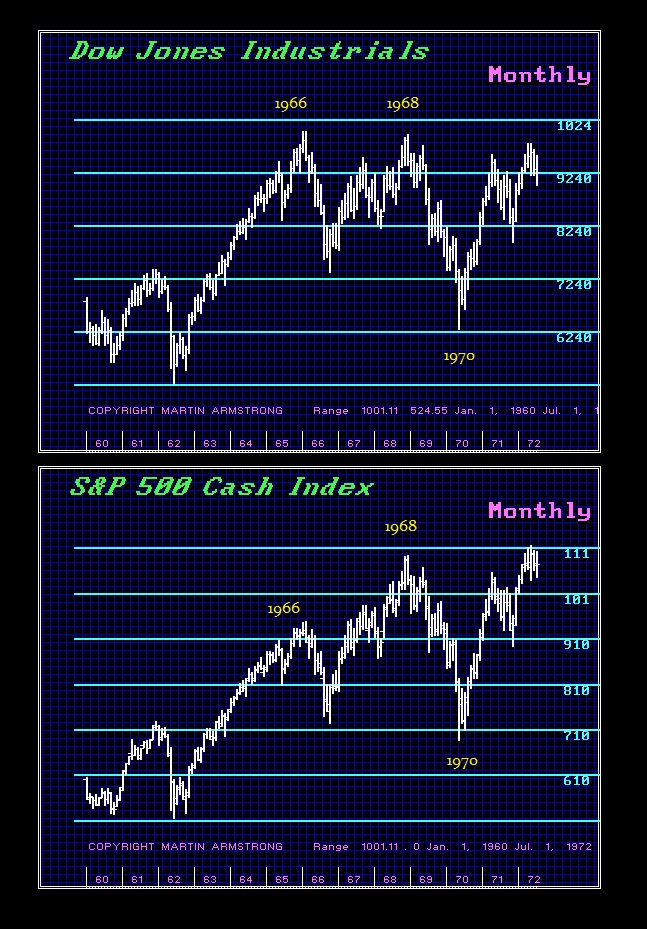
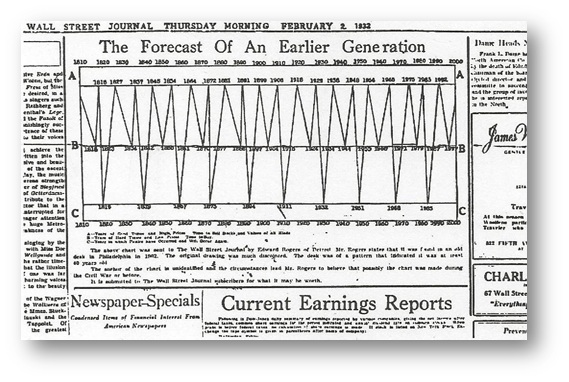
That’s when I also stumbled upon this illustration of a business cycle published on February 2nd, 1932 in The Wall Street Journal. I took the list I found that covered a span of 224 years and I divided it by the 26 events which yielded the 8.6-year average. I began to test through history which I knew well. The rest is history itself as they say (see wave structure). So no, there was nobody to talk to back then. You had to learn everything on your own. It was not until the Crash of 1974 that Paul Volcker was inspired to call it “The Rediscovery of the Business Cycle” because they did not even teach the existence of such a cycle. It was supposed to have been conquered by the government with Keynesianism. It was an age of rediscovery indeed. There was no place to go. Gold futures began in 1975, bonds 1977 and S&P 500 futures in 1985. There were no trading clubs. I was on my own.

China Venture Capital Raising now Exceed the USA


Believe it or not, Chinese start-ups have for the first time collected more venture capital than newly established US companies in the past quarter. This is reported by the South China Morning Post . Almost half (47%) of the venture capital used worldwide was spent on start-ups from the Middle Kingdom. The American start-ups were only just over a third (35%). This is part of the entire real reason why China will be surpassing the United States and take the title Financial Capital of the World. 

We will be releasing a printed report on this subject covering all the topics from politics to economic

Why CONFIDENCE is the Backbone of the New Monetary System


QUESTION: Mr. Armstrong; I found your recent article on inflation and contagions fascinating. Am I correct in summing it up that today because currencies are not commodity based, they rise and fall on anticipation of political events whereas under precious metals contagions took place by one country debasing compared to another?

Thank you for your reply;

EG

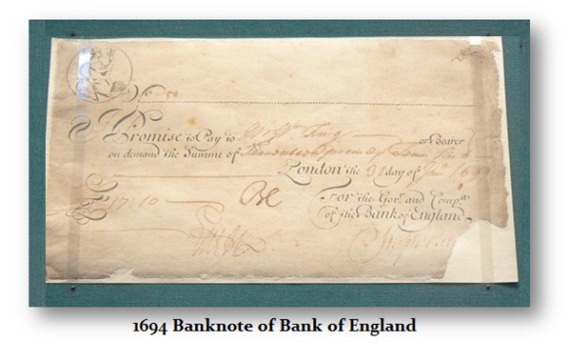
ANSWER: Correct. The monetary system has been altered far more than people understand. The question of money supply and inflation was philosophically established with Gresham’s Law. Gresham worked in Amsterdam and witnessed the response to the debasement of Henry VIII in England. His proposition that bad money drove out good money from circulation was one important observation. As countries would debase, people would hoard the old coinage, and actually, the money supply would shrink. It then requires a greater production of debased coinage to maintain an adequate money supply. This results in more debasement and unfolds in what people call hyperinflation. Yet, it is much more than simply just producing debased coinage or in modern time printing more money.

In addition to this observation, what is overlooked is frankly the driving forces behind the foreign exchange markets during the precious metal based monetary system and the modern paper monetary system (soon to be electronic based monetary system). Under a precious metal system, the coinage of one nation is compared and exchanged with others based entirely on its monetary value based on metal content. If England was at war with France, this had zero impact upon the value of their coinage as long as there was no debasement. Once debasement began, then the exchange rate between one currency and another changed.

Consequently, this influence of anticipating future value based upon possible political decisions was not readily dominant and the coins of one nation were compared entirely on their metal content rather than political events. When money began to appear as paper currency, this altered the monetary system for then the value of that currency was dependent upon the “confidence” of the people in that currency. Bank runs would emerge when people lost confidence in that establishment surviving.

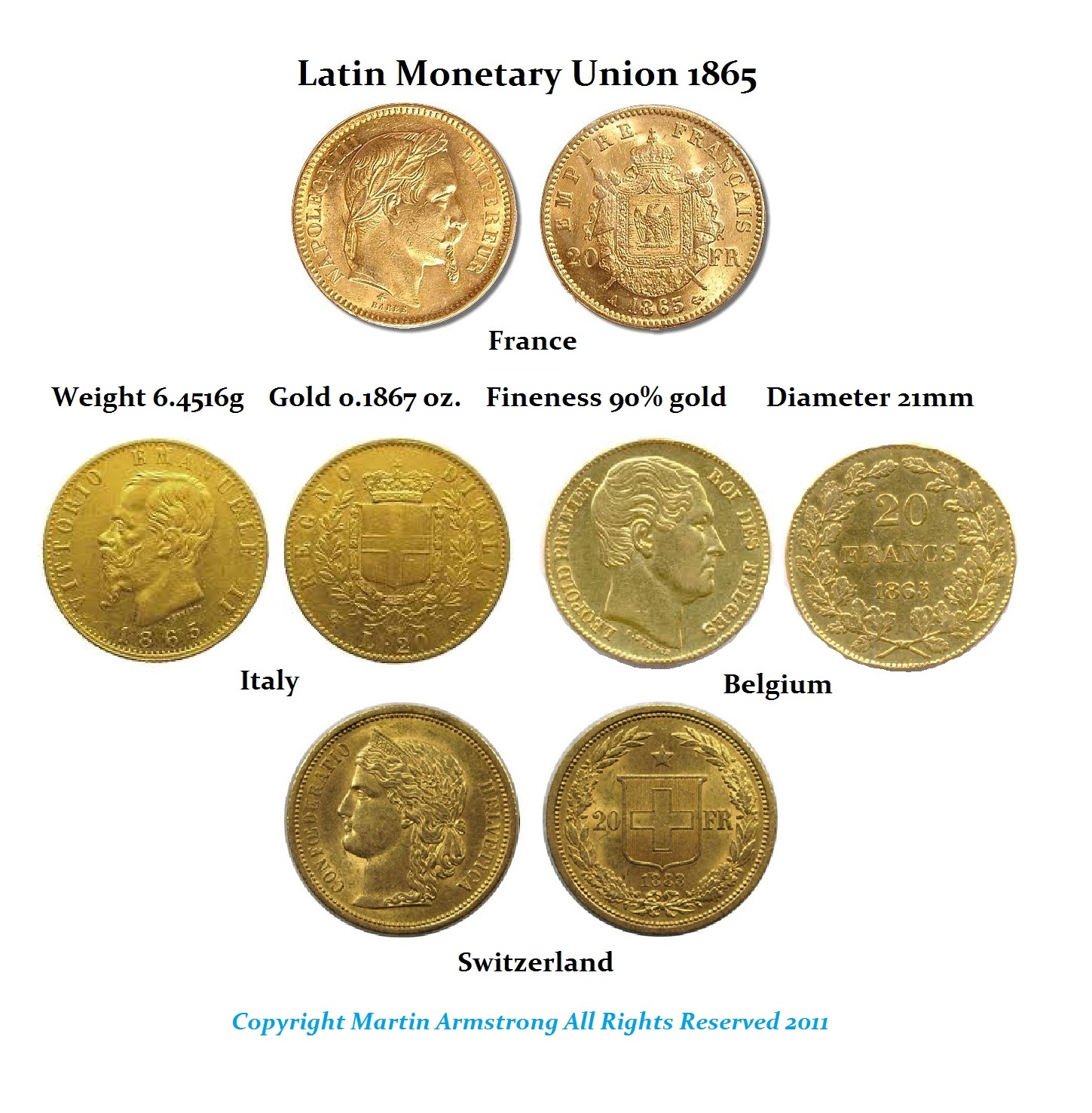
The Latin Monetary Union was an attempt to create a gold standard whereby member nations issued a standard coin of equal weight and metal content as to allow them to be interchangeable. Therefore, 20 French francs was equal to 20 Italian lire, 20 Belgian francs or 20 Swiss francs. The problem with commodity based monetary systems has always been that domestic economic trends in one country are exported as contagion to others. For example, the Spanish discovery of South American led to a massive influx of gold and silver coins which then created a contagion of inflation (lowering the purchasing value of coinage) throughout Europe.

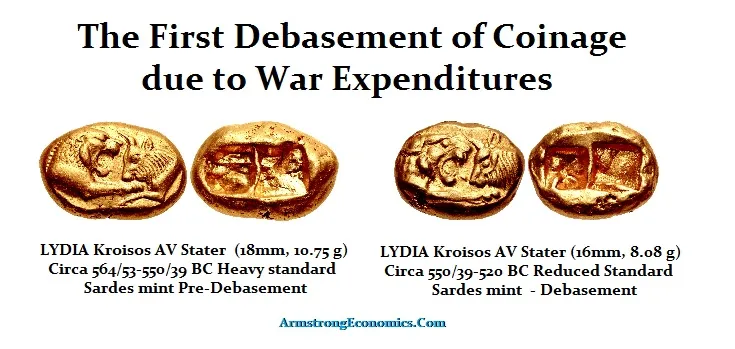
The waves of gold discoveries during the 19th century also created huge instabilities in the business cycle resulting also in waves of inflation. This is what Kondratieff studied to come up with his long wave theory. War has always resulted in waves of inflation as governments have had to increase the money supply to pay for these expenses. The US national debt exploded by $1 trillion for the Iraq war. We find from the very beginning of coinage in Lydia, its war against Cyrus the Great of Persia also resulted in a debasement of the very first coinage.

There are clearly established driving forces behind the monetary systems rise and fall. What we must come to understand is that a commodity based monetary system NEVER produced a perfect world where money was tangible and worth something. There were always waves of inflation based upon the discovery of new metal deposits. If we had a money supply that could NEVER change, then you would create deflation as the population grew. If there were only 10 gold coins and a population of 5 people, then everyone could have two coins, but one will inevitably have 4 because they invented something others wanted. Increase the population to 10, then the value of the 10 coins will rise in value meaning asset values will decline creating deflation.


Therefore, a tangible monetary system has never eliminated the business cycle and it will never bring “stability” as people preach. What has taken place is that by moving to a paper monetary system and a unit of account, which is increasingly more electronic (since paper money is less than 5% of commerce), the “confidence” factor that was once predicated upon the metal content has migrated to political events and thus we anticipate the future possibilities in the current value of any currency.


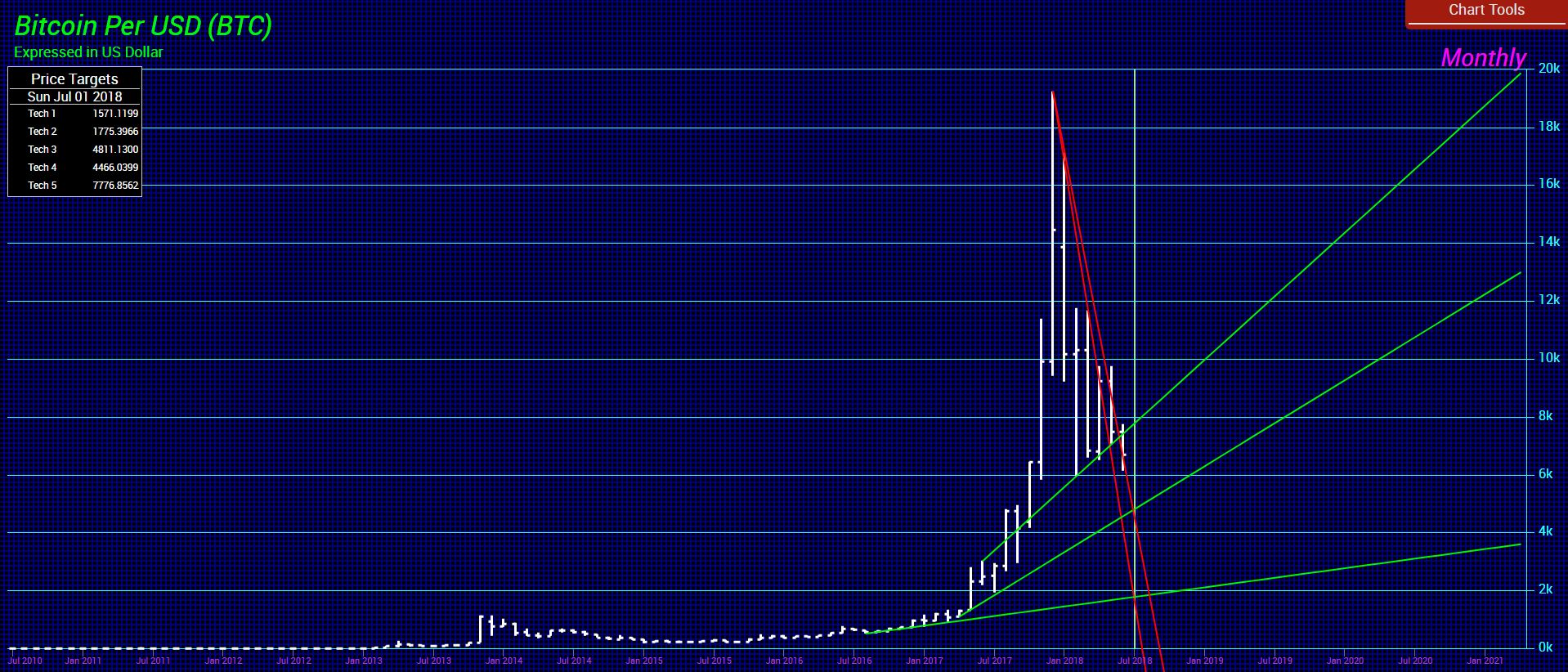
Here is a chart of Bitcoin. Once again, we do not see an instrument which is immune to the business cycle. It does not matter if we are dealing with coins, paper money, or electronic entries. Everything will still be subject to the business cycle. There will NEVER be any such exception. Moving forward, the only way to isolate contagions to some degree will be to create a basket of currencies as the international unit of account. It will still rise and fall in value. It cannot be permanently fixed.


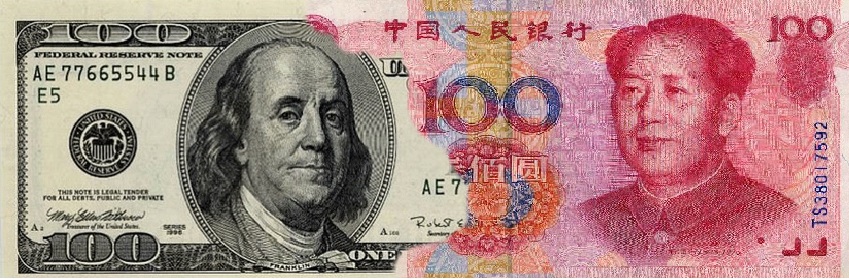
Therefore, while our computer forecasts that China will emerge as the Financial Capital of the World after 2032, those who hate the dollar and keep calling for its demise fail to understand that the more critical element that will make the China yuan a major global currency is when the “confidence” level rises among big capital and they feel “comfortable” parking their money in Chinese bonds, assets, etc. China is moving in that direction slowly. They will eventually allow their currency to be freely traded and currency controls will vanish. As that dawns, then we will see the yuan rise in global respect. They are moving to achieve that position. It just takes time.

We MUST comprehend that contagions have existed in ancient times to modern times regardless of the monetary system be it precious metals, paper, or electronic. We are all connected and the sooner we come to grips with that understanding, the sooner we can move forward in our evolution of money. Even the creation of money by banks through lending is driven by the business cycle

Boston University Graduate Alexandria Ocasio-Cortez Explains “Economics”…


According to DNC Chairman Tom Perez, Ms. Alexandria Ocasio-Cortez is “the future of the Democrat party.”  Ms. Ocasio-Cortez has a bachelors degree in “economics” and “international relations” from Boston University.

Born in 1989, Ms. Ocasio-Cortez is a millennial and a self-described democrat socialist.  In this interview segment she discusses a millennials’ view of economics:

On the dynamic current economy, 3.8% unemployment and capitalism providing expanded economic opportunity:

“unemployment is low because everyone has two jobs.”  “Unemployment is low because everyone is working 60, 70, 80, hours a week and can barely feed their kids”… “capitalism has not always existed in this world, and it will not always exist in this world.”

…Some people… and such, have jobs… it’s hyper-capitalism, that’s unemployment. Because it’s all like, you know, so unfair and stuff!

This is a millennial with a four-year degree in economics and international relations from Boston University; who won a primary race for congress and could very likely be heading to Washington DC as a political representative of New York.

Let that sink in.

Documenting History with Coins


QUESTION: Dear Martin,
I have been researching facts about history and there is strong evidence that what we were taught in school doesn’t fit with the reality. As you have a very vast coin collection, which is part of your research, how can you be sure of the timeline about those coins? I remember from your blog statements that many years are missing in the Japanese coinage and a very sudden drop in Roman silver minted coins. Greek, Roman and many other coins do not have any dates on them as we know it now. Is there any slight chance that years have been added to history by academia to fit their narrative?
Regards, Patrick.

ANSWER: Greek coins are not dated. Most have been determined based upon the archaeological discoveries. Therefore, Greek coins cannot be specifically dated to an individual year. What can be determined is the sequence of rulers and we can determine date approximations often from contemporary writers. The lack of coins in Japan for nearly 600 years simply means that there is no Japanese numismatic record. However, foreign coins are discovered in Japan. Chinese coins were used because they were not devalued with each new emperor as was the case in Japan. There have even been Roman coins discovered in Japan confirming there must have been some trade connection albeit indirect.

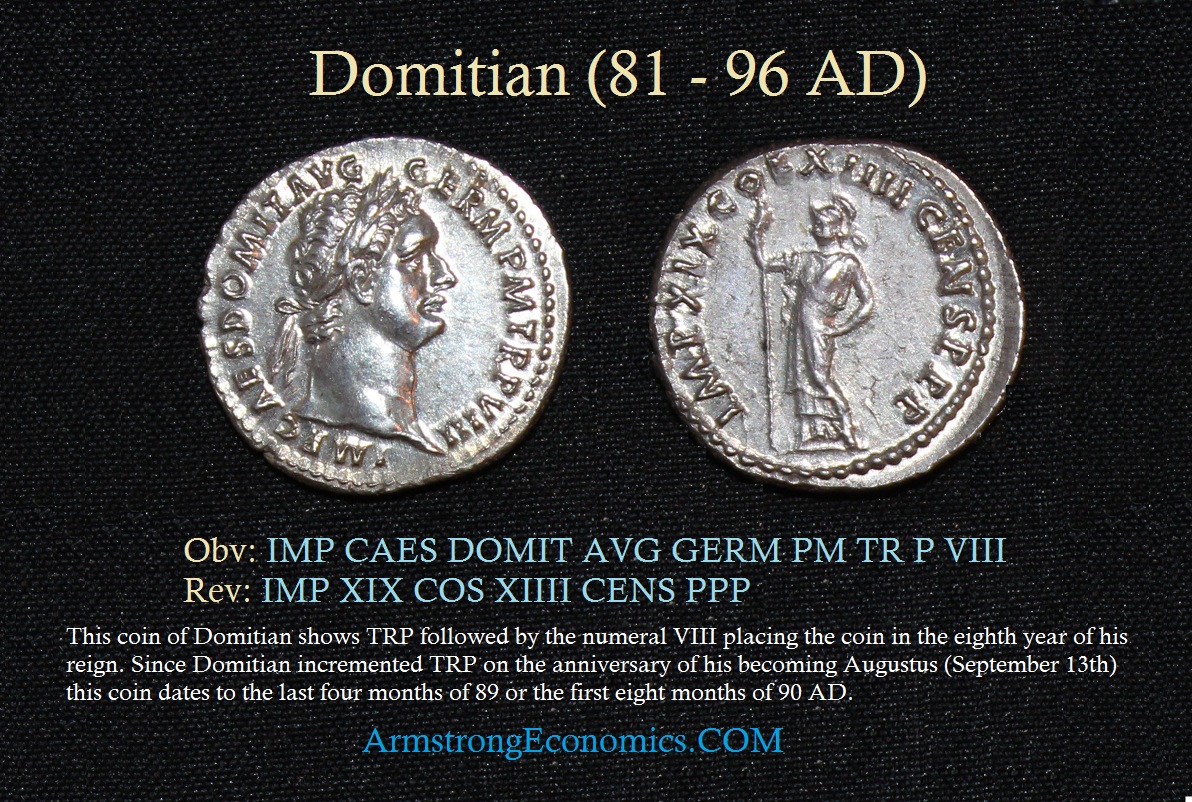
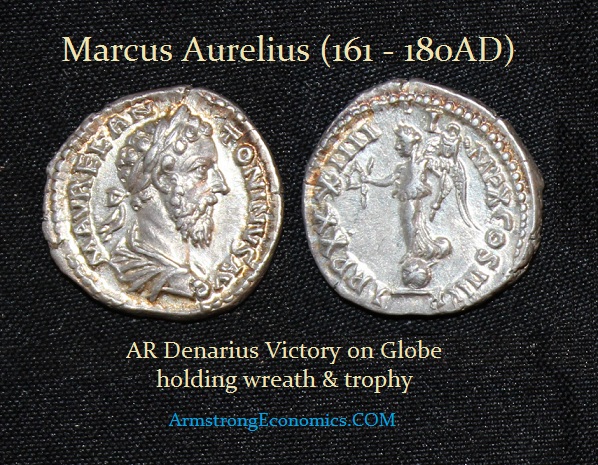
The Roman coinage is easy to date because Rome had overthrown the king and began the Republic during the 8th century BC. Therefore, an emperor was never portrayed as a “king” but maintained the pretense of being elected like our politicians today – the curse of a Republic. On the obverse of this Roman coin of Domitian (81-96AD), we see TR P VIII meaning this was the eight year of his reign since his Tribunicia Potestate – The Tribunician power, which had to be renewed each year as a pretence of being elected by the Senate, the same structure the EU today uses to appoint the head of the EU who never stands for public election either. Domitian had served as consul with his brother Titus before he succeeded him as emperor following his death. Therefore, the reserve of the coin shows he was also the Consul serving for the XIIII (14th) time. Again, these are one-year terms.

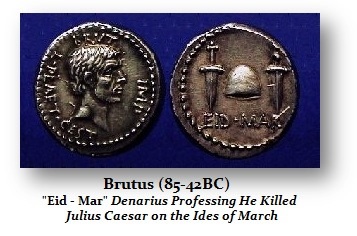
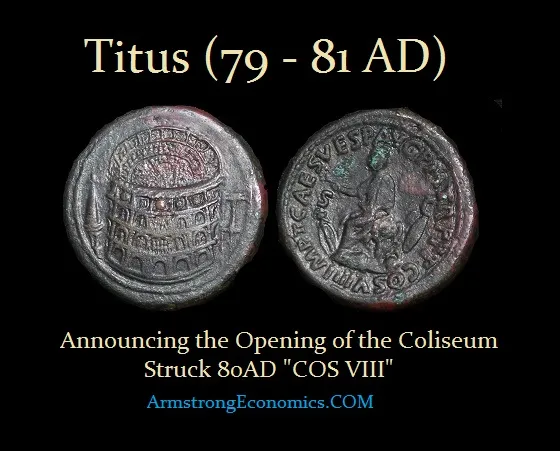
Here we have a coin of Brutus which boasts that he killed Julius Caesar on the Ides of March (15th) in 44 BC. We also have a coin of Titus announcing the opening of the Coliseum. The Romans used the reverse side of their coins often as a newspaper announcing events and victories. The Greeks were interested in art. They competed for design, but they did not use the coins as a means of propaganda.

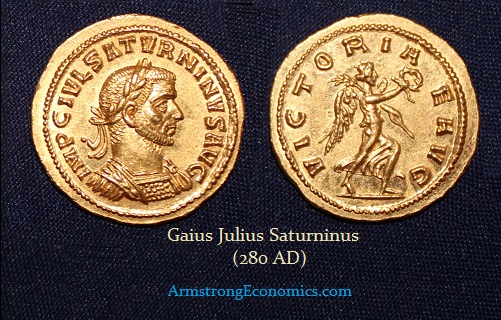
This coin of Saturninus is probably one of the most important Roman coins ever discovered. The Latin work Historia Augusta was written during the reigns of Diocletian and Constantine I in the late 3rd century AD. The work recorded the lives of emperors and usurpers in Rome before Diocletian. It was a collection of thirty biographies. Of course, some academics pronounced it was a fake as they did with Homer because it listed people they never heard of during the collapse of the Roman Empire during the Monetary Crisis of the 3rd century. They challenged both the authorship of the work as well as its date ever since Hermann Dessau (1856-1931) whose claim to fame as a historian came in 1889 when he rejected both the date and the authorship the manuscript. He argued there were major problems that include the nature of the sources and how much of the content he claimed was pure fiction. He was proven completely wrong when this coin and one other coin was discovered in Egypt. Saturninus was one of the names of a usurper he claimed never existed.

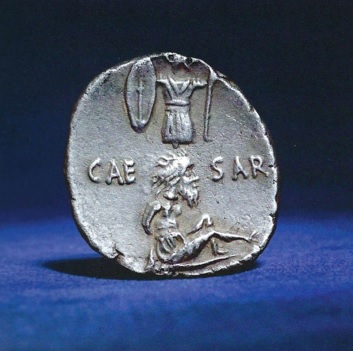
Here is a denarius of Julius Caesar showing a captive at the foot of a trophy. Note that the man has wild hair and a beard. It is believed that this coin represented the capture of Vercingetorix, the leader of the Gauls. Of course, the writings of Caesar and his conquest of Gaul have survived.

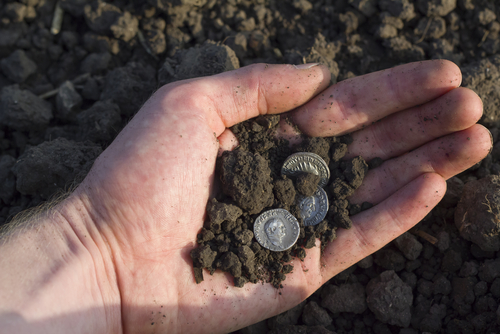
Coins have in fact called into question recorded history. But academics far too often defend old interpretations and refuse to revise previous assumptions. For example, the very date that Vesuvius erupted burying Pompeii is by no means definitive although you will find August 24th, 79 AD as the date carved in stone. This date has been interpreted from a letter to the historian Tacitus some 25 years following the event. This was his old friend Pliny the Younger who provided an eye-witness account of the eruption. He states that the eruption took place on Nonum Kal September (the ninth day before the Kalends of September), which has been calculated as August 24th. However, Tacitus was translated during the 16th Century which remains questionable on many points. The ancient historian Cassius Dio directly states that the disaster took place “towards the end of the harvesting season” which would be in October, not August.

The excavation of Pompeii revealed that the stores were selling fruit that would not have been seasonal for August. There were amphoras filled with wine after the harvest which had been sealed and ready for transportation and sale. Many of the people discovered were wearing warm clothing. That has been dismissed as they just wanted to cover themselves. But during excavations of Pompeii’s “House of the Gold Bracelet” in 1974, 180 silver and 40 gold coins were discovered with the bodies of a group of victims. The coins were buried with the people attesting to their link with the eruption. The coins were never cataloged until 2006. There was one coin that confirmed that the date for the eruption of Pompeii was incorrect and that the account of Cassio Dio was closer to fact than Tacitus.

Titus was emperor at the time of the eruption and he was remembered for the relief efforts. Titus’ administration was marked not by military or political conflicts, but by disasters. His first disaster was the eruption of Vesuvius. The eruption destroyed the cities and resort communities around the Bay of Naples in addition to Pompeii and Herculaneum which were buried under many feet of stone, ash, and lava. Titus appointed two ex-consuls to organize and coordinate the relief effort. He personally donated large amounts of money for the relief effort and he even personally toured the region the following year like presidents do today after such disasters (human nature never changes).

A single silver denarius was discovered among the 180 silver coins in 1974. When it was cataloged, it overturned history and has ever since been buried again in the Naples Museum rather than rewrite the history books. Titus’ father Vespasian died on June 24th, 79 AD. Therefore, any coin of Titus as emperor would have to have the very first recording of his power “IMP VIIII” or 8th Imperator, which was a title that meant ‘leader of the army’ to the Romans. The award was generally given at this point in history for a particularly important victory that was celebrated. In some cases, these subsequent awards, denoted by a numeral following IMP, which also allows dating of coins to a very short period.

The coin discovered in Pompeii had the legend “IMP XV,” which was granted to Titus for the war in Britannia where he sent Gnaeus Julius Agricola who pushed further into Caledonia and managed to establish several forts there as recorded by Tacitus (Agricola 22). Therefore, Titus received this title of Imperator for the fifteenth time for this event, according to Cassius Dio (Roman History LXVI.20). This took place we know in September 79 AD about 3 months after becoming emperor following his father’s death. Obviously, if any coin was discovered in the ruins of Pompeii with “IMP XV” in its legend, then this provides absolute proof that the date for Vesuvius of August 24th, 79 AD cannot be correct.

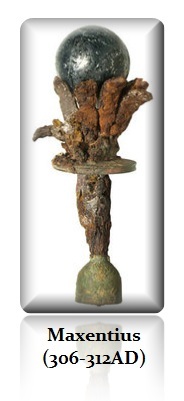
There are plenty of discoveries that have challenged the view of history. Roman swords have been discovered in Newfoundland for example. The Romans knew the world was round and NOT flat. They pictured a world that is round on countless coins. The one scepter that has survived from any Roman Emperor, Maxentius (306-312 AD), has a globe on it symbolizing that the Emperor ruled the entire world, which was a nice political boast.

Strangely enough, the coins have documented history even when academics choose to try to ignore them rather than admitting they are wrong. It just seems that people do not want to ever admit making a mistake. The academics are no different than politicians, and even the Catholic Church tried to pretend there were no allegations that were valid against some priests. The problem with this posture is that as this policy is supported, they undermine the credibility of everyone in that profession. Academics are no exception. Just revise history and get on with it.

Turkey the Poster Child of Emerging Market Crisis


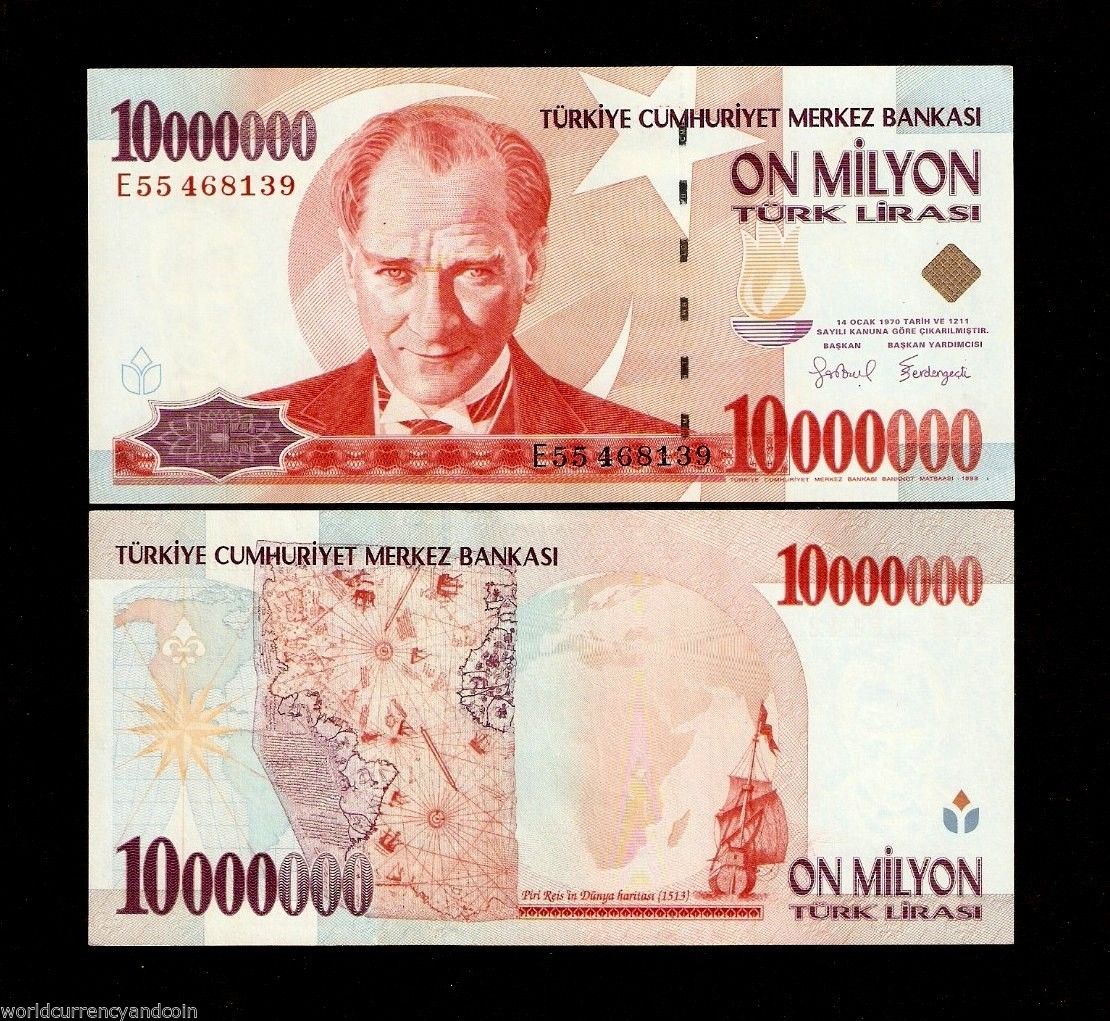
During the 1980s, I was called in to create a hedge for a bank against the Turkish lira which nobody made a market on. I had to create a synthetic hedge for the currency was moving into what became hyperinflation.  The Turkish lira has begun to fall ever since Recep Tayyip Erdoğan became the 12th president of Turkey on August 28th, 2014. We can see from the chart that the last 4 years has produced nothing but a US dollar rally. The lira really began to break down in 2015 following his election. While his vision was to make Turkey a more important country with a vision of the former glory of the Ottoman Empire, we can see in this chart that 2016 the dollar broke out of the channel technically and has begun the steady rally that can make Turkey the poster-child of the emerging market crisis.

The Turkish financial market has come under heavy selling pressure last week. Turkey could be at the center of a new world financial crisis which is unfolding at first in the emerging markets followed by Europe.  The price of the lira fell sharply last Thursday making this the largest price decline for one week in the past 10 years. The Lira continues the immediate downward trend which has been ongoing since Erdoğan came to power.

Turning to the Istanbul Stock Exchange, here too we also saw falling prices. The price of the leading index ISE National 100 plummeted during the week from about 100,000 points to only 90,000 points. At the end of January, the price was around 120,000 points. The relationship between price and expected equity returns dropped to the lowest level in the past nine years.

Looking at the bond market, the 10-year government bond yields rose by about 100 basis points on Thursday in a single day reflecting the collapse in public confidence. The 10-year bond now stands at an almost 18% rate, which is up significantly from 10% a little more than one year ago. Inflation is now running at 15% level and during the hyperinflation period, it reach just about 15% per month.

Erdogan continues to try to consolidate power into a virtual dictatorship. He made his son-in-law Minister of Finance after the election and curtailed the independence of the central bank. He thinks he can simply manipulate the interest rates down, which is just going to blow up in his face.  Erdogan has simply increased global investors’ fears with his attempt to control the central bank and interest rates. Erdogan has circumvented all democratic procedures and can appoint the president and vice president of the central bank without any other approval. We are looking at a politician who has become a dictator and we must question even the validity of any election in Turkey. Of even more concern, however, is that history warns this type of behavior typically is characterized by someone who will begin wars to distract the people and retain power at all costs.