Exceptional Engineering – Mega Diesel Engines


Free Documentary

Published on Mar 4, 2019
MTU (Engine and Turbine Union Friedrichshafen) is a brand of Rolls-Royce Power Systems. Their propulsion systems and large diesel engines, for example, neatly heat ships, heavy and military vehicles or railways. Not infrequently bring such drives namely achievements of up to 12,000 hp. The mega-diesels are manufactured in the idyllic Friedrichshafen on Lake Constance, but the engines “Made in Germany” have long been used worldwide.

The World’s Best Automatic Transmission – How Autos Became Cool Again


Engineering Explained

Published on May 1, 2019
How The Best Automatic Transmission Works. ZF’s 8-Speed Auto can give modern dual clutch transmissions a run for their money. It’s light, compact, quick-shifting, and shifts are incredibly smooth. The automatic transmission was a game changer. No longer were three pedals required, drivers could relax as they had one less thing to worry about on the road. But the automatic transmission had many flaws. It was inefficient, shifts were slow and often rough, and automatics were big and heavy. ZF introduced the world’s first production 6-speed auto in the 2002 BMW 7-series, but just a year later VW introduced the first production DCT in the European market Golf R32. The dual clutch was faster to shift, efficient, and gave drivers a direct feel. Was this the end for modern automatics? Not quite. ZF introduced their 8HP, an 8 speed automatic that swept the industry as a result of it’s shift quality, shift speed, efficiency, size, and cost. We’ll learn all about it in the video.


Opposed Piston Diesel Engines Are Crazy Efficient


Engineering Explained

Published on Jul 22, 2018
Two-Stroke Opposed-Piston Diesel Engine By Achates Power EE Shirts! – http://bit.ly/2BHsiuo Recommended Books & Car Products – http://amzn.to/2BrekJm Subscribe for new videos every Wednesday! – https://goo.gl/VZstk7 The Achates Power opposed-piston engine is packed full of unique technology. The supercharged, turbocharged, diesel 3 cylinder makes use of six pistons, two of which operate in each cylinder. It’s a two-stroke design, meaning every time the pistons come together a power stroke occurs, forcing both pistons away from one another and rotating their respective crankshafts. The two crankshafts are geared together to a common output shaft, which powers the vehicle. Research has shown two-stroke opposed piston engines to be wildly efficient. 3 cylinder designs are the most efficient, and it’s possible to achieve brake thermal efficiencies as high as 55%, a massive improvement for road car engines. The engine in this video is a 2.7L 3-cylinder producing 270 HP and 480 lb-ft of torque.


Are Electric Planes Possible?


Published on Jul 20, 2018

Be one of the first 73 people to sign up with this link and get 20% off your subscription with Brilliant.org! https://brilliant.org/realengineering/

The Truth About Vinyl – Vinyl vs. Digital


Real Engineering

Published on Nov 30, 2018
SUBSCRIBE 1.8M
Get 2 months of Skillshare for FREE using this link: https://skl.sh/realengineering17 New vlog channel: https://www.youtube.com/channel/UCMet…


NY Times Blames Whittle, Crowder, Shapiro, Molyneux, YouTube, for Making Alt-Right Radical


Published on Jun 11, 2019


Greenland Glacier is Growing, Not Melting


Greenland glacier reverses stunned scientists, according to the Weather Channel. This is illustrating that everything is subject to a cycle. Many argue it is only temporary. But the winters have been getting colder for the past three years. As I have stated previously, this could be just a reaction of up to three years. If we see another cold winter next year, then we should expect this colder climate change into 2024/2025.

Climate Change – the Elections Issue


In Australia, the polls said this would be  a climate change election because the voters were confronted by a drought that they were blaming on human causes. Tony Abbott, the former prime minister, lost to an independent who campaigned on the issue. There were a few other new candidates who used climate change and also won. Nevertheless, the people voted against the whole climate change argument and in a surprise victory, the conservatives won.

The US 2020 elections appear to be heading in the same direction. Climate change will be a major campaign issue in 2020. Climate change is the top issue among Democratic voters, according to a new national poll. A CNN poll found that 82% of registered voters who identified as Democrats or Democratic-leaning independents listed climate change as a “very important” top priority they’d like to see get the focus of a presidential candidate (see the Hill). During the 2016 general election, no journalist even asked the presidential candidates a debate question on the topic of climate change. As the 2020 race begins to take shape, it appears that the Democrats will rely on bashing Trump and climate change. What do climate-motivated voters really want? And how is the issue likely to change the race? Do they really want to end air traffic? Do they want to force people to have electric cars? Maybe — at least the USA.


Germany’s New Green Deal Has Failed – Energiewende


On March 11, 2011, when an earthquake-triggered tsunami damaged the nuclear power plant in Fukushima, Japan, Chancellor Merkel and her cabinet held that nuclear power in Germany had to come to an end. It was a historic event and a historic decision (see Der Spiegel). The new green deal of Merkel quickly became bogged down in the details of German reality and the impracticability of the whole idea. The so-called Energiewende, the shift away from nuclear in favor of renewables, was a major project that was up there with Germany’s reunification. After eight years, it is facing complete failure. Germany’s leaders in Berlin committed themselves to a project. They introduced laws, decrees, and guidelines with a complete lack of coordination, demonstrating once again that government is incapable of proper management skills.

With all the hype about pollution and greenhouse gases, Germany is still producing electricity by burning coal. German houses are still dependent on oil and natural gas furnaces, and the streets are still packed with the cars burning diesel when once upon a time they thought it was less polluting than gasoline-powered motors.

European carmakers are rolling out electric vehicles like the ones on view this week at the Paris Motor Show to burnish their reputations as technology leaders and compete with Tesla. But they are also doing this because EU regulations don’t leave them much choice. Europe’s automotive market is slowly getting charged. The drivers of electrification are EU regulatory agencies, which are imposing ever-stricter limits on carbon and nitrogen oxide pollution. The European Parliament has voted to mandate a 20% cut in CO2 emissions from new cars and vans in 2025, and a 40% reduction in 2030. The EU’s elected chamber rejected the European Commission’s more modest proposal of a 30% cut in 2030 compared to 2021 emission levels. The Parliament’s plan includes penalties for automakers that fail to meet sales targets, a key policy instrument the Commission had dropped from its proposal after lobbying by German carmakers.

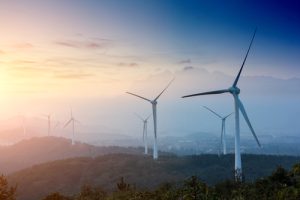
With the bulk of electricity being produced by coal furnaces, it seems the lack of coordination and this drive for a new green deal is just far from organized and may have a tremendous impact upon the European economy as a whole. Nobody is addressing the heating of homes on top of this and the wind power that has failed to provide a viable alternative.

Birth of a Black Hole 4K


Premiered 16 hours ago

This show was converted to 4K/UHD using an AI program. What do you think? For the best collection of 4k Space-Science content, go to…