FL Governor DeSantis Declares a Proactive State of Emergency Ahead of Potential Hurricane Helene


Posted originally on the CTH on September 23, 2024 | Sundance 

Those in the area of Sarasota, Clearwater/St Pete to the Florida Panhandle and Big Bend area need to pay particular attention to the path of this storm throughout the day today and tomorrow. An area of extreme weather is expected to become hurricane Helene very quickly.

There is a potential for strength to major hurricane status in the Gulf of Mexico prior to landfall. Those in the Mississippi and Alabama coastal area should also keep an eye for updates.

At 800 PM EDT (0000 UTC), the disturbance was centered near latitude 18.3 North, longitude 82.3 West. The system is moving toward the north-northwest near 7 mph (11 km/h). A northwestward motion is expected on Tuesday and Tuesday night, followed by a faster northward to north-northeastward motion on Wednesday and Thursday.

On the forecast track, the center of the system is forecast to move across the northwestern Caribbean Sea through Tuesday night, and then over the eastern Gulf of Mexico on Wednesday and Thursday. (link)

Hurricane Ian hit the Florida SW coast on Sept 29, 2022.  September hurricanes are strong, the Gulf of Mexico is very warm.

For those in the cone of uncertainty, remember, planning and proactive measures taken now can significantly reduce stress in the days ahead. Plan when to make the best decision on any evacuation (if needed) consider Tuesday night the decision timeframe. As a general rule: take cover from wind – but evacuate away from water.

DAY ONE (Today)
Determine Your Risk
Make a Written Plan
Develop and Evacuation Plan
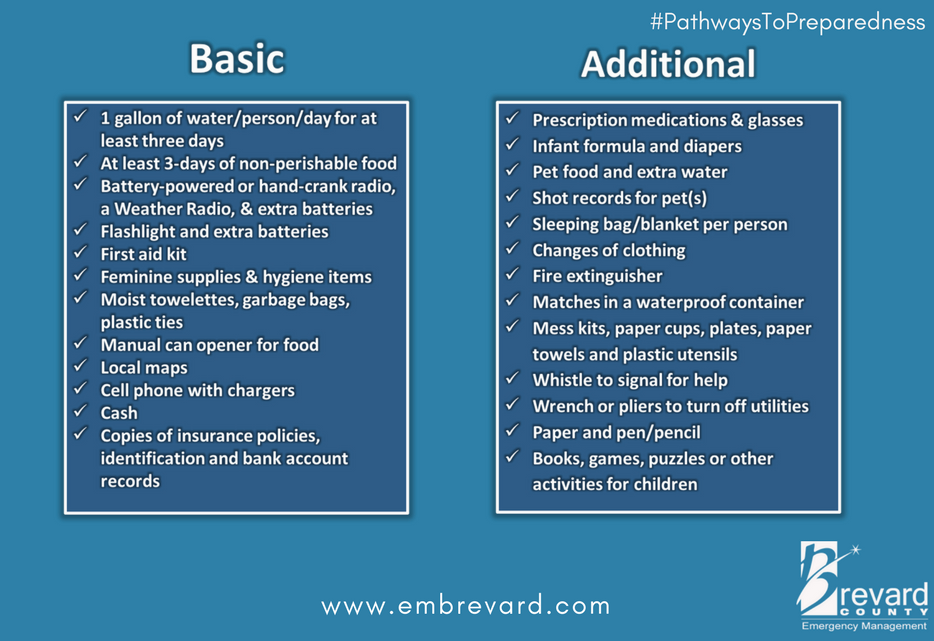
Inventory hurricane/storm supplies.

DAY TWO (Tuesday)
Get Storm Update
Assemble and Purchase Hurricane Supplies
Contact Insurance Company – Updates
Secure Important Papers.
Strengthen and Secure Your Home
Make Evacuation Decision for your Family.

DAY THREE (Wednesday)
Get Storm Update
Re-Evaluate your Supplies based on storm update
Finish last minute preparation
Assist Your Neighbors
If Needed – Evacuate Your Family

Communication is important. Update your contact list. Stay in touch with family and friends, let them know your plans. Select a single point of contact for communication from you that all others can then contact for updates if needed. Today/tomorrow are good days to organize your important papers, insurance forms, personal papers and place them in one ‘ready-to-go’ location.

Evaluate your personal hurricane and storm supplies; update and replace anything you might have used. Assess, modify and/or update any possible evacuation plans based on your location, and/or any changes to your family status.

Check your shutters and window coverings; test your generator; re-organize and familiarize yourself with all of your supplies and hardware. Check batteries in portable tools; locate tools you might need; walk your property to consider what you may need to do based on the storm’s path. All decisions are yours. You are in control.

Consider travel plans based on roads and traffic density. Being proactive now helps to keep any future stress level low. You are in control. If you have pets, additional plans may be needed.

One possible proactive measure is to make a list of hotels further inland that you would consider evacuating to. Make that list today and follow updates of the storms’ progress.

Depending on information tomorrow you might call in advance and make a reservation; you can always cancel if not needed. It is better to have a secondary evacuation place established in advance. Being proactive reduces stress. Even if you wait until much later to cancel, it is better to pay a cancellation fee (usually one night charge) than to not have a plan on where to go. Trust me, it’s worth it. Protect your family. Make the list of possibilities today, make the booking decision in the next 24 hrs.

Look over the National Hurricane Center resources for planning assistance. [SEE HERE]

Stuff People Do not Talk About…. 

The ‘context’ of Ian in 2022 was shared previously {Go Deep}.  What follows below are things to consider if you are prepping for a hurricane impact and/or deciding whether to stay in your home or evacuate.  Standard hurricane preparations should always be followed.  Protect your family, secure your property and belongings, and prepare for the aftermath.

What you do before the hurricane hits is going to determine where you are in the recovery phase.

Additionally, and this should be emphasized and discussed within your family, if you cannot be self-sufficient in the aftermath – for any reason, then you should evacuate.

Self-sufficiency in this context requires being able to cope for up to several weeks:

(1) potentially without power; (2) potentially without potable running water (3) potentially without internet service; (4) potentially without communication outside the region; and (5) with limited municipal and private sector assistance.   If you decide you cannot deal with these outcomes, you should evacuate.

Additionally, as a family or individual, you should also honestly evaluate:

(1) your physical abilities; (2) your emotional and psychological ability to withstand extreme pressures; and (3) your comfort in losing daily routines, familiar schedules and often overlooked things you might take for granted.

Post hurricane recovery is fraught with stress, frustration and unforeseeable challenges.

I saw a video presented by a structural engineer who was sharing his experience with Hurricane Ian.  I am going to use his video for a few references because even with professional credentials, some of the common mistakes people make are highlighted in his experience.  Keep in mind his video is taken about 30 miles inland from where the majority impact area (coastal region) is located.

The video below was shot from the soft side (western side) of the storm, and if we were to scale the difference between his experience and a person who was located in/around Fort Myers Beach, Sanibel, Pine Island or Cape Coral, he would be around a “5” on a ten-point impact scale.

Meaning the severity of conditions 30 miles southeast of him was twice as severe as his inland experience.

Key Points – At the 21: 35 moment (prompted), notice how his #2 vehicle is parked outside.  Also, at the 22:00 minute moment, notice what he is describing and showing with his garage door and how his #1 vehicle (a pickup truck) is positioned inside the garage. WATCH:

.

♦ This is exactly what I was talking about in hurricane preparation when discussing the garage door.  If that videographer was located 30 miles southeast, and/or his house was positioned facing West, instead of North, his garage door would have failed.  If you lose the garage door, YOU COULD LOSE YOUR ROOF.

You can always tell those people who have been through direct hurricane impacts by how they parked their cars.  I have never included this in the hurricane advice before so it’s worth a mention.  If you lose your Florida garage door you will more than likely lose your roof.  That’s just the reality of having a massive opening in your structure to 150 mph winds that will lift the trusses.

If you have two vehicles, put one vehicle inside the garage with the front bumper against the door to help stop the flex (do this carefully).  Put the other vehicle outside blocking the garage door facing down the driveway or facing parallel to the garage.  The goal is to use the aero dynamics of the car to push the wind away from the door and provide protection.

Purchase a cheap car cover to protect the outside vehicle and/or use old blankets (cable ties, bungee cords) to stop the outside vehicle from getting sandblasted and destroyed.  Place double folded corrugated cardboard in front of the radiator to protect it from storm debris.

Additionally, if you live in a flood zone, or if you are concerned about storm surge, the day before impact take your #1 car to the nearest airport or hotel with a parking garage and park in the upper levels.  Take an uber back home if you don’t have a friend or partner to help you.  This way you know you will have one workable vehicle, just in case.

♦ Another lesson from Ian, if you drive an electric vehicle and sustain saltwater intrusion (of any level) your car is not safe.  Saltwater makes the vehicle batteries extremely dangerous, and they could spark or catch fire.  Multiple homes survived Hurricane Ian only to have the electric car catch fire in the garage and burn the house to the ground.  Hurricane rain is saltwater rain.  The fire department was begging people to put their ev’s outside and not to plug them in.  Dozens of ev’s also erupted in flames while driving down the streets after the storm.

Back to the video above…

♦ Notice at 24:30 of the video this professional structural engineer is standing and physically supporting his glass patio doors, with his wife, trying to keep them from breaking in due to wind and pressure changes.  DO NOT DO THIS !   That is beyond dangerous.  Any small item of debris (even a small twig or branch) could hit that window and shatter it, turning flying glass into instant flying blades.

Put 3/4-inch plywood or steel bolted hurricane shutters over all your windows and doors.  Period.  This is not an option.  My steel bolted hurricane shutters were hit with debris so hard – whatever it was physically dented the steel.  Every window and door need to be covered and protected, especially glass patio doors (even if tempered). Do not think you can stand there and protect glass doors.  It’s beyond dangerous.

♦ Hardening your home is a matter of careful thought and physical work.  However, every opening into your structure must be protected, leaving yourself with one small exit opportunity just in case. Hopefully you have a bolted door with no glass windows you can use as an emergency exit.  If not, select a small window and leave only enough room uncovered for you to get out in case of emergency or structural collapse.

Beyond the ordinary supplies like drinking water, batteries, flashlights, battery or hand-crank radio, generators, gasoline, etc.  Evaluate the scale of what you have against the likelihood of weeks without power or water.   A few pro tips below:

♦ Put three 30-gallon trash cans in the shower and fill them with water before the storm.  This will give you 90 gallons of water for cooking and personal hygiene.  You will also need water to manually flush your toilets.  Bottled water is great for drinking, hydrating and toothbrushing, but you will need much more potable water if the municipal supply is compromised or broken.

♦ A standard 6,500-to-8,500-watt generator will run for approximately 8 hours on five gallons of gasoline.   Do not run it all the time.  Turn it on, chill the fridge, make coffee, use the microwave or charge stuff, then turn it off.  Do this in 4-hour shifts and the fridge will be ok and your gasoline will last longer.  Gasoline is a scarce and rare commodity in the aftermath of a hurricane.  Gas stations don’t work without power.  Check the oil in the generator every few days.  Also, have a can of quick start or butane available in case the generator starts acting up.

♦ Extension cords.  If you are purchasing them buy at least one 100 to 150′ extension cord with a triple ponytail.  This way you can use one cord into a central location to charge up your electronic devices.  Establish a central recharging station for phones, pads, laptops, and rechargeable stuff.

♦ Purchase a box of “contractor garbage bags” and just keep them in the garage.  These are large, thick, industrial trash bags that fit 40-gallon drums. They can be used for trash, or even cut open for tarps in the aftermath of a storm.  These thick mil contractor bags have multiple uses following a hurricane.

♦ Do all of your laundry before the hurricane hits.  You will likely not have the ability again for a few weeks.

♦ Cook a week’s worth of meals in advance of the hurricane. Store in fridge so you can microwave for a meal.  Eating a constant diet of sandwiches gets old after the first week.  Dinty Moore canned beef stew and or Chef-boy-ardee raviolis can make a nice break…. anything, except another sandwich.

♦ Have bleach for use in disinfecting stuff before and after a hurricane.  Also have antibiotics and antiseptics for use.  Hygiene and not getting simple infections after a hurricane is critical and often forgotten.  Again, this is where the extra potable water becomes important.  Simple cuts and scrapes become big deals when clean potable water is not regularly available.  Keep your scrapes and abrasions clean and use antiseptic creams immediately.

♦ Do not forget sunscreen and things to relieve muscle aches and pains.  Hurricane recovery involves physical effort.  You will be sore and/or exposed to the elements.  Remember, it’s all about self-sufficiency because the normal services are not available.  A well-equipped first aid kit is a must have.

♦ Buy a small camping stove.  Nothing big or expensive, just something you can cook on outside in case of emergency.  It will be a luxury when you are 2+ weeks without power and all the stores and restaurants are closed for miles.

♦ Those small flashlights that you can strap around your head that take a few AAA batteries?  Yup, GOLD.  Those types of handsfree flashlights are lifesavers inside and outside when you need to see your way around.  Nighttime is especially dark without electricity in the entire town.  Doing stuff like filling a generator with gasoline in the middle of the night is much easier with one of those head strap flashlights.  Strongly advise getting a few, they’re inexpensive too.

♦ Cash.  You will need it.  Without power anything you may need to purchase will require cash, especially gasoline.  Additionally, anyone you hire to help or support your immediate efforts will need to be paid.  Cash is critical.  How much, depends on your individual situation, but your cash burn rate will likely go into the thousands in the first few days.  Also keep in mind, you may or may not be able to work and without internet access even getting funds into place could be challenging.

♦ Hardware. A box of self-tapping sheet metal screws (short and long) is important, along with a box or two of various wood screws or Tyvex screws.  A battery drill or screw gun is another necessity.  Check all of this stuff during hurricane prep.

Look at my house below.  If you are not prepared mentally and physically to endure this, potentially for weeks and months, don’t try to ride it out. Just leave.

I have stayed through direct hurricane hits and worked dozens in the aftermath. As a Civilian Emergency Response Team (CERT) leader, I am considered an expert in preparation. However, following my experience with Hurricane Ian, ten full hours of hurricane intense destruction, I would never stay again. Remember, you can always come back later and deal with it.

Prayers for everyone!

Ep. 3456a – Climate Agenda Has Been Destroyed, [CB] Tries To Deflect The Economic Disaster, Big Fail


Posted originally on Rumble By X 22 Report on: Sep22, 2024 at 4:01 pm EST

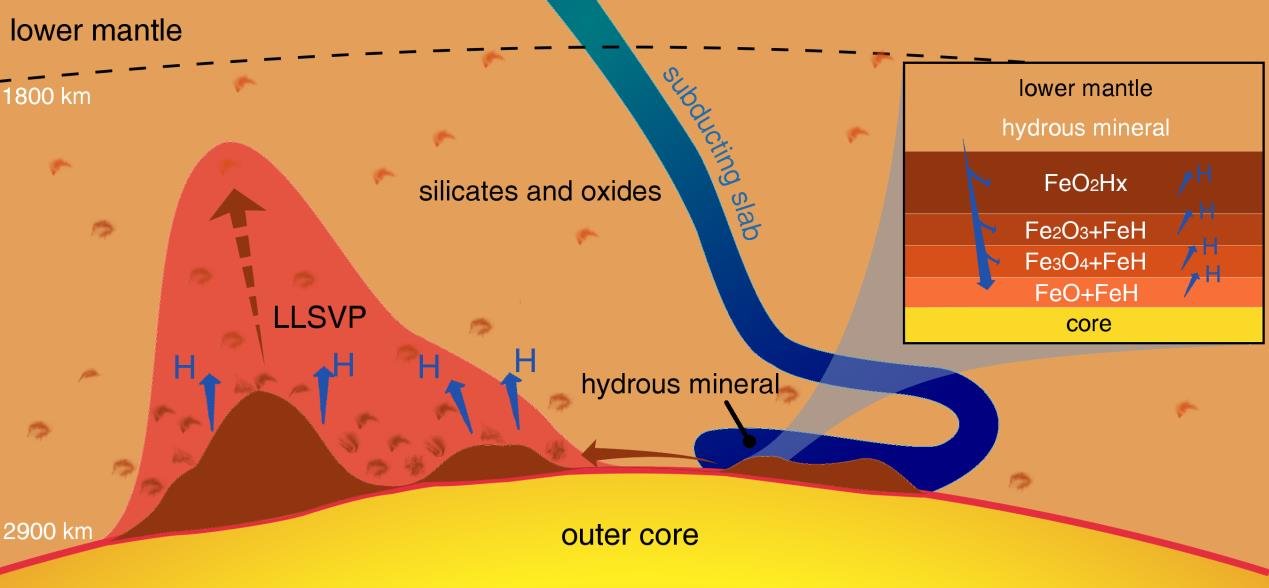
Geologic Hydrogen – the Next Gold Rush?


Posted originally on Sep 16, 2024 by Martin Armstrong

Hydrogen

Around 96% of hydrogen is produced from fossil fuels, with around 1% derived from renewable sources. Global demand for hydrogen is on the rise and will increase to 95 million tonnes by 2022. As over 150+ nations have committed to reducing green policies, hydrogen production has been met with challenges and uncertainty, which is why left-wing billionaires are betting big on searching for buried hydrogen.

Bill Gates and Jeff Bezos are among the founders behind a new startup called Koloma, a geologic hydrogen company that “leverages its technology, proprietary data, and human capital advantages to identify and commercialize these resources on a global scale.” The Denver-based company has already raised over $305 million and believes that it can alter the way the world uses hydrogen.

“Geologic hydrogen should have a very low carbon impact, but also a tiny land footprint and very low water impact,” Koloma CEO Pete Johnson said. Johnson mentioned how Russia and Ukraine were large exporters of hydrogen-derived ammonia, which is needed for most fertilizer products. “Geologic hydrogen resources in the U.S. will allow us to scale up our domestic ammonia production and become a net exporter, even as we dramatically drop the carbon footprint of the products,” he added.

geologichydrogen

As noted on the company’s website:

“Our production methods source hydrogen in a clean, continuous, and cost-effective manner, eliminating the barriers that have historically hindered widespread adoption. We are actively engaged in exploration and are appraising assets that will play a significant role in US decarbonization efforts. As the rapidly emerging geologic hydrogen industry takes shape, Koloma’s data-driven approach will power the discovery of geologic hydrogen resources around the world.”

Geologic hydrogen is being touted as “gold hydrogen” or “white hydrogen” as its natural origins make it acceptable to green policies. Other startups are popping up such as Breakthrough Energy that is backed by Alibaba’s Jack Ma and Virgin’s Richard Branson. Various companies are now digging for hydrogen in U.S., Canada, Australia, France, Spain, Colombia, and South Korea.

Experts cannot agree on whether there will be enough geologic hydrogen to make a notable difference in the world’s energy use. The Hydrogen Science Coalition, for one, believes that discoveries will produce less energy than a single wind turbine. That’s not stopping big money from backing projects to seek out buried hydrogen in what may become the next gold rush.

There is no plan in place to meet Agenda 2030 or the goal to move toward climate neutrality by 2050. Will this be the next gold rush? It depends on the results of the discoveries and how difficult it becomes for companies to access hydrogen, but this will be nowhere near reminiscent of the actual gold rush, where the average man could make a fortune. We will not see mass migration to areas filled with potential geological hydrogen, unlike the gold rush, where people from throughout the world relocated to the western United States. This will be an industry for the billionaire elite, as will all climate change measures that have no benefits for the average man.

The Election Cycle Virus


Posted originally on Sep 9, 2024 By Martin Armstrong 

2024 Mosquito_borne_illnesses

QUESTION: Are they at it again for the election disease syndrome? The media seems to be touting the CDC once more, sounding the alarm about a supposed “surge” in COVID-19 cases. The curious thing is you must be a Republican to catch it. It is only affecting the Red states like Texas, California, Florida, and North Carolina.

HS

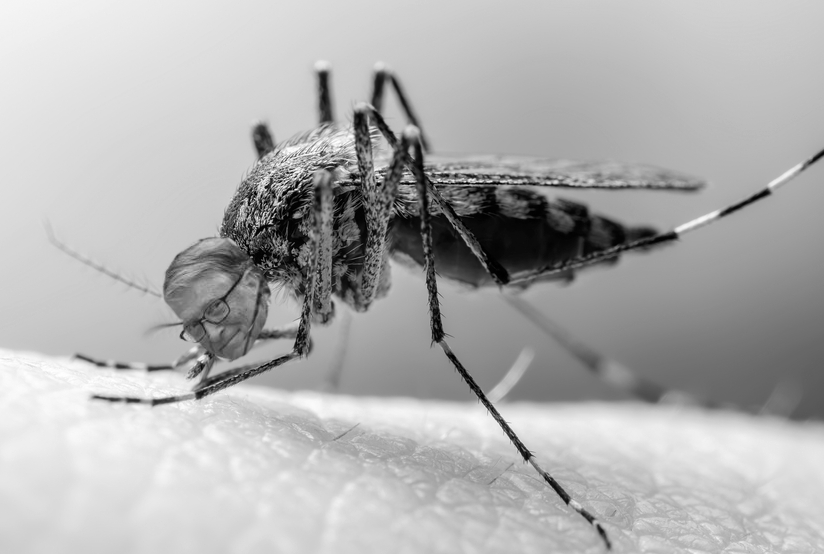
Bill_Gates mosquito

ANSWER: Oh yes, they have a mosquito crisis in New England. Until Bill Gates started breeding mosquitos and released billions in Florida, I never had a mosquito infestation in my yard. Even MALARIA has come back since Gates began his mosquito project. I would love to get RFK Jr as Attorney General to start indicting some of these Neocons and bioterrorists pretending to be helping society. What I find curious is that I am 74 years old. I have never seen such hype for a disease that emerges just in time for the elections as they got away with it in 2020.

I was personally tested for COVID-19 five times, and each time, it was negative. My daughter insisted I go to Tampa Hospital to see the top pulmonary specialist there. I said it’s not COVID; I was tested five times, always negative. He said to me I had COVID-19 and not to worry; the tests were invalid anyway.

We should name these things: the Election Virus-2024, then the midterms Election Virus-2026.

The Object appears to be staying home and sending in mail-in ballots

to provide cover for the illegal aliens to vote this cycle.

Climate Stupidity and How It Began


It began in California. “…California Assembly speaker Willie Brown formed our nation’s first clean-air district in the Los Angeles basin, the South Coast Air Quality Management District (SCAQMD)…”

https://www.americanthinker.com/articles/2024/05/climate_stupidity.html

Ep. 3426a – Green New Scam Backfires In California, People See The Recession, Boomerang


Posted originally on Rumble By X 22 Report on: Aug 1, 2024 at 6:30 pm EST

Miller: In AZ, Green New Deal Agenda Sees Many Traditional Energy Sources Shutdown


Posted originally on Rumble By Bannons War Room on: Aug 13, 2024 at 02:00 pm EST

Paris Olympics Failure – Green Policies on Display


Posted originally on Aug 13, 2024 By Martin Armstrong |  

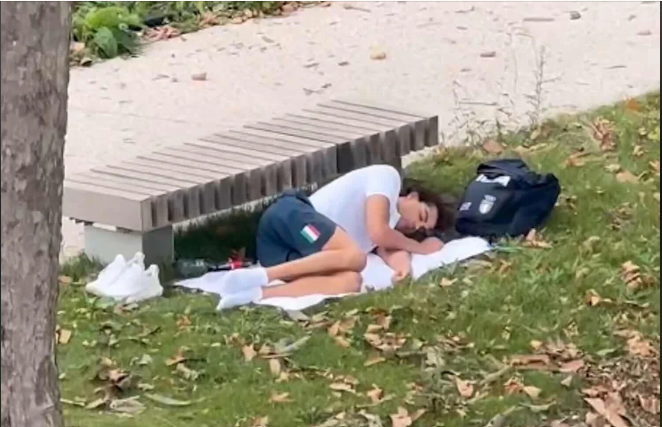
SleepingOutsideOlympics

The Paris Olympics was a preview of what to expect under Agenda 2030 and other lofty climate change goals. Paris aimed to host the most sustainable Olympics in history with a 50% target reduction in carbon emissions compared to previous Olympics like Rio 2016 or London 2012. The world’s most impressive athletes are now speaking out to tell the world that climate goals are NOT sustainable for human life.

First, the International Olympic Committee planned to offer the athletes sustainable living conditions. The unairconditioned rooms had cardboard beds made of reusable materials. The picture of Italian swimmer Thomas Ceccon sleeping outside has gone viral. “There is no air conditioning in the Village, it’s hot, the food is bad,” he told The Sun. “Many athletes move for this reason: it’s not an alibi or an excuse, it’s the reality of what perhaps not everybody knows.” He said he was too tired to make the final as he was exhausted from the climate-friendly accommodations.

Countless athletes left the Olympic village to find alternative housing. The organizers eventually caved and provided some form of air conditioning to athletes due to the high number of complaints. The geothermal cooling systems simply failed. Paris mayor Anne Hidalgo, meanwhile, told the athletes to “trust the science” ahead of the games. Where have we heard that before?

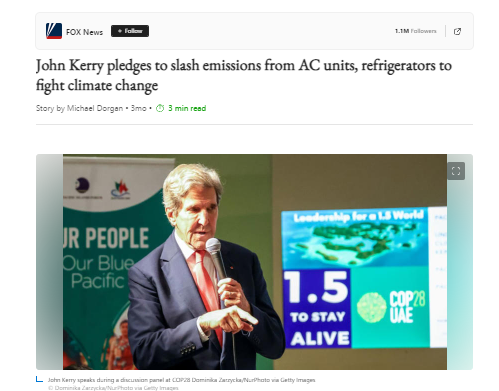
Kerry end Air Conditioning

“We appreciate the concept of not having air conditioning due to the carbon footprint,” Australian Olympic Committee CEO Matt Carroll said last year. “But it is a high-performance Games. We’re not going for a picnic.” They want you to believe that simple heating and cooling is a luxury that can be discarded in the name of science. We are now hearing from Olympians, the pinnacle of human strength and health, that they could not forego cooling systems.

Klaus Schwab of the World Economic Forum has said that people will eat bugs and enjoy them. Shamefully, that is precisely what the Olympic organizers fed athletes. “The science” claims that cattle is killing our environment since it releases too many emissions. The Olympic Committee boasted of serving a mainly plant-based menu to athletes, ignoring the obvious issue that nutrition and protein are essential.

Insects.Bugs_.WorldEconomicForum.WEF_

Countless athletes complained that they were hungry and did not have enough to eat. Worse, the food provided lacked the proper nutrition for their bodies to perform. “I want to eat meat, I need meat to perform and that’s what I eat at home, so why should I change?” British swimmer Adam Peaty, 29, told iNews. “I like my fish and people are finding worms in the fish. It’s just not good enough. The standard, we’re looking at the best of the best in the world — and we’re feeding them not the best.”

They are seeking to reduce the amount of meat everyone can eat. They are creating lab-grown alternatives without knowing the repercussions. Farmlands are being bought en mass and thousands of cattle and chickens are being slaughtered in nations abiding by the WEF agenda.

Then there are reports of athletes falling ill after swimming in the Seine that was never properly cleaned. There is a reason President Macron backed out of his obligation to swim in that filth. Rules for thee but not for me. The masses will be forced to sacrifice human comforts to promote the climate change agenda. YOU are the carbon they want to eliminate.

Categories:CLIMATE

Massachusetts to Ban Term “Mother”


Posted originally on Aug 5, 2024 By Martin Armstrong 

Baby Birthrate

Massachusetts, House Bill 4750 will protect parents from gender discrimination by removing “mother” and “father” from birth certificates. We have reached a place in our society where this announcement causes no recoil as the left has strayed far beyond reality. A few years ago, these stories would make front-page headlines and cause an uproar. A “mother” is now merely the “person who gave birth,” while the father is known as the “other parent.”

Congratulations on your child, person who gave birth! May I call you “person?” “The Women’s Caucus endorsed this bill … because we know that there are many paths to parenthood, and our laws need to be updated to reflect the diversity of families,” Hannah Kane, a Republican who voted in favor of the bill, stated. Eliminating women from the equation does not provide “diversity”. Rather, women now have no rights because they do not exist.

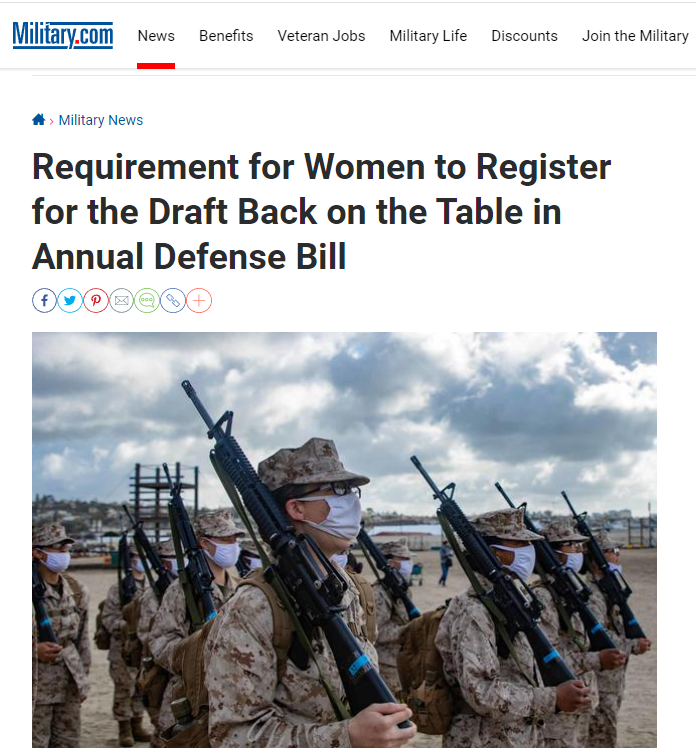
A girl in my office was complaining about the announcement a few weeks ago from Tampax that stated they had been selling feminine products that contained cancerous materials. Admittedly, I had not followed the story as closely. She proclaimed that the products were never removed from the shelves, and “bleeding persons” were never informed on what to do with their dangerous products or how to check to see if they were affected. The entire story was swept under the rug because current society does not value women. Become a genderless being with no identity. Be no one other than a taxpayer and potential soldier.

Requirement_for_Women_to_Register_for_the_Draft_Back_on_the_Table_in_Annual_Defe

This is a global phenomenon. Italy’s PM Georgia Meloni was declared a far-right fascist for daring to state: “I am Giorgia. I’m a woman, I’m a mother, I’m Italian, I’m Christian.” Canada began demonizing the nuclear family structure in 2018, when Service Canada urged public employees to “use gender-neutral language or gender-inclusive language.” “This avoids portraying a perceived bias toward a particular sex or gender,” Service Canada claimed. The US government began to issue documents in February that asked officials not to use terms like “mother” or “father.”’

There is no greater hedge against the government than the nuclear family. A blood-tied union that can actually rely upon one another, decide their own morals and ethics, practice tradition and religion, and banish fear-mongering. The government wants to replace parents as the head authority. They want children to report on their parents’ wrongdoing, no different than countless past regimes from the Soviets to the Nazis. Governments are using schools to help children harbor secrets from their parents and alter their perception of reality. There is an outright psychological war happening against Generation Alpha, who may only know of a distorted version of reality that governments have been providing them.

The pride of being a mother is no longer permitted; you are disregarded as a “birthing person” in some Orwellian dystopian mentality. Anyone can breastfeed, the world health agencies have declared. There is nothing that differentiates women from men, apparently. Most importantly, your child should honor thy government over thy “mother” or “father.”

Tropical Storm Debby Likely to Hit FL Big Bend as Hurricane


Posted originally on the CTH on August 4, 2024 

Tropical Storm Debby Likely to Hit FL Big Bend as Hurricane

August 4, 2024 | Sundance | 62 Comments

Tropical Storm Debby is anticipated to intensify quickly now and will likely impact the “big bend” of Florida area as a hurricane.   The good news is that Debby is moving fast (13 mph) and getting faster.  Less time for the buzzsaw is a good thing, regardless of intensity.

NATIONAL HURRICANE CENTER – At 200 PM EDT (1800 UTC), the center of Tropical Storm Debby was located near latitude 27.3 North, longitude 84.4 West. Debby is moving toward the north-northwest near 13 mph (20 km/h). A turn toward the north is expected later today, followed by a slower
motion toward the northeast on Monday and Tuesday. On the forecast track, the center will move across the northeastern Gulf of Mexico through tonight and reach the Florida Big Bend coast Monday morning. (LINK)

Remember, you are in control right now, not Debby. She takes control tomorrow. There is no need for panic or dark imaginings. Calm, prudent preparations should be taken if you are in the zone of uncertainty. A lot of change in impact zone can happen quickly with these northerly moving storms.

What follows below are less discussed things to consider if you are prepping for a hurricane impact and/or deciding whether to stay in your home or evacuate. Standard hurricane preparations should always be followed. Protect your family, secure your property and belongings, and prepare for the aftermath.
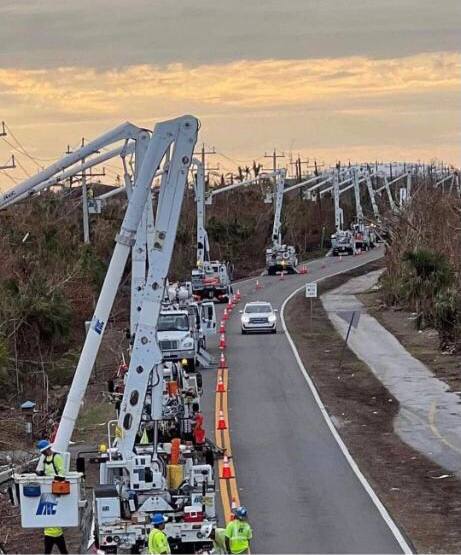
What you do before the hurricane hits is going to determine where you are in the recovery phase.

Additionally, and this should be emphasized and discussed within your family, if you cannot be self-sufficient in the aftermath – for any reason, then you should evacuate.

Self-sufficiency in this context requires being able to cope for up to several weeks:

(1) potentially without power; (2) potentially without potable running water (3) potentially without internet service; (4) potentially without communication outside the region; and (5) with limited municipal and private sector assistance.   If you decide you cannot deal with these outcomes, you should evacuate.

Additionally, as a family or individual, you should also honestly evaluate:

(1) your physical abilities; (2) your emotional and psychological ability to withstand extreme pressures; and (3) your comfort in losing daily routines, familiar schedules and often overlooked things you might take for granted.

Post hurricane recovery is fraught with stress, frustration and unforeseeable challenges.

I saw a video presented by a structural engineer who was sharing his experience with Hurricane Ian.  I am going to use his video for a few references because even with professional credentials, some of the common mistakes people make are highlighted in his experience.  Keep in mind his video is taken about 30 miles inland from where the majority impact area (coastal region) is located.

The video below was shot from the soft side (western side) of the storm, and if we were to scale the difference between his experience and a person who was located in/around Fort Myers Beach, Sanibel, Pine Island or Cape Coral, he would be around a “5” on a ten-point impact scale.

Meaning the severity of conditions 30 miles southeast of him was twice as severe as his inland experience.

Key Points – At the 21: 35 moment (prompted), notice how his #2 vehicle is parked outside.  Also, at the 22:00 minute moment, notice what he is describing and showing with his garage door and how his #1 vehicle (a pickup truck) is positioned inside the garage. WATCH:

.

♦ This is exactly what I was talking about in hurricane preparation when discussing the garage door.  If that videographer was located 30 miles southeast, and/or his house was positioned facing West, instead of North, his garage door would have failed.  If you lose the garage door, YOU COULD LOSE YOUR ROOF.

You can always tell those people who have been through direct hurricane impacts by how they parked their cars.  I have never included this in the hurricane advice before so it’s worth a mention.  If you lose your Florida garage door you will more than likely lose your roof.  That’s just the reality of having a massive opening in your structure to 150 mph winds that will lift the trusses.

If you have two vehicles, put one vehicle inside the garage with the front bumper against the door to help stop the flex (do this carefully).  Put the other vehicle outside blocking the garage door facing down the driveway or facing parallel to the garage.  The goal is to use the aero dynamics of the car to push the wind away from the door and provide protection.

Purchase a cheap car cover to protect the outside vehicle and/or use old blankets (cable ties, bungee cords) to stop the outside vehicle from getting sandblasted and destroyed.  Place double folded corrugated cardboard in front of the radiator to protect it from storm debris.

Additionally, if you live in a flood zone, or if you are concerned about storm surge, the day before impact take your #1 car to the nearest airport or hotel with a parking garage and park in the upper levels.  Take an uber back home if you don’t have a friend or partner to help you.  This way you know you will have one workable vehicle, just in case.

♦ Another lesson from Ian, if you drive an electric vehicle and sustain saltwater intrusion (of any level) your car is not safe.  Saltwater makes the vehicle batteries extremely dangerous, and they could spark or catch fire.  Multiple homes survived Hurricane Ian only to have the electric car catch fire in the garage and burn the house to the ground.  Hurricane rain is saltwater rain.  The fire department was begging people to put their ev’s outside and not to plug them in.  Dozens of ev’s also erupted in flames while driving down the streets after the storm.

Back to the video above…

♦ Notice at 24:30 of the video this professional structural engineer is standing and physically supporting his glass patio doors, with his wife, trying to keep them from breaking in due to wind and pressure changes.  DO NOT DO THIS !   That is beyond dangerous.  Any small item of debris (even a small twig or branch) could hit that window and shatter it, turning flying glass into instant flying blades.

Put 3/4-inch plywood or steel bolted hurricane shutters over all your windows and doors.  Period.  This is not an option.  My steel bolted hurricane shutters were hit with debris so hard – whatever it was physically dented the steel.  Every window and door need to be covered and protected, especially glass patio doors (even if tempered). Do not think you can stand there and protect glass doors.  It’s beyond dangerous.

♦ Hardening your home is a matter of careful thought and physical work.  However, every opening into your structure must be protected, leaving yourself with one small exit opportunity just in case. Hopefully you have a bolted door with no glass windows you can use as an emergency exit.  If not, select a small window and leave only enough room uncovered for you to get out in case of emergency or structural collapse.

Beyond the ordinary supplies like drinking water, batteries, flashlights, battery or hand-crank radio, generators, gasoline, etc.  Evaluate the scale of what you have against the likelihood of weeks without power or water.   A few pro tips below:

♦ Put three 30-gallon trash cans in the shower and fill them with water before the storm.  This will give you 90 gallons of water for cooking and personal hygiene.  You will also need water to manually flush your toilets.  Bottled water is great for drinking, hydrating and toothbrushing, but you will need much more potable water if the municipal supply is compromised or broken.

♦ A standard 6,500-to-8,500-watt generator will run for approximately 8 hours on five gallons of gasoline.   Do not run it all the time.  Turn it on, chill the fridge, make coffee, use the microwave or charge stuff, then turn it off.  Do this in 4-hour shifts and the fridge will be ok and your gasoline will last longer.  Gasoline is a scarce and rare commodity in the aftermath of a hurricane.  Gas stations don’t work without power.  Check the oil in the generator every few days.  Also, have a can of quick start or butane available in case the generator starts acting up.

♦ Extension cords.  If you are purchasing them buy at least one 100 to 150′ extension cord with a triple ponytail.  This way you can use one cord into a central location to charge up your electronic devices.  Establish a central recharging station for phones, pads, laptops, and rechargeable stuff.

♦ Purchase a box of “contractor garbage bags” and just keep them in the garage.  These are large, thick, industrial trash bags that fit 40-gallon drums. They can be used for trash, or even cut open for tarps in the aftermath of a storm.  These thick mil contractor bags have multiple uses following a hurricane.

♦ Do all of your laundry before the hurricane hits.  You will likely not have the ability again for a few weeks.

♦ Cook a week’s worth of meals in advance of the hurricane. Store in fridge so you can microwave for a meal.  Eating a constant diet of sandwiches gets old after the first week.  Dinty Moore canned beef stew and or Chef-boy-ardee raviolis can make a nice break…. anything, except another sandwich.

♦ Have bleach for use in disinfecting stuff before and after a hurricane.  Also have antibiotics and antiseptics for use.  Hygiene and not getting simple infections after a hurricane is critical and often forgotten.  Again, this is where the extra potable water becomes important.  Simple cuts and scrapes become big deals when clean potable water is not regularly available.  Keep your scrapes and abrasions clean and use antiseptic creams immediately.

♦ Do not forget sunscreen and things to relieve muscle aches and pains.  Hurricane recovery involves physical effort.  You will be sore and/or exposed to the elements.  Remember, it’s all about self-sufficiency because the normal services are not available.  A well-equipped first aid kit is a must have.

♦ Buy a small camping stove.  Nothing big or expensive, just something you can cook on outside in case of emergency.  It will be a luxury when you are 2+ weeks without power and all the stores and restaurants are closed for miles.

♦ Those small flashlights that you can strap around your head that take a few AAA batteries?  Yup, GOLD.  Those types of handsfree flashlights are lifesavers inside and outside when you need to see your way around.  Nighttime is especially dark without electricity in the entire town.  Doing stuff like filling a generator with gasoline in the middle of the night is much easier with one of those head strap flashlights.  Strongly advise getting a few, they’re inexpensive too.

♦ Cash.  You will need it.  Without power anything you may need to purchase will require cash, especially gasoline.  Additionally, anyone you hire to help or support your immediate efforts will need to be paid.  Cash is critical.  How much, depends on your individual situation, but your cash burn rate will likely go into the thousands in the first few days.  Also keep in mind, you may or may not be able to work and without internet access even getting funds into place could be challenging.

♦ Hardware. A box of self-tapping sheet metal screws (short and long) is important, along with a box or two of various wood screws or Tyvex screws.  A battery drill or screw gun is another necessity.  Check all of this stuff during hurricane prep.

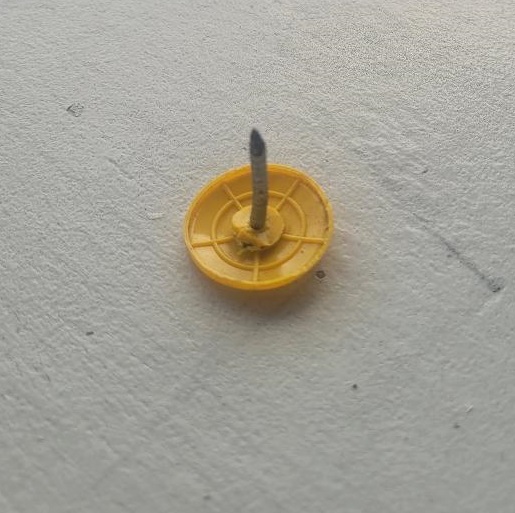
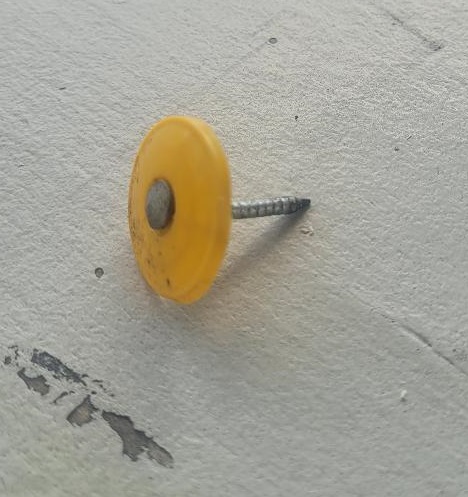
♦ ADD.  I forget my #1 personal nemesis in the aftermath (pictured below):

Roofing nails.  The pesky roofing nails.  Thousands of em’, all over. Those buggers are everywhere, and they will go through a flip-flop, sneaker sole or car tire perfectly. Most of them are black (not yellow) like the ones above.  Some of them have square of flat tops to help them stand up just perfect to find your tires.

I hope this is useful.

Love to all,

~ Sundance