The West’s Refusal to Seek World Peace


Armstrong Economics Blog/Tyranny Re-Posted Jun 27, 2022 by Martin Armstrong

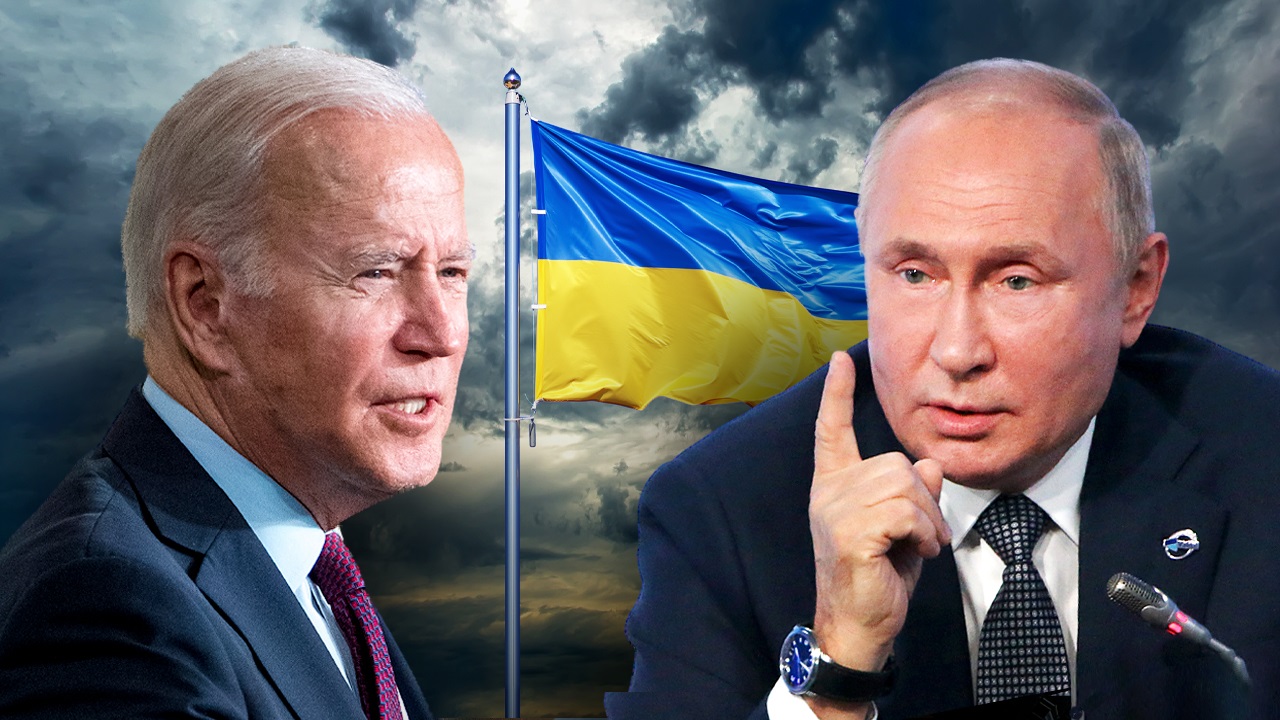
The press has done nothing but put forward present propaganda and they are driving the world into the arms of death. Once upon a time, the world leaders gathered together for a conference in Munich to discuss WORLD PEACE and SECURITY. Today, they seem to conspire on how to bring the world into the arms of death, perhaps to reduce population and forge a new one-world government with the deranged idea that they can actually wipe both Russia and China off the face of the earth.
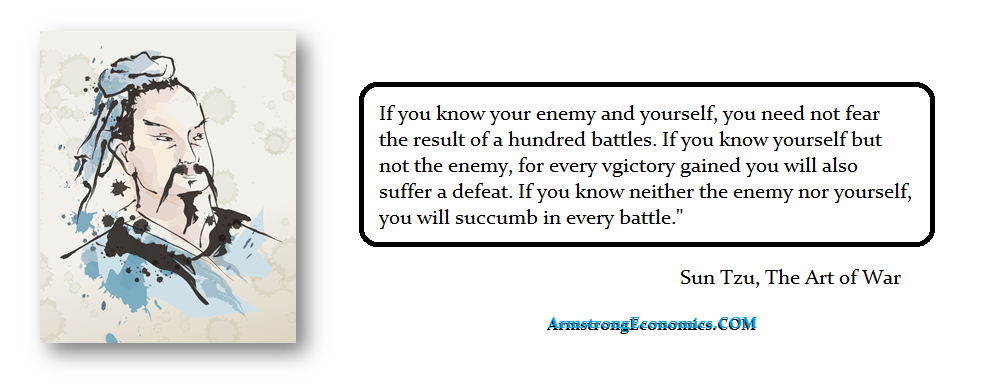
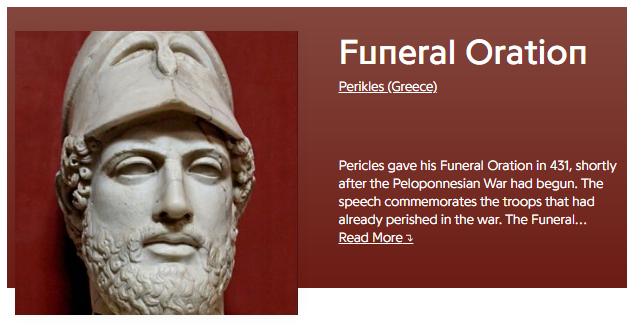
The WORLD PEACE and SECURITY conference speech of Putin in 2007 reminded me at the time of the famous funeral speech by the renowned ancient Athenian General Pericles. My favorite passage is how Pericles is reminding the people what they are fighting for that their form of government, democracy, is superior to that of Sparta which was effectively the first Communist State in history.

“[W]e differ from our antagonists. We throw open our city to the world, and never by alien acts exclude foreigners from any opportunity of learning or observing, although the eyes of an enemy may occasionally profit by our liberality.”

The exceptional nature of what will also be remembered for centuries is the famous speech of Russian President Vladimir Putin at the Munich conference on February 10, 2007. In the spirit of Pericles, Putin delivered a speech that was not significantly different from that of the “Great Funeral oration,” which was both patriotic for Athenians and concerned for the peace of the world.
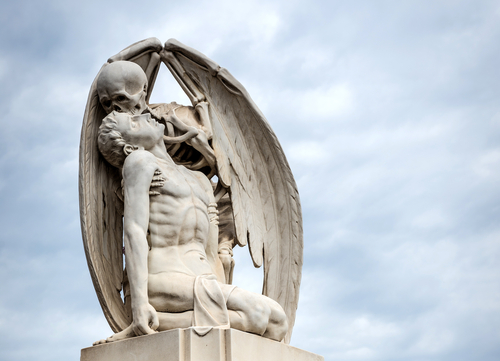
It is so imperative to understand your opposition for otherwise we will run head-first into the open arms of death and not just those on the battlefield that our politicians care nothing for as they dwell only on their power and hatred. We are looking at the very death of our freedoms. Everything we have built since World War II is now to be tossed into the gutter.

Putin pointed out that the West lied and cheated following the fall of communism. Instead of embracing Russia and a new democratic state, even the Guardian wrote on December 20, 1999, under the headline that the “Kremlin hails ‘peaceful Russian revolution” that power in Russia changed at the ballot box. They reported: “Hailing a “peaceful revolution” in Russian politics for the first time since the collapse of the Soviet Union in 1991, Kremlin officials and Putin supporters relished a relatively harmonious relationship between the legislature and the executive.

Still, our politicians expanded NATO and rejected peace. If peace was sought, then there was no longer a need for NATO. That would have led to the unemployment of millions. So NATO was not just retained but expanded. In 1997, at the time of the Nato-Russia Founding Act, a treaty designed to create a new relationship between the NATO alliance and Russia, foreign minister Yevgeny Primakov again raised Baker’s “double-dealing” 6 years earlier that NATO would not expand.

This accusation prompted the then US secretary of state, Warren Christopher, to commission an internal report into the claim. The report drew a distinction between side comments made by German politicians, such as Hans-Dietrich Genscher, ruling out NATO expansion, and what was agreed in the treaty text. But that report was disingenuous since numerous people there confirmed the understanding was that NATO would not expand to Russia’s border.

Today, Lithuania announced a partial blockade of the Russian exclave of Kaliningrad. This is a deliberate act to provoke war. Kaliningrad is Russian territory and to claim it is now justified because of Ukraine, once again shows how treaties mean nothing, and the politicians of Lithuania, like Zelensky, are willing to sacrifice their people for politics. They gather scheming on how to provoke a Russian invasion for this very purpose of creating World War III. They can no longer maintain this economic system they abused with endless borrowing with no intention of paying anything back. Instead of reform, they want to create war. Our world leaders are delusional if not sheer mad.
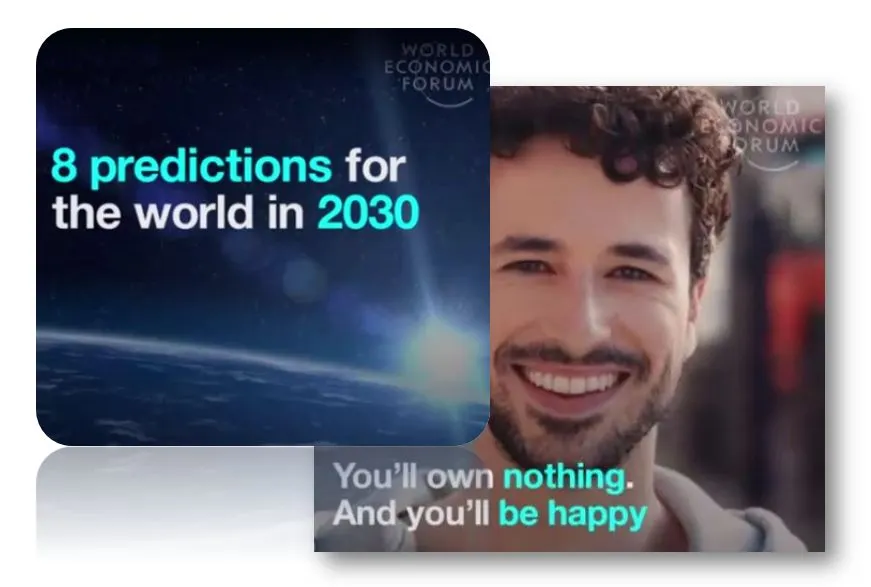
Putin and Russians know well that the West lies, cannot be trusted, and our politicians are obsessed with war as their exit strategy from an economic system that is collapsing because they have done nothing but borrow endlessly with no intention of paying anything back. Then Europe required pension funds to buy government bonds which they then took the interest rates to NEGATIVE in 2014 destroying not just the European bond market, but their pension system. When their co-conspirator Schwab and his WEF say you will own nothing and be happy because the government will default on everything and he is trying to pretend they are doing this for you to help with your debt burden.
First, it was manufactured COVID to exercise absolute control. We saw police abusing their power beating people because they did not have on a mask. Now we have Biden saying they need more taxes to prepare for the NEXT pandemic. In my entire life, there was never a pandemic that warranted closing schools and locking down society. I remember the March of Dimes for Polio.

Out magnanimous world leaders created the supply chain crisis and idiots like Elizabeth Warren said raising rates will not force Putin to leave Ukraine. If he did, the sheer hatred of Ukrainians toward Russians would lead to a wholesale massacre. I know Ukrainians far better than people know from both sides. However, our politicians in the West will never mourn the death of a single Russian civilian. They are unworthy of airtime even on CNN.

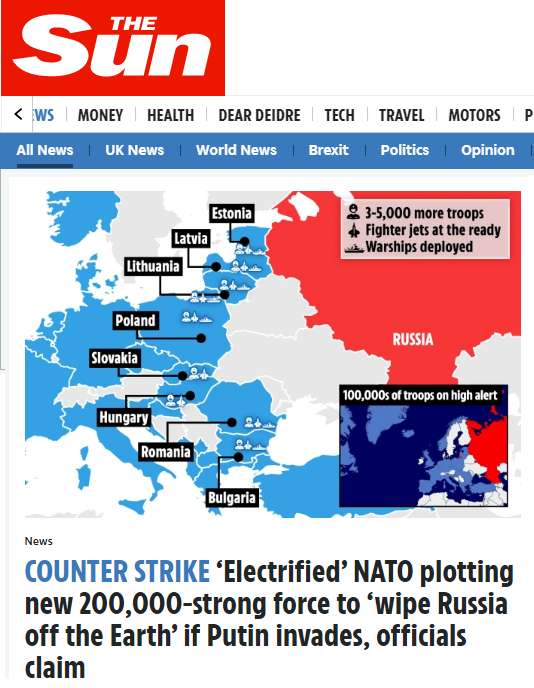
Worse still, I have been told for weeks now that there are people inside NATO who actually promote war and are using the phrase they intend to “wipe Russia off the Earth,” and this is starting to make the press in the UK and also in Russia. There is not a single rational person in any position of authority willing to take a second breath and say wait just one minute.
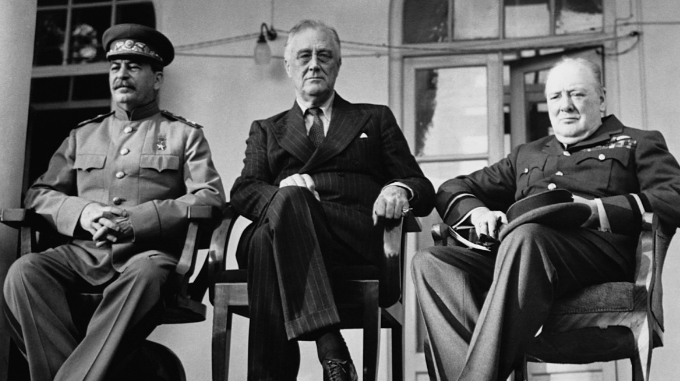
We fought every war against some evil foe from Hitler to communism. It was actually Hitler who ironically saved Europe from what was never really discussed. Hitler was against Stalin who wanted to conquer all of Europe and spread communism. His invasion of Russia curbed that desire. My father was with Patton. He always said that Patton argued that Germany was NOT our enemy – it was Stalin for his Communism and dream of taking all of Europe. Patton wanted to go from Berlin straight into Moscow but the President said no.
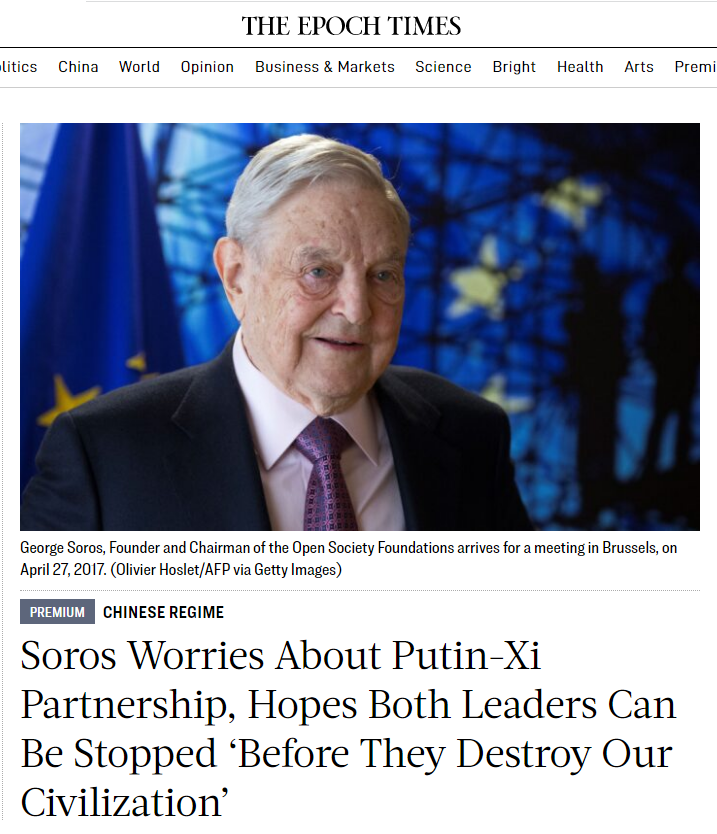
The only two major leaders to invade Russia were Hitler and Napoleon. We seem to be headed for a third try. They can threaten China to stand aside, but Xi is not stupid. He knows this thirst for world domination that has been cheered by Soros and Schwab egging on American Neocons who took the mantle from John McCain. If Xi does not unite with Putin, then China will be next. Just listen to the insane words of George Soros who seems to refuse to die and leave the world alone.

Soros’s version of “civilization” is his one-world government as is Schwab’s. He and Schwab think they can now create body parts to keep plugging in to live forever. They refuse to die and refuse to leave the world in peace.

So while Soros is lining the pockets of everyone who would overthrow everything that created world peace since 1945, the very threat to civilization is Soros and Schwab. Unfortunately, our computer would hide under my bed if it had legs. It has revealed our fate, but there seems to be no way to prevent it. These people are pushing for World War III because the economy is collapsing and governments can no longer keep borrowing endlessly. We have reached the end of the road and they cannot kick the can any further.
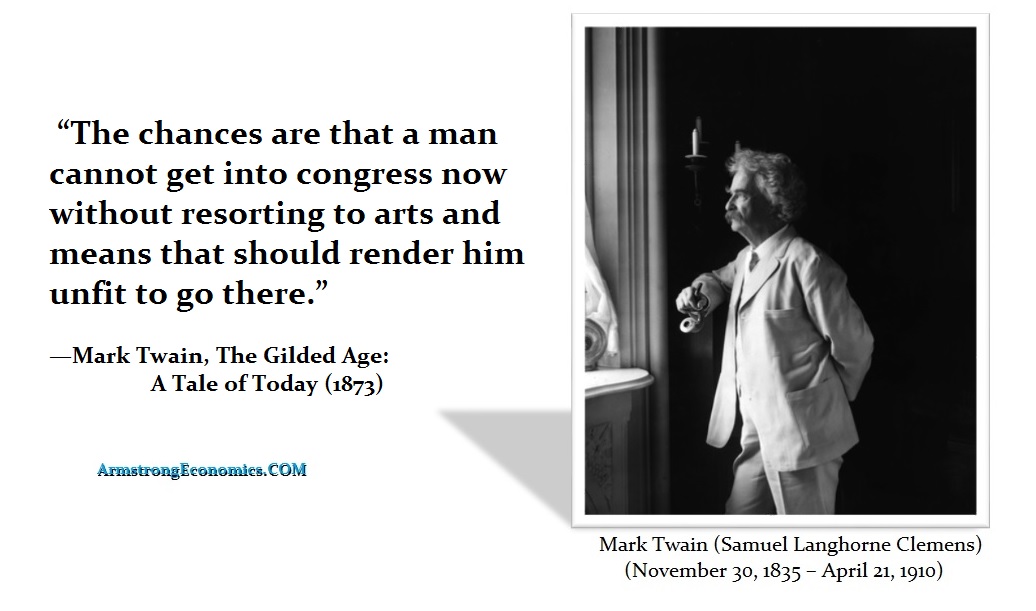
Abortion is the perfect distraction as is the January 6th Insurrection hearing to try to criminally prosecute Trump to affect the November elections. So while Liz Cheney shows she is as unethical as her father and now begs Democrats to support her because of her personal hatred of Trump, they propel the world into the arms of the Angel of Death all because they are far too corrupt, and far too incompetent to ever be in office. The daughter of John McCain, Meghan Marguerite McCain, spews out nothing but hatred for Russia. There is nobody who dare to consult history or looks in the mirror. The American people are tired of endless wars.


FULL SPEECH OF VLADIMIR PUTIN

(Kremlin.ru – March 10, 2007)

Munich

VLADIMIR PUTIN: Thank you very much dear Madam Federal Chancellor, Mr Teltschik, ladies and gentlemen!

I am truly grateful to be invited to such a representative conference that has assembled politicians, military officials, entrepreneurs and experts from more than 40 nations.

This conference’s structure allows me to avoid excessive politeness and the need to speak in roundabout, pleasant but empty diplomatic terms. This conference’s format will allow me to say what I really think about international security problems. And if my comments seem unduly polemical, pointed or inexact to our colleagues, then I would ask you not to get angry with me. After all, this is only a conference. And I hope that after the first two or three minutes of my speech Mr Teltschik will not turn on the red light over there.

Therefore. It is well known that international security comprises much more than issues relating to military and political stability. It involves the stability of the global economy, overcoming poverty, economic security and developing a dialogue between civilisations.

This universal, indivisible character of security is expressed as the basic principle that “security for one is security for all”. As Franklin D. Roosevelt said during the first few days that the Second World War was breaking out: “When peace has been broken anywhere, the peace of all countries everywhere is in danger.”

These words remain topical today. Incidentally, the theme of our conference – global crises, global responsibility – exemplifies this.

Only two decades ago the world was ideologically and economically divided and it was the huge strategic potential of two superpowers that ensured global security.

This global stand-off pushed the sharpest economic and social problems to the margins of the international community’s and the world’s agenda. And, just like any war, the Cold War left us with live ammunition, figuratively speaking. I am referring to ideological stereotypes, double standards and other typical aspects of Cold War bloc thinking.

The unipolar world that had been proposed after the Cold War did not take place either.

The history of humanity certainly has gone through unipolar periods and seen aspirations to world supremacy. And what hasn’t happened in world history?

However, what is a unipolar world? However one might embellish this term, at the end of the day it refers to one type of situation, namely one centre of authority, one centre of force, one centre of decision-making.

It is world in which there is one master, one sovereign. And at the end of the day this is pernicious not only for all those within this system, but also for the sovereign itself because it destroys itself from within.

And this certainly has nothing in common with democracy. Because, as you know, democracy is the power of the majority in light of the interests and opinions of the minority.

Incidentally, Russia – we – are constantly being taught about democracy. But for some reason those who teach us do not want to learn themselves.

I consider that the unipolar model is not only unacceptable but also impossible in today’s world. And this is not only because if there was individual leadership in today’s – and precisely in today’s – world, then the military, political and economic resources would not suffice. What is even more important is that the model itself is flawed because at its basis there is and can be no moral foundations for modern civilisation.

Along with this, what is happening in today’s world – and we just started to discuss this – is a tentative to introduce precisely this concept into international affairs, the concept of a unipolar world.

And with which results?

Unilateral and frequently illegitimate actions have not resolved any problems. Moreover, they have caused new human tragedies and created new centres of tension. Judge for yourselves: wars as well as local and regional conflicts have not diminished. Mr Teltschik mentioned this very gently. And no less people perish in these conflicts – even more are dying than before. Significantly more, significantly more!

Today we are witnessing an almost uncontained hyper use of force – military force – in international relations, force that is plunging the world into an abyss of permanent conflicts. As a result we do not have sufficient strength to find a comprehensive solution to any one of these conflicts. Finding a political settlement also becomes impossible.

We are seeing a greater and greater disdain for the basic principles of international law. And independent legal norms are, as a matter of fact, coming increasingly closer to one state’s legal system. One state and, of course, first and foremost the United States, has overstepped its national borders in every way. This is visible in the economic, political, cultural and educational policies it imposes on other nations. Well, who likes this? Who is happy about this?

In international relations we increasingly see the desire to resolve a given question according to so-called issues of political expediency, based on the current political climate.

And of course this is extremely dangerous. It results in the fact that no one feels safe. I want to emphasise this – no one feels safe! Because no one can feel that international law is like a stone wall that will protect them. Of course such a policy stimulates an arms race.

The force’s dominance inevitably encourages a number of countries to acquire weapons of mass destruction. Moreover, significantly new threats – though they were also well-known before – have appeared, and today threats such as terrorism have taken on a global character.

I am convinced that we have reached that decisive moment when we must seriously think about the architecture of global security.

And we must proceed by searching for a reasonable balance between the interests of all participants in the international dialogue. Especially since the international landscape is so varied and changes so quickly – changes in light of the dynamic development in a whole number of countries and regions.

Madam Federal Chancellor already mentioned this. The combined GDP measured in purchasing power parity of countries such as India and China is already greater than that of the United States. And a similar calculation with the GDP of the BRIC countries – Brazil, Russia, India and China – surpasses the cumulative GDP of the EU. And according to experts this gap will only increase in the future.

There is no reason to doubt that the economic potential of the new centres of global economic growth will inevitably be converted into political influence and will strengthen multipolarity.

In connection with this the role of multilateral diplomacy is significantly increasing. The need for principles such as openness, transparency and predictability in politics is uncontested and the use of force should be a really exceptional measure, comparable to using the death penalty in the judicial systems of certain states.

However, today we are witnessing the opposite tendency, namely a situation in which countries that forbid the death penalty even for murderers and other, dangerous criminals are airily participating in military operations that are difficult to consider legitimate. And as a matter of fact, these conflicts are killing people – hundreds and thousands of civilians!

But at the same time the question arises of whether we should be indifferent and aloof to various internal conflicts inside countries, to authoritarian regimes, to tyrants, and to the proliferation of weapons of mass destruction? As a matter of fact, this was also at the centre of the question that our dear colleague Mr Lieberman asked the Federal Chancellor. If I correctly understood your question (addressing Mr Lieberman), then of course it is a serious one! Can we be indifferent observers in view of what is happening? I will try to answer your question as well: of course not.

But do we have the means to counter these threats? Certainly we do. It is sufficient to look at recent history. Did not our country have a peaceful transition to democracy? Indeed, we witnessed a peaceful transformation of the Soviet regime – a peaceful transformation! And what a regime! With what a number of weapons, including nuclear weapons! Why should we start bombing and shooting now at every available opportunity? Is it the case when without the threat of mutual destruction we do not have enough political culture, respect for democratic values and for the law?

I am convinced that the only mechanism that can make decisions about using military force as a last resort is the Charter of the United Nations. And in connection with this, either I did not understand what our colleague, the Italian Defence Minister, just said or what he said was inexact. In any case, I understood that the use of force can only be legitimate when the decision is taken by NATO, the EU, or the UN. If he really does think so, then we have different points of view. Or I didn’t hear correctly. The use of force can only be considered legitimate if the decision is sanctioned by the UN. And we do not need to substitute NATO or the EU for the UN. When the UN will truly unite the forces of the international community and can really react to events in various countries, when we will leave behind this disdain for international law, then the situation will be able to change. Otherwise the situation will simply result in a dead end, and the number of serious mistakes will be multiplied. Along with this, it is necessary to make sure that international law have a universal character both in the conception and application of its norms.

And one must not forget that democratic political actions necessarily go along with discussion and a laborious decision-making process.

Dear ladies and gentlemen!

The potential danger of the destabilisation of international relations is connected with obvious stagnation in the disarmament issue.

Russia supports the renewal of dialogue on this important question.

It is important to conserve the international legal framework relating to weapons destruction and therefore ensure continuity in the process of reducing nuclear weapons.

Together with the United States of America we agreed to reduce our nuclear  strategic missile capabilities to up to 1700-2000 nuclear warheads by 31 December 2012. Russia intends to strictly fulfil the obligations it has taken on. We hope that our partners will also act in a transparent way and will refrain from laying aside a couple of hundred superfluous nuclear warheads for a rainy day. And if today the new American Defence Minister declares that the United States will not hide these superfluous weapons in warehouse or, as one might say, under a pillow or under the blanket, then I suggest that we all rise and greet this declaration standing. It would be a very important declaration.

Russia strictly adheres to and intends to further adhere to the Treaty on the Non-Proliferation of Nuclear Weapons as well as the multilateral supervision regime for missile technologies. The principles incorporated in these documents are universal ones.

In connection with this I would like to recall that in the 1980s the USSR and the United States signed an agreement on destroying a whole range of small- and medium-range missiles but these documents do not have a universal character.

Today many other countries have these missiles, including the Democratic People’s Republic of Korea, the Republic of Korea, India, Iran, Pakistan and Israel. Many countries are working on these systems and plan to incorporate them as part of their weapons arsenals. And only the United States and Russia bear the responsibility to not create such weapons systems.

It is obvious that in these conditions we must think about ensuring our own security.

At the same time, it is impossible to sanction the appearance of new, destabilising high-tech weapons. Needless to say it refers to measures to prevent a new area of confrontation, especially in outer space. Star wars is no longer a fantasy – it is a reality. In the middle of the 1980s our American partners were already able to intercept their own satellite.

In Russia’s opinion, the militarisation of outer space could have unpredictable consequences for the international community, and provoke nothing less than the beginning of a nuclear era. And we have come forward more than once with initiatives designed to prevent the use of weapons in outer space.

Today I would like to tell you that we have prepared a project for an agreement on the prevention of deploying weapons in outer space. And in the near future it will be sent to our partners as an official proposal. Let’s work on this together.

Plans to expand certain elements of the anti-missile defence system to Europe cannot help but disturb us. Who needs the next step of what would be, in this case, an inevitable arms race? I deeply doubt that Europeans themselves do.

Missile weapons with a range of about five to eight thousand kilometres that really pose a threat to Europe do not exist in any of the so-called problem countries. And in the near future and prospects, this will not happen and is not even foreseeable. And any hypothetical launch of, for example, a North Korean rocket to American territory through western Europe obviously contradicts the laws of ballistics. As we say in Russia, it would be like using the right hand to reach the left ear.

And here in Germany I cannot help but mention the pitiable condition of the Treaty on Conventional Armed Forces in Europe.

The Adapted Treaty on Conventional Armed Forces in Europe was signed in 1999. It took into account a new geopolitical reality, namely the elimination of the Warsaw bloc. Seven years have passed and only four states have ratified this document, including the Russian Federation.

NATO countries openly declared that they will not ratify this treaty, including the provisions on flank restrictions (on deploying a certain number of armed forces in the flank zones), until Russia removed its military bases from Georgia and Moldova. Our army is leaving Georgia, even according to an accelerated schedule. We resolved the problems we had with our Georgian colleagues, as everybody knows. There are still 1,500 servicemen in Moldova that are carrying out peacekeeping operations and protecting warehouses with ammunition left over from Soviet times. We constantly discuss this issue with Mr Solana and he knows our position. We are ready to further work in this direction.

But what is happening at the same time? Simultaneously the so-called flexible frontline American bases with up to five thousand men in each. It turns out that NATO has put its frontline forces on our borders, and we continue to strictly fulfil the treaty obligations and do not react to these actions at all.

I think it is obvious that NATO expansion does not have any relation with the modernisation of the Alliance itself or with ensuring security in Europe. On the contrary, it represents a serious provocation that reduces the level of mutual trust. And we have the right to ask: against whom is this expansion intended? And what happened to the assurances our western partners made after the dissolution of the Warsaw Pact? Where are those declarations today? No one even remembers them. But I will allow myself to remind this audience what was said. I would like to quote the speech of NATO General Secretary Mr Woerner in Brussels on 17 May 1990. He said at the time that: “the fact that we are ready not to place a NATO army outside of German territory gives the Soviet Union a firm security guarantee”. Where are these guarantees?

The stones and concrete blocks of the Berlin Wall have long been distributed as souvenirs. But we should not forget that the fall of the Berlin Wall was possible thanks to a historic choice – one that was also made by our people, the people of Russia – a choice in favour of democracy, freedom, openness and a sincere partnership with all the members of the big European family.

And now they are trying to impose new dividing lines and walls on us – these walls may be virtual but they are nevertheless dividing, ones that cut through our continent. And is it possible that we will once again require many years and decades, as well as several generations of politicians, to dissemble and dismantle these new walls?

Dear ladies and gentlemen!

We are unequivocally in favour of strengthening the regime of non-proliferation. The present international legal principles allow us to develop technologies to manufacture nuclear fuel for peaceful purposes. And many countries with all good reasons want to create their own nuclear energy as a basis for their energy independence. But we also understand that these technologies can be quickly transformed into nuclear weapons.

This creates serious international tensions. The situation surrounding the Iranian nuclear programme acts as a clear example. And if the international community does not find a reasonable solution for resolving this conflict of interests, the world will continue to suffer similar, destabilising crises because there are more threshold countries than simply Iran. We both know this. We are going to constantly fight against the threat of the proliferation of weapons of mass destruction.

Last year Russia put forward the initiative to establish international centres for the enrichment of uranium. We are open to the possibility that such centres not only be created in Russia, but also in other countries where there is a legitimate basis for using civil nuclear energy. Countries that want to develop their nuclear energy could guarantee that they will receive fuel through direct participation in these centres. And the centres would, of course, operate under strict IAEA supervision.

The latest initiatives put forward by American President George W. Bush are in conformity with the Russian proposals. I consider that Russia and the USA are objectively and equally interested in strengthening the regime of the non-proliferation of weapons of mass destruction and their deployment. It is precisely our countries, with leading nuclear and missile capabilities, that must act as leaders in developing new, stricter non-proliferation measures. Russia is ready for such work. We are engaged in consultations with our American friends.

In general, we should talk about establishing a whole system of political incentives and economic stimuli whereby it would not be in states’ interests to establish their own capabilities in the nuclear fuel cycle but they would still have the opportunity to develop nuclear energy and strengthen their energy capabilities.

In connection with this I shall talk about international energy cooperation in more detail. Madam Federal Chancellor also spoke about this briefly – she mentioned, touched on this theme. In the energy sector Russia intends to create uniform market principles and transparent conditions for all. It is obvious that energy prices must be determined by the market instead of being the subject of political speculation, economic pressure or blackmail.

We are open to cooperation. Foreign companies participate in all our major energy projects. According to different estimates, up to 26 percent of the oil extraction in Russia – and please think about this figure – up to 26 percent of the oil extraction in Russia is done by foreign capital. Try, try to find me a similar example where Russian business participates extensively in key economic sectors in western countries. Such examples do not exist! There are no such examples.

I would also recall the parity of foreign investments in Russia and those Russia makes abroad. The parity is about fifteen to one. And here you have an obvious example of the openness and stability of the Russian economy.

Economic security is the sector in which all must adhere to uniform principles. We are ready to compete fairly.

For that reason more and more opportunities are appearing in the Russian economy. Experts and our western partners are objectively evaluating these changes. As such, Russia’s OECD sovereign credit rating improved and Russia passed from the fourth to the third group. And today in Munich I would like to use this occasion to thank our German colleagues for their help in the above decision.

Furthermore. As you know, the process of Russia joining the WTO has reached its final stages. I would point out that during long, difficult talks we heard words about freedom of speech, free trade, and equal possibilities more than once but, for some reason, exclusively in reference to the Russian market.

And there is still one more important theme that directly affects global security. Today many talk about the struggle against poverty. What is actually happening in this sphere? On the one hand, financial resources are allocated for programmes to help the world’s poorest countries – and at times substantial financial resources. But to be honest — and many here also know this – linked with the development of that same donor country’s companies. And on the other hand, developed countries simultaneously keep their agricultural subsidies and limit some countries’ access to high-tech products.

And let’s say things as they are – one hand distributes charitable help and the other hand not only preserves economic backwardness but also reaps the profits thereof. The increasing social tension in depressed regions inevitably results in the growth of radicalism, extremism, feeds terrorism and local conflicts. And if all this happens in, shall we say, a region such as the Middle East where there is increasingly the sense that the world at large is unfair, then there is the risk of global destabilisation.

It is obvious that the world’s leading countries should see this threat. And that they should therefore build a more democratic, fairer system of global economic relations, a system that would give everyone the chance and the possibility to develop.

Dear ladies and gentlemen, speaking at the Conference on Security Policy, it is impossible not to mention the activities of the Organisation for Security and Cooperation in Europe (OSCE). As is well-known, this organisation was created to examine all – I shall emphasise this – all aspects of security: military, political, economic, humanitarian and, especially, the relations between these spheres.

What do we see happening today? We see that this balance is clearly destroyed. People are trying to transform the OSCE into a vulgar instrument designed to promote the foreign policy interests of one or a group of countries. And this task is also being accomplished by the OSCE’s bureaucratic apparatus which is absolutely not connected with the state founders in any way. Decision-making procedures and the involvement  of so-called non-governmental organisations are tailored  for this task. These organisations are formally independent but they are purposefully financed and therefore under control.

According to the founding documents, in the humanitarian sphere the OSCE is designed to assist country members in observing international human rights norms at their request. This is an important task. We support this. But this does not mean interfering in the internal affairs of other countries, and especially not imposing a regime that determines how these states should live and develop.

It is obvious that such interference does not promote the development of democratic states at all. On the contrary, it makes them dependent and, as a consequence, politically and economically unstable.

We expect that the OSCE be guided by its primary tasks and build relations with sovereign states based on respect, trust and transparency.

Dear ladies and gentlemen!

In conclusion I would like to note the following. We very often – and personally, I very often – hear appeals by our partners, including our European partners, to the effect that Russia should play an increasingly active role in world affairs.

In connection with this I would allow myself to make one small remark. It is hardly necessary to incite us to do so. Russia is a country with a history that spans more than a thousand years and has practically always used the privilege to carry out an independent foreign policy.

We are not going to change this tradition today. At the same time, we are well aware of how the world has changed and we have a realistic sense of our own opportunities and potential. And of course we would like to interact with responsible and independent partners with whom we could work together in constructing a fair and democratic world order that would ensure security and prosperity not only for a select few, but for all.

Thank you for your attention.


FULL SPEECH – The Funeral Oration of Pericles
C
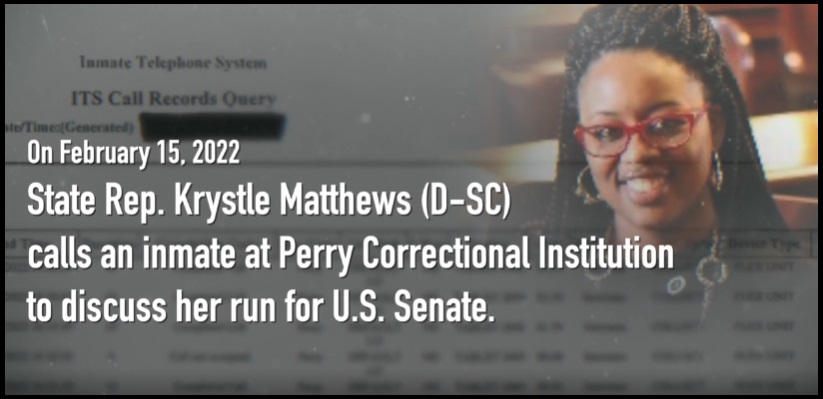
South Carolina Senate Candidate Caught on Tape Advocating to Deploy Georgia Election Strategy


Posted originally on the conservative tree house on June 26, 2022 | Sundance 

Project Veritas Action, a subsidiary of Project Veritas, has released a leaked audio from South Carolina Democrat Krystle Matthews, promoting a political strategy where blacks infiltrate the republican party and use drug money to fund organized political changes.  See Website Here.  A portion of the audio is below {Direct Rumble Link}

What South Carolina Senate candidate Matthews is outlining in the leaked audio sounds remarkably similar to the prior successful operation of Georgia democrats and republicans.  The networks of the AME church and the political activists within the Black Lives Matter movement, coalesce by infiltrating the republican party and then working to support the agenda of the Democrat political apparatus.  LISTEN: 

This is the quiet part of turning a red state blue.  It is far too late for any effort in Georgia to reverse the situation as the Republican club is now completely compromised.  Stacey Abrams will be the next Governor of Georgia and her three political activist groups, containing multiple levels of election workers and campaign organizers, will solidify the next decade of elections in support of Democrats.  However, states like Texas and South Carolina should pay attention to the strategic part of the effort outlined by Ms. Matthews, there is still some time to stem the outcome in those states.

[CHARLESTON – June 26, 2022] Project Veritas Action has published a recording of U.S. Senate candidate, Krystle Matthews, talking about her desire to break multiple laws while using profanities and racially-charged language.

Krystle Matthews (D-South Carolina) is heard on the audio discussing strategies like orchestrating democrats to run as republicans for elected office: “We need some secret sleepers.”

“We need them to run as the other side, even though they for our side, we need people to run as Republicans in these local elections. This is the only way you’re going to change the dynamics in South Carolina,” she adds.

She then encourages donations to her campaign from people engaging in illegal activity, including straw donations, which are political contributions made to candidates under another name.

“I still got to struggle to raise money for my campaign, where the f*** is my black people with money? I don’t care about no dope money, give me that dope boy money! Where the duffle bag boys?  Get you – find me somebody from your family that don’t even know you donating to my campaign and put that s*** under they names.” (read more)

The Modern Democrat Voter


Posted originally on the conservative tree house on June 26, 2022 | Sundance 

Rarely does an image encapsulate a moment in U.S. political history so succinctly.  This is a brilliant, absolutely brilliant, representation of a modern leftist who votes politically in favor of democrats.   This artwork is one of the best encapsulations I have seen in years.

The image is particularly poignant because modern leftists must pretend not to know things in order to advance their political ideology.  The suburban female voter, perfectly showcased as a “Karen” type figure (and the gender shaded imagery) is a representation of a wealthy, white, female, suburban liberal who drives the overall policy direction of the toxic political left.

The artwork perfectly encapsulates the G7 policy announcement made by Joe Biden earlier today:

(1) To increase dependency and control the third-world population the G7 will finance a vaccine manufacturing facility in Senegal.  The breeding of the brown people must be controlled – climate change policy demands it. 

(2) To control the optics of the third-world complaining about it, the G7 will mobilize $335 million in private capital to control the communication systems in Africa, Asia, and Latin America.  The brown people must not discover the nature of their exploitation; and the citizens within the G7 nations must not find out their government is exploiting the brown people. Wouldn’t look good.

(3) The United States will spend $50 million over five years to support gender equity in the developing world increasing the friction between brown women and brown men, while ignoring cultural differences and forcing the social ideology of the West upon them.  And finally…. 

(4) The G7, fearing third-world instability and anger from the brown people that could disrupt their supply chains, the U.S. and Western nations will now seek to increase their control of mining for mineral deposits needed for G7 batteries – and will fund more railroads and ports to export the critical material to the West more quickly. 

[SOURCE]

The announcement is an official launch and a rebranding of what had been rolled out last year at the G7 in the UK as “Build Back Better World,” the formal instructions from the World Economic Forum surrounding climate change.

[The G7 includes Canada, the United States, Italy, Germany, Japan, the U.K and France.]  

[Leaders of the EU and European Commission include themselves out of a sense of self-importance] 

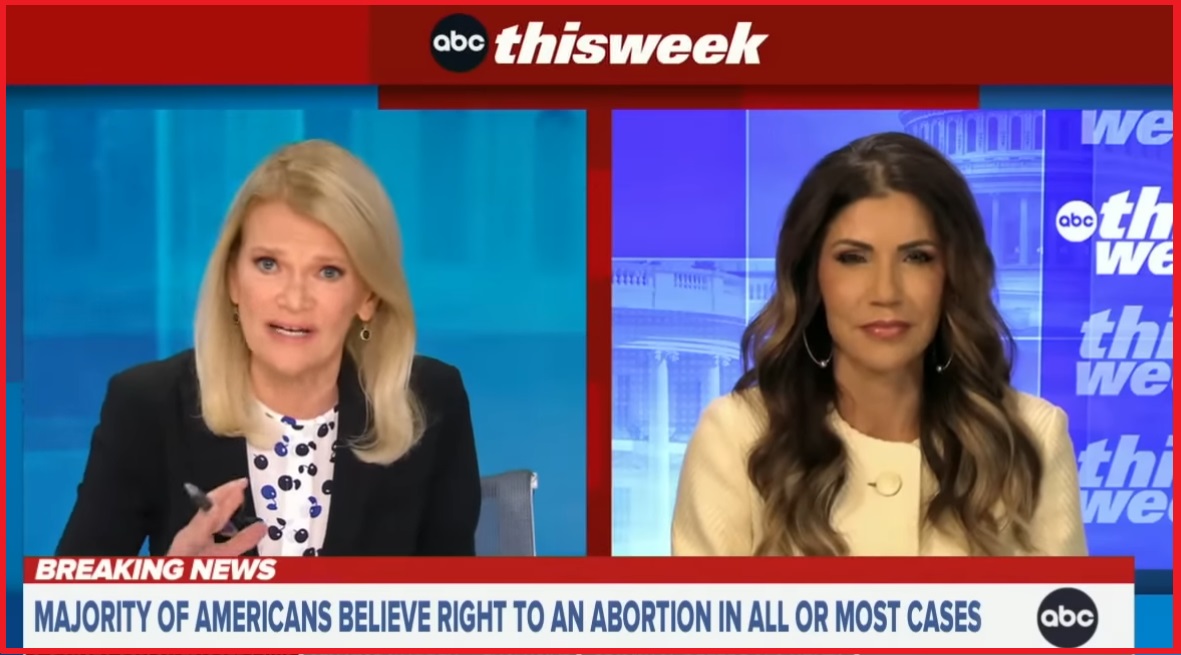
Sunday Talks, South Dakota Governor Kristi Noem Discusses Abortion Trigger Law in Aftermath of Supreme Court Ruling


Posted originally on the conservative tree house on June 26, 2022 | Sundance 

ABC News Martha Raddatz confronts South Dakota Governor Kristi Noem about state abortion rules, limits and restrictions in the aftermath of the Supreme Court ruling overturning Roe and returning the legal decision surrounding abortion to the states.

Ms Raddatz is a pro-death advocate who decries any possibility that an unborn child, including an unborn female child, has a right to live.  Ms. Noem handled the combative interrogation with political aplomb.  WATCH: 

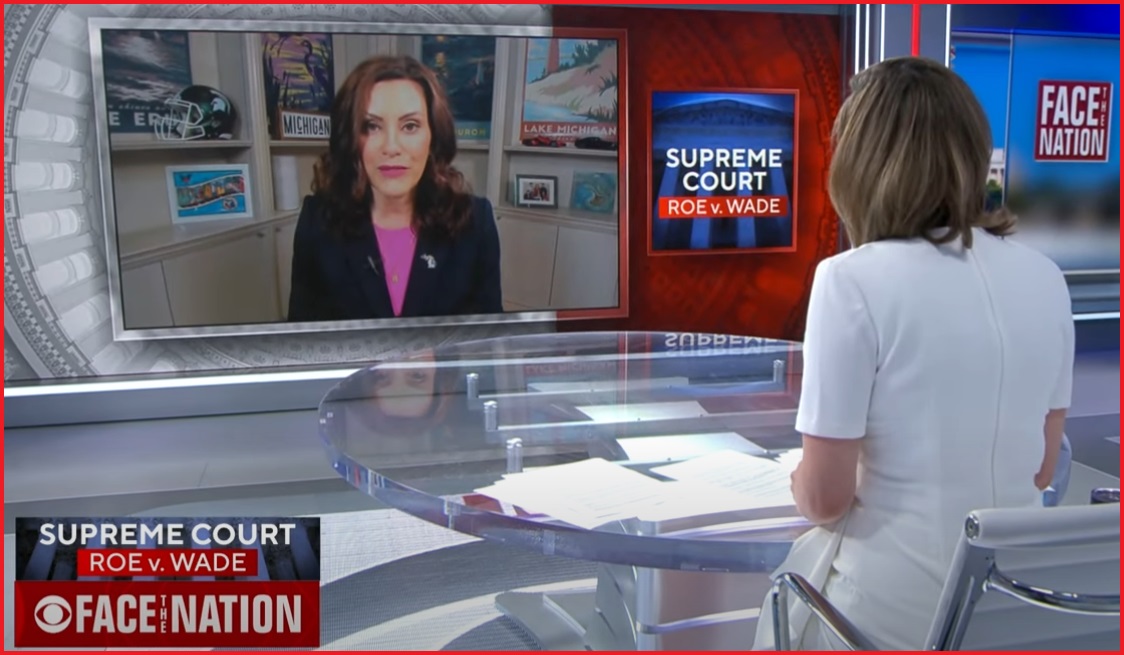
Sunday Talks, Michigan Governor Whitmer Decries Abortion Ruling, Laments that Michigan State Legislature Affirms Abortion Limits


Posted originally on the conservative tree house on June 26, 2022 | Sundance

Comrades, this is quite a remarkable interview if you stand back away from the issue and just look at the context.  Michigan Governor Gretchen Whitmer appears on CBS Face the Nation to discuss abortion in the aftermath of Supreme Court overturning Roe.  The legal aspects for any abortion restriction now return to the state legislature and representatives closest to the people.

Comrade Whitmer is repeatedly asked what she can do to keep abortion available without limit.  In her responses Whitmer notes that her opinion on the issue is not held by the state legislature and lawmakers, as a result there’s not much she can do.  Gretchen Whitmer is admitting her view is not the view of the people in her state, yet she vows to continue fighting against the will of the people.  WATCH:

[Transcript] –  …”GOV. WHITMER: What I’m trying to fight for is the status quo in Michigan and there are reasonable restrictions on that. With the current legislature that I have, there is no common ground, which is the sad thing.” (read more)

Biden Pledges to Mitigate Third-World Food Shortages and Consequences of G7 Climate Policy, by Spending $200 Billion to Control Brown People Infrastructure and Communication


Posted originally on the conservative tree house on June 26, 2022 | Sundance

Western leaders, specifically including the G7, have a serious problem.  Their collective energy and economic policy, a chase for the climate change and corporate financial agenda, have created the downstream consequences of global food shortages and third-world instability.  The non-industrial nations will now, once again, suffer as a direct result of Western ideology and arrogance.

To combat the pesky third-world pitch forks, today Joe Biden announced the U.S. will lead the G7 in a series of advanced spending measures intended to control how the pain inflicted by the industrialized nations will surface to the rest of the world.   Western media must not let the suffering of the brown people become visible, lest people start to connect the dots and realize the G7 is an ideologically racist and exploitative enterprise.

To soften the reality of the brown people suffering, the leftist administration of Joe Biden will spend $200 billion to mitigate the damage.  There are four aspects:

(1) To increase dependency and control the third-world population the G7 will finance a vaccine manufacturing facility in Senegal.  The breeding of the brown people must be controlled – climate change policy demands it. 

(2) To control the optics of the third-world complaining about it, the G7 will mobilize $335 million in private capital to control the communication systems in Africa, Asia, and Latin America.  The brown people must not discover the nature of their exploitation; and the citizens within the G7 nations must not find out their government is exploiting the brown people. Wouldn’t look good.

(3) The United States will spend $50 million over five years to support gender equity in the developing world increasing the friction between brown women and brown men, while ignoring cultural differences and forcing the social ideology of the West upon them.  And finally…. 

(4) The G7, fearing third-world instability and anger from the brown people that could disrupt their supply chains, the U.S. and Western nations will now seek to increase their control of mining for mineral deposits needed for G7 batteries – and will fund more railroads and ports to export the critical material to the West more quickly. 

[TranscriptWATCH:

[Transcript] – THE PRESIDENT:  Thank you very much.  Well, good afternoon, folks.

Our nations and our world stand at a genuine inflection point in history.  Technology has made our world smaller, more immediate, and more connected.  It’s opened up incredible opportunities, but also accelerated challenges that impact on all of us: managing global energy needs, taking on the climate crisis, dealing with the spread of diseases.

And the choices we make now, in my view, are going to set a direction of our world for several generations to come.

These challenges are hard for all of us, even nations with resources of the G7.  But developing countries often lack the essential infrastructure to help navigate global shocks, like a pandemic.  So they feel the impacts more acutely, and they have a harder time recovering.

In our deeply connected world, that’s not just a humanitarian concern, it’s an economic and a security concern for all of us.

That’s why, one year ago, when this group of leaders met in Cornwall, we made a commitment: The democratic nations of the G7 would step up — step up and provide financing for quality, high-standard, sustainable infrastructure in developing and middle-income countries.

What we’re doing is fundamentally different because it’s grounded on our shared values of all those representing the countries and organizations behind me.  It’s built using the global best practices: transparency, partnership, protections for labor and the environment.

We’re offering better options for countries and for people around the world to invest in critical infrastructure that improves the lives — their lives, all of our lives — and delivers real gains for all of our people, not just the G7 — all of our people.

Today, we officially launch the Partnership for Global Infrastructure and Investment.  We collectively have dozens of projects already underway around the globe.

And I’m proud to announce the United States will mobilize $200 billion in public and private capital over the next five years for that Partnership.

We’re here today because we’re making this commitment together as a G7 in coordination with one another to maximize the impact of our work.

Collectively, we aim to mobilize nearly $600 billion from the G7 by 2027.

These strategic investments are areas of — critical to sustainable development and to our shared global stability: health and health security, digital connectivity, gender equality and equity, climate and energy security.

Let me give you some examples of the kinds of projects that are underway in each of these areas.

First, health.  Two years ago, COVID-19 — didn’t need any reminders about how critical investments in healthcare systems were and health sec- — and health security is, both to fight the pandemic and to prepare for the next one, because it will not be the last pandemic we under- — we have to deal with.

That’s why the United States, together with the G7 partners and the World Bank, are investing in a new industrial-scale vaccine manufacturing facility in Senegal.  When complete, it will have the potential to produce hundreds of millions of doses of vaccines annually for COVID-19 and other diseases.

It’s an investment that will enhance global vaccine supplies as well as improve access and equity for developing countries.

Second, in the digital area.  Our economies’ future increasingly depends on people’s ability to connect to secure information and communications technologies.  And we need to strengthen the use of trusted technologies so that our online information cannot be used by autocrats to consolidate their power or repress their people.

That’s why the Digital Invest Program is mobilizing $335 million in private capital to supply secure network equipment in Africa, Asia, and Latin America.

And the U.S. government also supported the successful bid by an American company, SubCom, for a $600 million contract to build a global subsea telecommunications cable.  This cable will stretch from Southeast Asia, through the Middle East and the Horn of Africa, to Europe.

This will be essential to meeting the growing demand for reliable security, high-tech connectivity in three key regions of the world.

Third, gender.  When women and girls have the ability and the opportunity to parcia- — to participate more fully in those societies and economies, we see positive impacts not only in their communities but around the board — across the board.

We have to increase those opportunities, though, for women and girls to thrive, including practical steps to make childcare more accessible and affordable as we continue the vital work to protect and advance women’s fundamental rights.

The United States is committing $50 million over five years to the World Bank’s global Childcare Incentive Fund.  This public-private partnership supported by several G7 partners will help countries build infrastructure that makes it easier for women to participate equally — equally — in the labor force.

Fourth and very important, climate and energy.  We’re seeing just how critical this is every day.  The entire world is feeling the impact of Russia’s brutal war in Ukraine and on our energy markets.

We need worldwide effort to invest in transformative clean energy projects to ensure that critical infrastructure is resilient to changing climate.

Critical materials that are necessary for our clean energy transition, including the production of batteries, need to be developed with high standards for labor and the environment.

Fast and reliable transportation infrastructure, including railroads and ports, is essential to moving inputs for refining and processing and expanding access to clean energy technologies.

For example, the U.S. government just facilitated a new partnership between two American firms and the government of Angola to invest $2 billion in building new solar projects in Angola.  It’s a partnership that will help Angola meet its climate goals and energy needs while creating new markets for American technologies and good jobs in Angola and, I suspect, throughout Africa.

And in Romania, the American company, NuScale Power, will build a first-of-its-kind small modular reactor plant.  This will help bring online zero-emission nuclear energy to Europe faster, more cheaply, and more efficiently.

The U.S. government is helping to advance the development of this groundbreaking American technology, which will strengthen Europe’s energy security and create thousands of jobs in Romania and the United States.

These deals are just some of what’s in store.  And we’re ready.  We’re ready to get to work, together, all of us.

To lead efforts — to lead U.S. efforts, in my case — appointed — I appointed Amos Hochstein, my Special Presidential Coordinator, to deal with the rest of our colleagues.  I’ll [He’ll] lead the U.S. whole-of-government approach to drive a coalition and a collaboration with the G7 and our partners around the world, including private sector and multilateral development banks.

I want to be clear: This isn’t aid or charity; it’s an investment that will deliver returns for everyone, including the American people and the people of all our nations.  It’ll boost all of our economies, and it’s a chance for us to share our positive vision for the future and let communities around the world see themselves — and see for themselves the concrete benefits of partnering with democracies.

Because when democracies demonstrate what we can do, all that we have to offer, I have no doubt that we’ll win the competition every time.

Thank you. (LINK)

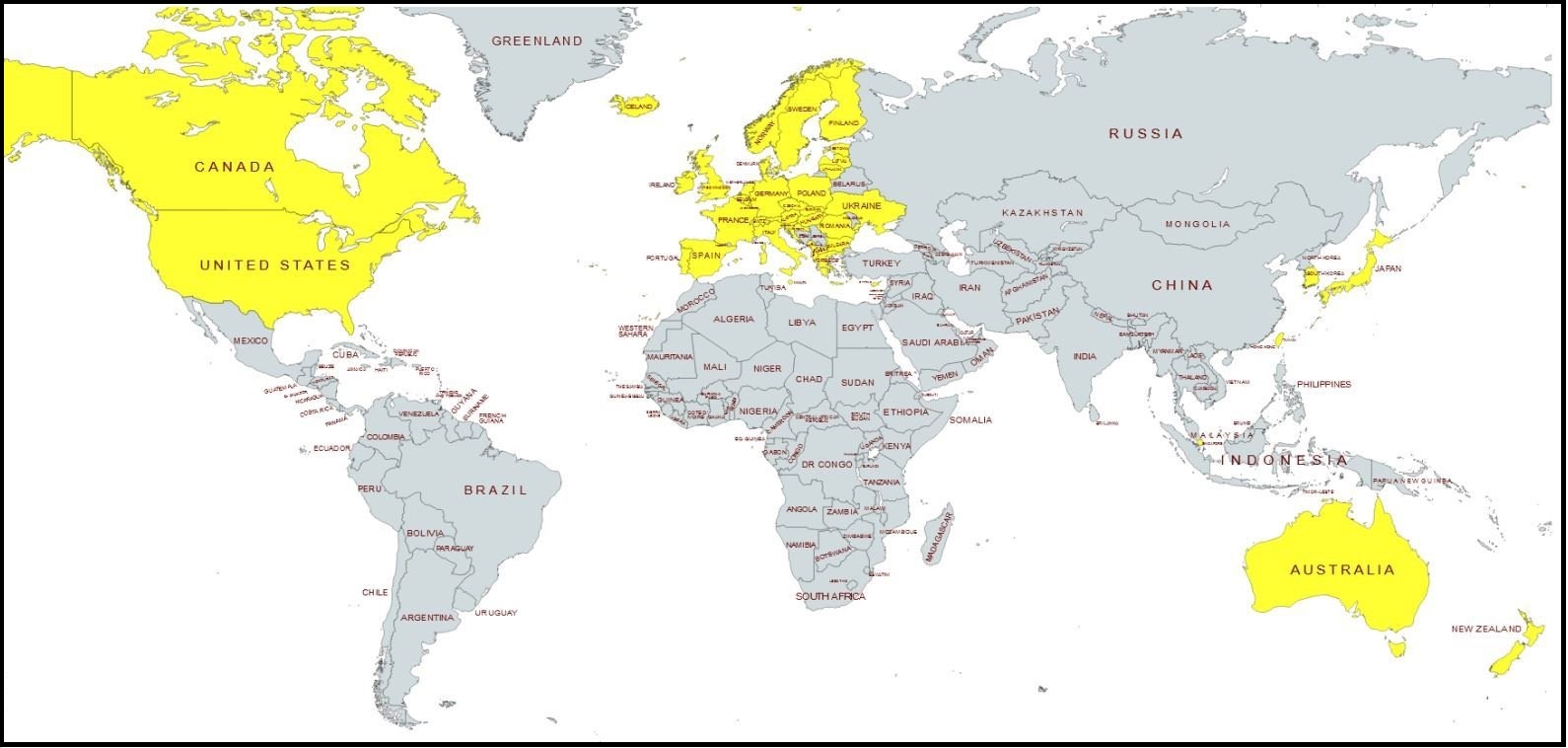
Western Democracy Democrat 

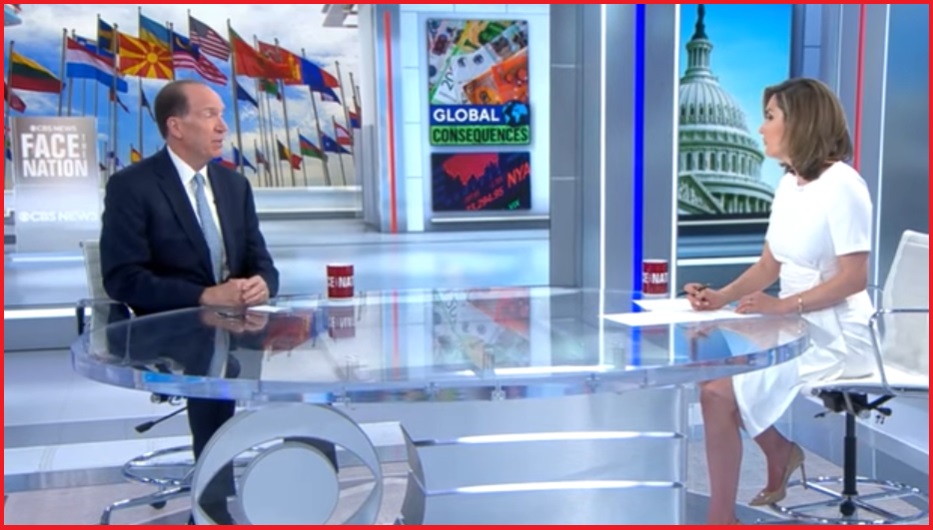
Sunday Talks, World Bank President Discusses Global Solution to Inflation, Food Shortages – Western Government’s Need to Reverse Direction


Posted originally on the conservative tree house on June 26, 2022 | Sundance

World Bank President David Malpass appears on CBS with media propagandist Margaret Brennan, a woman of exceptionally low intelligence, to discuss the current state of global economics and the likely consequences.  I have been saying this for a year and I will repeat, the absence of food will change things.

Within the interview [Transcript Here] the status and solutions that Malpass outlines are accurate and factual, albeit couched in gentle terms acceptable to the globalists. As noted by Malpass, if a shift in messaging and actual policy for energy and finance does not take place, the outcome will be bad for food production and government stability.

The World Bank president accurately states increased production is urgently needed to avoid global shortages.  However, that increase in production is only possible if the leaders of the largest economies reverse their positions on energy development and finance.  The world needs oil and natural gas production to increase dramatically in order to stave off food shortages. Unfortunately, those pragmatic recommendations are falling on deaf political ears.  WATCH:

[Transcript] – MARGARET BRENNAN: There are a lot of stressors on the global economic system right now, how do you describe where we are?

MALPASS: It’s a sharp slowdown, including even China. So we’ve seen the world growth fall by half since January in terms of GDP growth. But there’s also shortages, there’s inflation. And the food shortages for the poorer countries are becoming a significant concern, they already are.

MARGARET BRENNAN: I mean, global inflation, it’s not just the US it’s other wealthy countries around the world. But you’re also describing a recipe for global instability.

MALPASS: It feeds in when there’s not enough food that for- for weaker countries, poorer countries, that- that causes instability. And it’s a big factor in the turnover of governments that’s been occurring in quite a few of the countries. And then there also has to be much more discussion of what to do about the fiscal challenges that you know, running out of money for government as well as food. And so these all go together into fragility, very concerning.

MARGARET BRENNAN: COVID caused the deepest global recession since World War Two. Now, the world economy is in danger because of this Russian invasion in Ukraine. How do you avoid a global recession with all of these factors?

MALPASS: Some countries, it’s going to be very hard to do that. I think that leadership from the stronger countries is very important. There are a lot of possibilities, tools, for example, the- the central banks have many more tools than in 2008. You know, there were, there are regulatory tools that they have, they now hold huge bond portfolios, those could be- those are all funded by money from banks. So if there is reduction in the bond portfolios, that frees up capital that could be used for these supply chains that are so strained. The bottom line is there needs to be lots more production and that’s most available to the strongest countries. The U.S. is the world’s biggest economy and can increase production more than anybody else. And so that becomes one of the key variables in the outlook. What are you doing today, to increase production of everything, the world needs practically everything that the U.S. makes and there needs to be a process to really boost that production.

MARGARET BRENNAN: So if you were talking to Jerome Powell, that chair of the US Federal Reserve, you would say focus less on interest rates, focus more on what?

MALPASS: He’s got multiple tools. One is regulatory policy, the Fed is a sort of an important regulator of banks. So let the banks lend more. But then also on the bond side, reducing the bond portfolio would return more money to banks, all of the money being used to hold the bond portfolio comes from banks. And if they had more, they could lend and also the non-bank sector of the U.S. economy. That’s one of the most innovative, and it could put more money into the supply chain.

MARGARET BRENNAN: It’s interesting, you say that, the banks, I heard something from a U.S. official talking about that as an impediment to oil companies right now and President Biden’s calling on them to produce more energy. Is that a problem, that you see?

MALPASS: Big problem, and it’s really around the world markets look ahead, and they look at what the regulatory policy is going to be into the future. So if you’re an oil company, you hear the message from all around that, that the- the politicians don’t want your oil. And so- so then you- you drill less you put you make less of your R&D plans. You know, R&D is research and development is critical to the innovation in every sector. In developing countries, they aren’t producing energy either, because they’re constrained by bank regulations by the lack of financing.

MARGARET BRENNAN: But even at this meeting of the largest global, you know, Western economies at the G7, there’s going to be focus on sustainability, there’s going to be focus on climate change, the message there is switch away from fossil fuels. But then at the same time, you’re hearing Germany, build a coal burning once again, the United States urging oil and gas production once again, because of the crisis with Russia. So how do all these pieces fit together without impacting growth in a negative way?

MALPASS: There’s an inconsistency [in energy policy] and it’s a moment in time the world’s trying to reduce the dependence on Russia, and also on China. And it needs to keep markets open and not restrict exports and finance the new investments that’s needed, and there’s not clarity in Europe. You know, some of the countries want nuclear power, some want natural gas, and they’re talking about importing natural gas, but they’re doing it slowly. So that for the poorer countries in the world, this is also- it’s a conundrum, how are we going to get forward when Europe is drawing in so much of the world’s natural gas.

MARGARET BRENNAN: So a state department official said, a few days ago, food crisis will be at least a three-year problem. What time horizon do you put on the food crisis and the energy crisis?

MALPASS: I’ll say one thing, it’s possible to produce enough to soften that crisis. But at the rate that we’re going right now, the fertilizer isn’t being made, you know, fertilizer comes a giant source of fertilizer is from natural gas, through the ammonium channel into the most useful fertilizer. And it also is used to make the electricity that converts the minerals into fertilizer, and that’s just not happening. So a lot of the world is shutting down for lack of fertilizer, and then those shortages of crops will last for multiple years. We need to break that cycle, and do it pretty forcefully now, through announcements. The markets listen to what the governments are saying. And I think if the governments were saying, if the central banks were saying there’ll be currency stability, meaning years and years from now, the currencies won’t have devalued, they won’t be causing inflation, they’re going to be strong and stable for the long term, that would go a long way and the same thing on this production side of the economies, say that you want your strong economies to produce twice as much as they are right now. That’s within reach for many of these innovation techniques.

MARGARET BRENNAN: The Federal Reserve Chair said this week in this country, that recession is certainly a possibility, in part because of higher interest rates. Citigroup puts the odds of a recession at 50%. What’s your projection here for the world’s most important economy?

MALPASS: We put out a report three weeks ago that didn’t have the US in recession. But we said in downside scenarios there could be and so I don’t disagree with those estimates that you’re seeing there. And I would say the key variable is what do you do today to provide more production that addresses both the recession problem and also the inflation problem because you- you just push goods into the market and you make it clear to the world, we’re going to produce so much, you won’t be able to get that price.

MARGARET BRENNAN: So do you agree with Fed officials when they say it’s going to take at least two years, a couple of years before we get inflation back down to 2%?

MALPASS: It’s going to take time to come down, but again, that depends on what our- what’s your forecast for oil prices, for natural gas prices, for fertilizer? I guess it’s- it’s clearly- it’s going to take- months and months and maybe two years to bring inflation back down. It- markets respond, though, to signals. And so I think the important question is, can there be enough signals out of the U.S. but also the other advanced- the big economies, that they’re going to provide more production. And the reason I keep coming back to that central banks have a lot to do with whether businesses feel that they can borrow more money. It’s the regulatory policy, also this, this control of so many bonds, you know, in Japan, they’ve bought up a huge part of the national debt, so the central bank, but takes money from the banking system and buys government bonds. That’s not adding to supply in Japan.

MARGARET BRENNAN: So lastly, before I let you go, you have warned on this program before about a debt crisis in these developing countries, the emerging markets, with interest rates headed up is that now where we are, are we at crisis?

MALPASS: We’re at crisis, and we see more countries falling in one by one, we’ve seen that Sri Lanka in the very grave difficulties there. But it’s, it’s going to be many countries because of as you say, the interest rates going up and also their GDP going down in- in this slow growth environment of the world. The solution is a lot more production intent from the advanced economies.

MARGARET BRENNAN: A perilous moment for the global economy, David.

MALPASS: Dangerous, and I just hope we can push through strongly and with confidence.

MARGARET BRENNAN: Thank you very much for your time.

A Very Dangerous Time Inside Ukraine as U.S. Officials Admit CIA and Pentagon Conducting Proxy War Effort from Kyiv


Posted originally on the conservative tree house on June 26, 2022 | Sundance 

We must always keep focus on the context for information that comes from the U.S. State Dept and the Central Intelligence Agency to the media.  Yesterday, as Joe Biden was en route to the G7 summit in the Bavarian Alps, the New York Times published an article saying the CIA and Pentagon special forces are organizing and conducting the NATO war effort from a secret operation center in Kyiv.

Some viewed the article as the NYT violating operational security for the U.S. led effort. However, that perspective belies the nature of how the media is used in war by Dept of State and intelligence officials.  The details of the Times article are attributed to “three U.S. officials,” and should be looked upon as purposeful.

In addition to the timing of Biden headed to the G7, the admission of CIA officials conducting the war effort from inside Ukraine, comes as NATO partner country Lithuania informs Russia that prior transit treaties to the Russian enclave of Kaliningrad will not be honored.  NATO is poking and provoking a response from Russia, the Times article is part of this effort.

New York Times – … [E]ven as the Biden administration has declared it will not deploy American troops to Ukraine, some C.I.A. personnel have continued to operate in the country secretly, mostly in the capital, Kyiv, directing much of the vast amounts of intelligence the United States is sharing with Ukrainian forces, according to current and former officials.

At the same time, a few dozen commandos from other NATO countries, including Britain, France, Canada and Lithuania, also have been working inside Ukraine. The United States withdrew its own 150 military instructors before the war began in February, but commandos from these allies either remained or have gone in and out of the country since then, training and advising Ukrainian troops and providing an on-the-ground conduit for weapons and other aid, three U.S. officials said.

Few other details have emerged about what the C.I.A. personnel or the commandos are doing, but their presence in the country — on top of the diplomatic staff members who returned after Russia gave up its siege of Kyiv — hints at the scale of the secretive effort to assist Ukraine that is underway and the risks that Washington and its allies are taking.

[…] The commandos are not on the front lines with Ukrainian troops and instead advise from headquarters in other parts of the country or remotely by encrypted communications, according to American and other Western officials, who spoke on the condition of anonymity to discuss operational matters. But the signs of their stealthy logistics, training and intelligence support are tangible on the battlefield.

Several lower-level Ukrainian commanders recently expressed appreciation to the United States for intelligence gleaned from satellite imagery, which they can call up on tablet computers provided by the allies. The tablets run a battlefield mapping app that the Ukrainians use to target and attack Russian troops. (read more)

Regardless of debatable opinion on the Russian special military operation in eastern Ukraine, there are multiple motives for NATO and western government to escalate the proxy war against Vladimir Putin.

The proxy war in Ukraine provides a cover justification for the economic consequences driven by western government COVID-19 spending and policy.  We are seeing Russia being blamed for oil shortages, an EU energy crisis, U.S. gasoline prices, global food and fertilizer shortages, as well as global inflation overall.

While there is some latter causation in EU energy disruption related to the Ukraine war, the blaming of Putin is wildly disproportionate to the actual impact from the Russian operation; not to mention disconnected from the reality of those economic consequences surfacing long before the February 24th Russian incursion began.

Factually, it is the NATO and Western sanctions against Russia that have contributed to the Ukraine impact on the global economy.  Russia has no issue selling oil, gas and food related products to the global market.  It is the sanctions that forbid the sales and created the fracture in global trade now impacting the EU and to a lesser extent the U.S.

All of that said, consider the position of Vladimir Putin now as the U.S. openly admits to conducting military operations against Russia from inside Ukraine while NATO allies like Lithuania announce blockades against products to and from Russian civilians in Kaliningrad.

Putin knows the U.S-led NATO alliance would like nothing more than to invoke article 5 of the NATO treaty if Russia takes any hostile action toward a NATO country. The Russian president is likely not going to fall for any bait that can be placed in front of him.  However, that doesn’t mean Vladimir Putin does not have options to strike back against increased provocation.

Russia can strike any region inside Ukraine, including any area they previously did not have as a target, without changing the dynamic of current hostilities.  This puts the capital city of Kyiv in a precarious place, especially given the pronouncements by U.S. officials that CIA and Pentagon operators are working to fight Putin’s forces from inside Kyiv.  Again, a pronouncement that could be looked upon as intentionally publicized in order to provoke such a move.

Russia can also shut down the remaining pipelines out of Russia and sell oil and natural gas, albeit at higher prices, to non-western countries (India, China, etc).

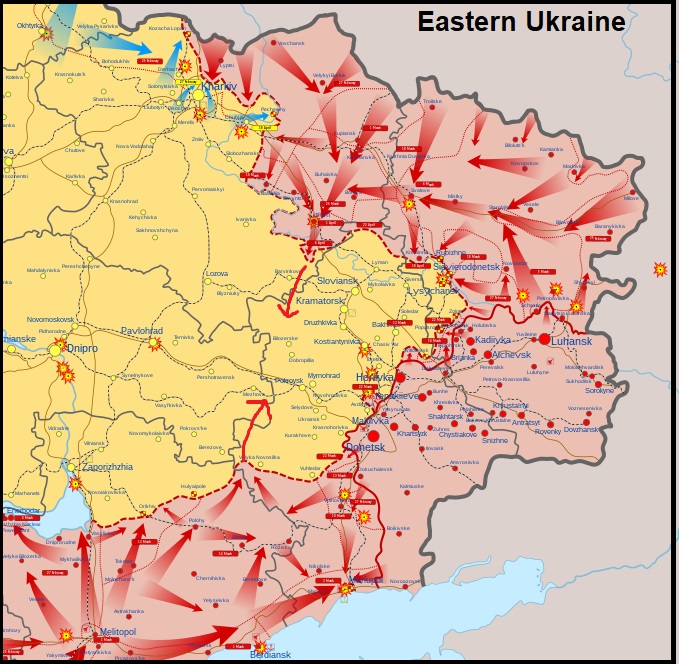
As the ongoing successful effort in eastern continues, Russia has options to ignore NATO’s desire to expand the conflict or he could target very strategic operation centers in Western Ukraine that are being used as bait by U.S. officials promoting their antagonism through the New York Times.

German Economic Minister Announces Restart of Coal Power Plants for Electricity Due to NATO Sanctions and German Dependence on Russian Oil and Gas


Posted originally on the conservative tree house on June 23, 2022 | Sundance

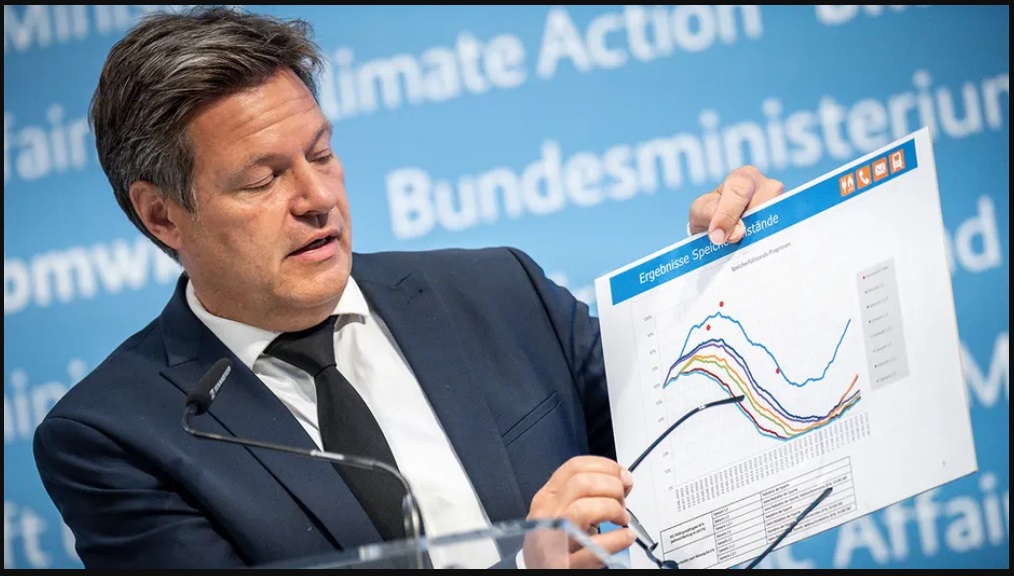
To say the recent remarks from German Economic and Climate Minister Robert Habeck showcase the stupidity of the western sanctions would be an understatement.  In a broad energy policy announcement to the German people, Minister Habeck has announced that natural gas is now urgently being stored and built up in order to survive next winter.

Additionally, the German parliament is being called into emergency session to re-write climate laws allowing coal-fired electricity power plants to be brought back on-line.  Essentially, years of German renewable energy investments and initiatives are now being reversed in order to maintain the commitment to NATO sanctions against Russia.

You can read the full translated remarks HERE.  Some of the more stunning excerpts are below.

GERMANY – Minister Robert Habeck […] “The situation on the gas market has deteriorated in recent days. The missing quantities can still be replaced, and the gas storage tanks are still being filled, albeit at high prices. Security of supply is currently guaranteed. But the situation is serious. We are therefore further strengthening precautions and taking additional measures to reduce gas consumption. 

[…] In order to reduce gas consumption, less gas is to be used to produce electricity. Instead, coal-fired power plants will have to be used more. […] That means, to be honest, more coal-fired power plants for a transitional period. That’s bitter, but in this situation it’s almost necessary to reduce gas consumption. We must and we will do everything we can to store as much gas as possible in summer and autumn. The gas storage tanks must be full in winter. That has top priority, ”said Habeck. (read full remarks)

In order to unbuckle themselves from dependence on Russian pipelines, Habeck also announced that floating Liquified Natural Gas terminals will have to be created so they can source LNG from other nations.   Currently Germany has no port system to offload LNG, they will be purchasing and leasing floating ships to act as LNG terminals.

I am reminded of the prior warning to Germany from U.S. President Donald Trump.  It’s worth remembering that U.S. media blasted President Trump for being so brutally honest in his NATO remarks where he warned about the danger of Germany being so dependent on Russia for oil and gas.  WATCH:

Zelenskyy Officially Bans Ukraine’s Largest Opposition Political Party


Posted originally on the conservative tree house on June 20, 2022 | Sundance 

The definition of the modern “western democracy” in Ukraine is increasingly showcased as the goal for modern totalitarian government.

The inflection point away from representative democracy was first evident in the way COVID-19 was leveraged by “western” governments in the U.S, Canada, Australia and the European Union.  Totalitarian minded leaders within those democracies, including governors in the United States, began operating without any elected representative feedback. Everything shifted from legislative representation to a system of dictatorial fiats with no opposition allowed in the arbitrary rules and regulations.

From forced lockdowns and arbitrary determinations of “essential workers,” various western government leaders were drunk on their new power.  Those who were already predisposed to the benefits of communism (aka Justin Trudeau) and various shades therein, dropped all pretense of believing there were limits to their power and began dispatching opposition views.

It did not take long before we saw things escalate into lockdowns, travel bans, forced business closures, quarantine camps and ultimately forced vaccinations and checkpoints for transit.  Collectively, none of these efforts ever went before a representative body for debate and consent; they were done through brute force and power of a top-down centralized authoritarian government.  It did not seem as if most people realized how ‘western democracy’ changed overnight through the use of the pandemic.

What we see taking place in Ukraine is an outcropping of this newly defined ‘western democracy.’   Using a declaration of emergency power, President Volodymyr Zelenskyy has now banned all opposition voices, taken control of broadcast media and now today banned the second largest political party in Ukraine. [Radio Free Europe Link]

Ukraine’s Opposition Platform For Life (OPPL) was the second largest political force in the Ukraine Parliament.  As of today, the party is officially banned by a Ukrainian court at the request of the Zelenskyy Ministry of Justice.   All assets, funds and property belonging to OPPL have been seized and transferred to the state.

“The court satisfied the claims of the Ministry of Justice of Ukraine: the activities of the Political party Opposition Platform – For Life were banned; the funds and other assets of the party, its regional, city, district organizations, primary organizations and other structural entities were transferred to the ownership of the state,” the statement reads.

As Ukrainian News Agency reported, the Cabinet of Ministers proposes to the Verkhovna Rada that the ban on the party be the basis for depriving the mandate of members of local councils. (link)

More from Reuters – KYIV (Reuters) – A Ukrainian court has banned a pro-Russian party led by a close ally of Russian President Vladimir Putin, the justice ministry said on Monday.  It said the court in the western city of Lviv had decided to transfer to the state all property, funds and other assets held by the “Opposition Platform – For Life” party led by Viktor Medvedchuk, a wealthy businessman accused of treason. (read more)