Armstrong Economics Blog/AI Computers
Re-Posted Jul 14, 2017 by Martin Armstrong

with the ambitious goal of creating a hedge fund to manage ALL the money in world(!) in an efficient manner using AI (machine learning, neural networks and whatever the data scientists can come up with).
At the core of this project is the historical data made accessible for free to the data scientists in encrypted form, but still usable since the structure is still there. The data scientists then compete with their AI methods against each other in auctions when evaluating their methods on a to them at auction time unknown validation set (latest data set).
The hedge fund will be the combination of the best AI methods driven in a purely evolutionary fashion with the purpose to allocate the money to where it is needed best. A nice feature is that the AI methods developed and put to use by a data scientist can be kept secret from the other data scientists and the hedge fund itself, The data scientist only needs to make the output of the AI algorithm available, pretty much like you do with Socrates :-).
The data scientist can always take his/her algorithm elsewhere if not happy with the hedge fund.
I think this sounds like a really innovative idea, but there might be some pitfalls that you would be able to highlight. For example I would expect your Socrates database to bigger than the Numerais at the moment.
Best Regards
/M
 The effort to create option models known as Black–Scholes completely broken down and resulted in the Long-Term Capital Management debacle. That was covered in the book – When Genius Failed. The failure took place because they did not have the database. They only tested the algorithm back to 1971.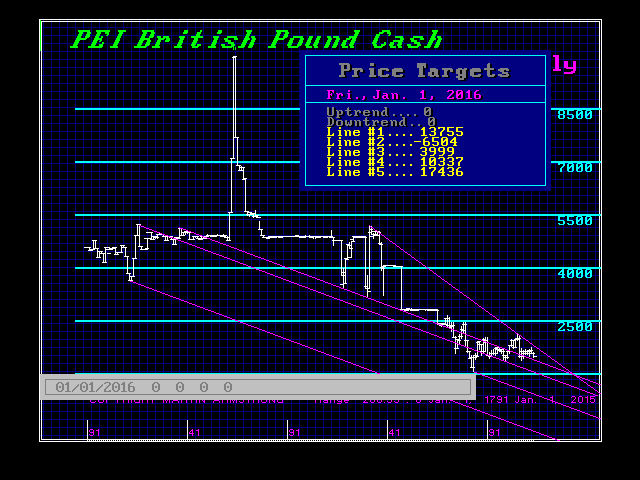


 The markets are far more precise than anyone could have ever imagined. It is unfortunate that the analytical field is plagued by people pretending to be prophets or gurus like the old snake-oil medicine salesmen of the 19th century. Nobody can forecast anything from as personal opinion perspective on a consistent basis. Sure, everyone can make a single forecasting call based upon a gut feeling. But they cannot accomplish that on any consistent basis. This is all about a journey into a world of hidden order – the chaos theory. It is not being a prophet, guru or physic. Such titles reduce the analyst to a snake-oil salesman.