A TV reporter is caught acting pretending the wind is so strong in Florence while two people in the background are casually walking by. Besi9des that, the wind is coming from behind him and he is acting as if he is fighting against the wind from from the opposite direction. Hurricane Florence was downgraded to Category 1 before it made landfall. Instead of reporting the truth, the media seems desperate for attention and viewership that they are exaggerating and outright reporting propaganda. The media is so intent upon handing the country back to Democrats, there is not a single piece of news that they are now turning it against Trump claiming Global Warming is the reason for Florence. We can’t even just get honest weather reports without a political slant and manipulation.
The Washington Post has used the Hurricane Florence as an excuse to turn it against Trump reporting he is “complicit” on climate change and this storm is basically all his fault. Surely if we just taxes every house $1,000 a year as in Canada for the Global Warming Tax storms like this would NEVER happen again is the implication. The Post wrote:
YET AGAIN, a massive hurricane feeding off unusually warm ocean water has the potential to stall over heavily populated areas, menacing millions of people. Last year Hurricane Harvey battered Houston. Now, Hurricane Florence threatens to drench already waterlogged swaths of the East Coast, including the nation’s capital. If the Category 4 hurricane does, indeed, hit the Carolinas this week, it will be the strongest storm on record to land so far north.
President Trump issued several warnings on his Twitter feed Monday, counseling those in Florence’s projected path to prepare and listen to local officials. That was good advice.
Yet when it comes to extreme weather, Mr. Trump is complicit. He plays down humans’ role in increasing the risks, and he continues to dismantle efforts to address those risks. It is hard to attribute any single weather event to climate change. But there is no reasonable doubt that humans are priming the Earth’s systems to produce disasters.
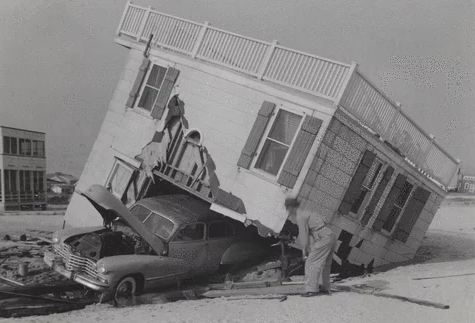
1944 The Great Hurricane Worst to Hit New Jersey
I grew up in New Jersey and had a family friend we called an uncle who lived on the beach. Twice he lost his house that was swept out to sea in 1955 and again in 1960. The press is acting like there have never been storms like we have today and this is all because of Global Warming. The first three of the top 12 worse storms to hit New Jersey took place in 1804, 1806, and 1821 followed by 1903. All predate the combustion engine and CO2 emissions.
Then there was the famous Spanish Treasure Ship fleet where all 11 ships were sunk in a Hurricane of 1715. Hello! These are before they claim Global Warming began! The list of the worst storms from the 19th century forward is 1804, 1806, 1821, 1900, 1903, 1938, 1944, 1955, 1960, 1999, 2011, and 2012. The worst hurricane was 1900 insofar if the measurement is the number of people dead which reached 12,000 in Galveston, Texas.
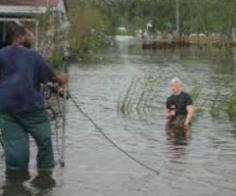
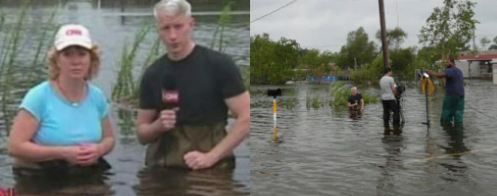
After the hurricane of 2017 that was to hit my area of Florida, CNN had people scared to the point they were, according to the Associated Press, paying $1,725 for a flight from Fort Myers to Charlotte, North Carolina ahead of Irma. People around here hate CNN for their coverage last year. They staged things like standing in water while the film crew was not anywhere close to the same depths. You have to figure Anderson Cooper was also probably standing with his knees bent to make it look even deeper. They are trying so hard to manufacture news it has become outrageous.
CNN claimed there would be a storm surge of 7 to 10 feet. I live right on the beach and it reached maybe one foot. The other day, there were two young girls sitting at the next table and all they talked about was FAKE NEWS and how they will not even watch TV anymore. If they get caught manufacturing this nonsense, can we believe anything anyone says now in mainstream media left or right?
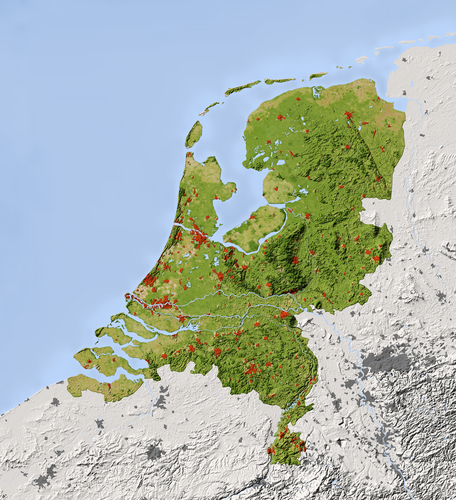
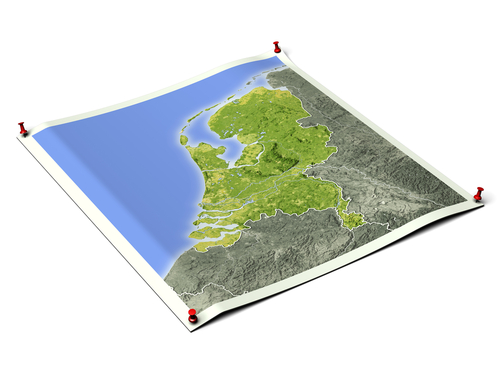
A friend of mine was taking a class in geography in university for the credits. The professor was all about brainwashing the class about Global Warming. The pitch was that with reducing air pollution from cars, it would be possible to save the Netherlands otherwise the seas will rise and the country will vanish from the face of the earth.
I find it really incredible how these people promote that everything on the planet is somehow our fault. Most of the ancient city of Alexandria, Egypt, from the time of Cleopatra is under water. Sure, that must have been caused by too many chariots and the farting of horses. Then there is the discovery of ancient sea fossils in the middle of Australia which shows that obviously, Australia was once under water. Dinosaur-age fossilized remains of extremely tiny organisms that are found in the sea have been discovered in the center of the arid Australian desert. This confirms that this area was, at least for a short time, under by sea water some 40 million years before Australia’s large inland sea existed.
I grew up in New Jersey. One of the few memories I have as a child was going down to the clay pits in search of dinosaurs since they had found one in the area. But they also found ancient sea creatures. During the Precambrian period, New Jersey was covered by a shallow sea that was home to stromatolite forming bacteria. During the early part of the Paleozoic, New Jersey was still under water. Fossils of various sea creatures were discovered in New Jersey. The state was home to creatures like brachiopods and trilobites. By the Silurian period, the northern part of the state was home to a river system. Sea levels rose and fell throughout the remainder of the state’s Paleozoic rock record long before people existed. There are no local rocks of Carboniferous or Permian age and then during the Triassic, the state became a terrestrial ecoregion. Then there were local lakes which became the home to various crustaceans. On land, dinosaurs left behind footprints and continued to do so into the Jurassic period. Much of the state was covered by sand which became known as the Pinelands.
The rise and fall of land have been going on for millions of years. It is part of the ecosystem itself and we are a bunch of narcissists to think that we are somehow even capable of changing the climate. We are no more than a flea on the back of a dog that can be shaken off when we become too annoying. When my friend texted me what the professor said that if we stopped driving our cars we could save the Netherlands, I texted back the ancient source I had read back in school.
There was a Greek geographer and explorer by the name of Pytheas of Massalia, but no copies of this work have survived. Nonetheless, we have others who have quoted Pytheas who recorded an account of the Low Countries, or what we call the Netherlands. Pytheas passed the Low Countries on his way to Heligoland around c. 325 BC. He wrote that “more people died in the struggle against water than in the struggle against men”. This is our earliest account of the region. Then we have the Roman author Pliny from the 1st century AD who wrote:
There, twice in every twenty-four hours, the ocean’s vast tide sweeps in a flood over a large stretch of land and hides Nature’s everlasting controversy about whether this region belongs to the land or to the sea. There these wretched peoples occupy high ground, or manmade platforms constructed above the level of the highest tide they experience; they live in huts built on the site so chosen and are like sailors in ships when the waters cover the surrounding land, but when the tide has receded they are like shipwrecked victims. Around their huts they catch fish as they try to escape with the ebbing tide. It does not fall to their lot to keep herds and live on milk, like neighboring tribes, nor even to fight with wild animals, since all undergrowth has been pushed far back.
Going back about 2,000 years ago, much of the Netherlands was covered by extensive peat swamps. The coastal dunes formed a natural embankment which prevented the swamps from draining. The first inhabitants were attracted to the rich soil compared to the peat swamps and sandy soil. They appear to have begun to protect themselves against floods by constructing their homes on artificial hills they created of which Pliny wrote about. Archeological evidence suggests that there was a cycle to the region between 500BC and 700AD where there were periods of habitation and abandonment as the sea level rose and fell.
It was not until the 9th century when the sea level rose again which forced people to raise their artificial hills higher. These small hills began to be connected forming villages and they began to construct dikes when communities could act in unison. It was not until after 1000AD that the population began to grow dramatically. This created more labor but a demand for more land. This is when we see the construction of dikes become more widespread. By 1250 most dikes had been connected into a continuous sea defense.
The Edict of Expulsion was a royal decree issued by King Edward I (1272-1307) of England on July 18th, 1290, expelling all Jews from the Kingdom of England. Why? The Jews were the king’s personal property, and he was free to tax them at will whereas British citizens could not be taxed without their consent which was obtained from Parliament. Edward I borrowed extensively from the Jews and taxes them to the point that they were no longer a source of revenue. He then expelled them and they were not allowed to take their property so it was the final confiscation to fund his war with France. Meanwhile, it was Philip IV of France who seized the Knights Templar, the Catholic Church moving it to Avignon installing a French Pope, and confiscating the assets of Italian bankers who were lending money to Edward I. This contributed to the first migration of the Jews to the Low Countries.
Sephardic Spanish Jews had once constituted one of the largest and most prosperous Jewish communities in the world and were regarded as the unquestioned leader of the Jewish world. During this period Sephardic Spanish Jews ended definitively with the anti-Jewish riots of 1391 about 100 years after the 1290 expulsion from England. Then about 100 years later, there was in Spain the Alhambra Decree of 1492 against the Jews. It seems that every time society could not repay the Jewish bankers, the borrowers suddenly discovered they were OMG Jewish. Consequently, the majority of Jews in Spain around 200,000 converted to Catholicism after the Alhambra Decree. Those who refused were forced into exile and migrated to the Netherlands where they began insurance and trading of commodities, bonds, and stocks in Amsterdam.
So to me, to even listen to some university professor claim that we can save the Netherlands by reducing CO2, I just cannot believe we have such idiots who know nothing and ignore history profess to students what amounts to just propaganda. And they want tens of thousands of dollars annually per student to be brainwashed. Unbelievable!
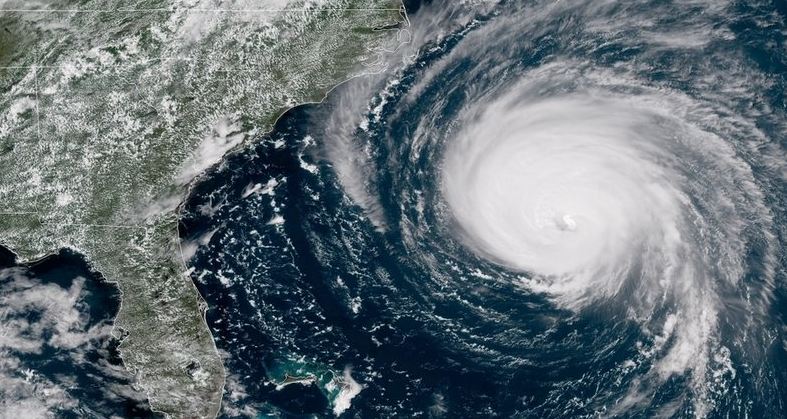
Here’s the latest advisory from the National Hurricane Center. At 1100 PM EDT (0300 UTC), the center of the eye of Hurricane Florence was located by NOAA Doppler radar and an Air Force Reserve Hurricane Hunter aircraft near latitude 34.0 North, longitude 76.8 West. 50 miles south of Moorehead City, 60 miles east-south-east of Wilmington, North Carolina. Florence is moving toward the northwest near 6 mph (9 km/h).
Data from the Hurricane Hunter aircraft, coastal surface observations, and NOAA Doppler radar indicate that maximum sustained winds are near 90 mph (150 km/h) with higher gusts. Little change in strength is expected before Florence core moves inland on Friday.
A turn toward the west-northwest and west at a slow forward speed is expected through Friday, followed by a slow west-southwestward motion Friday night and Saturday. On the forecast track, the center of Florence is expected to move inland across extreme southeastern North Carolina and extreme eastern South Carolina Tonight, Friday and Saturday. Florence will then recurve across the western Carolinas and the central Appalachian Mountains early next week.
STORM SURGE: The combination of a dangerous storm surge and the tide will cause normally dry areas near the coast to be flooded by rising waters moving inland from the shoreline. The water has the potential to reach the following heights above ground:
Cape Fear NC to Cape Lookout NC: 7-11 ft, with locally higher amounts in the Neuse, Pamlico, Pungo, and Bay Rivers
For those who are in the path of the storm, there comes a time when all options are removed and you enter the “Hunkering Down” phase. You’re there now. This storm is going to last for quite a while; and the backside storm surge has the potential to be much larger over time. This is going to be a long-duration event.
When the winds reach around 40mph, the utility company will likely, proactively, shut down the power. This makes things a heck of a lot safer in the aftermath; and much easier and safer during the rebuild. It is almost a guarantee you did not lose power due to damage from the storm but rather because of proactive measures from your power company. Do not expect the power to be turned back on until it is safe.
Hurricanes can be frightening; downright scary. There’s nothing quite like going through a few to reset your outlook on just how Mother Nature can deliver a cleansing cycle to an entire geographic region. The sounds are scary, especially in the dark. Try to stay calm despite the nervousness. Telephone and power poles, yes, even the concrete ones, can, and likely will, snap like toothpicks. Trees will bend and break; the sounds are dramatic.
There’s a specific sound when you are inside a hurricane that you can never forget. It ain’t a howl, it’s a roar. It is very unique sound in depth and weight. Yes, within a hurricane wind has weight. Stay clear of windows and doors. That scary roar sounds like it won’t ever quit…. it will… eventually; but at the time you are hunkering down, it doesn’t seem like it will ever end.
A constant and pure rage of wind that doesn’t ebb and flow like normal wind and storms. Hurricane wind is heavy, it starts and stays; sometimes for hours. Relentless, it just won’t let up. And then, depending on her irrelevant opinion toward your insignificant presence, hopefully she stops.
Then silence. No birds. No frogs. No crickets. No sound.
Nature goes mute. It’s weird.
We have no idea how much ambient noise is around us, until it stops.
Oh, if she wants, she’ll keep dumping buckets on you as she wanders away. Buckets. Not pails, garbage can sized buckets. After the scour, yup, nature too has a rinse cycle.
If your town, city or hamlet is not underwater, there will be convoys coming to construct a pre-planned electricity grid recovery process. Convoys from every city, town and state from the east-coast to the mid-west. A glorious melding of dirty fingernails all arriving for the meet-up. Depending on your proximity to the bigger picture objectives at hand, you will cherish their arrival.
But first, there will be an assessment. The convoys will stage at pre-determined locations using radios for communication. Street-by-street everything needs to be evaluated prior to thinking about beginning to rebuild a grid. Your patience within this process is needed; heck, it ain’t like you’ve got a choice in the matter…. so just stay positive.
Meanwhile, you might walk outside and find yourself a stranger in your neighborhood.
It will all be cattywampus.
Trees gone, crap everywhere, if you don’t need to travel, DON’T.
I mean CRAP e.v.e.r.y.w.h.e.r.e.
Stay away from power-lines.
Be entirely prepared to be lost in your own neighborhood and town for days, weeks, and even months. Unknown to you – your subconscious mind is like a human GPS mapping system. When that raging Florence takes away the subconscious landmarks I guarantee you – you are gonna get lost, make wrong turns, miss the exit etc.
It’s kinda funny and weird at the same time.
Your brain is wired to turn left at the big oak next to the Church, and the road to your house is likely two streets past the 7-11 or Circle-k. You don’t even notice that’s how you travel around town; that’s just your brain working – it is what it is.
Well, now the big oak is gone; so too is the Circle-K and 7-11 signs. Like I said, everything is cattywampus. Your brain-memory will need to reboot and rewire. In the interim, you’re gonna get lost… don’t get frustrated.
No street signs. Likely no stop signs. No traffic lights.
Remember, when it is safe to drive, every single intersection must be treated like a four-way stop…. and YOU ARE GOING TO HAVE TO PAY ATTENTION. Even the major intersections.
You’ll need to override your brain tendency to use memory in transit. You’ll need to pay close attention and watch for those who ain’t paying close attention. Travel sparingly, it’s just safer.
Check on your-self first, then your neighbors. It don’t matter if you’ve never said a word to the guy in the blue house before. It ain’t normalville now.
Break out of your box and check on the blue house down the street too. In the aftermath, there’s no class structure. Without power, the big fancy house on the corner with a pool is just a bigger mess. Everyone is equally a mess.
The first responders in your neighborhood are YOU.
You, the wife, your family, Mrs. Wilson next door; Joe down the street; Bob’s twin boys and the gal with the red car are all in this together. If you don’t ordinarily cotton to toxic masculinity you will worship it in the aftermath of a hurricane. Git-r-done lives there.
Don’t stand around griping with a 40′ tree blocking the main road to your neighborhood. Figure out who’s got chainsaws and set about clearing the road. If every neighborhood starts clearing their own roadways, the recovery crews can then move in for the details.
Stage one focuses on major arteries… then secondary… then neighborhood etc. It’s a process. Oh, and don’t get mad if your fancy mailbox is ploughed-over by a focused front end loader who is on a priority mission to clear a path. Just deal with it.
Phase-1 recovery is necessarily, well, scruffy…. we’re just moving and managing the mess; not trying to clean it up yet. It’ll be ok.
Keep a joyous heart filled with thankfulness; and if you can’t muster it, then just pretend. Don’t be a jerk. You will be surrounded by jerks…. elevate yourself. If you need to do a few minutes of cussing, take a walk. Keep your wits about you and stay calm.
Now, when the recovery teams arrive…. If you pass a line-man, pole-digger or crew say thanks. Just simple “thanks”. Wave at them and give them a thumbs-up. No need to get all unnecessarily familiar, a simple “thank you for your help” will generally suffice. You know, ordinary people skills.
Many of these smaller crews will be sleeping in cots, or in their trucks while they are working never-ending shifts. If you eventually start getting power back, and see a crew in a restaurant, same thing applies… “thanks guys”. If you can pay their tab, do it. If you can pay their tab without them knowing, even better.
Same goes for the tanker truckers. The convenience stores with gas pumps are part of the priority network. Those will get power before other locales without power. Fuel outlets are a priority. Hospitals, first responders, emergency facilities, fuel outlets, then comes commercial and residential.
Remember, you are the first responder for your neighborhood. Don’t quit.
Recovery is a process. Depending on the scale of the impact zone, the process can take days, weeks and even months. Take care of your family, friends and neighborhood, and generally make a conscious decision to be a part of any needed solution.
It’ll be ok.
It might be a massive pain in the a**, but in the end, it’ll be ok.
√Andrew
√Jeanne
√Frances
√Ivan
√Charley
√Irma
Keep a good thought. Who knows, we might even end up shaking hands.
According to the 11:00pm advisory Hurricane Florence has weakened to a Category 2 storm with winds at 110mph. Forward speed is still around 17mph and it is located approximately 280 miles east south-east of Wilmington North Carolina. [16 hrs away]
At 1100 PM EDT (0300 UTC), the center of Hurricane Florence was located near latitude 32.0 North, longitude 73.7 West. Florence is moving toward the northwest near 17 mph (28 km/h), and this general motion, accompanied by a gradual decrease in forward speed, is expected to continue through Thursday. A turn to the west-northwest and west at an even slower forward speed is expected Thursday night and Friday, and a slow west-southwestward motion is forecast Friday night and Saturday.
On the forecast track, the center of Florence will approach the coasts of North and South Carolina on Thursday, then move near or over the coast of southern North Carolina and eastern South Carolina in the hurricane warning area on Thursday night and Friday. A slow motion over eastern South Carolina is forecast Friday night and Saturday. (read more)
As many long-time readers will know, we do have a little bit more than average experience dealing with the aftermath of hurricanes. I ain’t no expert in the before part; you need to heed the local, very local, professionals who will guide you through any preparation, and neighborhood specific guidelines, for your immediate area.
But when it comes to the ‘after part’, well, as a long-time CERT recovery member perhaps I can guide you through the expectation and you might find some value. Consider this little word salad a buffet, absorb what might be of value pass over anything else.
When the winds reach around 40mph, the utility company will likely, proactively, shut down the power. This makes things a heck of a lot safer in the aftermath; and much easier and safer during the rebuild. Don’t expect the power to be turned back on until it is safe.
Hurricanes can be frightening; downright scary. There’s nothing quite like going through a few to reset your outlook on just how Mother Nature can deliver a cleansing cycle to an entire geographic region.
Telephone and power poles, yes, even the concrete ones, can, and likely will, snap like toothpicks. There’s a sound when you are inside a hurricane that you can never forget. It ain’t a howl, it’s a roar. A damn scary roar that just won’t quit…. it will… eventually, but at the time you are hearing it, it doesn’t seem like it will ever end.
A constant, and pure rage of scary wind that doesn’t ebb and flow like normal wind and storms… hurricane wind just starts and stays, sometimes for hours. Relentless and damn scary…. it just won’t let up. And then, depending on her irrelevant opinion toward your insignificant presence, hopefully she stops.
Then silence. No birds. No frogs. No crickets. No sound.
Nature goes mute. It’s weird.
We have no idea how much ambient noise is around us, until it stops.
Oh, if she wants, she’ll keep dumping buckets on you as she wanders away. Buckets. Not pails, garbage can sized buckets. After the scour, yup, nature too has a rinse cycle.
If your town, city or hamlet is not underwater, there will be convoys coming to construct a pre-planned electricity grid recovery process. Convoys from every city, town and state from the east-coast to the mid-west. A glorious melding of dirty fingernails all arriving for the meet-up. Depending on your proximity to the bigger picture objectives at hand, you will cherish their arrival.
But first, there will be an assessment. The convoys will stage at pre-determined locations using radios for communication. Street-by-street everything needs to be evaluated prior to thinking about beginning to rebuild a grid. Your patience within this process is needed; heck, it ain’t like you’ve got a choice in the matter…. so just stay positive.
Meanwhile, you might walk outside and find yourself a stranger in your neighborhood.
It will all be cattywampus.
Trees gone, crap everywhere, if you don’t need to travel, DON’T.
I mean CRAP e.v.e.r.y.w.h.e.r.e.
Stay away from power-lines.
Be entirely prepared to be lost in your own neighborhood and town for days, weeks, and even months. Unknown to you – your subconscious mind is like a human GPS mapping system. When that raging Florence takes away the subconscious landmarks I guarantee you – you are gonna get lost, make wrong turns, miss the exit etc.
It’s kinda funny and weird at the same time.
Your brain is wired to turn left at the big oak next to the Church, and the road to your house is likely two streets past the 7-11 or Circle-k. You don’t even notice that’s how you travel around town; that’s just your brain working – it is what it is.
Well, now the big oak is gone; so too is the Circle-K and 7-11 signs. Like I said, everything is cattywampus. Your brain will need to reboot and rewire. In the interim, you’re gonna get lost… don’t get frustrated.
No street signs. Likely no stop signs. No traffic lights.
Remember, when it is safe to drive, every single intersection must be treated like a four-way stop…. and YOU ARE GOING TO HAVE TO PAY ATTENTION. Even the major intersections.
You’ll need to override your brain tendency to use memory in transit. You’ll need to pay close attention and watch for those who ain’t paying close attention. Travel sparingly, it’s just safer.
Check on your-self first, then your neighbors. It don’t matter if you’ve never said a word to the guy in the blue house before. It ain’t normalville now.
Break out of your box and check on the blue house down the street too. In the aftermath, there’s no class structure. Without power, the big fancy house on the corner with a pool is just a bigger mess. Everyone is equally a mess.
The first responders in your neighborhood are YOU.
You, the wife, your family, Mrs. Wilson next door; Joe down the street; Bob’s twin boys and the gal with the red car are all in this together. If you don’t ordinarily cotton to toxic masculinity you will worship it in the aftermath of a hurricane. Git-r-done lives there.
Don’t stand around griping with a 40′ tree blocking the main road to your neighborhood. Figure out who’s got chainsaws and set about clearing the road. If every neighborhood starts clearing their own roadways, the recovery crews can then move in for the details.
Stage one focuses on major arteries… then secondary… then neighborhood etc. It’s a process. Oh, and don’t get mad if your fancy mailbox is ploughed-over by a focused front end loader who is on a priority mission to clear a path. Just deal with it.
Phase-1 recovery is necessarily, well, scruffy…. we’re just moving and managing the mess; not trying to clean it up yet. It’ll be ok.
Keep a joyous heart filled with thankfulness; and if you can’t muster it, then just pretend. Don’t be a jerk. You will be surrounded by jerks…. elevate yourself. If you need to do a few minutes of cussing, take a walk. Keep your wits about you and stay calm.
Now, when the recovery teams arrive…. If you pass a line-man, pole-digger or crew say thanks. Just simple “thanks”. Wave at them and give them a thumbs-up. No need to get all unnecessarily familiar, a simple “thank you for your help” will generally suffice. You know, ordinary people skills.
Many of these smaller crews will be sleeping in cots, or in their trucks while they are working never-ending shifts. If you eventually start getting power back, and see a crew in a restaurant, same thing applies… “thanks guys”. If you can pay their tab, do it. If you can pay their tab without them knowing, even better.
Same goes for the tanker truckers. The convenience stores with gas pumps are part of the priority network. Those will get power before other locales without power. Fuel outlets are a priority. Hospitals, first responders, emergency facilities, fuel outlets, then comes commercial and residential.
Remember, you are the first responder for your neighborhood. Don’t quit.
Recovery is a process. Depending on the scale of the impact zone, the process can take days, weeks and even months. Take care of your family, friends and neighborhood, and generally make a conscious decision to be a part of any needed solution.
It’ll be ok.
It might be a massive pain in the a**, but in the end, it’ll be ok.
√Andrew
√Jeanne
√Frances
√Ivan
√Charley
√Irma
Keep a good thought. Who knows, we might even end up shaking hands.
The next advisory from the National Hurricane Center is 2:00pm today. President Trump delivers a strong message of caution and concern ahead of the storm’s arrival.
.
On the forecast track, the center of Florence will approach the coast of North Carolina or South Carolina in the hurricane warning area on Thursday and Friday and move slowly near the coastline through Saturday. Florence is still forecast to be an extremely dangerous major hurricane when it nears the U.S. coast.
Earlier this afternoon President Trump and Vice-President Mike Pence held a press briefing in the oval office along with FEMA Administrator Brock Long and DHS Secretary Kirstjen Nielsen to discuss concerns and preparation in advance of hurricane Florence.
Those in the forecast areas are strongly advised to pay close attention to local officials and heed all evacuation orders. Florence is projected to be a long-duration event for the eastern seaboard and mid-Atlantic region. Severe, possibly catastrophic, flooding is likely.
.
[Transcript] – Oval Office – 3:13 P.M. EDT – THE PRESIDENT: Okay, thank you very much. I’ve received a briefing from Secretary Nielsen, Administrator Long, and my senior staff regarding Hurricane Florence and other tropical systems that will soon impact the United States and its territories. The safety of American people is my absolute highest priority. We are sparing no expense. We are totally prepared. We’re ready. We’re as ready as anybody has ever been.
And it looks to me, and it looks to all of — a lot of very talented people that do this for a living, like this is going to be a storm that’s going to be a very large one — far larger than we’ve seen in perhaps decades. Things can change, but we doubt they will at this stage. It’s a pretty late stage. We doubt they’re going to be veering very far off course.
The places that are in the way and in the most jeopardy would be Virginia, North Carolina, South Carolina — that area. And again, they haven’t seen anything like what’s coming at us in 25, 30 years — maybe ever. It’s tremendously big and tremendously wet. Tremendous amounts of water.
So I’ve spoken with the governors of South Carolina, North Carolina, and Virginia. They’re prepared. We’re prepared. We’re working very well in conjunction with the governors.
I’d like to ask Brock Long, our Administrator, who’s done so well for us in Texas and Florida — we have something that could very well be very similar to Texas, in the sense that it’s tremendous amounts of water. Texas was the one that had, I would say, to this point, Brock, probably more water than we’ve ever seen in a storm or a hurricane. And it went out for seconds and thirds. We’ve never seen anything like it.
But FEMA, as you know, did a fantastic job, and a fantastic job also in Florida. And I’d like to ask Brock, if you would, to just say a few words to the media as to where it is now, what’s going to be happening, and how well prepared we are.
ADMINISTRATOR LONG: Thank you, Mr. President. Unfortunately, Hurricane Florence is setting out to be a devastating event to the Carolinas, and potentially Virginia as well.
So as you can see, they’re forecasting a major landfalling storm — Category 3 or 4 storm at landfall. The biggest hazard that we’re worried about is storm surge. That’s the primary driver of the evacuations that are underway by the states of North Carolina, South Carolina, and Virginia right now. But as this system comes in and makes landfall, during the weekend it’s forecast to stall out, lose its strength and its steering currents, and drop copious amounts of rainfall.
Unfortunately, the remnants of Gordon passed through the Mid-Atlantic over the weekend and dropped a lot of rain, saturating rivers. So, Hurricane Florence, as it comes in and puts anywhere between 20 and 30 inches more in isolated areas, could create a lot of inland flooding.
So, right now, sir, we’re supporting the governors with achieving their life safety evacuation and movements. We’re focused on mass care and sheltering. And then we’ll be focused on helping them to execute their response and recovery goals.
THE PRESIDENT: What are the chances that it veers off course and the hit won’t be so direct? What are the chances of that?
ADMINISTRATOR LONG: Unfortunately, I believe there’s quite a bit of certainty in the track forecast because the forward speed is picking up. It’s getting faster. And when systems do that, the track forecast becomes a lot more accurate. And I think the expectation needs to be set with the citizens in this area that, if you’ve been asked to leave, get out of the areas that are going to flood, and get into a facility that can withstand the winds.
Let’s set the expectations as well: This has an opportunity of being a very devastating storm. The power is going to be off for weeks. You’re going to be displaced from your home in the coastal areas. And there will be flooding in the inland areas as well.
So these are going to be statewide events. The hazards will be statewide.
THE PRESIDENT: Thanks. You wanted to show us this one then?
ADMINISTRATOR LONG: Yeah. This is a seven-day rainfall graphic. As you can see, the pink areas and the purple areas indicate 20 inches. That’s mean area rainfall; that’s an average rainfall amount. But you may see isolated amounts greater — into the 30-inch range — over Virginia, the central portions of Virginia and West Virginia. And these impacts are — they’re going to be through the Mid-Atlantic. So we’re coordinating not only with South Carolina, North Carolina, and Virginia, but other Mid-Atlantic states, all the way to Delaware.
THE PRESIDENT: Good. And it has been great coordination. I have to tell you, the states have been terrific. Everybody is working together. The governors and all of their representatives have been absolutely fantastic. And FEMA — there’s nobody like you people. I mean, what they’re doing is incredible.
Do you have any questions for Secretary Nielsen or for Brock Long, please? Anybody?
Q What lesson do we take from what happened in Puerto Rico? How do we apply the lessons we took from Puerto Rico?
THE PRESIDENT: Well, I think Puerto Rico was incredibly successful. Puerto Rico was, actually, our toughest one of all because it’s an island, so you just — you can’t truck things onto it. Everything is by boat. We moved a hospital into Puerto Rico — a tremendous military hospital in the form of a ship. You know that.
And I actually think — and the Governor has been very nice. And if you ask the Governor, he’ll tell you what a great job. I think probably the hardest one we had, by far, was Puerto Rico because of the island nature. And I actually think it was one of the best jobs that’s ever been done with respect to what this is all about.
Puerto Rico got hit not with one hurricane but with two. And the problem with Puerto Rico is their electric grid and their electric generating plant was dead before the storms ever hit. It was in very bad shape. It was in bankruptcy. It had no money. It was largely — you know, it was largely closed.
And when the storm hit, they had no electricity — essentially before the storm. And when the storm hit, that took it out entirely.
The job that FEMA and law enforcement and everybody did, working along with the Governor in Puerto Rico, I think was tremendous. I think that Puerto Rico was an incredible, unsung success.
Texas, we had been given A-plusses for. Florida, we’ve been given A-plusses for. I think, in a certain way, the best job we did was Puerto Rico, but nobody would understand that. I mean, it’s harder to understand. It was very hard — a very hard thing to do because of the fact they had no electric. Before the storms hit, it was dead, as you probably know.
So we’ve gotten a lot of receptivity, a lot of thanks for the job we’ve done in Puerto Rico. Puerto Rico was very important.
And, by the way, speaking of Puerto Rico, they’re going to be affected, pretty much, pretty soon by something else that’s on its way. Is that right?
ADMINISTRATOR LONG: Potentially, Hurricane Isaac right now is tracking south of the island, but we are — we have several thousand people inside Puerto Rico right now working on long-term recovery that have shifted to the response mode to monitor as Isaac passes to the south.
THE PRESIDENT: We do not want to see Hurricane Isaac hit Puerto Rico. That’s all we need. But we have a big hurricane out there, and it’s sort of skirting along Puerto Rico and the edge of Puerto Rico. That would not be good.
Q Mr. President, how much money do you think you’ll need for recovery efforts to this next hurricane? And do you have that already, or do you need to get it?
THE PRESIDENT: Well, we have it currently. Obviously, these are all unanticipated, so we’ll go to Congress. Congress will be very generous, because we have no choice. This is the United States. And whether it’s Texas or Florida or, frankly, if it’s Virginia — because Virginia, it’s looks like it’s very much in the path. Maryland, by the way, could be affected — very seriously affected — just to add. It’s a little bit outside of the path. And then, of course, South Carolina and North Carolina. I think that any amounts of money, whatever it takes, we’re going to do.
But we’re already set up. We have tremendous trucking systems, we have food systems. We have a lot of — a lot of contractors waiting. But for the most part, its been handled by FEMA, and also weve coordinated locally. We have food for days. We have emergency equipment and generators for many days. We should be in great shape.
Now, Ive also heard it could be 21 and 22 inches. If you can imagine what that is — 22 inches of rain. It is not something that weve had. Certainly, weve never had this on the East Coast. So — but I think were very well prepared and very well set up. Wouldnt you say?
ADMINISTRATOR LONG: Yeah. I think this storm right here is very similar to Hurricane Hugo and almost like a combination of Hurricane Hugo in 89 and Hurricane Floyd in 1999.
But look, successful disaster response and recovery is one that’s locally executed, state managed, and federally supported. So what FEMA is doing is pre-positioning the federal government’s assets to support each one of those governors that are about to be impacted with achieving their response and recovery goals. And thats the way emergency management and disaster response works best.
I also think — Id like to point out that what we learned last year is we have got to build a true culture of preparedness within our citizens here in America. This is a partnership, and it takes anything from neighbor helping neighbor all the way to the federal government when it comes to correctly responding and recovering.
Q Can we ask you about the (inaudible) and power outages? What things are right now to —
ADMINISTRATOR LONG: Thats a great question. So FEMA doesnt own the power grids in any one of these states. A lot of them are owned by the private industry. So what we have are business emergency operation center calls. Were concentrating with the private vendors to make sure that they have strong mutual aid programs in place. And we set up incident support bases to help stage power crews coming in from other states. And largely, its FEMAs job to get out of the way to make sure that the private power companies can get into these areas to set up their grid. We dont own it. We dont own it.
THE PRESIDENT: But unlike Puerto Rico, you have very strong power companies. Theyre very powerful, very well managed in the sense that they have — they have tremendous overcapacity. They are going to do a great job. They also have made contracts with other power companies that wont be affected, and theyre going to be coming in — just to answer your question, theyll be coming in to the various states that will be affected.
Theyre going to be coming in very strongly, and theyre already lining up. Theyll be here probably, for the most part, tomorrow, or shortly before the storm hits. So theyre going to be in great shape. These are, really, states that have very, very strong power authorities.
Q Whats your message, Mr. President, to people who might not have evacuated yet?
THE PRESIDENT: Well, thats very risky. I mean, again, weve never seen anything quite like this on the East Coast, at least. And if it turns out to be as bad — you know, we go out there; you have people that actually go fly through these storms. These are very brave people. But they fly through.
And from what Im hearing, the sites that they’re seeing have not been seen on the East Coast before. So I would say everybody should get out. I mean, you have to listen to your local authorities and — whether youre upland or downland. But depending on where you are, you have to listen and you have to get out. If they want you to get out — because its going to be impossible to have people get in there, whether its law enforcement or FEMA or anybody else. Once this thing hits, its going to be really, really bad along the coast. Okay?
Anything else?
Q Do you believe Rob Porter and Gary Cohns denials today?
THE PRESDIENT: Ah, well, you shouldnt be talking about that right now because it doesnt matter. But I really appreciate their statement. Their statement was excellent. And they both said that beautiful, which shows that the book is just a piece of fiction.
Thank you very much. I think were very well prepared. And thank you all very much. Appreciate it.
Q Do you mind giving us an update on the trade talks?
THE PRESIDENT: Trade talks are coming along very well. Were dealing with China, as you know. Weve taken a very tough stand on China, I would say, to put it mildly. And with Canada, they want to make a deal very much. Me? If we make it, thats good. And if we dont make it, thats okay too. Canada wants to make a deal. Well see if we can get them into the deal we already have with Mexico. I think the deal with Canada is coming along very well, and weve all been dealing in good faith. Okay?
[National Hurricane Center] At 500 PM AST (2100 UTC), the center of the eye of Hurricane Florence was located by satellite near latitude 27.5 North,
longitude 67.1 West. Florence is moving toward the west-northwest near 17 mph (28 km/h). A motion toward the west-northwest and northwest is expected through early Thursday. Florence is expected to slow down considerably by late Thursday into Friday.
On the forecast track, the center of Florence will move over the southwestern Atlantic Ocean between Bermuda and the Bahamas through Wednesday, and approach the coast of North Carolina or South Carolina in the hurricane warning area on Thursday and Friday.
Maximum sustained winds have increased to near 140 mph (220 km/h) with higher gusts. Florence is a category 4 hurricane on the Saffir-Simpson Hurricane Wind Scale. Further strengthening is forecast tonight and Wednesday. While some weakening is expected on Thursday, Florence is forecast to be an extremely dangerous major hurricane through landfall. (link)
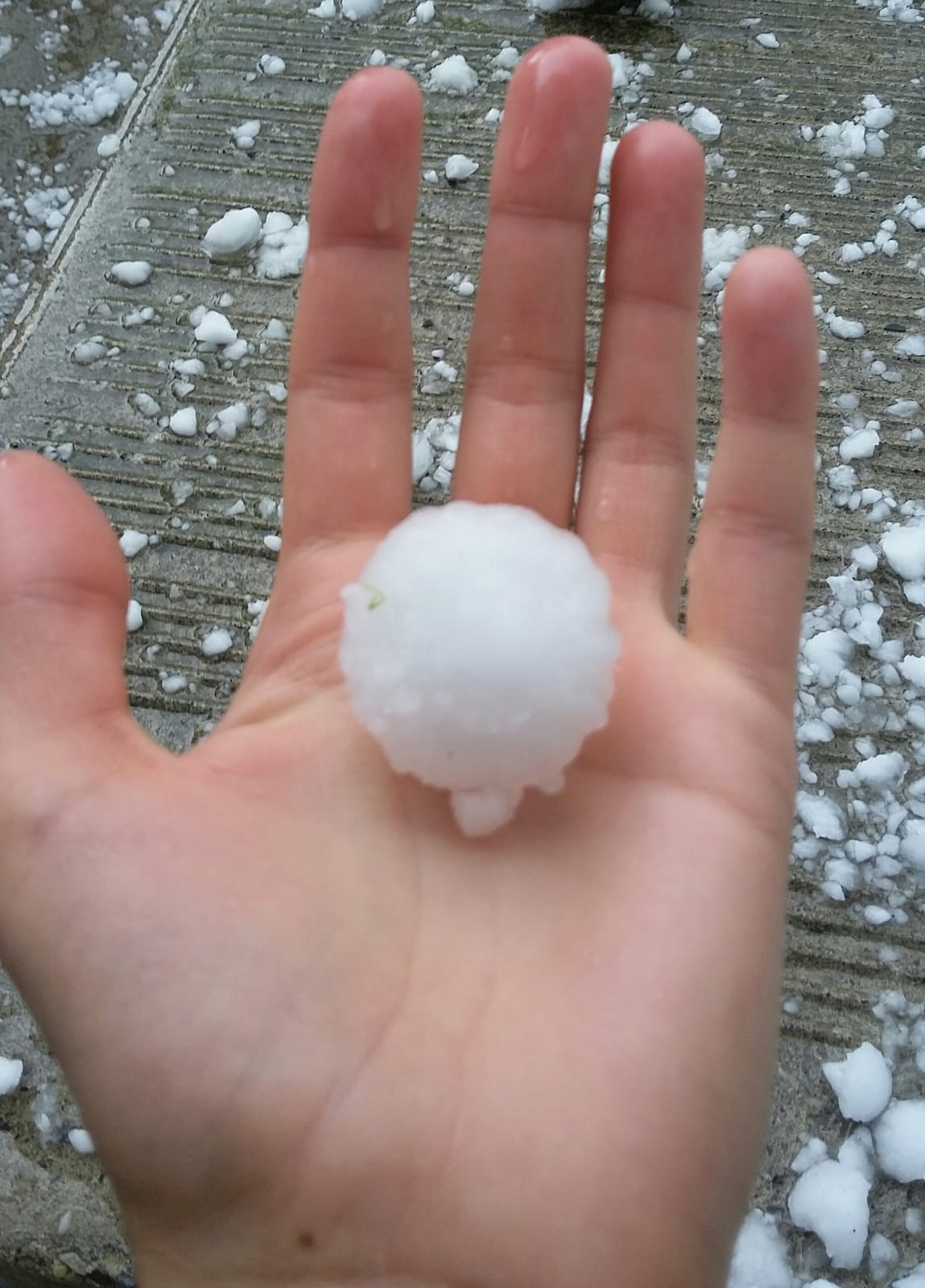
The report of a reader saying it snowed in Rome was an incorrect translation. It was Hailstones. The same thing took place in Calgary. Although strange, they are not unknown even in summer. Hailstones are large, layered ice particles, often spherical in shape. They are produced by thunderstorms having strong, tilted updrafts. Hailstorms form within an unusually unstable air mass. In the case of Calgary, it could have been set off by the wildfires combining with Volcanic particle
I have created this site to help people have fun in the kitchen. I write about enjoying life both in and out of my kitchen. Life is short! Make the most of it and enjoy!
This is a library of News Events not reported by the Main Stream Media documenting & connecting the dots on How the Obama Marxist Liberal agenda is destroying America

 I grew up in New Jersey and had a family friend we called an uncle who lived on the beach. Twice he lost his house that was swept out to sea in 1955 and again in 1960. The press is acting like there have never been storms like we have today and this is all because of Global Warming. The first three of the top 12 worse storms to hit New Jersey took place in 1804, 1806, and 1821 followed by 1903. All predate the combustion engine and CO2 emissions.
 After the hurricane of 2017 that was to hit my area of Florida, CNN had people scared to the point they were, according to the Associated Press, paying $1,725 for a flight from Fort Myers to Charlotte, North Carolina ahead of Irma. People around here hate CNN for their coverage last year. They staged things like standing in water while the film crew was not anywhere close to the same depths. You have to figure Anderson Cooper was also probably standing with his knees bent to make it look even deeper. They are trying so hard to manufacture news it has become outrageous.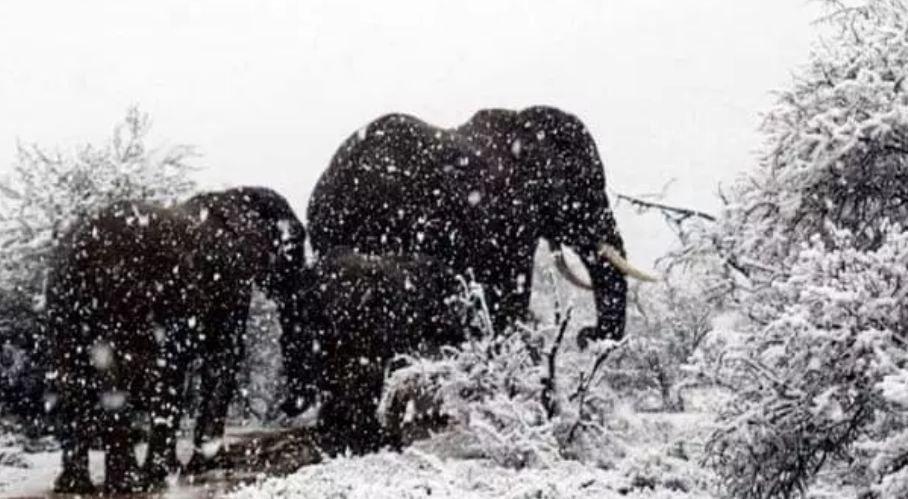





 Centinel2012