
Armstrong Economics Blog/Agriculture
Re-Posted May 13, 2019 by Martin Armstrong
COMMENT: Mr. Armstrong, I find it really distasteful that you laid out events well in advance and then everyone copies you without ever giving you credit. There are articles now appearing about the coming food shortage. The degree of plagiarism is unbelievable. It must be dishearting. I certainly begin to distrust these people and organizations for they certainly even know who you are.
LMS
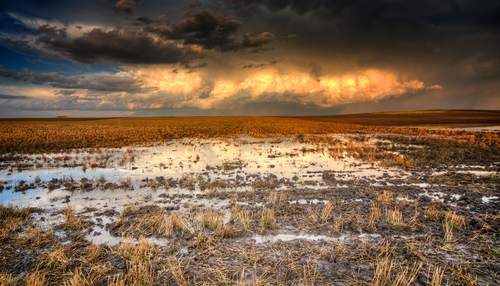
REPLY: That is life. They are trying to sell something so they have to pretend to do the research to make money by getting people to read. The flooding wiped out stockpiles. Now the planting season is already behind on schedule because of the weather. As I have warned, the computer has been forecasting colder winters and shorter-summers. The planting season will decline and thus the danger of a serious food shortage as we head into 2024.
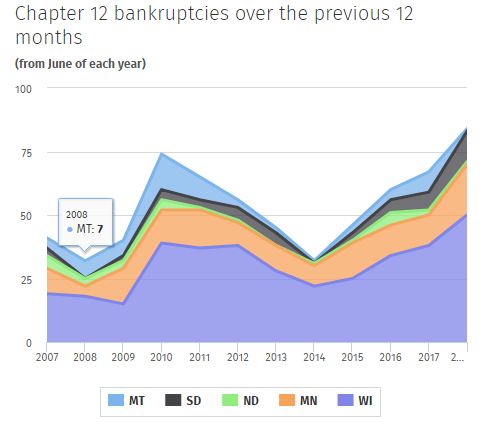
I previously wrote about the soaring bankruptcies among farmers and combine this with the flooding that continues, I believe the computer will be on point. I also wrote about how this year, the Russian wheat crop failed has failed because of the bitter cold with even April coming in as the coldest in more than 140 years. To make matters worse, our computer warns that the weather will not improve. The next 4 years will put even more financial pressure farmers. Even in Australia, the drought is sending the “roos” invading the cities and they like to feed precisely during Rush Hour. The drought is so bad in Australia, that animals are dying for lack of feed crops.
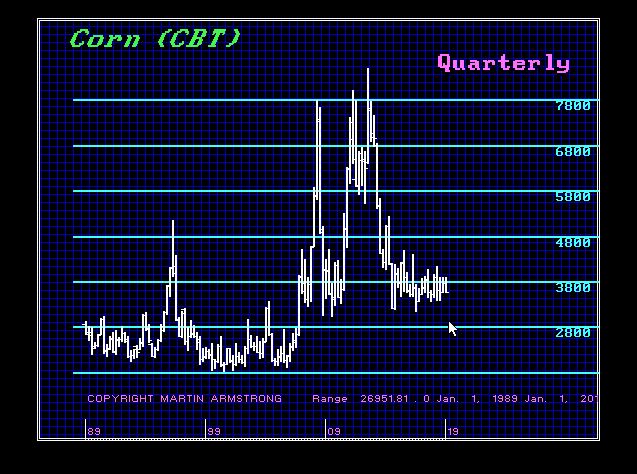
In the USA, four states are well behind on the planting schedule – Illinois, Minnesota, Indiana, and South Dakota. These four states combined to produce nearly 40% of the corn in the U.S. The charts are not yet responding to the fundamentals. This should begin to change next year. Nevertheless, we are building bases at higher levels. I have written plenty of times that any continuation of the weather beyond this season warns of a continued cooling trend. When our model is showing Global Cooling and 2019 has broken so many records, then there is a risk of a pending bull market in the price of food. This is something rather important enough to put on the agenda but governments prefer to listen to the Global Warming crowd to justify taxes.
Malcolm Gladwell: The strange tale of the Norden bombsight

The Moment in Time: The Manhattan Project

Published on Jan 16, 2008
4th Generation Nuclear Weapons

The Saturn V Story (Space Race Documentary) | Spark

“APOLLO 13: To The Edge And Back” – (1994 Documentary)

Published on Mar 3, 2018
World War 2 Top 10 Tanks (Videos)
World war 2 Top 10 Fighter Planes (Videos)

Published on Aug 14, 2016
Remanufacturing a Packard V12 engine

Concrete Buildings Create C02?
Armstrong Economics Blog/Climate
Re-Posted May 3, 2019 by Martin Armstrong
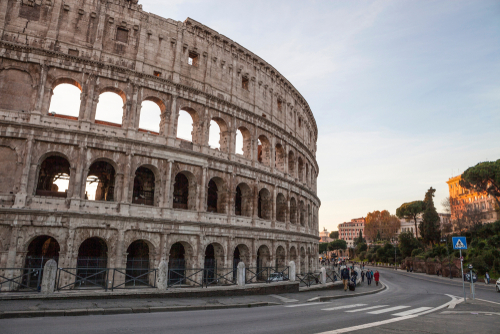
The latest thing now is that constructing office buildings out of concrete and steel is now claimed to account for 5% to 8% of total greenhouse gas. They are now proposing to construct skyscrapers out of wood that are 35 to 40 stories high. They now argue that concrete structures are huge contributors to greenhouse gases. Of course, concrete was invented by the Romans and it is why the Colosseumis still standing as well as the Pantheon. Roman concrete or opus caementicium was invented during the late 3rd century BC when builders added volcanic dust called pozzolana to mortar made of a mixture of lime or gypsum, brick or rock pieces, and water.
Roman concrete was used from the late Roman Republic until the end of the Roman Empire. They used it to build monuments, large buildings, and infrastructures such as roads and bridges. The quality of the concrete was excellent and the buildings and monuments that are still standing today are a testament to the strength of their construction. Today, they argue that cement is one of the primary producers of carbon dioxide and it causes damage to the topsoil. Concrete creates hard surfaces which contribute to surface runoff causing soil erosion, water pollution, and flooding according to the Greens.
However, then there are studies that claim that concrete actually absorbs greenhouses gases and is good for the environment. Cement is the building block of civilization since ancient times and may eventually suck some of that carbon dioxide (CO2) enough to actually cancel nearly a quarter of the gases released making cement, according to a new study.
Of course, Wildfires emit carbon dioxide and other greenhouse gases that will continue to warm the planet well into the future. They damage forests that would otherwise remove CO2 from the air. And they inject soot and other aerosols into the atmosphere, with complex effects on warming and cooling. If we construct buildings all out of wood and they catch fire, that creates a major threat of greenhouses gases. Wildfires are estimated to produce 5% up to 10% of annual CO2 emissions.
Guess the only solution is to exterminate all human life. No more studies to contradict one day eggs are bad for you and the next they are no problem. Be sure to visit the Colosseum before an environmentalist blows it up to save the planet.
 Centinel2012