The Gold Reports & the Building of Volatility the Precursor to Chaos


Volatility Historical

Our first report will be released on Gold, Guns & War which illustrates how gold has historically reacted to different types of war events, both internationally as well as domestically, as in civil unrest and revolution.  Illustrated here, we can see the historical volatility in gold over decades of interacting with the global economy and war. This chart shows how volatile the instrument is now in relation to a historical all time correlation.

We are witnessing the gradual rise in volatility since the 1999 lows. We are still nowhere near the sharp rise in volatility sparked by the collapse of Bretton Woods. Nevertheless, the timing is setting up on our volatility models for the future. Everything is lining up and we will be reviewing this at the Hong Kong WEC at the end of the month.

Trump Keeps His Pledge on Tax Reform


trump-cohen

TAX-REF (3)A lot of emails are coming in asking if I have been advising Trump on the taxes since this is similar to the plan I proposed when I testified before Congress. The answer is no. If they took the tax proposals we had worked on with members of Congress back in the Nineties, who knows. They are on file and have been endorsed by many different tax reform advocates.

I have not spoken with anyone in the White House regarding taxes. I testified why the corporate tax rate must be cut to 15% before the House Ways & Means Committee. The answer is very simple. Corporations will be taxed in their home country unless they pay some tax where they are domiciled overseas. Our headquarters back then was in Hong Kong. Everyone was there because of a 15% corporate tax rate. I testified if the USA lowered the corporate tax rate to 15%, then the USA would become the tax-haven and corporations would move to the States. This is a no brainer and was based on the fact that we did in fact advise multinational corporations – not just theory. I knew what they would do and would have advised them to move accordingly.

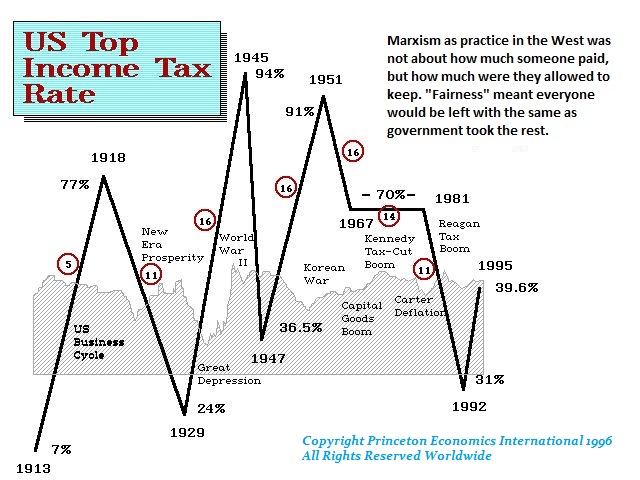
tax-cycThe biggest problem we face is this has to be made into a Constitutional Amendment. This is my ADVICE to Trump right now! Why, as soon as the cycle changes and the Democrats gain control, the taxes will rise again. This is why corporations level. We LACK TAX STABILITY. Taxes become a yo-yo  and business cannot plan long-term when the political atmosphere keeps changing between Marxism and a Free Market. This eternal battle destroys economic growth and has ruined jobs only to reduce the standard of living for the long run. A chart of the top tax brackets look like the brainwave of a schizophrenic.

Trump’s tax plan reduces seven tax brackets down to three. So it’s not the Flat Tax that Democrats will slam because the rich will keep more than they average person based solely on Marxism that discriminates freely against someone based upon their income. The first tax cut was JFK, the second was Reagan. This will be the biggest tax reform in US history. It does not go far enough, but it is the best we can do until there is a collapse in the monetary system that ends Marxism once and for all.

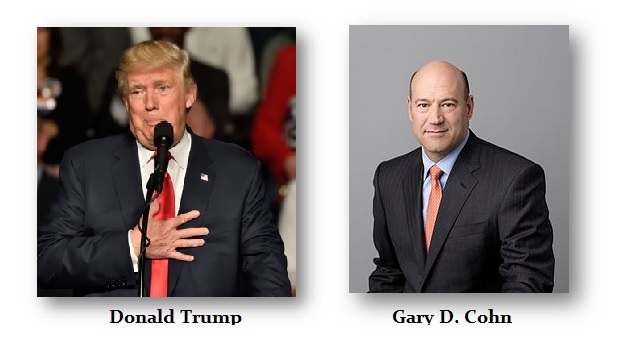
White House chief economic advisor Gary Cohn and Treasury Secretary Steven Mnuchin effectively summarized the plan to reporters. It reflects the proposal Trump outlined as a candidate keeping his word to his supporters. That in itself is really unusual for any candidate to do what they said during the election.

The tax rate on repatriation of trillions of dollars offshore is still being argued with Democrats, who never saw a $1 they did not want at least 50% of. The Death Tax has been devastating to small business and farmers. The next generation have been compelled to sell land, the farm or close the business to pay the estate taxes. This has wiped out small farms and resulted in big corporate America producing food as small farmers were forced to sell because of taxes. Likewise, if a small business sees its owner die, the family has been forced to shut it down. This was one primary reason I have been saying we will go public or else if I died, the taxes owed for my death would result in job losses for staff. Going public was the only way to get around this to ensure the company continues. So these changes will be beneficial for the economy and this may be one of the reasons why the stock market still looks like it will double in value into the years ahead after we get past 2017 this year from Political Hell.

  • Trump’s plan will cut the number of income tax brackets from seven to three, with a top rate of 35 percent and lower rates of 25 percent and 10 percent. It is not clear what income ranges will fall under those brackets. It would also double the standard deduction.
  • The proposal will chop the corporate tax rate to 15 percent from 35 percent.
  • It would eliminate tax deductions with only a few exceptions, including the mortgage interest and charitable contribution deductions.
  • The White House said there will be a “one-time tax” on the trillions of dollars held by corporations overseas. However, Mnuchin said the rate for that tax has yet to be determined. Mnuchin said the White House is “working with the House and Senate” on a repatriation rate, saying it would be “very competitive.”
  • The plan would get rid of the estate tax, otherwise known as the “death tax.” Cohn said that the move will help privately-held businesses and American farmers. Analysis of the estate tax reveals that it affects only a very small portion of Americans.
  • Mnuchin also said the U.S. would go to a “territorial” tax system. Though further details were not forthcoming, such systems typically exclude most or all of the income that businesses earn overseas.
  • Trump’s plan would also repeal the alternative minimum tax and 3.8 percent Obamacare taxes.

London Property Sales Crashed 40% Thanks to Tax Increase


62 Cornall Gardens

Where I use to live back in 1985

George Osborne budgetThe London housing market sales has crashed to its lowest level now since 2013. We reported in November 2015 with the turn in the ECM on 2015.75 that the London property market peaked. Valued crashed by 11.5% in the first month after the turn of the ECM. Landlords are joining together to challenge the Conservative’s (i.e. Tory’s) tax hike by filing a suit in the high court against their tax increase on “buy-to-let” investment properties.  In July 2015, we warned that the Conservatives were going after the non-domiciled residents in London and that would stop the real estate boom.

The figures are now out and they show that the number of homes bought over the last year crashed by 40% between March 2017 and March 2016, from 173,860 to 102,810. “That was thanks to new stamp duty rules introduced at the beginning of last April, which hiked stamp duty on second homes and led to a buying frenzy just before the rules were introduced,” reported Emma Haslett.

Keep in mind that we are only human. Consequently, if you see municipal taxes rising in the USA, expect property values to also decline. It is the same worldwide.

The IMF Is Not Done Destroying Greece Yet


Tyler Durden's picture

Authored by Raul Ilargi Meijer via The Automatic Earth blog,

Austerity is over, proclaimed the IMF this week. And no doubt attributed that to the ‘successful’ period of ‘five years of belt tightening’ a.k.a. ‘gradual fiscal consolidation’ it has, along with its econo-religious ilk, imposed on many of the world’s people. Only, it’s not true of course. Austerity is not over. You can ask many of those same people about that. It’s certainly not true in Greece.

IMF Says Austerity Is Over

Austerity is over as governments across the rich world increased spending last year and plan to keep their wallets open for the foreseeable future. After five years of belt tightening, the IMF says the era of spending cuts that followed the financial crisis is now at an end. “Advanced economies eased their fiscal stance by one-fifth of 1pc of GDP in 2016, breaking a five-year trend of gradual fiscal consolidation,” said the IMF in its fiscal monitor.

In Greece, the government did not increase spending in 2016. Nor is the country’s era of spending cuts at an end. So did the IMF ‘forget’ about Greece? Or does it not count it as part of the rich world? Greece is a member of the EU, and the EU is absolutely part of the rich world, so that can’t be it. Something Freudian, wishful thinking perhaps?

However this may be, it’s obvious the IMF are not done with Greece yet. And neither are the rest of the Troika. They are still demanding measures that are dead certain to plunge the Greeks much further into their abyss in the future. As my friend Steve Keen put it to me recently: “Dreadful. It will become Europe’s Somalia.”

An excellent example of this is the Greek primary budget surplus. The Troika has been demanding that it reach 3.5% of GDP for the next number of years (the number changes all the time, 3, 5, 10?). Which is the worst thing it could do, at least for the Greek people and the Greek economy. Not for those who seek to buy Greek assets on the cheap.

But sure enough, the Hellenic Statistical Authority (ELSTAT) jubilantly announced on Friday that the 2016 primary surplus was 4.19% (8 times more than the 0.5% expected). This is bad news for Greeks, though they don’t know it. It is also a condition for receiving the next phase of the current bailout. Here’s what that comes down to: in order to save itself from default/bankruptcy, the country is required to destroy its economy.

And that’s not all: the surplus is a requirement to get a next bailout tranche, and debt relief, but as a reward for achieving that surplus, Greece can now expect to get less … debt relief. Because obviously they’re doing great, right?! They managed to squeeze another €7.3 billion out of their poor. So they should always be able to do that in every subsequent year.

The government in Athens sees the surplus as a ‘weapon’ that can be used in the never-ending bailout negotiations, but the Troika will simply move the goalposts again; that’s its MO.

A country in a shape as bad as Greece’s needs stimulus, not a budget surplus; a deficit would be much more helpful. You could perhaps demand that the country goes for a 0% deficit, though even that is far from ideal. But never a surplus. Every penny of the surplus should have been spent to make sure the economy doesn’t get even worse.

Greek news outlet Kathimerini gets it sort of right, though its headline should have read “Greek Primary Surplus Chokes Economy“.

Greek Primary Surplus Chokes Market

The state’s fiscal performance last year has exceeded even the most ambitious targets, as the primary budget surplus as defined by the Greek bailout program, came to 4.19% of GDP, government spokesman Dimitris Tzanakopoulos announced on Friday. It came to €7.369 billion against a target for €879 million, or just 0.5% of GDP. A little earlier, the president of the Hellenic Statistical Authority (ELSTAT), Thanos Thanopoulos, announced the primary surplus according to Eurostat rules, saying that it came to 3.9% of GDP or €6.937 billion.

The two calculations differ in methodology, but it is the surplus attained according to the bailout rules that matters for assessing the course of the program. This was also the first time since 1995 that Greece achieved a general government surplus – equal to 0.7% of GDP – which includes the cost of paying interest to the country’s creditors. There is a downside to the news, however, as the figures point to overtaxation imposed last year combined with excessive containment of expenditure.

The amount of €6-6.5 billion collected in excess of the budgeted surplus has put a chokehold on the economy, contributing to a great extent to the stagnation recorded on the GDP level in 2016. On the one hand, the impressive result could be a valuable weapon for the government in its negotiations with creditors to argue that it is on the right track to fiscal streamlining and can achieve or even exceed the agreed targets. On the other hand, however, the overperformance of the budget may weaken the argument in favor of lightening the country’s debt load.

Eurogroup head Dijsselbloem sees no shame in admitting this last point :

Dijsselbloem Sees ‘Tough’ Greek Debt Relief Talks With IMF

“That will be a tough discussion with the IMF,” said Dijsselbloem, who is also the Dutch Finance Minister in a caretaker cabinet, “There are some political constraints where we can go and where we can’t go.” The level of Greece’s primary budget surplus is key in determining the kind of debt relief it will need. The more such surplus it has, the less debt relief will be needed.

That’s just plain insane, malicious even. Greek PM Tsipras should never have accepted any such thing, neither the surplus demands nor the fact that they affect debt relief, since both assure a further demise of the economy.

Because: where does the surplus come from? Easy: from Troika-mandated pension cuts and rising tax levels. That means the Greek government is taking money OUT of the economy. And not a little bit, but a full 4% of GDP, over €7 billion. An economy from which so much has already vanished.

The €7.369 billion primary surplus, in a country of somewhere between 10 and 11 million people, means some €700 per capita has been taken out of the economy in 2016. Money that could have been used to spend inside that economy, saving jobs, and keeping people fed and sheltered. For a family of 3.5 people that means €200 per month less to spend on necessities (the only thing most Greeks can spend any money on).

I’ve listed some of the things a number of times before that have happened to Greece since the EU and IMF declared de facto financial war on the country. Here are a few (there are many more where these came from):

25-30% of working age Greeks are unemployed (and that’s just official numbers), well over 1 million people; over 50% of young people are unemployed. Only one in ten unemployed Greeks receive an unemployment benefit (€360 per month), and only for one year. 9 out of 10 get nothing.

Which means 52% of Greek households are forced to live off the pension of an elderly family member. 60% of Greek pensioners receive pensions below €700. 45% of pensioners live below the poverty line with pensions below €665. Pensions have been cut some 12 times already. More cuts are in the pipeline.

40% of -small- businesses have said they expect to close in 2017. Even if it’s just half that, imagine the number of additional jobs that will disappear.

But the Troika demands don’t stop there; they are manifold. On top of the pension cuts and the primary surplus requirement, there are the tax hikes. So the vast majority of Greeks have ever less money to spend, the government takes money out of the economy to achieve a surplus, and on top of that everything gets more expensive because of rising taxes. Did I ever mention businesses must pay their taxes up front for a full year?

The Troika is not “rebalancing Greece’s public finances in a growth-friendly manner”, as Dijsselbloem put it, it is strangling the economy. And then strangling it some more.

There may have been all sorts of things wrong in Greece, including financially. But that is true to some degree for every country. And there’s no doubt there was, and still is, a lot of corruption. But that would seem to mean the EU must help fight that corruption, not suffocate the poor.


Yes, that’s about a 30% decline in GDP since 2007


The ECB effectively closed down the Greek banking system in 2015, in a move that’s likely illegal. It asked for a legal opinion on the move but refuses to publish that opinion. As if Europeans have no right to know what the legal status is of what their central bank does.

The ECB also keeps on refusing to include Greece in its QE program. It buys bonds and securities from Germany, which doesn’t need the stimulus, and not those of Greece, which does have that need. Maybe someone should ask for a legal opinion on that too.

The surplus requirements will be the nail in the coffin that do Greece in. Our economies depend for their GDP numbers on consumer spending, to the tune of 60-70%. Since Greek ‘consumers’ can only spend on basic necessities, that number may be even higher there. And that is the number the country is required to cut even more. Where do you think GDP is headed in that scenario? And unemployment, and the economy at large?

The question must be: don’t the Troika people understand what they’re doing? It’s real basic economics. Or do they have an alternative agenda, one that is diametrically opposed to the “rebalancing Greece’s public finances in a growth-friendly manner” line? It has to be one of the two; those are all the flavors we have.

You can perhaps have an idea that a country can spend money on wrong, wasteful things. But that risk is close to zilch in Greece, where many if not most people already can’t afford the necessities. Necessities and waste are mutually exclusive. A lot more money is wasted in Dijsselbloem’s Holland than in Greece.

In a situation like the one Greece is in, deflation is a certainty, and it’s a deadly kind of deflation. What makes it worse is that this remains hidden because barely a soul knows what deflation is.

Greece’s deflation hides behind rising taxes. Which is why taxes should never be counted towards inflation; it would mean all a government has to do to raise inflation is to raise taxes; a truly dumb idea. Which is nevertheless used everywhere on a daily basis.

In reality, inflation/deflation is money/credit supply multiplied by the velocity of money. And in Greece both are falling rapidly. The primary surplus requirements make it that much worse. It really is the worst thing one could invent for the country.

For the Greek economy, for its businesses, for its people, to survive and at some point perhaps even claw back some of the 30% of GDP it lost since 2007, what is needed is a way to make sure money can flow. Not in wasteful ways, but in ways that allow for people to buy food and clothing and pay for rent and power.

If you want to do that, taking 4% of GDP out of an economy, and 3.5% annually for years to come, is the very worst thing. That can only make things worse. And if the Greek economy deteriorates further, how can the country ever repay the debts it supposedly has? Isn’t that a lesson learned from the 1919 Versailles treaty?

The economists at the IMF and the EU/ECB, and the politicians they serve, either don’t understand basic economics, or they have their eyes on some other prize.

A $20 Gold Coin that Saved a Life


confederate submaribe George Dixon gold coin

A story that a sweetheart gave a Confederate soldier George Dixon a $20 gold coin dated 1860 as a good luck charm has been validated. The story was that George kept the coin with him always, in his pocket, as good luck. During the Battle of Shiloh, George was shot point blank. The bullet struck in his pocket hitting the center of the gold coin. The impact was said to have left the gold piece bent, with the bullet embedded in it which saved his life.

Confederate submarine H.L. Hunley

George’s luck, however, did not last forever. Nearly 150 years ago, the Confederate submarine H.L. Hunley, the first ever in history, failed to return to port after its successful maiden mission. The sunken submarine was discovered in 2015 off the waters of South Carolina where it sunk in 1864.

Confederate submarine

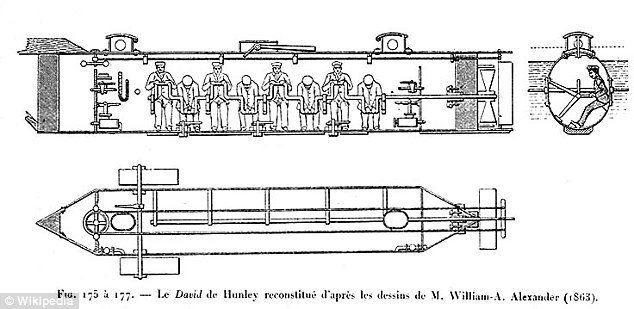
The propulsion was simply men turning a crank. A pole on the front was designed to ram explosives into enemy ships. Therefore, the sub had to actually make contact. The poll placed a powder charge into the Union warship Housatonic and sunk her, but the Hunley went down with its eight man crew and never returned on February 17th 1864.

The archaeologists also found inside the submarine one bent gold coin that was carried by the sub’s captain, Lieutenant George Dixon, for good luck. The legend was proven true. The $20 gold coin saved his life one time.

Raising Highway Speeding Tickets to 175% of Your Weekly Income


British Speed Trap

A word to the wise. Any American traveling to Europe, you are better off hiring a limo driver or call Uber than drive yourself. In Europe, they have speed cameras everywhere. If you are 1 KM over the speed limit in Switzerland, the camera goes off and you have a fine. It’s not like America where even on an interstate highway with a 65 mph limit, traffic typically moves at 80 mph and police will start to look at you over 80. Local municipalities are different. Some of them are so broke they make up stuff.

In Europe, they fine you using cameras, which are also illegal in the USA. You have a right to confrontation and a camera cannot testify against you in court. Those state who adopted the red light cameras used them for revenue, but you would not get any points on your license because they too were unconstitutional.

The Europeans are simply totally insane. They fine you in proportion to what you can pay. In Britain, they are setting this at 175% of the weekly wage. So if you were a CEO earning $25 million a year, your fine will be $841,346.

In 2010, motorcycle was clocked at 164 mph. They let him keep his license if he paid $12k to Canadian authorities for speeding ticket. Then there is Finland which also adjusts speeding ticket fees based on the driver’s annual income. One driver caught doing a measly 15 over in a 50 mph zone and since he made about $7mil a year, his speeding ticket was almost $60K.

There was the Nokia phone director Anssi Vanjoki who was rising his Harley-Davidson in Helsinki, Finland and got tagged going 47 mph in a 31 mph zone. They fined him €116k. Straight out of the Communist Manifesto, in 2004, a 27-year-old heir to his family’s sausage business was hit with a with a $217k ticket for going 50 mph in a 25 mph.

Then there was the Swiss millionaire speeding at 85 mph in a 50 mph zone. The court said his net worth was $22.7m and since he had a previous speeding ticket, the court fined him $290,000. Yet even this is not the record for speeding tickets. The Swiss are simply really out worshiping Marx. A Swedish driver in a Mercedes-Benz SLR in Switzerland got caught going 186 mph. He was fined €650,000, which back in 2010, was $1 million.

Making fined based upon income is definitely the ultimate Marxist agenda. Worse yet, you are being caught by a camera and need not even be chased like in some Hollywood Movie like the Fast And Furious.

If You Can’t Reform – Just Blow The Budget Completely Apart


Students-1

You really have to wonder how politicians ever come to these ideas that they have a right to discriminate and suppress anyone based solely upon what material things they possess. In France, the left is running to take 90% from the rich and hand it to everyone else. Why should they continue to invest, take risks, or even work for that matter. I would close up shop and just leave.

In February, the city of San Francisco came up with a new “free college” plan for city residents that included an added stipend for books and travel expenses. Of course, it was by no means “free” because they were raising taxes in the city to pay for it.

In Europe where education is free, kids keep going to school collecting degrees because (1) its free, (2) they cannot find a job, and (3) who wants to work and pay taxes? The education is really indoctrination and nobody ever learned how to actually do something from a school. Even doctors have to do an internship actually doing the job to get into the door.

Well now the state of New York has joined the socialist agenda of Marx and on April 9th, the N.Y. legislature passed “The Excelsior Scholarship” bill to grant free public college to state residents. On April 13th, N.Y. Governor Andrew Cuomo signed it into law.

The N.Y. college tuition of any state resident whose family earns up to $100,000 a year prior to the fall semester this year, $110,000 in the fall of 2018, and $125,000 in 2019 will be eligible. They have adopted the communist system where once you earned your free degree, you had to work for the state. Here, New York required that the student must stay in New York for four years after they graduate. If you cannot find a job in New York and there is one in California, sorry – you can’t take it.

Interesting regulations.

Latest Interview with Martin Armstrong


The End of Quantitative Easing – Perhaps Now It Will Be Inflationary?


yellen-draghi

One of the greatest monetary experiment in financial history has been the global central bank buying of government debt. This has been touted as a form of “money printing” that was supposed to produce hyperinflation. That never materialized as predicted by the perpetual pessimists. Nevertheless, the total amount of Quantitative Easing (QE) adding up the balance sheets of the Fed, the ECB and BOJ is now around $13.5 trillion dollars, which by itself is a sum greater than that of China’s economy or the entire Eurozone.

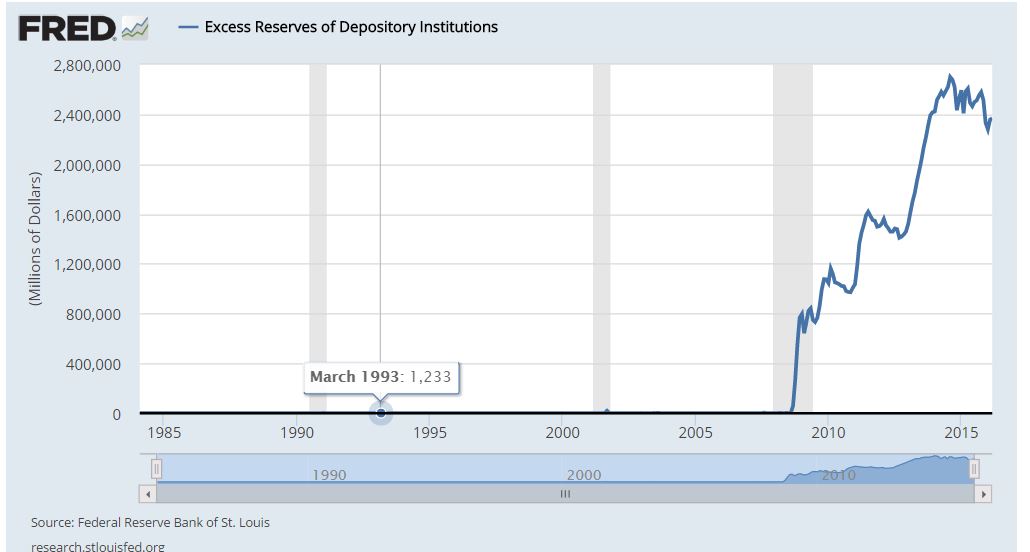
Fed Excess Reserves

QE-rIf QE failed to produce inflation, then ending QE may actually produce the inflation people previously expected. Where’s the strange logic in that one? Well you see, it really does not matter how much money you print, if it never makes it into the economy, it will not be inflationary.

The craziest think the Fed did was create excess reserves. The bankers complained that the Fed was buying the government debt so they would have no place to park their money. The Fed then accommodated them creating the excess reserves and paid them interest for absolutely no reason whatsoever.  Almost $3 trill was parked at the Fed collecting interest so that $4.5 trillion of “printing” money never made it out the door. Hence, there was no inflation to speak of (outside of healthcare which always rises no matter what).

So how does stopping QE actually create inflation? The withdrawal of the Federal Reserve (Fed), the European Central Bank (ECB) and the Japanese central bank from the QE programs will lead to an increase in yields on the bond markets sending the financing costs for the states higher. This is predicated upon the notion that people will continue to buy government debt. Governments have increased their spending sharply because interest rates were effectively zero and the central banks were buyers. Now comes the moment of truth. Has QE undermined the bond market to such an extent that only a blind fool will buy government debt in an atmosphere of rising rates?

Moreover, other sectors of the global financial system have been seriously disrupted. For one, European banks were shipping cash to their US branches and also parking it at the Fed whereas the ECB was charging negative rates. Furthermore, of the $13.5 trillion on the balance sheets in central banks, they are now trapped and cannot sell that debt. This means they are themselves screwed and they have to wait for that debt to mature in order to reduce their balance sheets. They have no way out.

The Fed had a balance sheet of about $900 billion in 2008, whereas it currently stands at about $ 4.5 trillion. The Bank of Japan recorded an increase of 107 trillion yen in the same period of time to about 490 trillion yen or also about $4.5 trillion. Then we have the ECB which has more than doubled its balance sheet from EUR 2 trillion to EUR 4.1 trillion or also about $4.5 trillion.

The central banks bought the government bonds from the commercial banks and paid them money created out of nothing which is how the pessimist put it. In theory, that is elastic and if the government debt matures, it then evaporates from the balance sheet. Here comes the problem. The governments continue to borrow. With the central banks no longer buyers, then interest rates can rise faster than anyone expects because they will have to entice fresh buyers. If that fails to materialize, then we come to the Sovereign Debt Default crisis.

The Federal Reserve had recently announced that it would no longer reinvest its gains on government bonds that had matured into new US securities, resulting in a shortening of the balance sheet. Bills of $426 billion will be due at the Fed in 2018, and again about $357 billion a year later. So if the Fed will not repurchase that debt, then the amount of new debt coming to the market will DOUBLE.

The Treasury will be forced to find ways to absorb the additional supply if the Fed wants it’s cash back so the Treasury must find a lot more private buyers. The shrinking of the balance sheets represents the continued deflationary trend from a real economic expansion trend. The government will be competing for cash in an ever growing tighter economy.

The balance sheet of the Japanese central bank is likely to be expanded for a while as long as the targeted inflation target of 2 percent is not reached. The ECB’s balance sheet will continue to grow at least until the end of the year, as the borrowing program has been running until then. However, the negative effects of the balance sheet shortening of several central banks will mutually reinforce each other in 2018 and help to bring the financial crisis to a head for 2018-2020.

The withdrawal of the ECB’s purchases of securities that also included European corporate paper will lead to secondary effects even outside Europe and help to further maintain the deflationary aspects with respect to economic growth. This will serve to demonstrate the unintentional impact of this entire unorthodox monetary policy experiment.

Therefore, at this year’s WEC, we will be looking at this complex crisis. The inflation will be asset inflation – not demand inflation. So hold on – this is going to be the craziest ride in monetary history of human kind.

British PM Calls for Early Election


Theresa May

Prime Minister Theresa May on Tuesday called for an early general election to be held June 8, 2017. She is seeking a strong mandate as she negotiates Britain’s exit from the European Union. She said that while the people voted to leave the EU, the politicians had not and they think because she has a thin majority, they can prevent BREXIT.

May’s governing Conservatives have a very small majority, with 330 seats in the 650-seat House of Commons. This has given a lift the the British pound as brain-dead and blind people still think being in the EU is somehow better. May actually triggered a two-year countdown to Britain’s exit from the EU in March. She said that if there is no election soon, then “the negotiations with the European Union will reach their most difficult stage in the run-up to the next scheduled election.”

Britain has a Fixed-Term Parliaments Act, whereby elections are held every five years. However, but the prime minister can call for a snap election if two-thirds of lawmakers vote for it.

Naturally, the primary opposition Labour Party, Jeremy Corbyn, who wants to turn Britain into total socialist state, said he welcomed May’s decision “to give the British people the chance to vote for a government that will put the interests of the majority first.”

May said she was looking forward to showing how Labour will stand up for the people of Britain against the bureaucrats in Brussels.

IBBPUS-M 4-18-2017

While the pound has rallied into the April target, it has reach into only the 12700 zone. We can see that technical support lies at the 12131 level with technical resistance at about 13400. We still need a weekly closing ABOVE 13000 just to imply the pound will hold for a while. We need a monthly closing above the 13500 area to raise hopes of extending the consolidation into the end of the year. A closing for April below 12865 will warn that the pound is losing support.

IBBPUS-M FOR 4-18-2017