Canada Will be the Most Impact by a Steel Tariff


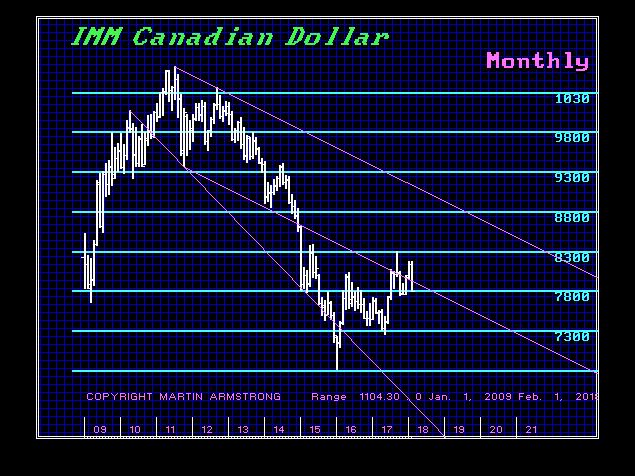
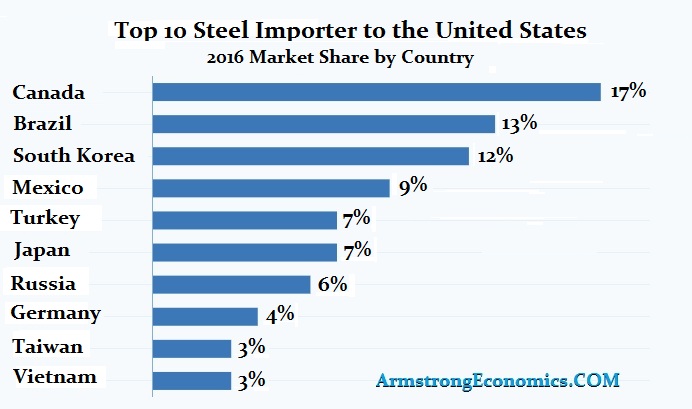
Canada is the largest exporter of steel to the United States. The decline in the Canadian dollar has helped this trend in particular. Trump is clueless when it comes to the impact of currency on foreign trade. If he wants to do tariffs, they MUST be indexed to the currency. Failure to do that will cause serious consequences as the dollar rises on the world financial markets in the years ahead. He will create a trade war globally and politicians on both sides remain ignorant of foreign exchange and its impact upon trade numbers.

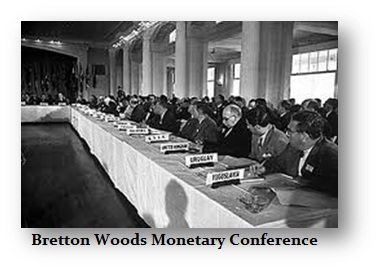
I have stated many times that the entire system of trade is in a state of confusion. Following Bretton Woods, currencies were fixed to the dollar which in turn was fixed to $35 per troy ounce of gold. Therefore, the accounting system ONLY measured the amount of currencies moving back and forth. It was assumed that you imported more goods if the amount of outflow of dollars increased. Consequently, the way we measure trade today has NOTHING to do with the actual amount of product moving internationally. If you spent more dollars but the dollar decline in value by 20%, then even an increase in imports measured in dollars at 20% was no change in the actual product

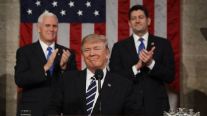
Trump to Impose Tariffs


Trump is implementing tariffs against any country that imposes a tariff of American products. This is a tit-for-tat and will be of a like amount. For years, many countries have imposed tariffs on US products when there has been no tariff on their products. The criticism against Trump at Davos was he should put the world economy first not America. They talk a lot but do not play by the same rules.

His announcement this week that he is imposing tariffs on steel and aluminum was the excuse to justify the consolidation period of the stock market. Trump said his administration would impose a 25% tariff on steel imports and a 10% tariff on aluminum. It was not immediately clear whether Trump would exempt some countries from the tariffs, as his national security advisers have urged him to do to avoid hurting U.S. allies. The big problem is that Trump FAILS to understand how the economy truly functions. Imposing tariffs on foreign imports because they can produce something more efficiently is NOT protecting American jobs – its is imposing higher costs on the American public. If America cannot compete against foreign steel and aluminum, the answer is not tariffs, but TAX REFORM and UNION REFORM. If unions fail to understand that demanding higher wages in an uncompetitive manner will only lead to the loss of jobs, then end result cannot be prevented by tariffs.


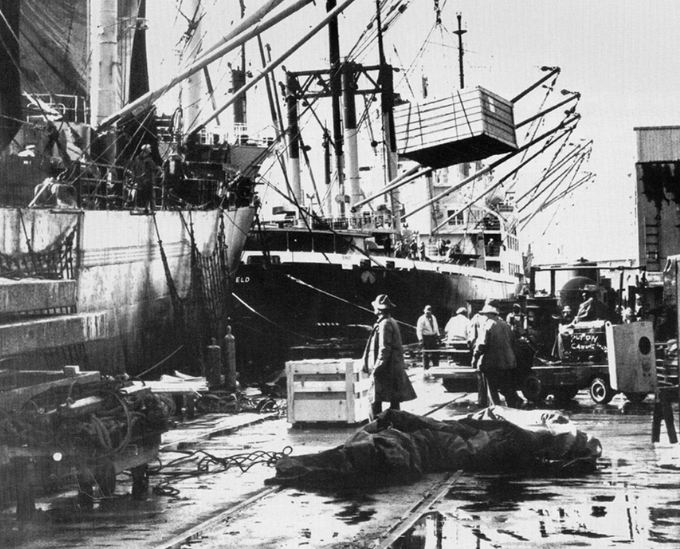
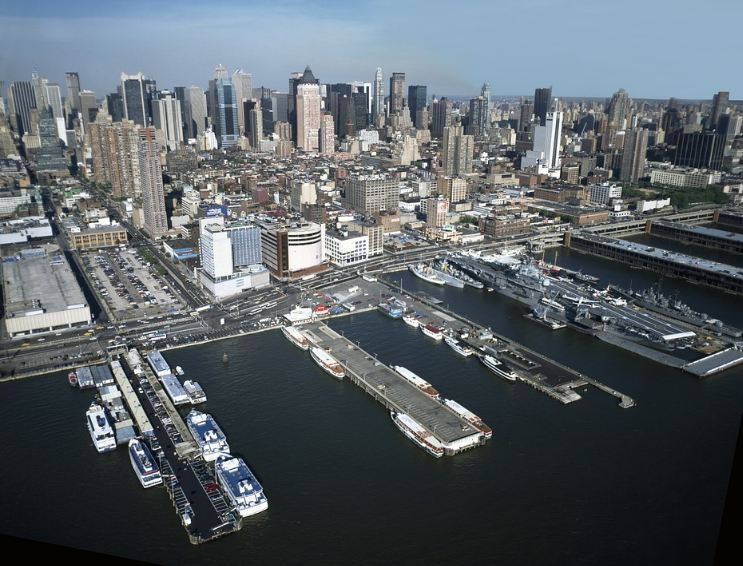
Once upon a time, New York City was the largest port in the United States. Because of unions and outrageous demands, little by little they killed their own jobs. Shipping moved to New Jersey, Philadelphia, and Virginia. What used to be a viable industry today is just a shadow of what it once was. No matter what the field, everything is subject to competition. Imposing tariffs is simply subsidizing overpaid jobs and higher taxes.

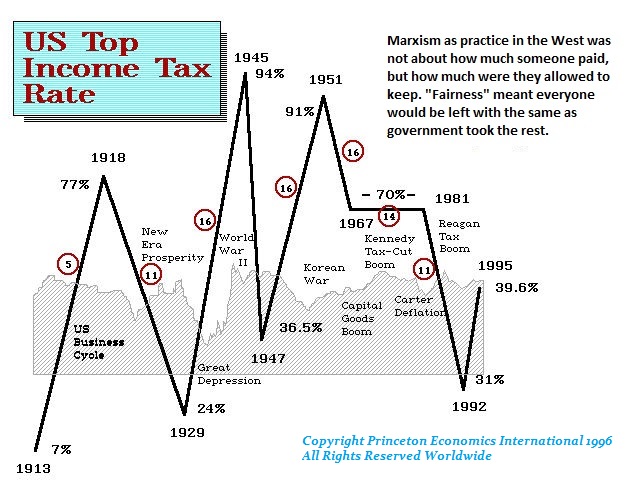
It is not JUST wages that cause companies to move and import goods. The US tax code historically looks like the brainwave of a Schizophrenic.  The Democrats come in and taxes rise as high as 94% and the Republicans come in and they go back down. There is absolutely no permanency to the tax code. Consequently, business leaves even when the issue is not wages so much. They leave just to be able to have consistency.

Would you rent an apartment where the lease said the landlord can raise your rent any time he desires if he needs more money to pay something else? This is the entire problem. The Democrats always pitch to tax business and the rich. The biggest shareholder of American public corporations has been the California pension funds (CalPERS) so who actually owns the majority of public companies? It is the people through their retirement funds.

Every time the Democrats raise taxes, they destroy American jobs. So it is NOT entirely the simple matter of wages. First US protective tariffs on washing machines and solar systems were imposed and now on aluminum foil. The US said that aluminum foil from China was being dumped at low prices. Trump imposed measures against some companies from China claiming that American workers and businesses should not be affected by unfair imports.

Swedish Central Bank Voice Alarm


QUESTION: Hi Martin,

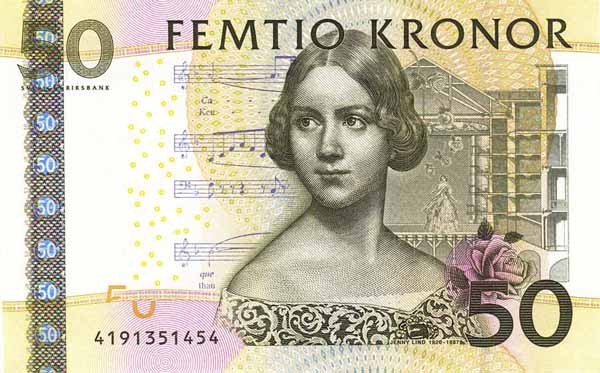
Yesterday the Swedish Riksbank Chairman Stefan Ingves went on prime time TV expressing fear that public authorities are losing control over the Swedish currency! He also on prime time TV asked rhetorically -We have asked our self what is money?! Can you believe that!?
What the heck is going on? The Chairman of the WORLDS OLDEST CENTRAL BANK goes on prime time TV expressing fear for the public to lose confidence in the Swedish KRONA! Also saying that private companies are taking control over the currency and that cryptocurrencies are a threat.
I know the Swedish Krona is a small currency but one of the oldest still alive today. What does Socrates say about the Swedish Krona?
Stefan Ingves also yesterday published a long article in Dagens Nyheter, a national magazine expressing the same fear. A large finance paper published an article yesterday about this issue. Here is the link.
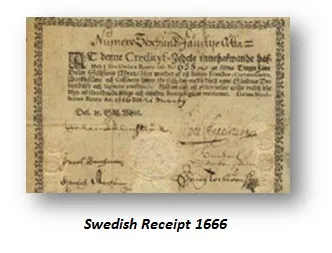
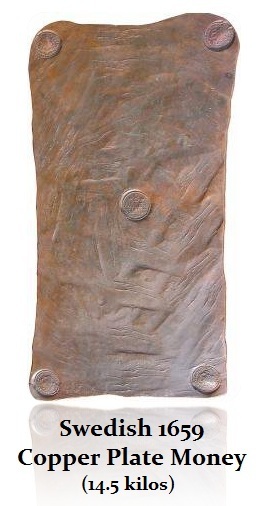
ANSWER: Sweden is the oldest Central Bank. That is where it all began. The first true banknotes for circulation appeared in Sweden, and these were actually used by the government to support its wars with Germany. In 1661, the government established a 30-year monopoly for its Stockholm Banco to issue these banknotes known as “letters of credit” that were to be payable in Swedish copper plate money that was extremely heavy weighing almost 15 kilos. It was not very practical for actual circulation. However, this practice was abused and ended up supporting the king. This led to the first banking panic in 1663 when there were more obligations than money to now redeem the notes. The bank was forced to close in 1664.
When the Governor of the bank Stefan Ingves is saying is that central banks have actually lost control of the money supply as well as the economy. He is pointing out that the bulk of the money supply is actually created in the private sector by leverage. He believes that the future will be dominated by commercial banks and he views the emerging new electronic currencies as “problematic”.
This is what I have been warning about. The onslaught of cryptocurrencies threatens the monopoly of governments to create and control the core base currency/money supply. Governments will not allow cryptocurrencies to compete. Right now, they are grabbing headlines, but they are not really viable currencies. They are not in use within the day-to-day economy.
Stefan Ingves is voicing what I have been hearing behind the curtain. The cryptocurrencies are problematic within the economy. But the main factor that controls the money supply has been the commercial banking system. The creation of loans creates electronic entries on accounts. If I have $100 in my account and the bank lends you $100, we then both have $100 in our accounts so the money supply is doubled WITHOUT the central bank printing anything.

South Africa Expropriating White Farmer’s Property


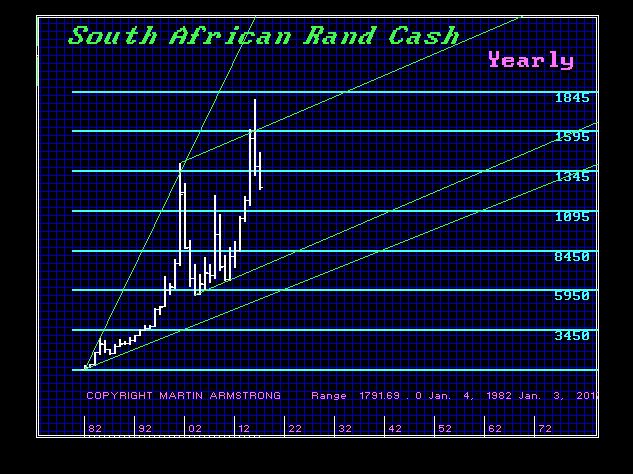
South Africa is turning extremely left-wing to the point that it is risking any viable economic future. The Parliament of South Africa on Tuesday voted to expropriate the majority white farmers of the country without compensation. This is how the Russian Revolution took place – the just took everyone’s property. The motion was submitted by the left-wing party Economic Freedom Fighters (EFF) and it was supported by the ruling party ANC (African National Congress). This maneuver is trying to change the constitution. All the work of Nelson Mandella is being gradually eliminated.

Clearly, the topic of land expropriation has been one of the most sensitive issues since the end of apartheid in South Africa. New President Cyril Ramaphosa, in his first major speech after taking office in mid-February, publicly stated that he supported the expropriation of white farmers without compensation. The excuse is that this will lead to increased food production. It has absolutely nothing to do with that. The majority of the agricultural land in South Africa still belongs to the white South Africans even 24 years after the end of apartheid. White ownership has declined slightly from 85% to 73%. However, the idea of a free market in South Africa does not truly survive. The rising chants assert that the “time for compensation is over; now is the time for justice!”

Parliament mandated the Constitutional Commission to report on the issue at the end of August. The ruling ANC party is under pressure before next year’s parliamentary elections, and land seizures of white South Africans could increase popular support in the poor black electorate. Of course economically, when a nation simply expropriates private property, thereafter, it becomes economically a high risk to do business with them.

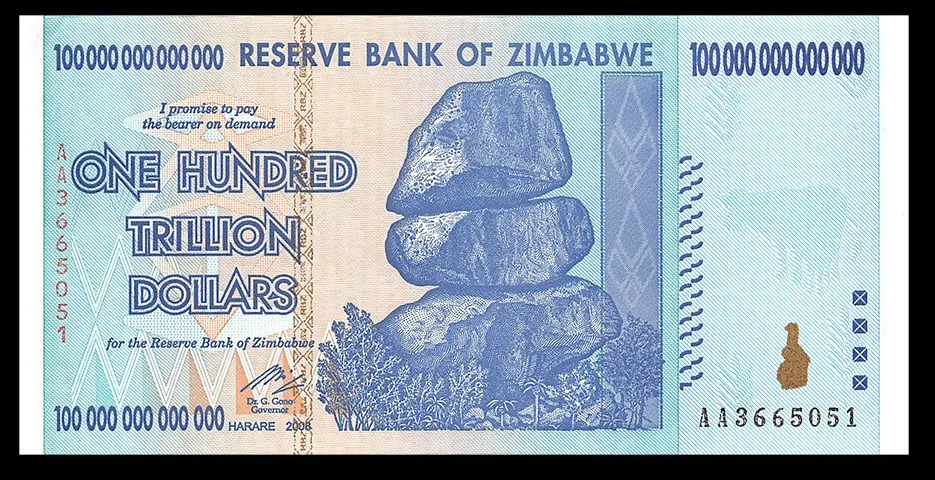
The hyperinflation of Zimbabwe was in part set in motion by the violent expropriation of white farmers. Zimbabwe saw a sharp decline in production of food plunging the country into chaos. Zimbabwe was formerly known as the breadbasket of southern Africa. Once it expropriated the farms of white farmers, the country fell into complete chaos. South Africa is risking the very same future. Inflicting vengeance upon the white farmers may make many feel better, but it risks sending the economy into total chaos.

Meanwhile, President Cyril Ramaphosa was part of the original movement in South Africa’s peaceful transition to democracy. However, he has also been criticized for his conduct dealing with firms such as his joint venture with Glencore and allegations of benefitting illegally from coal deals with Eskom. Glencore became a huge controversy because of its business activities involving Tony Blair, former Prime Minister of UK. There is a Directional Change due in 2020. The Apartheid era (1948-1994) lasted for 46 years. The current situation appears moving toward a major economic crisis going into 2020.