The Rumors are that Turkey Will Default


The rumors running around is that Turkey will default as Erdogan decides to move to align with Iran and Russia and leave the West behind. While there have been speculative attacks on the Turkish economy and US tariffs and sanctions have been detrimental, the initial causes of this growing monetary problem are really all internal. Erdogan’s management of the economy has been a disaster. He has pretended to borrow too much money from foreign investors to stimulate the economy. It is true that the total debt rose to over $450 billion, about half of GDP. Turkish exports and the current account deficit rose to $50 billion. This has led to rapid inflation that has been at least an annual rate of nearly 7% on average during the last ten years. In truth, Erdogan was really trying to build the economy to fulfill his dream of reestablishing the Ottoman Empire and emerge as at least the dominant power over the Middle East.
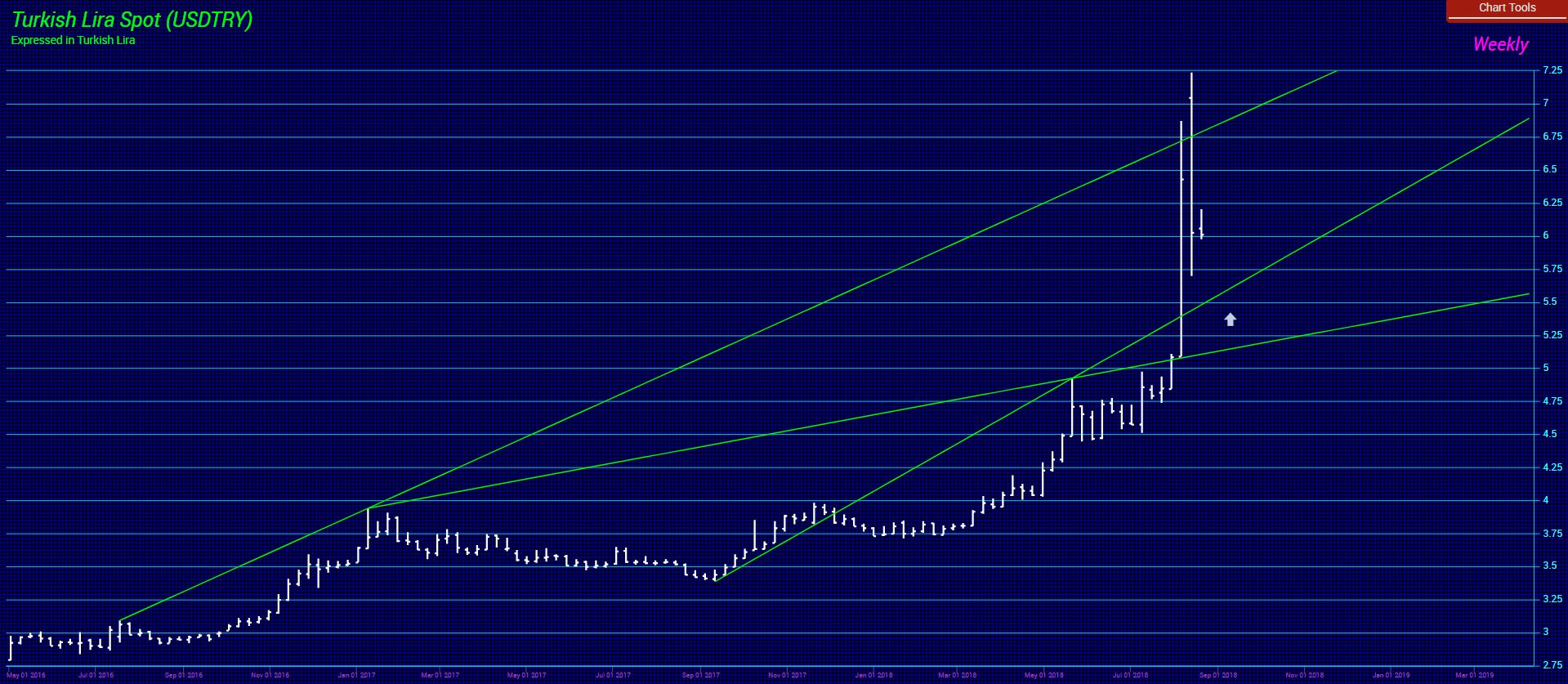
Unfortunately, Erdogan is stubborn and he really has no way out. He wants his cake and consumes it all at the same time. The rumors running around the trading desks is that he will pull the plug and turn his back on the West. By doing so, he can then justify defaulting on the debt of the “corrupt” West who wants to subjugate Turkey will be the justification spin of things. It looks like this will remain volatile into October.

Zimbabwe – New President is Sworn In


QUESTION: Dear Mr. Armstrong,
Zimbabwe is just coming out of a very hard time. Their currency is not (at least to my knowledge) recognised internationally. What advice would you give to the Government as they try to sort out this situation? Would you consider advising them on the way forward so that they do not make any fundamental errors in the beginning. It is a lovely place, I can assure you, if you do go.
Best regards,
CH

ANSWER: I am aware of the hope which has taken hold there in Zimbabwe with the tens of thousands of people celebrating the victory of President Emmerson Mnangagwa yesterday. He really needs to restore world confidence and that is possible. He finished out Mugabe’s term but almost 20% of the white population fled and Mugabe was a Marxist. It will take some political guidance, but if he would really listen, he could actually transform your country into a powerhouse. The first and primary directive is always the rule of law. If a property can be taken, then capital will never trust such a nation. It falls into the category of Country Risk.

Overall, the economy of Zimbabwe was quite strong. From 1991 to 1996, the Zimbabwean Zanu-PF government, which was in power since independence, and its President Robert Mugabe adopted an Economic Structural Adjustment Programme (ESAP) that was really insane and we see similar policies rising in South Africa. Mugabe created an extremely serious economic change that was not unlike the drastic approach of Maximinus I of Rome. Maximinus effectively attacked the rich and paid informants who reported anyone with hidden wealth. Commerce began to collapse and it was his actions that really began the decline and fall of Rome into 268AD.

We have to be honest here that Mugabe created the hyperinflation in Zimbabwe that began in the late 1990s because of his Marxist philosophy shortly after the confiscation of private farms from white landowners towards the end of Zimbabwean involvement in the Second Congo War. During the height of inflation from 2008 to 2009, it was difficult to measure Zimbabwe’s hyperinflation because the government of Zimbabwe stopped filing official inflation statistics. However, Zimbabwe’s peak month of inflation is estimated at 79.6 billion percent in mid-November 2008.

We would provide a set of proposals, but it would have to be confidential. If President Mnangagwa agreed, then and only then could we make them public. The risk of creating false hope in markets is not wise.

The Fight Behind the Curtain inside the EU


Italy is the third largest economy in Europe just behind France, but it is number two insofar as industrial production is concerned. The French manufacture three main brands, Peugeot, Citroen, and Renault, in the world of automobiles which are not very popular in the USA. The Italians, however, have the more recognized brands worldwide such as Ferrari, Maserati, Lamborghini, Alfa Romeo, Fiat, and Lancia. The sports car enthusiast is always torn between a Ferrari and a Lamborghini while you are beginning to see Maserati’s everywhere in the standard high-end marketplace.

From the manufacturing perspective, the Italians have been able to compete producing cars in Euro for their reputation in car production carries the day. The crisis for Italy with respect to the Euro has been the conversion of their past debt to Euro which altered the standard depreciation of debt whereby you are paying back with cheaper currency.

The idea that was floated as an alternative to leaving the Euro calling for a referendum on the country’s EU membership was the proposal which called for the introduction of so-called mini-bots – government guaranteed bills. The catch was that they were to be restricted only to Italy and can be used to pay taxes. This idea does not seem to be moving anywhere close to reality. However, it recognized that there was a problem with its debt.

Instead, the proposals have turned on reforming the ECB. There are people in the Italian government who want to alter the ECB as a direct result of Draghi’s policy of Quantitative Easing which has destroyed the European Bond Market. The Italian proposal call for the ECB’s statutes should be changed to allow the central bank to act as a lender of last resort and acquire Italian government bonds not only on the secondary market by QE, but also on the primary market buying them directly from the Italian government. In reality, this would be a direct assault on the German philosophy of austerity. There would be nothing against higher inflation if it would create more jobs. Italy is making it clear that they would prefer 7% inflation and an unemployment rate of 2% rather than 2% inflation and an unemployment rate of 7%. In reality, Italy is arguing for the same policies that were adopted by Roosevelt to end the Great Depression.

This is becoming a battle behind the curtain between austerity and reality. The question to emerge is what happens if Germany refuses to yield? Are we looking at the very issue that brings down the entire EU house of cards?

Currency Inflation That Most Never Noticed


QUESTION: Mr. Armstrong; I find your anecdotes fascinating and very enlightening how you always bought German cars and made money on them.  Is currency the primary reason people often think something is a good investment when in fact it is really just currency fluctuations?

PVB

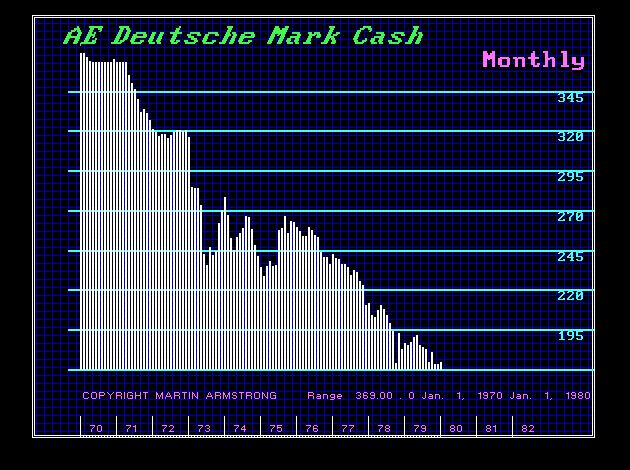
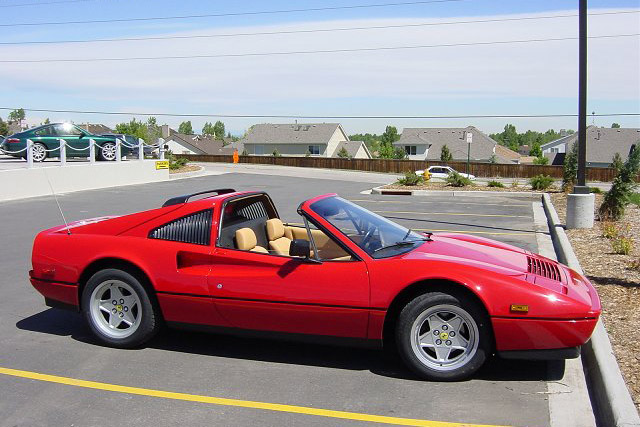
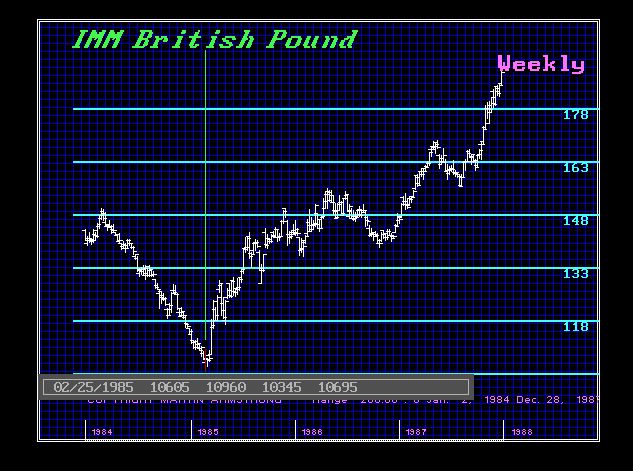
ANSWER: You are hitting the nail right on the head. The decline in the dollar throughout the 1970s made German cars appear to appreciate and this was attributed to quality. This was the entire reason why the German car industry exploded. I have often stated at WEC conferences that I made the same play with a Ferarri in London. When the British pound dropped to $1.03 in 1985, I ran out and used the currency to make some deals. I bought a 328 Ferarri for about $30,000 when in the US it was a $50,000 car. Because the pound had dropped, Ferarri could not afford to sell them in Britain at that price so they raised it £45,000.

As you can see from the chart I provided, the pound bottomed in February 1985 at $1.0345. After Ferrari raised the price and then the pound went to nearly $2, suddenly a car that cost me $30,000 had a replacement cost of almost $100,o00. This is what led to many people buying several Ferraris and garaging them thinking that the car was the investment.

Currency Inflation is probably the most misunderstood economic force in the matrix. Probably 99% of economists and investors remain ignorant of such trends because they have never dealt in the international world of finance and focused only domestically. Those of us who have been hedge fund managers and worked internationally understand the fluctuations of currency and its impact. This is a lesson still not taught in school and politicians remain oblivious to the real implications.

Trump & the Trade War


People really think we have free trade and somehow Trump is reversing that fact. This, of course, is how the press has portrayed the issue, but that is just far from the truth. Trump is now looking at putting a 20%-25% tariff on cars coming from Europe. Personally, I only have German cars so I would not like to see that outcome. But personal wishes are not something I can explore for analysis. What I can say is that far too much is being fudged.

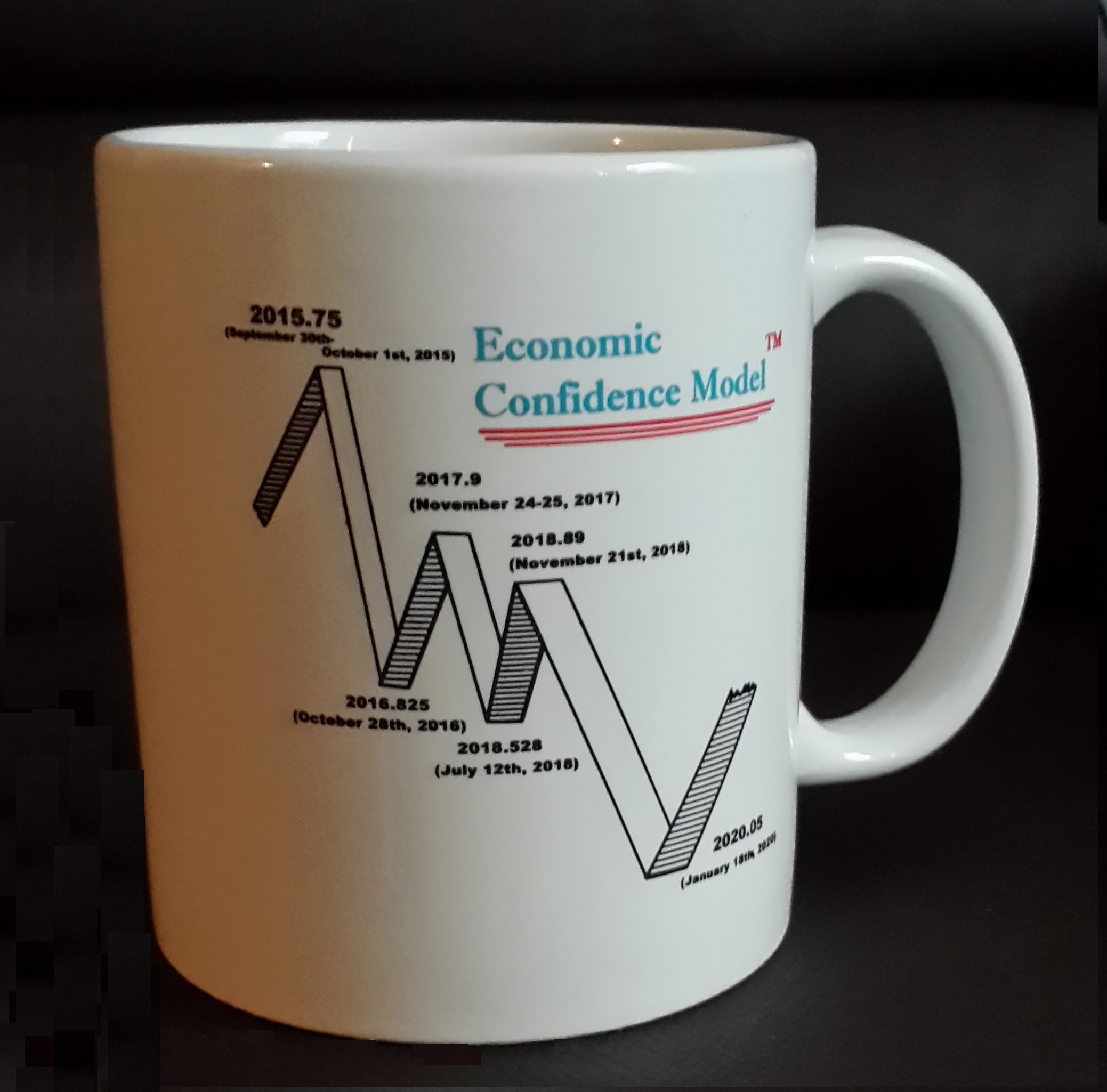
Countries are using DUTIES as the alternative to tariffs. It has gotten so impossible, we can no longer create the mugs we always give away at every conference in the USA when the conference is in Europe or Asia. Our last two conferences in Asia required us to manufacture the mugs in the country of the conference because we cannot get them into the country even when we hand them out for free. To government’s nothing is FREE and then you have to negotiate the “duty” to pay based upon what you would have paid for a cup manufactured in their country.

On that score, I have to agree with Trump. He has offered a free trade deal to the EU dropping all tariffs if they do the same. France rejected. There should be no tariffs and NO duties. Just for once let there be free trade. It has NEVER existed. Before the income tax, the US-funded itself with excise taxes. Excise taxes are taxes paid when purchases are made on a specific good, for example, gasoline. Excise taxes are often included in the price of the product. There are also excise taxes on activities, such as on wagering or on highway usage by trucks. One of the major components of the excise program is motor fuel today. Now we have consumption taxes in this manner AND income taxes. Government is now funded by just shaking us upside down and inventing countless taxes so they do not have to report the total cost of taxes.

Platinum at 10-Year Lows


QUESTION: Marty, Socrates has done a fantastic job on platinum. It is just so refreshing to have an analysis that is not biased and always saying buy. It looks like platinum is just a precursor to gold. There is an oversupply and with South Africa in turmoil politically on top of its currency in the EM world, would you care to comment on this market?

Thanks for this system. It really makes a difference.

JS

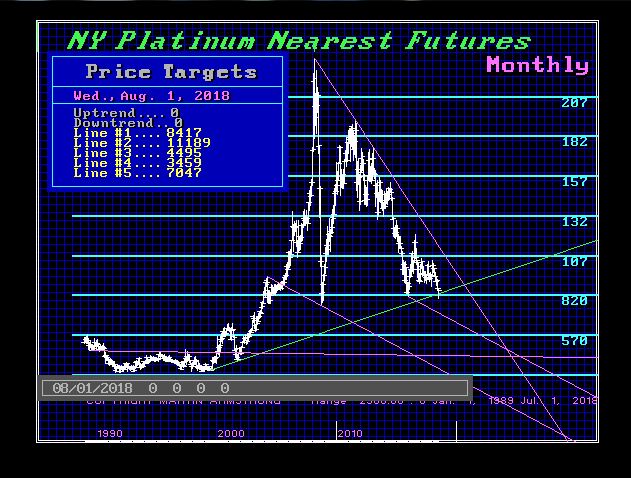
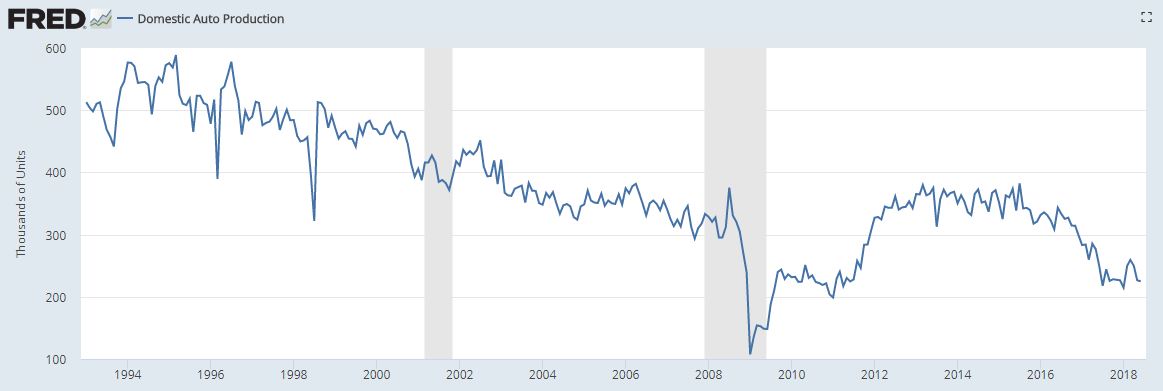
ANSWER: Platinum prices have really dropped hard reaching 10-year lows as the collapse of Turkey’s lira did in fact rippled through emerging market currencies which resulted in the decline of the currency of top producer South Africa. This has indeed underscored the persistent oversupply of the autocatalyst metal. Auto production has been declining for the most part since the 1990s. Moreover, the move toward electric cars in Europe has also resulted in a sharp decline in demand for platinum which has contributed to the oversupply.

Platinum has been caught in a broad sell-off that is clearly an oversupply crisis mixed with investors rushing to the safety of the dollar when there is a serious crisis brewing not just in emerging markets, but also within the EU. As I have warned, the dollar is the ONLY game in town to park BIG MONEY. Those who ran to turkey for the high yield are reaping the losses of their stupidity and greed. The political uncertainty surrounding Turkey has been pushing the dollar higher and making dollar-priced metals more expensive for buyers using other currencies. This is putting pressure to lower the price in dollars to be able to sell the metal.

Meanwhile, with the emissions-reducing catalytic converters for vehicles market is declining along with the jewelry market for platinum, which has also been declining due to deflation in Europe and a preference for gold. Despite the lower prices, global platinum jewelry demand declined 12% to 2.18 million ounces in 2017. According to GFMS industry reporting:

“According to the GFMS Platinum GroupMetals Survey 2017, platinum was the worst performing precious metal in 2016, with its price stumbling 6 percent to average $988.76, falling below $1,000 for the first time since 2005. … Despite the lower price, global platinum jewelry demand declined 12 percent to 2.18 million ounces. The fall is largely attributed to declines in demand in North America and China, which saw 10 percent and 12 percent falls, respectively. In China, platinum’s decline is believed to be the result of weaker economic conditions as well as the metal losing market share to 18k yellow gold. For North American consumers, it was a matter of jewelry price stickers not reflecting platinum’s lower cost to gold. Because platinum is a denser metal, a platinum piece can be 40 percent heavier than its gold counterpart, and thus more expensive for consumers

New Zealand – Welcome to the South Island?


COMMENT: Mr. Armstrong; Your recommendation at the WEC two years ago that the south island in New Zealand would be a safe place has really led to a lot of chaos. So many billionaires have suddenly been buying up property down here it is obvious you have a lot of influence. It has even made the Guardian. Please don’t send any more people down here.

HU

REPLY: I never sent anyone directly to New Zealand. I know we are well read among the money class as they say. Everyone eventually makes their own decision. Nevertheless, your Prime Minister is out to stop foreign investors buying property down there these days.

Real Estate & Understanding The Role of Debt


QUESTION: Dear Sir/Madam

Thank you so much for what you all do.

I was just reading today’s Blog 17-08-2018 –  ‘ Real Estate – Leverage – Transition to the Reset ‘.   The bit I did not understand was where it was written  ‘ Keep in mind that as the currency declines, then the repayment cost of a mortgage declines. One the one hand, mortgages will be unavailable but those who hold the mortgage lose the most ‘

My question is when the Reset happens in which way will the mortgage holders lose the most even if the repayment cost of a mortgage declines ?  I live in the UK

thank you so much

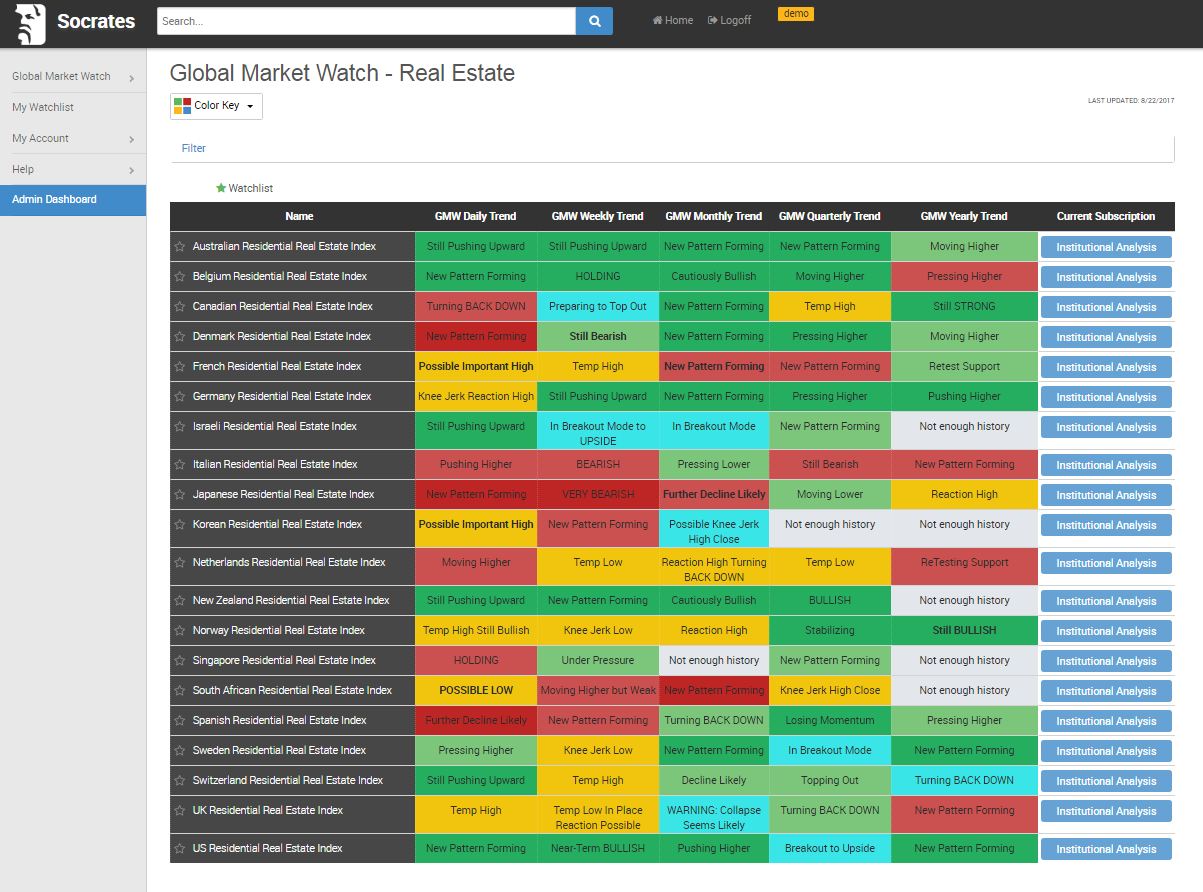
ANSWER: Since I posted that chart from Socrates that illustrates real estate, many people have written in to ask where can they find that on Socrates. This is part of the pro version that will be released WE HOPE for the WEC this year (see Socrates Newsletter just sent out). Here are the real estate markets covered by Socrates at this time.

What I mean when I say that those who hold mortgages lose in such a situation of a decline in the purchasing power of a currency is basic. The city of Detroit suspended its payments on bonds in 1937. They resumed in 1963. Now they say they never defaulted. However, they paid back with cheaper dollars. The holder of a mortgage or a bond charges interest which is supposed to be more than the inflation rate. When inflation exceeds the interest rate, then you are paying back with cheaper dollars.

Take a life-insurance policy. If you bought one in the 1940s and it was for the huge amount of $5,000, after funeral costs of say $1,500, you left your heirs a sizable chunk of money. Today, that is nothing and will cover at best 20% of the cost of a funeral. Life-insurance is always paying back with a cheaper dollar. This is the problem in Europe. Greece, Italy, and Spain were accustomed to paying their past debts with a cheaper currency. When they converted their debts to the Euro and the Euro doubled in value, suddenly they went into deflation and cannot pay their debts and survive.

The borrower always benefits over the long-run because they are traditionally paying back with cheaper currency. If you took out a mortgage in 2007 when the pound hit 2.11 and you paid it off in 2016 when the pound was 1.18, you saved 44% in real terms of currency. This is what was behind the real estate boom that government and the vast majority of people do not understand. One of the reasons I have been blamed for creating the take over boom back in the 1980s was that I had shown some of the takeover playing how to use currency. In the case of Alan Bond who bought all the Courage Pubs back then, we were borrowing in a currency that was declining against the pound. I showed him and others how to take debt and convert it into a performing asset. They were the fun times

Italy’s Conflict with Brussels & EU


The collapse of the Morandi Bridge in Italy has prompted a serious dispute between Brussels and Italy. Italy is taking the position that the demand of Brussels to comply with austerity denies Italy the ability to even repair its infrastructure for its own people. When it asked previously for relief to deduct the cost of all the refugees, Brussels denied that exception. My sources in Italy are hardening on their view that Italy is now an occupied country.

The Eurozone austerity policy has destroyed the European economy because they have utterly FAILED to understand what was the real cause of the German Hyperinflation. This view that any increase in the money supply is evil has subjected Europe to DEFLATION that has devasted its economy, infrastructure, and resulted in massive unemployment among the youth. The Great Depression was not reversed until they stopped Austerity which only benefits the bondholders – not the people. To sell their debt, they presume they need austerity so bondholders get back the fair value of what they lent. That has never happened anyway.

Who is the Fool? The Borrower or the Lender?


Many people worry about over-indebtedness and point to a default of borrowers. It is interesting how the view of debt is always the low-life borrower. In reality, the real stupidity rests with the lender. Many are pointing to US corporate debt and stating that it has grown to an estimated US $ 7 trillion and they paint this as high-risk bonds and corporate loans which have been issued over the past decade. Of course, there were some who were foolish to issue variable interest rate bonds. Those companies are likely to find themselves in trouble. But there are others who issued long-term fixed bonds at low rates. Our advise to corporate clients was to borrow as much as possible at fixed rates for 50 to 100 years while the fools were willing to buy. Other major corps issued 100-year bonds including Walt Disney Company (DIS) and Coca-Cola (KO). The loser will be the BUYER, not the ISSUER.  It was a fool’s market to buy such fixed rate bonds for 100 years.

When Greece got in trouble, what is the first solution economists ALWAYS recommend? A debt haircut!. , which in most cases is based on the Libor benchmark interest rate, which has increased significantly in recent months. The first thing they did was extend the Greek debt by 10 years to avoid a default and the ECB agreed that any profits made by central banks in the Eurozone on Greek bonds would be returned to Athens in two equal tranches every year, between 2018 and 2022. You always extend maturity to avoid a default and you take a haircut in the value of the bonds you bought.

We are also witnessing this at the municipal level in Germany where about 50% of municipal governments are effectively bankrupt. The President of the German Institute for Economic Research (DIW), Marcel Fratzscher, came out and called for fundamental reforms where the holders of their debt would take a haircut. He has made it clear that a reduction in more than half of the state investments was made by the municipalities. The German grand coalition was supposed to organize a haircut to reduce the value of outstanding debt from the federal states on down to the municipalities. In reality, they are hopelessly over-indebted not unlike Illinois and California in the USA.

Even when we look at the war loans from the USA to Europe, it was not until 2015 that Britain finally repaid it war loans. There were still 38,000 holders of UK war bonds with amounts less than £100 as well. They actually cut the 5% coupon in 1932 reducing it by agreement to 3.5%. So you see, taking 100 years to repay a debt meant that the value of the pound when the money was lent was $4.86 and when it was paid off less than $2. Actually, the French never even paid interest on the $4 billion they owed the USA after World War I and the only country to pay the United States back during the 1930s was Finland.

So when we look at the indebtedness of even Emerging Markets, keep in mind that the loser will be the lender – not the borrower. It seems that no matter how many times a government defaults like Spain, seven times, the fools rush right back in and buy again. The famous bank of the Medici had a rule “to deal as little as possible with the court of the Duke of Burgundy and of other princes and lords, especially in granting credit and accommodating them with money, because it involves more risk than profit” (Raymond de Roover Professor of History at Brooklyn College: The Rise and Decline of the Medici Bank was first published in 1966. id/ p 343). The Medici failed because later generations did not follow that rule