February 23, 2020
More will be upcoming soon, including schedule details and links to broadcast events; but with the excitement in India building here’s a quick 24hr livestream as President Trump arrives and India celebrates. It’s all HUGE!!


More will be upcoming soon, including schedule details and links to broadcast events; but with the excitement in India building here’s a quick 24hr livestream as President Trump arrives and India celebrates. It’s all HUGE!!
White House Trade and Manufacturing Advisor Peter Navarro has an interview with Maria Bartiromo to discuss potential U.S. supply chain issues and the need to reorient our medical equipment manufacturing back to North America. As Navarro highlights the Chinese communist govt recently nationalized an American medical manufacturing company and commandeered all of their products. An important discussion.
Additionally, Navarro discusses the ongoing administration effort to combat incoming fake products from China still estimated to be over ten percent of all imports.

And now for something completely different. Meme creator @mad_liberals has created a brilliant expanded meme video of Peshwa Warrior President Trump. WATCH:

Chopper pressers are the best pressers. Earlier today President Trump and First Lady Melania Trump departed the White House heading to Ramstein Air Base in Germany on the first leg of their trip to India. As the president departs he paused to answer a variety of questions from the media. [Video Below, UPDATE Transcript added]
.
[Transcript] – THE PRESIDENT: Hello, everybody.
Q What’s your message to the people of India today?
Q (Inaudible) win for Bernie Sanders?
THE PRESIDENT: Well, I think it was a great win for Bernie Sanders. We’ll see how it all turns out. They’ve got a lot of winning to do. I hope they treat him fairly. Frankly, I don’t care who I run against. I just hope they treat him fairly. I hope it’s not going to be a rigged deal because there’s a lot of bad things going on. And I hope it’s not going to be one of those. So we’ll see what happens.
But I congratulate Bernie Sanders. And if it’s going to be him, he certainly has a substantial lead. We’ll see what happens.

Q Have you been briefed that Russia is trying to help Bernie Sanders? And if so, what’s your message to Putin? Are you comfortable with him intervening?
THE PRESIDENT: Nobody said it. I read where Russia is helping Bernie Sanders. Nobody said it to me at all. Nobody briefed me about that at all. What they try and do is — certain people like certain people to have information. No different than it’s been.
But I have not been briefed on that at all. Nobody told me about it. They leaked it. Adam Schiff and his group — they leaked it to the papers and — as usual. They ought to investigate Adam Schiff for leaking that information. He should not be leaking information out of intelligence. They ought to investigate Adam Schiff.
Q Are you trying to block the publication of Bolton’s book?
THE PRESIDENT: You’ll have to ask the Attorney General. I don’t know where it stands. But you’ll have to ask the Attorney General.
Q Did you call him a traitor? Mr. President, did you call him a traitor?
Q (Inaudible.)
THE PRESIDENT: Say it?
Q Do you believe that Russia is trying to interfere to help Bernie Sanders?
THE PRESIDENT: You’ll have to ask Bernie Sanders that. I mean, he’d know better than me. I have not been briefed to that effect. But you’ll have to ask Bernie Sanders.
Q Are you concerned about Russian interference?
THE PRESIDENT: I think what it could be is, you know, the Democrats are treating Bernie Sanders very unfairly. And it sounds to me like a leak — a leak from Adam Schiff, because they don’t want Bernie Sanders to represent them. It sounds like it’s ’16 all over again for Bernie Sanders.
And he won. He had a great victory yesterday. But you know what’s happening. You can see the handwriting on the wall. And I watched last time, with respect to him. And they might’ve tried to do it with me, but I was able to catch it. That would be a terrible thing if that were the case.
Q Vladimir Putin said the other day that other countries are trying to split Russia and Ukraine apart, and if they came together, they would absolutely be a world superpower — Ukraine and Russia. What do you make of President Putin’s comments?
THE PRESIDENT: Well, I’d like to see them come together. I think if they came together in the sense that they got along with each other, that would be a great thing. It would be a great thing for the world. If Ukraine and Russia could work out some agreement where they get along, to me that would be very good.
Q (Inaudible) Mick Mulvaney as the Chief of Staff?
THE PRESIDENT: Yeah. Sure. He’s here now. Sure. No problem.
Q Mr. President, what’s your updated thinking about a pardon for Roger Stone?
THE PRESIDENT: Well, I’ve seen a very sad thing going on with respect to Roger Stone. You have a juror that’s obviously tainted. She was an activist against Trump. Said bad things about Trump and said bad things about Stone.
And she somehow wheedled her way onto the jury. And if that’s not a tainted jury, then there is no such thing as a tainted jury. I think it’s a disgrace. And I could say plenty more about that whole situation, but I’ll hold it.
I don’t know why they gave a judgment — why the judge ruled prior to ruling on that. Because, in theory, you should rule on that and then you see what happens. But the judge gave a sentence without discussing that, and I guess she’s going to bring that up at a later date.
But I do think this: That juror is so biased and so tainted that that shouldn’t happen in our criminal justice system. That’s for sure.
Q What if he doesn’t get a new trial? What if she says no new trial? What are you going to do?
THE PRESIDENT: We’ll see what happens.
Q Who will you nominate for Director of National Intelligence?
THE PRESIDENT: We have four or five people that are great, very respected. In the meantime, we have our Ambassador to Germany who is a very smart person. And he’s doing a great job.
Q Who’s on the list?
THE PRESIDENT: I can’t tell you yet, but I’ll be announcing it very —
Q Why did you dismiss Maguire? Why did you dismiss him? Were you unhappy with him?
THE PRESIDENT: His time came up. You know, I think it was — March 11th, his time comes up. He ran out of time. Because on March — I think it was a date of March 11th. He’s a very nice man. His time came up, so he had to leave on March 11.

Q What is your message to the people of India? You are traveling to India today. What is your message to the people of India?
THE PRESIDENT: Well, I look forward to being with the people of India. We’re going to have many millions and millions of people. It’s a long trip.
But I get along very well with the Prime Minister, Prime Minister Modi. He’s a friend of mine. I committed to this trip a long time ago, and I look forward to go — going.
We’re taking — as you know, the First Lady is coming. Some of you are coming. I hear it’s going to be a big event. Some people say the biggest event they’ve ever had in India. That’s what the Prime Minister told me. This will be the biggest event they’ve ever had. So it’s going to be very exciting. I’m going to be there one night. That’s not too much.
And then I’m stopping in South Carolina. We’re doing a big rally. And then I’ll be doing CPAC on Saturday. So there’s not a lot of time for rest, I will say that.
Q Will Bernie be the nominee?
THE PRESIDENT: I think so, unless they cheat him out of it. I think so. I think Bernie is looking more and more like he’ll be the nominee unless they cheat him out of it. A lot of people thought he was going to be the nominee last time, and that didn’t work out. I think they’re watching it very closely. I would imagine so.
Q Have you been updated on the coronavirus, sir?
THE PRESIDENT: Yeah, we’re very much involved. We’re very — very cognizant of everything going on. We have it very much under control in this country.
Q Are you concerned for that virus expansion in Japan?
THE PRESIDENT: Well, it’s a big — it’s a big situation going on throughout the world. And I can say, the United States, we’ve very much closed our doors in certain areas, in about certain areas, through certain areas. And we’ll see what happens. But we have the greatest doctors in the world. We have it very much under control.
We accepted a few people — a small number of people. They’re very well confined and they should be getting better fairly soon. Very interestingly, we’ve had no deaths. We have a — I mean, you know, we’ve had a great practice.
We had 12, at one point. And now they’ve gotten very much better. Many of them are fully recovered.
Q Do you think President Xi should be doing something different?
THE PRESIDENT: No, I think President Xi is working very, very hard. I spoke to him. He’s working very hard. I think he’s doing a very good job. It’s a big problem. But President Xi loves his country. He’s working very hard to solve the problem and he will solve the problem. Okay?
Q Will you be (inaudible) Ambassador to Germany, Mr. Grenell, to continue?
THE PRESIDENT: I’ll be appointing a ambassador to Germany. I will say Ambassador Grenell has done a fantastic job. This is just a temporary job. We have five people that we’re looking at very seriously — expert people. And at a certain point in the not-too-distant future, we’ll be announcing who they are. Right?
Q Are you also appointing a new envoy to Kosovo and Serbia talks?
THE PRESIDENT: Say it?
Q Are you also appointing a new envoy to Kosovo and Serbia talks?
THE PRESIDENT: Well, the ambassador will be doing that. He did a great job. He’s very familiar with the people, and he will be — he has done a fantastic job on that. He’s going to continue to maintain that because he’s got such a good dialogue. Everybody said that was a deal, you know, that couldn’t be done. And we got it done. It’s a great thing for those two countries.
Q When the DNI is in place, are you ordering the IC to not investigate Russian interference for the 2020 election?
THE PRESIDENT: I’m not involved in it. I’m not involved. I don’t have to, but I stay uninvolved. I don’t have to; I can be totally involved, as you know. But I very much stay uninvolved, and it’s all working out very well.
Q (Inaudible) Afghanistan, sir, do you trust the Taliban to keep their word?
THE PRESIDENT: Look, the Taliban has been fighting for decades. We’ve been over there 19 years. We’re like a law enforcement force. We think they want to make a deal; we want to make a deal. I think it’s going to work out. We’ll see.
We’re, right now, in a period that’s been holding up. You know, we have a certain period of nonviolence. It’s been holding up. It’s a day and a half. So we’ll see what happens.
But people want to make a deal, and I think the Taliban wants to make a deal too.
Q Would you sign the deal with them?
THE PRESIDENT: They’re tired of fighting.
Q Would you sign a deal with them? Would you have them here? Or where would you do that?
THE PRESIDENT: We haven’t made — we haven’t decided. I want to see how this period of a week works out. We can do that very quickly.
Q But you would put your name on it?
THE PRESIDENT: Yeah. Yeah. Assuming it works out over the next less than a week, I would put my name on it. Sure. It’s time to come home. And they want to stop. You know, they’ve been fighting a long time. They’re tough people, we’re tough people. But after 19 years, that’s a long time.
Q So what’s your latest thought on Huawei? Great Britain, the other week, signed a deal with them.
THE PRESIDENT: We have to be very careful. National security. Huawei. National security. We have to be very careful.
Thank you very much, everybody.
Q Mr. President, did you watch the fight?
THE PRESIDENT: I did. Great fight. By the way, that was a great fight. Did you watch it?
Q (Inaudible.)
THE PRESIDENT: You liked it? That was a great fight. Two great fighters. It was, really, very exciting. Maybe we have to bring them both to the White House — I don’t know. Because that was really a good one. In fact, I think we’ll do that. Have a good time. Have a good time.

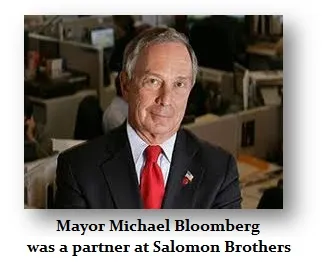
QUESTION: Wasn’t Bloomberg part of the manipulation of the US Treasury Auctions at Salomon Brothers?
JF
ANSWER: No, he sold out to Phibro and was not asked to stay on. In 1973, Bloomberg became a general partner at Salomon Brothers, where he headed equity trading and, later, systems development. In 1981, Salomon Brothers was bought by Phibro Corporation, and Bloomberg was laid off from the investment bank. Perhaps they saw his personality and did not see where he would fit into the bank with what many say was a position of self-importance. Bloomberg News was founded by Michael Bloomberg and Matthew Winkler in 1990 to deliver financial news reporting to Bloomberg Terminal subscribers. The agency was established in 1990 with a team of six people while Winkler was the editor-in-chief.
Michael Bloomberg had the audacity to deliver a speech at the Democratic Convention saying, “There are times when I disagree with Hillary Clinton. But let me tell you, whatever our disagreements may be, I’ve come here to say: We must put them aside for the good of our country. And we must unite around the candidate who can defeat a dangerous demagogue.”
He tried banning large sugary drinks which took effect on March 12, 2013. The pizza deliverymen were prohibited by LAW from delivering 2-liter bottles of soda, assuming one person would drink the whole thing. He never heard of a pizza party or a Superbowl party. Bloomberg is a very dangerous demagogue who accused Trump of being one. Perhaps it takes one to know one. The definition of a demagogue is a political leader who seeks support by appealing to the desires and prejudices of ordinary people rather than using rational argument. As far as a demagogue having the skills to manipulate the press, that’s not Trump, but that is Bloomberg who owns the press.
For someone who came from the market-manipulating house of Solomon Brothers, his attempts on stop-and-frisk, changing the law so he could continually run New York City eliminating term-limits, and his attempt to outlaw 2-liter bottles of soda are just the definition of a demagogue. He will take the green agenda and implement it in a dictatorial fashion as he ran New York City.
However, Bloomberg’s actions with regard to “Occupy Wall Street” were so outrageous in how he protected his clients with terminals. He even drew outrage from the Washington Post (Bloomberg’s disgraceful eviction of Occupy Wall Street). Bloomberg defended Wall Street against the protest “Occupy Wall Street” and arrested people for exercising their First Amendment Rights. Again, Bloomberg acted like a dictator. The Washington Post wrote: “The behavior of the NYPD and the mayor’s office, in ordering this brazen action while blocking the press and the public from reporting on the eviction, is a disgraceful display of unnecessary force on a protest that for the most part has behaved lawfully and respectfully throughout its two-month existence.”
Kathy Kiely, the Washington news director at Bloomberg Politics, said she resigned from her post after growing uncomfortable with the way her outlet responded to news that Bloomberg is considering an independent White House bid. She said when she resigned in January 2016, “I think that Michael Bloomberg has built a terrific news organization but that he needs to liberate it to cover all the news, even the news about him.”
Actions speak louder than words. All of the actions of Bloomberg in New York City are a warning sign that this guy is a real threat to the American Constitution. He refuses to respect the right of freedom, speech, First Amendment, or due process of law. We will see Bloomberg News now become CNN in the financial world and distort all facts to support moving their leader to the White House.
CTH often describes the background DC motives with the phrase: “There are Trillions at Stake.” Here we take a look at what that really means, and how DC politics is not quite based on the ideas that frame many reference points.
With people taking notice of DC politics for the first time; and with people not as familiar with the purpose of DC politics; we end up within two different references. Perhaps it is valuable to reset the larger frames of reference and provide clarity.
 Most people think when they vote for a federal politician -a House or Senate representative- they are voting for a person who will go to Washington DC and write or enact legislation. This is the old-fashioned “schoolhouse rock” perspective based on decades past. There is not a single person in congress writing legislation or laws.
In modern politics not a single member of the House of Representatives or Senator writes a law, or puts pen to paper to write out a legislative construct. This simply doesn’t happen.
Over the past several decades a system of constructing legislation has taken over Washington DC that more resembles a business operation than a legislative body. Here’s how it works right now.

Outside groups, often called “special interest groups”, are entities that represent their interests in legislative constructs. These groups are often representing foreign governments, Wall Street multinational corporations, banks, financial groups or businesses; or smaller groups of people with a similar connection who come together and form a larger group under an umbrella of interest specific to their affiliation.
Sometimes the groups are social interest groups; activists, climate groups, environmental interests etc. The social interest groups are usually non-profit constructs who depend on the expenditures of government to sustain their cause or need.
The for-profit groups (mostly business) have a purpose in Washington DC to shape policy, legislation and laws favorable to their interests. They have fully staffed offices just like any business would – only their ‘business‘ is getting legislation for their unique interests.
These groups are filled with highly-paid lawyers who represent the interests of the entity and actually write laws and legislation briefs.
In the modern era this is actually the origination of the laws that we eventually see passed by congress. Within the walls of these buildings within Washington DC is where the ‘sausage’ is actually made.
Again, no elected official is usually part of this law origination process.
Almost all legislation created is not ‘high profile’, they are obscure changes to current laws, regulations or policies that no-one pays attention to. The passage of the general bills within legislation is not covered in media. Ninety-nine percent of legislative activity happens without anyone outside the system even paying any attention to it.
 Once the corporation or representative organizational entity has written the law they want to see passed – they hand it off to the lobbyists.
The lobbyists are people who have deep contacts within the political bodies of the legislative branch, usually former House/Senate staff or former House/Senate politicians themselves.
The lobbyist takes the written brief, the legislative construct, and it’s their job to go to congress and sell it.
“Selling it” means finding politicians who will accept the brief, sponsor their bill and eventually get it to a vote and passage. The lobbyist does this by visiting the politician in their office, or, most currently familiar, by inviting the politician to an event they are hosting. The event is called a junket when it involves travel.
Often the lobbying “event” might be a weekend trip to a ski resort, or a “conference” that takes place at a resort. The actual sales pitch for the bill is usually not too long and the majority of the time is just like a mini vacation etc.
The size of the indulgence within the event, the amount of money the lobbyist is spending, is customarily related to the scale of benefit within the bill the sponsoring business entity is pushing. If the sponsoring business or interest group can gain a lot of financial benefit from the legislation they spend a lot on the indulgences.
Recap: Corporations (special interest group) write the legislation. Lobbyists take the law and go find politician(s) to support it. Politicians get support from their peers using tenure and status etc. Eventually, if things go according to norm, the legislation gets a vote.
Within every step of the process there are expense account lunches, dinners, trips, venue tickets and a host of other customary financial way-points to generate/leverage a successful outcome. The amount of money spent is proportional to the benefit derived from the outcome.
The important part to remember is that the origination of the entire process is EXTERNAL to congress.
Congress does not write laws or legislation, special interest groups do. Lobbyists are paid, some very well paid, to get politicians to go along with the need of the legislative group.
When you are voting for a Congressional Rep or a U.S. Senator you are not voting for a person who will write laws. Your rep only votes on legislation to approve or disapprove of constructs that are written by outside groups and sold to them through lobbyists who work for those outside groups.
While all of this is happening the same outside groups who write the laws are providing money for the campaigns of the politicians they need to pass them. This construct sets up the quid-pro-quo of influence, although much of it is fraught with plausible deniability.
This is the way legislation is created.
If your frame of reference is not established in this basic understanding you can often fall into the trap of viewing a politician, or political vote, through a false prism. The modern origin of all legislative constructs is not within congress.
“we’ll have to pass the bill to, well, find out what is in the bill” etc. ~ Nancy Pelosi 2009
“We rely upon the stupidity of the American voter” ~ Johnathan Gruber 2011, 2012.
Once you understand this process you can understand how politicians get rich.
When a House or Senate member becomes educated on the intent of the legislation, they have attended the sales pitch; and when they find out the likelihood of support for that legislation; they can then position their own (or their families) financial interests to benefit from the consequence of passage. It is a process similar to insider trading on Wall Street, except the trading is based on knowing who will benefit from a legislative passage.
The legislative construct passes from K-Street into the halls of congress through congressional committees. The law originates from the committee to the full House or Senate. Committee seats which vote on these bills are therefore more valuable to the lobbyists. Chairs of these committees are exponentially more valuable.
Now, think about this reality against the backdrop of the 2016 Presidential Election. Legislation is passed based on ideology. In the aftermath of the 2016 election the system within DC was not structurally set-up to receive a Donald Trump presidency.
If Hillary Clinton had won the election, her Oval Office desk would be filled with legislation passed by congress which she would have been signing. Heck, she’d have writer’s cramp from all of the special interest legislation, driven by special interest groups that supported her campaign, that would be flowing to her desk.
Why?
Simply because the authors of the legislation, the originating special interest and lobbying groups, were spending millions to fund her campaign. Hillary Clinton would be signing K-Street constructed special interest legislation to repay all of those donors/investors.
Congress would be fast-tracking the passage because the same interest groups also fund the members of congress.
President Donald Trump winning the election threw a monkey wrench into the entire DC system…. In early 2017 the modern legislative machine was frozen in place.
The “America First” policies represented by candidate Donald Trump were not within the legislative constructs coming from the K-Street authors of the legislation. There were no MAGA lobbyists waiting on Trump ideology to advance legislation based on America First objectives.
As a result of an empty feeder system, in early 2017 congress had no bills to advance because all of the myriad of bills and briefs written were not in line with President Trump policy. There was simply no entity within DC writing legislation that was in-line with President Trump’s America-First’ economic and foreign policy agenda.
Exactly the opposite was true. All of the DC legislative briefs and constructs were/are antithetical to Trump policy. There were hundreds of file boxes filled with thousands of legislative constructs that became worthless when Donald Trump won the election.
Those legislative constructs (briefs) representing tens of millions of dollars worth of time and influence were just sitting there piled up in boxes under desks and in closets amid K-Street and the congressional offices. Legislation needed to be in-line with an entire new political perspective, and there was no-one, no special interest or lobbying group, currently occupying DC office space with any interest in synergy with Trump policy.
Think about the larger ramifications within that truism. That is also why there was/is so much opposition.
No legislation provided by outside interests means no work for lobbyists who sell it. No work means no money. No money means no expense accounts. No expenses means politicians paying for their own indulgences etc.
Politicians were not happy without their indulgences, but the issue was actually bigger. No K-Street expenditures also means no personal benefit; and no opportunity to advance financial benefit from the insider trading system.
Without the ability to position personal wealth for benefit, why would a politician stay in office? The income of many long-term politicians on both Republican and Democrat sides of the aisle was completely disrupted by President Trump winning the election. That is one of the key reason why so many politicians retired immediately thereafter.
When we understand the business of DC, we understand the difference between legislation with a traditional purpose and modern legislation with a financial and political agenda.
Lastly, this is why -when signing legislation- President Trump often says “they’ve been trying to get this through for a long time” etc. Most of the legislation passed by congress and signed by President Trump in his first term is older legislative proposals, with little indulgent value, that were shelved in years past.
Example: Criminal justice reform did not carry a financial benefit to the legislative bodies, and there was no financial interest funding the politicians to pass the bill. If you look at most of the bills President Trump has signed, with the exception of a few economic bills, they stem from congressional construction many years ago.

Artist Jon McNaughton presents his latest artwork centered around the current state of U.S. politics and President Donald J Trump. [Visit Website Here]
 .
.
Chopper pressers are the best pressers…
The White House has provided a great deal of background information on the upcoming trip to India by President Donald Trump and First Lady Melania Trump.

WHITE HOUSE – SENIOR ADMINISTRATION OFFICIAL: Good afternoon, everyone. Thanks to everyone for joining this call. The topic of the call: This is a background briefing with senior administration officials on President Donald J. Trump’s travel to India.
The briefing is embargoed until 2:30 p.m. and it’s offered on background attributed to a “senior administration official.”
Now, for your information only, we have two senior administration officials with us today. We have [senior administration officials].
Now, please, again, this is on background, attributed to a “senior administration official,” so that will be your information only.
So, at this point, I will turn it over to [senior administration official], who will begin our briefing.
SENIOR ADMINISTRATION OFFICIAL: Hello, and thank you for being here. First, I’ll run through the official delegation for the trip to India. With the President and the First Lady, there will be a 12-person official delegation. That will include:
* Ambassador Ken Juster, the United States Ambassador to of India
* Secretary Wilbur Ross, of Commerce Department
* Secretary Dan Brouillette, of the Energy Department
* Mick Mulvaney, Assistant to the President and Acting Chief of Staff
* National Security Advisor Robert O’Brien
* Ivanka Trump, Assistant to the President and Advisor to the President
* Jared Kushner, Assistant to the President and Senior Advisor to the President
* Stephen Miller, Assistant to the President and Senior Advisor for Policy
* Dan Scavino, Assistant to the President and Senior Advisor for Digital Strategy
* Lindsay Reynolds, Assistant to the President and Chief of Staff to the First Lady
* Robert Blair, Assistant to the President and Special Representative for International Telecommunication Policy and Senior Advisor to the Chief of Staff
And the final member of the official delegation is:
* Stephanie Grisham, Assistant to the President and Press Secretary and Director of Communications for the President and First Lady
And additional bilateral meeting participants include:
* Adam Boehler, Chief Executive Officer of the U.S. International Development Finance Corporation
* Ajit Pai, Chairman of the FCC
* Lisa Curtis, Deputy Assistant to the President for South and Central Asian Affairs
* Mr. Kash Patel, Special Assistant to the President and Senior Director for Counterterrorism
* And finally, Mr. Mike Passey, Director for India, National Security Council
I’ll quickly run through the schedule, give an overview.
The President will arrive in India, in Ahmedabad, in the state of Gujarat, on Monday, where he’ll deliver remarks at Sardar Patel Stadium with Prime Minister Modi.
The President and the First Lady will then go with Prime Minister Modi to visit the Taj, in Agra.
They will then fly to New Delhi and rest overnight in New Delhi, and have a full program on Tuesday. This will include ceremonial events, bilateral meetings with the Prime Minister, a business event with Indian investors, with a special focus on companies that are investing in manufacturing in the U.S.
He’ll have a meet-and-greet with embassy staff and a meeting with the President of India. And to cap it off, there will be a state dinner at the presidential palace, called Rashtrapati Bhavan, on Tuesday evening.
And I’ll give just a few overview remarks before we go into the Q&A about what the President hopes to accomplish in this visit.
The President is going to India as a demonstration of the strong and enduring ties between our two countries. These are ties based on shared democratic traditions, common strategic interests, and enduring bonds between our people. And, in part, this has been exemplified by the very close relationship between the President and Prime Minister Modi.
So the visit will focus on several key areas. First, we’ll focus on building our economic and energy ties. Just to note that two-way trade in goods and services exceeded $142 billion in 2018, and there’s certainly much more room to grow, particularly in energy.
The Strategic Energy Partnership that was launched by President Trump and Prime Minister Modi in 2017 has paid major dividends. It’s improved energy security. It’s encouraged the production of more energy. And it’s facilitated Indian imports of U.S. crude oil, LNG, and coal.
And, certainly, India is the fifth-largest economy in the world, has huge energy needs. And the U.S. is ready to help India meet those needs. Indeed, in 2016, U.S. energy exports to India have grown 500 percent to nearly $7 billion.
Second, we will focus on defense and security cooperation to both fight terrorism and promote a free and open Indo-Pacific. The U.S. wants an India that is strong, with a capable military that supports peace, stability, and a rules-based order in the Indo-Pacific region.
Indeed, India is a pillar of our Indo-Pacific strategy, and we continue to work together to promote this vision of a free and open international system based on market economics, good governance, freedom of the seas and skies, and respect for sovereignty.
And our shared vision for a free and open Indo-Pacific really goes to the heart of what binds our two countries together, and this is our shared democratic systems that place a premium on citizen-centric governments. In fact, India has a strong foundation of democracy, going back to the early days, right after independence. India is a country rich in religious, linguistic, and cultural diversity. In fact, it’s the birthplace of four major world religions.
Prime Minister Modi, in his first speech after winning the election last year, talked about how he would prioritize being inclusive of India’s religious minorities. And, certainly, the world looks to India to maintain religious liberty and equal treatment for all under the rule of law.
So, to sum up, this visit will build upon our many shared values, our strategic and economic interests, and lock in those gains made in the relationship by the administration over the last three years.
And that concludes my opening remarks. Thank you.
SENIOR ADMINISTRATION OFFICIAL: So, Operator, I think we’re ready now to take a few questions.
Q Hi, it’s Andrew Feinberg with Breakfast Media. Thanks for doing this call. Given your remarks just now about your commitment to ensuring religious freedom in India, is the President planning on saying anything to Prime Minister Modi about his government’s attempt to keep Muslim migrants from being able to gain Indian citizenship, or the National Registry of Citizens, which is, some reports are saying, excluding Muslim — people of Muslim descent who have lived in India for many years from retaining their citizenship?
SENIOR ADMINISTRATION OFFICIAL: Thank you. I think President Trump will talk about our shared tradition of democracy and religious freedom both in his public remarks and then certainly in private. He will raise these issues, particularly the religious freedom issue, which is extremely important to this administration.
As I talked about, we do have this shared commitment to upholding our universal values, the rule of law. We have great respect for India’s democratic traditions and institutions, and we will continue to encourage India to uphold those traditions.
And we are concerned with some of the issues that you have raised. And I think that the President will talk about these issues in his meetings with Prime Minister Modi and note that the world is looking to India to continue to uphold its democratic traditions, respect for religious minorities. Of course, it’s in the Indian constitution — religious freedom, respect for religious minorities, and equal treatment of all religions in India.
So this is something that is important to the President and I’m sure it will come up.
Q Hi, this is Kathleen Stubbs with the Asahi Shimbun. Thank you for doing this call. My question is: What will be the nature and structure of the press conferences? When might they be scheduled for?
SENIOR ADMINISTRATION OFFICIAL: The details will be worked out on the site there. We can’t provide the specific details of the logistics at this time.
Q Hi, this is Mara Lee from International Trade Today. I wanted to see if you all had any thoughts on the likelihood that India’s participation in the Generalized System of Preferences could be restored. I take it there’s not going to be an announcement during this trip, but might there be enough progress to get that done later in 2020?
SENIOR ADMINISTRATION OFFICIAL: The concerns that led to the revocation, suspension of India’s GSP access remains a concern for us. And to remind those on the call it was really the failure of the Indian government to provide equitable and reasonable access to its markets in numerous sectors.
We continue to talk to our Indian colleagues about addressing these market access barriers. Our trade teams led by USTR have been in touch with their counterparts over the past several weeks. That engagement will continue.
The trade and economic relationship with India is critically important to the United States, and I think also access to the United States market is critical to the Indian government. We do want to make sure that we get this balance right. We want to address a bunch — a lot of concerns, and we’re not quite there yet.
We will likely have discussion with the Prime Minister about these concerns and continue the discussion beyond this visit.
Q Hi, there. This is Jill Colvin from the Associated Press. I just wanted to be clear: So, do you expect any progress whatsoever on the trade front? Are there specific discussions that are planned? The President had sort of alluded that there could be potentially some progress made.
SENIOR ADMINISTRATION OFFICIAL: Well, we have had a number of announcements coming from India in the past several weeks, which are making the discussions a bit more difficult perhaps. Recent announcements on Make in India have made the protectionism concerns in India even greater. So we will be discussing those concerns. And what we see as an increase in barriers, not a decrease, this will certainly come up among the leaders.
Whether or not there will be announcement on a trade package is, really, wholly dependent upon what the Indians are prepared to do. That said, we have a number of significant commercial deals, which are of great significance that we’re very pleased to announce in a number of key sectors.
Q Yes. Hi, this is Adam Behsudi with Politico. Can you say with any more detail on where the sticking points were on some of the trade issues in terms of not being able to come together? Or was it really down to the actions that India has taken in the last couple months and weeks on trade?
SENIOR ADMINISTRATION OFFICIAL: I think many of the concerns about private sector are well documented. Certainly throughout the GSP process, you had a number of key market access issues raised by stakeholder communities in the United States.
But the Make in India push of the Indian government, as I noted, has made the protectionism concerns even more of a concern to us. We’ve seen India’s budget process recently used to raise tariffs on products of interest in the United States. We continue to see important divergences on e-commerce and digital trade. So it’s a pretty wide scope, frankly, of important service and goods access barriers that we need to address.
Q Hi, this is (inaudible) from The Hindu. I guess my question is to [senior administration official]. Thank you for your comment. I was wondering, should we expect President Trump to offer to mediate on Kashmir again? And will there be any discussion on Afghanistan? There are reports about Indian troops in Afghanistan. Should we expect some sort of request from the U.S. side on that?
SENIOR ADMINISTRATION OFFICIAL: I think what you’ll hear from the President is very much encouraging a reduction in tensions between India and Pakistan, encouraging the two countries to engage in bilateral dialogue with each other to resolve their differences.
We continue to believe a core foundation of any successful dialogue between the two is based on continued momentum in Pakistan’s efforts to crack down on terrorists and extremists on its territory. So we continue to look for that.
But I think the President will urge both countries to seek to maintain peace and stability along the line of control and refrain from actions or statements that could increase tensions in the region.
And with regard to the second part of your question, I think was that on the — what was the second part of your question?
Q The question was on Afghanistan. Will there be an ask for India on that? Will President Trump ask for Indian troops? There are reports about this.
SENIOR ADMINISTRATION OFFICIAL: Right now, the U.S. is focused on the peace process in Afghanistan. You saw there was a major announcement by Secretary Pompeo where we have finalized an understanding with the Taliban to reduce violence in Afghanistan. So we see this as a major step forward, and we’re focused on that.
With regard to India, we would just encourage India, as we are all regional countries, to do whatever it can to support this peace process so that it can be successful and we can potentially end 19 years of military, [DEL: diplomatic, economic :DEL] engagement. You know, that we can end the military engagement. We will be continuing our diplomatic and economic engagement, which has been there over the last 19 years.
But we certainly would look to India to support this peace process — an important country in the region, important to the overall stability of the region. So I think if the issue comes up, that is what would be the request from the President.
Q Hi, this is Alex Lawson from Law360. There was some talk yesterday in the private sector about the potential for some kind of MOU, a memorandum specifically on intellectual property. I know there’s been a number of sort of sticking points in the U.S. business community about pharmaceutical patents in India and some other things.
Do you have any details on what might come on that front during the trip?
SENIOR ADMINISTRATION OFFICIAL: I don’t have any specific details on that particular MOU. We’ll be looking at a few handful of agreements on the defense, (inaudible), energy front, but I don’t have any specific details on the MOU that you mentioned.
OPERATOR: We have no other questions at this time.
SENIOR ADMINISTRATION OFFICIAL: Great. Well, thank you everyone again for joining us. And again, the backgrounder is from senior administration officials on background. And you’re now — we’ll lift the embargo at this point, and you are free to go ahead.
So thank you very much for your time and help. Bye-bye.

National Economic Council Director Larry Kudlow appears on CNBC for an extensive interview on upstream economic issues. With China’s economy at a standstill; and with the troubles of the coronavirus spreading outward; what does that mean for us?
There’s some good questions in this interview. Domestically, as we noted yesterday, the U.S. economy is strong and growing. However, the Wall Street multinationals are very exposed to the China issues. On the bright side the overall China issues are helping to push more corporate decisions toward domestic investment and away from Beijing.
.
Given these lessons being learned, I sure wish we didn’t have China involved in making our medicines and medical products. The administration needs to look at this more.
Director Kudlow also appeared on Fox Business with Lou Dobbs.
.
WASHINGTON – The Trump administration is planning a 5G summit at the White House in early April as part of its global effort to ensure that Chinese telecom giant Huawei does not become dominant in next generation communications technologies, officials told CNBC.
The event has not been officially announced yet. The president’s top economic advisor, Larry Kudlow, told reporters Friday that such a meeting would happen.
“We’re going to have a lot of them in the White House to have a discussion. I’m sure the president will join us in part. That would include Samsung, that would include all of our guys,” Kudlow said.
The development comes at a crucial moment for U.S.-Chinese relations. China, which is grappling with the coronavirus outbreak, last month signed a “phase one” trade deal with Trump as both sides look to complete additional phases.
Behind the scenes, a senior administration official said telecom and technology CEOs have been visiting with President Donald Trump at the White House to explain their views on how to make sure that American firms continue to dominate the communications industry. (more)

Today President Trump delivers a rare mid-day Trump rally in Las Vegas, Nevada. Today’s Keep America Great rally is being held at the Las Vegas Convention Center. President Trump is expected to speak at 3:00pm EST. [Livestreams Below]
RSBN Livestream Link – Trump Campaign Livestream Link – Fox News Livestream Link
.
.

I have created this site to help people have fun in the kitchen. I write about enjoying life both in and out of my kitchen. Life is short! Make the most of it and enjoy!
De Oppresso Liber
A group of Americans united by our commitment to Freedom, Constitutional Governance, and Civic Duty.
Share the truth at whatever cost.
De Oppresso Liber
Uncensored updates on world events, economics, the environment and medicine
De Oppresso Liber
This is a library of News Events not reported by the Main Stream Media documenting & connecting the dots on How the Obama Marxist Liberal agenda is destroying America
Australia's Front Line | Since 2011
See what War is like and how it affects our Warriors
Nwo News, End Time, Deep State, World News, No Fake News
De Oppresso Liber
Politics | Talk | Opinion - Contact Info: stellasplace@wowway.com
Exposition and Encouragement
The Physician Wellness Movement and Illegitimate Authority: The Need for Revolt and Reconstruction
Real Estate Lending

