
The Pope’s comments were totally out of line with a mam of the cloth of any religion — but this was “Totally” inappropriate for the catholic Pope. I glad I’m Russian Orthodox not a Catholic.
Tag Archives: Huxley’s “Brave New World”
Whither Are We Going?
Post By Prof. Paul Eidelberg
Mankind is tottering on an abyss. Violence punctuates daily life in a world increasingly portrayed as meaningless. We are strangers, not only to each other but to ourselves. The “crisis of identity” has become a cliché. Familial and national ties have been eroded; we are homeless cosmopolitans. Indeed, no less than the President of the United States boasts of being a “cosmopolitan”! He emulates the Swedes, who replaced their heritage with multiculturalism.
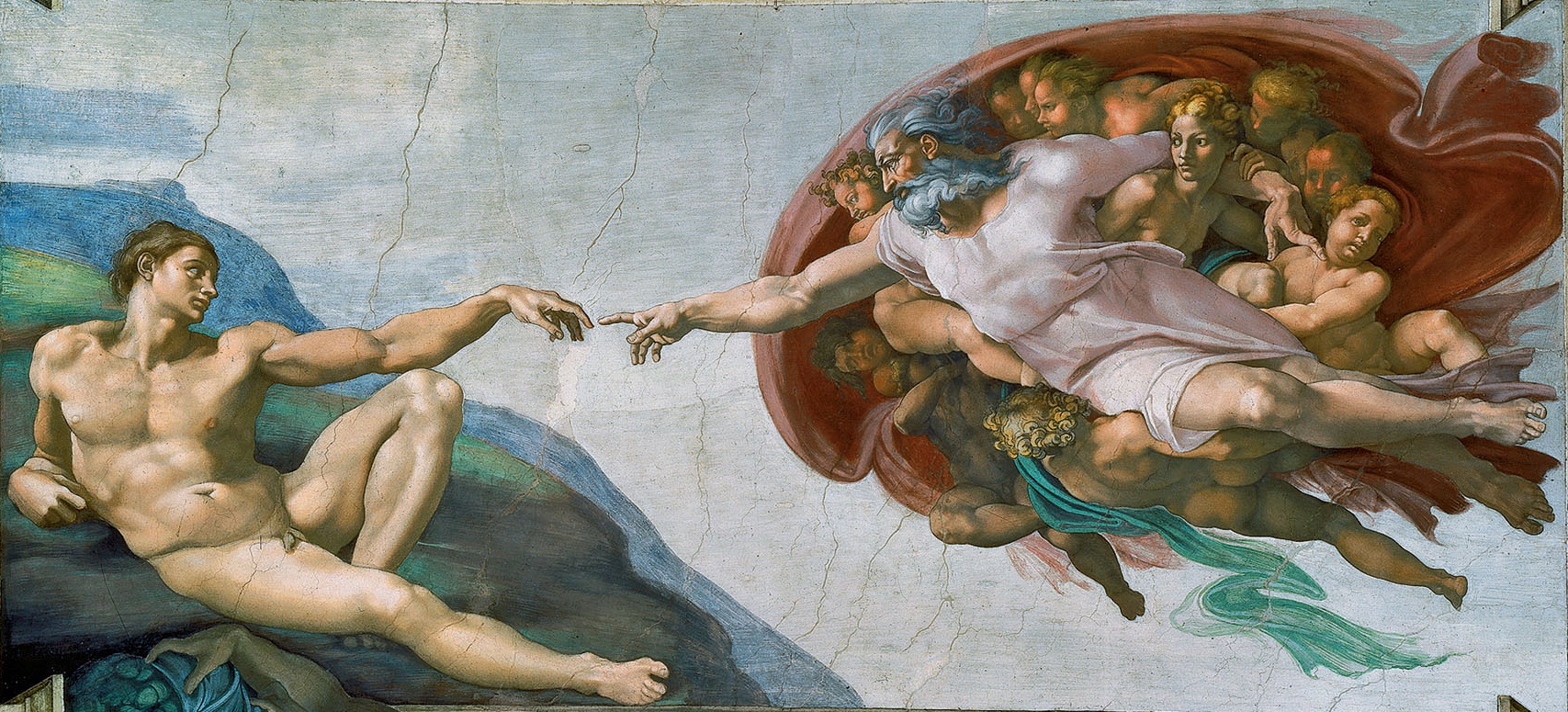
Not knowing who or what we are, we lack the hauteur and confidence of cosmopolitans of the past. They believed in Universal Man, in man sub specie aeternitatis; we believe in nothing. Our humanism is empty; we can’t even take our own humanity seriously. Nihilism has rendered the distinction between man and beast problematic. What, indeed, is noble about man that anyone should boast of being a “humanist”?
When man becomes problematic, enter civilizational decay, but also the possibility of renewal. Such was the case some twenty-four hundred years ago when Greek sophists like Protagoras exulted in teaching youth that “man is the measure of all things.” This unheard of and skeptical doctrine (the dogma of today’s universities), signifies that all ideas concerning the True, the Good, and the Beautiful are human creations, relative to time and place. Socrates saw that this secularism and relativism would eventually destroy the Olympian gods and was even then undermining public morality in Athens. The sophists, the Greek counterparts of today’s “value-free” social scientists, were broadcasting the death of Zeus, the pagan god of justice. Without Zeus, what would hold society together? Without the traditional understanding of right and wrong, men would devour each other like animals.
Enter Socrates. His task, completed by Plato and Aristotle, was to substitute a restrained skepticism for the sophists’ unrestrained skepticism, lest men revert to beasts. The world-historical function of these Athenians was to construct a philosophy of man and a world view that would replace the no longer credible mythology of the Homeric cosmos. Accordingly, and as dramatized in The Republic (when the god-fearing Cephalus leaves the dialogue), philosophy replaces religion and the philosopher replaces Zeus. No longer are the gods to rule mankind, but reason – unaided human reason – would henceforth determine how man should live.
Of course, neither Plato nor Aristotle was so naive as to expect the generality of mankind to defer to the rule of philosophers. Apart from other considerations, philosophers are not only as quarrelsome as the offspring of Zeus and Hera, but, unlike the Olympians, they are mortal: here today, gone tomorrow. Something impersonal as well as immutable and eternal was therefore needed to command the obedience of man. What else could this be but Nature – nature divested of Homeric deities. Neither the gods nor man but all-encompassing Nature was to be the measure of all things. And this Nature, far from being arbitrary and mysterious, was fully accessible to the human mind.
The magnitude of Aristotle’s program has not been surpassed in the history of philosophy. He merely set out to comprehend the totality of existence, to reduce heaven and earth to an organized system of theoretical, practical, and productive sciences. To borrow the terminology of Rabbi J.B. Soloveitchik in Halakhic Man’ Aristotle would tolerate no randomness or particularity, no mystery to obscure the fleeting events of existence. Everything had to be fixed, clear, necessary, ordered. Nothing was beyond the grasp of the human mind because Nature, or the Cosmos, was an intelligent and therefore intelligible whole.
With Greek philosophy a new type of man appeared in the forefront of world history, Cognitive Man. Cognitive Man is a secularist who deifies the intellect. He must therefore be distinguished from his secular rivals, Volitional Man and Sensual Man. Whereas Cognitive Man seeks to understand the world, Volitional Man wishes to conquer and change it, while Sensual Man simply wants to enjoy it. Only with the ascendancy of Volitional Man, personified by Machiavelli, did secularism come into its own as the regnant force of history.
Of course, Machiavelli had collaborators: Hobbes, the father of modern psychology: “The thoughts are to the desires as scouts and spies to range abroad and find the way to the things desired”; Hume: “Reason is, and ought only to be the slave of the passions.” The influence of these two harbingers of Sensual Man explains why we are not used to thinking of Platonic-Aristotelian philosophy as secular.
Plato and Aristotle pay nothing more than lip service to the divine. True, the refinement of their writings conveys great piety. What gives the lie to this impression is that neither philosopher regarded piety as a virtue. We must also bear in mind their caution and civic-mindedness. Socrates, the master of irony, was given the hemlock for atheism. And what with the widespread corruption in Athens resulting from affluence, a disastrous war, and the unabashed atheism of so many intellectuals, it would have been reckless for these aristocrats of the mind to have joined the scoffers of a religion which, whatever its shortcomings, did provide some salutary restraints on the passions of men.
There are refined and vulgar forms of secularism. Plato and Aristotle’s is couched in pious language not only for political and pedagogical reasons, but because, in their species of humanism, the philosopher is virtually divine. By no means is the philosopher to be confused with the academic professor of philosophy. No one has portrayed the difference more powerfully than Nietzsche in Beyond Good and Evil (Part VI, “We Scholars).” For these giants of the intellect, Cognitive Man is the passionate lover of wisdom, where wisdom is nothing less than knowledge of the organizing principles of the universe.
But what is most distinctive of Cognitive Man, whether philosopher or scientist, is his attempt to reduce the fleeting phenomena of existence to lawfulness. This is as true of Platonic-Aristotelian philosophy as it is of Galilean-Newtonian physics, despite their very different conceptions of lawfulness. Both schools seek to discover the riddle of existence in some scientific order or pattern of the world. This is the aim of Cognitive Man.
However refined the quest of Cognitive Man, what unites him with his secular counterparts, Volitional and Sensual Man, is that, like them, he does not pursue the object of his desire to glorify God. The reason is quite simple: for Cognitive Man such a God does not exist. Aristotle, like Spinoza, is a “pantheist.” His Prime Mover is an extrapolation from the principle of motion (Physics 251b17-25, 266a5). As for Plato, his Demiurge is not a creator but an artificer that imposes order on a preexisting chaos (Timaeus 30a, 52d-55, 69b). One thing is clear: both philosophers rejected the idea of a personal God. Otherwise piety would be a virtue.
To be sure, the human psyche is not so easily compartmentalized. Cognitive Man may shade into Volitional Man. Thus Aristotle taught Alexander the Great political science; and politics. However, for Aristotle politics is but the application of philosophy to action. Let us see how Aristotle deals with this issue.
When Aristotle inherited the concept of nature from his teacher Plato, that concept had already been demythologized and transformed into the impersonal and immutable standard of how man should live. Aristotle enriched and systematized the idea by developing an organic and teleological theory of nature. Such was the success of this theory that it had no serious rivals in abodes of learning until the seventeenth century. Vestiges of organicism may be found even in Kepler. However, not until the mechanistic theory of nature fathered by Galileo and Newton was organic concept of nature laid to rest.
What made the organic (and teleological) theory of nature so alluring and enduring is that it appealed to common sense. Observe the growth of a tree from its seed and it will seem that the processes of nature are inwardly directed toward an end or telos. The end is that toward which a living thing strives in order to reach its completion. So it is with man. Neither force imposed from without, nor chance, so much as an immanent impulse prompts man to form associations that can fulfill his potentialities. The most self-sufficient and comprehensive association is the political community, the polis, which alone can complete or perfect man’s nature. Whatever contributes to that end is called “good.” Nature is thus the standard for judging what is good (or bad); there is no other.
Could there be a more impersonal yet intimate and benign substitute for the Olympian gods? Must we not marvel at Aristotle’s genius? By creating a new foundation for morality, Aristotle became one of the greatest “legislators” of mankind.
This organic and teleological conception of man and nature was shattered by Galileo and Newton, the founders of modern science. Their mechanistic conception of nature left nature devoid any moral compass. Neither the quantum theory of Plank nor Einstein’s general theory of relativity provides a scintilla of light on how man should live.
When Nietzsche announced that “God is dead,” he was also announcing, wittingly or otherwise, the death of man. Modern man had become “human-all-too-human.” Thus was born Nietzsche’s desperate idea of the ubermensch. He asked “whither are we going?” and we are living today without an answer. This will compel us to return to Israel.
Monopoly Goes Cashless — The Coming New World Totalitarian Order
Armstrong Economics Blog
Re-Posted Feb 17, 2016 by Martin Armstrong

Well, Monopoly is going cashless. It looks like the game company sees the writing on the wall and are preparing the kids for the new world order — a cashless society.
Is The Pending Euro Collapse on Target From Our 2011 Forecast of March 13/14 2016?
Armstrong Economics Blog
Re-Posted Feb 17, 2016 by Martin Armstrong
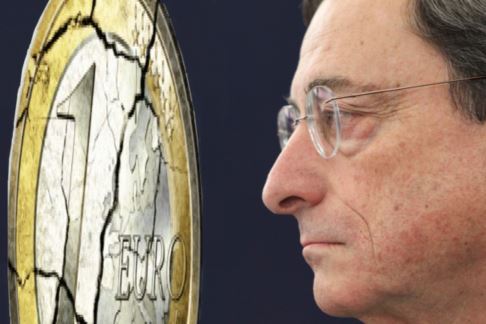
The euro crisis appears to be unfolding right on target rather amazingly. Our target was published in “The Rise and Fall of the Euro” back in 2011. The target for the collapse in confidence was 2016.202. This comes into play March 13/14, 2016. It is rather amazing that we can target a specific event within time, years in advance, and watch these things unfold. This illustrates that TIME remains everything and humanity repeats a process that results in the same response over and over again throughout history. This also demonstrates that our forecasting is not based upon OPINION. With the euro unable to reach 116 of a rebound, this does not look very good in the next few weeks.
Here is what we published in that report:

From a timing perspective, the Bretton Woods System actually began with the operational start of the IMF on March 1, 1947 (1947.164). The euro began officially on January 1, 1999 (1999.002). The birth of the euro essentially completed the 51.6-year cycle between 1947 and 1999. The collapse of the euro appears to be due no later than 17.2 years from its birth, making the ideal target 2016.202, just 23.5 weeks ideally AFTER the peak on this current Economic Confidence Model wave 2015.75.
Larry Summers Calls to End $100 Billis — Here Comes the Totalitarian State
Armstrong Economics Blog
Re-Posted Feb 17, 2016 by Martin Armstrong

 Larry Summers, the father of NEGATIVE INTEREST RATES, is so against a free society and looks upon us as dumb cattle to be herded and corralled for his pleasure. His ideas are just beyond belief. Now Mr. Pro-Government-Anti-Democracy is advocating killing the $100 bill. He is moving to electronic money so that government can get all the taxes it ever dreamed of. We are rapidly being converted from milk cows to just beef cows. This is creating a completely totalitarian future. With people like this who never had a real job but knows how to dictate to the world, our future looks very bleak.
Summers actually reveals this is really about taxes by arguing that the U.S. government should stop issuing new $100 bills and recall the old ones out of circulation. Keep in mind the government will comply because this is the balloon he is floating at their direction and the press cheers our demise. There is nobody in the press willing to call him out. They prefer to lick the ground he walks on. They give him air-time because that is their role.
Summers went further and suggested that even the $50 bill should be examined. In support of the ECB ending the €500 note, he slandered Luxembourg who objects to ending the €500 note by saying that this minuscule country has a “long and unsavory tradition of giving comfort to tax evaders, money launderers, and other proponents of bank secrecy.”
This proves that withdrawing the €500 note in Europe and the $100 and $50 bills in the U.S. is all about taxes — not crime or terrorism. They are moving to end money as we know it. The problem is that the $100 bill circulates predominantly OUTSIDE the USA. They will take a step closer to eliminating the dollar as the reserve currency, and eventually we will end up with a new one-world currency as early as 2018 but probably by 2020. This is really part of the 2017 G20 accord to tax everyone everywhere.
Thank you Mr. Summers for your persistent dedication to eliminating our freedom and converting the world into a giant totalitarian state, despite admitting the government is incapable of forecasting the business cycle. That means that they are too blind to even comprehend the consequences of their actions today.

 TIP: Swap your $100 notes in the sock-drawer for $20s. We went from $10,000 to $100 without terrorists or money laundering laws (which now means hiding money from government). Summers will take us down to $1 at best and he wants that gone as well. This guy should be in prison for what he has done to society. He was the cheerleader to get rid of Glass Steagall under the Clintons.
Summers is in the top 10 people who have created the destruction of all our rights and the world economy. The press treat him as royalty. In my book, he is in the class of Adolf Hitler within the Financial arena. Hitler actually began terminating the handicapped because they were a burden to the state. They happened to be veterans from WWI. This is the same attitude of Summers. Eliminate all our rights for his efficient mind to be at peace. What happens when he controls everything, and government is still unable to survive? He will be first among the elite to advocate sending in troops to hunt anyone who dissents from his will. Yes I am being harsh. But this guy has ZERO respect for that cattle he sees out his window any more than Germany terminating veterans because it was a burden to take care of them. Our society which he cannot figure out how it works because he admits it is too “complex” for his mind, never prevents him from trying to manipulate us to his desire. He seems more like a two-year old who get mad they cannot play with a toy and do not like to share. If the economy is too complex to forecast, it is too complex for his manipulation games.
Judge Tells Apple To Help FBI Unlock San Bernardino Terrorist’s Phone Data – Apple Says No…
The Federal Government itself created the situation where the San Bernardino Islamic terrorists preforming Jihad were allowed to do so even though they knew of their activities. Now they want Apple to make a back door into a product they make so they can try and do the job they should have done before this happened when they could have stopped this from happening. This can not be allowed no matter what the case. I was in military intelligence (G2) and I was a special Operations officer and I know what the government is capable of doing believe me you do not want them to have that power.
Plagues & Changes in Economics — The Hunt for Taxes
Armstrong Economics Blog
Re-Posted Feb 16, 2016 by Martin Armstrong

QUESTION: Mr. Armstrong; I assume you have studied this hunt for money government goes through. Has it always ended in the collapse of government?
Thank you
PD
ANSWER: No. It really depends upon the economic system in place. There are two comparable plagues that devastated the world population. One ended in oppression and the other gave birth to capitalism. It is like the battle between public and private. It depends on what side you reside when it hits. In a public wave, taxes rise to compensate for the decline in population, whereas in the latter we find the birth of taxation applied to individuals who suddenly are free to earn money.
One of the worst such events coincided with the Justinian Plague (541-542AD) and was a pandemic involving Yersinia pestis, the organism responsible for bubonic plague. This hit the population on a monumental scale, creating a wave of devastation comparable to the Black Death that came about 600+ years later (2 x 309.6), which created capitalism by killing about 50% of the people and ended serfdom by reintroducing wages during the 14th century. It is estimated that about 25 million were impacted on its first wave but recurrences struck, bringing the total death toll to perhaps 50 million. The primary source describing this as a worldwide event in history has come to us from the noted contemporary historian during the 6th century, Procopius of Caesarea (Procopius Caesarensis; c. 500-560 AD).
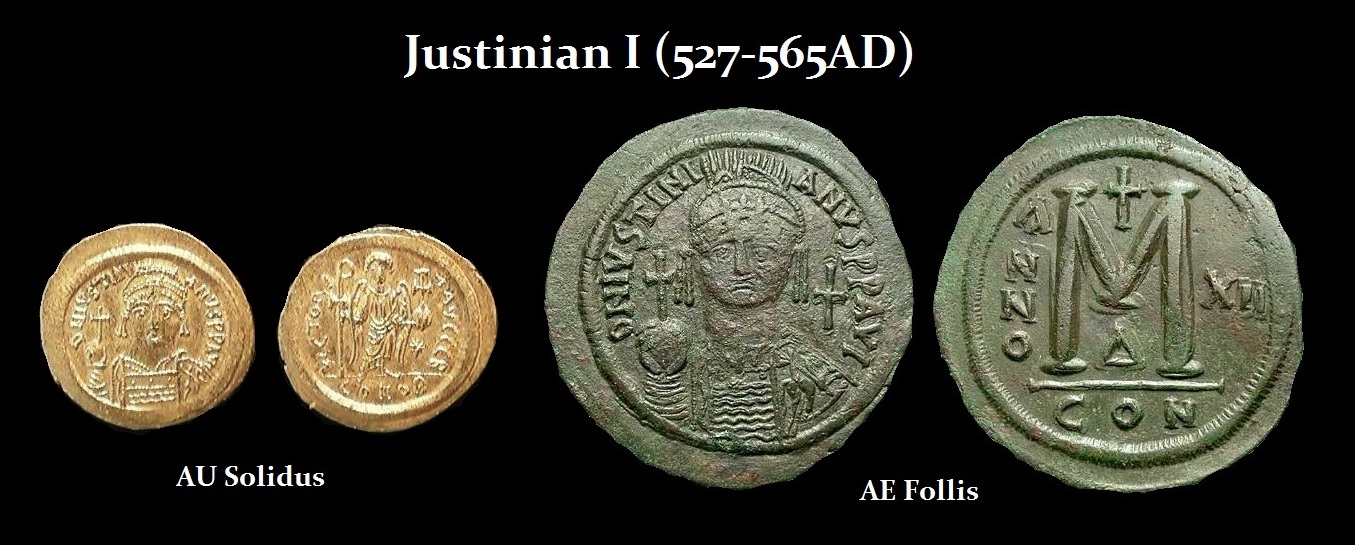
The Justinian Plague (541–542 AD) resulted in 5,000 deaths per day in Constantinople, but the Emperor responded with massive taxation as the pestilence swept through the known world; notably the Roman Empire. Justinian is remembered for his legal code reforms, but also for massive taxation for trying to restore the fallen glory of ancient Rome by waging a series of military campaigns to retake lands that had been overrun by barbarian tribes. The plague wiped out most of the farming community and impacted the tax revenue of the government. It was taxation that was different from the Black Death. Here taxation was applied to individuals, whereas latter taxes were minimal and applied only to landlords. Justinian showed no mercy whatsoever when it came to the collapse in his tax revenue. Despite the human desolation, Justinian hunted the ruined freeholders. He not only demanded they pay his annual tax even if they had no income, but he increased the tax on those living to compensate for the amount of taxation their deceased neighbors were liable to pay.
Justinian I was rather ruthless when it came to taxation. There was a tax revolt that boiled over on January 13, 532 AD, known as the Nika Revolt, which emerged when an angry populace arrived at the Hippodrome in Constantinople to watch the chariot races. The Hippodrome was next to the palace complex where Justinian could watch from the safety of the palace. The spectators were hurling insults at Justinian for his taxes. Initially, it was a contest between two opposing teams known as the “Blue” and “Green.” After race 22, the chants began to change to Nίκα (“Nika”, meaning “Win!” or “Conquer!”). The crowds became violent, and for the next five days the palace was under siege. They set fires that destroyed most of the city including the church, the Hagia Sophia, which Justinian would impose harsh taxes to later rebuild.
Therefore, in this instance, Justinian I raised taxes on the 50% who survived so his revenue would not decline. Since this was a period of capitalism where individuals earned money for their labor (in socialism/communism the state earns the profit from the labor of the population), taxes were raised on the people. The Black Death ended serfdom as labor became scarce and landlords had to offer more than 20% of the food and a free housing to work their land.
Draghi Lied; Claims the ECB Is Withdrawing the €500 Note for Crime and Not Taxes
Armstrong Economics Blog
RE-Posted Feb 16, 2016 by Martin Armstrong

Mario Draghi has claimed that the European Central Bank would withdraw its €500 highest-denomination banknote only to combat crime— not to curb the use of paper money — but you really cannot expect him to tell the truth. If he really told the truth, he would set off a panic withdraw from banks.
The USA use to print $10,000 notes in 1934. That stopped with Roosevelt and the birth of socialism to prevent people from storing cash to escape taxes. There was no excuse of terrorism or crime. Crime has actually declined. Draghi is simply engaging in political bullshit by denying the truth so he can quietly remove cash from society. Teddy Roosevelt even used recorded speeches for people to listen to during the election of 1912 to press the socialist agenda under the Progressive Party. The night of the election in 1932, there were rumors that Roosevelt would close the banks and devalue the dollar. Hoover begged him to come out and say he would not for the rumor set in motion a banking panic. Those with money withdrew it. Roosevelt came out of the high of the election and lied to the public by saying he would never do such a thing. In fact, if he told the truth, people would have poured into the banks and withdrew their deposits in gold. So he lied, and then demanded all gold be turned over to the Treasury, and then he devalued the dollar in 1934.
So never pay attention to the words of politicians or central bankers. They can never say what they will do for the public will act in a counter-trend move. Draghi is withdrawing the €500 notes for the same reason FDR stopped the Treasury from issuing high denomination notes — taxes; not crime nor terrorism. It has always been about money.
EVIDENCE POINTS TO SCALIA ASSASSINATION
I agree his death is just to convenient to the progressive movement so its hard to believe that it is not an assassination!
White House Begins Selecting Scalia Replacement – Short List Includes Current AG Loretta Lynch…
I would not want to bet that McConnell doesn’t cave and confirms anyone that Obama picks no matter who it is. A more important question than Obama’s pick would be why wasn’t an autopsy preformed on Scalia?

