Martin Armstrong – Rates are Going to Jump to 10% Instantaneously


Martin Armstrong – Rates are Going to Jump to 10% Instantaneously

Greg Hunter
Published on May 19, 2018
Where does renowned financial and geopolitical analyst Martin Armstrong see big trouble brewing? Look no further than the bond market. Armstrong explains, “The bond market is going down. . . . We’ve already started into it. . . .You have to understand both Japan and Europe have destroyed their bond markets. They have completely and utterly destroyed them. They are the buyers. That’s it. There is no pension fund that can buy 10-year paper at 1.3% when they need 8% to break even. They are locking in a 10 year loss. They can’t do it. We have been helping major funds shift into equities because it is the only place they can go. . . . Once you start seeing the cracks in Europe, you are going to see interest rates rise faster than you have ever contemplated in your life. There is nobody in their right mind that can buy an Italian bond at 1.3%. It’s just not going to happen. Once the ECB is forced to stop, those rates are going to jump to 10% instantaneously. Once it starts to crack, that’s it, it’s gone. What is going to make everyone know it is cracking is when you see rates going up dramatically, and the ECB is at a point it just can’t buy any more.”

Armstrong does not see a big War in the near term, but one is brewing in the Middle East. What Armstrong does see right now is “increasing civil unrest.”

On gold, Armstrong sees the yellow metal “fighting a stronger dollar” but predicts it will have its day sometime after 2020 to 2021.

Join Greg Hunter as he goes One-on-One with financial and geopolitical expert Martin Armstrong.

Donations: https://usawatchdog.com/donations/

Stay connected to USAWatchdog.com: https://usawatchdog.com/join/

All links can be found on USAWatchdog.com: https://usawatchdog.com/dollar-up-bon…
Category
News & Politics
The Shortage of US Dollars


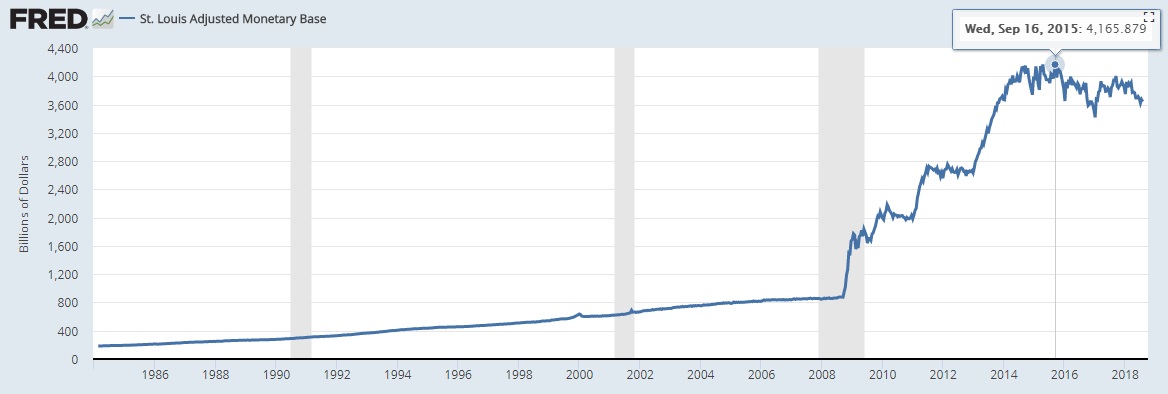
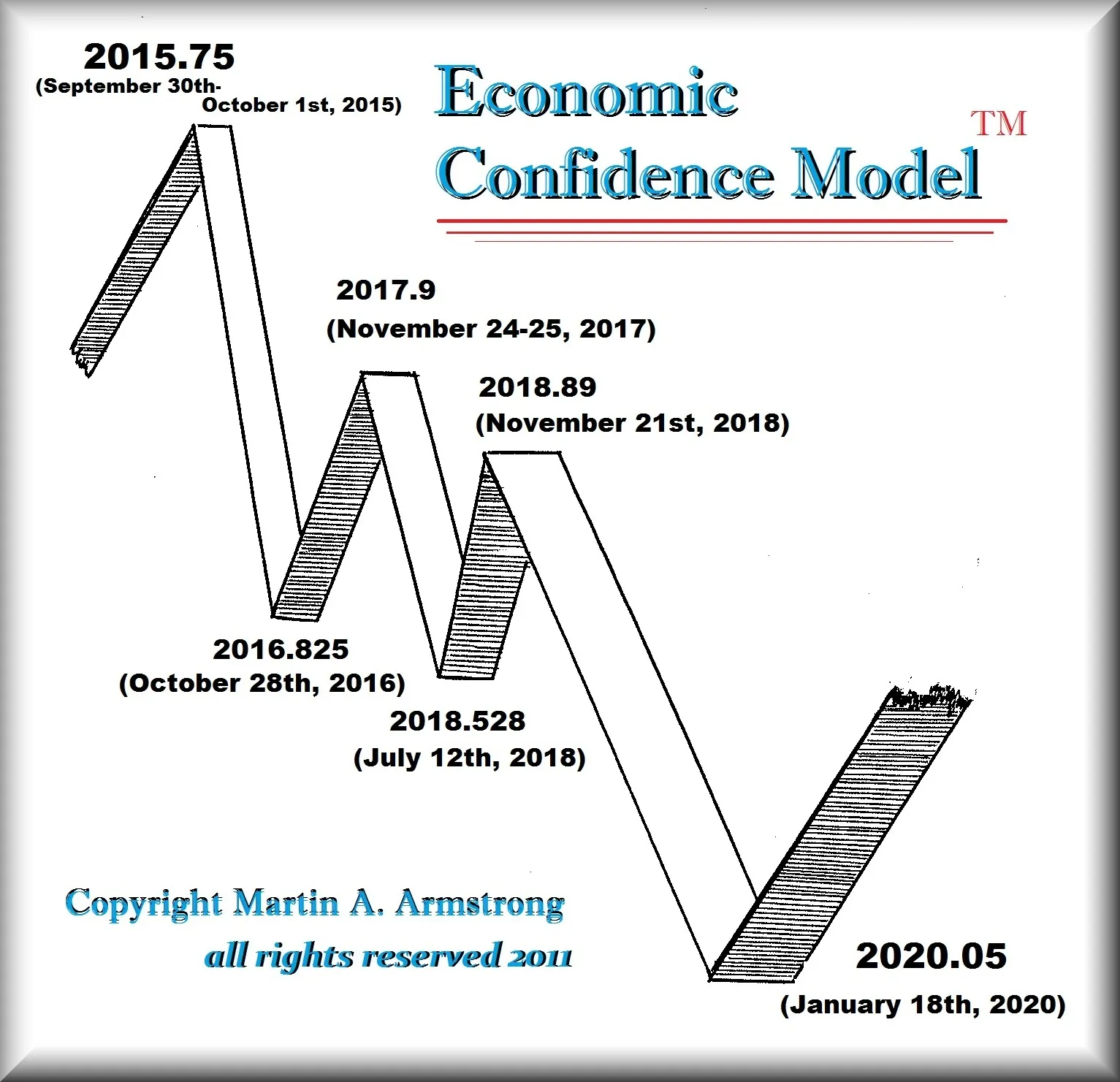
What people have to understand is that the Federal Reserve is moving in the opposite direction with respect to its monetary base. The Adjusted Monetary Base is the sum of currency (including coin) in circulation outside Federal Reserve Banks and the U.S. Treasury, plus deposits held by depository institutions at Federal Reserve Banks. These data are adjusted for the effects of changes in statutory reserve requirements on the quantity of base money held by depositories. This peaked with the Economic Confidence Model turn in 2015 on October 1st. The Fed has been shrinking its balance sheet and believe it or not, there has been growing a SHORTAGE of dollars contrary to those who keep saying the world is awash with dollars so buy gold, cryptocurrencies, or whatever.

I have been stating that (1) were are in a major bull market for the dollar, and (2) it is the US economy that is supporting the world. What I mean is simply this. Everyone from China to Europe is DEPENDENT upon trade with the USA because it is the US consumer who is the marketplace. The balance of the world CANNOT win a trade war with the USA. They have focused on selling to the USA rather than developing their own domestic consumer economies. China has shifted and understood that important distinction and has indeed turned its focus to developing a domestic economy. Europe has not and it is significant to comprehend that the structure of the European Union is disastrous. They want to PRETEND to be the federalized entity of Europe, but all 28 member states must agree on trade. This PREVENTS Germany from accepting Trump’s proposal to abolish all tariffs because France will not agree to an absolute free trade and that will prevent the EU from acting in the best interest of the whole. It requires unanimous consent.

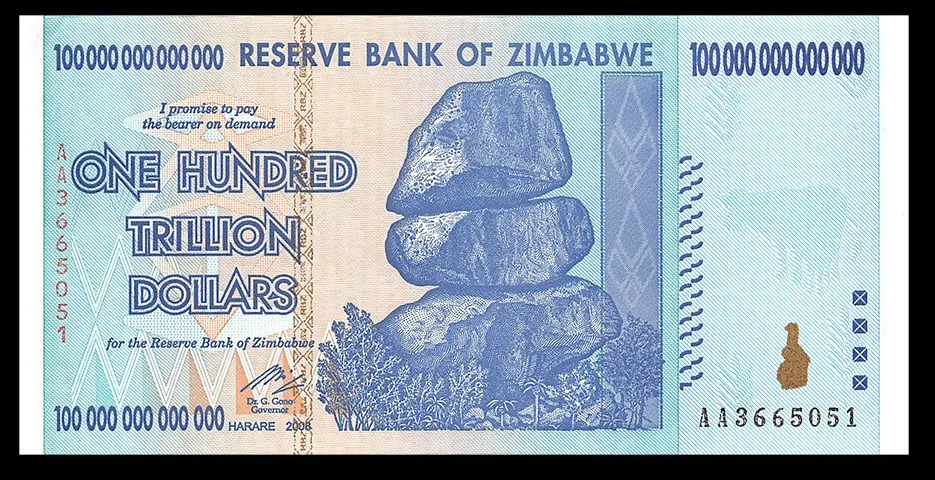
Australia has imposed a 10% tariff on anything purchased overseas and they expect foreign businesses to collect their taxes. They call it a GST, but it is imposed on all products as a protective measure they claim for local businesses. FREE TRADE is simply not feasible politically while Trump gets all the blame. The rest of the world CANNOT win a currency war. So far, our computer has been spot on. We are headed toward a monetary reset in the years ahead but to get there, we must experience a STRONG dollar – not a WEAK dollar. The sooner these pretend analysts stop the same rhetoric that stems from the broken Quantity Theory of Money, the sooner we will begin to truly understand how the economy works. Turnkey is a live example of the most vital element of all – CONFIDENCE. When that is lost, this is what produces hyperinflation – NOT the quantity of money.

There is a SHORTAGE of US dollars on the trading desks around the world – not an excess. This is also what is behind the bid.

Are Cryptocurrencies A Fictional Dream?


COMMENT: Dear Mr. Armstrong; I suppose we have to learn the hard way. Our electronic currency system crashed here in Zimbabwe. Many people were using it because of the old hyperinflation. The argument that private money would be better than government made a lot of sense here given the history. Most people were using US dollars and just about all other currencies from surrounding countries. We lived exactly the experience you have described when the confidence in government collapses. Yet now, many are wondering if this cryptocurrency is just another way to undermine the economy.

JKW

REPLY: I believe the vast majority of the world has never looked at exactly what was taking place in Zimbabwe. The new mobile money emerged as the leading transaction platform in Zimbabwe because of the previous hyperinflation. However, its weaknesses came into focus after the dominant EcoCash network in Zimbabwe collapsed for two days. Consumer businesses were left floundering in an already difficult economy. Many people were just locked out of the economy with no alternative.

EcoCash was competing against smaller platforms run by state-controlled telcos NetOne and Telecel Zimbabwe. The people preferred a privately run system the to the government. EcoCash was conducting business with more than eight million registered. It was also being used by expat Zimbabweans in South Africa and Botswana. This has obviously exposed the weakness of the electronic currency market. Take out the power grid and the economy will collapse overnight.


Cryptocurrencies are not a dead end. They are an asset class for now. There are a lot of problems with the technology and it would clearly make the entire economy vulnerable to a crisis in the failure of platforms or the power grid. Goldman Sachs sees the opportunity because of all the fraud. They are looking at stepping in as a CUSTODIAN because the integrity of the security behind a cryptocurrency is often questionable.

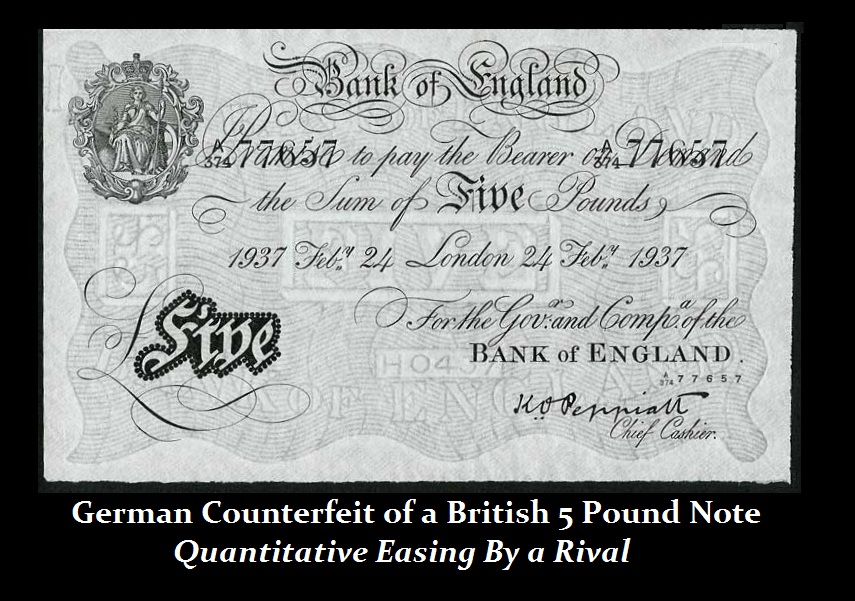
In war, you target the electricity grid as a first objective and then the total economy would collapse as well as the effort to fund a war. During a war, governments have often counterfeited each other’s currency. The British did that with American colonial currency. If they could undermine the confidence and cause hyperinflation, then funding the war effort would collapse. Today, you would do this by hacking and targeting the power grid.

In all the high-level meetings I have had about this technological innovation, the single greatest concern is would it make a nation more vulnerable during a war? Can a cyber attack simply paralyze the economy? Keep in mind that only about 4% of the economy takes place in cash. The rest is electronic deposits. Therefore, this threat is NOT limited to cryptocurrencies. It may very well be the next way to win a war. Attack the banking system and you will freeze the ability to fund a war. Don’t think they are not thinking about that right now

The Minsky Moment


A number of people have asked if I ever looked at Hyman Minsky’s concepts in forecasting the economy. Minsky’s Financial Instability Hypothesis failed not because of the fact that he attempted to interject cycles and even listened to Schumpeter, the problem was that he was an economist and not a trader. His own attempts to devise a mathematical model of his hypothesis were unsuccessful. The first of Minsky’s two papers in the AER set out a mathematical model of a financially driven trade cycle developed during his Ph.D. from Harvard in 1954 but he never attempted to develop the model further.

There have been many people who have claimed they used his model and were able to forecast the 2007 crash. I know many traders around the world in a professional capacity and I do not know ANYONE who did not see the crash coming. Being able to say this is a bubble and it will end badly was the topic of the movie The Big Short. Being able to see such a bubble is by no means unusual for many who are seasoned. I know of no profession who bought into the whole Bitcoin nonsense of how it would replace the dollar, end central banks, and start a new age all within a matter of months. The professionals just laughed because they know such a change takes decades not months.

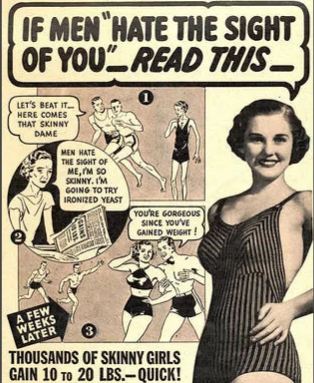
Minsky’s observations of the Great Depression are seriously flawed. The primary problem was that they were focused domestically. They did not take into consideration the entire world economy. His hypothesis of financial instability argued that a financial crisis is endemic in capitalism because periods of economic prosperity encouraged borrowers and lenders to be progressively reckless. This excess optimism creates financial bubbles and then later busts. Therefore, capitalism is prone to move between periods of financial stability to instability. This is a type of market failure and it justifies government regulation to smooth the cycle, which is also his agreement with Keynesianism. The real cause is simply the human emotion. Women’s skirts rise and fall and men’s ties get wide and then back to thin. Fashion changes. Paintings of Paul Rubens portrayed robust women for that proved they were wealthy and could afford to eat. Skinny women were unattractive and considered to be poor. Even during the 1920s, advertisements told women how to gain weight. Today, the trend is the opposite. There is a cycle to everything.

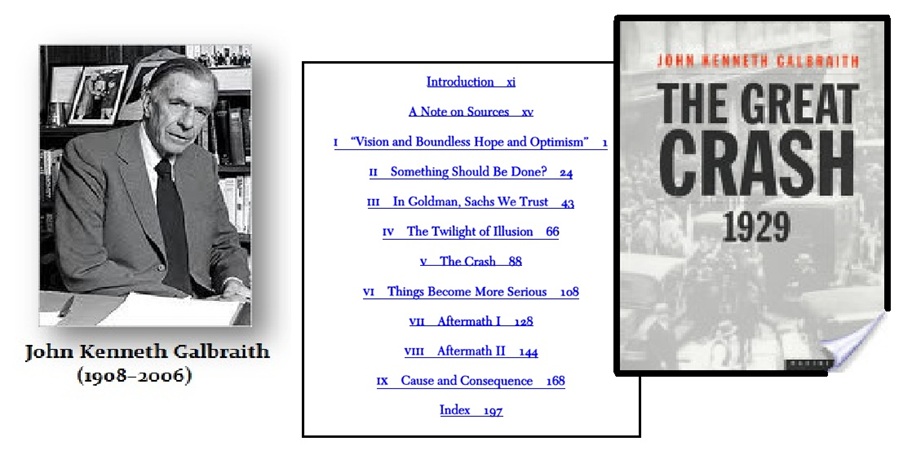
Minsky’s Financial Instability Hypothesis is merely something that monitors domestic considerations and from that perspective, he completely failed to comprehend the Great Depression. It was far more than merely excessive debt etc. He agreed also with Galbraith who blamed corporations and never even looked out the wholesale collapse of government debt on a major worldwide scale in 1931. There was NO MENTION of the Sovereign Debt Crisis of 1931 you can read about in Herbert Hoover’s memoirs 1931.

Under Minsky’s theory, he endorses government power to smooth out the business cycle which they have never been able to do even once. Yet in all fairness to him, Minsky also believed that financial instability was a characteristic feature of capitalism as did Kondratieff yet the very institutional and policy measures introduced by governments sometimes contribute to the problem. It has become known as the Minsky Moment which is a sudden major collapse of asset values which is part of the credit cycle or business cycle. Such moments occur because long periods of prosperity and increasing value of investments lead to increasing speculation using borrowed money. Unfortunately, while it sounds authoritative, it can be applied to many periods that did not result in a major crash of the economy and can simply be confined to one market rather than the whole as was the case with the DOT.COM bubble and the Bitcoin crash. Neither produced a major depression.