Cryptocurrency – Private v Public


QUESTION: Dear Marty:
I have been reading you for over a decade. I notice a change in your attitude towards Bitcoin/Crypto. Initially, you were completely against it, now you seem to be neutral. Has something changed? We now have Futures, CBOE is coming out with an ETF, every major bank is thinking of entering the space. The G20 will soon come out with a supportive statement.
Thank you,
YA

ANSWER: No. I regard this as an ASSET CLASS for trading. That is distinct and separate from the claim it is a currency. Even Hyun Song Shin, the economic advisor and research director of the Swiss-based Bank for International Settlements (BIS), told Bloomberg that Bitcoin and other cryptocurrencies are “far from maintaining a monetary system” and “just pretend to be real currencies “. On that score, he is absolutely correct. This is like expecting Recep Tayyip Erdoğan of Turkey to stand up and say he is wrong and his policies have been disastrous for Turkey and he will put the good of the nation before himself, or the same in Venezuela, or the religious leadership in Iran. Currencies move into hyperinflation NOT because of the rise in the quantity, but because of the collapse in CONFIDENCE, that then forces the increase in the quantity of money to pay the bills. I suppose it’s the question which came first? The chicken or the egg?

You have to separate reality from fiction. That does not mean that Bitcoin is not an asset class. It just is not a currency that has any real footing within the economy. So there is NO POSSIBLE WAY any government will allow a PRIVATE cryptocurrency to replace a national currency. That will NEVER happen. However, I have previously stated that governments want to ELIMINATE cash for tax reasons. Only about 4% of transactions today are in paper currency, to begin with. The bulk of our monetary system is already digital currency that does not exist. The pitch that cryptocurrency will circumvent central banks and governments is just absurd. You have to separate PRIVATE from PUBLIC. That is the issue against Bitcoin.

The commercial banks that are looking at it are for non-currency issues of the blockchain. Goldman Sachs is looking to a custodian to hold money for cryptocurrencies to make money. But the sales-pitch that Bitcoin will become the reserve currency, replace central banks, and eliminate national currencies is really way out there. The FAX machine was invented by the Scottish inventor Alexander Bain who worked on chemical mechanical fax type devices. Back in 1846, he was able to reproduce graphic signs in laboratory experiments. He applied and received a British patent #9745 on May 27, 1843, for his “Electric Printing Telegraph”, but it took more than a 100 years to actually become usable. Yes, you can see the future and no doubt you could envision sending photographs around the world back in 1843. There is just a huge gap between technology and its implementation. Back in the 1960s when integrated circuit chips first appeared, it was obvious we would shrink a computer to fit on a desktop. The problem was trying to figure out what people would do within. Later Microsoft, Lotus, etc., figured out how to use it and the computer age began for the mainstream. We are NOT there yet in cryptocurrencies any time soon.
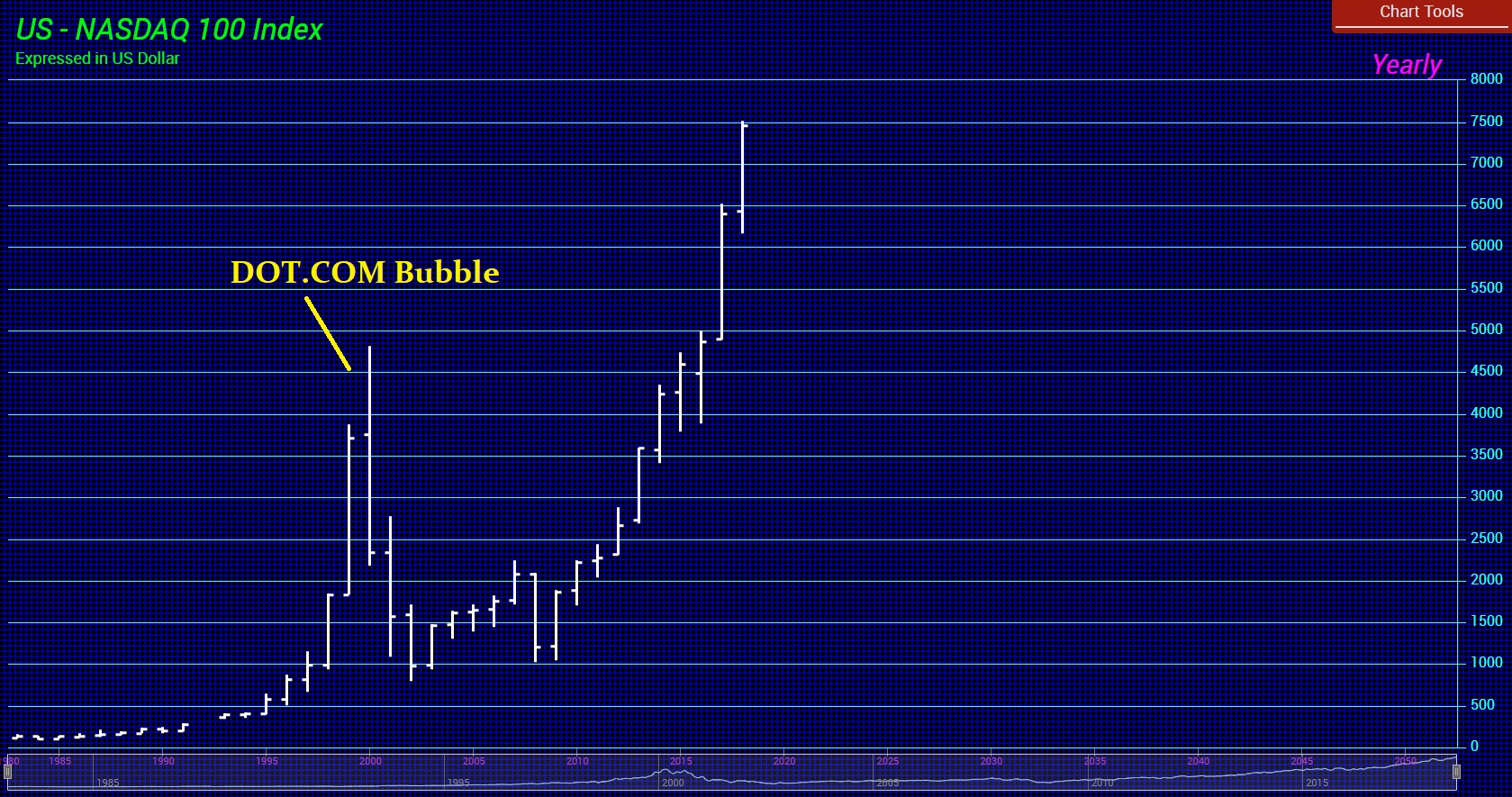
 

Can the economy move to purely electronic currency? The answer is NO – not yet. We may still be looking at that well AFTER 2032. India and Sweden have found it impossible to get away from paper money. There is a large segment of the population that do not bank no less own a computer or even a smart phone. The EU passed a law calling it everyone has a “right” to have a bank account, which was really a step to try to move closer to an electronic currency. You are looking at the basic requirement of a generational shift. As the older generation dies out, money will become completely digital, newspapers will see their last print, and paper books may be found only in a museum. Things always change – but not as fast as people think. The DOT.COM Bubble was all about the rage of how the internet would replace stores. The prices got ahead of the reality. Eventually, the technology changes the system. But it always takes time. Eventually, new higher were made and a more solid market emerged – with TIME!
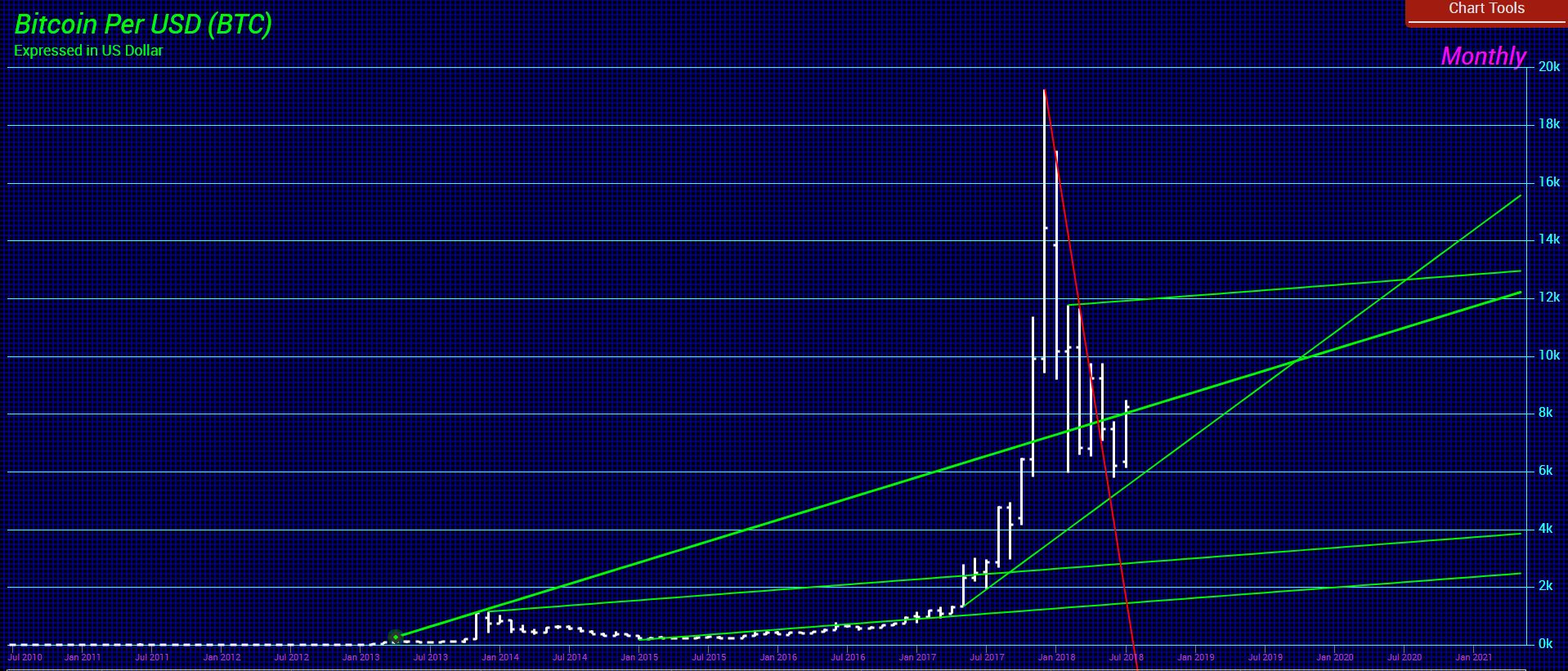
 

Cryptocurrencies are an “asset class” meaning they are tradable with futures. However, that is a far cry away from being an actual currency that is legal tender accepted everywhere including taxes. We have included it in the markets analyzed by Socrates for that very reason. It is an instrument to trade. Just don’t marry the trade
Martin Armstrong – Rates are Going to Jump to 10% Instantaneously


Martin Armstrong – Rates are Going to Jump to 10% Instantaneously

Greg Hunter
Published on May 19, 2018
Where does renowned financial and geopolitical analyst Martin Armstrong see big trouble brewing? Look no further than the bond market. Armstrong explains, “The bond market is going down. . . . We’ve already started into it. . . .You have to understand both Japan and Europe have destroyed their bond markets. They have completely and utterly destroyed them. They are the buyers. That’s it. There is no pension fund that can buy 10-year paper at 1.3% when they need 8% to break even. They are locking in a 10 year loss. They can’t do it. We have been helping major funds shift into equities because it is the only place they can go. . . . Once you start seeing the cracks in Europe, you are going to see interest rates rise faster than you have ever contemplated in your life. There is nobody in their right mind that can buy an Italian bond at 1.3%. It’s just not going to happen. Once the ECB is forced to stop, those rates are going to jump to 10% instantaneously. Once it starts to crack, that’s it, it’s gone. What is going to make everyone know it is cracking is when you see rates going up dramatically, and the ECB is at a point it just can’t buy any more.”

Armstrong does not see a big War in the near term, but one is brewing in the Middle East. What Armstrong does see right now is “increasing civil unrest.”

On gold, Armstrong sees the yellow metal “fighting a stronger dollar” but predicts it will have its day sometime after 2020 to 2021.

Join Greg Hunter as he goes One-on-One with financial and geopolitical expert Martin Armstrong.

Donations: https://usawatchdog.com/donations/

Stay connected to USAWatchdog.com: https://usawatchdog.com/join/

All links can be found on USAWatchdog.com: https://usawatchdog.com/dollar-up-bon…
Category
News & Politics

The Shortage of US Dollars


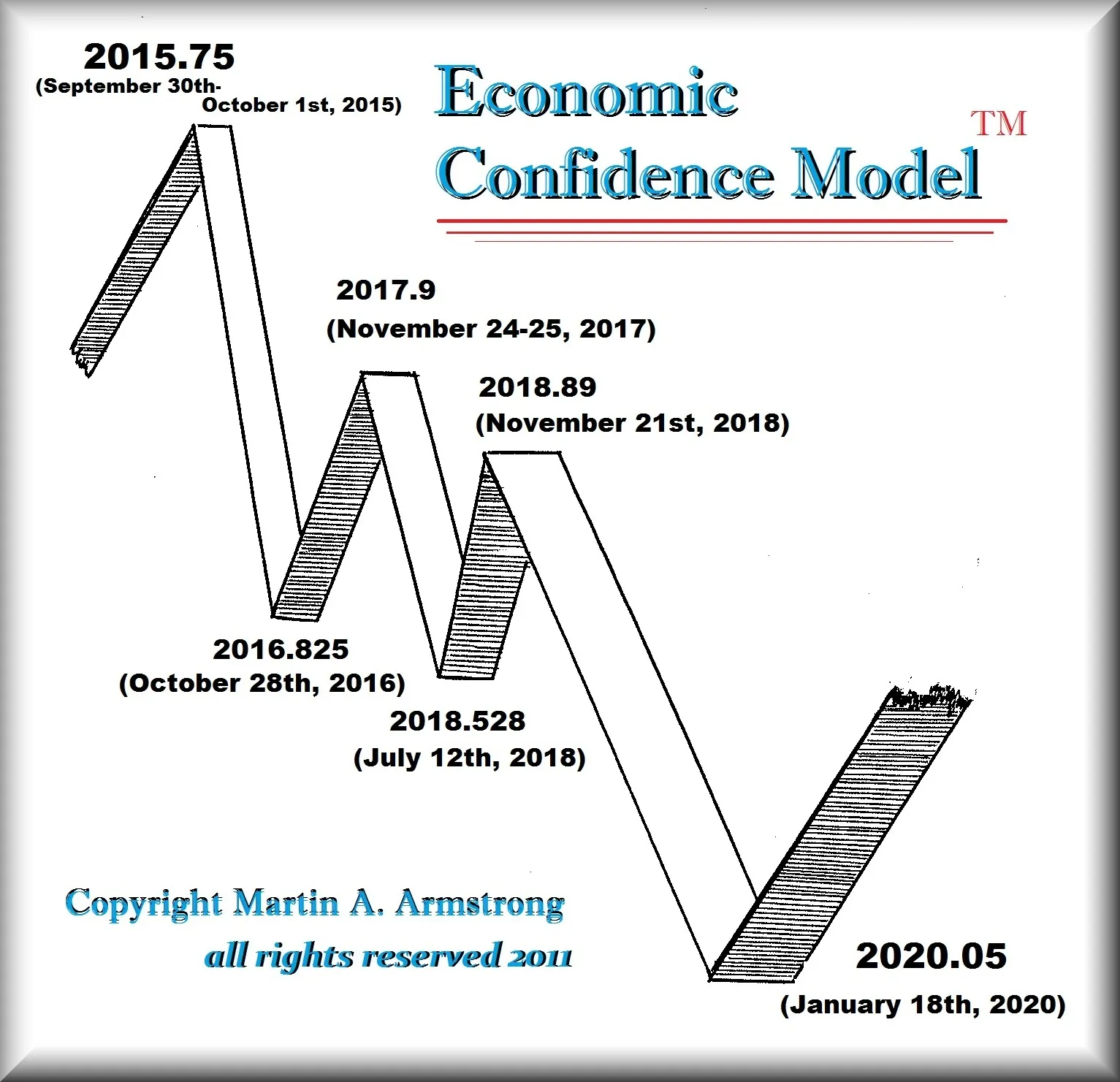
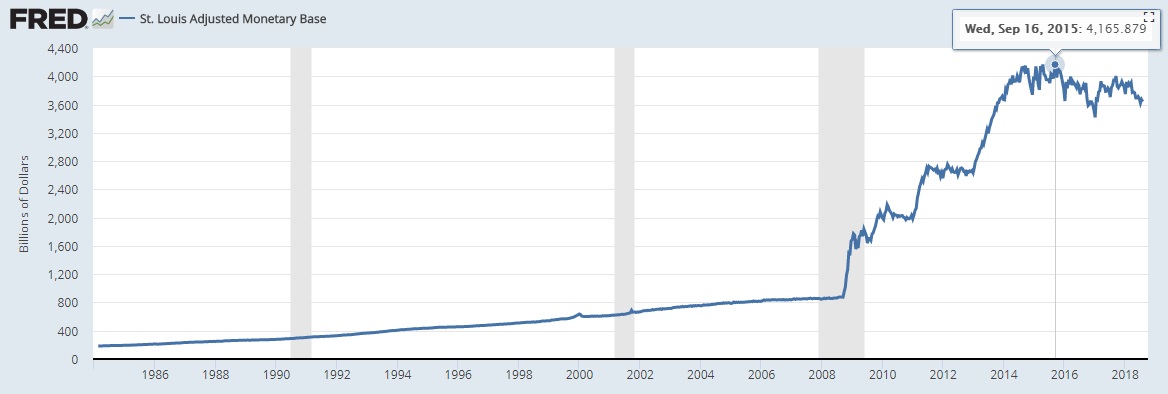
What people have to understand is that the Federal Reserve is moving in the opposite direction with respect to its monetary base. The Adjusted Monetary Base is the sum of currency (including coin) in circulation outside Federal Reserve Banks and the U.S. Treasury, plus deposits held by depository institutions at Federal Reserve Banks. These data are adjusted for the effects of changes in statutory reserve requirements on the quantity of base money held by depositories. This peaked with the Economic Confidence Model turn in 2015 on October 1st. The Fed has been shrinking its balance sheet and believe it or not, there has been growing a SHORTAGE of dollars contrary to those who keep saying the world is awash with dollars so buy gold, cryptocurrencies, or whatever.

I have been stating that (1) were are in a major bull market for the dollar, and (2) it is the US economy that is supporting the world. What I mean is simply this. Everyone from China to Europe is DEPENDENT upon trade with the USA because it is the US consumer who is the marketplace. The balance of the world CANNOT win a trade war with the USA. They have focused on selling to the USA rather than developing their own domestic consumer economies. China has shifted and understood that important distinction and has indeed turned its focus to developing a domestic economy. Europe has not and it is significant to comprehend that the structure of the European Union is disastrous. They want to PRETEND to be the federalized entity of Europe, but all 28 member states must agree on trade. This PREVENTS Germany from accepting Trump’s proposal to abolish all tariffs because France will not agree to an absolute free trade and that will prevent the EU from acting in the best interest of the whole. It requires unanimous consent.

Australia has imposed a 10% tariff on anything purchased overseas and they expect foreign businesses to collect their taxes. They call it a GST, but it is imposed on all products as a protective measure they claim for local businesses. FREE TRADE is simply not feasible politically while Trump gets all the blame. The rest of the world CANNOT win a currency war. So far, our computer has been spot on. We are headed toward a monetary reset in the years ahead but to get there, we must experience a STRONG dollar – not a WEAK dollar. The sooner these pretend analysts stop the same rhetoric that stems from the broken Quantity Theory of Money, the sooner we will begin to truly understand how the economy works. Turnkey is a live example of the most vital element of all – CONFIDENCE. When that is lost, this is what produces hyperinflation – NOT the quantity of money.

There is a SHORTAGE of US dollars on the trading desks around the world – not an excess. This is also what is behind the bid.

Are Cryptocurrencies A Fictional Dream?


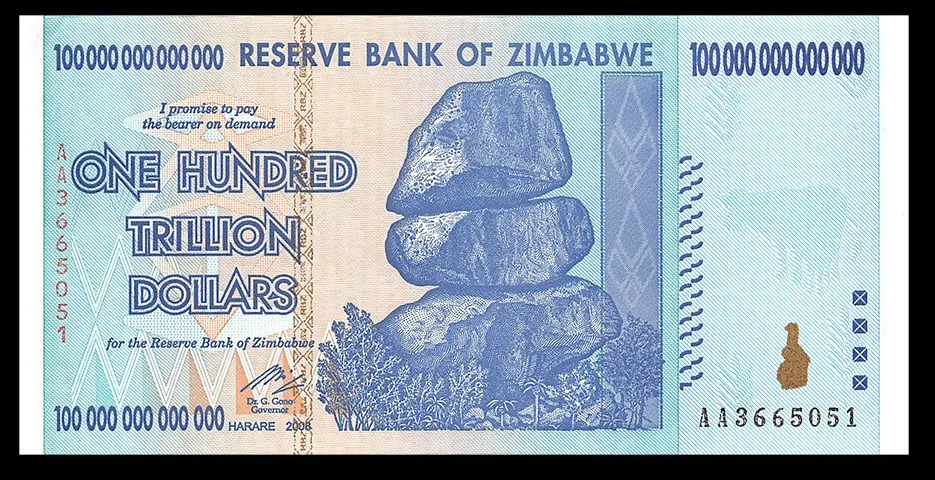
COMMENT: Dear Mr. Armstrong; I suppose we have to learn the hard way. Our electronic currency system crashed here in Zimbabwe. Many people were using it because of the old hyperinflation. The argument that private money would be better than government made a lot of sense here given the history. Most people were using US dollars and just about all other currencies from surrounding countries. We lived exactly the experience you have described when the confidence in government collapses. Yet now, many are wondering if this cryptocurrency is just another way to undermine the economy.

JKW

REPLY: I believe the vast majority of the world has never looked at exactly what was taking place in Zimbabwe. The new mobile money emerged as the leading transaction platform in Zimbabwe because of the previous hyperinflation. However, its weaknesses came into focus after the dominant EcoCash network in Zimbabwe collapsed for two days. Consumer businesses were left floundering in an already difficult economy. Many people were just locked out of the economy with no alternative.

EcoCash was competing against smaller platforms run by state-controlled telcos NetOne and Telecel Zimbabwe. The people preferred a privately run system the to the government. EcoCash was conducting business with more than eight million registered. It was also being used by expat Zimbabweans in South Africa and Botswana. This has obviously exposed the weakness of the electronic currency market. Take out the power grid and the economy will collapse overnight.


Cryptocurrencies are not a dead end. They are an asset class for now. There are a lot of problems with the technology and it would clearly make the entire economy vulnerable to a crisis in the failure of platforms or the power grid. Goldman Sachs sees the opportunity because of all the fraud. They are looking at stepping in as a CUSTODIAN because the integrity of the security behind a cryptocurrency is often questionable.

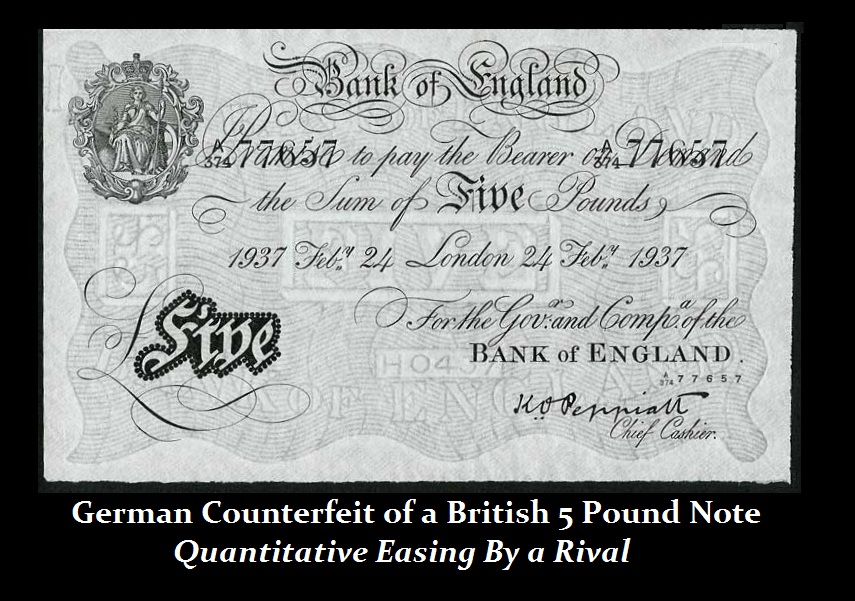
In war, you target the electricity grid as a first objective and then the total economy would collapse as well as the effort to fund a war. During a war, governments have often counterfeited each other’s currency. The British did that with American colonial currency. If they could undermine the confidence and cause hyperinflation, then funding the war effort would collapse. Today, you would do this by hacking and targeting the power grid.

In all the high-level meetings I have had about this technological innovation, the single greatest concern is would it make a nation more vulnerable during a war? Can a cyber attack simply paralyze the economy? Keep in mind that only about 4% of the economy takes place in cash. The rest is electronic deposits. Therefore, this threat is NOT limited to cryptocurrencies. It may very well be the next way to win a war. Attack the banking system and you will freeze the ability to fund a war. Don’t think they are not thinking about that right now

The Minsky Moment


A number of people have asked if I ever looked at Hyman Minsky’s concepts in forecasting the economy. Minsky’s Financial Instability Hypothesis failed not because of the fact that he attempted to interject cycles and even listened to Schumpeter, the problem was that he was an economist and not a trader. His own attempts to devise a mathematical model of his hypothesis were unsuccessful. The first of Minsky’s two papers in the AER set out a mathematical model of a financially driven trade cycle developed during his Ph.D. from Harvard in 1954 but he never attempted to develop the model further.

There have been many people who have claimed they used his model and were able to forecast the 2007 crash. I know many traders around the world in a professional capacity and I do not know ANYONE who did not see the crash coming. Being able to say this is a bubble and it will end badly was the topic of the movie The Big Short. Being able to see such a bubble is by no means unusual for many who are seasoned. I know of no profession who bought into the whole Bitcoin nonsense of how it would replace the dollar, end central banks, and start a new age all within a matter of months. The professionals just laughed because they know such a change takes decades not months.

Minsky’s observations of the Great Depression are seriously flawed. The primary problem was that they were focused domestically. They did not take into consideration the entire world economy. His hypothesis of financial instability argued that a financial crisis is endemic in capitalism because periods of economic prosperity encouraged borrowers and lenders to be progressively reckless. This excess optimism creates financial bubbles and then later busts. Therefore, capitalism is prone to move between periods of financial stability to instability. This is a type of market failure and it justifies government regulation to smooth the cycle, which is also his agreement with Keynesianism. The real cause is simply the human emotion. Women’s skirts rise and fall and men’s ties get wide and then back to thin. Fashion changes. Paintings of Paul Rubens portrayed robust women for that proved they were wealthy and could afford to eat. Skinny women were unattractive and considered to be poor. Even during the 1920s, advertisements told women how to gain weight. Today, the trend is the opposite. There is a cycle to everything.

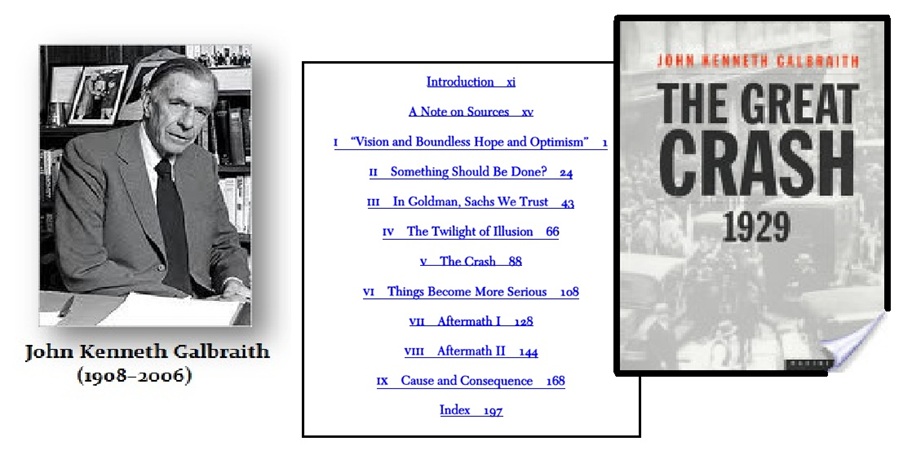
Minsky’s Financial Instability Hypothesis is merely something that monitors domestic considerations and from that perspective, he completely failed to comprehend the Great Depression. It was far more than merely excessive debt etc. He agreed also with Galbraith who blamed corporations and never even looked out the wholesale collapse of government debt on a major worldwide scale in 1931. There was NO MENTION of the Sovereign Debt Crisis of 1931 you can read about in Herbert Hoover’s memoirs 1931.

Under Minsky’s theory, he endorses government power to smooth out the business cycle which they have never been able to do even once. Yet in all fairness to him, Minsky also believed that financial instability was a characteristic feature of capitalism as did Kondratieff yet the very institutional and policy measures introduced by governments sometimes contribute to the problem. It has become known as the Minsky Moment which is a sudden major collapse of asset values which is part of the credit cycle or business cycle. Such moments occur because long periods of prosperity and increasing value of investments lead to increasing speculation using borrowed money. Unfortunately, while it sounds authoritative, it can be applied to many periods that did not result in a major crash of the economy and can simply be confined to one market rather than the whole as was the case with the DOT.COM bubble and the Bitcoin crash. Neither produced a major depression.

IMF Criticizes Germany for its Chronic Trade Surplus?


QUESTION: Mr. Armstrong; I know you say you do not advise the IMF. But whatever you write, they follow and repeat. So they are following your blog at least and they implement whatever you say. This is very curious. They are now saying that Germany’s export model economy is threatening the world economy. You were the first to even differentiate domestic compared to export model economies. Do you care to restate that you do not advise the IMF?

GP

ANSWER: I do not deny that probably every government is reading this blog. That is the way it goes. They have realized that we not merely advise institutions, but we also report on trends that are not the subject matter of mainstream media. That said, we DO NOT HAVE any consulting agreement with the IMF. I have met personally with IMF board members. Yet keep in mind that does not mean that boards are unanimous in their decisions or beliefs.

What you are referring to is the IMF’s chief economist Maurice Obstfeld, who pointed out writing in the newspaper Die Welt (The World), further expansion of the German trade surplus would put financial stability at risk. He wrote that Germany’s continuing high trade surpluses are making Germany responsible for the increased crisis risks for the global economy with respect to trade disputes. He has also stated that there are no immediate threats to excessive trade imbalances in Germany. What he is talking about is with respect to global trade imbalances are promoting protectionist tendencies.

Keep in mind that everyone looks at the Current Account. I have stated numerous times that the Current Account also includes investment in buying government debt. The German Current Account surplus is now declining. Much of this was being driven by the internal capital flows within Europe moving to Germany as a hedge against the collapse of the Euro where the trade became the assumption that they would end up with Deutschemarks when the Euro collapsed.

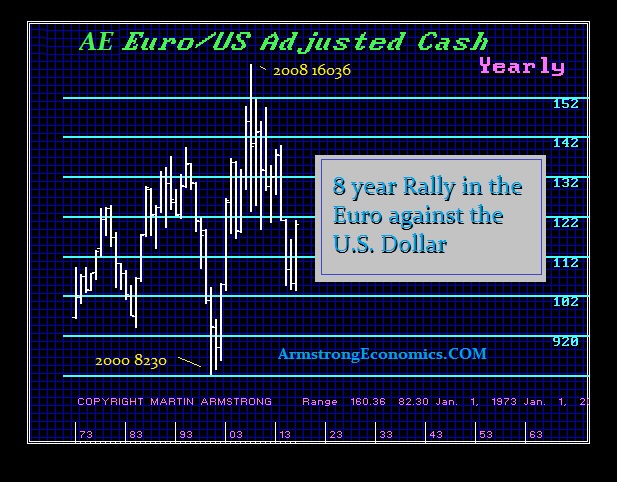
Germany’s Current Account surplus peaked in 2015 at 8.9% of economic output. Last year it was still at the 8% level. The IMF classifies this 8% level as risky. This is by no means a sign that the Germany economy is booming. Actually, it has been the currency that has accounted for more shifts in manufacture than anyone would guess. The rise in the Euro from 82 cents to $1.60 between 2000 and 2008 was significant. By 2017, The German car manufacturer BMW actually produced 1.98 million passenger cars and light trucks built in the United States and were exported from there in the USA – not Germany. If we look at the dollar value of BMW exports from the USA, this accounted for $57.04 billion of U.S. international trade. BMW has actually become the largest manufacturer component that is being produced in the United States – not Germany.

Donald Trump has criticized Germany for its high trade surpluses. The USA is Germany’s largest export market. The current account includes the exchange of goods and services between states as well as the movement of capital. I have stated before that if we allocate trade according to the flag the company flies, then the USA has over a $2 trillion trade surplus. Are the BMWs exported from the USA German or American trade? They are creating American jobs, but the cars say BMW and people think they are imported.

Germany is using an old world mercantilist philosophy and assumes that an export-driven economy is THE number one objective. This is why German politicians were in favor of the Euro. It was Helmut Kohl who really pushed for the Euro to eliminate the FOREX risk to increase German exports. The IMF is repeating perhaps my observations of the Domestic v Export model economies. The shift to this focus seems to be driven by the trade dispute and negotiations with Trump. I am not so sure they are actually going as deep as I have with respect to the economic structure of economies. We all cannot have trade surpluses. Someone has to have a trade deficit. This is their focus whereby I and looking at the structured design. I am writing that for China to become the Financial Capital of the World, they MUST abandon the Export Model of Germany and shift to the Domestic Model to expand its economy that then supports the world as does the USA currently. Slight difference.


ECM & the Cycle Inversion?


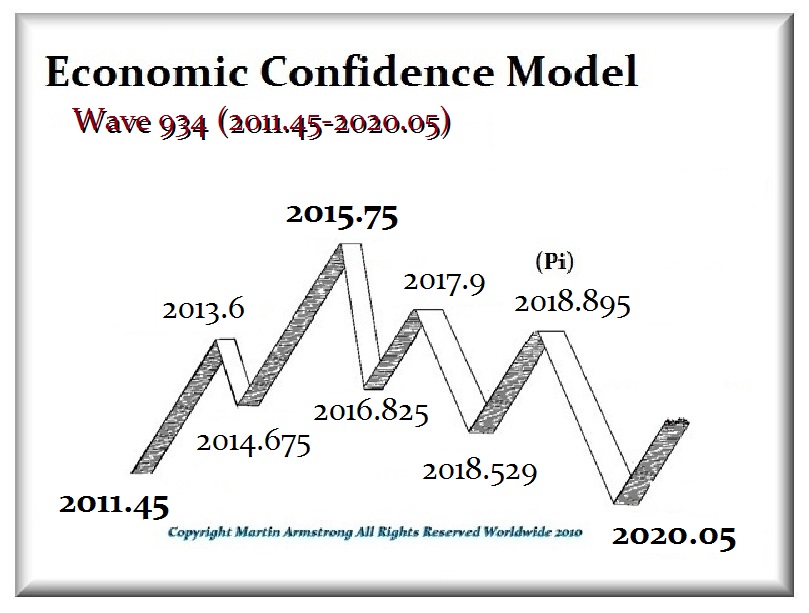
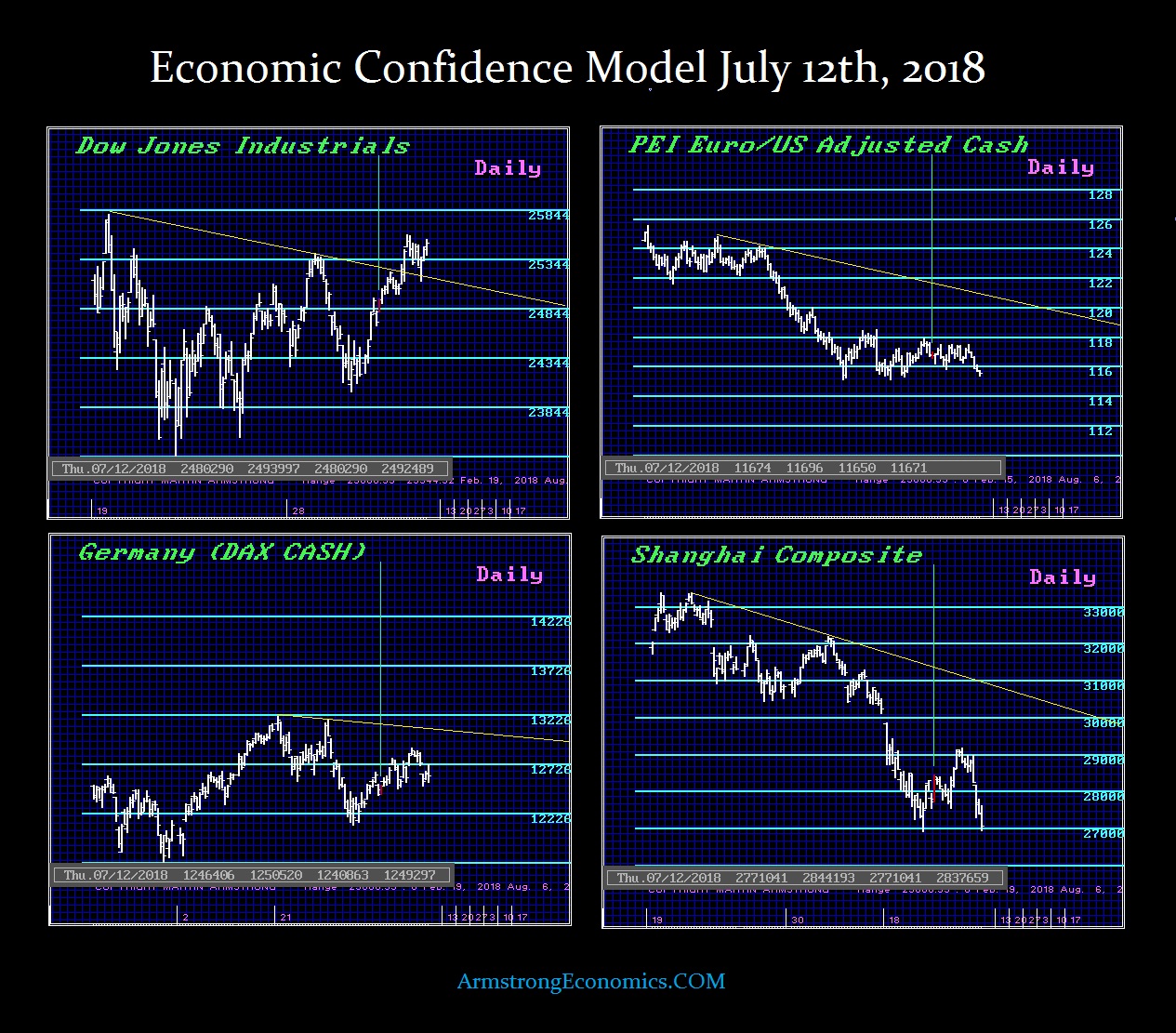
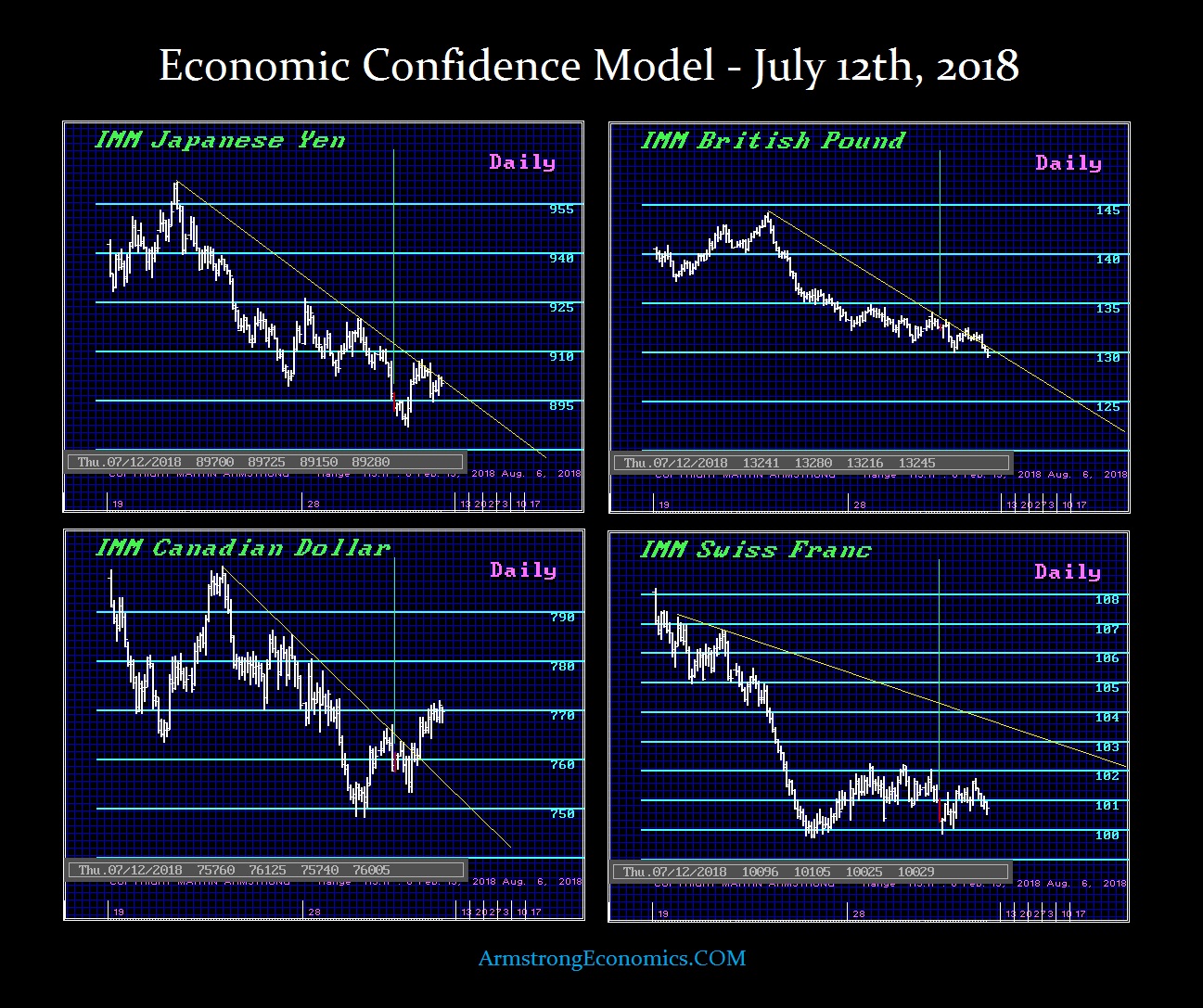
The Economic Confidence Model (ECM) is a global business cycle. The entire world economy NEVER peaks and bottoms together. This latest turning point of July 12th, 2018 (2018.529) has apparently provided a MAJOR warning that we just could be moving into a major Cycle Inversion from the perspective of the United States. What does that mean? It means that the USA may be moving into a serious high in 2020 against a backdrop of a decline for the world insofar as liquid assets (non-fixed). The China share market has just lost its status as king of the mountain in Asia as Japan has once again reclaimed that lofty position from a value perspective.

The ONLY markets, currency and economy moving against this global bearish trend into 2020 has been the United States. The Dow Jones Industrial Index broke out above the simple Downtrend Line, whereas we do not see this in Europe or Asia.

When we look at the array of world currencies, it is hard to mistake the fact that the dollar is rising. The ONLY other currency to benefit has been Canada. This is reflecting a shift in global capital flows to North America. Canada has been to some extent benefited by its proximity to the United States and has offered some diversification for European and Asian capital outflows.

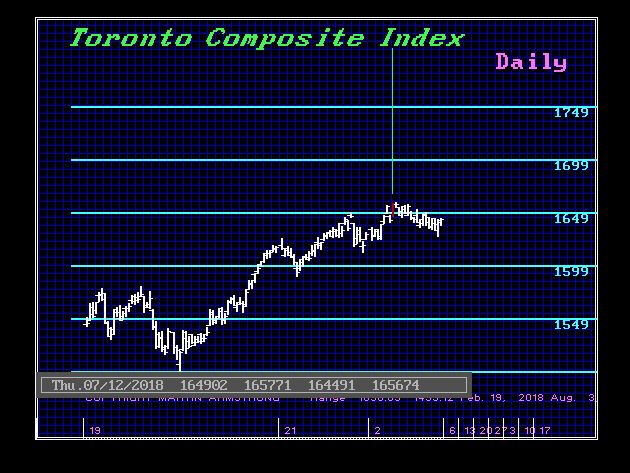
When we look at the Canadian share market index (TSE), we can see that the July 12th turning point produced the highest closing during July. By the time we reach the World Economic Conference in Orlando on November 16-17, 2018 (Friday & Saturday), we will be approaching the Pi turning point on November 22/23rd, 2018 the next week. Besides the US mid-term elections, we are facing a very critical people in Europe. November is lining up to be an important turning point in the currencies. This is shaping up to ensure that the Orlando WEC event will be a hot topic this year and we hope to strategically set the stage for the balance of the ECM wave from there onward into 2020.

Understanding The Dollar Strength


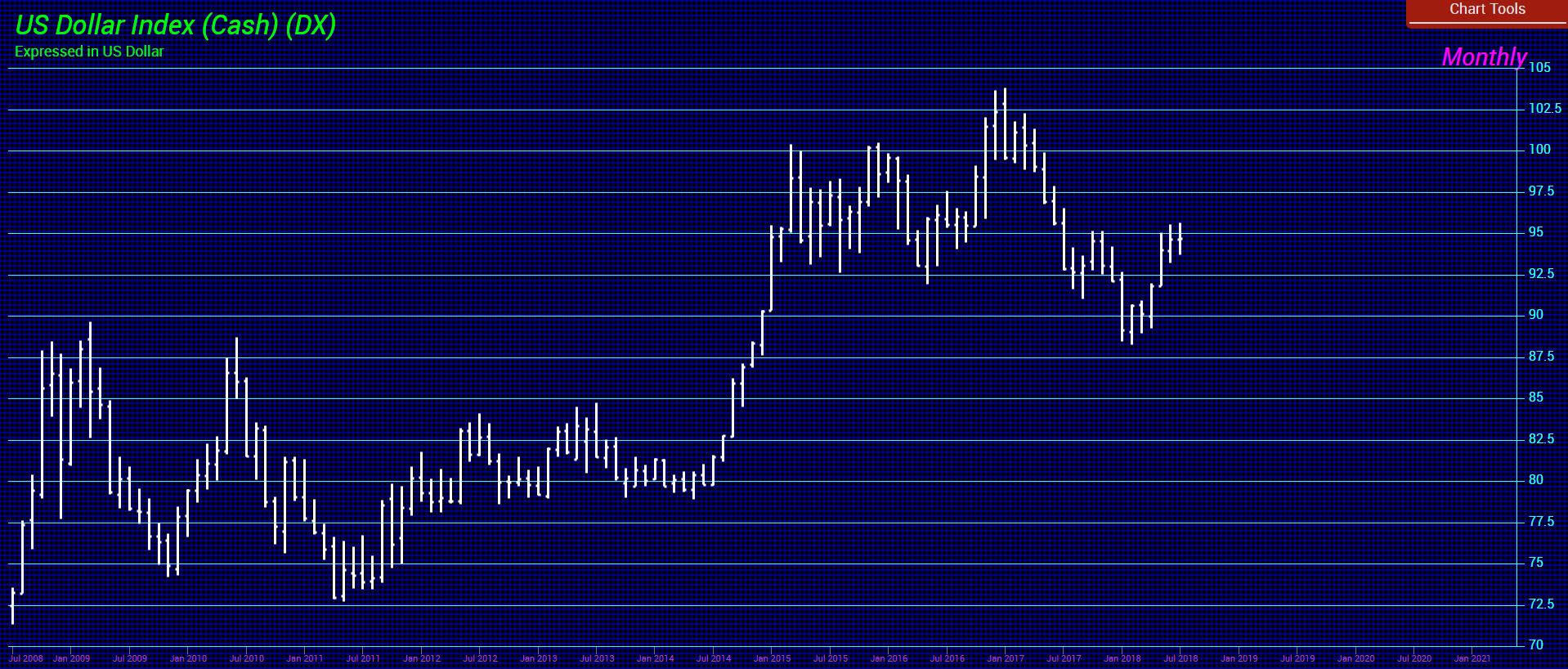
It is fascinating to watch how the bias in people just ensures not just that a sucker is born every minute to replace the one that wises-up, but there are suckers who never learn from experience and cling to their ideas no matter how much it costs them. The U.S. dollar has been climbing against major currencies for several months, with the dollar index .DXY up is trading up about 2.84% for the year. It is true that the dollar has strengthened since late 2015 as the Federal Reserve began raising interest rates against a background of steady economic growth, slowly rising inflation and the lowest U.S. unemployment rate since the 1960s. But the strength in the dollar is more than just interest rates. It is the prettiest of the three ugly sisters as they say – US – Europe – Asia.

The Fed has raised rates twice this year and is expected to raise rates a couple more times by year end which may attract more foreign capital into the U.S. dollar with monetary policy remaining loose to very insane in Europe and Japan. We have the ECM, which has destroyed the European bond market, frozen like a deal in headlights. It is trapped and it realizes that it has been buying the debt of member states who are now addicted to excessively low-interest rates. If the ECB actually stops buying, we are looking at a major debt crisis in Europe as interest rates explode exponentially. However, their policy of austerity has really oppressed the Greek economy and now they have their eyes set on Italy which will more likely create a revolution before the Italian accept going the way of Greeks – quietly into the night.

In Japan, there to they have wiped out the bond market. The government actually bragged that they bought 97% of the government debt auction. Hellow? That’s a good thing? The Bank of Japan has reduced debt purchases for a third time in June 2018, taking advantage of the recent stability in bond yields and the yen. At least Japan is reducing its purchases whereas the ECB talks a good game, but cannot actually do anything. The attempt to force austerity by the EU upon southern Europe is tearing the system apart.


The dollar bottomed in February 2018. It has yet to elect a Monthly Bullish Reversal. Trump has been unusually vocal about the dollar, unlike most Presidents, following more in the footsteps of Treasury officials. Trump has publicly been criticizing the dollar’s strength several times. He obviously thinks a lower dollar is better for trade. But the markets are going against Trump. You cannot “Make America Great Again” without also strengthening the dollar especially when we still have insanity in Europe economically and Japan still in never-never-land.

In a CNBC television interview, Trump said he was concerned about the potential impact of a stronger dollar on American exports. He also broke tradition by criticizing Federal Reserve policy on raising interest rates, saying it takes away from the United States’ “big competitive edge”. Trump has had no problem with deficit spending hoping it would reduce the dollar to support trade and therefore jobs. While investors and traders have been concerned about the spending, they have been forced to attribute some of the gains to the Trump administration’s tax cuts which are bringing capital home. On the other hand, they see the tax cuts as widening the fiscal deficit, and that they expect leads to borrowing more on the government’s part. Then Trump’s imposition of import tariffs against China, Europe, Mexico and Canada, they generally think will contribute to inflation. But they fail to grasp that Trump is using Tariffs to force a better trade deal.

So hang on to your hat. The strength behind the dollar CANNOT be analyzed simply by looking at the domestic situation. We are in a position of capital flight on a global scale. All these arguments add up to nothing when capital begins to flee from one economic crisis to another. Remember Herbert Hoover’s words from 1931. When we begin to see the first crack in Sovereign Debt, both in Emerging Markets and inside the EU, it will be Kattie-bar-the-door!

Why Marxism Cannot Work


Published on Apr 28, 2016
Marxist Feminsm, Marriage & MGTOW: https://www.youtube.com/watch?v=LY7No… Support my work on Patreon: http://ow.ly/3ymWFu PayPal Donations Welcome. Click here: http://goo.gl/NSdOvK Help Support My Channel. Buy Computing Forever Merchandise, Mugs, Hats, T-Shirts: http://ow.ly/3v3TWq Images in this video sourced are royalty free, creative commons, public domain from Wiki images & http://Pixabay.com Sign up to our Monthly Newsletter to receive exclusive FREE Computing Forever video and blog content: http://goo.gl/YKq7ZK SUBSCRIBE TO THIS YOUTUBE CHANNEL: https://www.youtube.com/user/LACK78 KEEP UP ON SOCIAL MEDIA: Twitter : http://twitter.com/lack78 Facebook : https://www.facebook.com/ComputingFor… Google+ : LACK78: http://goo.gl/k4gWsg Google+: Computing Forever: http://goo.gl/Q8gZpY ALL MY TECH BLOGGING NEWS CONTENT:http://computingforever.com MORE VIDEO AWESOMENESS: http://youtube.com/daveknowsstuf

Concern About Influencing Markets


QUESTION: Thank you very much for your blog and all the knowledge that you pas on.
You are well known in many circles and I would think have great influence in the inner circles and behind the curtain. Now then your computer forecasts can sway a lot of people because of that. If you were to advice in advance of a major market crash you could be accused of starting a panic or worse. So my question is would you do it or sit on it and explain later?
Retired in Canada.

AW

ANSWER: No. We have ALWAYS provided forecasting regardless of the consequences. The Computer itself is writing the analysis on over 1,000 instruments daily. Everyone knows that there is no human writing these reports. Besides that, there are those behind the curtain who want the real forecast even though it may be against them. I have been on the phone with central banks during a crisis when they have asked me does it look like they will need to intervene. So you will be surprised. Even they want the truth when it counts.

I am not doing mainstream media interviews that would ever appear as a headline that the market will crash tomorrow or something like that. ONLY is such information appears in the mainstream media does it raise a red flag.