India Enters the Sovereign Debt Crisis


I have warned continually that the Sovereign Debt Crisis will unfold not so much by people selling government debt, but by the lack of people buying new debt. The greatest peril is when there is NO BID for the new issues because all governments are operating a PONZI scheme. The sell new debt to pay off maturing debt. Currently, holders of Indian government debt have been dumping 4.7 billion rupees ($73 million) of government bonds on average every day this year, according to data from the Clearing Corp. of India. Last year, their net daily sales totaled 368 million rupees.

The Sovereign Debt Crisis emerges when the government is unable to raise enough cash to pay off the maturing debt. India has crossed that threshold so as we have warned, the Sovereign Debt Crisis will begin from outside the USA and spread to the core. This is how all Empires, nations, and city-states collapse.

The Evolution of Growing Food


QUESTION: Mr. Armstrong; You previously mentioned that we can grow crops inside warehouses without the sun or soil. How did mankind survive the last mini Ice Age wit dropping temperatures as we have seen in recent winters here in Europe?

LW

ANSWER: With each cycle, we tend to improve upon technology. Being able to grow food inside will be an important advance for us during this cycle. You can set one up in your basement.

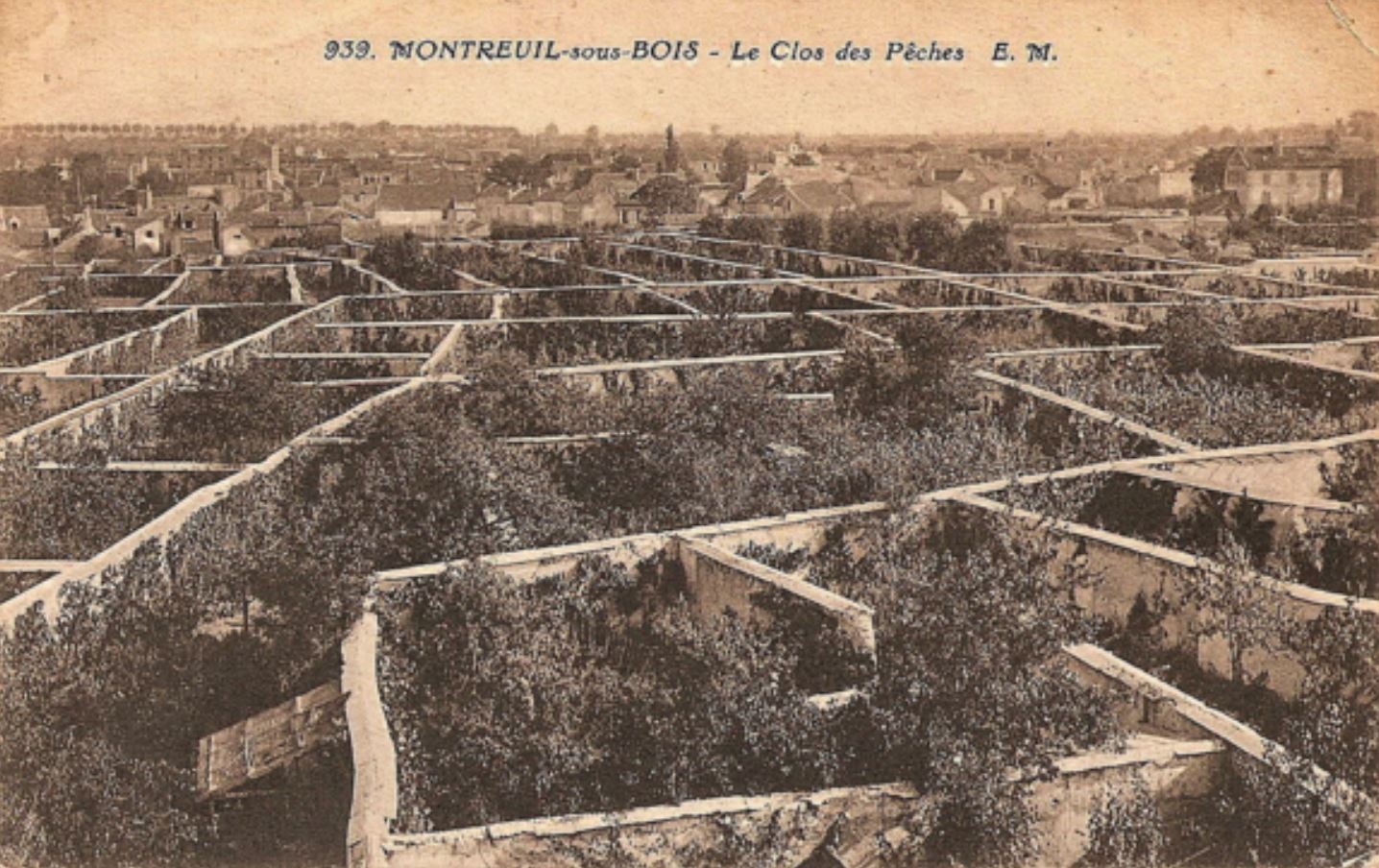
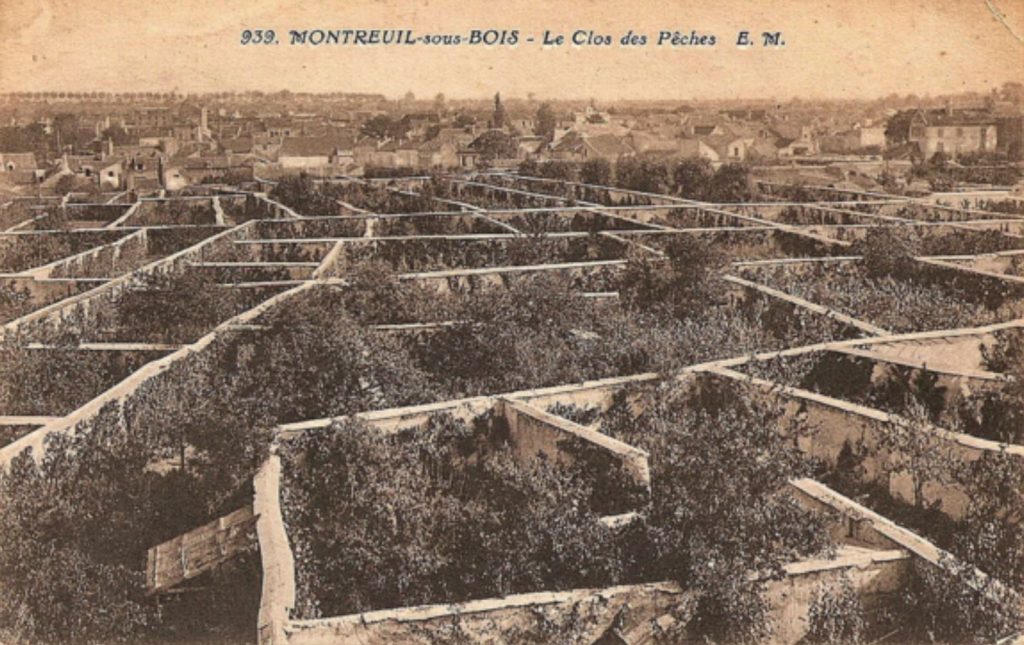
Previously, there was the invention of the fruit wall which appeared around the beginning of the Little Ice Age that ran the course of about 200 years from about 1550 to 1850.

The invention of the fruit wall saved society. They built walls which reflected sunlight during the day essentially using solar energy to improve growing conditions. These walls also absorbed solar heat, which in turn was slowly released during the night, preventing frost damage. They created a warmer microclimate 24 hours per day.

Fruit walls also protected crops from cold blasts of winds from the north as we are experiencing today. They eventually began to construct wooden canopies to shield the fruit trees from rain and hail. They would also use mats suspending then from the walls in case of bad weather. I remember my grandfather loved figs and he had fig trees he would wrap during the winter to protect them in New Jersey. In Europe, these fruit walls were used as far north as England and the Netherlands.

Conrad Gessner (1516 – 1565) was a true Renaissance man. He was a Swiss physician, naturalist, bibliographer, philologist, zoologist, and a botanist. He wrote of the effect of the Fruit Walls which then popularized them in Europe.

The French began to improve the technology by pruning the branches of the fruit trees in such ways that they could be attached to a wooden frame on the wall.
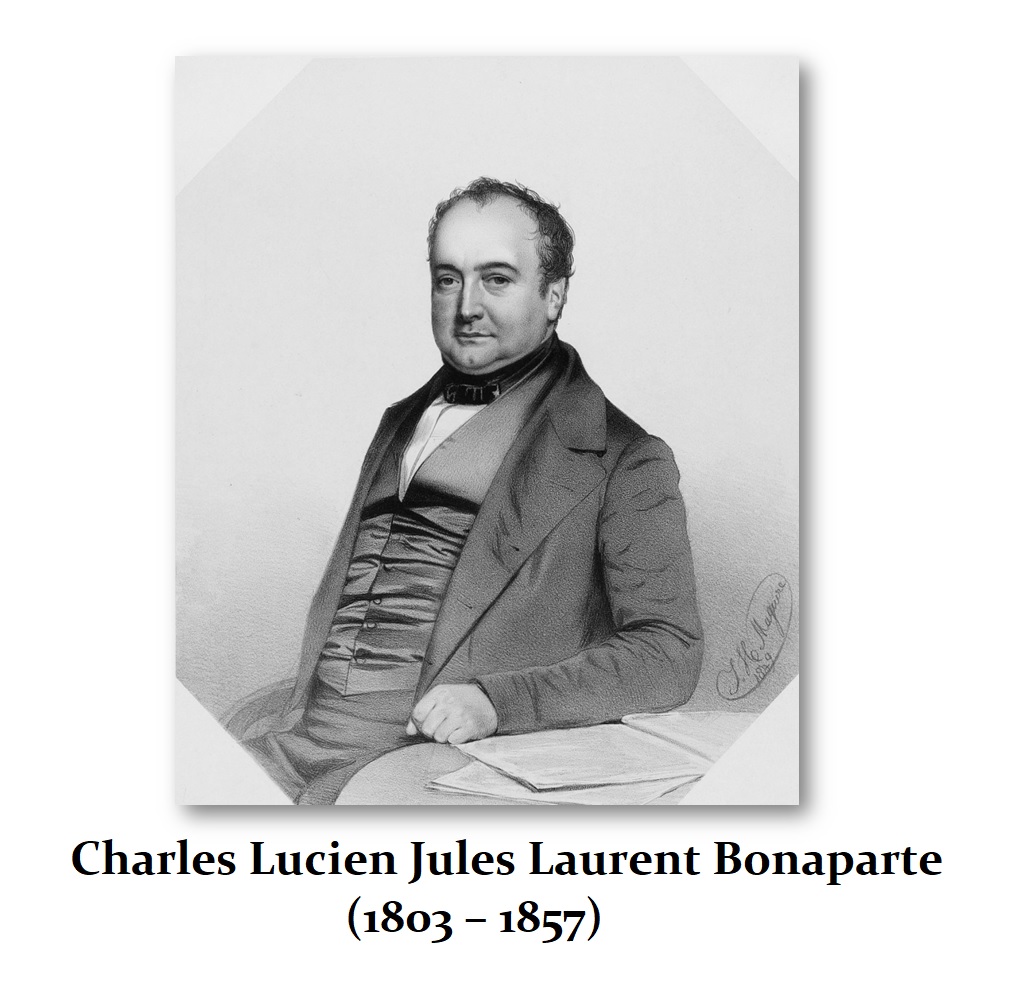
The French botanist Charles Lucien Bonaparte (1803 – 1857) is credited with building the first practical modern greenhouse in Leiden, Holland, during the 1800s to grow medicinal tropical plants. The French called their first greenhouses orangeries since they were used to protect orange trees from freezing. Today, Holland grows more food in greenhouses than any other country.

metropolis-farms-24

Today, the next step forward is growing food in warehouses without the sun or earth.

Cryptocurrency Maybe Become a Tax Nightmare


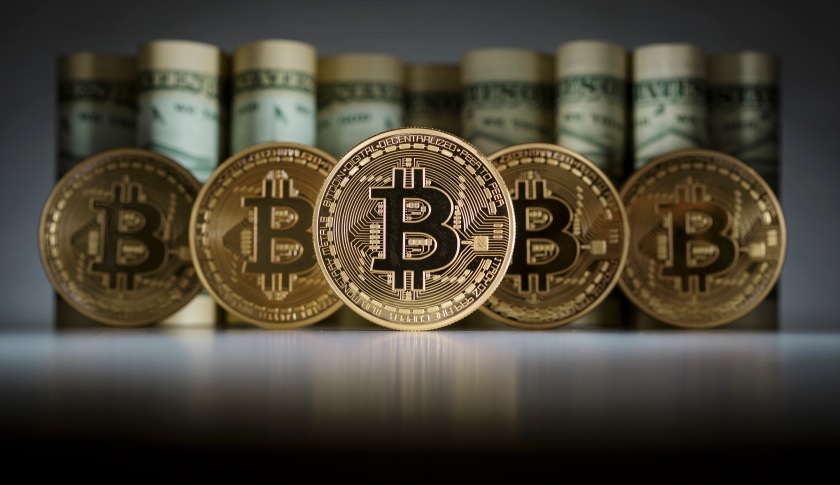
Credit Karma is reporting that of the first 250,000 tax filings, less than 100 people reported owning any cryptocurrency. Credit Karma is reporting that only 0.04% of cryptocurrency-traders are paying taxes to Uncle Sam.

The dangerous aspect here is the IRS got over 20,000 names from the exchanges and they will match their accounts to tax returns. Anyone who thinks this is an alternative currency that circumvents taxes and the central banks will have a new reality after April 15th. They will know everyone who has bought or sold any cryptocurrency.

Volatility – What is It?


QUESTION: Dear Martin,

In the private blog you mentioned a few times that the volatility will rise again in the week of the 12th. When you mention volatility, do you mean volatility as measured by the VIX index?


So far the VIX has lost around 1/3 this week so I suppose you mean something else?

Thanks!

JWD


ANSWER: The VIX is not a true indicator of volatility. We have three main volatility measurements and each is different.

(1) you have the traditional measurement of close to close. That is interesting, but it does not truly capture the concept of volatility.

(2) Then there is intraday volatility which we measure and simply the percentage movement between the high and low of that session. You can have a 1,000 point swing in the Dow intraday yet close nearly unchanged. The first volatility measurement would never even show a blip.

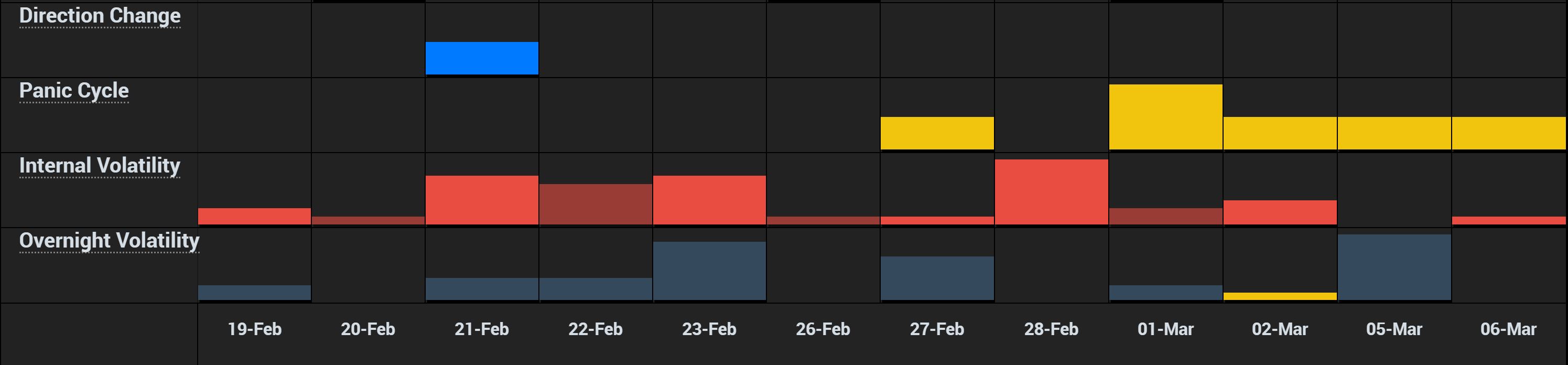
(3) The third measurement is overnight volatility. This is measured from the previous close to the open of the current day session. For example, Monday, February 5th the Dow opened at 25337.87 compared to Friday’s closing of 25520.96 gapping down.

Our indicators are intended for trading, unlike the VIX. In our Arrays, you will see Overnight Volatility, Intraday Volatility, and Panic Cycles, which are extreme moves in one direction or an outside reversal which exceeds the previous session high and penetrates the previous secession low.


The VIX is a convoluted formula that does not reflect trading but more of a trend lending itself to manipulations. Hence, the VIX is not very reliable. The VIX is a measure of expected volatility calculated as 100 times the square root of the expected 30-day variance (var) of the S&P 500 rate of return. The variance is annualized and VIX expresses volatility in percentage points.

Volatility Index VIX Futures

where var = (365/30) x Expected 30-day variance.

The 30-day variance is the sum of squared standard deviations st (“volatilities”) of the S&P 500 rate of return at every point in time t during the 30 days:

Volatility Index VIX Futures

Japan Sells US Debt Trying to Ease A Trade War


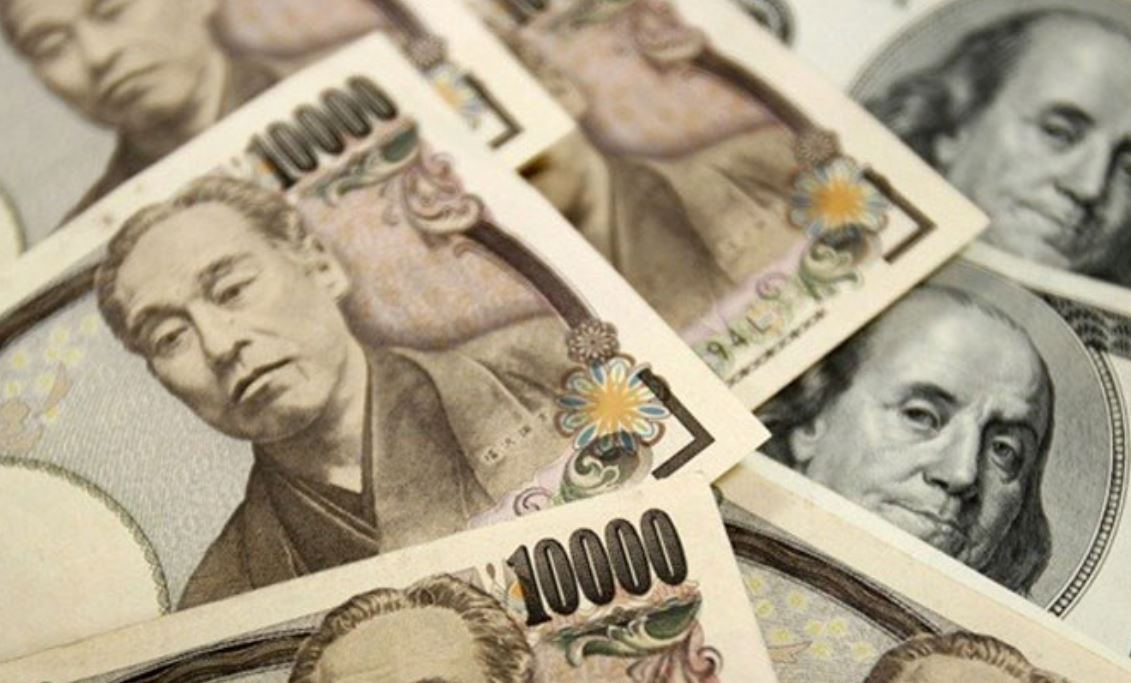
The Japanese government once again reduced its holdings of US government bonds during December 2017. In total, Japan sold bonds worth $ 22.5 billion. This is not a huge amount. Nevertheless, this puts the total stock of US debt at about $ 1.06 trillion, which is the lowest level since 2012. Japan used to be the largest holder of debt externally. However, it has fallen to number two just behind China.

By contrast, the Chinese government increased its holdings by about $8.5 billion in December to $ 1.18 trillion. The acquisitions in the entire year 2017 were as extensive as last 7 years ago. Naturally, the hard-money biased reporting paints this as an imminent crash in the dollar. What they fail to understand is that helping to lower the dollar is a tactic to ease trade friction

Real Estate v Quantitative Easing


QUESTION: Hi Martin,
I just finished your new NYSE Boom/Busty report. This is excellent work and as always extremely fascinating. Thank you for continuing to share these profound views with us.
My question relates to your view that we are looking at a complete collapse of Quantitative Easing and that will likely see a massive capital flight to the dollar and the major safe haven will be EQUITIES. In the context of this possibility, are you able to comment on how this may relate to Real Estate. Your ECM seems to be calling for Real Estate to top out and structurally fall in 2032. Is it not possible that with the collapse of QE and potentially economies that we will see more negative rates in the short end and with the government powers to seize assets in bank accounts, would it not be prudent to have zero cash in hand and hence we see a massive capital flight to Real Estate too? Or will the collapse of QE lead to significantly higher rates across the curve and hence blow all leveraged exposure sky high?

Many thanks as always,

David

ANSWER: The problem with real estate has been that its value depends upon lending. This was what the government did as part of the New Deal by creating 30-year mortgages. This was a scheme to get prices up by extending the period people could pay off the loan. Typically, the duration was 5 years previously.

The collapse in Quantitative Easing will have the effect of causing rates to rise on the long-term. However, there will be a shift toward private assets and this will help to a large extent. However, keep in mind that many institutions will be trapped and unable to shift to private assets. Many boards will not understand the shift and still believe, wrongly, that unsecured government debt is best.

Prices of real estate will decline in proportion to the decline in mortgage availability. We are already witnessing banks beginning to withdraw from lending on real estate.

I have provided the guide-posts for what is to come. This will be an interesting future.

Short v Long-Term Rates


QUESTION: Hi Mr Armstrong, I have read somewhere that you think that interest rates will go up higher than expected and at faster pace. I don’t understand its relations with bonds. Also your opinion seems to be in clear contrast to everyone else who thinks it will go up slowly over the next few years. If this happened this year, this would be one of your many landmark predictions.
thanks

HH

ANSWER: To some extent, you are mixing short v long-term. The short-term is set by the rates the central banks set. Even this will rise beyond what the central bank desires because of demand.

The long-term is set by the market. That is why the central banks tried Quantitative Easing buying in long-term bonds hoping that would lower the long-term rates which are set by the auction process.

I am not forecasting that the central banks will rapidly raise rate all on their own. They will be forced to follow long-term rates and as Quantitative Easing is reduced, rates will rise when government deficits expand because the fiscal side of the balance sheet has been on life-support by the monetary policy

Understanding the Reversals


QUESTION: Martin,

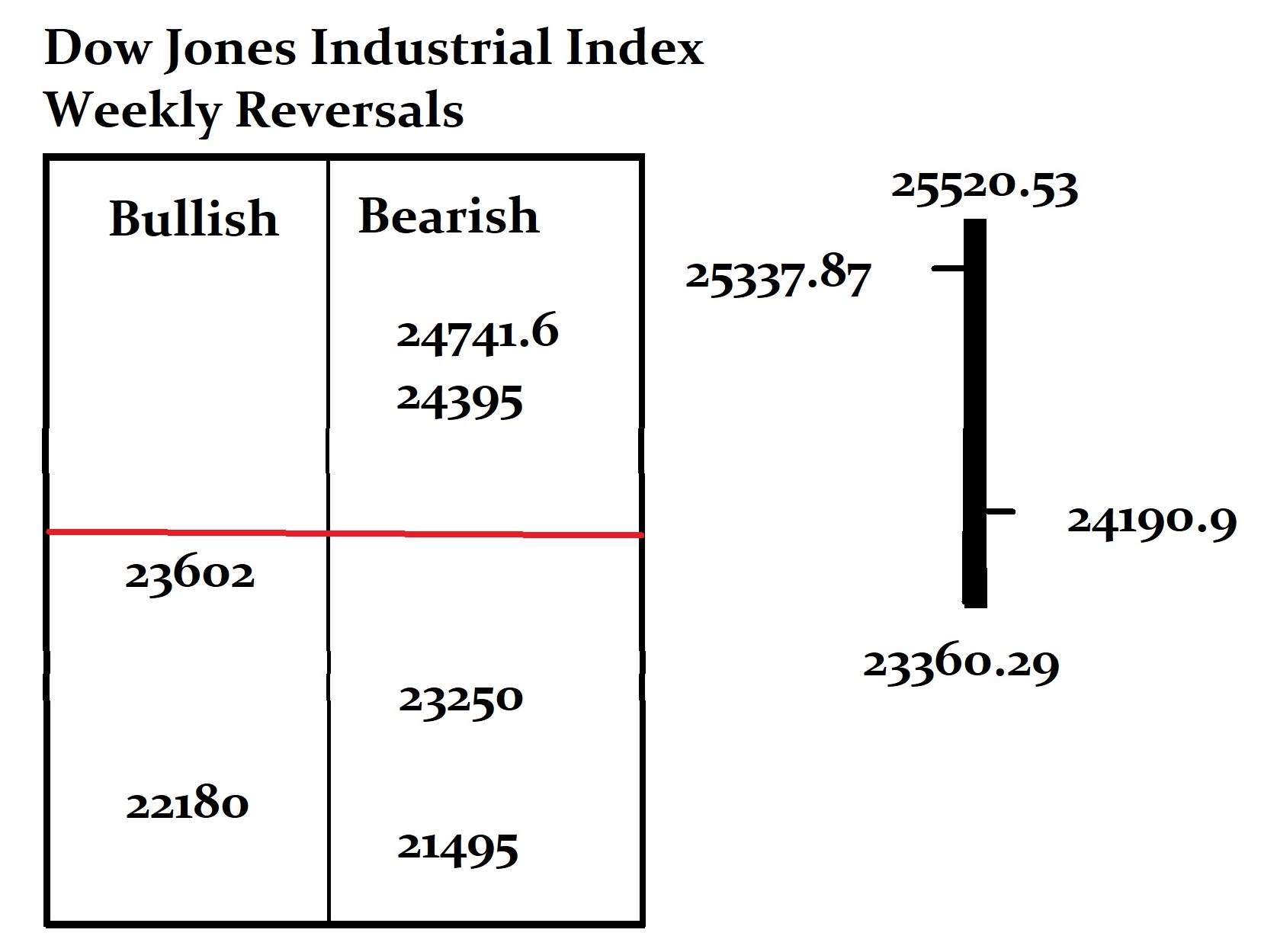
Last week, we had elected the weekly reversals at 24741.6 and 24395. Yesterday, we briefly recaptured, then re-lost those levels again.

Do weekly reversals expire at the end of the week, expire once they are elected, or do they remain active from week to week?

As always, thanks for all you do with your blog and with Socrates.

DB

P. S. – Do you prefer “Martin” or “Marty”? Many address you as “Marty”, but I don’t know if you reserve that name for your close friends. I certainly do not want to offend you.

ANSWER: No worry. I answer to both. As far as the Reversal System is concerned, when you pass beyond Reversals electing them on the close by more than 1% away from the number, you will typically rally back to test them before proceeding. In this case, you went to the third one and bounced. You always generate counter-trend reversals when you are making a low. In most cases, they are above the market activity.

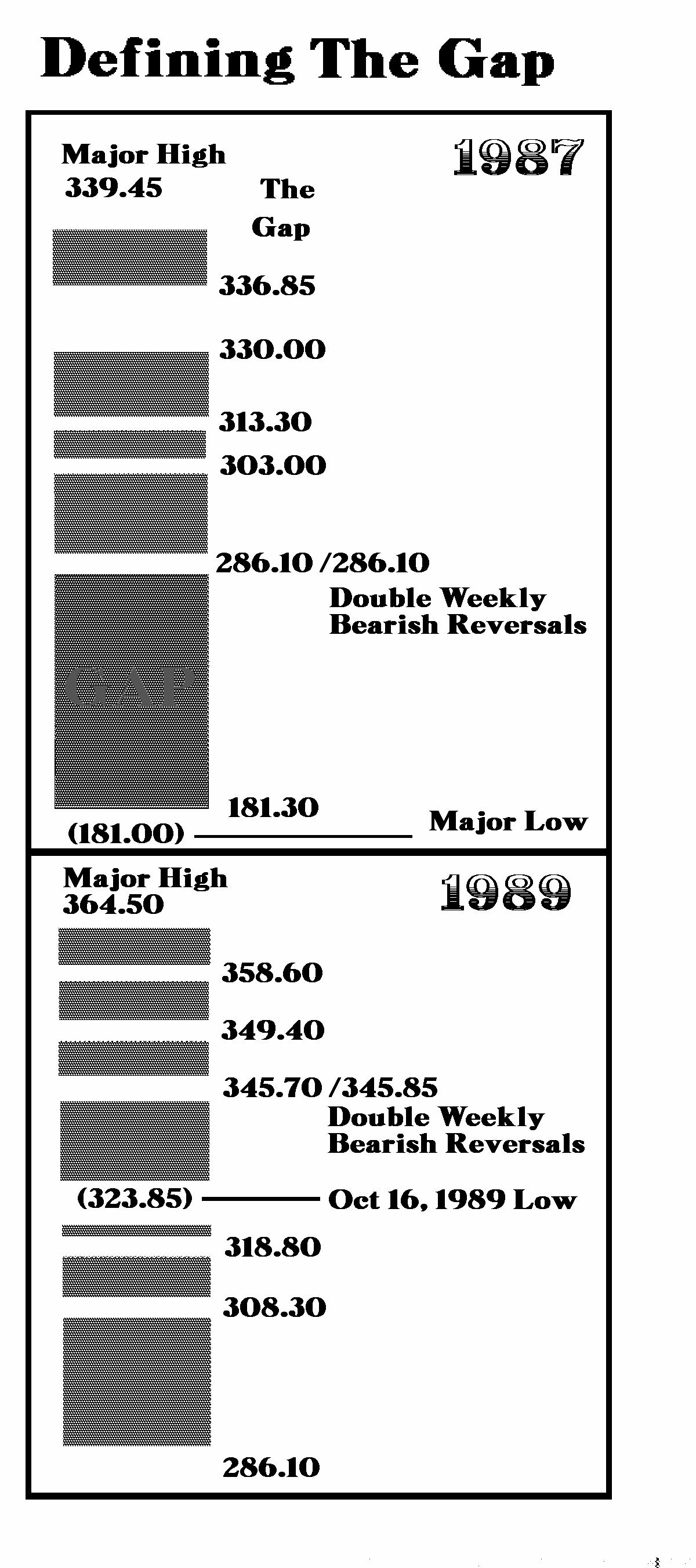
In this case, two Weekly Bullish Reversals were elected and that is why we bounced. It was also why I have warned that it appeared this was not a 1987 meltdown, but a consolidation and choppy period. There were no Double Weekly Bearish Reversals that would indicate a meltdown if elected as was the case from the 1987 and 1989 highs.

The two reversals 24741.6 and 24395 were elected and they will provide overhead resistance. In the case of 1987, you took out all four Weekly Bearish Reversals and there was a gap from 286 on the S&P500 to 181.

The great thing about the Reversal System is we eliminate human opinion. The numbers are very black and white. How they are laid-out in a given market identifies the potential for a meltdown or just a correction. Then our Timing Array showed turning points every two weeks indicating also a choppy pattern. In this way, we are able to eliminate the human subjectivity that is always hit or miss.

Conflict between Fiscal & Monetary Policy


We are moving into a crisis of monumental proportions. There has been a serious fundamental problem infecting economic policy on a global scale. This conflict has been between monetary and fiscal policy. While central banks engaged in Quantitative Easing, governments have done nothing but reap the benefits of low-interest rates. This is the problem we have with career politicians who people vote for because they are a woman, black, or smile nicely. There is never any emphasis upon qualification. Every other job in life you must be qualified to get it. Would you put someone in charge of a hospital with life and death decisions because they smile nicely?

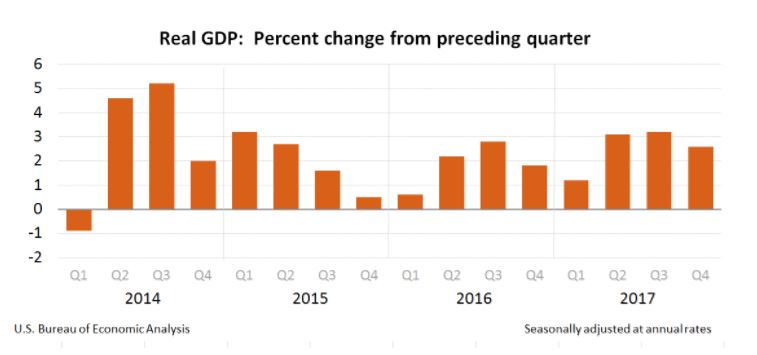
Economic growth has been declining year-over-year and we are in the middle of a situation involving low-productivity expansion with high and rapidly rising budget deficits that benefit nobody but government employees.  Once upon a time, 8% growth was average, then 6%, and 4% before 2015.75. Now 3% is considered to be fantastic. Private debt at least must be backed by something whereas escalating public debt is completely unsecured. The ECB wanted to increase the criteria for bad loans, yet if those same criteria were applied to government, nobody would lend them a dime.

Monetary policy, after too long a phase of low-interest rates and quantitative easing, has created governments addicted to low-interest rates. They have expanded their spending and deficits for the central banks were simply keeping the government on life-support – not actually stimulating the private sector. Governments have pursued higher taxes and more efficient tax collection. They have attacked the global economy assuming anyone doing business offshore was just an excuse to hide taxes.

The combination of fiscal policy and monetary policy around the world has produced historically the most irresponsible economic mismanagement in history. This assumption that government can manipulate the economy is extremely dangerous for we remain clueless about how the global economy even functions. This entire Marxist/Keynesian proposition that governments are capable of managing the economy has implemented various miserably conceived theories that will lead to a budget crash and a debt crisis for every reasonably rational contemporary society. Historically, there were debt jubilees mentioned in the Bible.

You shall then sound a ram’s horn abroad on the tenth day of the seventh month; on the day of atonement, you shall sound a horn all through your land. You shall thus consecrate the fiftieth year and proclaim a release through the land to all its inhabitants. It shall be a jubilee for you (Leviticus 25:1-4, 8-10, NASB).

Religion aside, was a debt forgiveness a way to prevent monument collapses of society? The Romans never even had a national debt. Today, we have government hawking 100-year bonds. We have pension funds that required 8% returns and then governments ordered that the bulk of such funds if not 100% should be “conservative” and invest in only government bonds. We are reaching a crisis point in longer-dated yields because investors are unwilling to lend money at low rates long-term. Smart money is beginning to wake up to the perpetual mismanagement of the long-term trend by the government. The central banks have been backing off of continually buying government debt and the Fed in the USA has announced it will not reinvest when its holdings of government debt mature.

This is the Sovereign Debt Crisis and Monetary Crises we face in the years ahead.

China’s One Belt and One Road


QUESTION: What is your view of China’s One Belt and One Road policy?

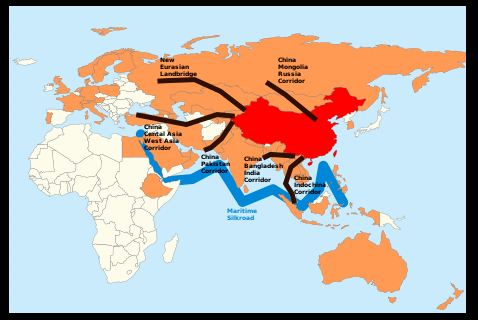
ANSWER: The Silk Road Economic Belt and the 21st-century Maritime Silk Road, also known as the One Belt and One Road Initiative, (OBOR),  is a development strategy proposed by Chinese Government that focuses on connectivity and cooperation between Eurasian countries, primarily the People’s Republic of China (PRC), the land-based Silk Road Economic Belt (SREB) and the ocean-going Maritime Silk Road (MSR). It was unveiled by Xi Jinping in September and October 2013. This is really nothing new. Trade between China and the Roman Empire existed. There are even records of Marcus Aurelius (161-180AD) sending a diplomat to China. Even the color purple was the royal color of an emperor who only he was allowed to wear. That was a dye which came from the East as was the case with spices and silk.

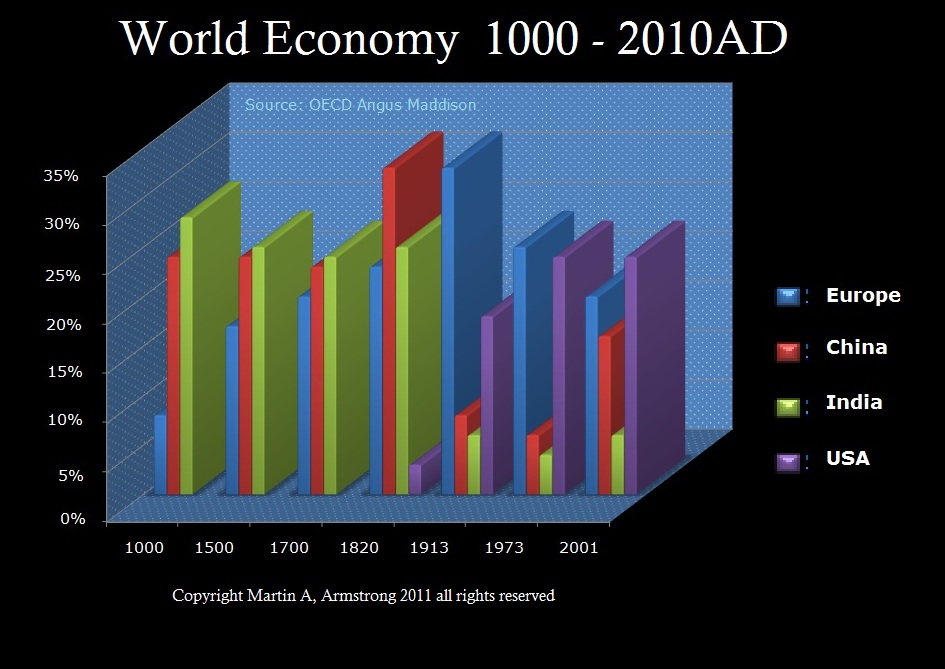
This strategy underlines history and China’s push to take a larger role in global affairs with a China-centered trading network is the very aspect that will make China the Financial Capital of the World once again. This project was initially called One Belt and One Road, but in mid-2016 the official English name was changed to the Belt and Road Initiative. China has been focusing on infrastructure investment, construction materials, railway and highway, automobile, real estate, power grid, and iron and steel. This is the largest infrastructure project in history, covering more than 68 countries, equivalent to 65% of the world’s population and 40% of the global GDP as of 2017. China never issued historically gold or silver coins. What has survived are private ingots known as Sycee that is a testament to the level of trade China enjoyed in the past.

All our models are bullish LONG-TERM on China – Post 2032. We have opened offices in China and have been granted our business license in China which took three years to be approved