The Struggle is Real: Crazy, Creepy, Spank-Me and How Position themselves for 2020…


In the aftermath of the first set of Democrat debates, the strategy of the institutional democrats and their media assets gains a little clarity.

Senator Elizabeth Warren emerged unscathed thanks to her wounded-Indian routine and generally safe position on the first night of the foray.  Warren’s minority status, when combined with the baffle-em’-with-BS routine, appeared to align with pre-debate intents.

Senator Harris took Biden’s scalp knocking a solid ten percent from his pre-debate pollingby accusing him of toxic whiteness/institutional racism.  Ever the opportunist, Spank-Me positioned herself as the heir-apparent to the grievance vote.  Booker attempted to regain grievance position, but his ethnic linguistics only made him look silly.  Down twinkles.

Facing a left-wing surge, communist Senator Sanders angrily demanded the electorate embrace full anarchy; but his messaging fell short, again.  Something about the joy of bread-lines, and shared misery combined with a Starbucks Latte, doesn’t seem to hold appeal beyond the Antifa and Occupy groups.   However, the unattended and overindulged children of the limo-liberal community will not easily stop supporting Che’ Bernie.

Creepy Joe was/is under constant attack and now appears to have underestimated the motives of those who pushed him into fray.  The anger crowd need a target for their rage and gropey Joe is the perfect candidate to personify everything they can project upon old white men.  Once they kill off Creepy, watch out Crazy – they’ll come for him soon.

It appears, based on the immediate narratives and media smoke-signals, the clans want ‘Spank Me‘ and ‘How’ to gain maximum traction.

The percentage of Democrats who say they would vote for former Vice President Joe Biden if the presidential race were held tomorrow slipped by 10 points after the first primary debate.

According to a Morning Consult/FiveThirtyEight poll of likely Democratic voters released on Friday, 41.5 percent said before the debates they would vote for Biden tomorrow, but 31.5 percent said the same thing after Thursday night’s debate.

The apparent decline in support comes after Biden was widely seen as having faltered, including engaging in a stark exchange with Sen. Kamala Harris (D-Calif.) over school busing.

Harris herself got a nearly 9 point bump, with 16.6 percent of Democrats saying they would support her after the debate, up from 7.9 percent before the events.

Other 2020 candidates had marginal increases or decreases. (read more)


Darwin’s Demon: Tech Devolution Makes Your Grandchild Look Like ‘Mindy’


Published on Jun 28, 2019

Will smartphones and other technology make your grandchild look like ‘Mindy’ — a tech-driven dsytopian vision of species devolution with a pronounced hunch, thickened skull, extra eyelid, ‘tech claw’ and other adaptations that conjure a creature which might be called Darwin’s demon. Some say Mindy already walks among us. If you’re of a more conservative posture, you might enjoy the fellowship of Members who make this show. Sign up today. Try it for 30-days. If you don’t feel like you’ve found your people, and a place where reasoned thought, civil dialogue, and fun, make life better for you and the Republic, then just write us for a full refund. It’s a no risk proposition. Join now at https://BillWhittle.com/register/

The Vanishing American Adult


Published on Jun 13, 2017

Recorded on June 2, 2017 Senator Benjamin Sasse joins Peter Robinson to discuss his book The Vanishing American Adult and the growing crisis in America of prolonged adolescence. Senator Sasse argues that children are growing up, entering adolescence, and becoming stuck in the transitional stage to adulthood as they fail to become financially independent from their parents. He argues that because this generation of children is growing up during a time of relative peace and prosperity, it has allowed millennials to grow up without the issues of previous generations that were raised in war time. In this era of consumption and material surplus, he argues that adolescents are leading age-segregated lives and not developing a work ethic and that both their parents have an obligation to teach their children to grow up. Furthermore, he stresses the importance of intergenerational learning by allowing children to be raised around their grandparents and other adults to help them learn that the trivial trials of youth don’t matter in the long run. Senator Sasse believes that there are certain virtues that American children have to learn to become productive and happy adults. Part of that is by teaching children the distinction between production and consumption and how to find happiness and self-worth through jobs that make one feel like a necessary part of the company/society. This, he argues, will help raise peoples’ self-worth and lead them to happiness and fulfillment in their everyday. Senator Sasse finishes by stressing the importance of building children’s identities as readers to help foster the growth of ideas and active learning over the passive activities of sitting in front of screens. He notes that sedentary life is not fulfilling and that by encouraging people to participate in production over consumption will lead to more fulfilling lives. He ends on the optimistic note, that while our youth may still need guidance, overall America’s best days still lie ahead. For the full transcript go to http://www.hoover.org/research/vanish…

Bernie Sanders to Wipe Out All $1.6 Trillion in Student Loans, Offer College Free


Published on Jun 26, 2019

Democratic socialist presidential candidate Bernie Sanders says he’ll wipe out all $1.6 trillion in student loan debt, plus offer college and trade school for free. Won’t 45 million Americans who still owe for college just love Bernie’s plan?

Who Dares Say He Believes in God?


Published on Jun 8, 2019

And Jesus said unto him, Why callest thou me good? there is none good but one, that is, God. (Mark 10:18; see also Luke 18:19). Not every one that saith unto me, Lord, Lord, shall enter into the kingdom of heaven; but he that doeth the will of my Father which is in heaven. (Matthew 7:21, KJV). I have been asked many times by many people if I believe in God. I don’t like this question. I generally respond by stating that I act as if God exists, but that’s not sufficiently true. Who could do that? Who could conduct themselves with the moral exactitude and care necessary of someone who would dare to make that claim? Either claim? In any case, after being asked the question yet again, when I was in Australia, I decided to attempt to answer it in some detail. This lecture, one of the 12 Rules for Life tour talks, was delivered in Sydney Feb 26, 2019, at the International Convention Centre. It was one of six I had professionally video recorded. Five of the six will be released directly on thinkspot, our new social media platform (to be announced in mid-June), as a bonus for direct subscribers (not to worry; there are still more than 50 to be released as audio on the Jordan B Peterson podcast at http://bit.ly/2HUdgnc, so it’s not as if there will be any shortage). But I thought YouTube would be appropriate for this, given the potentially broad interest in the topic. I’ve made a new playlist for it, too, entitled On (my) Belief in God. Three videos make up that playlist: this one, a 20 minute talk I did for the Prager summit in May of 2019 (https://youtu.be/vwKCK5EhibM), and an interview/discussion I had with Dennis Prager at the same event (https://youtu.be/j0GL_4cAkhI) I would recommend watching them in the playlist order, which will be this lecture first, then my Prager talk, then the interview, if you’re interested in doing so. I think they make a good group.The idea of belief in God is of extreme importance. I hope that these lectures and interviews add to everyone’s understanding of my position and why I hold it. As always, thank you very much for your continued support. The adjunct videos are also available on the Prager U site: the lecture at https://www.youtube.com/watch?v=avInT… the interview at https://www.youtube.com/watch?v=L47oJ… Thanks to the Prager U organization for the invitation and opportunity.

Utah Police Announce Arrest in Case of Missing Utah Student Mackenzie Lueck…


A very sad end to a statewide search for missing University of Utah student Mackenzie Lueck. During a police conference update today, Ms. Lueck was identified as a murder victim. A suspect has been arrested.

(Via NBC) Salt Lake City police on Friday arrested and charged a man with the murder of missing University of Utah student Mackenzie Lueck.

Ayoola Ajayi, 31, is charged with aggravated murder, aggravated kidnapping, obstruction of justice and desecration of body, authorities announced.

Salt Lake City police Chief Mike Brown said he personally telephoned Lueck’s parents in Southern California to tell them their 23-year-old daughter was dead.

“This is one of the most difficult phone calls I have ever made as both Greg and his wife, Diana, are devastated, are heartbroken by this news,” Brown said.

The announcement came after SWAT officers in full tactical gear swarmed an apartment complex at about 9:20 a.m. MT at 1028 S.W. Temple. (read more)

Advertisements

Cultural Differences in the United States


QUESTION: Hi Martin,
I have been reading your blog for about 5yrs now.
Do you think that the Alabama “anti-abortion” bill could be one of the fundamentals hurling the USA towards the massive civil unrest that is Socrates model is predicting? The Alabama bill passing seems similar to events leading up to the US Civil war in the timeframe of 1830-1861 in which states were passing laws/court rulings that forced the Supreme Court to make decisions (i.e. Dredd Scott and others) that ultimately lead to secession and war.
thanks!

FB

ANSWER: Not this one issue. It is accumulative and illustrates the differences culturally within the United States on a regional basis. Clearly, what the culture is in California has a polar opposite view in Alabama.

Universal Virtue: Nearly Everyone, Everywhere, Returns Cash-Filled Wallet


Published on Jun 24, 2019


“Knitting” Bots: Talk About Google’s Forbidden Topics without Going Broke


Published on Jun 24, 2019

Stephen Green finds a way to talk about one of Google’s forbidden topics without going broke. He’s forced to refer to certain companion robots as “knitting” bots to avoid getting flagged and demonetized for appealing to prurient interests. Together with Bill Whittle and Scott Ott, Steve examines the benefits and drawbacks of these high-tech “knitting bots” while trying to avoid Google and YouTube’s secret defamation. If you think we need more free speech, not less, join the people who made this show. They run their own private blog away from Google’s prying eyes at https://BillWhittle.com/register/

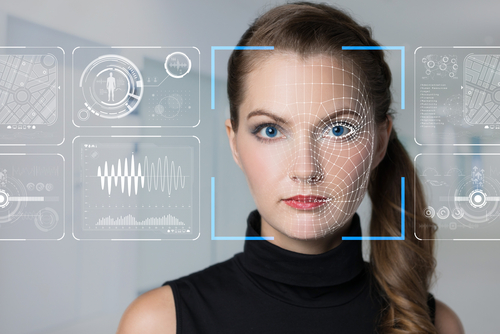
Is Facial Recognition Destroying our Right to Privacy?


The recent Financial Times investigation revealed that Microsoft had collected discreetly a facial recognition database of some 10 million images of some 100,000 people. They apparently used it for facial recognition software. When the FT began investigating, Microsoft discretely deleted the database. The public dataset, called ‘MS Celeb,’ included images of ‘celebrities’ pulled from the internet, but also contained photos of ‘arguably private individuals,’ often without their knowledge or consent, the FT found.


The classic film, the Minority Report, takes place where facial recognition is just using eye scans. To become invisible, he goes through a procedure where he gets eye transplants to hide his identity. This scene shows that when walking through a store, they scan his eyes and offer advertising tailored to preferences. There is no question that this technology can become much like the movie but using facial recognition eliminating the option of just getting our eyes replaced.

Already there are government agencies using facial recognition to look for people walking in public places. New York Police Department’s facial recognition system, includes image alteration and the use of non-suspect images. They are using facial recognition in Britain to look for criminals, but it is apparently wrong 96% of the time. There has even been lawsuits filed over this intrusive approach. San Francisco banned the police from using facial recognition. There are companies offering facial recognition for police.

There is no question that facial recognition poses a significant threat to our privacy and could hamper First Amendment-protected protests and other legal activities. Anyone who exercises their right to join some protest can find their faces suddenly recorded into a secret database that pops up on any encounter with governments.