A new study by the University of Colorado Boulder published on “One Earth”cites water scarcity as the top threat to food security in the next 20 years. “Multiple events occurring at the same time compound the problem,” the study noted, citing droughts, floods, heat waves, pest outbreaks, diseases, and financial and political conflicts. Over 50% of those experiencing food insecurity live in conflict regions, and increasing political instability and civil unrest will cause this figure to rise. Various agencies such as the World Bank and United Nations have cited that food insecurity reached record levels in 2021 and has increased in 2022. However, one aspect that is not often discussed is water.
Humans can survive longer without food than water. Without water, there are no crops or cattle. Other studies point to increasing global demand for water as well. A 2019 study, “Reassessing the projections of the World Water Development Report,” found that water demand increased 600% over the past century.
“Global water demand for all uses, presently about 4,600 km3 per year, will increase by 20% to 30% by 2050, up to 5,500 to 6,000 km3 per year. Global water demand for agriculture will increase by 60% by 2025. By 2050 the global population will increase to between 9.4 to 10.2 billion people, an increment of 22% to 32%.”
Agricultural needs represent 70% of water demand. The poorest nations often have less access to clean water, and these are the same areas where the population is expected to rise. The aforementioned study also states that food demand will increase by 60% by 2050.
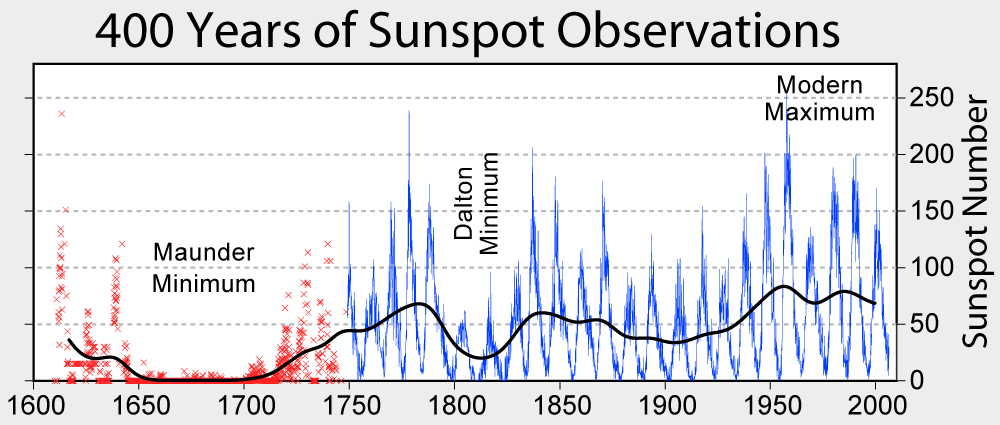
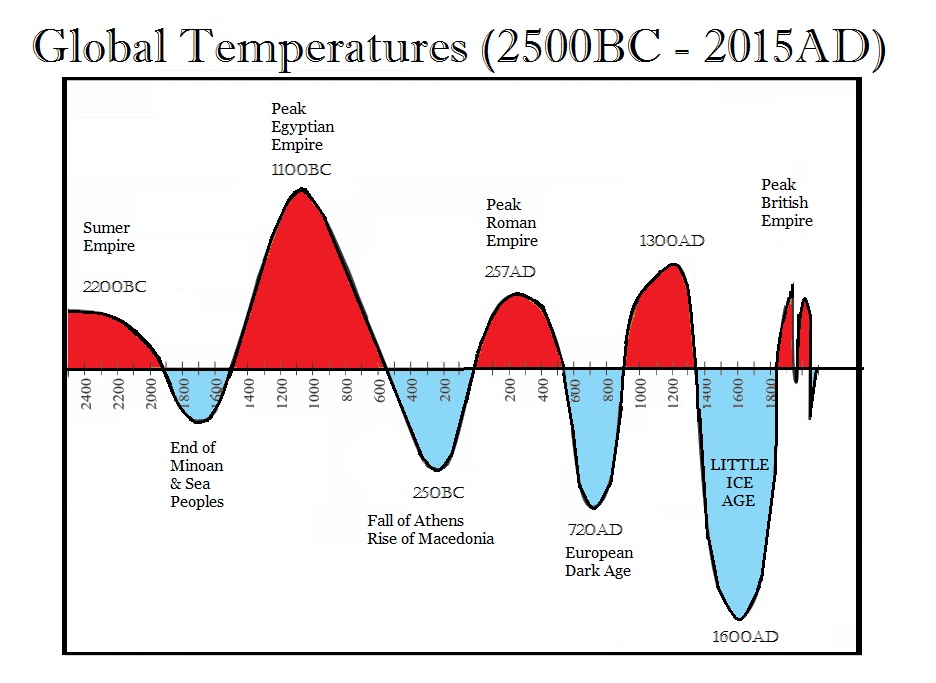
Our model projected entering another “grand minimum,” which overtook the sun beginning in 2020 and will last through the 2050s. This will result in diminished magnetism, infrequent sunspot production, and less ultraviolet (UV) radiation reaching Earth. We are facing a global cooling period on the planet that may span 31 to 43 years. It is interesting that these studies are pointing to 2050 as the point where water will become extremely scarce as it aligns with our models’ projection for the weather as we will then enter a new sunspot cycle.
Posted originally on the conservative tree house on July 19, 2022 | sundance
The goal of gaining public acceptance for eating insects instead of meat is now part of the Public Broadcasting Service (PBS) effort. The larger climate change objective is to “transition” the global food supply away from cows, pigs and chickens, and toward a more sustainable lifestyle of eating insects and bugs. Farmers in North American and Europe are facing massive regulatory changes as part of the Build Back Better or Green New Deal initiatives.
In the U.S. Joe Biden has pledged his entire administration effort toward the goal of reducing U.S. carbon emissions and protecting the planet. Part of that initiative includes the need to change the diet of Americans away from traditional farm proteins, and toward sustainable alternatives via bugs and/or insects like cockroaches, crickets and grasshoppers.
A comprehensive marketing, branding and image campaign is underway to change the public perception toward an acceptance of sustainable algae and bugs as food sources. Public Broadcasting (PBS) is part of that imitative:
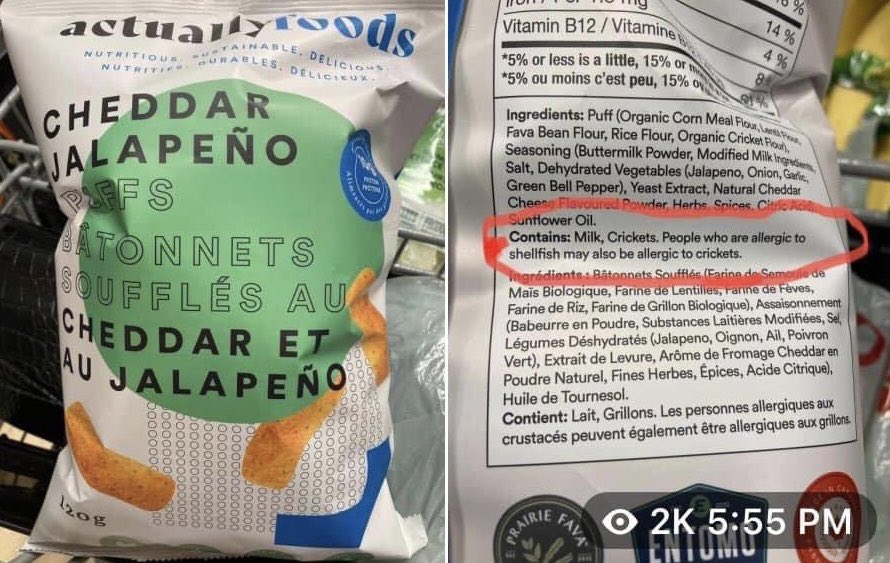
Several U.S. food manufacturers now include insects and bugs as part of their ingredient list. It would be worthwhile checking the labels on the latest snack foods to identify the percentages of worms and bugs that may be included in your favorite salted snack.
Additionally, a significant investment has taken place in Canada where they are now generating 9,000 metric tons of crickets to replace traditional protein sources (link). The public/private partnership in London, Ontario, is now shipping crickets for use by North American food manufacturers. There has been minimal public pushback against the effort and the government appears to be fast-tracking insects as food alternatives for global shortages of grain and meats.
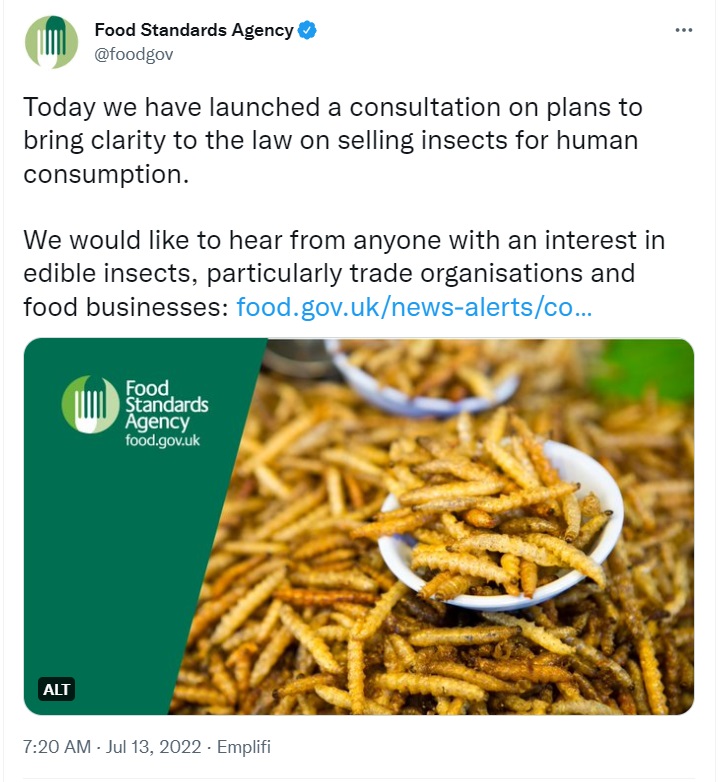
In the United Kingdom, the government is now taking public feedback on the use of insects in the food supply. According to a recent public notification from the U.K. Food Standards Agency, they are working toward an acceptable standard across the industry for insects and worms in the food supply.
From the notification: “A consultation on a proposed legislated transitional period under the novel food regulations for edible insects in England, Scotland and Wales. The proposal has been developed with input from Food Standards Scotland (FSS).” (more)
As farmland across Europe and North America increasingly comes under enhanced “climate change” regulation from government, we can expect the speed of food supply transitioning to insects to increase exponentially.
There are a lot of government resources [EXAMPLE HERE] now dedicated to changing public perception. The western government alliance wants people to start eating bugs, and, more importantly, want people comfortable doing so as the energy and climate regulations increasingly limit food options.
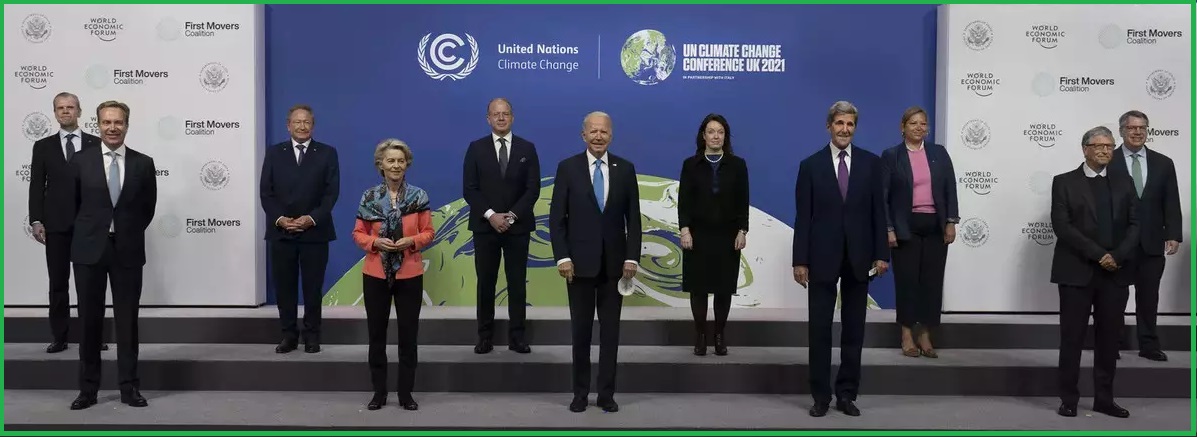
With PBS now joining the chorus of insect food promotion; and with the increasingly discussed pending global food shortage now looming; it would appear that western leaders are following the advice from the World Economic Forum and preparing their citizens in Europe and North America to accept insects as food.
As noted earlier, you may already be eating the insects and just not be aware of it. Apparently, people who are allergic to shellfish should be more concerned and diligent about the ingredients of the food they consume, as insects may generate the same allergic reaction.
Posted originally on the conservative tree house on July 19, 2022
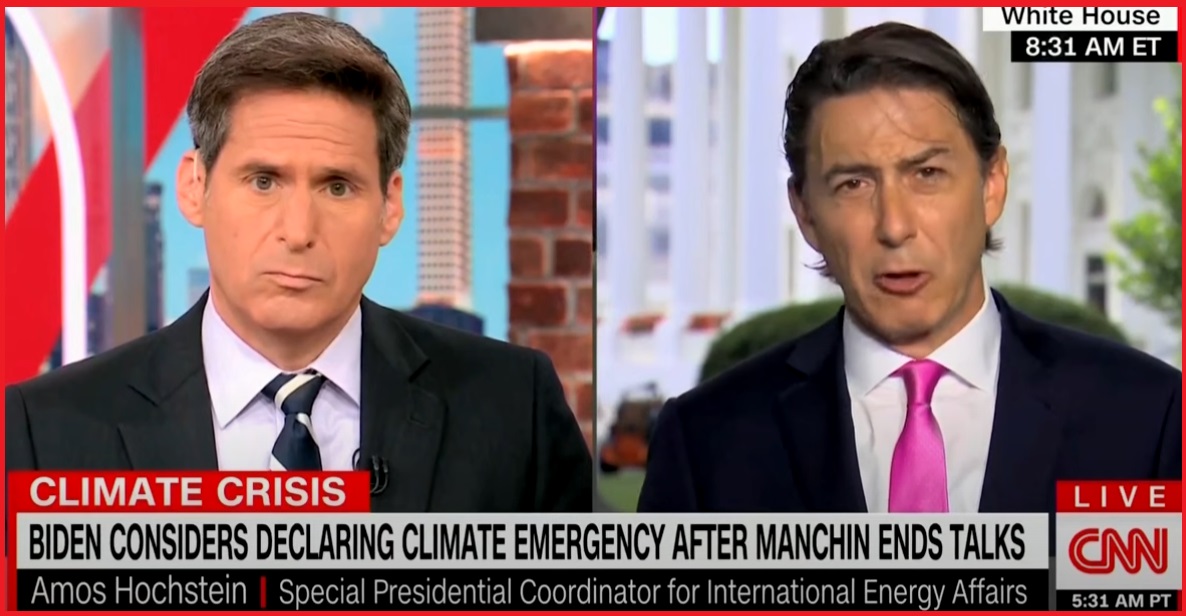
This guy popped up after the trip to Saudi Arabia and has been spouting hypocrisies ever since. In this first segment, White House senior energy adviser Amos Hochstein, in charge of U.S. energy security, says the administration cannot accept or approve any long-term oil and gas development that undermines the urgency of the crisis they are exploiting.
Instead, Hochstein says U.S. energy producers should invest in oil and gas development that turns an immediate profit. [Pro-tip, that doesn’t exist.] Keeping the oil and gas industry in a perpetual state of shortage, overcapacity and expense, allows the “transition” to windmills and solar to remain urgent. Put another way, the energy crisis is part of the plan. WATCH:
Mr. Hochstein also appeared on Fox News this afternoon to claim that coal is the worst of the worst and must never be used again. When asked about Germany going back to coal to replace Russian gas, Hochstein says that’s a terrible plan. However, Hochstein was never confronted over the stupid part of his anxiety.
Germany is being forced to use coal because Biden/Hochstein have triggered energy sanctions against Russia that stopped the flow of natural gas. Germany is being forced to use the horrible coal because Biden/Hochstein is forcing them to.
In order for ideologues to retain their insane ideological positions, they must pretend not to know things. Unfortunately, we do not have a media that is capable of calling them out on the hypocrisy and challenging the weakness of their positions. Thus, the great pretending continues….
Posted originally on the conservative tree house on July 19, 2022 | sundance
Kentucky republican House member Thomas Massie had some interesting statistics in hand when questioning Transportation Secretary Pete Buttigieg about the administration goal to make electric vehicles 50% of all cars, vans and trucks sold by 2030.
Essentially, it is a cart and horse scenario. An electric vehicle requires five times as much energy production as the standard home air conditioning cost. The U.S. electricity grid cannot support an increase in household energy use that is equivalent of adding five times as many houses using air conditioning. Math is math. WATCH:
.
Comrades, the likely federal government solution is simple. Comrade citizens can have one electric car (mandated by regulatory compliance), or they can have their home air conditioned, but they cannot have both. [Assuming social credit scores are high enough]
See how easy that is?
...”the significant problems we face are only as challenging as the significance of the problem.”
Posted originally on the conservative tree house on July 19, 2022 | sundance
CTH cannot overestimate what is more likely than not, as the Biden administration is now reportedly going to declare a national climate emergency in order to take their Green New Deal policy to the next level via executive fiat. [The Hill Story Here]
Any possibility of the Biden administration creating an even deeper economic collapse under the auspices of climate change regulation, has essentially been stalled by congressional opposition to further Green New Deal (Build Back Better) spending and regulatory legislation.
Some, albeit not enough, congressional representatives, can see what lies at the end of this fundamental energy change, a significant collapse of the United States economy. However, the committed ideologues behind Joe Biden are not going to let the legislative branch interfere in their climate change agenda.
What we are about to see is most reasonably predictable against the backdrop of how Biden’s administration exploited the “national COVID emergency,” that backstopped and justified their eventual use of OSHA to mandate vaccinations, and regulatory control over the private sector, under the guise of a pandemic emergency. We predicted that administration approach in December of 2020, and that is exactly what they did {GO DEEP}.
When CTH shared that OSHA would be the institutional regulatory vector for forced vaccinations, many said we were conspiracy theorists. Ten months later that is exactly what the people behind Joe Biden did (link). Now we can expect that same health emergency approach (massive regulations) to repeat with the declaration of a national climate emergency.
Pause and think about the ramifications to all domestic economic and business interests if the federal government starts using all agencies to regulate a new climate emergency policy. Think about the regulations, the scale of potential regulations, from the dept of transportation, the dept of labor (including OSHA), the dept of the interior, the dept of energy, the dept of housing and urban development, the dept of education, the dept of health and human services, and many more.
Joe Biden is an avatar; a political pawn; a cognitively declining guy who has no idea what is happening around him.
The people behind the Biden campaign, those in real control of what this is about, have not hidden their goals and aspirations.
These are not stupid people.
They are scheming, conniving, ideological, ever-planning, ever-manipulating & Machiavellian types within the political system, lusting for power, influence and affluence.
WASHINGTON DC – The Biden administration is considering the declaration of a climate change emergency in response to congressional inaction on the issue.
It’s unclear when and if such an announcement will come, though the White House had been considering a move as early as Wednesday.
Two sources familiar with the discussion on Tuesday morning told The Hill that the announcement could come Wednesday — the same day that Biden is expected to discuss climate during a trip to Massachusetts.
A third source also told The Hill that a climate emergency was under White House consideration.
By Tuesday afternoon, one of The Hill’s sources said that while the White House had planned to declare the emergency as soon as Wednesday, it has since advised that it will not do so on that day.
The Associated Press separately reported Tuesday afternoon that the White House would hold off from a declaration on Wednesday.
The Washington Post first reported late Monday that the White House was considering declaring the emergency as soon as this week. The White House announced Tuesday that Biden will travel on Wednesday to Somerset, Mass., to deliver remarks on tackling climate change.
A White House official declined to directly comment on whether Biden will pursue a climate emergency declaration, saying only that many options are under consideration.
“The President made clear that if the Senate doesn’t act to tackle the climate crisis and strengthen our domestic clean energy industry, he will. We are considering all options and no decision has been made,” the official said in an email.
The move comes as hopes for climate action on Capitol Hill have stalled, as swing vote Sen. Joe Manchin (D-W.Va.) backed away from talks last week following months of negotiations. The potential climate legislation, as part of Biden’s broader economic agenda, was expected to include major investments in clean energy. (read more)
Think about those types of business and energy regulations applied on a national level, and then, as seen in prior Democrat administrations with IRS etc, think about those energy regulations also being enforced through the prism of political affiliation.
Think about how states that refuse to participate will be cut off from federal grants and funding for college tuition, Medicare and/or Medicaid reimbursement, etc. etc.
Think about what happens to Main Street USA?
Think about companies on the NASDAQ or national companies on the stock-market?
Think about how those USA-specific federal energy compliance regulations apply when considering U.S. business operations -vs- just taking operations overseas without those worries.
Think about who in Washington DC then takes control of what types of business interests are allowed to operation…. who determines the winning and losing?
Think about how Federal emergency climate regulations can be used to put the multinational corporate world back (the globalists) on their former financial pathways, even without TPP and TTIP trade deals. [Every domestic regulation weaponized against Main Street USA is a win for the Wall Street multinationals.]
Think about how much China and southeast Asia would benefit love to see our economy knee-capped in a Biden regulatory stranglehold; essentially achieving the same objectives as the Paris Climate Treaty.
Think long and hard about how far the tentacles of achieving the Green New Deal can extend under the auspices of federal emergency climate mitigation.
Remember, those who are working on this don’t care about the middle-class and they have not for decades. The visibility of the ‘rust belt’ is the reference. This is about government bureaucrats using their DC powerbase to control trillions in economic value and sell their ability to influence the winners and losers to the highest foreign bidder.
Look at what blue states have already done to seize power and control under the auspices of a national health emergency. Now think about that same manipulative intent spread throughout the entire country by weaponizing federal agencies with advanced regulation toward a national climate emergency. The entire country turned into a California style-controlled energy economy.
Now, think carefully about how that approach aligns with a political change in personnel at the White House. Joe Biden’s usefulness now exhausted.
Posted originally on the conservative tree house on July 17, 2022 | Sundance
CBS pretentious pretender Margaret Brennan interviews Joe Biden’s Energy Security Coordinator Amos Hochstein about the trip to the Gulf Arab States and subsequent energy policy developments. [CBS Transcript Here] Hochstein spins the non-existing benefits of the trip by attributing the pre-existing Saudi cease-fire in Yemen as an outcome of Biden talking to Crown Prince Mohammed bin Salman. Quite a stretch.
Hochstein still thinks there is going to be a way for ‘western governments‘ to place price caps on Russian oil exports by getting the entire planet to agree only to pay Russia a set price for oil. With Russia an OPEC+ member, and the members of OPEC not in ideological alignment with the Biden administration on a host of geopolitical issues, good luck with that. The producers (OPEC) have control over what prices the consumers (Non OPEC) pay; they are not going to give up that mechanism just to please the Biden administration.
On the domestic front, while there is little possibility of a global oil production increase from OPEC, Hochstein claims to have assurances from U.S. oil producers they will increase their production capacity by November. At the same time the institutions in charge of Biden energy policy are going to keep targeting the oil producers to destroy them. Quite a weird dynamic. Hochstein finishes by saying solar and windmills are the future of U.S. energy production and if we invest more, well, we can save the planet. WATCH:
It is worth remembering what MbS said about the meeting: “We agree on many things, but we differ on a few others. Every country has its own culture and circumstances. I respect yours, you respect mine. Do not impose your culture on us. Do not impose your beliefs on us.” … “We agree we need to do more for climate change, but you guys are doing it wrong by favoring certain energy sources over others. The world needs energy security. We need all energy sources including oil & gas. We are doing our part on both fronts: climate change & energy security.” … “The stage of a country’s economic & social development must be considered in climate change negotiations.” … “We are increasing our production capacity to 13 million barrels per day (from 12 mb/d), but that is it. We cannot do more.”
The message here is: You guys do your part and invest more if you want to avoid energy crises, recessions and unemployment. Do NOT blame us!
[Transcript] – MARGARET BRENNAN: Welcome back to Face The Nation. As President Biden met with Middle Eastern leaders last week, he was accompanied by Amos Hochstein, the Special Presidential Coordinator for International Energy Affairs. He’s with us now. Mr. Hochstein, Welcome to Face The Nation. Good to have you here in person.
PRESIDENTIAL COORDINATOR ON ENERGY SECURITY AMOS HOCHSTEIN: It’s great to be in person. Thank you.
MARGARET BRENNAN: So you were one of the few US officials in the room when President Biden met with Saudi leaders. Why was this trip worth the political risk? What did you get?
HOCHSTEIN: Well, I think this was a historic trip. First, it started just landing in Saudi Arabia in Jeddah, as the first-ever flight from for a president to fly from Israel, directly to Saudi Arabia, with the backdrop of Saudi Arabia, opening the announcing that they’re opening the skies for the first time for Israeli Aircraft, for all aircraft, including flights to and from Israel over its airspace, comes on the backdrop of a major achievement over the last few months of a ceasefire in Yemen, where 1000s of people have been killed. Over the last seven years, this has been the longest ceasefire we’ve had with a commitment from Saudi Arabia to work to extend the ceasefire even further; major announcements for food security and achieving contributions from the GCC from the Gulf countries on food security.
MARGARET BRENNAN: But none on oil, yet.
HOCHSTEIN: Well, we had a major announcement on cooperation on energy writ large. And if you recall, just before the President announced his trip just a few days before that OPEC+ made a- a major shift and its policies, recognizing that since Putin started amassing forces, the markets have been affected, and that there was a supply-demand issue and announced increases in supply over 50% for July and August. And I’m, based on what we heard, on the trip, I’m pretty confident that we’ll see a few more steps in the coming weeks.
MARGARET BRENNAN: So OPEC+ meets August 3. Saudi has some, very little spare capacity. So are you saying you got a wink and a nod that they’re going to pump more?
HOCHSTEIN: I think what we discussed, first of all, it’s not just about Saudi, it’s about we met with with the GCC and with Saudi Arabia. There is, I’m not going to go into how much spare capacity there is in Saudi Arabia and in UAE and Kuwait, etc. But there is additional spare capacity, there is room for increased production. As we’ve told producers in the United States, we’ve had conversations over the last several months and weeks, with OPEC. And I believe that there is still more room to-to see additional steps.
MARGARET BRENNAN: Saudi says it’s got like a million spare barrel capacity.
HOCHSTEIN: Again, it’s not just about Saudi, this is OPEC. So, there are other countries as well. So, we needed to see a little bit more. But let’s-let’s look at what has happened since the President announced his trip. Oil prices at that point were at about $120. Today, oil prices are around $100, $101. So that’s a $20 decline based on the steps–
MARGARET BRENNAN: –some of that economic concerns, though China, looking like it’s slowing and concerns here about consumption going down.
HOCHSTEIN: So there’s no doubt there’s never one reason why oil prices go up while goes down. As you know, in oil prices go up, they tend to say there’s only one reason; that’s the part of the political leadership. But if you think about it this way, over the last few months, the President has supplied the US market with a million barrels a day, which is a historic level from the strategic reserve. We’ve never done that before.
MARGARET BRENNAN: And that, what, ends in September?
HOCHSTEIN: No that-that will end towards the end of the year.
MARGARET BRENNAN: Will it end towards the end of the year? Can you afford to stop putting emergency supply on the market?
HOCHSTEIN: Well, look at what has happened. The private sector, as we talked to them, the United States said they can increase production in the United States by about a million barrels a day. But it’s going to take time to invest in it, it will come at the end of the year. So we stepped in, the president stepped in and said ‘I’ll fill that gap.’ So hopefully, my expectation is that the private sector in the US will have those increases coming, so we don’t need to have the emergency from the US government. In the meantime, we’ve seen the prices, both the oil price, but also the price of the pump has come down at the fastest rate that we have seen in over a decade. So, from over $5. And remember this just a few weeks ago–
MARGARET BRENNAN: –still pretty high, but it’s still pretty high. It may have come down a bit.
HOCHSTEIN It’s not $5 anymore, it’s now $4.55. And I expect it to come down more towards $4. And we already have many gas stations around the country that are below $4. So we’re this is the fastest decline rate that we’ve seen against a major increase in oil prices during a war in Europe, where one of the parties in the war is the third largest producer in the world. So these are extraordinary circumstances we’ve taken very tough measures to address them right away, both for the American consumer but really for global economy, too.
MARGARET BRENNAN: Well, we’ll watch to see if those gas prices continue to fall. I want to ask you about what the administration is pushing around the world which is this concept of putting a cap on the price of Russian oil that is sold, so that it’s not cutting back on the amount but rather the windfall profits Putin can profit off of it. What’s to stop Vladimir Putin from just saying, fine, I’m just going to stop pumping.
HOCHSTEIN: Well, I think that the wait, look the price cap is–
MARGARET BRENNAN: –Does that ruin your plan, if he does that?
HOCHSTEIN: Well, first, he could do that tomorrow, regardless of what we do on a price gap. You know, Putin has been an unreliable supplier, unfortunately. But I think what we’re doing is we’re designing the mechanisms so that he can still, he’d still would have revenues he needs those revenues to, that’s the only revenues he really has in his country. There’s nothing else in Russia except for oil and gas.
MARGARET BRENNAN: Well, JP Morgan says he’s got enough cash that he’s sitting on, that he could cut by 5 million barrels in that extreme example, that the price of oil would go up to over $300 a barrel, almost $400 dollars a barrel.
HOCHSTEIN: Well, what we want to be able to do is to mitigate where the price of oil on the world market doesn’t actually impact Russia at all, because we’re going to put a price cap, so that all they have is to get that price at no more than that.
MARGARET BRENNAN: Right.
HOCHSTEIN: We believe that that is the way to do it. So if prices go up, he still won’t get that price and we can reduce that price.
MARGARET BRENNAN: Why would India or China comply?
Well, first, at the G7, a couple of weeks ago, the G7 endorsed this idea as a good idea. We’re now starting to have the conversations with the major consumers. And I would ask the question the other way around, doesn’t every buyer try to get a lower price? So, I think every buyer is incentivized to pay less. And I’ll go a step further. Right now, regardless of what you see as the global oil price. That’s not what Putin’s getting. So these headlines about Putin getting some kind of a math between how much is he selling times the price of oil in the world, that’s not his revenue, because he’s already agreed to major discounts–
MARGARET BRENNAN: –He’s still taking in money and he’s still funding this war. So–
HOCHSTEIN: That’s what we’re trying to stop.
MARGARET BRENNAN: Right. But in the meantime, I want to ask you quickly about the president’s climate change efforts, this bill, and his proposal is completely stalled right now. The president says he’s going to take executive action, what is the plan? What are you going to actually do here in the United States?
HOCHSTEIN: Well, I think we’ve tried to get a plan where we can incentivize, great incentives for US investors–
MARGARET BRENNAN: –But you can’t block new oil and gas drilling, right? You can’t do some of those things, because they would counter your efforts.
HOCHSTEIN: Well, I think what we want to do in this in this bill that we’ve proposed, and we are hopeful that we still hope that that’s what Congress does, is to give it the kind of incentive assurances that we can have additional American investment in climate, renewable energy electric vehicles. Why wouldn’t we want to do that? Why would we want to make-to create an environment in which China is ahead of us? The rest of the world is making the investments and we’re not. We want to be able to put the kind of incentives that will be additional investment in the infrastructure for renewable energy, for solar, for wind, and for electric vehicles and for our nuclear fleet in this country. That’s how we get to climate. We didn’t get that today. The President is determined to take some action that he can through executive orders, and through other actions. We’ll see what we can do this weekend in the coming weeks. But again, I think that the responsibility here is to be able to invest into our future, whether we like it or not this those-some don’t like it. This is the future of energy markets in the United States and around the world. We got to decide do we want the US to lead, or do we want the Chinese to lead this?
MARGARET BRENNAN: You got to convince Senator Joe Manchin, we’ll be talking about that ahead in the segment, thank you very much for coming in. [LINK]
…”And then he said, Texas has no wind for the windmills. Yes, Texas!”
Posted originally on the conservative tree house on July 13, 2022 | Sundance
Officials in the state of Texas are worried the emergency measures taken Wednesday to avoid blackouts may not be enough. The utility operators urgently need the wind to start operating the windmills or things might get worse. Reuters News has more:
(Reuters) – Texas’s power grid operator on Wednesday took emergency measures to avoid rolling blackouts as soaring electricity demand threatened to outpace available supplies amid a stifling heatwave.
The Electric Reliability Council of Texas (ERCOT), which operates the grid that serves more than 26 million customers, initiated a rarely used emergency program that is triggered when supplies fall below a critical safety margin.
Earlier, ERCOT had urged residents to cut power use during the hottest hours of the day and warned of a risk for rolling blackouts. Residents were asked to turn up thermostats, defer the use of high-power appliances and turn off swimming pool pumps.
The emergency notice came after ERCOT began paying suppliers an average of $5,000 per magawatt hour to keep generators running. That price is the highest the grid operator pays. “They were pulling a lot of levers to avoid going into emergency operations and rolling blackouts,” said Doug Lewin, president of consultants Stoic Energy LLC. (read more)
Call me Captain Obvious, but in addition to the population migration, it looks like Texas imported California’s energy policies. The sustainable energy isn’t sustainable. However, on a positive note, their state ESG score is improving.
Posted originally on the conservative tree house on July 13, 2022 | Sundance
Gasoline in Mexico is $3.12/gal. Gasoline in the United States is $4.78/gal
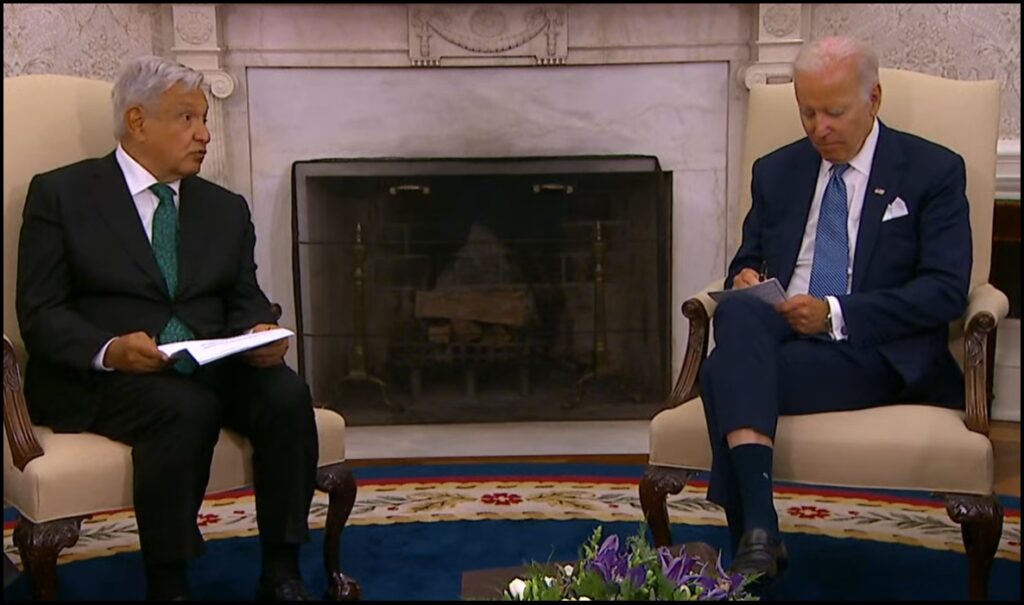
The media did not give this much attention; however, Mexican President Andres Manuel Lopez-Obrador thoroughly, albeit diplomatically, dressed down Joe Biden over his economic and energy policy during a Tuesday visit to the White House.
You might remember that together with a host of south and central American leaders, Mexican President Lopez-Obrador refused to attend Joe Biden’s Latin-America summit last month {Go Deep}. With that in mind Obrador’s media remarks in the oval office are quite remarkable in their pointedness.
The video and audio are tenuous, and the delay for interpretation makes following the flow of AMLO’s comments a little challenging. However, if you read the transcript you can clearly see how AMLO is diplomatically undressing Biden over the economic issue of U.S. energy policy. It would appear that AMLO is not part of the great western reset and has no intention on inflicting the pain that is deliberately being created by other western leaders. [Video at 23:30, Transcript Below] WATCH:
Now keep in mind that socially AMLO is a soft-socialist (immigration). However, he is also a strong economic nationalist who has previously expressed a strong dislike for the influence of multinational corporations in Mexico. AMLO is not a World Economic Forum acolyte. AMLO is on team BRICS.
In these remarks, AMLO is very pointedly telling Joe Biden that his U.S. energy policy is seriously flawed. It is really quite remarkable.
AMLO tells Biden that Mexico will continue investing in expanded refining of gasoline, and he is willing to sell that gasoline to American companies because Joe Biden will not issue permits to expand gasoline refining capacity in the United States. Additionally, AMLO affirms his position on further oil development in Mexico and then, here comes the kicker,…. offers to expand electricity sales to the United States, including supplying Texas with electricity because both the Biden administration and Texas are not developing their own energy resources.
AMLO is telling Biden that Mexico will increase energy subsidies to the United States if Biden asks him to. Think about that.
[Transcript] – PRESIDENT LÓPEZ OBRADOR: (As interpreted.) Yes, I fully coincide with what you have proposed, President Biden. And I could summarize everything we’ve been saying in five basic items of cooperation.
Number one, since the energy crisis started, Mexico has used 72 percent of its crude and fuel oil exports to United States refineries — 800,000 barrels a day.
Therefore, we decided that while we’re waiting for prices of gasoline to go down in the United States — and I hope that Congress approves or passes your proposal, Mr. President —
PRESIDENT BIDEN: It has gone down for 30 days in a row. (Laughs.)
PRESIDENT LÓPEZ OBRADOR: (As interpreted.) — of lowering — lowering prices, yes. That’s it.
In the meantime, while we’re waiting for prices to go down, we have decided that it was necessary for us to allow Americans who live close to the borderline so that they could go and get their gasoline on the Mexican side at lower prices.
And right now, a lot of the drivers — a lot of the Americans — are going to Mexico, to the Mexican border, to get their gasoline.
However, we could increase our inventories immediately. We are committed to guaranteeing twice as much supply of fuel. That would be considerable support.
Right now, a gallon of regular costs $4.78 average on this side of the border. And in our territory, $3.12.
Let me clarify something, and I also want to take advantage of this opportunity to thank you, Mr. President. Most of this gasoline, we are producing it in the Pemex refinery that you allowed us to buy in Deer Park, Texas.
Two, we are putting at the disposal — or sending at the disposal of your administration over 1,000 kilometers of gas pipelines throughout the southern border with Mexico to transport gas from Texas to New Mexico, Arizona, and California for a volume that can generate up to 750 megawatts of electric energy and supply about 3 million people.
Three, even though the USMCA has made progress for the elimination of tariffs, there are still some others that could be immediately suspended. And we could do the same with some regulations, regulatory measures, and tedious procedures or red tape in terms of trade related to foodstuffs and other products so that we can lower prices for consumers in both our countries, always being very careful in the protection of health and the environment.
Four, starting a private-public investment plan between our two countries to produce all those goods that will be strengthening our markets so that we can avoid having importations from other regions or continents.
In our country, we shall continue producing oil throughout the energy transition. With the U.S. investors, we are going to be establishing gas-liquefying plants, fertilizer plants, and we shall continue promoting the creation of solar energy parks in the state of Sonora and other border states as well.
And we’re going to accomplish this with the support of thermal electric plants and also through transmission lines to produce energy in the domestic market, as well as for exports, to neighboring states in the American union, as for instance, Texas, New Mexico, Arizona, and California.
It’s also important to mention that, two months ago, we took the sovereign decision of nationalizing lithium in Mexico. This is a fundamental mineral, a fundamental input to advance in our purpose not to depend on fossil fuels. And this will be available for the technological modernization of the automotive industry among our great countries — the countries of the USMCA.
Five, orderly migration flow and allowing arrival in the United States of workers, technicians, and professionals of different disciplines. I’m talking about Mexicans and Central Americans with temporary work visas to ensure not paralyzing the economy because of the lack of labor force.
The purpose of this plan would be to support and to have the right labor force that will be demanded by the plan you proposed and that was passed by Congress of using $1 trillion for the construction of infrastructure works. (read more)
Mexican President Lopez-Obrador is offering to bail out the United States energy crisis.
Posted originally on the conservative tree house on July 11, 2022 | Sundance
This is not The Onion or any form of spoof. This is real life, and it is happening today.
Amid a heatwave throughout most of Texas, The Electric Reliability Council of Texas, or ERCOT, is urgently asking Texas residents to conserve electricity because “it has projected a shortage in energy reserves Monday “with no market solution available.” Voluntary conservation is needed between 2 p.m. and 8 p.m. Monday.”
The problem, as the Texas power authorities have identified it, is outlined via NBC News:
According to ERCOT, factors driving the need for this important action by customers:
Record high electric demand. The heat wave that has settled on Texas and much of the central United States is driving increased electric use. Other grid operators are operating under similar conservative operations programs as ERCOT due to the heatwave.
Low wind. While solar power is generally reaching near-full generation capacity, wind generation is currently generating significantly less than what it historically generated in this time period. Current projections show wind generation coming in less than 10 % of its capacity.
Conservation notifications are issued when projected reserves may fall below 2300 MW for 30 minutes or more, according to ERCOT. (link)
Pres. Trump jokes about windmills in speech on energy: "All of a sudden it stops, the wind and the televisions go off, and your wives and husbands say, 'Darling, I want to watch Donald Trump on television tonight, but the wind stopped blowing." https://t.co/JsAo4rT8TMpic.twitter.com/H3ERYkZ5CR
An engineering study on the timing of the proposed change in our form of energy generation. Written on July 3, 2022 by Centinel
With the transition out of fossil fuels into green energy now well underway, there will be an unavoidable lag in available energy. The reason for this is that the solar panel fields being built and the wind turbines installations are both occurring at a rate way too slow to keep up with the reduction of fossil fuel production that is already being implemented. The energy gab is what is driving the price of fuel (gasoline and Diesel) up.
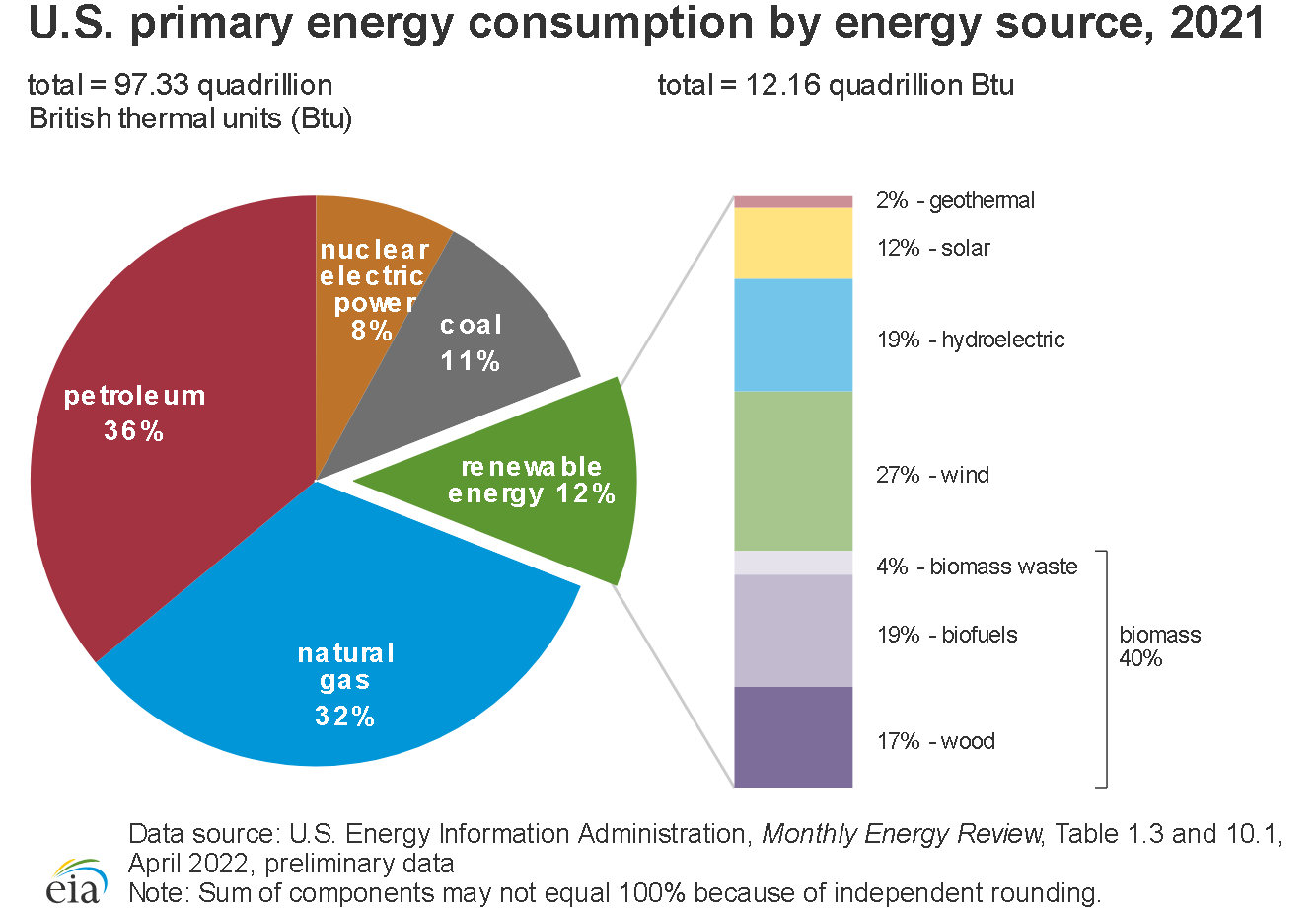
Approximately, 88% of U.S. energy is from Petroleum, Natural Gas, Coal, and Nuclear and of the remaining 12% is from all other sources, but only 4% of that is Solar and Wind. The other 8% is hydroelectric and biomass; which I’m not sure they really count if you want zero CO2 emissions by 2030.
To reach that goal of zero CO2 means we have to get rid of 88% of the existing US generating capacity and increase the Solar and Wind from 4% to 88% or 22 times the existing solar and wind capacity. The issue is that to keep everything running we need to install the green energy first and then cut out the fossil fuels in proportion to the increase of the green energy; for example look at this approximation below based on The US Energy Information Administration (EIA) June 2022 report for the year 2021 above.
Year Solar Wind Coal, Oil, Natural Gas
2022 4% 88%
2024 25% 66%
2026 46% 44%
2028 67% 22%
2030 88% 0%
If the Coal, oil and natural gas production is removed faster than the Green Solar and Wind capacity is increased than blackouts of increasing duration will result and the economy will shut down. It is basic engineering and not political. The politicians tell us the science is settled on Climate change and this has to be done and if that is true then to get to zero CO2 by 2030 the previous numbers must be followed, the engineering to accomplish that goal is also settled, This issue with politicians is they are not capable of making rational decisions on major projects just like they are also not capable of winning a war i.e. Vietnam under President Johnson and WW II Germany under Hitler. It’s a basic rule in The Art of War that the king or ruler must let the generals run the war. Here in the U.S. the politicians are not letting the engineers run the conversion.
The politicians decided to reduce the U’S’ production of fossil based fuel when they took over and that started the price increase on day one, January 20, 2021, of the Biden Administration. There are two kinds of inflation product supply and excess demand. If supply goes down and demand is constant, the price goes up. On the other side if demand goes up and supply does not then that drives up the price from the demand side.
In the current U.S. case its primarily supply shortages of gasoline and diesel coupled with increased demand as we came out of the COVID economics issues. Since everything moves by truck or rail, the price increases of diesel affects everything.
I have created this site to help people have fun in the kitchen. I write about enjoying life both in and out of my kitchen. Life is short! Make the most of it and enjoy!
This is a library of News Events not reported by the Main Stream Media documenting & connecting the dots on How the Obama Marxist Liberal agenda is destroying America








 Centinel2012