The Fate of Italy & the Italian Lira


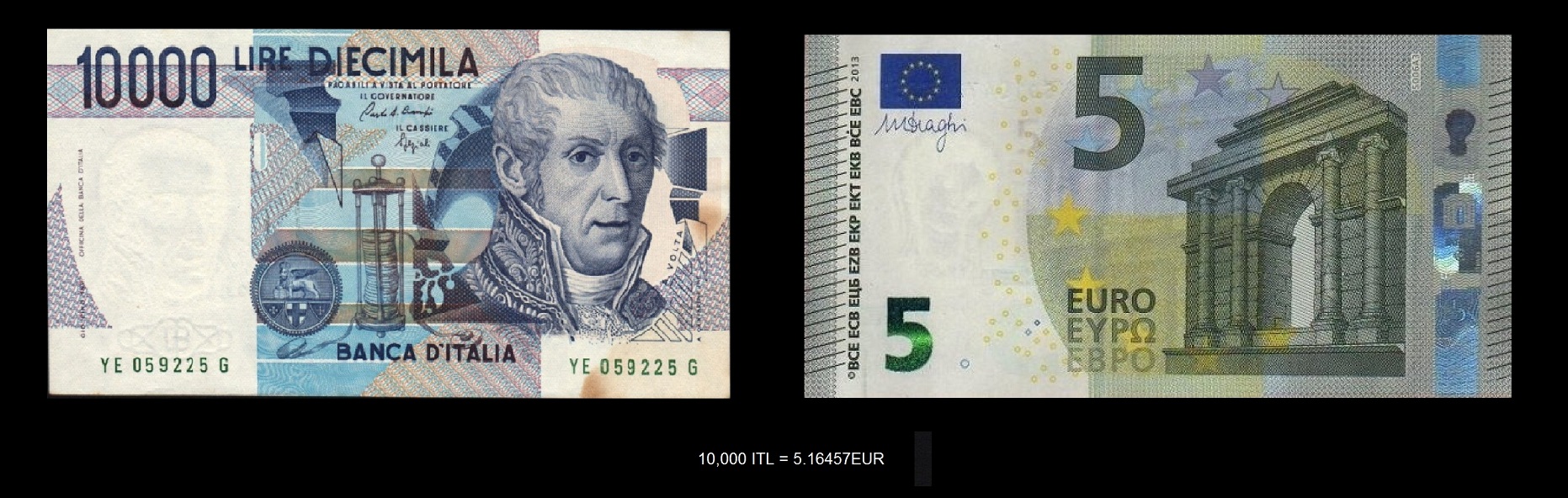
QUESTION: Mr. Armstrong; A friend of mine world for the central bank back in the nineties and he gave me a copy of this chart you provided to Italy on your recommendation not to enter the euro on the present terms back then. He said you were the only one with a database and nobody ever saw what the lira looked likely before World War II. Do you have that report you gave to the Italian Central Bank?

JDH

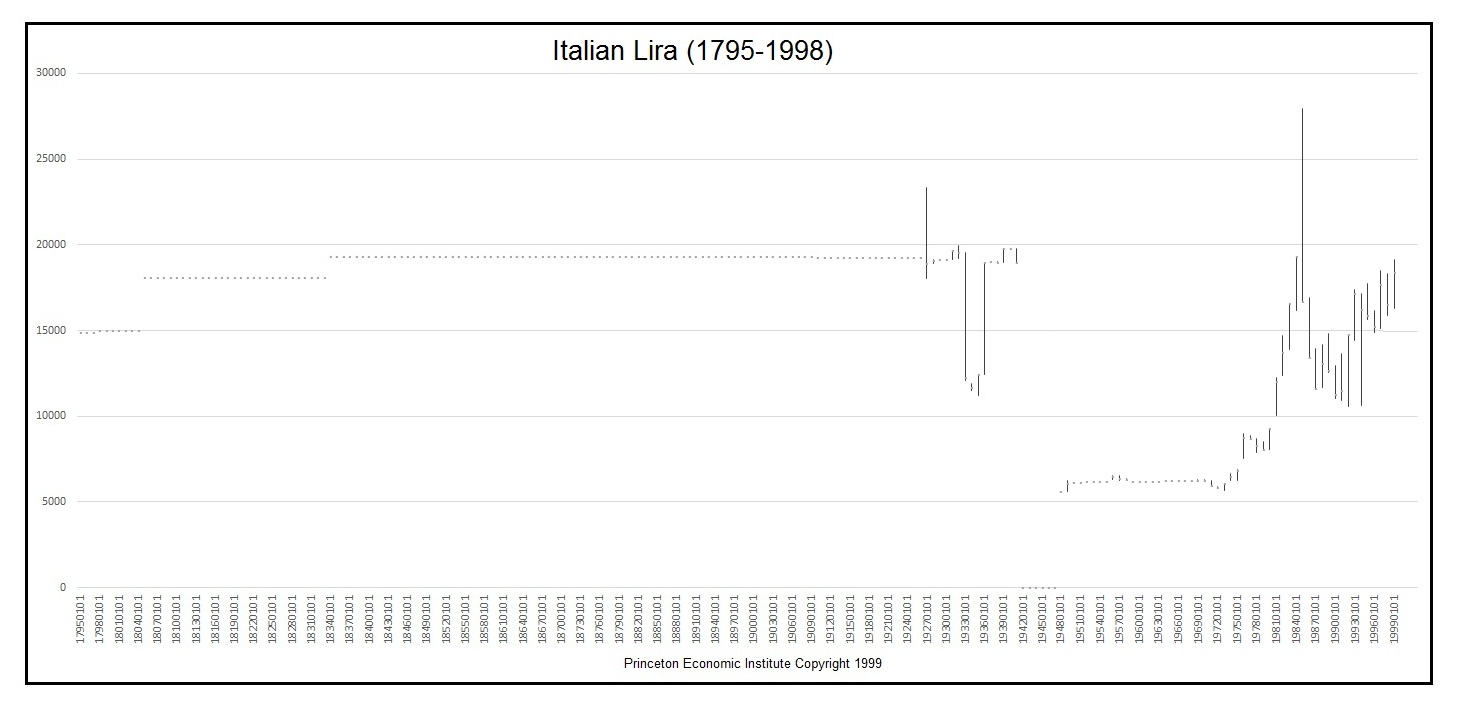
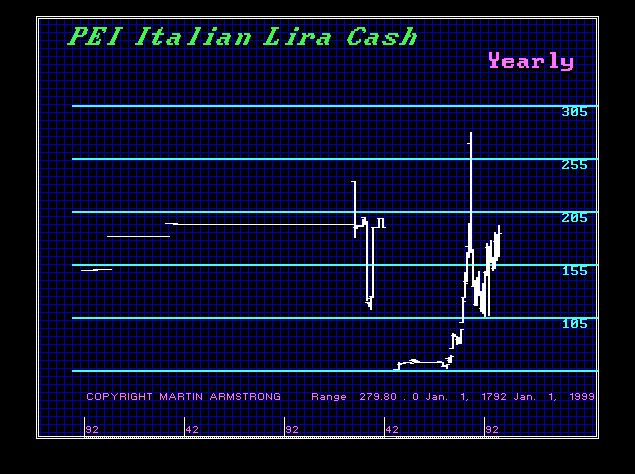
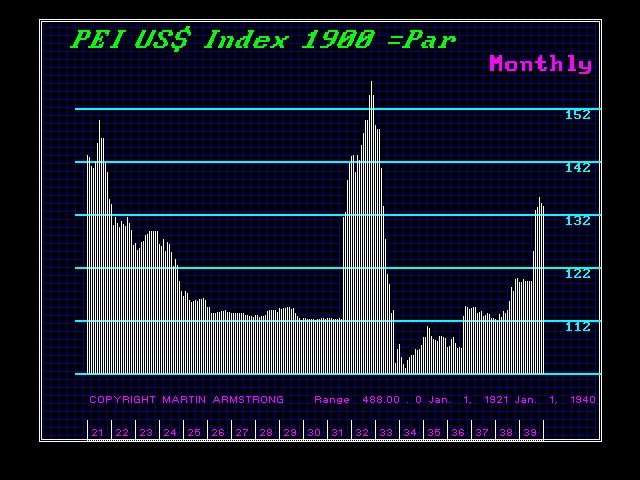
ANSWER: Sorry. I do not have a copy of that report. It was a private issue. The general advice was put out back then in a series of reports we published for our general client base (see Euro). Here is a chart from 1792 to 1999. We can see that the intraday high for the US dollar against the Italian Lira was 1985.

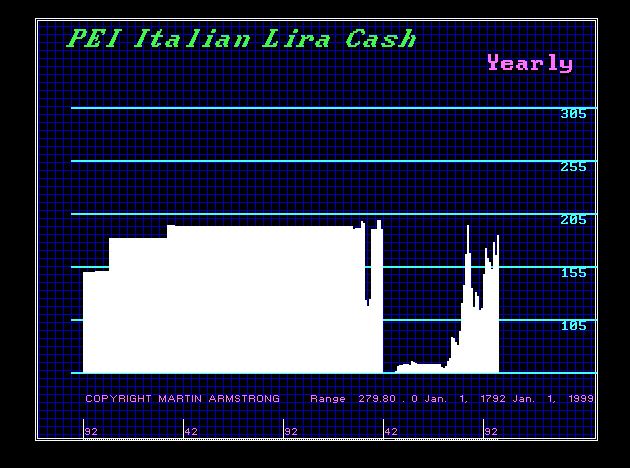
Here is a chart on a closing basis. We can easily see that the US dollar is breaking out and will be making historical new highs against Italy going forward in time.


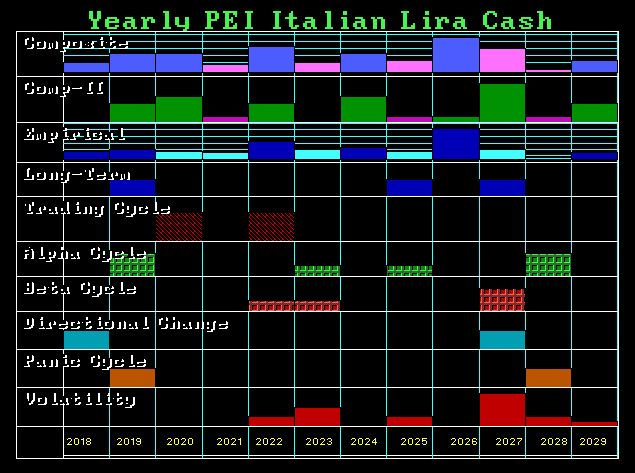
Now when we ask the computer to extrapolate the Lira from the past and project where the turning points would be in time looking ahead as if it were a single currency, 2018 comes up as a directional change and 2019 in a Panic Cycle. Here are the turning points and we will see this provide the critical points for cracking the euro

Hungary Election Also Shows EU’s Days are Numbered


Viktor Orban has clearly won the parliamentary elections in Hungary winning 74.6% of the votes on Sunday in Budapest. His party could take 134 seats in the 199-seat parliament giving it a constitutional two-thirds majority. This is an amazing landslide victory for Orban that no American president has ever reached such a majority. The record is 61.05% of the popular vote and that was a sympathy vote for Lydon Johnson after the Kenney Assassination. Even Franklin Roosevelt in 1932 only won 57.41% and Ronald Reagan even beat Roosevelt scoring 58.77%. This puts Orban’s victory at a truly historical level and it is decidedly anti-EU based upon the Refugee Crisis.

After all, it was 1683 when the Turks invaded the Holy Roman Empire and sought to conquer Europe with the Battle of Vienna. That is a historical event that lives on in memory throughout that region. The Muslim invasion crossed from Istanbul through Bulgaria, Serbia, Hungary, to Austria. That event still lives on in the memories of the people in that region that Western Europe does not respect.

Little by little, the European Project is being torn apart all because of the Refugee Crisis that was begun by Markel without ever putting anything to a vote for all of Europe who must suffer simply because Merkel tried to divert her critics from Greece. This has demonstrated that the European Project has been a complete failure. It allowed Merkel to affect all of Europe without any democratic process. The European Project has failed for it has tried to federalize Europe covertly, yet has undermined the political-economic structure necessary to accomplish that goal. The European Project should have remained a trade agreement rather than a political agenda. By trying to force their centralized agenda upon everyone, they are acting no different than any other conqueror.

Russia & the Panic


QUESTION: Mr. Armstrong; I greatly appreciate the mere fact that you cover the Russian markets when nobody does. It is really incredible that your computer can write so much and there is no fear of bias or policial slant. Socrates just wrote, “At this moment, this market is in a downward trend on all our indicators looking at the weekly level.” There has been a panic taking place here with stocks crashing on the news of asset confiscation. You mentioned that your model will predict war correlating all the markets. Is this what is beginning with the crash?

EV


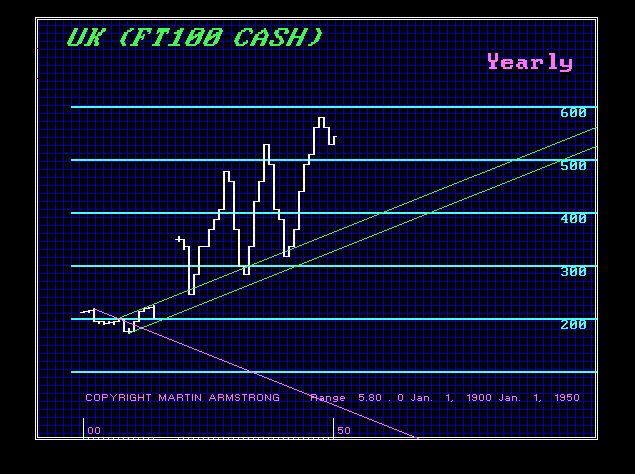
ANSWER: Yes. Here is a chart of the British share market as World War I began. There, the market began to display inherent weakness. It could not get through the top of the channel and as soon as the previous year’s low broke, the market crashed. They then closed the market completely so many people lost all liquidity. We must fear that Europe will do the same. The EU does not like free markets. They have outlawed short government bonds. They are trying to seize the market in the Euro from London because they want to manipulate the currency and will try to prevent a currency crash with the stroke of a pen. Europe remains deeply in danger of a liquidity crisis. If you have money all parked in Europe, you may find it of little use in a crisis.

The immediate crash in Russia was caused by investors in Moscow dumping Russian shares and the ruble following the announcement that the West wanted to confiscate Russian assets abroad. The ruble depreciated by nearly 3% against the dollar. The United States imposed sanctions on Russia for interference in the 2016 US presidential campaign, which is something they do to everyone else from Canada all the way to Russia. Hillary has turned Russia bashing into a national sport. This is clearly leading to a confrontation for the West desperately needs a war to divert attention from the failure of social program promises.

The Russian government will retaliate against the tightened US sanctions. Clearly, the actions of the Congress are unjustified and intended to provoke a confrontation. We are on the path to war and every opportunity to further that goal is clearly being taken by the USA, UK, and the EU.

World Trade – We Are Lost But Don’t Even Know It


QUESTION: Mr. Armstrong; You seem to be the only rational person who understands world trade. Trump said we already lost the Trade War. Does he have any clue as to what is really going on in world trade?

HF

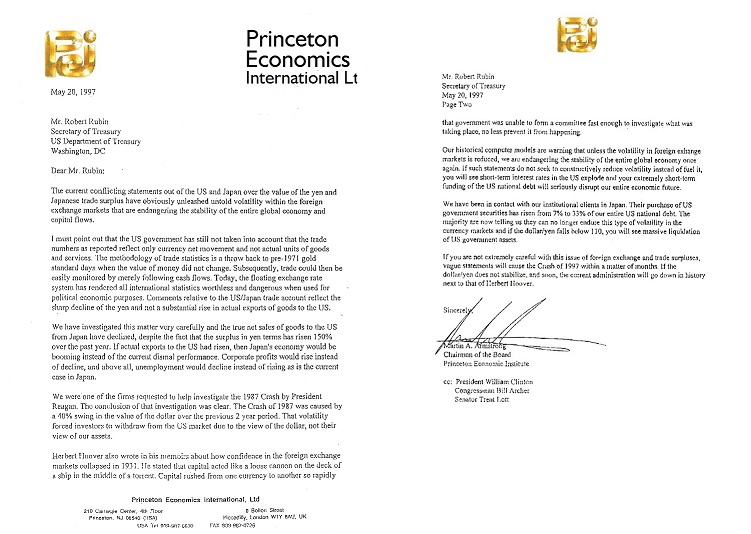
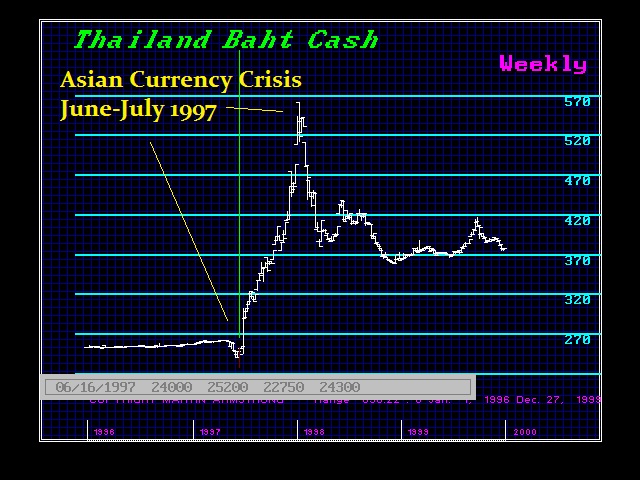
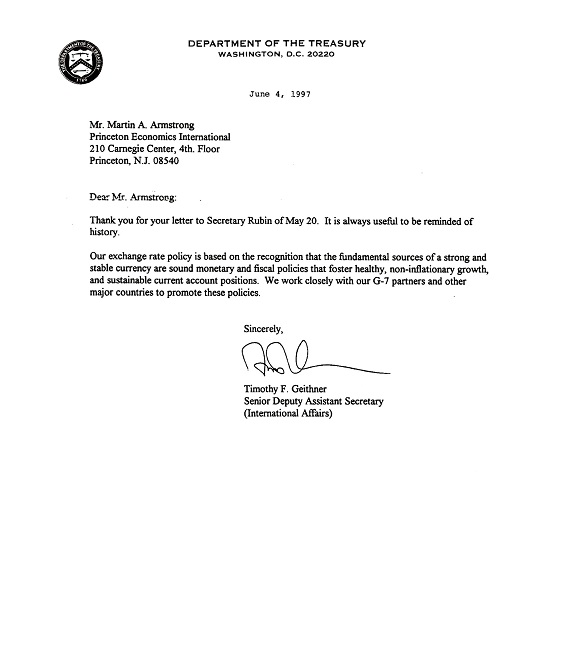
ANSWER: Sorry, but he and just about everyone else is just brainwashed. We are experiencing the same problem when the Japanese trade surplus was number one. Rubin was starting the same nonsense under Clinton back in 1997. I wrote to Rubin in May 1997. Once again, I warned of coming crazy volatility and that hit the next month with the 1997 Asian Currency Crisis. Rubin was again trying to talk the dollar down for trade but with Japan.

These people are just amazingly stupid or just too lazy to do the real research. Back then, Japan was the largest holding of US debt. They had bought the debt to try to ease trade friction.  When they buy US debt, that runs through the Capital Account – not the Current Account. However, the interest they earn goes back out through the Current Account. Hence, the more debt they buy to ease the trade deficit actually makes it worse.

When it comes to world trade, we are simply lost in our own short-sightedness. Nobody seems to even bother to look at this issue. If we add world trade and attribute it to the flag flown by the parent company, the USA dominates the world. There is a trade surplus.

I had recommended to the Japanese to buy gold in New York and ship it to London and resell it there. That was a transaction which went through the current account and provided the impression that the trade deficit was declining.

The situation is just hopeless. Nobody will listen and they just like yelling about things that make absolutely no logical sense.

Tim Geithner responded:

Currency Based v Credit Based Monetary System


Economic Theory

QUESTION: Hi Mr. Armstrong. Impressive work you do. I have followed you closely since I watch your documentary and your predictions have mostly been spot on.

I was wondering if you perhaps could share some thoughts on the increasing US budget deficit while employment etc is at multi-year low. This is rare and would someday crash and burn I guess.

EL

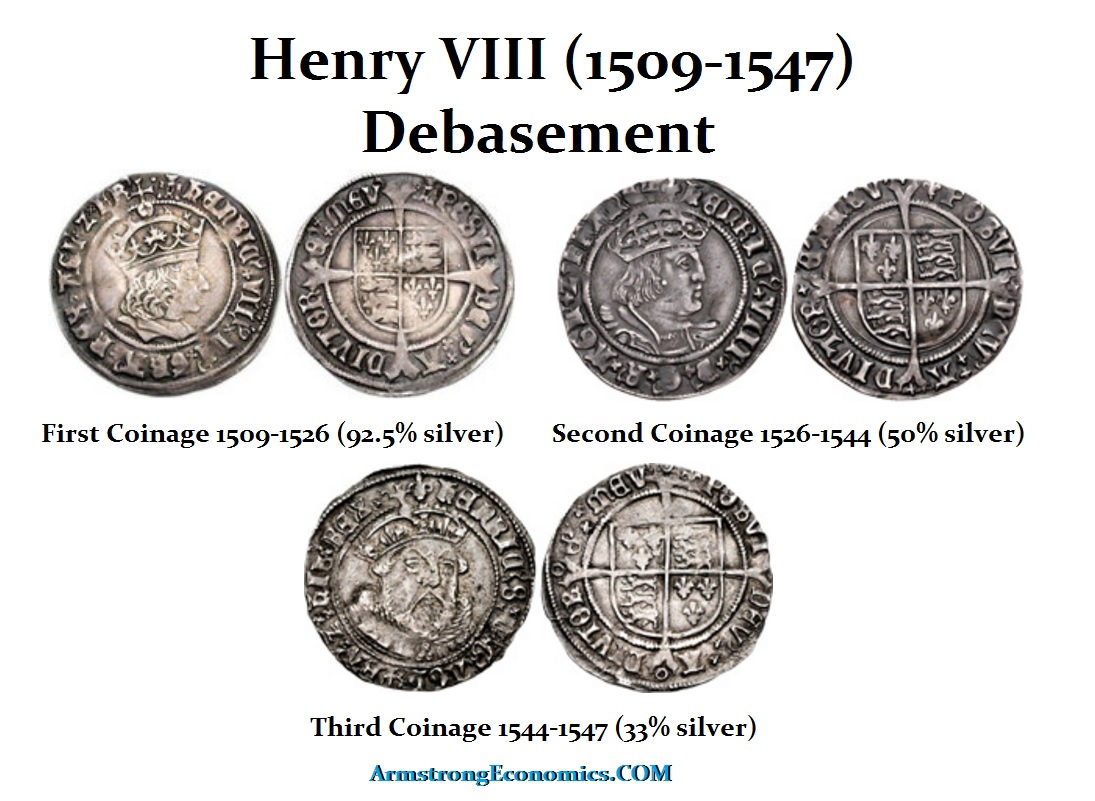
ANSWER: I fully understand that the prevailing belief concerning economic theory is that an increase in money supply will cause inflation. There is absolutely NO EMPIRICAL evidence to support that theory. Much of this concept has been distorted by the ideas of Sir Thomas Gresham (1518-1579) who is famous for his Gresham’s Law that bad money drives out good. He was more than just an early observer of finance. Gresham was England’s agent in the Low Countries where he negotiated loans with the bankers on behalf of England. The repayment of their sovereign loans and interest owed by England caused exchange fluctuations and markets began to trade showing the swings in confidence in the various sovereign debts.

Gresham attempted to smooth out the market fluctuations without success. He advocated using the power of government to affect these fluctuations suggesting to create an exchange-equalization account to control the value of the currency. This is not dissimilar to the 1985 attempt to manipulate currency by the formation of the Group of Five nations (G-5) that was the brainchild of James Baker advisor to President Ronald Reagan. Just as the free markets caused the 1987 Crash due to the manipulation of currency by the G-5, here also we find that the free markets forced reform of the currency in England and Spain, and this would be a bitter lesson that would result in strikingly distinct monetary policies in Britain compared to Continental Europe.

Exchange rates among nations were entirely based upon the metal content of the coinage. Both Spain and England experimented with debasing the coinage in an effort to increase their money supply. Therefore, Gresham’s observations were based entirely upon foreign exchange predicated upon the metal content of the coinage rather than full faith and credit in a government. As a result, the theory of inflation that dominates modern thinking remains tied to the old world monetary system BEFORE based upon CURRENCY BASED compared to the modern system which is a CREDIT BASED system dependent upon the full faith and trust of a political government rather than a monetary bases system.

This is why our modern ideas of Quantitative Easing have FAILED to produce inflation for the monetary system today is CREDIT BASED rather than CURRENCY BASED. Exchange rates are no longer dependent upon metal content, but instead, they are based upon the perception of the government. This is why the dollar will fluctuate based upon trade news etc. When you look at the actual amount of money impacted even by a trade war, it is negligible. The entire price action is based upon anticipation (confidence) rather than an actual monetary system outcome.

Great Alignment – Metals – Shares – Tangible Assets


QUESTION: Hi Mr. Armstrong, I notice that the gold market and the Dow Jones they both had a high in January and since then they have been treading water, are this markets getting in sync or is just a coincidence. Also when it come to the markets you have explain that we will always see the “if then” situation, my question is a what point do we know that this is the right time to pull trigger on buying or selling?

Thank you

NMP

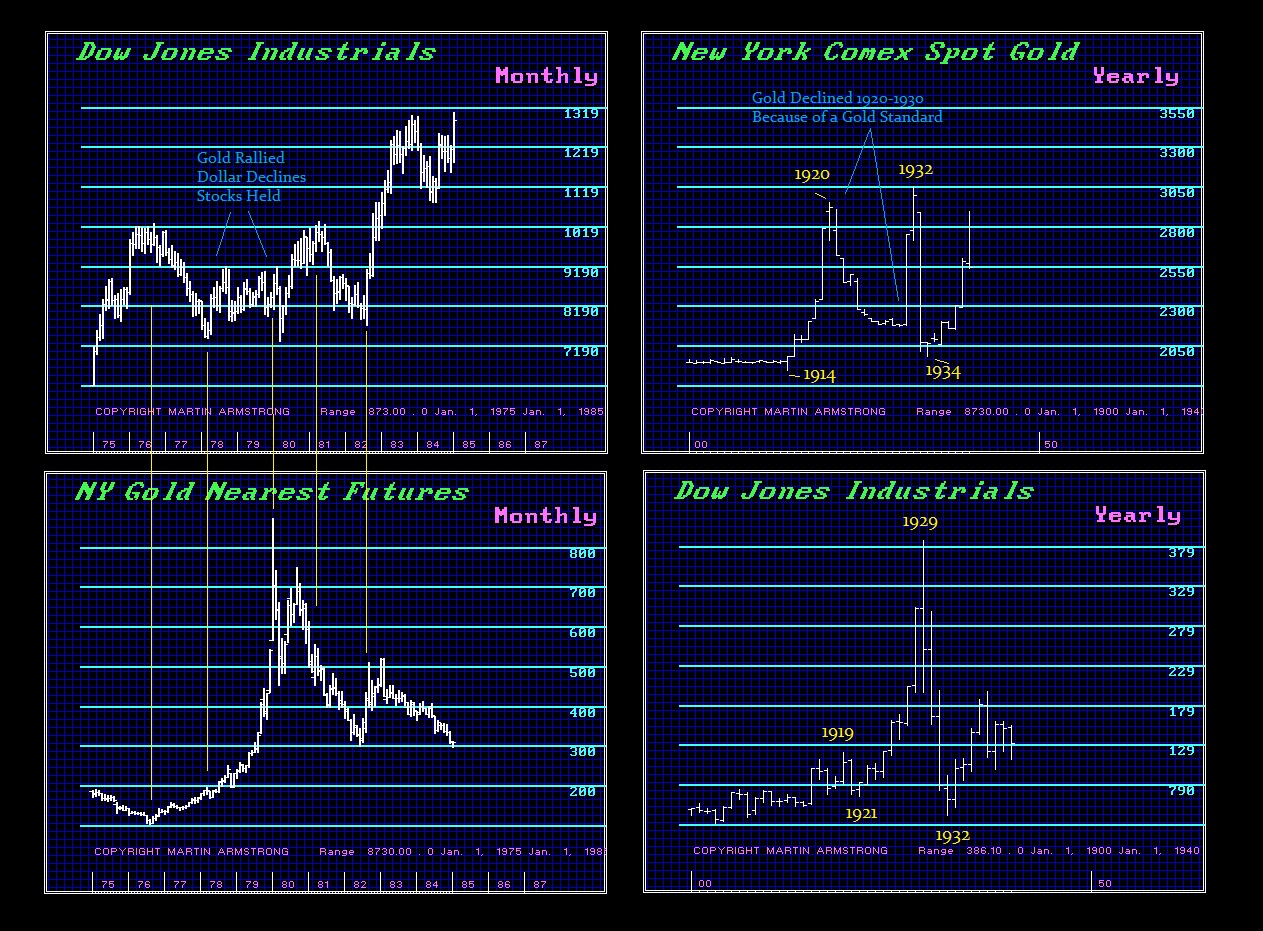
ANSWER: We are not there just yet. However, we are starting the Great Alignment and this is what needs to take place as we move into the future. The 99% of analysis out there on gold is just so wrong it is laughable. They typically call the dollar to collapse and gold will soar. They look at historical charts without understanding the economics behind them. Yes, you see gold rally between 1930 and 1932 so they forecast gold will rally with the collapse of the dollar and the stock market. However, 1931 was the Sovereign Debt Crisis where most of the world permanently defaulted on their National Debts. The USA did not. So because we were on a gold standard, if the price of gold rose, so did the dollar. OMG! That must be heresy!

When you are on a gold standard, then tangible assets drop in terms of currency so yes gold rises. But when you are NOT on a gold standard, then gold is just a tangible asset that declines against the currency along with everything else. Most of these people are clueless about understanding the monetary system

During the rally for gold into 1980 when the dollar was declining in the floating exchange rate system, the stock market did not crash – it consolidated. These people spin out total sophistry that sounds great, cause so many people to lose their savings, and they never repent or try to understand why they have been wrong every since 1980

The Great Alignment will be when all tangible assets rise against a declining purchasing power of the currencies which today are NOT linked to gold.

We are getting closer. Do not rush in where only fools are found.

Central Banks are not All the Same


QUESTION: Hi Marty,

I am curious if you have a take on the BOJ. They own almost all of the JJB market and have stated explicitly they will buy it all. Now they own 77% of the Japanese ETF market.

Is it folly to suggest that the US gov’t or FED is not doing the exact thing?

Case in point, I know no one in managed money that is stupid. So, this morning why were stocks panic bid in the face of horrid payrolls and an all out bloodbath with China, especially considering that valuations are extreme. That was not delta hedging.

Have equity markets become weaponized for economic policy?

ANSWER: The Fed is nothing like the Bank of Japan (BoJ) or even the ECB. In the case of Japan, their debt has always been primarily held domestically. You could not issue even a private note in Japanese yen without prior approval of the Ministry of Finance. Japan has maintained a controlled economy. The ECB has followed that direction. It is illegal to short Eurozone bonds. In both cases, they believe if they control the financial markets they can prevent a crash and this support the political agenda.

The Fed is NOT reinvesting its bond purchases. When they mature, the balance sheet will be reduced. Always people bash the Fed and attribute what the BoJ and ECB do assuming the same will take place at the Fed. This is just not true.

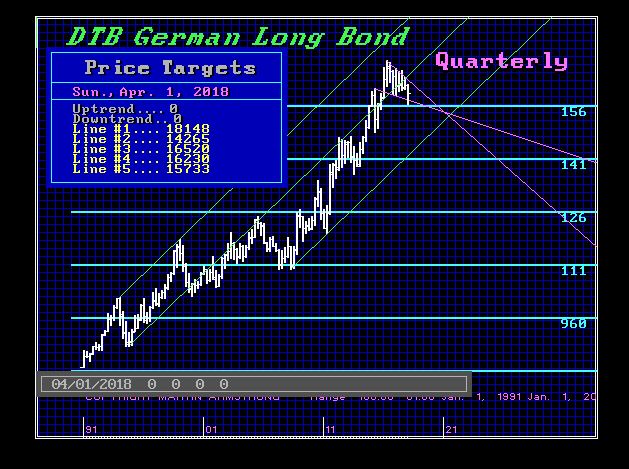
We just obtained the lowest quarterly closing on German bonds since the major high of June 2016.

Understanding the Markets


QUESTION: Mr. Armstrong; On your January 29 blog, you wrote “In the US Share Market, this is now a turning point we have reached. I have warned for months that exceeding the November high would lead to a January high. Now, the failure of February to make new highs warns of a March low. The support for a correction now lies at the 25637 level on a weekly closing basis (this is not a reversal). We will elaborate today on the Private Blog.” You warned that March could produce a high and keep the cycle inversion process in play. That proved correct since the Nasdaq made new highs and the Dow a reaction high. So that led to the drop into the first week of April. For the actual buy and sell signals, we should only do so on reversals and turning points. The January high you did with the turning point I assume and then the reversals kicked in. The buying opportunity I also assume we must wait for the turning point as was the case for the high. Correct?

PF

ANSWER: Correct. I have made it perfectly clear that NORMALLY one turning point is followed by the OPPOSITE event on the next. So a January high would traditionally produce a March low. However, I pointed out that we have been in a Cycle Inversion. September 2017, November 2017, and January 2018 followed by March 2018 were all the monthly sequential turning points. Normally, each would produce the opposite. That was not the case and each produced a high. This is the Cycle Inversion and it is also warning that we are still consolidating. March produced a high in the Nasdaq and only a reaction high in the Dow. This further warned that there was a shift from an international focus to domestic (Dow v Nasdaq). March also produced only a reactionary high the week of 03/12.

Far too many people expect a guru and want to act based solely upon a comment. Buy this or sell that and that person should always be correct. That is the dream of a fool for nobody can do that. They will ALWAYS quickly lose their money and then blame their pretend guru. That is a sure-fire way to go broke and if they are trying to trade short-term on such comments, they must be insane.

I have stated at the outset of this year that 2018 was a Panic Cycle. That means you test both directions! I further warned that we would see consolidation dominate the first part of 2018 so there was no reason to rush back in until we reach (1) turning point and (2) reversals. The closing of the first quarter was neutral in many markets once again showing that we are still in this consolidation mode. Buy or sell signals are on REVERSALS – never comments.

If you are trying to be a short-term trader and you think that will lower your risk, you are dead wrong. The best performance is to go with the trend and act ONLY on Weekly to Monthly signals – not commentary. January was a critical turning point. All our models were converging at that time so it was ripe for the correction which is why I stated that and was already getting criticism by January 31st, 2018.
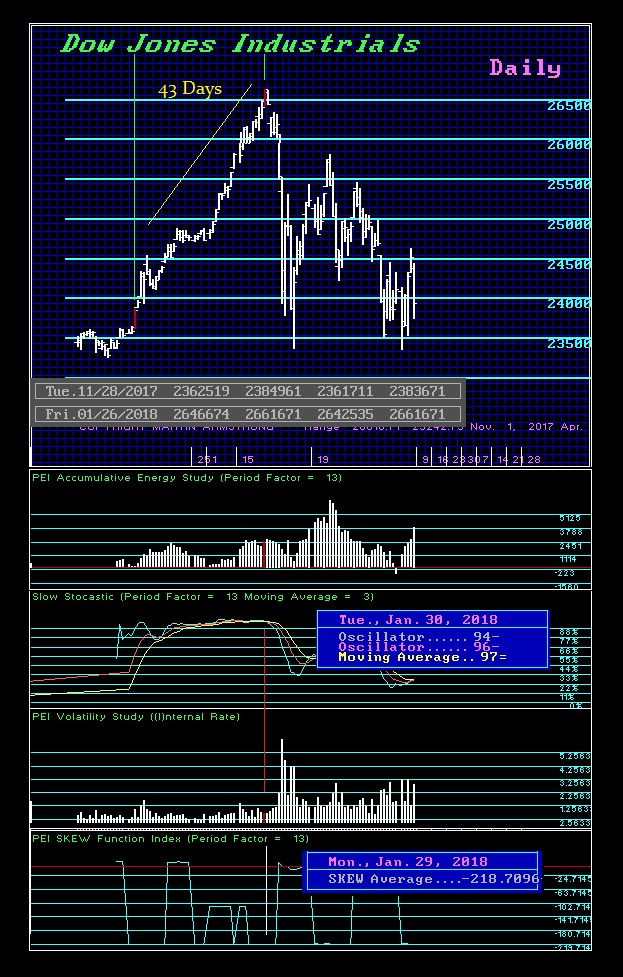
The high was Friday January 26th. Every model we had was starting to scream DOWN! The Cycle Inversion was confirmed on the first day of December. I warned if we exceeded the November high, we would rally into January. The high came exactly 43 days (8.6 /2) from the breakout. That frequency does work in the share market except at extreme turning points. That lined up perfectly. The oscillators, always a lagging indicator, turned down on the 30th. Our Skew Model bottomed one day from the high on the 29th. Our Energy model peaked on the day, The subsequent sharp rally into March confirmed this was a reaction high.

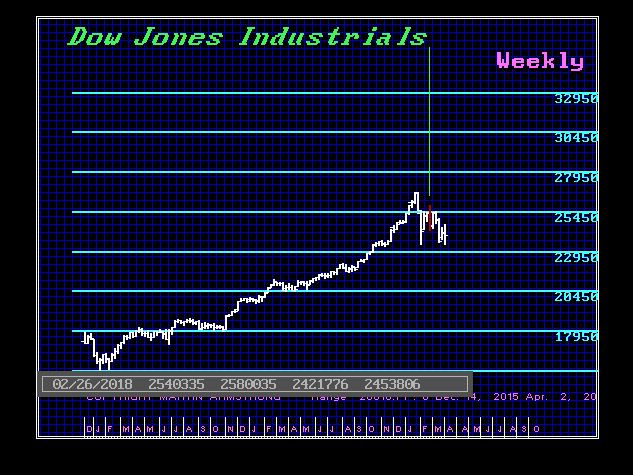
Here is the Array on the Dow. There were three weeks targeted 02/12, 02/26, and 03/12 followed by 04/02. The week of 02/12 was a Directional Change and that sent the market back up leaving the February low intact. The next target was 02/26 which produced the reaction high in the Dow. The next target 03/12 produced the high in the Nasdaq.  Then the next target 04/02 produced the retest of the Feb low. Once again, we can see how the markets were interacting and producing the shift from international to domestic.

Clearly, commentary is just an attempt to expalin what is unfolding. It is NEVER for trading purposes. We trade based upon the Reversals and Toming exclusively.


Companies Stop Buy-Backs Causing January Crash?


QUESTION: Mr. Armstrong; The analysis being punted around is that the crash from January was caused because companies stopped buying back their own shares. The analysis claims that $4 trillion in buy-backs have taken place since 2009 and they stopped because of regs and that was the cause of the crash. It seems to me that this is bogus for the Nasdaq rallied into March and it was the Dow that led the whole way. This analysis appears to be fake news for it is as you say, trying to reduce everything to a single cause. Would you agree?

HC

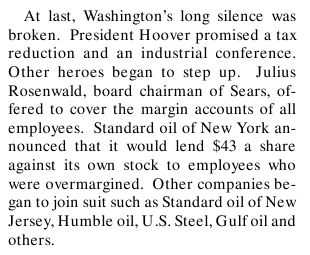
ANSWER: Absolutely. Yes, Bloomberg wrote about that and put out the research of Goldman Sachs. During the Great Depression, companies tried to support the market and were buying back their shares aggressively during the crash. It not only failed to support the market, it undermined the companies themselves and many failed because they could not raise money nor borrow money as the Great Depression continued. This fundamental sounds logical, but it is just nonsense. Not only did companies rush to buy their own shares back as the 1929 Crash unfolded, they even went as far as to offer loans on their own shares to workers. I wrote about that in the Greatest Bull Market:

/id. page 231

None of all this support had any impact in stopping the Crash. As I have stated many times, everything is connected. If the entire market is crashing, a company trying to buy back its own shares to support its share price has NEVER worked even once in reversing the trend. Bloomberg’s report is indeed bogus. It is simply trying to report ah – this was the cause! It never works that way