The Yield Curve


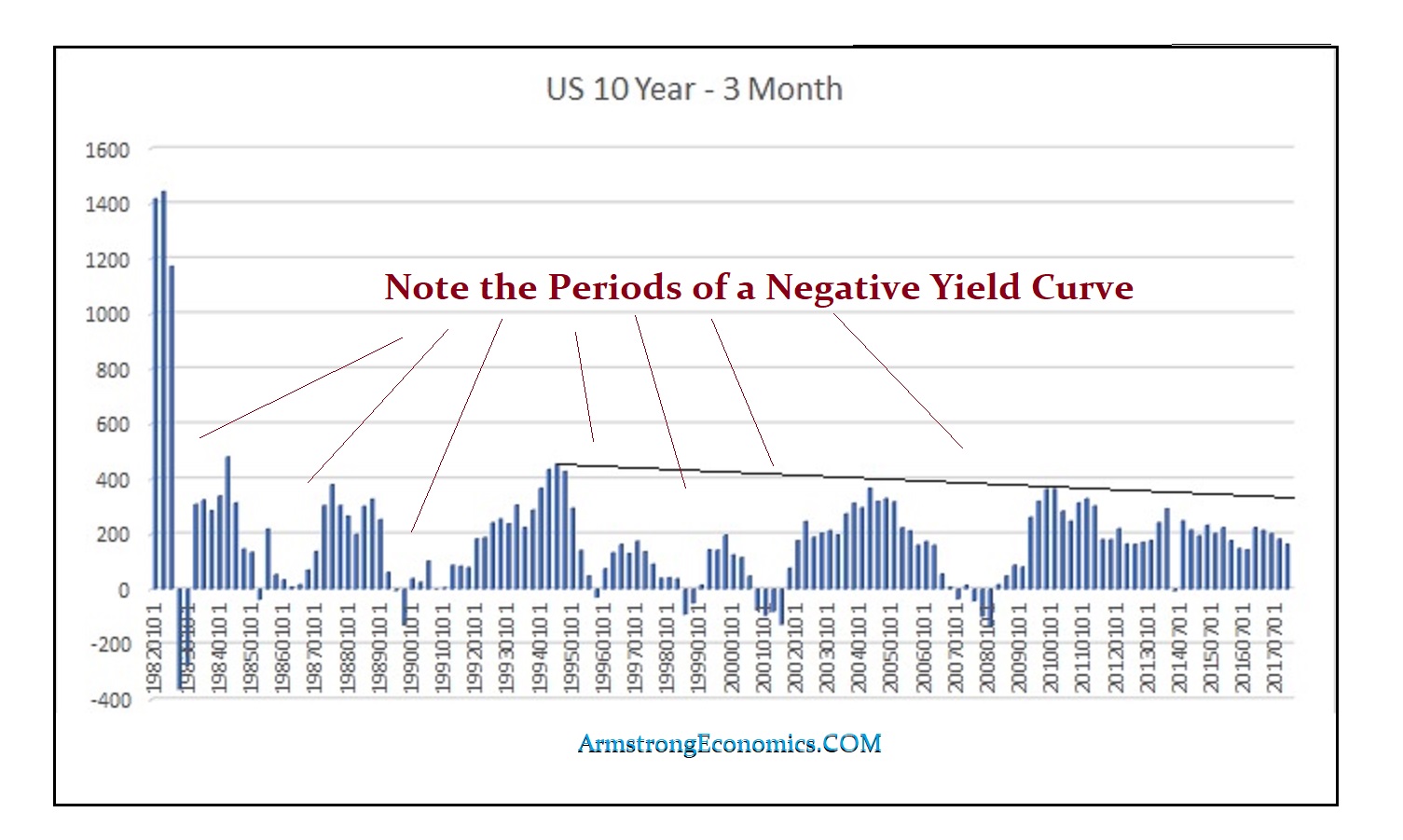
QUESTION: AT the Institutional WEC session in 2016, you forecast that rates would rise but that the long-end would produce a positive yield for the next two years at least. Are we coming to an end of that forecast?

ANSWER: The new Institutional service is being expanded currently. Our hedging model positions have been added to the commentary. However, the consensus out there is that while the Fed is expected to raise rates 3 more times this year and 2 to 3 times next year, our models are projecting we are moving back toward a negative yield curve.

The last key high came at 3.65% premium for the 10-year during the first quarter 2010. The Quarterly Bearish Reversal rested at 2.61% and the next one presented a huge gap down to 0.87%. That first Quarterly Bearish was elected by the 3rd quarter 2010. The spread went negative in the 4th quarter 2013.

We will be adding the yield curve to the Institutional Levels. Those who have bought the long-term assuming that the short-term rate hikes will be modest for some time making a yield of about 2.65% attractive, may discover that the yield curve just may swing into a negative position again rather uncontrollably rather than intentionally.

We will be addressing this in more depth on the Institutional Blog.


On both the Professional Report for Individuals and for the Institutional Reports, Socrates writes a separate report for each time level in addition to a consolidated overview.


SAMPLE: INSTITUTIONAL REPORT FOR THE MONTHLY DOW JONES

This is not the complete report. Timing has been omitted in this version.


THE SOCRATES INSTITUTIONAL MONTHLY COMMENTARY, DOW JONES INDUSTRIALS AS OF THE CLOSE OF  Fri. Jan. 19, 2018: Using our Monthly Hedging Model based on the Reversal System exclusively, we are currently long since  Fri. Jan.  1, 2016 when we reversed our hedge position in this market.

The last Reversal elected was a Monthly Bullish during April 2017. From a speculative perspective, basis the Reversal System, we are currently hypothetically long 14 positions at this particular moment on the Monthly level. Closing support lies at 2245613. Only a daily closing below this level will signal a pause in the Monthly trend. This market is in a Breakout mode but is easing up right now yet it is still trading up year over year about 23.6%.

This market has been making new highs which has been a series of successive advances. The last 3 highs have been progressively making higher highs implying we have a bullish run in motion for the past 25 months. The Channel Technical Resistance stands at 2515199 for the next session. A closing above that will signal a breakout to the upside once again.

Regarding the near-term level, the market has closed up 21.2% from the last cycle low established April 2017, which has been only a 8-month rally as of last year. Nonetheless, turning to the long-term perspective, the market has still closed on the Monthly level up 60.8% from the strategic low established August 2015, which has been a 28-month rally from last year.

Our models for this month’s open on the monthly level was 2563170 which we opened below coming in at 2480935. We needed an opening print above that number to signal this was still in a strong breakout position. We have exceeded that number so far during the trading this month and we are still above it on the latest closing basis suggesting the market is still rather strong. The projected extreme target breakout resistance for this month stands at 2650939.
Critical support still underlies this market at 2170962 and a break of that level on a monthly closing basis would warn of a decline ahead becomes possible. Nevertheless, the market is trading above last month’s high showing some strength. On a broader perspective, this market remains in an uptrend posture on all our indicators looking at the monthly level. We see here the trend has been moving up for the past 28 months. The last monthly level low was 1537033, which formed during August 2015, and only a break of that high will see the market move high still. The last high on the monthly level was 2487607, which was created during December 2017, and has now been exceeded in the recent rally.

Currently, we have not elected any Monthly Bearish Reversals from this new high. The immediate Monthly Bearish Reversal to watch lies at 2170962. A closing beneath this level will signal a temporary high is in place. Additionally, a closing beneath 2392190 would also imply a pause, technically speaking, in the uptrend for now. Technical projected resistance for tomorrow stands at 2543813. Only exceeding that level would imply a runaway breakout to the upside.

Looking at our Pivot Points, the market is trading above one indicating pivot implying that this market is in a positive position with support at 2442269 and resistance at 2563170 and 2593155 this month.

ENERGY MODELS
Our Monthly Energy Models are still in a bullish mode given the fact that the market closed higher.

RISK
Turning to the monthly time level, we must respect that there is a 7.55% risk on the upside, where we show a clear downside risk factor at 16%. From a risk perspective, resistance on a closing basis stands at 2804252 whereas the risk on the downside begins at 2170962.


REVERSALS

The current overall tone on the Monthly level is very Bullish for right now electing four Monthly Bullish Reversals suggesting a strong trend move on this time level with the last Reversal being elected on April 2017.

The first key Monthly Bearish Reversal rests at 1601365. A bull market remains in play as long as that Reversal holds on a monthly closing basis. To confirm a mid-term change in trend to the downside, all four Monthly Bearish Reversals in this market would need to be elected meaning a monthly close beneath 2170962 is required. Our projected Bullish Reversals in this market are above beginning at 3373849. The Dow Jones Industrials is obviously in a full-blown bull market on the weekly to yearly levels of our model. Overall, the posture is quite bullish right now on the long-term perspective. Long-Term trend changes only when we elect monthly sell signals.
Elizabeth I Two-Tier Monetary System


QUESTION: You have mentioned that the US maintained a two-tier monetary system with trade dollars during the 19th century. Did Britain ever do the same or was the fact that Britain was the financial capital so they were exempt?

Thank you for the help and education.

DL

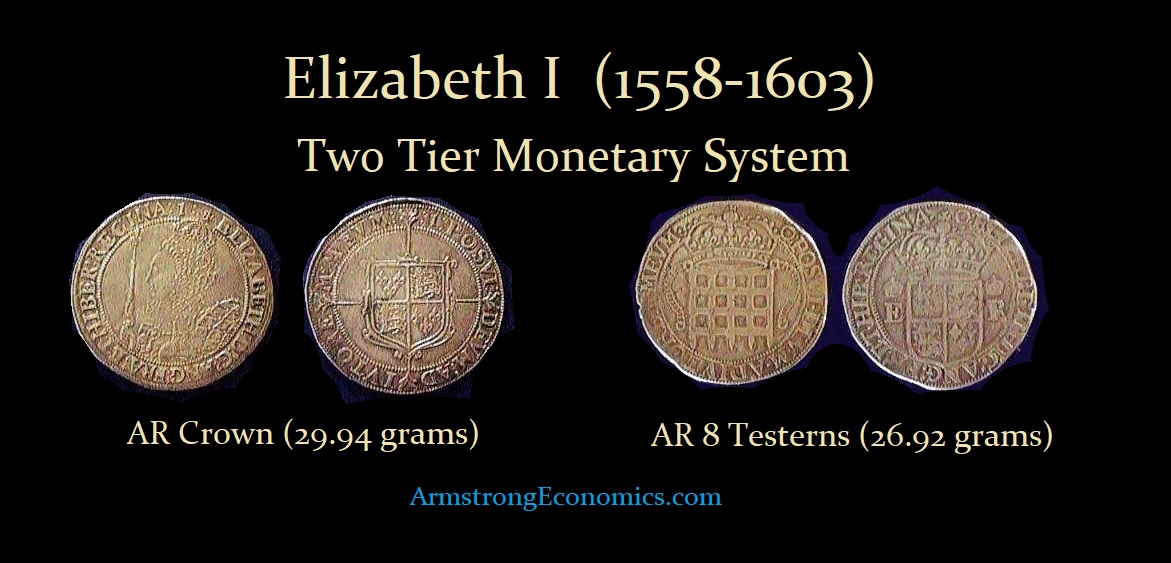
ANSWER: When Elizabeth I (1558-1603) was on the throne, Spain was the financial capital. Therefore, we do see an attempt to employ a two-tier monetary system in England at that time. Elizabeth issued four denominations of Eight, Four, Two and One silver Testern as they were known. They were also called “Portcullis Money”, This was an attempt at producing a trade coinage sponsored by the newly formed East India Company to be used in overseas trade principally in the Far East. However, the competition against Spain and the Spanish Eight Reales (dollars) and its fractions was far too great. Eventually, the coinage did not succeed and thus the surviving coins are a rarity today. The surviving coins are most likely those that were retained in London as a novelty.

The abbreviated Latin legends translate as on the obverse “Elizabeth by the Grace of God, Queen of England France and Ireland; and on the reverse “I have made God my Helper” a Psalm from the Bible.

Vertical Market are the Most Difficult to Trade Even With 30 Years Experience


COMMENT: Dear Mr. Armstrong,
I want to thank you for the great advice some months back, “Do not short this market”, I took your advice. I day trade, and other experienced Traders, with over 30 years experience, recommended I shorting the DOW, Swing Trades, I did not short the markets. Their positions were eventually stopped out with big losses.

Thanks again

A. (from London)

REPLY: Keep in mind that even 30 years of trading experience does not stack up to the type of market we are involved in. VERTICAL MARKETS are different animals altogether. We are in the DENIAL STAGE and that means the market presses higher without a major bullish attitude. What will eventually happen is the more the Dow presses higher, we will reach that major line and when crossed, people will just throw in the towel and then say it will NEVER stop.

I restate that position once again – DO NOT SHORT THIS MARKET. You Must Wait for Socrates to give the signal. It picked the high in Bitcoin. It can do things even with the historical data because it is forecasting the entire world and everything has its place.

Can We Stop the Government Borrowing & Just Print Without Inflation?


The conservatives are going nuts about raising the debt ceiling as if this really matters. They claim: “The United States is effectively bankrupt, but that doesn’t matter to the GOP. Once evangelists of fiscal responsibility and scourges of deficit spending, Republicans today glory in spilling red ink. The national debt is now $20.6 trillion, greater than the annual GDP of about $19.5 trillion. Alas, with Republicans at the helm, deficits are set to continue racing upwards, apparently without end.”

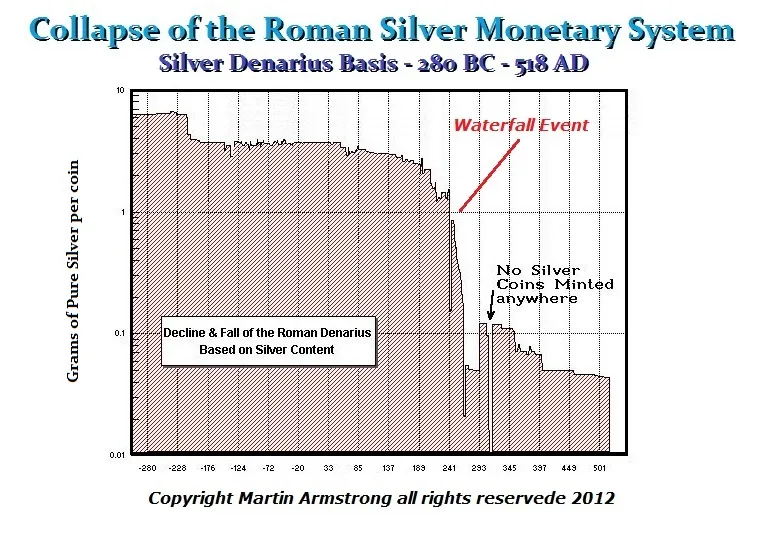
What they fail completely to grasp here is until the system is completely revamped and we adopt the way the Roman Empire was funded from 280BC to 68AD, just creating the money to fund the government instead of borrowing it, there is no hope in solving this issue. In a recession, Keynes argued borrowing can be beneficial in creating economic stimulus and shortening the recession. Governments used that statement to then perpetually borrow year after year.

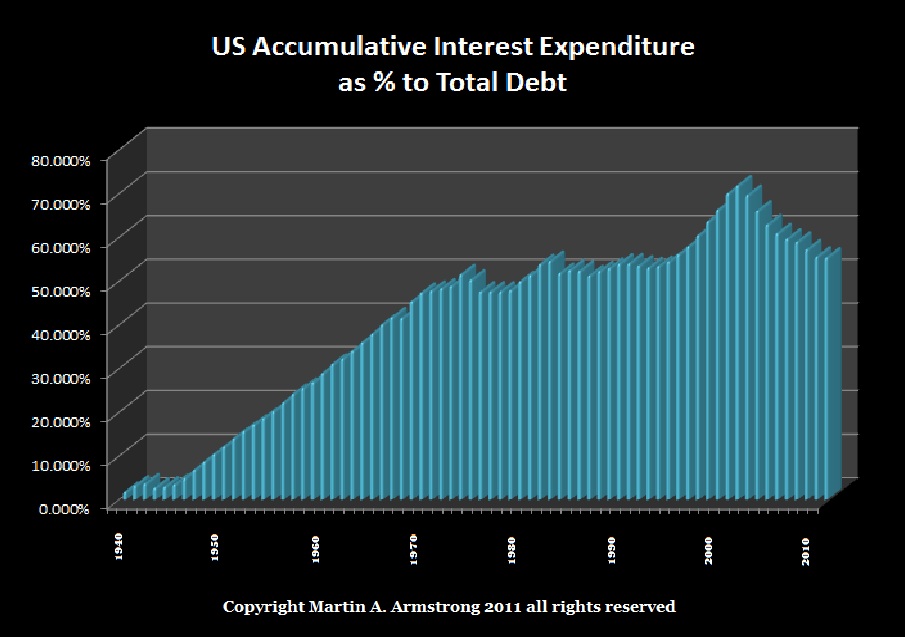
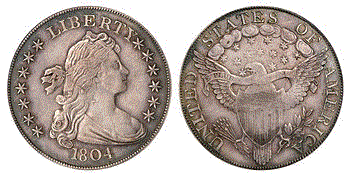
In 1940 a Cadillac sold for $1675. Currently, the low-end Cadillac is $35,000. This is almost 21 times the 1940 price level. The US national debt was $51 billion before the war and it is now $20 trillion. The debt has risen 392% compared to 20.89% for a Cadillac. The minimum wage in 1940 was 30 cents per hour. Today, the minimum wage is $10.10 per hour in 2018, which is a rise of 33.6%. However, if we look at collectibles, the famous 1804 silver dollar sold for $30,000 around 1940. In 1999, one sold for $4.14 million. Here we had an advance of 138%.

Then there was the Peter Paul Rubens which just sold for $58 million in 2016. The owners had tried to sell during the Great Depression. Nobody was interested. They then lent to a monastery where it hung in a hallway for 20 years. Other than that exception, nothing has advanced in proportion to the national debt. Therefore, the idea that increasing the money supply will automatically result in proportional inflation cannot be proven by any means of a statistical study. It is a nice theory, but it has never been proven to work. Hence, 10 years nearly of ECM quantitative easing failed to reverse the deflation.

If we had simply created the money instead of borrowing it, the national debt would be less than 50% of what it is today. The government borrowing competes with the private sector reducing economic growth and creating a bid for money that raises interest rates for the average person. Inflation did not go crazy in Rome until about 250AD onward.

The theory that it is less inflationary to borrow than create meant something when government debt was not collateral for loans. You could not borrow against TBills or bonds before 1971. Ever since borrowing is more inflationary because we then have to pay interest to keep it rolling when we have no intention of paying it off. The entire system will go crazy and as interest rates rise, the debt will explode.

Debt today is simply money that pays interest.

Alaska Hit by 7.9 Earthquake – The Start of a more Active Period lies Ahead


A 7.9 earthquake just struck off the coast of Alaska. There have been 12 major earthquakes greater than 7.0 since 1906. The 1964 earthquake was one of the biggest ever in North America measuring 9.2. The real significance of this event today is the fact that the Ring of Fire in the Pacific has 10 volcanoes now erupting all around. This is clearly from a cyclical standpoint rising in volatility to put this in market terms.

The other significant factor is this spans the course of 112 years which is also half the cycle duration of a 224-year wave that led to the discovery of the 8.6 year Economic Confidence Model.  We seem to be following the Pi cycle in nature as well. The disturbing fact here is the activity is rising around the Pacific Rim.

We should now expect the volatility to rise. After the 1964 earthquake, 1965 became an extremely active year with 18 magnitude 7.0+ events. Two of these were above magnitude 8 and struck within 10 days of each other.

So grab on to something if you live on the edge of the Pacific Ring of Fire

Quantity Theory of Money (QTM) & Its Failure


QUESTION: I am most interested in your revisionist view of QTM. You debunk QTM frequently within broader topic discussions, but I’d love for you to address QTM by itself in a historical context. Perhaps starting with the Austrian darling, Henry Thornton, and his “An enquiry into the nature and effects of the paper credit of Great Britain” (1802).
Separately, are you aware of the work of De Grauwe/Polan’s “Is inflation always and everywhere a monetary phenomenon” published in the Scandinavian Journal of Economics (2005)? If not, the paper’s summary regarding QTM states that the correlation between money supply and prices is not proportional and predisposes a stable velocity of money. The authors find a stronger QTM correlation and inflation in countries with high inflation extant. In lower inflation countries, such as the U.S., the correlation is less proportional.
When I was an economics student in the 70s we were taught two holy grails of econ: Keynesianism and Monetarism. Since you debunk both theories, I’d like to hear why.
Thanks,

TGM

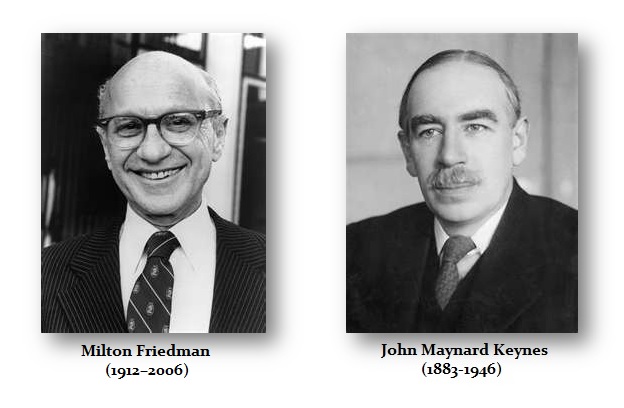
ANSWER: I go into this in great detail in the How to Trade a Vertical Market. This is not a topic for a blog post lacking the space. To shorten the response as much as possible, both Friedman and Keynes were based upon a system that was purely in theory. The government only took part of Keynes’ suggestion to increase spending even into a deficit to stimulate demand. He also never advocated perpetual spending indefinitely. Keynes also advocated lowering taxes to stimulate. Few Presidents have ever done that: JFK, Reagan, and now Trump is attempting it.

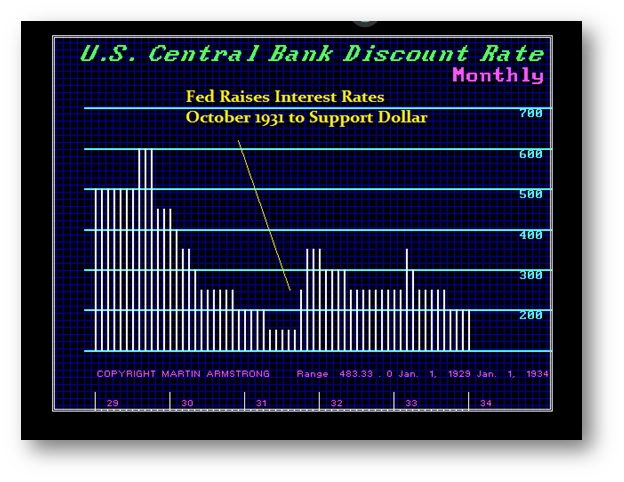
Milton argued that the Fed was following austerity and raised rates to support the dollar during the 1931 Sovereign Debt Crisis. As Friedman and Schwarz wrote, “The Federal Reserve System reacted vigorously and promptly to the external drain. . . . On October 9 [1931], the Reserve Bank of New York raised its rediscount rate to 2-1/2 per cent, and on October 16, to 3-1/2 per cent–the sharpest rise within so brief a period in the whole history of the System, before or since (p. 317).”

Milton’s premise was that the Fed was doing what Germany is doing today. They were trying to support the currency to retain confidence in the bond market rather than stimulating the economy. In theory, Milton makes sense that one should expect higher inflation if the money supply were expanded instead of contracted. There is a lot of assumptions in that statement that simply do not hold up with time.

It is by no means a one-dimensional economy. This is global and we are all connected. The overlooked aspect here is the size of government has drastically changed from the time Keynes lived and Milton published his book. The size of government has grown to consume nearly 40% of GDP on average. It is no longer the incidental observer. It can no longer raise and lower interest rates to control demand when the government is the lion share of that demand and competes against the private sector. Volcker raised interest rates into 1981 to fight inflation and succeeded in costing the government vast amounts of interest thereafter. Raising rates to curb demand may stop the private sector, but it has no influence upon government. You can not stop a Ponzi Scheme once you begin.

In Europe, increasing the money supply has had ZERO inflationary impact and has not stimulated the economy in the least. There is no one-to-one relationship. It is far more complex and it becomes a balancing act. They have been sterilizing any impact of increasing the money supply by raising taxes. The monetary increase is only coming from buying government bonds. It is not supporting the private sector but instead, it has subsidized the government sector.


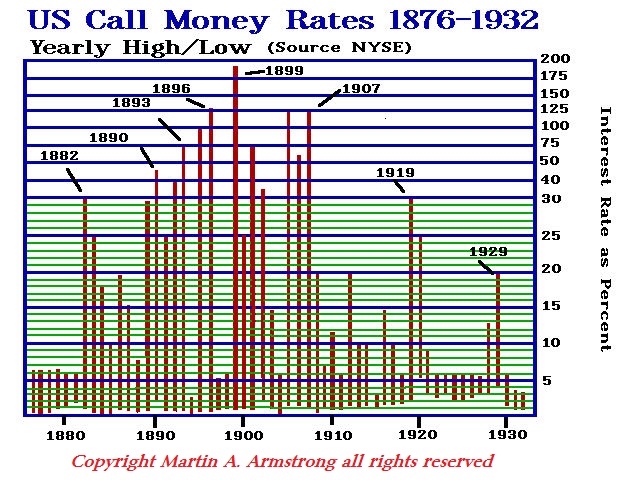
Even our studies of interest rates have revealed the same outcome.  There is no one-to-one relationship between raising interest rates and stopping inflation or asset inflation. The stock market has NEVER peaked with the same level of interest rates twice in history. It boils down to the simple realization that people respond to the NET affect and not to theory. If you believed t6he stock market will double in one year, you will pay 20% interest. If you do not think the stock market will rally 5%, you will not pay 3%.

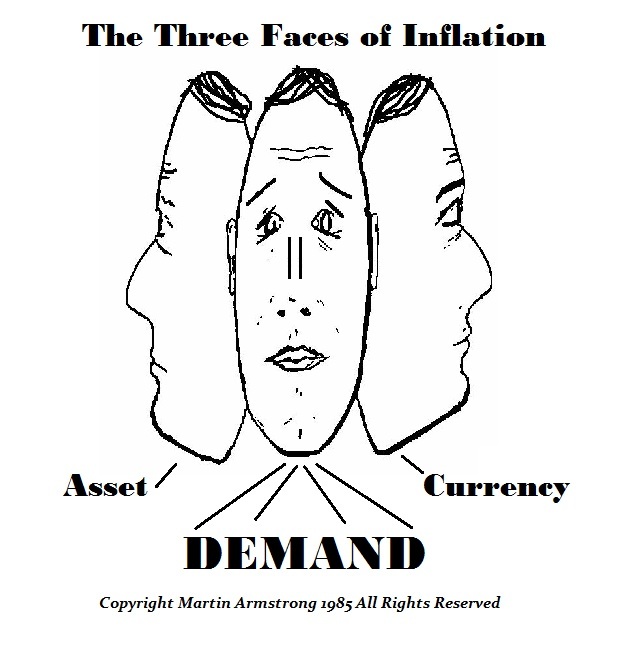
I have identified inflation unfolds from three primary sources. First, there can be asset inflation that is not a general inflation experience through the entire economy. Right down we see the Dow Jones has risen from the 6000 level in 2009 to 23000. That has not been matched by inflation is prices or wages.

Then there is the currency inflation. The decline in a currency will result in a corresponding rise in prices of imported goods. This was what we saw with OPEC during the 1970s and the rise in the dollar from 1980 into 1985 all-time high correspondingly produce deflation.

Then we have demand inflation. This is taking place right now in butter in Europe as prices are up 300% because of shortages.

None of these three types of inflation are created by monetary policy and they cannot be altered by trying to artificially control demand by government. The butter rally in Europe is because they maintain high quotas until 2015 when they were reformed since it produced a glut. When removed, prices fell and production collapsed. Not there is a shortage and prices have soared. This is made worse by government interference. We can see demand rise in anything caused by a shortage in that product and again this is not monetary driven.


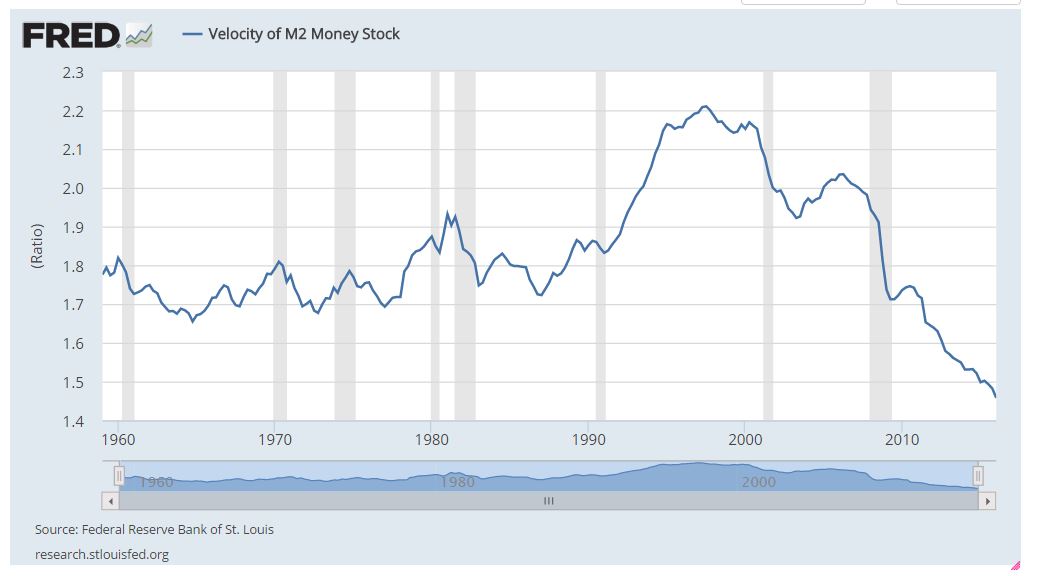
Money TheoryIt comes down to a complex formula driven by CONFIDENCE. People are hoarding cash even though the quantity has increased in theory so the velocity of money has been declining. The higher the tax rate, the lower the economic growth as people hoard money (save) and that produces the decline in the velocity of money.
Lowering interest rates DOES NOTHING to stimulate the economy when the banks do not lend anyway and would prefer to park money at the Fed in excess reserves which are sterilizing and the idea of quantitative easing.

If the QTM theory worked, then the central banks’ stimulation QE should have worked. It failed. There is a lot more to this than a simple one-to-one relationship.


In the How to Trade a Vertical Market, I have gone into ancient examples as well. I have shown that the QTM did not hold up even in ancient times when there was no central bank. It is far more complex a subject for just a simple blog post.

Refugee Migration Will Keep Wages Suppressed in Europe


QUESTION: Mr. Armstrong; Here in Germany, one obvious consequence of the refugee migration has been that wages are declining for low-end jobs. I believe you had said that would be a consequence of the refugee crisis. Do you see this spreading throughout Europe?

KS

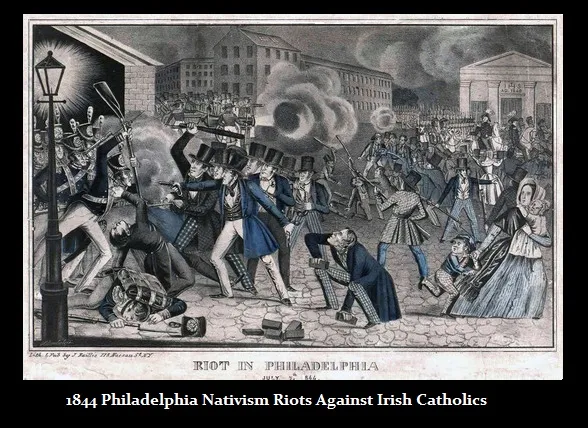
ANSWER: It is only common sense that if you increase the labor force in the low-end unskilled area, wages must decline. Every study that has ever been conducted on this issue has shown that is the logical consequence. This is indeed what caused the riots in Philadelphia against the Irish. Wages declines in the midst of a depression. Yes this trend will spread throughout the EU.

Do Commitments of Traders & Inventories Really Matter?


QUESTION: Do you think that the Commitment of Traders and reported inventories are relevant to gauge market performance?

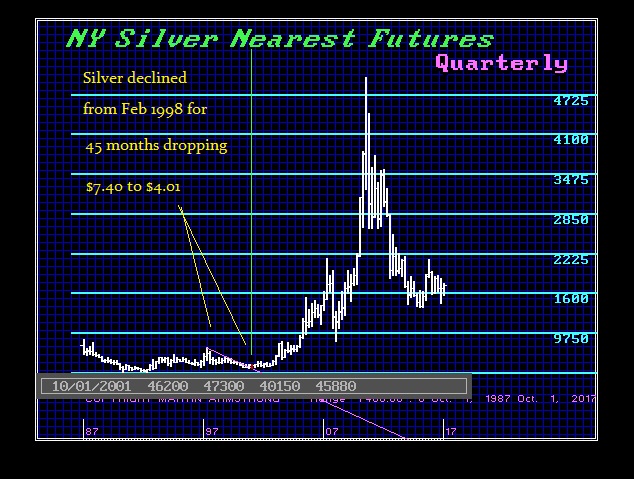
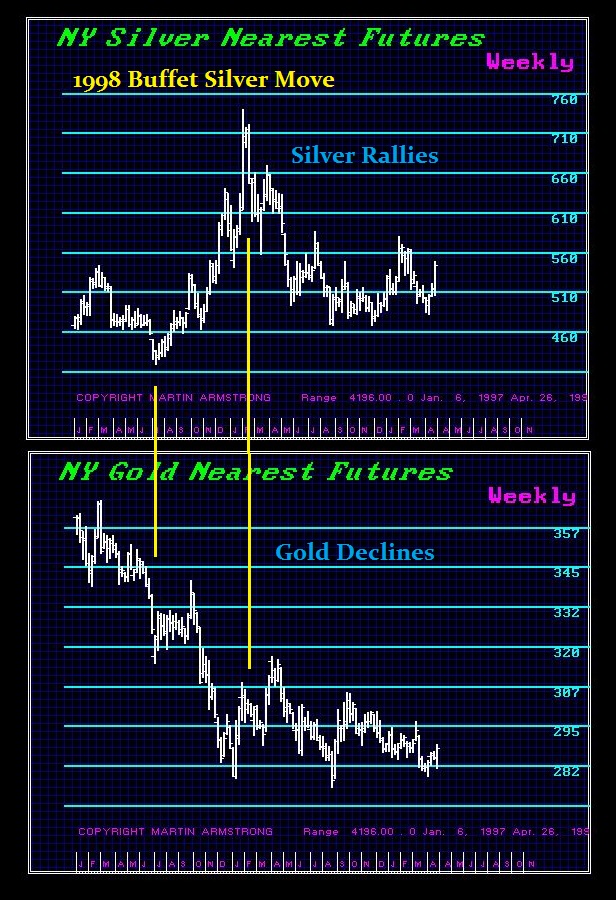
ANSWER: The oldest game in town is manipulating inventories. Commodities can be stored at many places, but only selected facilities are on the reporting list. During the famous Buffet Silver scandal of 1997-1998, to justify taking silver up in price they had to make the inventories appear to decline. The easy way to do that was simple. Buffet bought the silver but in the London market – not COMEX. Thus, the silver was moved from New York to London and then everyone touted silver was in short supply as if it had been consumed like wheat.

Phibro had one of their paid analysts to call the Wall Street Journal to try to stop me from warning clients that silver was being manipulated. Their mistake was getting mainstream media involved. Once the Wall Street Journal reported I said silver was being manipulated, the CFTC had to call me. I can write on this blog whatever. As long as it does not appear in the mainstream press government can ignore it.

The CFTC called me and asked me where the “manipulation” was taking place. I told them it was out of their jurisdiction in London. They said they could make a call and I said that was what they had to do. The indeed called the Bank of England and all the silver dealers were ordered to appear in the morning at the Bank of England. Buffet would be found out and had to issue a public statement that he had amassed 130 million ounces of silver or about 25% of the world supply. He denied manipulating the market and announced that the company had taken delivery on 87.5 million ounces of silver, the remaining 42 million was on “call for delivery at varied dates until March 6, 1998.” The release went on to say that the he “is willing to defer delivery for a reasonable period upon payment of a modest fee.”

The press backed Buffet. Even Baron’s penned the “Silver Fox” concluding: “After that, silver prices will march on. For a while at least, Buffett’s play will continue to look golden.”

Of course, that was not the case even with buying 25% of the world supply.


Like the Hunt Brothers, with Buffet taking 25% of the world supply, he too could not force a bull market. This is telltale signs of a false rally which is indicative of manipulation. So commitment of traders and inventories are by no means fundamentals to hang your hat on for a guaranteed trade. They are more often than not used to get the sheep to buy in. You must also look around at other markets and how everything fits. You will notice that gold was not responding in sync with silver. If it was a true bull market, gold would lead the way.

Central Bank Reserves – The Rise of the Yuan


QUESTION: Mr. Armstrong; I understand that your model shows that China will become the dominant economy post-2032. The IMF added the yuan to their SDR basket. Are central banks starting to use the yuan in reserves in a major way yet?

KD

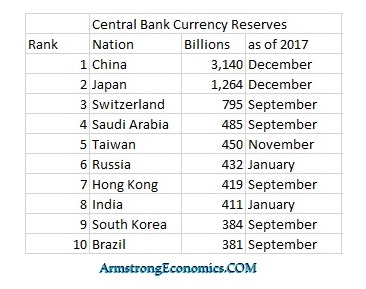
ANSWER: Yes. The ECB (European Central Bank) converted a half-billion euros to yuan. So that is not what you would call major. This is a first step in the true internationalization of the yuan. The Bundesbank has also converted a small portion of their reserves. So it is starting. Reports that China was selling off US debt are false. The U.S. debt to China is $1.2 trillion as of October 2017. That’s 19% of the $6.3 trillion in Treasury bills, notes, and bonds held by foreign countries. The rest of the $20 trillion national debt is owned by either the American people or by the U.S. government itself. What China and most governments have been doing is reducing their holding in maturity from 10 years down to 5 years or less.

Despite what everyone may believe, the ECB reserves rank only number 30 on the list among central banks with just 75.1 billion. China has the biggest reserves of all followed still by Japan. Other than Switzerland, no European country ranks in the top ten. This is a reflection of their status in world trade as well. It only follows reason that the Chinese yuan will become a wider used reserve currency as it also dominates trade.

Why the Dollar is the Mainstay of the World Economy


QUESTION: A friend told me the one pound coins I have from a trip to Britain last year were canceled. How can a government simply cancel its money?

KL

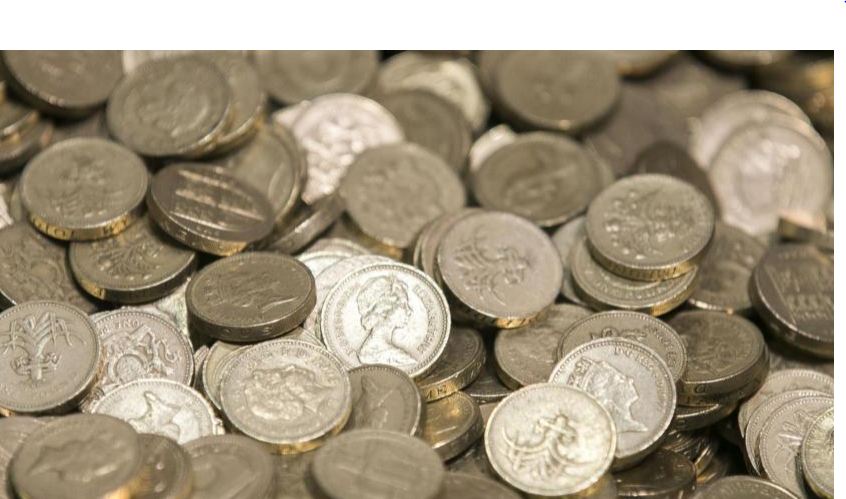
ANSWER: Oh yes. Britain canceled the one pound coins last October. They estimated that £400-450 million pounds became worthless overnight. Europeans routinely cancel their currency. This is another reason why the US dollar is the RESERVE CURRENCY in the world. While you have these people who hate the dollar all the time in the USA, outside, it is the mainstay. The dollar is used worldwide because it is trusted while other countries routinely cancel currencies. India made headlines last year cancelling their high denomination notes overnight. This may force people to pay their taxes and prevent them from hoarding cash. But it is also why the US Treasury and Board of Governor’s staffs estimate that nearly 60% of all U.S. banknotes in circulation, or close to $500 billion, is held outside the United States. There are more dollars outside the USA than inside. This is also why the USA is not pushing the electronic currency as hard as you see in Europe. There, they just want to cancel all the currency to get more taxes.


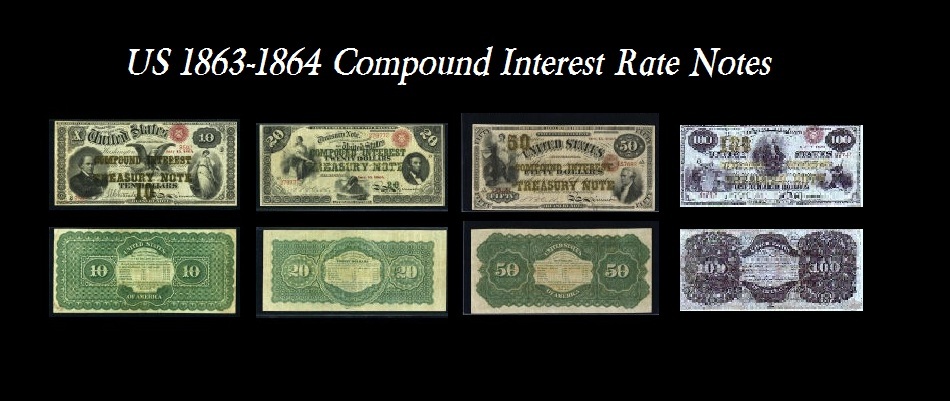
There was a 1996 article on this they called the Money Plane when everyday planes full of $100 bills were flying to Russia. They were shipping $100 million per day. This is why the dollar is the world’s RESERVE CURRENCY. The majority of it is used outside the country because everyone else cancels their currency routinely. The US currency has NEVER been canceled so the very first note from 1863 can still be spent although its value is way beyond its face. This is why the dollar is the mainstay of the world economy. It is the preferred medium of exchange in the cash world outside the USA. The dollar-haters do not step a foot outside the country and are clueless about the real role the dollar plays worldwide.