One Day After Arresting Political Opposition Voice, an Assassination Attempt on Guatemalan President Giammattei


Posted originally on the conservative tree house on July 30, 2022 | Sundance 

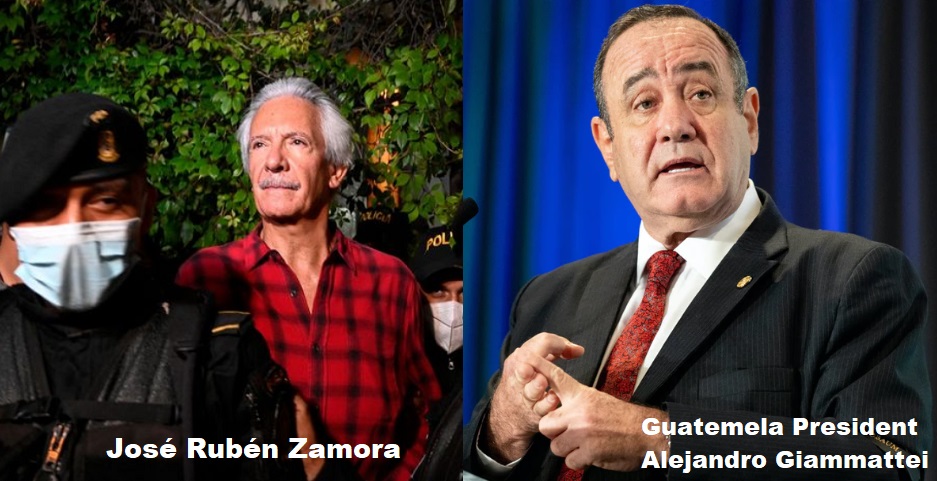
At first blush I’m inclined to see Jose Ruben Zamora as the Latin version of Jamal Khashoggi; which is to say, he glows CIA.

Yesterday in Guatemala, the government arrested a “journalist” and “businessman” named Jose Ruben Zamora who was the publisher of a national newspaper and strong opposition voice against the conservative government of President Alejandro Giammattei [WSJ link].  Today, Guatemalan President Giammattei is reported to have survived an assassination attempt, leaving people injured as a result of gunfire [details sketchy].

(Via WSJ) – […] Guatemalan police arrested José Rubén Zamora, a businessman and renowned journalist who heads the elPeriódico newspaper, at his house in a tree-lined residential neighborhood in the capital after a judge issued an arrest warrant against him, the country’s attorney general’s office said.

“This is a political persecution,” Mr. Zamora told reporters, flanked by policemen, in front of his house. A group of people gathered at the site, shouting: “You are not alone! You are not alone!”

The head of the anticorruption unit at the attorney general’s office in charge of the investigation, Rafael Curruchiche, said the arrest had nothing to do with Mr. Zamora’s work as a journalist but with his business activities.

[…] Associations of journalists, human-rights advocacy groups and some legal experts denounced Mr. Zamora’s arrest as an assault on freedom of speech and open intimidation in reprisal for the newspaper’s coverage. (read more)

I’m sorry to say this, but in this new political era – when associations of multinational media organizations and NGO type human rights groups suddenly start protesting the arrest of a journalist suspected of criminal activity, I no longer grant the benefit of doubt.

In this new era, we have passed through the looking glass.  NATO now represents the manipulative globalist bad guys in collusion with corporations; Ukrainian President Zelenskyy is a corrupt grifter and transparent tool of the U.S. State Dept and CIA; WaPo’s Jamal Khashoggi held all the optics and behaviors of a western intelligence agent; and the U.S. media have become narrative engineers who willingly feed on a constant stream of false information by intelligence assets intent on shaping American opinion.

As a result, when all the betters who tell me that J6 was a bigger threat to democracy than 9/11; the same people who call Brazilian President Jair Bolsonaro a dictator; the same people who claimed Chairman Kim Jong-Un was a mad man; are also telling me to suspect Guatemalan President Alejandro Giammattei of being a strong-armed dictator arresting the poor and virtuous journalist Jose Zamora, who uses his hair to knit sweaters for homeless kittens, my suspicious cat crawls atop the tree of cynicism and gives me the side-eye.

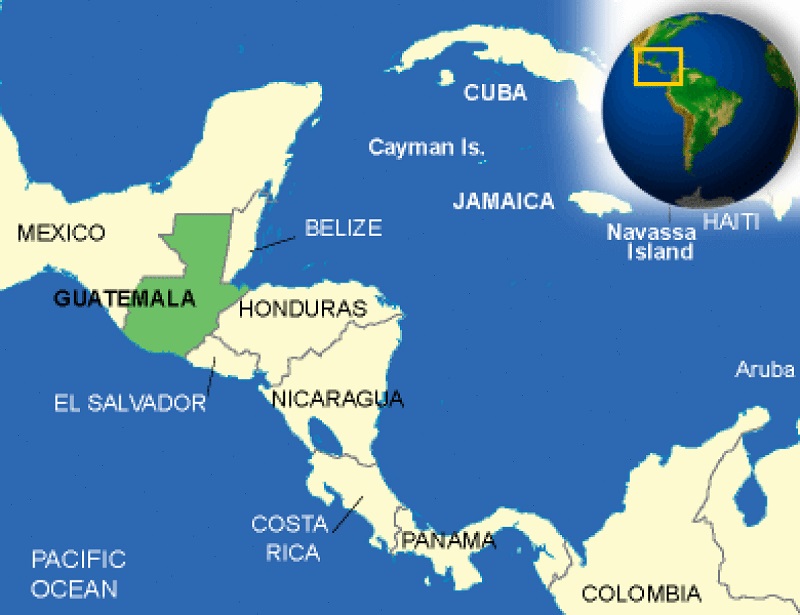
Then we overlay how much various central American nations are influenced by the United States government, and, well, we find ourselves being predisposed toward the opposite of what the narrative engineers claim.

Public skepticism is the result of what Senator Grassley recently called “institutionally corrupt” U.S. government behavior.

Not Every Developed Western Nation is Destroying Itself While Chasing the Build Back Better Objective


Posted originally on the conservative tree house on July 30, 2022 | Sundance 

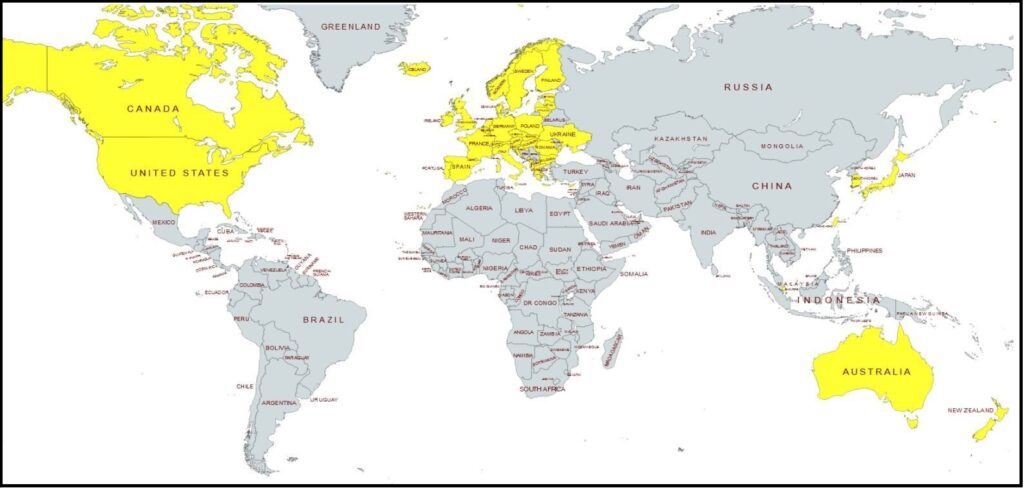
In fact, there are several western nations who see the ‘climate change” energy transformation as an economic kamikaze mission… and that reality is upsetting those who control the larger western alliance agenda.

When we outlined the ‘biggest problem‘ we noted: Brazil, Mexico, and more recently Japan, have started pushing back against the climate change ideologues.  We must do the same.

So, let’s get everyone up to speed.

Factually, Brazilian President Jair Bolsonaro is not only a nationalist leader for his country, Brazil itself is in an emerging economic relationship within the BRICS group (Brazil, Russia, India, China, South Africa).  The BRICS group are not in ideological or geopolitical alignment with the World Economic Forum (WEF) climate change instructions known as Build Back Better.  This lack of ideological synergy is one of the reasons we see a joint effort between the U.S. State Dept and U.S. intelligence group to target Jair Bolsonaro for removal.  [Watch Bolsonaro w/ Tucker Carlson]

Recently, Mexican President Andres Manuel Lopez-Obrador (AMLO) visited the White House.  AMLO is basically soft-socialist, a nationalist who does not like the influence of multinational corporations on the economic politics within Mexico.  When he visited with Joe Biden, AMLO’s public comments in the oval office (he actually had them written down so he would not be deterred from his delivery) about the U.S. chasing a short-sighted and dangerous energy policy, were just ignored by media.  However, watching AMLO deconstruct the Biden energy policy was very telling. [Review Outline Here].

In addition to so-called geopolitical adversaries like Russia, China and Iran, there are also geopolitical allies who clearly see that fracturing the global economy based on energy development, the center of the Build Back Better agenda, is going to create major issues for the citizens within the countries determined by ideological quest to change their energy system.   As noted with Brazil and Mexico, not everyone in the “west” is on board with the program.

Even in Germany and the U.K. we see evidence indicating pragmatic discussion is starting to surface.

There will eventually be an inflection point within the EU as the desires of the ideological leaders run into the reality of the situation.  [ex. Dutch farm protests]

The Build Back Better climate agenda is essentially a process to deindustrialize economies, then rebuild them.  Will Germany really accept a lower standard of living, just to be equitable in economic malaise?  If you know any German people, you know the answer to that is an emphatic NO.

Additionally, southeast Asia (ASEAN group) represents an almost impossible region to shift away from traditional oil, coal, gasoline and food derivatives that need fertilizer and natural gas etc.  And everyone knows China is not going to go along with the ‘climate’ nonsense.

Even if Beijing puts a smiley-faced panda mask on the Beijing dragon, they are going to use the climate change suicide mission of the west as a geopolitical advantage toward their own expanded economic influence.  Hell, who wouldn’t.

♦ Which brings me to the recent appearance of Japanese pushback, which comes with a typically Japanese subtlety.

Keep in mind that Japanese industry is still the largest investor in U.S. manufacturing and jobs.

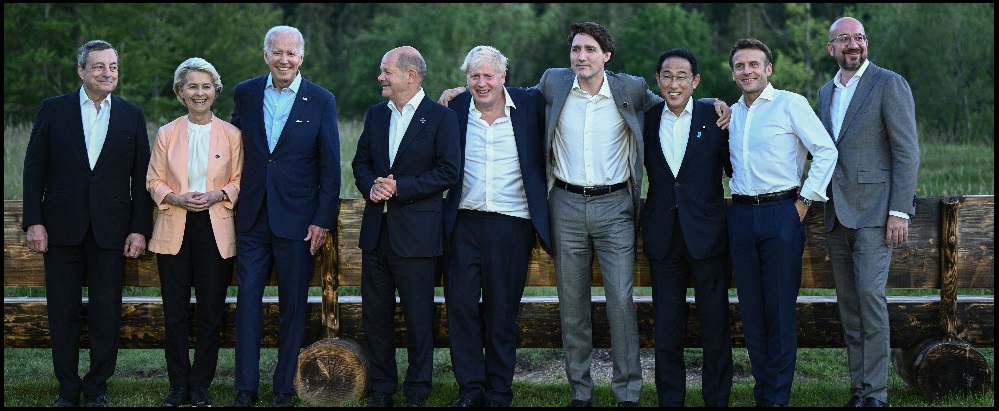
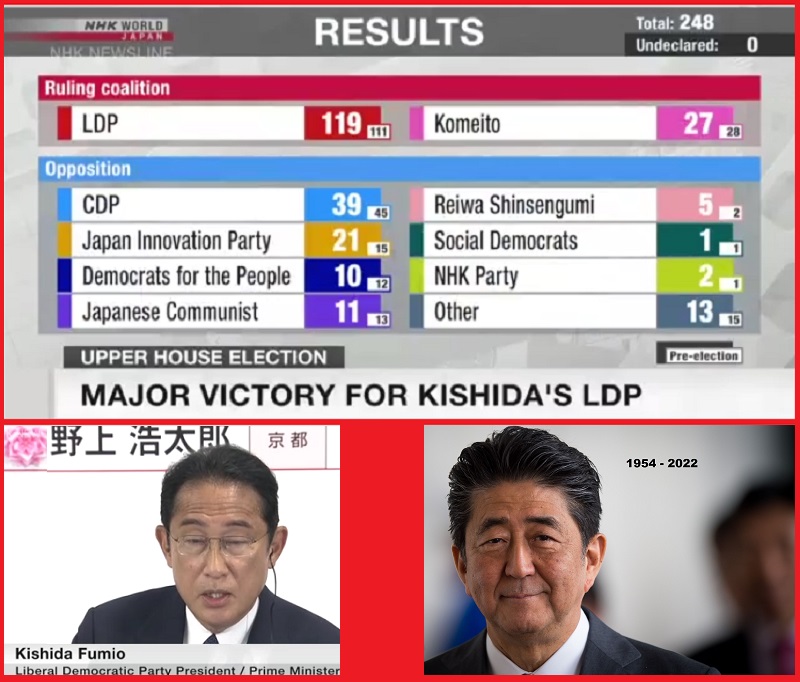
Despite Japan signing-on with the western alliance sanctions against Russia, almost assuredly a decision intended to stay in alignment with the G7 politics, recently Japan has refused to join the collective western approach to raise central bank interest rates to facilitate the BBB ‘transition’ (link).

This has caused the Japanese yen to fall rapidly against western currency, specifically against the U.S. dollar.  The dollar has gained 25.5% against the Japanese yen (link).

Now, inflation in Japan is still an issue, but it is less an issue than in the EU and North America (Canada/USA with Mexico excluded).  Part of that lower inflation dynamic is caused by Japan not driving supply-side inflation as a result of the energy transition.

The decision by the Bank of Japan (BoJ) has created some anxiety within the western alliance group of central bankers.  Additionally, Japan is remaining in good standing with Russia for energy resources and continues to purchase all oil and LNG at the lowest rates possible, regardless of origination. Japan is also the top investor and buyer of LNG from Russia’s Sakhalin-2 plant, so they are the most exposed to Moscow’s new demand to pay for energy through a Russian bank.

(Reuters) – SINGAPORE — Russia’s Sakhalin Energy Investment Co has requested its liquefied natural gas (LNG) customers to make payments via a Moscow unit of a European bank and is in talks to change the payment currencies away from U.S. dollars, two sources familiar with the matter said on Friday. (link)

Again, another geopolitical dynamic that breaks Japan away from the collective western suicide mission.

From the perspective of Japan, all of these moves -while not aligning with the demands of the BBB agenda- make perfect sense.

While their currency is suffering from not following the western agenda, they have several upsides.  First, exports from Japan to the United States and the EU now become even cheaper. With a higher dollar value, Japanese imports into the United States come at a discount.  This will help Japan export goods and retain a strong export economy.

Second, with Japan already a massive investor inside the United States, the dollars that are generated in profit from their operations are delivered back to Japan at a higher value.  A higher dollar value, the outcome of their breaking from the western central bank decision to raise rates, does not hurt Japan.  They bring back high valued dollars from their decades in investment into North America, and they continue exporting to the U.S. at a discount.

So, the nationalist outlooks of Japan, Brazil and even our Mexican neighbors are reflecting a pragmatic self-interest that so far has withstood the pressures from the western alliance to fall into line.  This is how those three countries are positioned to push back against the insufferable BBB agenda.

We can use the example of those western industrialized nations to show that not everyone is in alignment with this globalist multinational finance and corporate takeover.

If we can get more people to see how short-sighted and dangerous the agenda of the World Economic Forum is, we can further expose the real nature of the BBB agenda, to accumulate wealth and control amid a very small conglomerate of WEF corporate and banking interests.

The ‘climate change agenda‘ has always been about a small group of multinational interests having more assembled power, influence and affluence.  As they now take their Davos effort onto the world stage, they will encounter resistance and push-back.  Not everyone in the western alliance is on board with the objective.

Stay smart, avoid the shiny things, stay focused, and look for ways to throw sand into the machinery.

There are more of us than them.

MAKE 1984 FICTION AGAIN!


Awaken With JP Published originally on Rumble on July 28, 2022

Argentina’s Economy Collapses


Armstrong Economics Blog/Corruption Re-Posted Jul 30, 2022 by Martin Armstrong

Argentina’s economy has collapsed. Around 57% of adults in the nation are currently unemployed. The Socialist nation has programs in place to compensate, costing the country around $6 million daily. However, socialism no longer works when you run out of other people’s money. July’s inflation report showed an uptick over 60%.

Harry Lorenzo, chief finance officer of Income Based Research, told The Epoch Times, that the government’s constant spending has exacerbated the problem ten-fold. “The Argentine government has been grappling with a collapsing economy for some time now. The main reason for this is the government’s unsustainable spending, which has been funded in part by generous welfare programs,” Lorenzo stated. This is the same issue we see in the US, Canada, Europe, and elsewhere when governments spend without the intention of ever paying off their debt.

Argentina has defaulted on seven separate occasions since gaining independence in 1816. Speaking more recently, Argentina’s economy was already in ruin in the 1980s when they faced a serious debt crisis, and the currency became worthless. Inflation reached 2,600% in 1989, and the nation experienced hyperinflation into 1990. They decided to peg the Argentine peso against the USD in the late 1990s, which proved disastrous. Never in the history of economics has a peg survived because the economy is not a flat line.

By 2001, the peso was completely devalued. US Treasury bonds and Argentine government bonds rose 5,000 bps – bank runs ensued. There was an immediate freeze on bank deposits that December and the people were left with nothing. The International Monetary Fund simultaneously announced it would no longer support Argentina and cut them off from funding. This is when the nation lost its last tie to any foreign capital. The nation had no choice but to default once again at the end of December.

Various leaders, whoever could stick with the job, promised that the government would provide the people with basic needs. Nearly 60% of the nation was below the poverty line by 2002. By 2010, Argentina restructured 92% of its debt. The nation tried to remove trade restrictions and attract investors – but who would want their debt? The IMF granted Argentina one of the largest bailout packages in history in 2018, which totaled $57 billion. The IMF again agreed to restructure $44 billion for the nation in January of this year.

The problem with social programs is that there is never enough money. Rising inflation has increased the poverty level, and the average person can no longer afford an abundance of basic necessities such as food. The people of Argentina have been on strike for months, many refusing to work. The government promised them social programs in exchange for a cut of their pay. Argentina’s economy minister, Martin Guzmán, resigned at the beginning of the month. The Argentine peso continues to decline against the dollar, pushed down further by recent Fed rate hikes. This is what happens when governments spend recklessly, peg their failing currency, and promise the people security that they cannot provide.

Fed Preferred Inflation Index Jumps 6.8% in June, Largest Increase in Four Decades


Posted originally on the conservative tree house on July 29, 2022 | Sundance 

The federal reserve looks carefully at the Personal Consumption Expenditures (PCE) price index when weighting inflation data.  The Bureau of Economic Analysis just released the PCE index for June [DATA HERE] and the results show a 6.8% increase in June from a year ago, the largest jump in four decades.

Wage growth in the second quarter (April, May, June) was generally strong, rising 1.6%.  However, it now looks like the consumption index and the wage indexes are creating their own inflationary spiral.  In addition to supply-side inflation, driven by Joe Biden’s energy costs, the labor costs are now increasing substantially which adds costs on the production side of the economy.

As wages go up to keep pace with supply side inflation, the prices of goods and services produced/handled by those workers also increases.  This is the inflation spiral that can get out of hand quickly.  The major concern (not necessarily expressed by pundits) is the inability of any institutional economic response to offset the originating inflation caused by the energy policy.  The economic team is pretending supply-side inflation created by energy policy doesn’t exist. They are only directing attention to demand side inflation.

As long as energy policy keeps driving the price of electricity, gasoline and petroleum products higher, workers need higher wages.  Those wage increases, while significant in scale, still lag the rising originating prices of the goods; and the wage growth adds to the final costs. Inflation then becomes structurally embedded, hyper-inflation begins.  This looks like the current situation.

The monetary policy makers (fed reserve) can only impact the demand side of the inflationary cycle.  Raising interest rates does reduce demand; however, it also reduces labor at the same time.   Monetary policy cannot impact the originating source of inflation that starts this spiral.  The core issue is Joe Biden’s Green New Deal energy agenda.

WASHINGTON – […] An inflation gauge closely tracked by the Fed jumped 6.8% in June from a year ago, the government said Friday, the biggest such jump in four decades. Much of the increase was driven by energy and food.

On a month-to-month basis, too, prices surged 1% in June, the biggest such rise since 2005. Even excluding the volatile food and energy categories, prices climbed 0.6% from May to June.

Employees’ wages, excluding government workers, jumped 1.6% in the April-June quarter, matching a record high reached last fall. Higher wages tend to fuel inflation if companies pass their higher labor costs on to their customers, as they often do.

Friday’s figures underscored the persistence of the inflation that is eroding Americans’ purchasing power, dimming their confidence in the economy and threatening Democrats in Congress in the run-up to the November midterm elections.

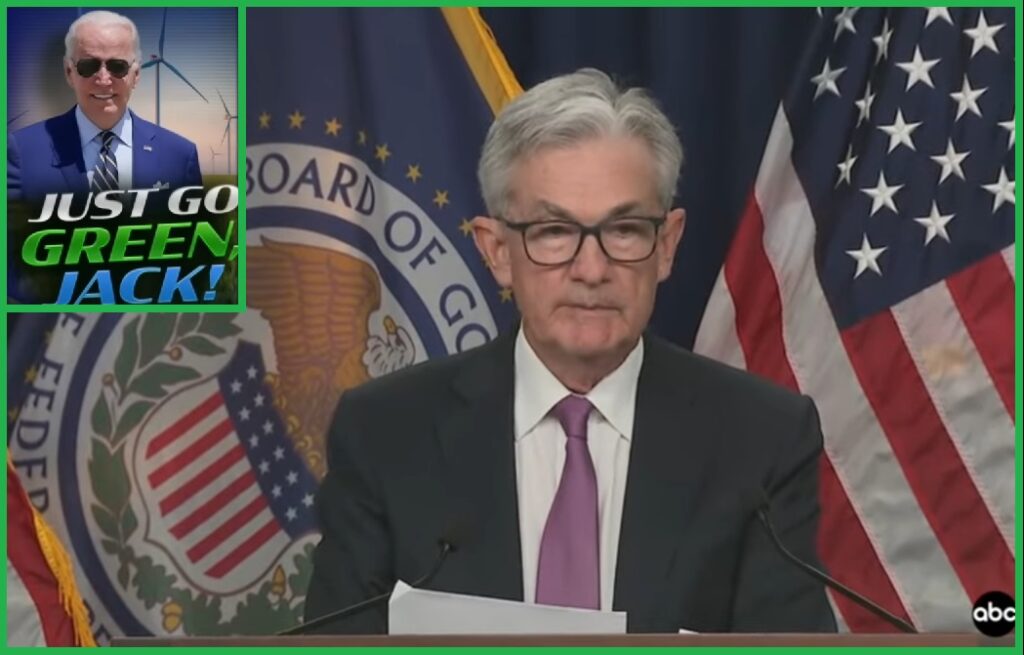
But more persistent drivers of inflation show little, if any, evidence of slowing. The wage data released Friday — a measure known as the employment cost index — indicated that paychecks were still growing at a robust pace. That’s good for workers, but it could raise concerns at the Fed about its effect on prices. Chair Jerome Powell specifically cited this measure during a news conference Wednesday as a source of concern for the the central bank’s policymakers.

“This is a (report) that’s going to keep Fed officials up at night,” said Omair Sharif, president of Inflation Insights. (read more)

Shrinking the Economy is a Feature, Not a Flaw – Massive Layoffs and Unemployment Likely Hits in September


Posted originally on the conservative tree house on July 29, 2022 | Sundance 

The distance between Wall Street and Main Street has never been as brutally obvious as it is today.  It is simply stunning to watch the cheerleading and casual nature of the economic and financial pundits as they speak esoterically about how policies intended to reduce the U.S. economy are so wonderful.

Seriously, the disconnect in life impact has never been as stark.  At least in previous times of economic contraction there was a smidgen of appreciation for the pain that unemployment and rising costs bring to the blue collar and middle-income working class.  In this new era, the financial stress and visible outcomes of destroyed families are simply shrugged aside as if these are abstract consequences.

In this segment former Federal Reserve vice-chair Randal Quarles, notes with a casual flippance how the economic policies of the Biden administration are simply doing what needs to be done in order to intentionally reduce the U.S. economy.  Sure, massive unemployment, in direct correlation to the scale of the inflation that precedes it, is almost certain, but hey…. the economy must be collapsed if the Build Back Better, Green New Deal, agenda is to be fully implemented. WATCH:

Maybe this flippancy seems starker because those who consider themselves outside the collateral damage impact zone were not visible in prior generations.  Perhaps it is because modern technology and the information era allows us to see conversations that were previously only described in print newspapers and journals.  Whatever it is, the shameless disconnect between the unaffected rulers and the proles who have to live with the consequences are far more visible today than before.

Smiling while describing a future where working men are emasculated by their inability to support their families. Smiling and shrugging while explaining a landscape where moms are worried about how to feed their children, as the checkbook in the household creates a type of stress these ‘betters’ have likely never experienced, is almost psychotic in its detachment.

Desperation is not a good situation for any society.

Worse yet, laughing in the face of desperation leads to the type of outcomes that eventually hits the ‘betters.’

[ SOURCE ]

Interview: The World According to Martin Armstrong


Armstrong economics Blog/Armstrong in the Media Re-Posted Jul 30, 2022 by Martin Armstrong

Click here to listen to Martin Armstrong’s latest interview. 

By Kerry Lutz:

“We’re seeing oil price shocks, commodity booms and busts, and various factors that are threatening to de-throne the US dollar. Why is this happening, and what does this mean for the global economy? I have Martin Armstrong on the show to discuss this, and he explains the various changes that have occurred—such as sanctions in Russia and countries opting to not borrow in dollars—that put the dollar at risk. Not only is the dollar in danger in these conditions—this shift in currency use greatly affects the world economy. Tune in for more information.”

Zelensky: From War-Torn Leader to High Fashion Model


Armstrong Economics Blog/Corruption Re-Posted Jul 29, 2022 by Martin Armstrong

(Photo by Annie Leibovitz)

The latest models for the cover of Vogue are none other than Mr. and Mrs. Zelensky. The editors at Vogue actually permitted the president to wear his favorite green military-issued t-shirt that he parades around in daily like some cartoon character.

“The Art of War” never mentioned posing for a high-end fashion magazine as a strategy. Times have changed. This is a strategic marketing move since he is begging Western politicians for billions of dollars. Volodymyr and Olena appear as young and trendy political celebrities who we should root for by turning a blind eye when our elected officials send them our money. There is no need to hold a vote or to question where the money is spent! They are the good guys!

It seems only his previous supporters are buying this new pitch as the internet is fuming with calls of the Zelenskys being tone deaf, at best. Multi-millionaire Zelensky appears to be the everyday man when in reality he is extremely corrupt and wants the entire world to suffer alongside him. The average taxpayer funding his war efforts cannot afford a single item from Vogue, but the West is enamored with celebrity culture. Let us not forget that he appeared via video at the Grammys this year, surrounded by the rich and famous stars. The next generation of voters, who will be paying Zelensky’s debt, are influenced by these celebrities and magazines. Zelensky is using Western celebrity-obsessed culture to spin himself as the good guy, completely ignoring his unwillingness to hold peace talks or admit that he provoked this war.

First Major German City Turns Off Hot Water and Public Building Electricity to Save Gas


Posted originally on the conservative tree house on July 28, 2022 | Sundance 

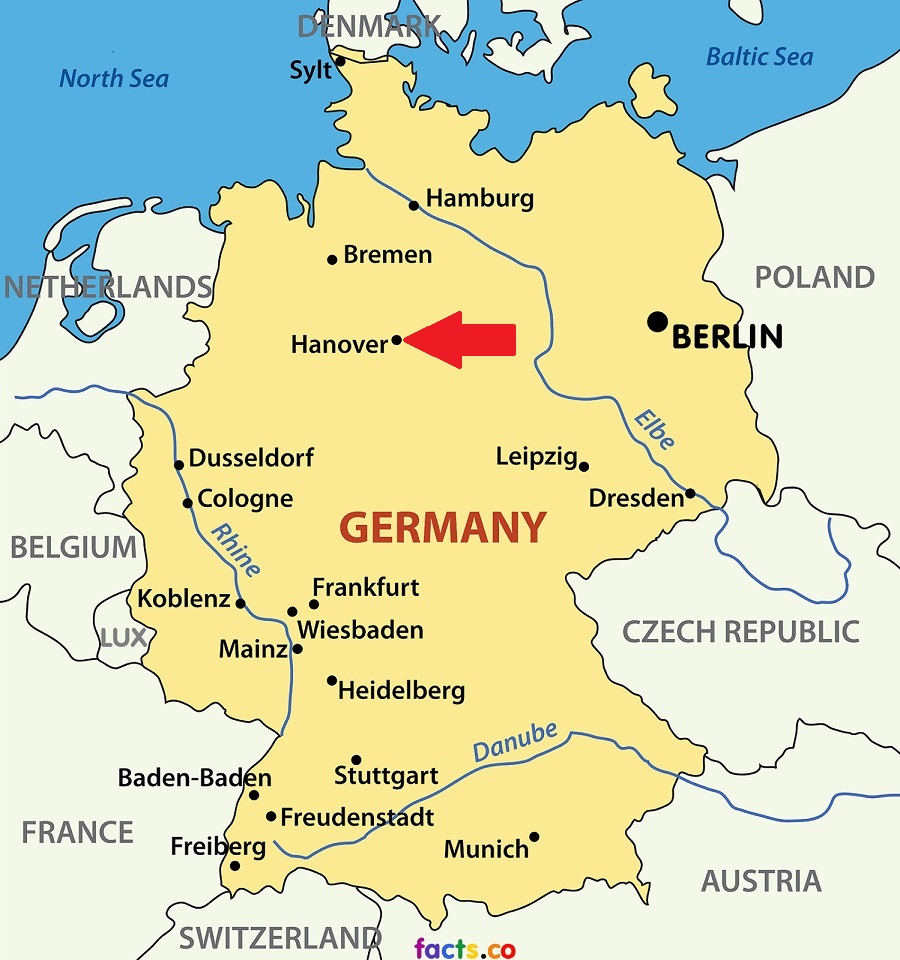
Hanover, a city in the northwest of Germany, has become the first major metropolitan area to try and reduce the use of natural gas by removing hot water from public buildings.  The move comes as natural gas supplies from Russia are reduced to 20% of capacity.  Germany is attempting to fill up storage facilities of natural gas in order to survive the winter.

Germany, together with several European countries, are telling their citizens to expect large increases in their electricity bills as energy costs continue to skyrocket.

Germany does not have any LNG terminals to receive shipments of natural gas into ports, they are dependent on pipelines from Russia.  They are urgently trying to reduce the current amount of natural gas being consumed.

(Via Daily Mail) – […] Other desperate gas-saving measures include switching off public fountains and blacking out night-time lights on major buildings such as the town hall and museums. The city’s mayor, Belit Onay, spoke of an ‘imminent gas shortage’ that meant they had to reduce the city’s energy consumption by 15 per cent.

[…] There will also be a ban on portable air conditioners, heaters and radiators among the general populace as the average German begins to pay a price for standing up to the Russian dictator.

[…] Germany, like most of Europe, has been enjoying a hot summer which should soften the blow of the cold showers, but public officials are introducing the measures now in fear of what awaits them when the season turns.

Gazprom, the Russian state energy giant, has been giving European leaders sleepless nights by disrupting the flow of gas via its Nord Stream 1 pipe line.

They cut the flow to 40 per cent in June, citing maintenance issues, and this week they reduced the gas supply through the pipe to just 20 per cent.

These reductions, which EU energy chief Kadri Simson dismissed as ‘politically motivated’, have seen energy bills soar, governments struggle to fill gas storage facilities and energy-intensive heavy industries wondering if they can keep the factories running.

Russia denies that it is deliberately throttling supply to cause pain and instability in Europe, but few doubt that it is a deliberate ploy to punish what it calls ‘unfriendly countries.’

In response, European Union countries agreed to a controversial, bloc-wide 15 per cent reduction in gas usage on Tuesday that is hoped will reduce the pressure on European countries most vulnerable to Russian energy blackmail. (read more)

To Lower Natural Gas Use World’s Largest Chemical Company Announces Making Less Ammonia, Fertilizer Production Will Shrink Further


Posted originally on the conservative tree house on July 28, 2022 | Sundance 

The energy crisis in Germany is now a confluence of terrible events that will snowball well into next year.

The world’s largest chemical company, BASF, has announced they will cut down the production of ammonia in order to use less natural gas.

In the short term this will help Germany build up natural gas supplies to survive a cold winter with predicted rationing still planned.  However, in the long term the shortage of ammonia means less fertilizer which will mean future shortages and increased costs for farmers; ultimately creating lower yields next year.

FRANKFURT, July 27 (Reuters) – Germany’s BASF (BASFn.DE), the world’s largest chemical company, is cutting ammonia production further due to soaring natural gas prices, it said on Wednesday, with potential ramifications from farming to fizzy drinks.

Germany’s biggest ammonia maker SKW Piesteritz and number four Ineos also said they could not rule out production cuts as the country grapples with disruption to Russian gas supplies.

Ammonia plays a key role in the manufacturing of fertiliser, engineering plastics and diesel exhaust fluid. Its production also yields high-purity carbon dioxide (CO2) as a byproduct, which is needed by the meat and fizzy drinks industries.

“We are reducing production at facilities that require large volumes of natural gas, such as ammonia plants,” BASF Chief Executive said in a media call after the release of quarterly results, confirming an earlier Reuters report.

[…] Unlike many European countries, Germany has no liquefied natural gas (LNG) port terminals to replace Russian pipeline gas. That means companies are under political and commercial pressure to reduce gas intensive activities if gas deliveries are cut further.

[…] Russia resumed pumping gas via its biggest pipeline to Europe, Nord Stream 1, on July 21 after a 10-day maintenance outage, but Gazprom (GAZP.MM) on Monday said supplies to Germany would drop to just 20% of capacity. (read more)

Like I told Olaf, food is so overrated…