Legendary Florida State University head coach Bobby Bowden spoke at a Tampa Trump rally last night to an enthusiastic audience over 20,000. Here’s what he had to say:
Source: Coach Bobby Bowden: “Put Me Down For Eight”…
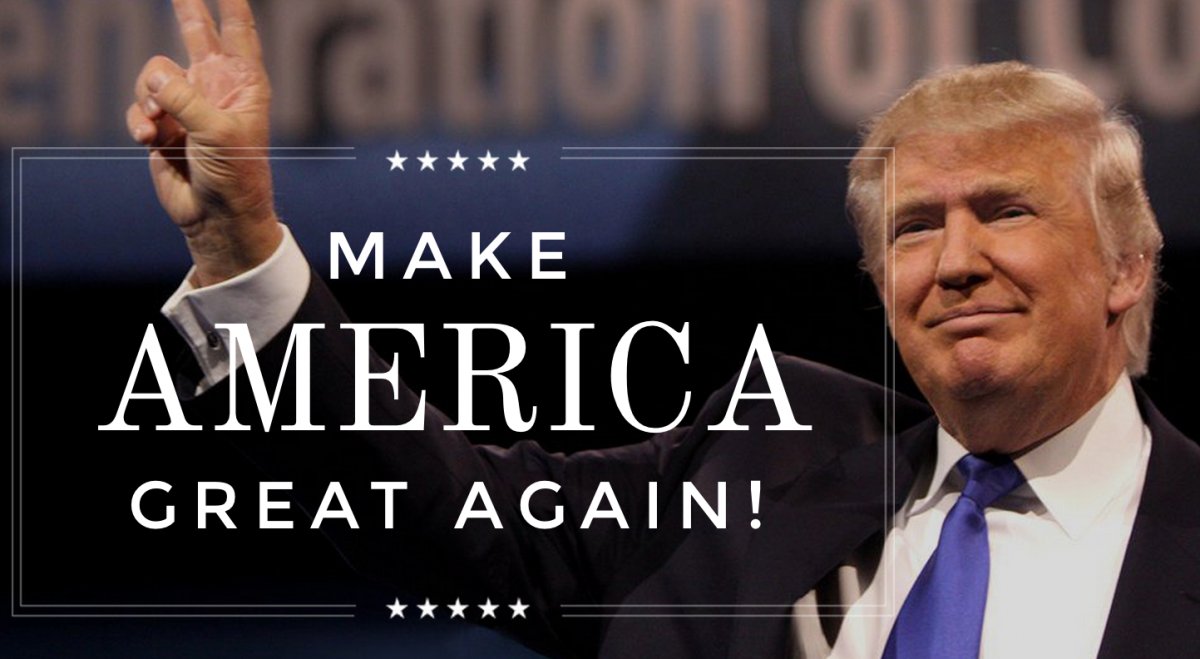

Legendary Florida State University head coach Bobby Bowden spoke at a Tampa Trump rally last night to an enthusiastic audience over 20,000. Here’s what he had to say:
Source: Coach Bobby Bowden: “Put Me Down For Eight”…

QUESTION: Mr. Armstrong; You have said that the only way to reverse the deflation is to raise interest rates not lower them. I understand that the low rates only reduce the cost of funds for banks, but it hallows-out savings and pensions. Has anyone listened to you and tried the opposite trend to raise interest rates? It seems the Fed is listening to you but the IMF and others plead to the Fed not to raise rates. Can you point to any hope in this regard?
Thank you for you do. Truly you make us think.
KS
ANSWER: Actually, all you have to do is look at Iceland. Not only did they throw the bankers in prison instead of giving them bonuses, but they also raised interest rates unlike everyone else in the Western world. In an attempt to stimulate their economies, Western central banks lowered rates and the European Central Bank (ECB) moved to negative rates after implementing a very unconventional monetary policy suggested by Larry Summers. Meanwhile, the Central Bank of Iceland (CBI) did precisely the opposite by raising interest rates and reducing the size of its balance sheet. This stands in direct contrast to the ECB, the Bank of England (BOE), Japan, and the United States.
Just step back and look objectively at the evidence. Back in July 2011, the CBI’s benchmark rate of 4.25% was significantly higher than the ECB’s benchmark rate of 1.50%, and it was substantially higher than the BOE’s benchmark rate of 0.50%. Since that point in time, the CBI’s benchmark rate increased relative to both the ECB and BOE.
Iceland now has the strongest economy in all of Europe where its GDP has risen more than 100%, doubling since 2009. This stands in amazing contrast to the ECB where European growth since 2009 has been just 14%, and in Britain, the total GDP growth since 2009 has been 27%. This is clear evidence that this policy of low interest rates is nonsense. The rate of interest reflects inflation and future opportunities. If rates are at zero, it demonstrates that there is zero confidence in the future of Europe. I think even an ape could figure out that this is not working.

QUESTION: I am beginning to see the light. It seems as though when gold rallies strong, the sentiment is reflected in these gold promoters. Then gold drops and they preach the same thing again. This leads them to buy every high and in fact they are merely cheering the news and are not analysts at all. They are not objective in any way. So are they just news chasers?
Thank you for the light to bring
KJ
ANSWER: Yes, of course. They act more like the most novice investor just starting out. Their forecasts are based solely on emotions, and they try to look for fundamentals to fit their predetermined conclusion. We are all human and that means we are subject to the same human frailties as everyone else. So, when these people see a strong price move, it is their emotion that takes over and the forecast is not connected to reality. They are convinced about a single theory. They are incapable of learning because advancing in knowledge requires admitting mistakes.
These type of people claiming to be analysts give the field a bad name because they are by no means analysts, but simply news followers. They think something has to have a reason behind every move. This is where they are dead wrong. Markets move in ANTICIPATION of future events. This is why professionals say, “Buy the rumor and sell the news.” It really does not matter if the event is real or not. If people THINK it may happen, they will act accordingly in ANTICIPATION. Deutsche Banks shares crashed because people ANTICIPATED it would collapse. They did not wait for a formal announcement, as it would have been too late to act. So they act, expecting something might happen. In the case of bank runs, that fear can lead to actual bank failure even the rumor was false.
Hillary would sell her daughter to the devil for more money or power and not even blink!
If Soros is involved you know its crooked!
What can you say?????
Since the people that talk about politics don’t want Trump to win then they have no reason to tell the citizens that the pols are faked to show Hillary wining.
There is a talking point about Obamacare failing as the cost shifts are too extreme upon the participating (paying) electorate, etc. […] State insurance regulators across the country have ap…
Source: ObamaCare is Not Failing – It’s Doing Exactly What It Was Constructed To Do…
I have created this site to help people have fun in the kitchen. I write about enjoying life both in and out of my kitchen. Life is short! Make the most of it and enjoy!
De Oppresso Liber
A group of Americans united by our commitment to Freedom, Constitutional Governance, and Civic Duty.
Share the truth at whatever cost.
De Oppresso Liber
Uncensored updates on world events, economics, the environment and medicine
De Oppresso Liber
This is a library of News Events not reported by the Main Stream Media documenting & connecting the dots on How the Obama Marxist Liberal agenda is destroying America
Australia's Front Line | Since 2011
See what War is like and how it affects our Warriors
Nwo News, End Time, Deep State, World News, No Fake News
De Oppresso Liber
Politics | Talk | Opinion - Contact Info: stellasplace@wowway.com
Exposition and Encouragement
The Physician Wellness Movement and Illegitimate Authority: The Need for Revolt and Reconstruction
Real Estate Lending
 Centinel2012