Good News, Gasoline Prices Drop – Bad News, Demand for Gasoline Plummets to Pandemic Era Levels


Posted originally on the conservative tree house on August 5, 2022 | Sundance 

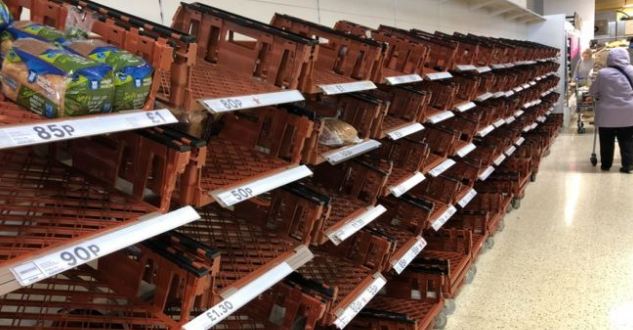
The good news is that gasoline prices have dropped in the past several weeks to an average of $4.13/gal.  However, the bad news is that most of the drop in price is related to gasoline demand dropping to the same level as July 2020 during the pandemic lockdown phase.

Obviously, $4.13/gal is still a very high price for gasoline, and that is leading to fewer people purchasing gasoline.

(Via Fox) – […] New data from the Energy Information Administration (EIA) shows that gas demand dropped from 9.25 million barrels per day to 8.54 million per day last week. That’s 1.24 million barrels per day lower than last year and “in line with demand at the end of July 2020,” when there were widespread virus-related restrictions and fewer people were hitting the road, according to AAA. 

The latest demand figures bolster a recent AAA survey that revealed 64% of drivers had changed their driving habits or lifestyle since March to offset the high prices at the pump. (read more)

If you think about the position of the Organization of Petroleum Exporting Countries (OPEC or OPEC+), it makes sense for them to recognize the intentions of the western leaders to shrink the western industrial economies and respond accordingly.

OPEC knows North American and European leaders are intentionally reducing economic activity in an effort to lower the economy to match the lower level of energy production. This is the “managing the transition phase” of the Build Back Better agenda, the intentional shrinking of the economy through energy and monetary policy.

Knowing that, it makes sense that OPEC would not produce additional oil into a globally shrinking economic system.  Producing more oil would be against their own economic interests.
Fertilizer Bans Lead to Food Scarcity


Armstrong Economics Blog/Agriculture Re-Posted Aug 4, 2022 by Martin Armstrong

Canada’s Trudeau is proposing to reduce fertilizer with the globalist goal of achieving zero emissions by 2030. Every indicator says that food scarcity is on the rise, and yet politicians are continually making it harder to farm. Trudeau’s plan entails a 30% reduction in fertilizer and is a direct threat to the food supply.

Fertilizer Canada believes this plan will begin hurting agriculture as soon as 2023. The agency believes that Canada may lose over 160 million metric tons of spring wheat, canola, and corn between 2023-2030 alone. Alberta Minister of Agriculture Nate Horner stated that the world is looking at Canada to increase food production amid scarcity and that the government is doing much more harm than good with this ban. “The world is looking for Canada to increase production and be a solution to global food shortages. The Federal government needs to display that they understand this. They owe it to our producers,” he stated.

Who else placed bans on fertilizer, and how did it go? Let’s look at Sri Lanka, which is currently in ruins. Disgraced former President Gotabaya Rajapaksa promised to transition to “organic” farming. In April 2022, the government banned synthetic fertilizers and pesticides and forced two million farmers to switch to organic farming. The plan failed and the downturn was swift. Rice production fell 20% in six months and continued to fall until the nation began importing rice for the first time in recent history.

The Rajapaksa Administration knew it was in serious trouble by 2021 and tried to offer farmers incentives for losses incurred. Now, over 86% of the population of Sri Lanka is food insecure. Countries looking to ban or reduce fertilizer must realize that the outcome will lead to less food. Should we let people starve to “save” the environment?