
The only way the left can win anything is by hiding the truth of all their failures; which are many and very very bad.
Tag Archives: Crowd Control
French Parliament – Nullified – Get Ready for More Civil Unrest
Armstrong Economics Blog
Re-Posted Jul 22, 2016 by Martin Armstrong

After months of controversy over the labor market reform that was designed to end excessive socialism in France, the French Government has bypassed the final vote in Parliament altogether. Given the resistance in his own camp, Hollande and the Prime Minister Manuel Valls in the National Assembly are using a special rule that allows them to effectively circumvent the democratic process. This trick is to simply assume that the law is considered adopted unless a motion of censure against the government is provided and successful. That is considered extremely unlikely. Therefore, this is providing cover for the politicians who can say they never voted for such a reform of labor laws.
This labor reform should loosen labor laws and give companies more flexibility, and in this manner, they are hoping companies can easily create new jobs. The classic opponents fear for workers’ rights will vanish and several unions have repeatedly protested. They cannot see that their one-sided labor monopoly is destroying jobs and economic growth. This is part of the crash and burn. Still, the labor unions will fight for themselves and refuse to see that they themselves are causing the economic decline.
The French unions are notorious for their communistic ways. They themselves chase companies out of France. For decades, when we advised clients looking to establish plants inside the Eurozone prior to 1998, we always warned them against France. After being threatened with closure back in 2014, workers at a French Goodyear Tire factory outright kidnapped two company executives and held them hostage; promising to hold them until “enormous amounts of money” were paid to them. You cannot imagine why anyone would even want to be assigned to run a foreign company in France these days.
Labor reform is desperately needed in France, but the unions are effectively communistic organizations who will generally act only in their self-interest, even if it is against the interests of the people. So, this will only fuel our models for civil unrest moving forward.
Trump Effect: The EU, Turkey, NATO and Now Clinton Democrats Demand War…
We have been protecting the EU and Asia for the past 71 years since the end of WW II and paid the price in money and lives; and that was fine before we became broke with almost $20.0 Trillion in debt now. So what Trump is really saying is the once we are protecting need to pay for it and by that we mean 100% or we will need to pull out to save money that we no longer have.Would it be better if we had troops station all over, of course but where does the money come from to pay for it after Obama bankrupted the country?
First Principles – by Treeper Cetera
It is actually very simple you live by the Golden Rule or you live like an animal thinking only of yourself; the choice is yours to make no one can make it for you.
Turkey – Failed Coup – Real or Fake?
Armstrong Economics Blog
Re-Posted Jul 20, 2016 by Martin Armstrong

QUESTION: Mr. Armstrong; You have been warning that we are in an upward trend now for civil unrest which includes coups to revolutions as distinguished from a foreign war or invader. At the Berlin cocktail party last year you said Turkey was a risk for the risk in civil war. You said it should begin next year. Was this failed coup attempt what you were referring to?
ANSWER: Turkey has a history of military coups— 1960, 1971, and 1980. It has had two cycles running through its political history since the fall of the Ottoman Empire in 1920. The two cycles are 8.6-year based frequencies. The armistice of October 31, 1918, ended the fighting between the Ottoman Empire and the Allies. However, it did not bring peace to the region. The Sultan, Mehmed VI, feared he would be deposed, but the Allies knew he was a figurehead and hoped that his retention would ensure post-war stability. They did not want to cut off his head in fear that his replacement would be far worse.
In November 1919, the Ottoman government did nothing to stop the Allies. The Allies delayed the signing of the peace treaty known as the Treaty of Sèvres (1920) with the Ottoman Empire only because they were arguing among themselves over who would take what countries. The treaty was not signed until August 10, 1920, confirming French and British possession of Syria, Lebanon, Palestine, Jordan, and Iraq in the guise of League of Nations mandates.
Sharif Hussein ibn Ali was rewarded for his leadership of the Arab Revolt with international recognition of the Hejaz as an independent kingdom. The treaty effectively gave the Greeks possession of eastern Thrace and ‘Ionia’ (western Anatolia); the Italians got the Dodecanese Islands and a ‘zone of influence’ in southwestern Anatolia. To the east, the Armenians were given an independent state, taking in much of eastern Anatolia, while the Kurds were granted an ill-defined autonomous region and promised a referendum on independence, which has yet to take place. The Ottoman state’s army was limited to 50,000 men and its navy to a dozen coastal patrol boats with no air force whatsoever.

It was at this point that Mustafa Kemal emerged as a leading figure in Turkey. His rule brought a form of Turkish nationalism that was very different from the pan-Turkic ideals up to that point. Kemal believed that the once-great Ottoman Empire had become a dead weight on the Turkish people who needed a homeland of their own. Keep in mind that the Turks invaded that region and took the territory from the Greek Byzantine Empire when the last emperor, Constantine XI (1448-1453), died on the walls of Constantinople in 1453, ending more than 1,000 years of history.
Kemal and his supporters sought to establish a new Turkish state based on Anatolia, where most of the empire’s Turkish population had traditionally lived since the fall of Byzantium. Kemal and other nationalists began hiding weapons from Allied disarmament teams and encouraged the formation of local Turkish civilian militias and political alliances between nationalist groups. They also attempted to divide the Allies through political intrigues, which was rather easy to do.
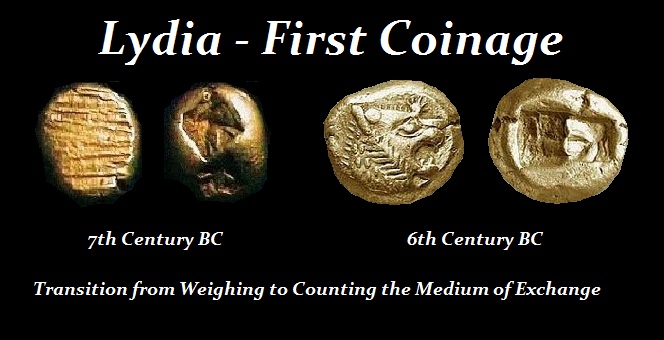
The greatest military threat to the Turkish nationalists came from the Greeks, whose claims to western Anatolia, eastern Thrace, and Constantinople were reinforced by the large ethnic Greek populations in those regions. The Greeks occupied Ionia for thousands of years and fought against the Persian invaders ever since Cyrus the Great. It was here that coinage was invented by the Greeks, first with the standardization of weight, and then by impressing a design to guarantee its authenticity by the king of Lydia. On May 15, 1919, Greek troops occupied the ancient port city of Smyrna (modern-day Izmir). More Greek forces arrived in the following months, gradually extending their control deep into the west Anatolian countryside. Clashes with Turkish civilians dogged their movements and greatly increased nationalist sentiment. Meanwhile, the Italians landed troops in south-western Anatolia to reinforce their claim on that region. This also played into the hands of the Turkish nationalists and fueled their movement.
As Turkish attitudes began to rise toward nationalism, the interim Ottoman government came under increasing pressure from the Allies to suppress these nationalist groups. In the end, they were reluctantly forced to act, but this backfired. On April 23, 1920, the nationalists convened a Grand National Assembly in Ankara. They elected Mustafa Kemal as its first president, establishing what was essentially an alternative government. This triggered a civil war.
The British and French had demobilized so there was no military support available for the Ottoman government. This civil war ended only when the details of the Treaty of Sèvres were publicized in August 1920. The harshness of the terms in the Treaty of Sèvres destroyed all credibility of the Ottoman government and exposed what they had agreed to that ended the Ottoman Empire. Turks of all political persuasions began to unite at this point behind the new Grand National Assembly, which completely stood up and rejected the Treaty of Sèvres. A showdown with the Allies seemed at this point inevitable.
Only the Greeks could muster any troops, but they saw this only as an opportunity to gain more land in Anatolia. This set the stage for what the Turks call the Turkish War of Independence. The Greek Army made rapid progress and advanced from Smyrna in June 1920, capturing much of western Anatolia. The Greeks initially outnumbered the Turkish nationalists and were better equipped. Kemal agreed to help Bolshevik Russia destroy the newly independent Caucasus states in exchange for restoration of most of the territory they had lost in the 1877–78 Russo-Turkish War. This secured eastern Anatolia and extinguished any chance of independent Armenian or Kurdish states taking emerging there.
American President Woodrow Wilson supported the Armenian bid for independence in that area and condemned these actions. Kemal knew the USA would not intervene with Russia on their side. Kemal’s government also bought off the French by promising to support their rule over Syria in exchange for tacit recognition that all of Anatolia was Turkish territory. Kemal was smart and played one side against the other. Kemal then struck an agreement over the Dodecanese Islands with the Italians, who in turn withdrew their troops from Antalya in June 1921. It was through such diplomatic maneuvering that the Turks gained access to the international arms trade. Kemal effectively isolated the Greeks. British support for the Greeks was a personal passion of Prime Minister Lloyd George whose cabinet did not share. Kemal has isolated the Greeks by playing the Allies against each other.
Kemal’s strategy was to render Greeks their only military opposition. In March/April 1921, the new Turkish Army turned back the first major Greek offensive. The Greek Army in Anatolia was increased to 200,000 men. Kemal assumed direct command at the Sakarya River and ended a three-week battle resulting in Turkish victory. Finally, in August 1922, the Turks carried out a large, carefully prepared offensive that threw the Greeks into a headlong retreat to the coast. All Greek troops were evacuated from Anatolia by September 16, 1922. The war was over and Turkish Independence was won.
On October 13, 1922, Ankara officially became the capital of the new Turkish state. On October 29, a republic was proclaimed with Mustafa Kemal as its first president. Turkey’s Grand National Assembly abolished the Sultanate on November 1, 1922. Mehmed VI and his family sought refuge with the British military authorities in Istanbul. They were smuggled out of the city and eventually went into exile in San Remo, Italy, where the former monarch would later die in 1926.
1960 Turkish coup d’état
1971 Turkish military memorandum
1980 Turkish coup d’état
1993 alleged Turkish military coup
Interestingly, the relationship between military coups and civil wars are tightly linked. The first 51.6-year cycle from 1920 brings us to the 1971 coup. The 1960 coup d’état incident took place at a time when there was social, economic, and political turmoil. The United States’ aid from the Truman Doctrine and Marshall Plan was running out. Prime Minister Adnan Menderes was planning a visit to Moscow in hopes of establishing alternative lines of credit. The coup was staged by a group of 38 Turkish military officers acting outside the Staff Chiefs’ chain of command to prevent the political leadership from realigning with Russia simply to get aid. The incident took place on May 27, 1960. However, as the 1960s wore on, the economic conditions worsened and many Turks migrated to Germany at this time.
Turkey was engulfed in violence and economic instability. An economic recession as Bretton Woods was in trouble sparked a wave of social unrest marked by street demonstrations, labor strikes, and political assassinations. This is when left-wing workers’ and students’ movements rose up, which were countered on the right by Islamist and militant nationalist groups. The left carried out bombing attacks, robberies, and kidnappings that began in 1968 and intensified moving into the economic decline that bottomed in 1970. The left-wing violence was matched and surpassed only by far-right violence under the Grey Wolves. Then on the political front, Prime Minister Süleyman Demirel from the center-right Justice Party was re-elected in 1969. The party experienced internal disputes and split to form splinter groups of their own. This essentially reduced his parliamentary majority and brought any political processes to a halt.
Finally, by January 1971, the state of the political-economy in Turkey descended into a state of chaos. The students began to embrace Latin American style, urban-guerrilla warfare by robbing banks, kidnapping US servicemen, and attacking American targets as they became increasingly Marxist. Neo-fascist militants bombed the homes of university professors who were critical of the government and factories went on strike, bringing all services and production to a near standstill during the first quarter 1971.
The Islamist movement was rising inspired by the books of Sayyid Outb (1906-1966) who was executed in 1966 for plotting the assassination of the Egyptian President Nasser. The Islamists formed the National Order Party, which outright rejected Atatürk and Kemalism, putting them in conflict with the armed forces. The government appeared too weak with defections and squabbling. This resulted in the military coup to save the country. This event became known as the “coup by memorandum,” whereby the military delivered in lieu of sending out tanks. This was the major event on the 51.6-year cycle as the government and economy fell into chaos.
The September 12, 1980, Turkish coup d’état followed the continuing conflict between right-wing/left-wing armed conflicts, which reflected the proxy wars between the United States and the Soviet Union. It has been argued that the military allowed these conflicts to escalate to provide justification to seize control of the government outright, but this is always with hindsight. However, the violence did abruptly end afterwards the coup. For the subsequent three years, the Turkish Armed Forces ruled the country through the National Security Council before democracy was restored.
Nonetheless, our models have identified interesting correlations that suggest some government officials will often resort to “regime change” as a tactic to prevent civil war from occurring. A military coup can often provide a mechanism to avoid a dynamic escalation of conflict that would otherwise lead to civil war. Hence, sometimes the means to avert an outright civil war necessitates a coup.
The leading indicator is typically the fractionalization of political parties, which results in a breakup of political movements that then enter into conflict when the economy turns down. That economy remains the most powerful driver in the global model, and it is unquestionably the most powerful driver at predicting regime change at the polls as well as within the civil unrest cycle. For the former to evolve into the latter, we need the fractionalization of political parties. For example, we are seeing that with the hard-line Republicans refusing to support Trump. This is all part of the process of taking a step toward civil war and the break-up of countries.
Considering that the driving force to set the stage is always economic, the fiscal mismanagement of the political state is critical. We are witnessing the process in Europe as a whole. This “fractionalization” is creating heated, opposing groups at the very top of the political ladder that ultimately lead to autocratic regimes as political elites try to protect their power base. This increases the danger of political instability that leads to civil unrest and can brew into military coups or go all the way to revolution. Hence, during regime changes, whether at the hand of the people with a right to vote or by military coups, the actual revolution phase is a process that can be forecast within a global model.
In the case of Turkey, this particular failed coup was either orchestrated to fail as a means to solidify ultimate power or we are witnessing the coming clash between Islamic and freedom of region rule in Turkey. That ultimate confrontation is due in 2023 (two 51.6-year cycles from 1920).
Britain’s Chancellor of the Exchequer Revolts Against Merkel
Armstrong Economics Blog
Re-Posted Jul 15, 2016 by Martin Armstrong
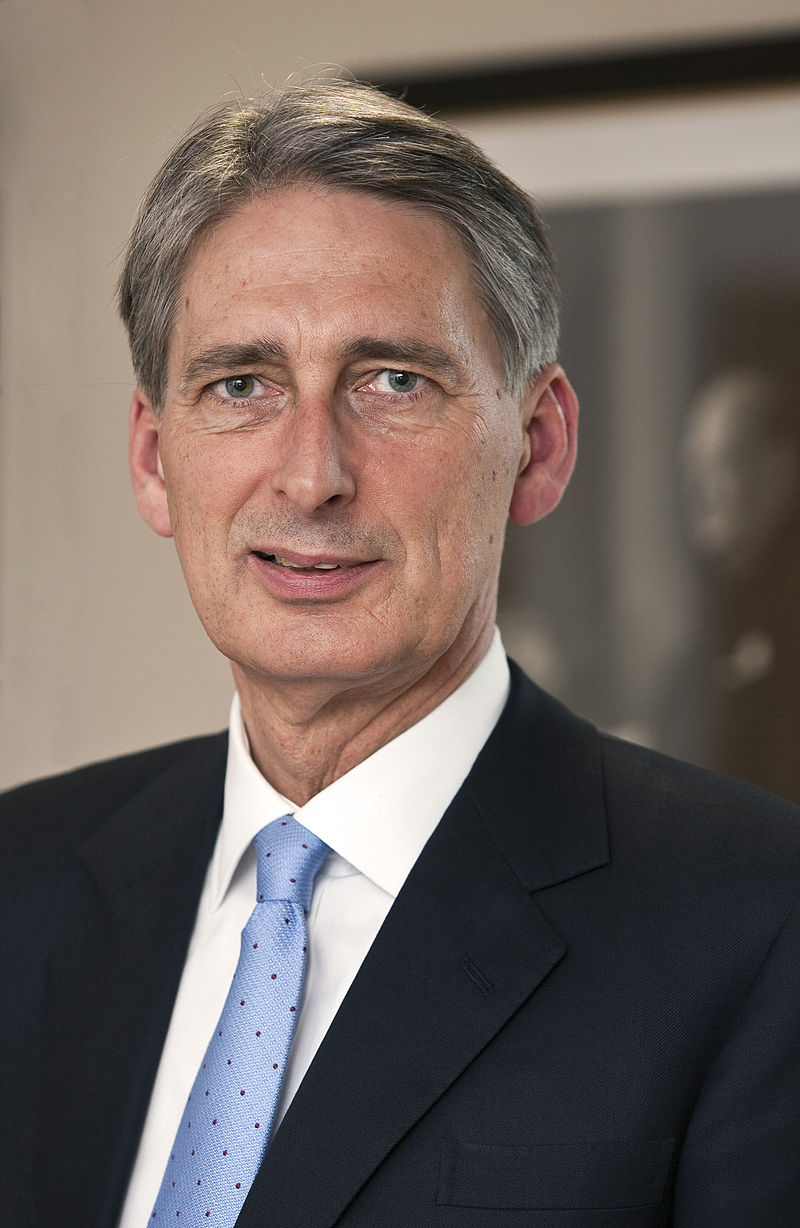
The new British Finance Minister Philip Hammond, was appoint as Chancellor of the Exchequer on July 13th, 2016. Hammond is a welcome relief and has come out and departed with Draghi and Merkel stating: “The markets need calming signals. You need to know that we will do everything necessary to keep on track the economy. “ Hammond came out and stated that it is time to rethink the economic policy of his country and in reality Europe. He stated rationally that the entire idea of austerity was the appropriate response to the financial crisis of 2008. However, Hammond stated bluntly that the world is in a completely different position today. Effectively, Hammond outright fundamentally rejected the economic policies of Angela Merkel. What we are beginning to see is an economic revolution against the idea of Merkel’s austerity programs. From Italy and France, we are also hearing the same rebellion.
May Becomes PM in Britain & Boris Becomes Foreign Secretary
Armstrong Economics Blog
Re-Posted Jul 15, 2016 by Martin Armstrong
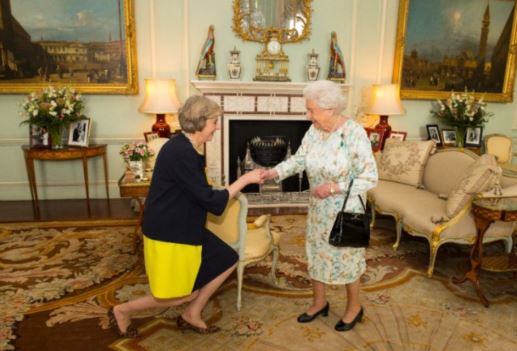
T heresa May became the new Prime Minister of Britain on Wednesday and formally met with the Queen to ask permission to lead her government. May is now embracing BREXIT as such members are dominating her cabinet and on top of that, May made the main Brexit campaigner Boris Johnson her foreign secretary. May is positioning Britain to exit the EU. This is fantastic news for Britain may survive rather than be dragged down by the collapse of the EU. This would be a restoration of economic sanity.
While the British pound will still move lower as the world economy implodes, forcing the dollar higher, the pound will survive compared to the euro which is off to the emergency room.
The Brits who though staying in the EU was doable will gradually see the real crisis unfold. As the EU banking system is in shambles, they will quickly see that extracting Britain from the EU was the only viable option.
Rating Agencies Downgrade 24 Counties
Armstrong Econmics Blog
Re-Posted Jul 14, 2016 by Martin Armstrong

The three main credit rating agencies have been downgrading government debt at an alarming rate, which confirms our computer models, albeit a tad late. The first half of 2016 has seen more sovereign downgrades since the crash of 2009. The first six months of last year saw Moody’s downgrade 24 governments, Standard & Poor’s 16 governments, and Fitch 14. This has included Saudi Arabia and Brazil.
Civil Unrest Explodes in Berlin Over 3500 People Riot Against Police
Armstrong Economics Blog
Re-Posted Jul 11, 2016 by Martin Armstrong

Civil Unrest is exploding. The biggest and most violent protest in Germany erupted in Berlin over the weekend exactly with our models calling for an explosion in civil unrest. Some 1800 police were called in and at least 120 policemen were injured in what is becoming a street battle. This has been the most aggressive and violent protest in Germany for the past five years. Protesters were throwing bottles, cobblestones and fireworks, as well as they destroyed cars in addition to attacking police officers. It appears at least 3,500 rioters took part in the uprising and possibly more than 4,000.
The protest is against police operations and involved mostly young people who have risen up against the police operations in the Riga street area. Protesters wore black hoods carrying banners with slogans like “Riga defend 94” and “Housing solidarity against state terror.” The demonstration went on with the crowd chanting repeatedly: “Bullenschweine get out of Riga!” Demonstrators were throwing firecrackers and police fired back with tear gas. The police also called in air support using helicopters and they had to call in for reinforcements from Bavaria, Brandenburg, Lower Saxony, Saxony, Saxony-Anhalt, Thuringia and the Federal Police. Interior Senator Frank Henkel (CDU) announced that the police will also be present at night after the demonstration. So riots and arson attacks should be stopped.
Friends, Americans, World Citizens, lend me your ears;
Amstrong Economics Blog
Re-Posted Jul 6, 2016 by Martin Armstrong

Friends, Americans, World Citizens, lend me your ears;
I come to bury the Clinton email scandal, not to praise her.
The evil that politicians do lives after them;
The good is oft interred with their bones;
So let it be with Clinton scandals. The noble Mr Comey
Hath told you Hillary Clinton was ambitious and extremely careless:
If it were so, it was a grievous fault and reckless for a president,
And grievously hath Clinton answer’d it denying any classified abuse thrice.
Here, under leave of Mr. Comey and the rest–
For Mr. Comey is an honourable man;
So are they all, all honourable political men and women in the Obama administration–
Come I to speak in Clinton’s campaign.
She claims she was a friend of the people, faithful to all:
But Mr. Comey says she was ambitious and extremely careless;
And Mr. Comey and Democrats are of course honourable men.
She hath accepted many donations from foreign governments to become the first woman president
and bankers as well whose vast sums did the general coffers of her foundation fill:
Surely, my listeners, she fairly sold her influence for fair value and did not cheat them.
Nay, I say to thee, Clinton did only a tad more than any other politician who seeks riches from office.
Did this in Clinton seem ambitious and extremely careless intent only on becoming president?
When that the poor have cried and protested over water, did not Clinton hath wept:
Ambition should be made of sterner stuff:
Yet Mr. Comey says Clinton was ambitious and extremely careless;
And Mr. Comey is an honourable man.
You all did see that Clinton denied ever sending anything classified
Yet Mr. Comey presented claims that would deny her that veracity crown,
Which she did thrice proclaim: was this ambition and extremely careless?
Yet Mr. Comey says Clinton was ambitious, a liar, and extremely careless;
And, sure, Mr. Comey is an honourable man.
I speak not to disprove what Mr. Comey spoke,
But here I am to speak what I do know.
You all did love Clinton once, not without cause:
What cause withholds you then, to mourn for her misfortune now?
O judgment! thou art fled to brutish beasts,
And men have lost their reason. Bear with me; she is a woman. Surely that alone is qualification.
What else doth matter? Should our arrogance expect true integrity as leader of the world?
My heart is in the coffin there with the image of justice, freedom, and American apple pie,
And I must pause till it come back to me.
 Centinel2012