Capital Controls v Protectionism


QUESTION: Marty; You mentioned at the cocktail party in Rome, which was spectacular BTW, that your concern would be capital controls emerging when the euro starts to break hard. Do you have a time frame for that?

WJ
ANSWER: Yes, the view from the cocktail party was spectacular. A bit cold; we could have used that global warming.

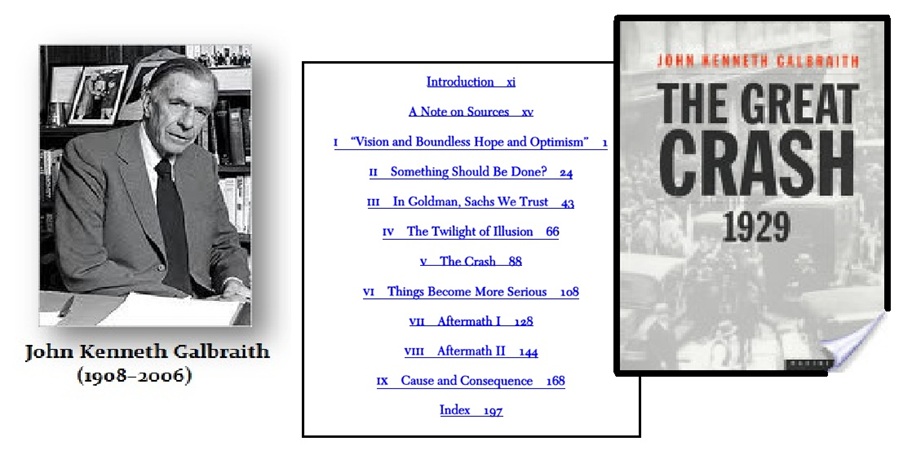
We saw Turkey move to entertain that which set off the contagion in emerging markets overnight. While the history books tend to put the blame for the Great Depression at the feet of corporation, as did Galbraith, they never mention the Sovereign Defaults of 1931 or the fact that there were capital controls imposed.
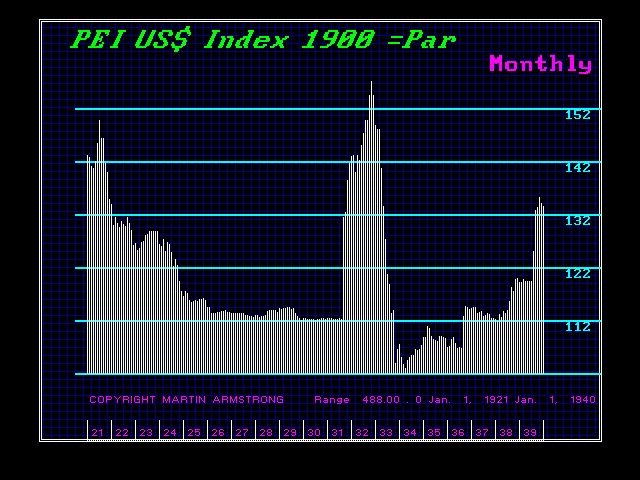
The flight of capital to the dollar was met by imposing capital controls. These capital controls may have solved the flight of capital immediately, but at the cost of a complete collapse in confidence in Europe as a whole. The lesson from 1931 was not that of PROTECTIONISM, which killed trade, but it was the imposition of capital controls that brought international trade to a halt. If capital could not be exported, then commerce could not buy any goods. This was far more drastic than protectionism with tariffs. There just seems to be very questionable analysis applied which was either by true idiots, or more likely, the analysis deliberately hid the actions of government to justify the takeover by Marxist Socialism.

The time frame where we may see governments resort to capital controls may arrive in 2021-2022. We MUST be realistic that capital controls are far worse that trade disputes.
QE & Its Failure


QUESTION: Dear Martin,
During WEC in Rome I came to understand that the issue with QE is that it did not create any inflation in the USA. On the other hand, as you mentioned the inflation is being calculated in a different way that it used to be in the future. How come then the US does not just change the way of calculating the inflation in a way which would show it’s there? Wouldn’t that be an easier way than to do more QEs?
Thank you,

MK

ANSWER: The primary reason QE fails is because the economy is global. Central banks can no longer manage the economy, for the money does not remain in isolation. Additionally, as I pointed out in Rome, they may have negative interest rates, but that does not pass through. You cannot borrow money from a bank at negative rates.

The Threat of Protectionism


QUESTION: Marty:

I read you every day and I am one of the fortunate people to have a financial advisor that attends your Conference every year in the US.

I am wondering how Airbus will be affected in the future as the Euro further declines.

Thanks, RM

ANSWER: This is one of the aspects that caused the protectionism during the 1930s. As the turmoil in Europe unfolded, capital fled to the dollar pushing it higher. This invoked protectionism also propelled by the decline in commodity prices. The protectionism began with the agricultural sector and then spread to other areas.

As the dollar is pushed higher, we will see protectionism rise again probably 2021-2022. European companies that do not have professional hedging departments will suffer greatly.

Moving from QE to Just Monetizing Government


QUESTION: Mr, Armstrong; Why the push for lower interest rates again in developed markets? You have stated the QE has been a total failure. Are they incapable of doing anything else?

KE

ANSWER: We are switching from QE to a new reality of budget management. If interest rates rise on government bonds, the budget blows out. At this stage, the Fed is toying with the idea of setting benchmark rates for 2 to 10-year instruments. This will be different than QE. It will be the collapse of government bond markets on a global scale.

ETF v Mutual Fund


QUESTION: Are ETFs really better than a mutual fund for tax purposes?

HS

ANSWER: The primary difference between mutual funds and ETFs (exchange-traded funds) is that while an open-end mutual fund is priced once based upon the market closing, ETFs as well as a closed-end mutual funds trade all day. This actually goes back to the Panic of 1966 when mutual funds were open-ended but traded on the exchange and were bid up and down based on emotion rather than net asset value. The crash took place because mutual funds were at times selling well above net asset value.

If we look at the reforms post-1966, investors in mutual funds buy or sell them directly from the mutual-fund companies themselves. That creates a different tax structure than an ETF in which purchases go to the market and the ETF is simply created by purchasing the underlying basket.

Mutual funds and most ETFs are governed by the Investment Company Act of 1940. Therefore, this legislation treats them like a pass-through company. When a mutual-fund investor wants to sell, the fund sells shares of appreciated stock to generate cash which creates a taxable capital gain. Since most funds operate as simple pass-through vehicles, those tax liabilities from the gains accrue to all investors in the fund including those who have not sold any holding.

ETFs actually do avoid that type of tax issue. ETFs are not direct buyers or sellers of shares as a mutual fund. The ETF is created by a market maker with a special contract with the ETF provider. The investor has the newly created ETF share which is created by purchasing all of the holdings in the underlying ETF. This basket of shares is given to the ETF issuer thereby creating the ETF shares.

Because an ETF is not a direct buyer of the underlying shares as in a mutual fund, the ETF itself is not a buyer or seller. The basket of shares are swapped and are therefore in-kind transactions, thus there is no pass-through capital-gains tax bill. This is the tax advantage of an ETF over a mutual fund.

Creating the Euro & Germany Was Denied the Right to Ever Vote to join the Euro


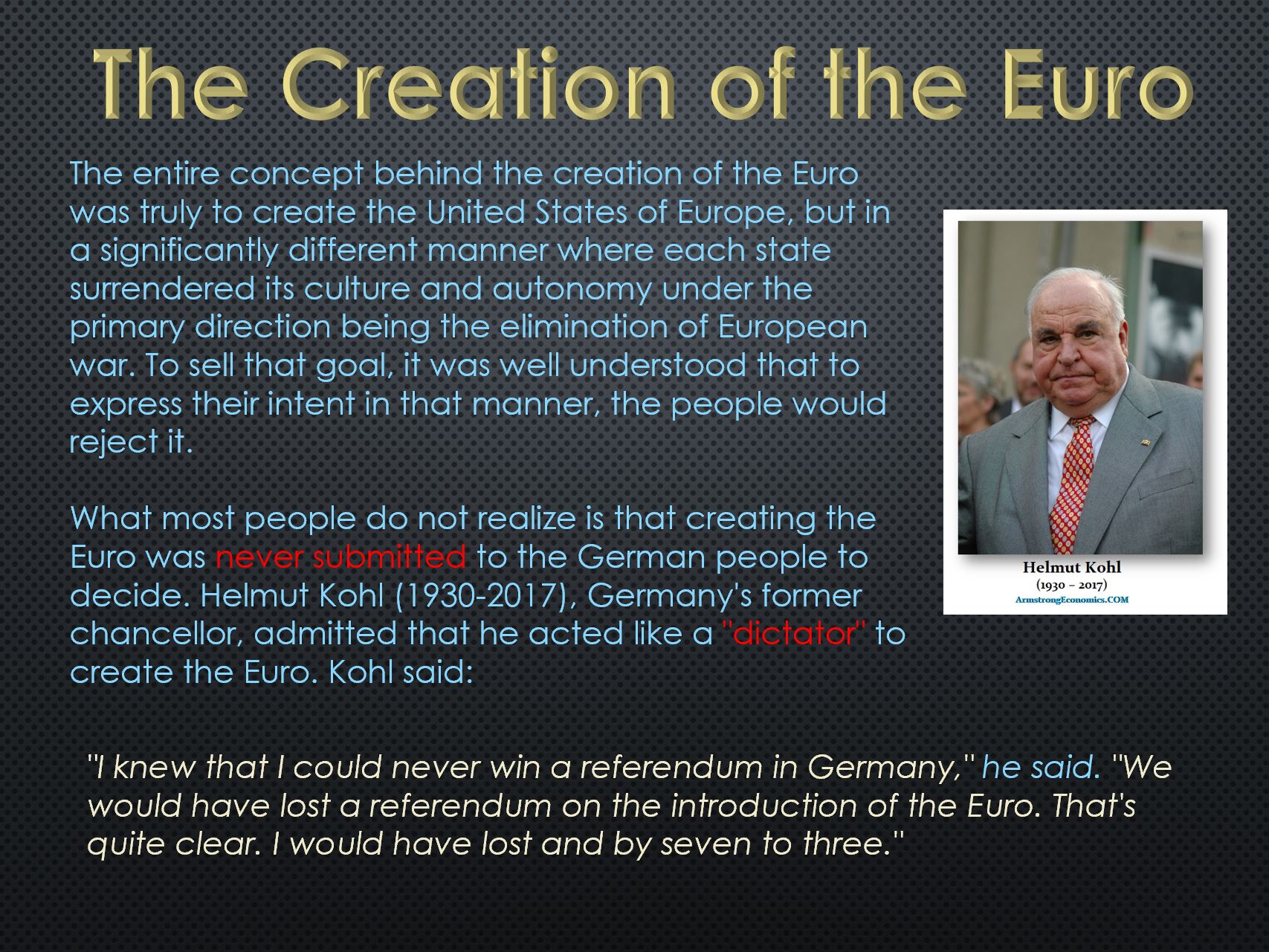
COMMENT: Marty; I just wanted to say that this WEC in Rome was one of your best, NOt that Nigel Farage was there calling you the alternative to Davos, but you really do your research and your contacts behind the curtain become self-evident. Nobody in the audience every knew that the German people were denied the right to vote on joining the euro. The most important economy was denied any democratic process.

See you in Orlando

PG

ANSWER: Yes, I was amazed at how even the central bankers who attended were unaware of that fact. This is part of the reason for the rise in the AfD in Germany. From the outset, the theory has been to federalize Europe to prevent a world war. They assumed the people would never vote for it so they hide the real agenda. The people are not those who create wars – it is always those in power.

What they have done is to fuel the flames of history that remind people of the differences that are culturally embodied within the languages.

How Did Rome Put Money into Circulation with no Central Bank?


QUESTION: How were ancient coins placed into circulation?

DR JB

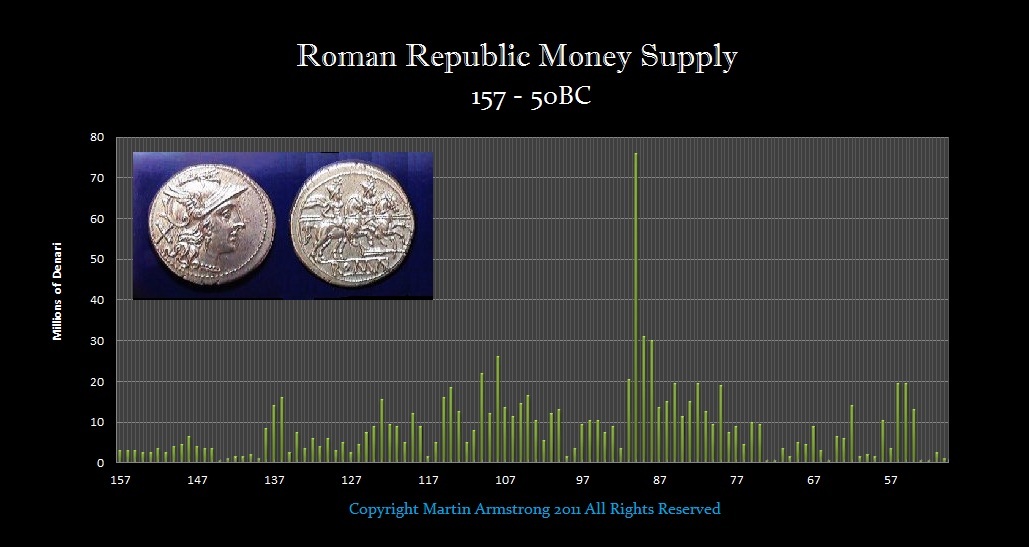
ANSWER: That is actually a very interesting question. As the legend goes, the Gauls (French) attempted to invade the city of Rome quietly, but had frightened the sacred flock of geese that made a lot of noise. This alerted the Romans to the surprise attack giving us the word “monere” meaning in Latin to warn. The Temple of Juno then became popularly known as the Temple of Juno Moneta. Since this is where the coins were minted, we now arrive at the word “money” that springs from the origin of this legend and place that was an ancient mint.

Our term such as capital flow is also derived from the Latin word “currere” meaning “to run” or “to flow” and this is where the money flowed from giving us the word “currency” meaning the flow of money. This is why Juno Moneta is pictured on Roman coins as holding the balance scales in one hand and a cornucopia in the other symbolizing endless bounty or wealth. This is the birth of the term money and currency.

Now, since Rome had no national debt and no central bank, we immediately wonder how on earth did this function? The government-owned the mines and thus they coined money to meet their expenses.  Unlike our modern governments, they did not have a huge welfare state. They did subsidize food. But the coinage was used to pay the troops and government expenses and thus this is how the money was put into circulation. They would increase the output in times of war and decreased it in times of peace for the most part.

The End of Keynesian-Monetarist Theory


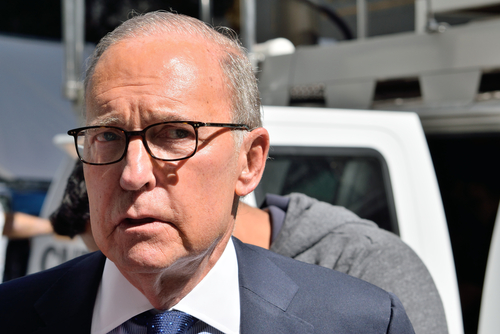
QUESTION: Thank you for your great work. I have read this article where Kudlow says: White House economic adviser Larry Kudlow predicted that it is possible the Federal Reserve won’t hike interest rates again during his lifetime: My question is do you think he is right? And what will the consequence be if the interest rate remains where it is – For example, the next 10 or 20 years?
P.S. Of natural causes, we do not know how long time Kudlow lives.
Best regards
L/Sweden

ANSWER: Perhaps he got bad news from his doctor or it is a political statement that is just absurd. What he is really saying is that Quantitative Easing has so destroyed the Keynesian model that there is now no other alternative for central banks to control the economy. If they raise rates, the budget explodes. We are witnessing the end of Keynesian.Monetarist theory.

Will Social Security Exist in 2021?


QUESTION: Hi Martin,
You mentioned in a 2016 blog post that “We will probably see the end of this Social Security program by 2021.772 (October 9, 2021)”. Does this forecast still have a high probability of occurring? If so, won’t this be devastating to retirees, especially those with little or no retirement savings? My employer no longer offers a pension plan to employees, only a 401K plan.
Ref. “Negative Interest Rates Destroying the World Economy”, Apr 17, 2016.
Kind Regards,
DA

ANSWER: I do not see this unfolding as a default. They will have to revise the system one way or another. There is more likely to be a huge split in interest rates from the private sector compared to the public at the federal level. As I have stated before, I tried to would with Congress back in the ’90s in reforming Social Security transforming it into a wealth fund that was allocated out among managers. The Democrats would not vote for it so this is why Social Security today cannot survive. It invests 100% in government bonds. That means it does not even earn a fair interest rate.


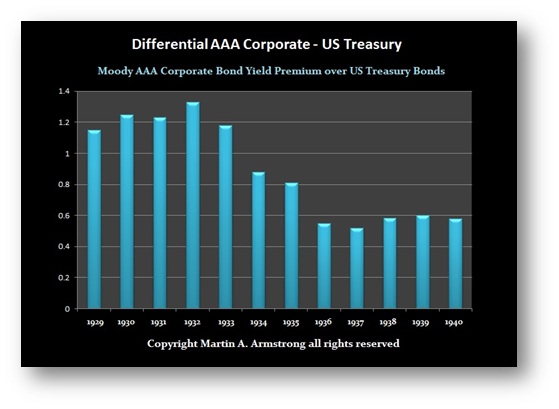
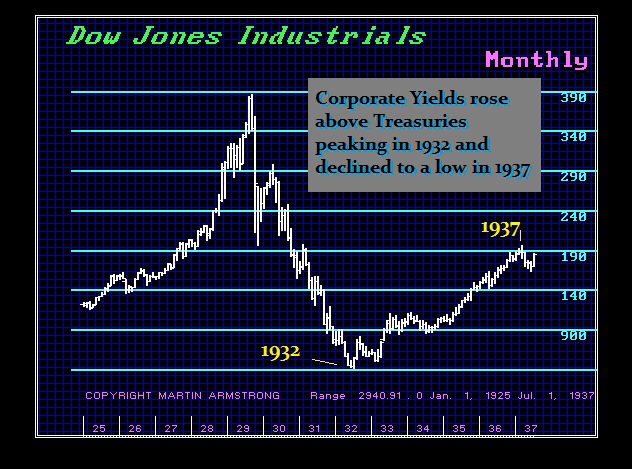
When people feared the private sector, AAA corporate rates soared peaking with the bottom of the stock market in 1932 and then declined to bottom with the rally into 1937. What we face now is the collapse of Social Security because it is restricted to buying only government debt where the interest rates are artificially maintained at absurdly low levels. Therefore, Social Security is already constantly being reduced in benefits. It cannot continue in this manner. It will have to be reformed and changed entirely. I do not believe that they will stop paying people. The way they default is reducing payments and the payments will not be enough to sustain themselves. Look at Venezuela. They honor their pensions, but what you get today will buy only a cup of coffee.

The likelihood of Social Security remaining as it is today is ZERO. Private sector rates will rise v manipulated government rates. We have entered into the Great Unknown economically. The Quantitative Easing of the Bank of Japan and the Europeans Central Bank have wiped out the free markets and ended government borrowing as a viable free market. The far more interesting aspect of interest rates will become the spread between corporate and public at the federal level.


What Will the Fed do in a Contagion?


QUESTION: I have been following your blog for a number of years, public and private. I read the blog concerning “European Politics.” In it you state the capital flight will be a contagion. I understand what the influx of European capital will have on the DOW and S&P, but much less certain of the duration of the impact and contagion. My question is two part; 1) what impact will the contagion have on the US Dollar and how do you expect the US Fed to react interest rate wise and 2) duration of equities move up – short-lived or longer-term trend is your friend.

Thanks

CF

ANSWER: The contagion will last probably 2 years at best. There was such a contagion during the Great Depression. That is what Milton Friedman used to criticize the Fed. All this gold came to the USA pushing the dollar higher, but the Fed refused to monetize it. The backing of gold behind the dollar doubled between 1929 and 1931.

This time we are on a floating exchange rates system so the Fed cannot sterilize the capital inflows as it did during the Great Depression imposing austerity as Germany demand today. Today, the capital inflows are targeting the equities because the interest rates are artificially low. If the stock market explodes, the Fed will be criticized by Congress for creating asset inflation and creating a bubble with low-interest rates.

Unlike the Bank of Japan and the European Central Bank, the US bond market is the only thing trading. The Fed is not trapped as are the other central banks. At some point, the Fed will be obligated to raise rates to fight against the asset bubble, but that will then attract even more capital and push the BoJ and ECB over the edge.

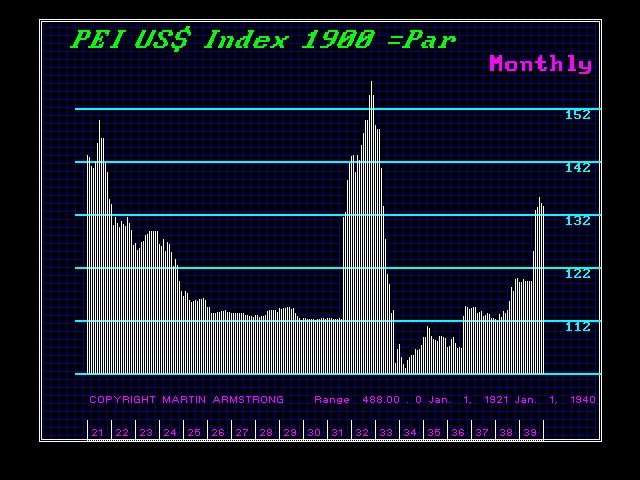
Keep in mind that ONLY a rising dollar compel monetary reform in the USA. During 1934 Roosevelt devalued the dollar and in 1985 they created the G5 to stage an organized group to manipulate the dollar lower. All those people touting gold will rally and the dollar will crumble are clueless. A lower dollar will increase corporate profits and reduce trade deficits. ONLY a higher dollar will break the monetary system.