Understanding the ECM


From Armstrong Economics Models

Martin Armstrong We are Now Alone

The key to comprehending the Global Economy lies in the realization that we are not alone. Everything is connected in an intricate dynamic nonlinear network where the slightest change in one region can set in motion a ripple effect of dramatic proportions around the world. Understanding this dynamic nonlinear global network is the first step in restructuring government and our idea of managing our political-social-economy.

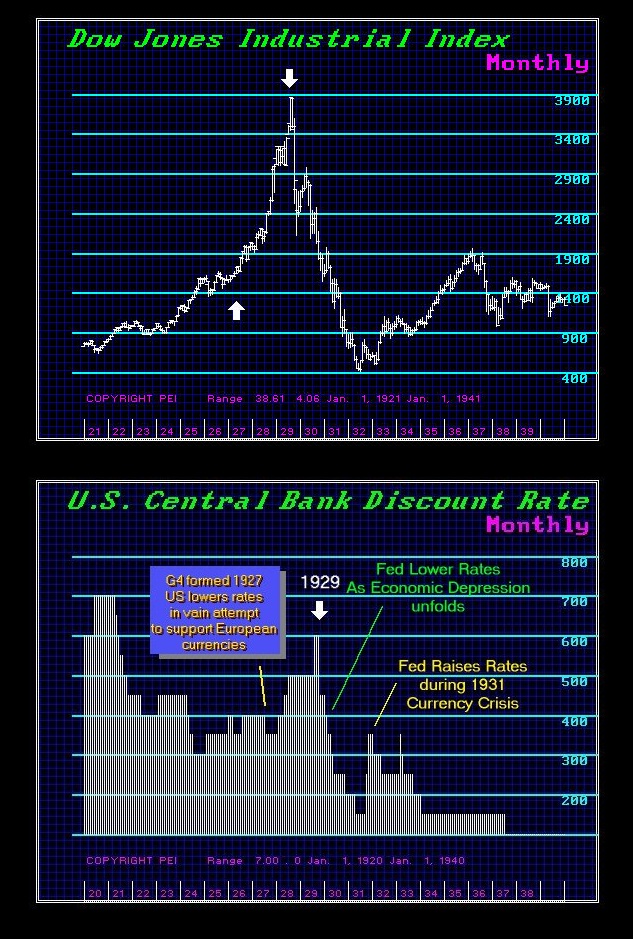
The primary mistake many make with the Economic Confidence Model (ECM) is assuming it should be a perfect model for the stock market, gold, or some other market. It is a global model and does not track any individual market. It is tracking the phenomenon of international capital flows. There is a shift back and forth between PUBLIC and PRIVATE investment trends. For example, the wave that peaked in 1929 was a PRIVATE wave where people had great confidence in the private sector. When the crash came, we turned toward the government creating a more conservative wave of PUBLIC investment where bonds do better than stocks.

The peak of that PUBLIC wave was marketed by the peak in interest rates during March 1981. Confidence shifted back to the PRIVATE sector and the Dow Jones finally broke through the 1,000 barrier. The takeover boom began as stocks had been ignored during the PUBLIC wave and actually bottomed in 1977 from a book value perspective. The takeover boom was caused by the realization that you could buy companies, sell there assets, and double your money. Stocks were seriously undervalued.

Capital concentrates into a single region and then into a single market. There is a cycle to this as well from within a region such as the hot market will be real estate, bonds, stocks, commodities, and then back to real estate. What makes a bubble is this concentration of capital. However, every market retains its own cycle and it is when that cycle lines up with the ECM that we get the big booms and busts. Gold has a 8 year cycle that is fractal building into a 64 year cycle. It peaked in 1980 and declined for 19 years until its model turned in 1998. Because gold has been used as money periodically, you must understand that in a gold standard, inflation means gold declines, whereas it is the opposite during a free market. Therefore, while the 64 year model shows an idealized peak for 1998, it is a turning point rather than a particular high of low. The low in gold at that time sets it up for its ultimate high against government 64 years later.

The key to understanding the ECM is this global capital concentration. Hence, 1929 was a concentration of capital in the USA as money fled Europe and correctly so since they by and large defaulted on their national debts in 1931. This drove the dollar to historic highs, confused politicians who then adopted protectionism, all because capital was fleeing. Today, capital is fleeing Europe in fear of defaults once again.

Its proper use of the ECM is to understand that it is NOT a model based upon a single market and it should not be attempted to force fit this model to any individual market. The key is to watch the individual market that is lining up with the ECM and that is where the most intense capital flow will be moving.

This is why there was a bubble top in US in 1929 and 1989 in Japan. It is global capital flows. Each market has its own cycle that is separate and unique. It is when that individual market lines up with the ECM that you get the big moves.


The 2007.15 turning point picked precisely to the day the peak in the real estate indexes. That was the real turning point. The pressed called it Armstrong’s Revenge. But this is simply how these function. Capital concentrates into a single sector within a single region. It is that concentration of capital that makes that market explode.

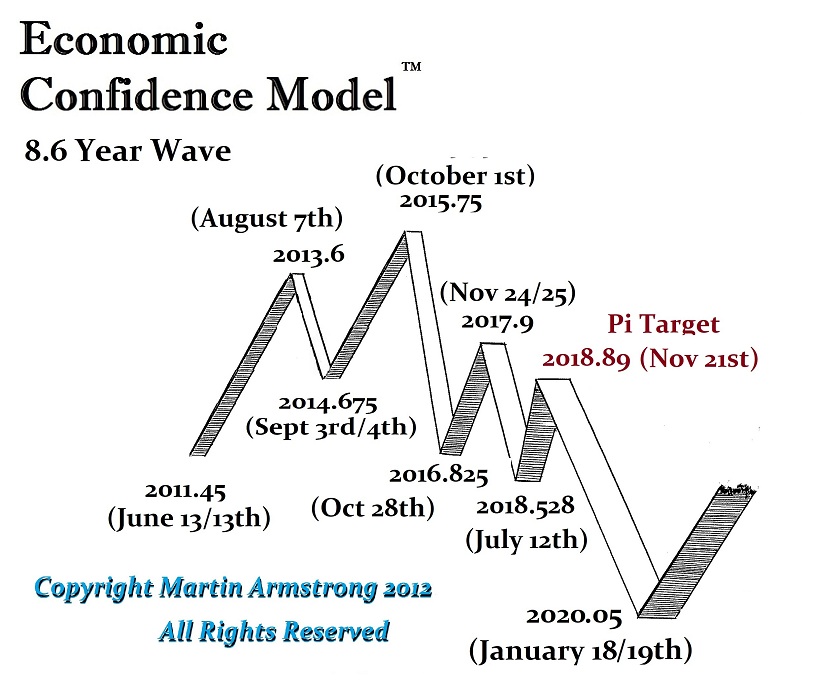
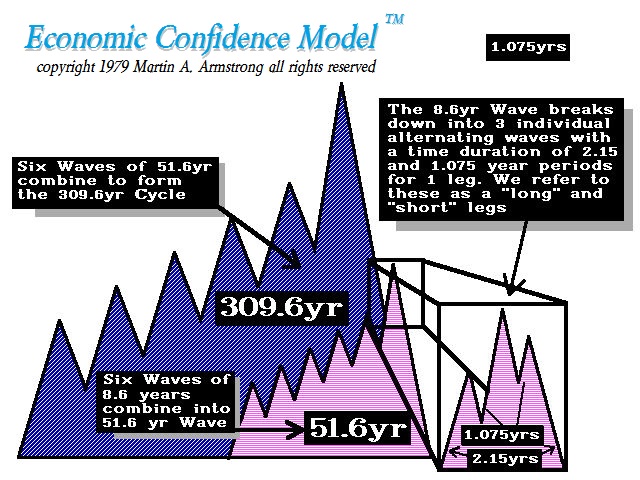
The 8.6 year frequency is fractal in nature and it may indeed work from different dates other than the formal dates we show on the ECM. This is a frequency that is inherent in everything and is fractal in nature. Its proper use is determining the shifts in capital flows to yield the boom bust cycle in the economy (global investment). It is by no means a universal model for every market. Cycle duration in Agriculture tend to be shorter and more volatile because they are also lined up with weather. The markets in financials (stocks & bonds) tend to be the longer than commodities, with the longest cycle duration being real estate.

This cycle has been present even in ancient data. So it is by no means geared to a single market nor should it be presumed to be a perfect model for an individual market. Each market has its own cycle. These are what we show in the Forecast Arrays which are not based on the ECM. It is the correlation of the individual market cycles to the ECM that we discovery where capital will flow to next.

By no means try to use this for a individual market unless that market lines up with the ECM. As you can see, all the things that turn with the ECM over years is based upon capital concentration. It is inherent within the economic structure that we live

The Economic Confidence Model


From Armstrong Economics Models

ECM-Wave-2011-2020The business Cycle is something everyone admits exists, yet they refuse to accept that it can be defined and forecast with accuracy.  The future to most seems to be an intangible part of time itself.  It has no shape, no definition, no substance, yet politicians claim vote for them and they will force the future to comply with your desires. Nonetheless, simultaneously they argue that the future cannot be measured for we do not know its limitations or its boundaries. The future is very much an intangible, yet not when it comes to soliciting votes.

Fortuna-2Yet is it true that we do not know whether there lies ahead thousands of years or if tomorrow may exhaust the supply of time held within future’s grasp. The Roman goddess Fortuna was pictured holding a cornucopia in one arm with the other on the rudder of ship symbolizing she could change the course of your future any time she so pleased. Only the past and the present are tangible. They can be measured, studied, written about, philosophized about or even ignored for that matter. Yet the past and present remain the quantified tangible part of time itself for they are the only surviving evidence that time even exists.

Burns Arthur

Nevertheless, there were two former Federal Reserve Chairmen Arthur Burns and Paul Volcker have concede that the business has defeated all attempt to manipulate society. Paul Volcker even called it the Rediscovery of the Business Cycle The entire theory that government can steer the economy has been proven to be so wrong it is no longer funny.

Throughout recorded time, man has pursued an unrelenting search of some method, some scheme that would steal the very secrets held captive by the future. Mankind’s pursuit of the future has not only caused him to search the far corners of the world, but that of the universe as well.

Delphi-5
In ancient times, men of celebrated wisdom and stature would go to great lengths to travel from the remotest parts of the Hellenistic world to listen to the riddles spoken by a virgin in the lofty mountain tops at Delphi. The tradition of consulting the oracle at Delphi persisted throughout the centuries. The oracle of Delphi compelled even the emperors of Rome hundreds of years later to embark on that very same pilgrimage in search of the answers to the future.

Within every society, man has sought after the illusive secrets that he has envisioned being held captive in a golden cage by the future. Human kind has sought not merely oracles, but fortune tellers, sibyls, soothsayers, seers, mystics, and some noted charlatans and has listened to the interpretations of everything from tarot cards, the entrails of animals they kill, the flight of an owl, to the path of a comet in the night sky. The secrets of the future have forged the human soul into the supernatural.

From a purely objective viewpoint, humankind has stumbled upon curious means that have had some success. Astrology has divided man and his very personality into twelve sun signs. Upon close inspection, although this science is far from being completely accurate, one will notice a sense of striking reality. Parts of this are amazingly accurate in assigning traits and even predicting the future in regards to an individual’s emotions.

Too often we are compelled to make fun of or shun new concepts. Many people believe completely in the occult and will testify to the accuracy of tarot cards and astrological charts. It is said that Napoleon and Hitler both directed their many battles in coordination with the readings and predictions derived from the stars. Such methods obviously are not completely accurate or today we would have been ruled by Adolph Hitler, Jr. or Napoleon X.


But nevertheless, there is some sense of truth that lies hidden within the stars. Is it possible that man did indeed stumble gracefully upon some mystical force? The universe itself was, after all, conceived upon a pattern of cycle. If it were not for this cyclical pattern, we would be unable to predict such common place events as winter, summer, spring and fall. Even everyday events such as watching the weather on television comes from a a study of its past or cyclical movements. With the study of the past, man has attained some success in forecasting the future.

The key to comprehending the Global Economy lies in the realization that we are not alone. Everything is connected in an intricate dynamic nonlinear network where the slightest change in one region can set in motion a ripple effect of dramatic proportions around the world. Understanding this dynamic nonlinear global network is the first step in restructuring government and our idea of managing our political-social-economy.

The primary mistake many make with the Economic Confidence Model (ECM) is assuming it should be a perfect model for the stock market, gold, or some other market. It is a global model and does not track any individual market. It is tracking the phenomenon of international capital flows. There is a shift back and forth between PUBLIC and PRIVATE investment trends. For example, the wave that peaked in 1929 was a PRIVATE wave where people had great confidence in the private sector. When the crash came, we turned toward the government creating a more conservative wave of PUBLIC investment where bonds do better than stocks.

The peak of that PUBLIC wave was marketed by the peak in interest rates during March 1981. Confidence shifted back to the PRIVATE sector and the Dow Jones finally broke through the 1,000 barrier. The takeover boom began as stocks had been ignored during the PUBLIC wave and actually bottomed in 1977 from a book value perspective. The takeover boom was caused by the realization that you could buy companies, sell there assets, and double your money. Stocks were seriously undervalued.

Capital concentrates into a single region and then into a single market. There is a cycle to this as well from within a region such as the hot market will be real estate, bonds, stocks, commodities, and then back to real estate. What makes a bubble is this concentration of capital. However, every market retains its own cycle and it is when that cycle lines up with the ECM that we get the big booms and busts. Gold has a 8 year cycle that is fractal building into a 64 year cycle. It peaked in 1980 and declined for 19 years until its model turned in 1998. Because gold has been used as money periodically, you must understand that in a gold standard, inflation means gold declines, whereas it is the opposite during a free market. Therefore, while the 64 year model shows an idealized peak for 1998, it is a turning point rather than a particular high of low. The low in gold at that time sets it up for its ultimate high against government 64 years later.

The key to understanding the ECM is this global capital concentration. Hence, 1929 was a concentration of capital in the USA as money fled Europe and correctly so since they by and large defaulted on their national debts in 1931. This drove the dollar to historic highs, confused politicians who then adopted protectionism, all because capital was fleeing. Today, capital is fleeing Europe in fear of defaults once again.

Its proper use of the ECM is to understand that it is NOT a model based upon a single market and it should not be attempted to force fit this model to any individual market. The key is to watch the individual market that is lining up with the ECM and that is where the most intense capital flow will be moving.

This is why there was a bubble top in US in 1929 and 1989 in Japan. It is global capital flows. Each market has its own cycle that is separate and unique. It is when that individual market lines up with the ECM that you get the big moves.


The 2007.15 turning point picked precisely to the day the peak in the real estate indexes. That was the real turning point. The pressed called it Armstrong’s Revenge. But this is simply how these function. Capital concentrates into a single sector within a single region. It is that concentration of capital that makes that market explode.

The 8.6 year frequency is fractal in nature and it may indeed work from different dates other than the formal dates we show on the ECM. This is a frequency that is inherent in everything and is fractal in nature. Its proper use is determining the shifts in capital flows to yield the boom bust cycle in the economy (global investment). It is by no means a universal model for every market. Cycle duration in Agriculture tend to be shorter and more volatile because they are also lined up with weather. The markets in financials (stocks & bonds) tend to be the longer than commodities, with the longest cycle duration being real estate.

This cycle has been present even in ancient data. So it is by no means geared to a single market nor should it be presumed to be a perfect model for an individual market. Each market has its own cycle. These are what we show in the Forecast Arrays which are not based on the ECM. It is the correlation of the individual market cycles to the ECM that we discovery where capital will flow to next.

By no means try to use this for a individual market unless that market lines up with the ECM. As you can see, all the things that turn with the ECM over years is based upon capital concentration. It is inherent within the economic structure that we live.

Bitcoin v Gold


QUESTION: Do you think that Bitcoin will replace gold as some people claim it is some new reserve asset?

Thank you for being the voice of reason in the middle of all these people p[reaching their own position.

GD

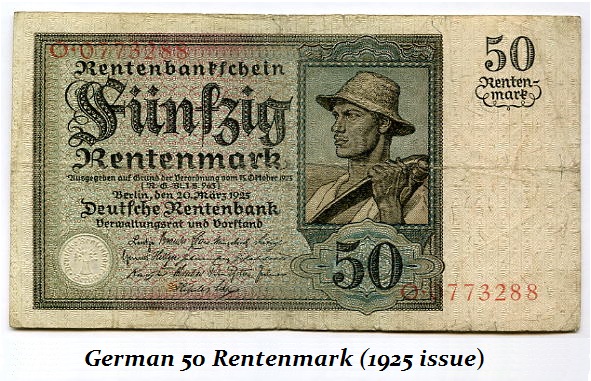
ANSWER: That is really a bizarre question. I do not see how that is possible. As far as it becoming a reserve asset that surpasses everything else, I would have to say that is not plausible. These are proposals propagated clearly by retail people involved in the conspiracy world. Even if we look at the German hyperinflation, the PRIMARY assets to survive was real estate. That became the backing of the replacement currency.


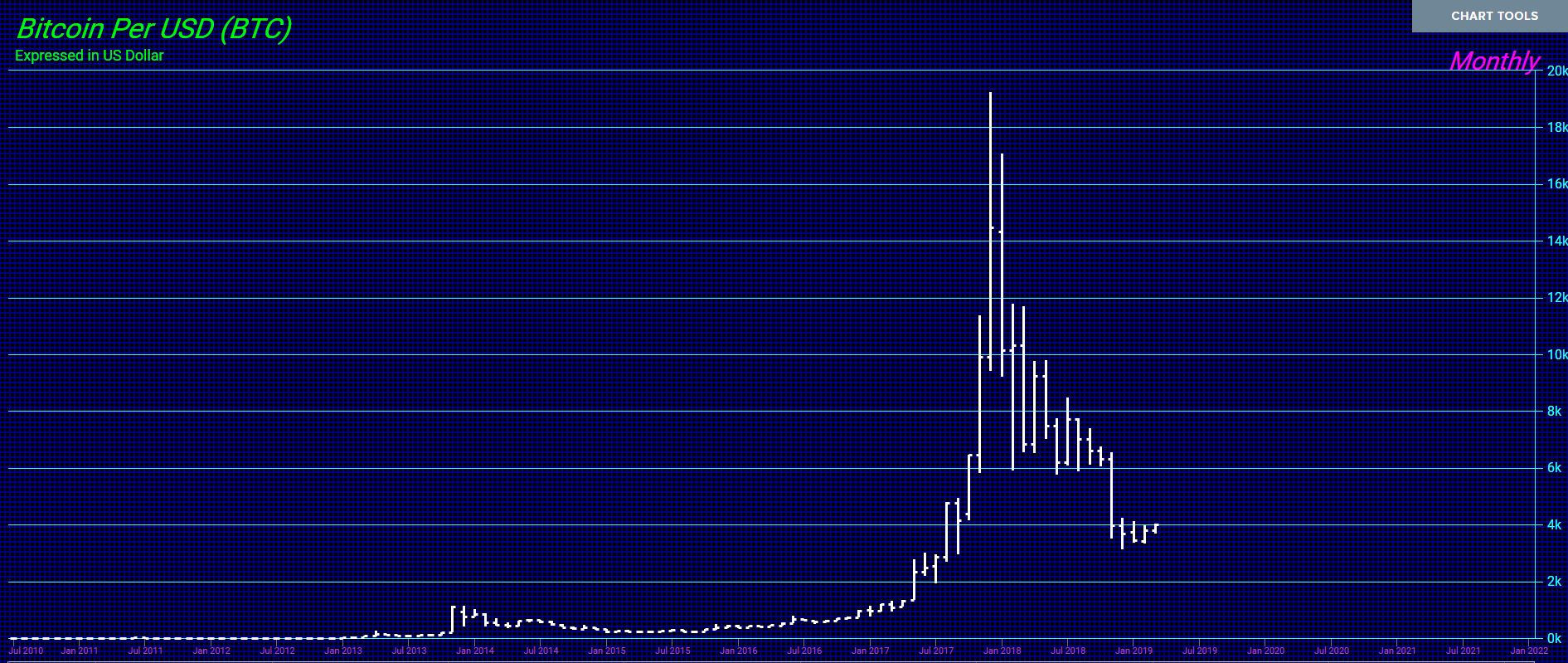
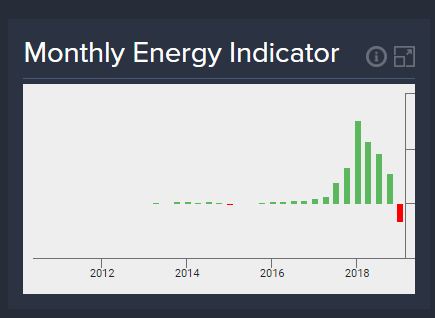
Money itself is NEVER a store of wealth. It rises and falls against tangible assets. I have stated plenty of times that Bitcoin is a trading vehicle — nothing more. Just look at the chart. This fluctuates like everything else. That alone proves it will never be some mythical store of value or reserve assets. Our Energy Models have turned negative so it has squeezed out most of the excess which would allow it to make a rally if it exceeds the Weekly Bullish Reversals (see Socrates report for further details — available to subscribers only).

It does not matter what you are talking about. ABSOLUTELY NO instrument will ever be the main “reserve asset” for people will always disagree. There will be people who cling to gold, others to stocks or real estate, and then we have the sublime fools who will hold government debt. You will never convince everyone to create a single reserve asset.

These are usually the rantings of people unfamiliar with how the world economy really functions. Even central banks hold dollars but in bonds to earn interest. They do not hold physical paper dollars. When they were leasing out gold to earn some income, these same people accused them of suppressing the market in a conspiracy.

Institutions need to earn some income. This is why they do not hold gold. Gold shares they can’t hold but bullion must be lent out to earn income. How are they going to hold Bitcoin that pays no interest and fluctuates like any other commodity?

What these people preach sounds great to the retail market who is just looking to make capital gains. But institutions cannot function that way. Pension funds need income to make payments. They can no more hold Bitcoin than gold bullion in a vault without income.


Are Bonds Preferable to Stocks in a Crisis?


QUESTION: There are a few people coming out claiming the stock market will crash so buy bonds even though you will lose money. How can people keep calling for a mega-crash so long with constantly being wrong since 2010?

Thank you for your reason

NR

ANSWER: These people are still living in a world that is defined by the event of the Great Depression. Even Germany forces austerity upon Europe because they do not understand the events behind their own hyperinflation and stupidly assume it was merely an increase in the supply of money that caused the event. Nobody seems to be bothered to ask which comes first – the chicken or the egg?

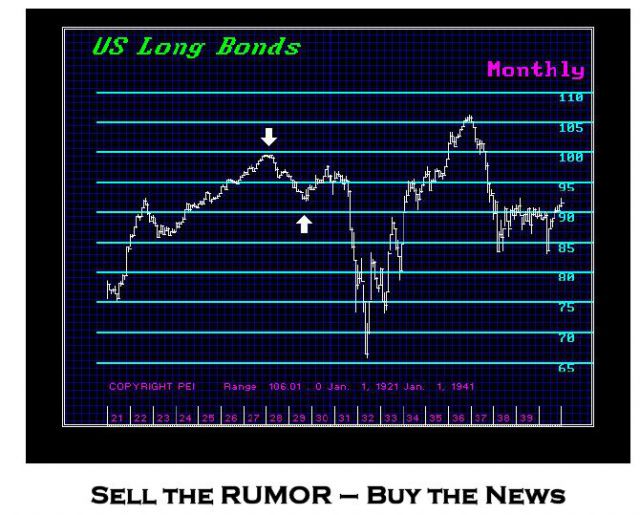
Here is a chart of the stock market with the US Long Bond. Andrew Jackson paid off the national debt in 1835. President Jackson also shut down the Second Bank of the United States on Sept. 10th, 1833. Jackson announced that the government would no longer deposit federal funds in the Second Bank of the United States, which was a quasi-governmental national bank. The stock market peaked in 1835 and began its decline without a central bank. Then during July 1836, Jackson issued the Specie Circular. Under this act, the government would only accept gold or silver in payment for federal land.

Jackson’s Bank War closing down the Bank of the United States was personal because they funded his opposition. By shifting deposits to state banks, Jackson set off a major crisis undermining the entire monetary system. He effectively devalued all the circulating currency in the country with one law – the Specie Circular. Suddenly, there was a run on gold. The Panic of 1837 unfolds as New York banks suspended all withdrawals of gold. Jackson created massive austerity, but he had shut down the national debt as well. This was a very complicated financial crisis with an interesting mix of events combining together.

There were NO federal issues of paper money and the first paper dollar to be issued by the government did not unfold until 1860 to fund the Civil War. Therefore, Jackson effectively canceled all paper money by refusing to accept it and this resulted in a gold panic forcing the banks to suspend all payments. People were rushing to banks to exchange their paper currency for gold and banks could not meet the demand and suspended all demands for gold.

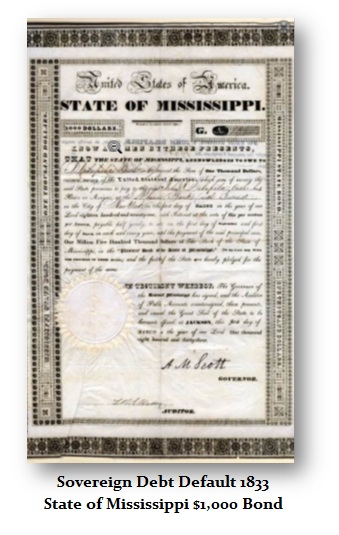
When federal bonds resumed in 1842, they had declined in value as interest rates rose. There was no flight to quality, only to gold given there were no federal bonds. This is when several states moved into default permanently upon their debt. Therefore, the Monetary Crisis Cycle that hit then was felt in the state and local levels – not federal. The Monetary Crisis Cycle that hit in 1931 resulted in widespread sovereign defaults outside the USA.

Each cycle that hits is slightly different characters and reasons. I highly warn against buying any sovereign debt whatsoever. Any federal debt to hold must be short-term no more than 90-day paper. In the case of the Hard Times of 1837-1842, the stock market crashed in terms of gold because all money was effectively canceled. Paper money collapsed as notes lost their legal-tender value. Thus, only gold rose in value as the medium of exchange thanks to Jackson refusing to accept anything but gold.

This time around, bonds are legal tender so that is the money that will decline in value far more than anyone expects. Both the Bank of Japan and the ECB in Europe have wiped out their bonds markets for they have been the primary buyer of government debt which they cannot now resell.


The Stock Market – Up & Away or Crash & Burn?


QUESTION: Mr. Armstrong,

In your blog you talked about a global recession and hard landing. Does this mean the US stock market will rally because funds will flow from the rest of the world to the US stock market? Or will the US stock market succumb to the global recession and go lower too?

This is very confusing for most of us and a very critical time in the markets. I hope you will guides us with your knowledge and experience.

Thank you for all you do!

KC

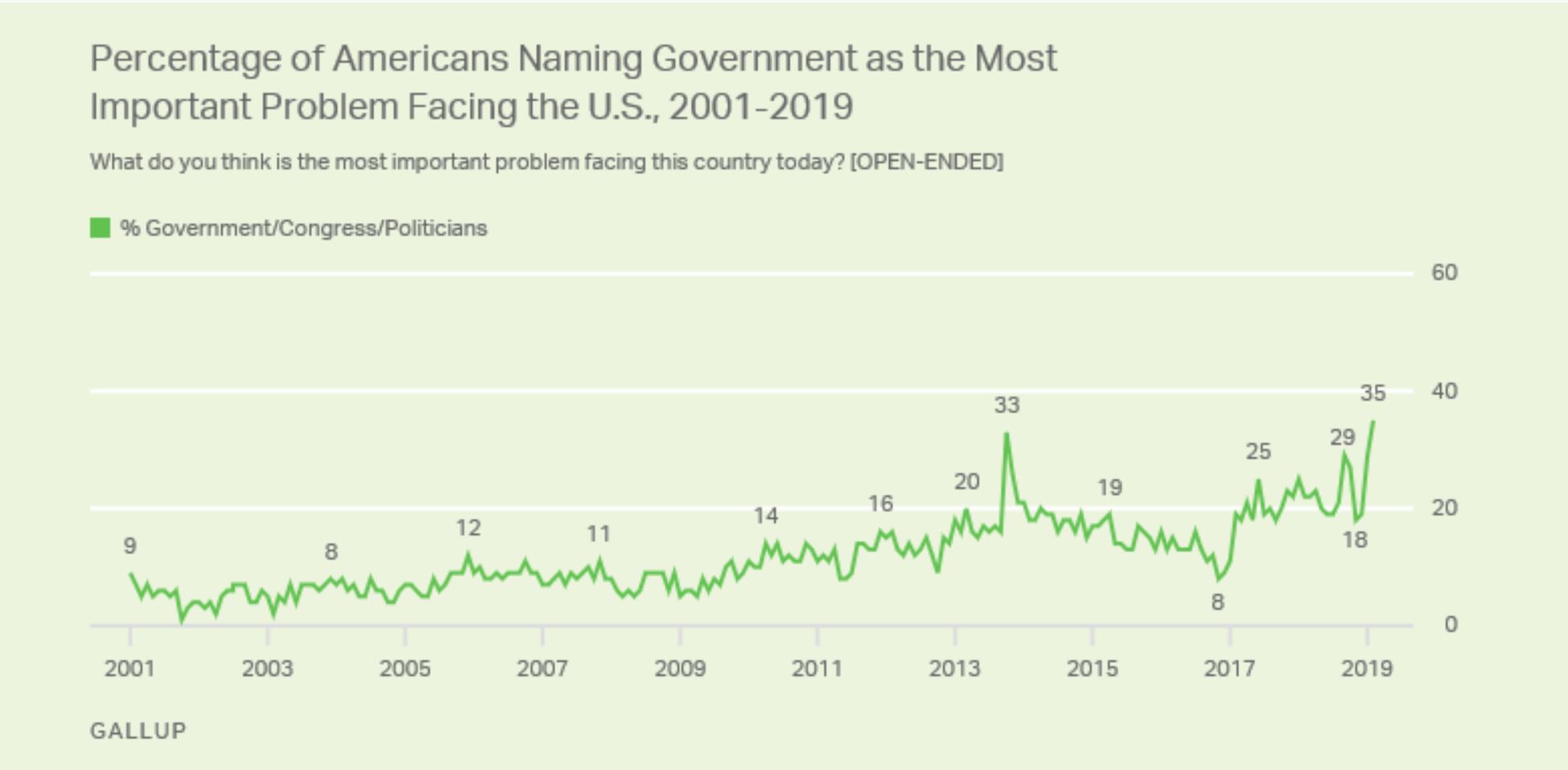
ANSWER: The key to pushing capital fleeing into the stock market will be the decline in public confidence within the government. Everything is unfolding on schedule. You see turmoil everywhere from Canada to France and Italy. The level of people distrusting government is climbing. Normally, it will take a 45% level of people turning against the government to set off the spark.

So no, there still does not appear to be a major crash of 50-62% as the majority are calling. The market is testing resistance, but here too we do not see this as breaking out and taking off just yet. We are in a choppy consolidation building a higher base that qualifies as a cycle low. We will be ready to take off soon. Just be patient.


The Rally Beyond 2015 in the Dow Has Proven We are in a Cycle Inversion


QUESTION: There are many people who are now saying we are headed into a recession. Your model shows we are coming to the end. Yet you have been the only analyst who has been correct. There are bankers warning the stock market will collapse by 50% because it always goes down in a recession. I watched the market rally to new high as you forecast back in 2010 going into 2015. Then you warned the market would invert and continue the rally after 2015. The market rallied into nearly your Pi Target in 2018. You said at the last WEC there would be a correction back to retest the monthly bearish reversal.

You have been correct at every turn. Back in 2014, you posted: “What will not go down when the cycles shift, inverts and rises even further.” It seems that this has been a cycle inversion where the market has just been rising through the upside and downside of your model. My question is this. You still forecast that this is just the staging ground and we are about to see a different pattern altogether. Is this all part of the cycle inversion you have been stating is underway?

NM

ANSWER: Yes. I also wrote in that post: “This is why I have been warning a cycle inversion is coming. We may be in that process now starting from November 19th/20th.” With all the craziness on the horizon economically, the government was the one in trouble, not the private sector. That meant we had to undergo a cycle inversion. That is what is underway. A normal cycle would have seen the market peak in October 2015 and then decline. The fact that the market has continued to rally past 2015 proves this is a cycle inversion. We will be addressing this at the Rome WEC. We are about to make a major play that will be critical to understanding for the future.

Can European Sovereign Debt Really Crash Without a Free Market?


QUESTION: Hi Marty,

When the stock market crashed in 1929, followed by the bonds into 1933, we saw a minor bump in the stock market. As this occurred during a Public Wave, are u suggesting during our current Private Wave, we will see bonds collapse first 2020+, as capital flees into the stock market for a peak in 2022/2023? How will European bonds collapse when the ECB continues QE? Or will the catalyst be one or two large bank ( DB), or country failures (Italy), or Brexit?

Who ranks in importance?

Thank you?

ANSWER: One of the fascinating aspects of what we face is clearly the sovereign bond markets. The ECB and the Bank of Japan fund their government debts without end, and they have both destroyed their bonds markets. I will have to run back to Europe because things are just getting really crazy there. The ECB cannot sell the bonds it has already bought. They have already stated that as bonds mature, they will reinvest that money aside from any new purchases because there is no market. Since they have destroyed their own bond markets, we are UNLIKELY to see a crash if there are no bids and offers. They will simply pretend that sovereign debt is perfectly fine.

What we should expect to see is private sector debt decline as rates rise. The premium of private over government will widen simply because the government debt is not a free market number. I can say that there are a lot of people in various governments who are contacting us these days. This shows there are people who are deeply concerned that this is not going to end very nicely.

As far as which is more serious, BREXIT or an Italian exit, it will be the latter and not the former. Why? Italy was a founding member of the euro and it uses the euro. Therefore, Britain never joined the euro thanks to Maggie Thatcher. Italy leaving the euro will be far more devastating to the euro itself and will complicate matters since the ECB is saturated with Italian debt. There are a lot more ties that have to be cut besides trade, as is the case in Britain.

Is Perpetual Prosperity a Fictional Dream?


QUESTION: Hi Mr. Armstrong…Thanks for trying to settle our confusion re: Griffin’s “Creature” You make a distinction between Gov’t mandated debt & Fed helicopter money. But isn’t debt still just debt?
Also, you seem to be saying the Federal Reserve is a necessary evil (maybe not even evil), & that central banks & fractional reserve banking are a fair & honest system. All very confusing.
I believe you could more easily enlighten our Neanderthal economic brains by simply describing your version of a near perfect monetary system, that’s also immune from political interference. Maybe call it “The Armstrong Guide to Perpetual Prosperity”

We’re NOT mocking you. Would love to see this as would 99% of your readers.

Wishing you a long & healthy life. We need you.

HS

ANSWER: I understand this gets confusing because people have taken one tiny stone and assume the entire mountain is the same. The Fed was created to be funded by the banks themselves to effectively be their bailout institution. As I have written before, the Fed “stimulated” for it was authorized to buy ONLY corporate paper when banks could not lend. Because of WWI, the politicians directed the Fed to only buy government debt and never returned it to its purpose. It is nothing like what it was designed to do.

There is no such thing as Fed Helicopter Money. That is another absolute absurd proposition. The Fed can create elastic money, but it is effectively backed by the debt they purchase. The entire Quantitative Easing was by NO MEANS the creation of money out of thin air. They were buying in government debt which is in itself simply money that pays interest. The Helicopter Money these people argue was supposed to create hyperinflation only revealed that the people who call it that actually have no idea what they are talking about. They pretend that the money was just created with no backing. But it was buying in government debt. The REAL MONEY supply is not simply cash, it includes the entire national debt BECAUSE debt is now collateral and can be used in the economy. The economic reality was simply moving money from your left pocket to your right. The supply remained the same. That is why Quantitative Easing failed to work. The real creation of money is the debt and the difference is significant for it is money that pays interest requiring the creation of ever more debt.

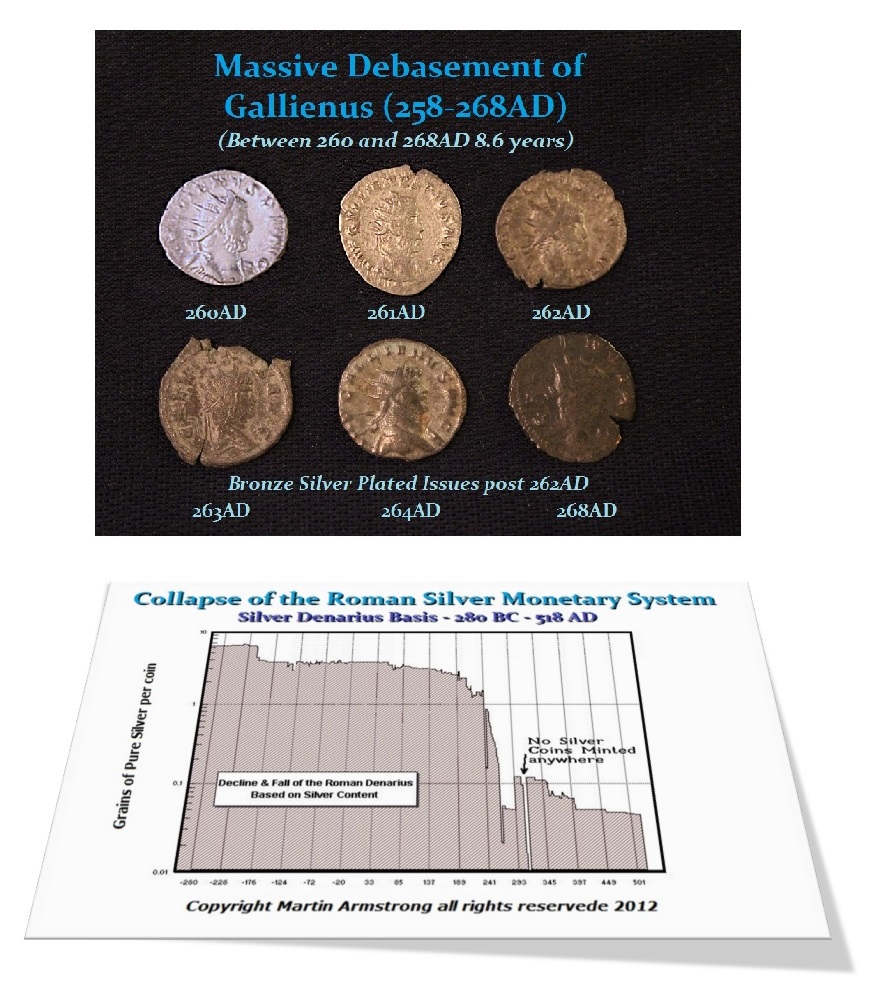
The PERFECT monetary system is one in which there is no debt. Rome lasted for 1,000 years BECAUSE it had no debt. It did use MMT insofar as it created money each year to fund itself. The great debasement took place during the 3rd century when Emperor Valerian I was captured by the Persians in 260 AD and forced to be a slave to the Persian King. That broke confidence in the government; people freaked out and began to hoard everything.

The first criteria are TERM LIMITS and the elimination of any power to borrow. No spending bill may be merged with another. Every bill must stand on its own and the people must vote by a computer on each bill. They cannot be passed without more than 50% of the people voting. Therefore, we restore a DIRECT form of Democratic government. There may be no law that is based upon any religious belief or seeks to impose any restriction upon any race, gender, or sexual orientation. Some people will object. But we must understand that we have to protect even people we disagree with in order to protect ourselves. There can be no exception to basic rights. Arnaud Amalric, prior to the massacre at Béziers, was reported to have said: “Novit enim Dominus qui sunt eius,” which is a direct translation of the Latin phrase “Kill them. For the Lord knows those that are His own.” It is not our station to sit in judgment over others pretending to know what God wants. That is his role, not ours. Laws should never be allowed to be written for the purpose of forcing the belief of one group upon another as we have today with the left v right.

Next, we must eliminate all forms of Direct Taxation (income tax), which requires people to report to the government even to confirm you are not rich. All taxation MUST be indirect as the Founding Fathers intended. The people will pay taxes based upon their consumption. Naturally, raw food and rent should be exempt. Then you cap the government expenditure at a max of 5% of GDP, not to exceed the population growth rate.

Money is simply the medium of exchange. It is NEVER a reservoir or store of wealth. It is merely the unit of account that is no different from a language. If someone says something to you in German, you immediately try to translate it to your native tongue to understand what they said. Money serves the same function. We call Trump a billionaire, not because he has cash in the bank, but because people look at his assets and translate them into money to judge his worth. That is the role of money. We must understand and embrace it. Only then can we comprehend a monetary system.

These are just a few of the necessary elements. The crisis is NEVER the quantity of money. It is those who seek to rule us from above. Direct reform at the powers that be and the monetary system will quickly fall into line. There is no possible “perpetual prosperity” because everything is connected and nature also plays a role in the business cycle. Marx to Keynes have all tried to create the perfect system that will produce endless prosperity. That is an impossible fictional dream.


Thomas Sowell on Intellectuals and Society


Published on Dec 16, 2009

SUBSCRIBE 114K
The author of more than a dozen books, Dr. Sowell is now a senior fellow at the Hoover Institution. In his newest work, Intellectuals and Society, he will discuss why so many disasters of our time have been committed by experts or intellectuals. You may remember FDRs Brain Trust which according to later studies is a prolonged the depression by several years. The wiz kids at the pentagon under McNamara who managed to mess up the Vietnam War, you can run through an impressive list of things, of disasters brought about by people with very high IQ


Trade Deficits & the Confusion Caused by the Methods used to Calculate it


QUESTION: Marty, just reported this past week America’s trade deficit hit a record $891 billion while, in the same week, unemployment report fell to 3.8%. Does this refute the conventional economic belief that trade deficits take away jobs and output?

Cheers, TGM

ANSWER: What is reported as trade is not simply trade. The numbers are all screwed up. It tracks actual goods as well as services and that includes capital flows. The accounting system is set up in such a way that capital investment buying bonds, stocks, and real estate go into the Capital Account. However, all dividends and interest earned by a foreigner on US assets then are accounted for in the Current Account. It is the Current Account that people report as trade which is not correct because it also includes interest and dividends. Thus, the more foreigners invest in a country, the more it will erroneously appear to be expanding the trade deficit as interest and dividends flow back on their capital investment.