Milton Friedman Myths v Reality


The Coming Coin Shortage


The Federal Reserve also established a U.S. Coin Task Force

Dr. Ileana Johnson Paugh image

Re-Posted from the Canada Free Press By  —— Bio and ArchivesJuly 22, 2020

The Coming Coin Shortage

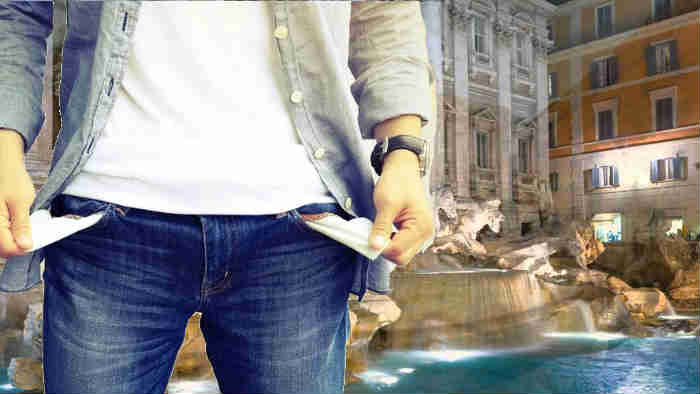
As if the global economic disaster caused by the Chinese Covid-19 viral pandemic was not bad enough, the looming global “coin shortage” and the “unknown pneumonia” (Covid-20?) in Kazakhstan are here.

Why exactly do we have a coin shortage?

  • Banks tell us that the Fed are not releasing enough coins.
  • Armstrong Economics wrote that faith in governments has been eroded. It sees governments as promoters of the idea that money is dirty, and the solution is to eliminate coins and paper money even though physical money as a medium of exchange has been in circulation for centuries.
  • The U.S. Treasury reported a disruption in the coin supply chain and its velocity of circulation due to the lockdowns and the huge reduction in consumption in the last four months of forced lockdowns in all 50 states. People shopped mostly for food and avoided all other venues of direct commerce for fear of Covid-19 infection and because so many places were closed. Many shopped online or in large retailers like Costco, Target, Walmart, and Amazon.
  • Allegedly, the U.S. Mint has minted less coins to protect employees from COVID-19. It is an interesting issue to ponder since minting coins and printing paper currency are highly automated operations, with expensive computers driving the printing and minting presses and requiring very few employees, mostly in checking roles to make sure the machines run properly and the mint/print are done correctly, as well as controlling the quality of each batch that is bound and packaged for distribution and circulation.
  • Some central banks are sterilizing money with UV light to prevent the spread of viral infections.
  • The Fed purportedly quarantined for ten days U.S. dollars returning from Europe and Asia.

The U.S. Treasury sees the current coin shortage in U.S. businesses as a decrease in velocity of various coins in circulation. The Treasury estimated the value of coins in circulation in April 2020 of $47.8 billion as an adequate coin supply, larger than last year’s supply of coins by at least half a billion. But the closing of retail shops, many permanently, bank branches, transit authorities, and laundromats due to Covid-19 fears, eliminated the typical places where coins enter circulation.

Nobody knows exactly if people are hoarding coins on purpose or if the businesses that have closed temporarily or permanently have cleared out all their cash registers of coins and paper currency.

“The coin supply chain includes many participants, from the U.S. Mint who produces new coin, to the Federal Reserve who distributes coin on the U.S. Mint’s behalf, to armored carriers, banks, retailers and consumers, all of whom have a role to play in helping to resolve this issue.”

On June 11, the Federal Reserve announced the Strategic Allocation of Coin Inventories which was a temporary coin order allocation in all Reserve Bank offices and Federal Reserve coin distribution locations effective June 15, 2020.

The Federal Reserve also established a U.S. Coin Task Force in early July to deal with disruptions to normal coin circulation.  All interested parties participated – U.S. Mint, Federal Reserve, armored carriers, American Bankers Association, Independent Community Bankers Association, National Association of Federal Credit Unions, Coin aggregator representatives, and retail trade industry.

The Federal Reserve said that “it is confident that the coin inventory issues will resolve once the economy opens more broadly and the coin supply chain returns to normal circulation patterns, however, “it recognizes that these measures alone will not be enough to resolve near-term issues.”

Hoarding Cash and the plan to Eliminate cash!


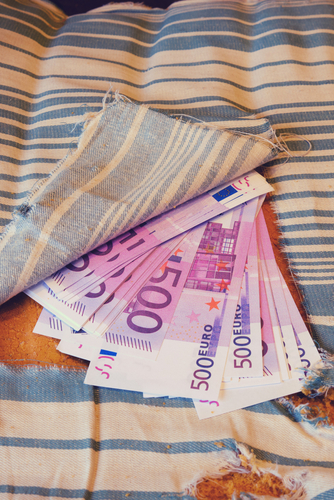
The reason there is a shortage of cash developing around the world is rather straight-forward. The trust in the government is collapsing. Italy has just lowered the legal amount someone can pay for anything in cash from €3000 to €2000. Australia made it a criminal act to pay for anything with A$10,000 or more (US$7,000).  In Switzerland, the limit on cash you can withdraw from an ATM is CHF5,000. In Germany, the limitation is typically €1000. Greeks abroad will be able to withdraw up to 5,000 euros ($5,800) a month.

In the United States, the US Treasury says the pandemic has significantly disrupted the supply chain and circulation patterns of US coins. Additionally, the US Mint has been printing fewer coins to protect its employees from COVID-19. The World Health Organization (WHO) has not advised banning paper money, but it has stressed the need for handwashing after touching cash, which is a subtle caution that money should be limited. Some central banks are deploying measures to sterilize paper money with heat or UV light. Even the Fed began a seven to 10-day quarantine for United States dollars returning to the country from Europe and Asia.

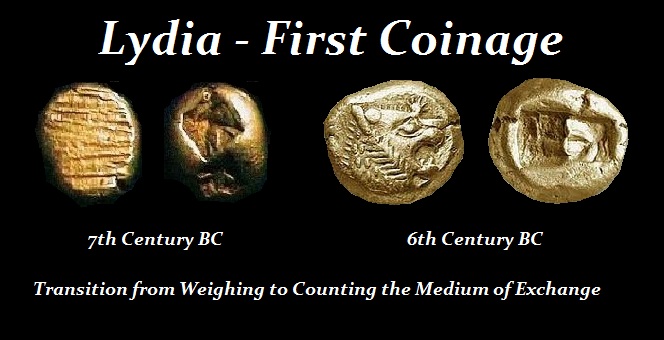
It is very clear that governments are trying to paint money as dirty, and the solution is to eliminate physical money, despite the fact that it has been in use since about the 7th century BC. All of a sudden, it is a danger after 28 centuries. This plays nicely into the Socialist’s dream to control everything!

Milton Friedman – What is America?


Trend in Interest Rates


COMMENT: Marty,

Good morning. Repo rates have been creeping up ever so slightly and quietly. Points wise not much, but percentage-wise, numbers are getting bigger. Has everybody been lulled to sleep and looking the wrong way again?

Best,
E

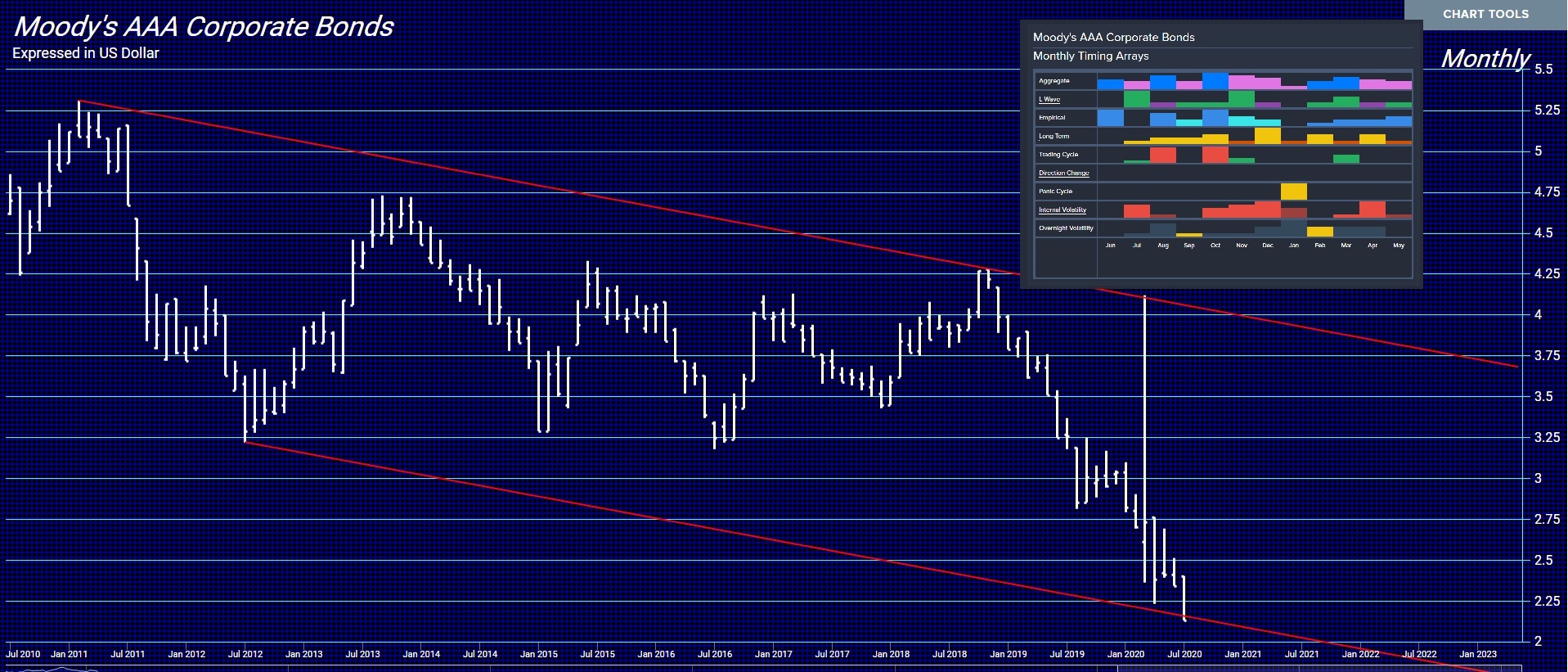
REPLY: The shift from a Public to a Private wave is in full motion. We can see this in Moody’s AAA Corporate Bond Index. Note that the while chaotic swing in March ran right up to the top of the Downtrend Channel and then we have swung down and just closed below the bottom of the channel. We have an important turning point arriving in October. We show the next major turning point in the US 30-year bonds being September.

These governments imposing lockdowns again are acting political rather than in the best interest of the people. Locking people down results in a collapse of tax revenue. Many in the USA have been promised by the Democrats they will be bailed out if they win the White House right down to their pension funds. This is what is going on behind the curtain – cutting deals.

Clearly, these governments are not stupid. They have to realize how much revenue has collapsed and how much damage they have caused to the people and the economy. Our models are projecting HIGHER interest rates ahead and this reflects their high-risk gamble on trying to overthrow Trump. What they fail to grasp is that the private sector has lost all confidence in governments and as such, they have destroyed the old financial system of perpetual borrowing.

As fiscal mismanagement abounds, interest rates will rise to reflect credit risk. The central banks are powerless to prevent this rise. The Fed cannot buy all state debt any more than the ECB will be authorized to buy all sovereign debt in the Eurozone. We have reached the point of no return.

Risk Seems to be Everywhere


QUESTION: Dear Martin,

Thank you for your commitment to helping others through this unsettling time.

Long before I found you, I was fascinated with the capital markets and historical financial crashes, in particular. I spent many years on Wall Street (and LaSalle ST) building and marketing trading systems for the listed options industry.

Through the numerous currency failures, be they inflationary or deflationary, running to private assets has been a lifesaver for some clever enough to figure it out or those lucky to be serendipitously well positioned. Yet, it is always about timing. That is the subject of this question.

If the value of a currency is based on the productive power of the people behind the currency, it makes sense that Socrates is pointing to private assets going forward. It seems to me that the very best private assets would be businesses that enjoy productive power (not so easy to predict/choose in this environment). Whether we are denominating in dollars, rice, or seashells, it seems that a solid business will crank out currency units in whatever form and be a good hedge.

Hugo Stinnes emerged after WWI as an industrialist. Controlling coal, steel, electricity, and other fundamental businesses, he was able to profit as the currency collapsed. Stinnes continued this work straight through the introduction of the Rentenmark and Reichsmark seemingly not skipping a beat. He possessed productive power but was also very politically connected, which is key to this question. Later, The Third Reich was notorious for shutting down or nationalizing businesses. We look to be headed in that direction.

For those accumulating profits in, for example, mining stocks during the commodity boom, or wheat contracts, or equities, the question is, how do we get out of those trades? What is the risk that we sell/trade at the right time only to have our assets seized? For example, do you foresee a day, here in the U.S., whereby the government liquidates a portion of an account’s common shares for a bail-in or wealth tax? If so, then illiquid private placements (productive real estate or businesses with durable Free Cash Flow) that are very hard to value (and liquidate) might be the only real safe haven.

The risk seems to be everywhere. The risk most concerning and most difficult to predict or quantify is Government Risk – even here in the U.S. I can understand why the very wealthy buy paintings and rare items. Such items represent a real possibility to function as a “time machine” to bridge this insanity.

I would love to hear your thoughts. Above all, Socrates is a lifesaver and I am humbled to have access.

With respect,
JC

Texas

ANSWER: Yes, I knew a client who bought up all the old coins for scrap metal. Then it turned out there was a shortage of metal so the old coins were deemed valid at a new exchange rate. He made a fortune. There are definitely commodities that will preserve wealth in times like this. We must be careful about the Socialists, for they will do the same as the Nazis and nationalize just confiscating assets.

I believe the best shot we have is Socrates — let it monitor the subtle shifts. The one thing you can count on is the greed of those in power. Just as I began to see the subtle shifts with the Repo Crisis last August 2019, thereafter the markets were showing something was not right. I stood up at the WEC in Orlando and warned that something was seriously wrong and that the market would undergo a serious correction with the turn in the ECM.

Historically, Socrates seems to pick up things we humans do not see because they are subtle. It is like playing chess. You have to come up with a strategy and play in your mind the next several moves. You will lose if you simply react on a one move at a time basis. This is what Socrates is doing. It is playing out strategies. It looks for the possible paths and then monitors the movements across the entire globe to determine the eventual path. This is why NOBODY can forecast the future with 100% accuracy. We cannot as humans see all the possibilities. Socrates is mapping out the future and it reveals the most likely path and course of action.
Things can change and we get cycle inversions. But it is always playing one region against another. This is why all of these pundits fail because they focus typically just domestically and never see the trends coming from external factors. Things are so bad in Europe and the politicians are deliberately blocking travel from the USA to Europe in an effort to overthrow Trump to further their New Green World Order. In the process, before year-end, they will bankrupt at least 20% of all small businesses and wipe out the tourist trade for Southern Europe. These morons think they can placate the public with minimal subsistence from Guaranteed Basic Income they are beginning in Spain.

They will NOT be able to defeat the Monetary Crisis Cycle no matter what schemes they come up with. This is totally insane. Nevertheless, we will be monitoring what markets we need to exit in advance to try to preserve assets. This is a game of survival of the fittest. We do not have to run around naked on some island eating bugs. But we may have to take precautions and move to safe havens outside of urban cities for sure.


Stores Must Take Cash by Law


QUESTION: Dear Mr Armstrong,

Here is a softball question for the holiday weekend.

If US currency is legal tender, aren’t retail stores obligated to accept it?

This would seem to restrict the ability of retail stores to 1) demand electronic payment and 2) reject payment using $100 bills.

Happy 4th to you.

MB

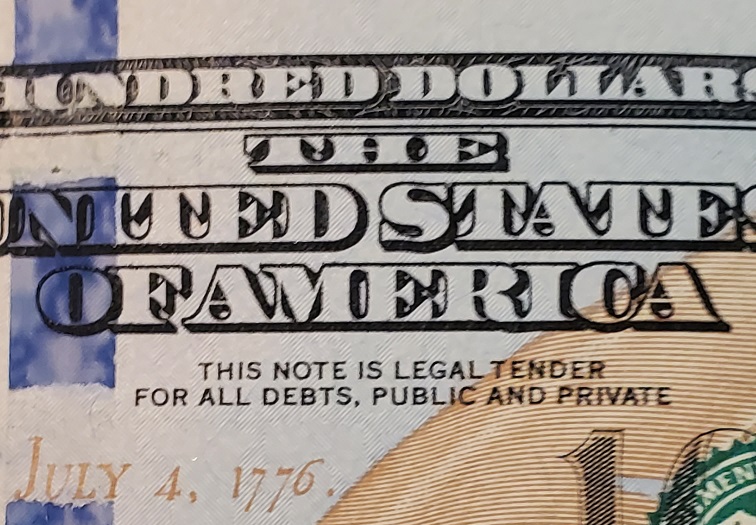
ANSWER: You are correct. Stores MUST accept cash – that is what LEGAL TENDER means! Congress would have to pass an Act and the President MUST sign it to eliminate paper money.

Trading is the Only School to Learn Real Economics


QUESTION: I noticed that all the economists who are not academics are the people who actually discovered something. The academics always advocate for manipulating society like Keynes and Marx. Why is that?

PD

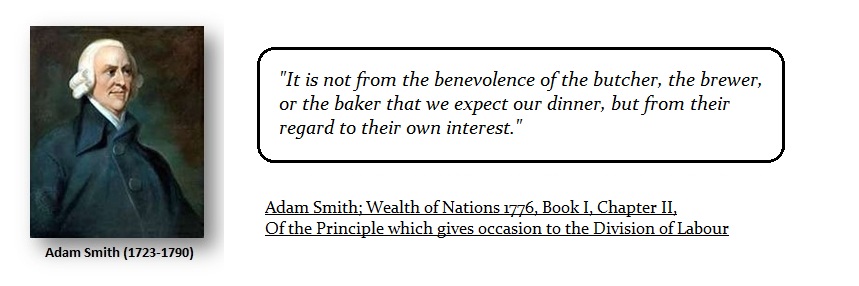
ANSWER: If you look at the first analyst to establish supply and demand, it was John Law. Even Adam Smith used his examples in “Wealth of Nations.” Adam Smith actually investigated his work to come up with his invisible hand. There was David Ricardo, who also made a fortune as a trader. Those are the three greats and NONE of them has a formal economics degree, which was first taught as a separate course in 1902 at Cambridge.

Those of us who come from the real world of trading, do not have the luxury to come up with Utopian theories that sound nice. Unless you have traded, you will never understand that the market is always right. If you do not listen to the market, you will lose everything.

Trump Could Launch the Receivables Liquidity Corporation


The RLC backed by the government is in a better position to wait out the economic recovery and collect at the best time and have an organized collection program

Jonathon Moseley image

Re-posted from the Canada Free Press By  —— Bio and ArchivesMay 24, 2020

Trump Could Launch the Receivables Liquidity Corporation

We are fortunate that President Donald Trump is a businessman who knows how to bounce back from difficulties.  However, the United States really is already in a depression.  We don’t yet have technical indicators stretching over several quarters.  Yet:  “Total nonfarm payroll employment fell by 20.5 million in April, and the unemployment rate rose to 14.7 percent, the U.S. Bureau of Labor Statistics” reported on May 8.

We can fix this.  But it will take swift and decisive action.  We’ve seen it in movies:   The giant airplane is in a power dive heading down into the side of a mountain.  The hero manages to restart the engines and turns the nose up just in time to clear the mountainside and head back upward.

This is a proposal based on my years as a debt-collection attorney in Virginia

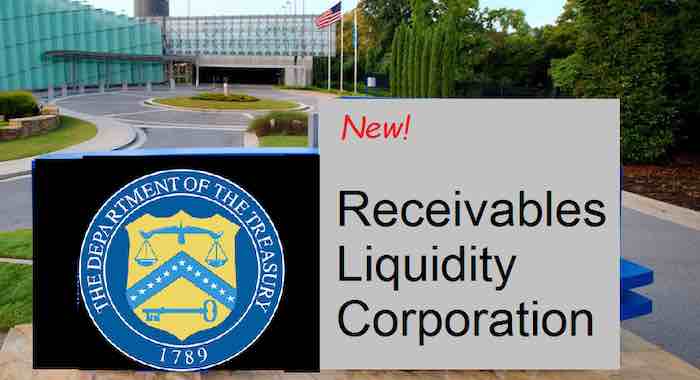
President Trump could create a Receivables Liquidity Corporation. (You heard that name and idea here first.)  After the Savings & Loan crisis, the government created a private corporation backed by the U.S. Treasury, called the Resolution Trust Corp.  The RTC took over failing banksand slowly liquidated their assets at opportune times.  During the 2008 mortgage crisis bailouts, allegedly the U.S. Treasury turned a profit eventually.  The government sold the stock it acquired in the bail outs at a time of panic (low prices) and then sold them after the economy had grown healthy (high stock prices).

This is a proposal based on my years as a debt-collection attorney in Virginia.  This could work for Canada, the European Union, now independent England, even the Bahamas or almost any country – not just the United States.  It can even work combining several nations together.  However, it does require a nation with sufficient financial credit to carry debts for a long time until the ideal time to collect on them.  And it requires a mindset to think outside the box with a more business-oriented public private partnership.

The engine has seized up.  When we try to start the engine again, it is going to be bad.  If everyone pulls back and values plummet just because people are frightened, the damage will be far greater than if the new RLC takes payment much later, after things have rebounded.

As soon as the economy re-opens, it will end the freeze on evictions of renters behind on their rent and foreclosures on mortgages.  Within two months of re-opening, many of those 20.5 million unemployed could be homeless.   Those unemployed won’t be able to suddenly repay 2 to 4 months of overdue rent or mortgage payments.

Businesses have been unable to pay rent for offices, store fronts, etc.  Utilities haven’t been paid.  Businesses have accounts receivable but their clients can’t pay those invoices because they are not getting paid.  Those clients can’t pay because their own clients aren’t paying.  And on and on.

President Trump hoped early on that there would be pent-up demand and the economy would snap back.  But he acknowledged back then that the longer the economy stays closed the harder it would get.  Now, there may be a lot of desire to buy.  But will people have the money to spend?

Consider the situation for many small businesses:  As a solo attorney, I am a small business.  Before the pandemic, clients typically had no money to pay me.  Now, no one is paying them.  They have on-going expenses for food and what rent they can cover, with no income in most cases.  The people who should be paying them have no money because they are not getting paid.  So I’m not getting paid for past work or hired for new work.  So my vendors aren’t getting paid.  Etc.  A negative cascade.

The stimulus checks in the United States were small and late.  For many businesses, the $10,000 small business advance loan never arrived.  And the Paycheck Protection Program Loan—for the very small businesses who can get one—is only 2 ½ months of a business’ payroll after cutting any salaries above $100,000.  The size of the economy is enormous.

However, those programs do not have to be repaid.  The only way that the U.S. Government can afford to spend a lot more is if the money is repaid—eventually.

How?  The time horizon for small business is short.  They can’t survive for long without getting paid by clients.  By contrast, the Treasury can carry those invoices for years until the economy has rebounded and the debtor can afford to pay.

So let’s say a landlord is owed 4 months’ rent for a business or a residence.  Once the economy restarts, and the ban on evictions is over, he’s got to collect that unpaid rent from people who don’t have any money after 4 months of house arrest.  Or businesses have shipped products that they haven’t been paid for.  Or utility companies have overdue utilities for 3 to 5 months.  What are they going to do?  If they try to collect, they will leave businesses in the dark without electricity or homes without water.  How is the economy going to rebound like that?

Instead, the landlord or utility company sells the invoice to the Receivables Liquidity Corporation and gets paid in full.  Hopefully, the invoice eventually gets paid to the RLC with interest when the economy has recovered.  The debtor must agree to:

  1. waive rights to discharge that particular debt in any bankruptcy,
  2. provide the owner’s personal guarantee for a business,
  3. waive the statute of limitations,
  4. consent to deduction from tax refunds,
  5. certify that they do not dispute the debt or to what extent, and
  6. add interest if the invoice did not provide for it.

In return the debtor gets a grace period of one year or more before having to start repaying the invoice(s) (with a possible hardship extension if circumstances warrant on application).   The debtor would get an installment plan to pay back over time.  If the debtor does not agree they are subject to immediate collection action.  So they have motivation to agree to the terms.  If they cooperate, they get a breather of at least a year before they have to pay.

The RLC backed by the government is in a better position to wait out the economic recovery and collect at the best time and have an organized collection program.  While some invoices will not get paid, hopefully enough will be paid with interest and collection fees – eventually—to come close to breaking even.

One small problem:  Who would run this program?  Wink.  Call me….

Value of a Currency


QUESTION: Hi Mr. Armstrong,
You have said that money is not gold, or silver, or oil, or fiat currency, but rather represents the collective elbow grease and ingenuity of a people. From the work of Socrates, which country or countries best typify this concept and therefore will become the better countries to live in, so that we may guide our families and children in that direction?
As always best to you and your vision, and thank you.
MB

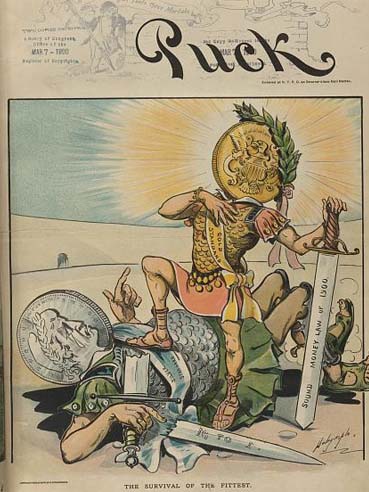
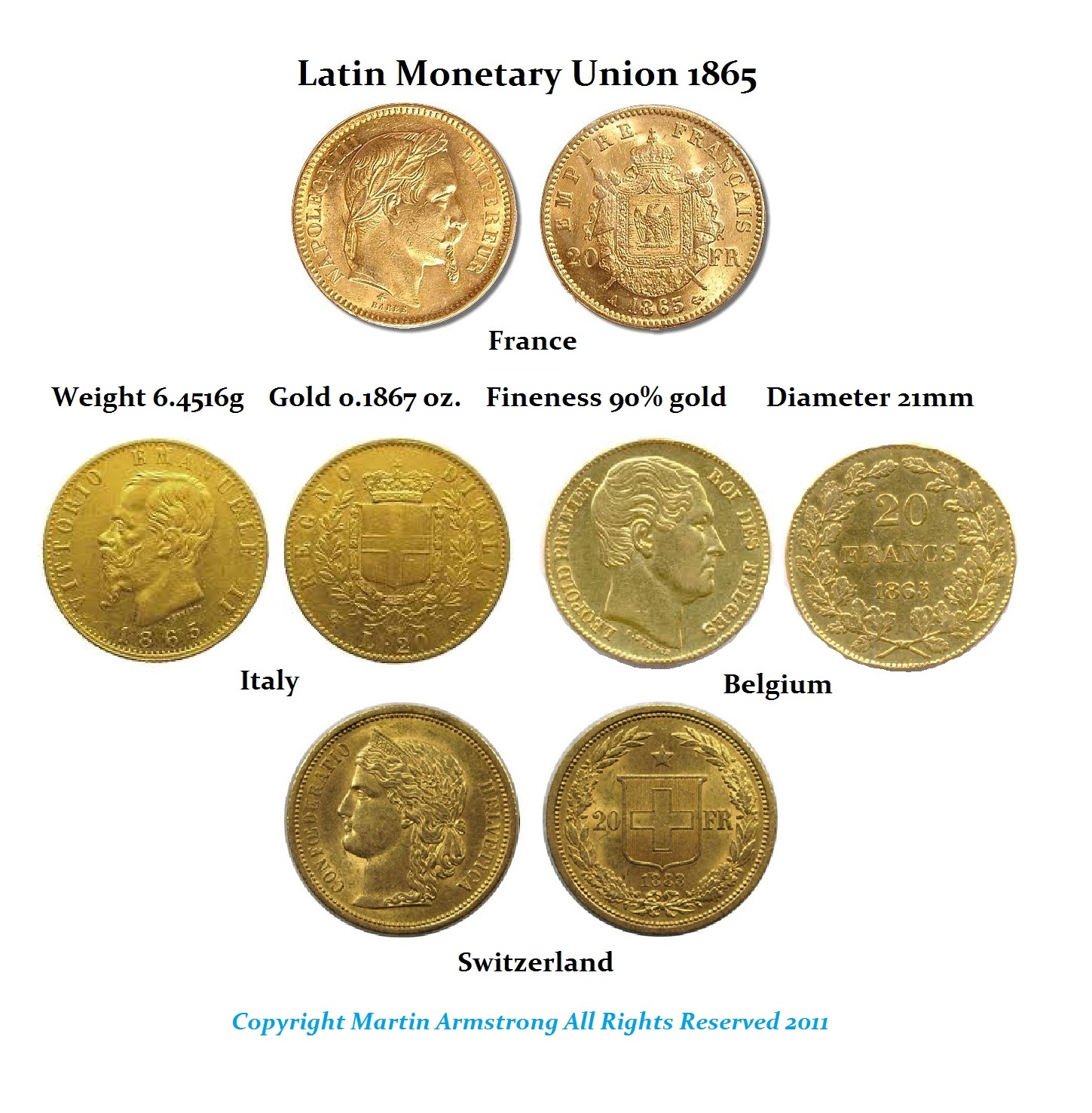
ANSWER: What made America great was not our resources. The Silver Democrats tried to force a higher silver to gold ratio and were bribed by the silver miners. When the world was on the gold standard, that dictated the value of a currency in international FOREX markets because the value of the currency was just the metal content. Napoleon attempted to create that standard and the idea, known as the Latin Monetary Standard, was used after his defeat where the coins were all of the same weight and purity.

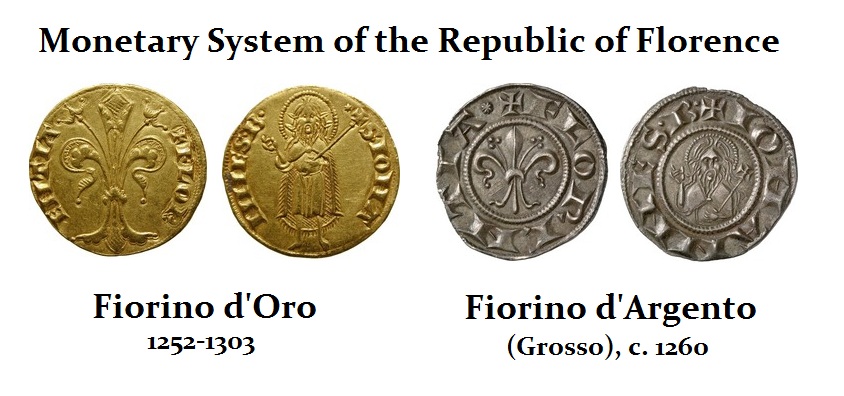
However, great disruptions to this standardized system of metals repeatedly led to major economic upheavals. The economy of Florence suffered from the tremendous economic crisis and people were burning down the houses of bankers because they blamed them without understanding the real cause. Due to the war between France and England, the French debased the coinage. This drove the price of silver up dramatically where there had been a two-tier monetary system — gold for international transactions and silver for domestic. Since wages were paid in silver, as the price rose, employers could no longer afford to operate and the economy crashed with a vast rise in unemployment.

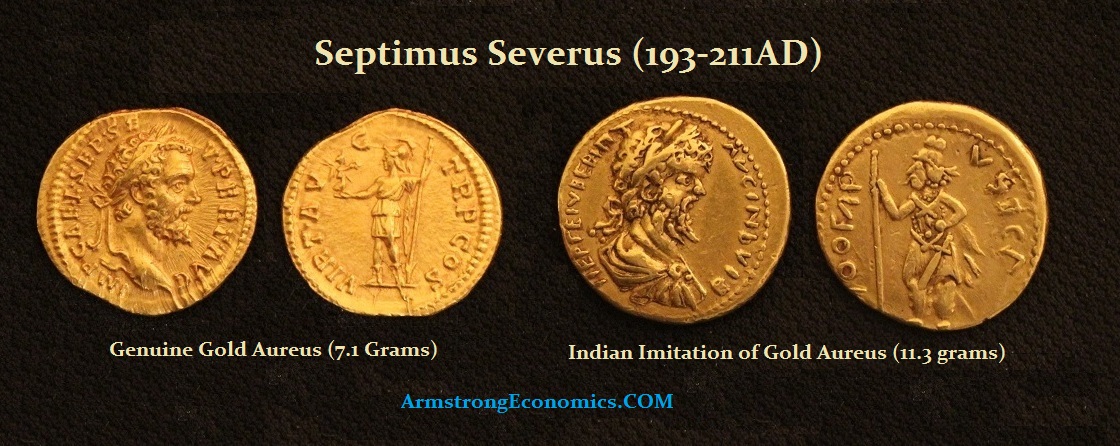
Only after World War I and II did modern society begin to see that the value of a currency was not simply the metal content. There was a premium even over gold’s value attributed to the Romans, as was the case with silver and the Greeks. This is proven by so many surrounding nations imitating their coinage with the same metal content and weight showing that there was a premium over the raw metal.

China, Japan, and Germany all rose from the ashes because their people were productive. Once the unions began and extorted higher sums of wages beyond competitiveness, the USA began to see its labor move offshore for it was overpriced relative to the world because of also taxes on labor — not merely the hourly wage.

Adam Smith in his “Wealth of Nations” saw that it was not simply metal. If a farmer or candlestick maker sold something from London to Paris, they both returned with gold. It was the value of their labor that mattered.

Unfortunately, the socialists are leading the charge and have conspired together to bring down the economy to force political change. They are also weakening the West and inviting war. Just as Rome saw its economy decline sharply within 8.6 years during the 3rd century, the barbarian invasions began. These socialists have no idea what they have unleashed. The world economy will NEVER be the same all because of a pretend virus that has a death rate of 10% of the annual flu.

Unfortunately, the baton will pass to Asia. The West will be engulfed in civil strife. The Socialists have killed the economy precisely as did the communists during their revolutions in Russia and China. We have a turning point in 2021 even for Russia.

Industrialization in the Soviet Union was a process of accelerating the industrial potential of the Soviet Union to reduce the economy’s lag behind the developed capitalist states, which was carried out from May 1929 to June 1941.

The official task of industrialization was the transformation of the Soviet Union from a predominantly agrarian state into a leading industrial one. The beginning of Socialist industrialization as an integral part of the “triple task of a radical reorganization of society” (industrialization, economic centralization, collectivization of agriculture and a cultural revolution) was laid down by the first five-year plan for the development of the national economy lasting from 1928 until 1932.

In Soviet times, industrialization was considered a great feat. The rapid growth of production capacity and the volume of production of heavy industry (4 times) was of great importance for ensuring economic independence from capitalist countries and strengthening the country’s defense capability