Coffee Prices on the Rise


Posted originally on Sep 19, 2025 by Martin Armstrong |  

Coffee

Coffee prices are the latest grocery item troubling American consumers. The United States is the world’s largest importer of coffee, but produces less than 0.1% of all coffee for domestic consumption, importing over $8.2 billion (1.6 metric tons) of coffee last year alone. The average retail price of coffee spiked 21% in the past year, marking the sharpest rise since the late 1990s.

Tariffs are certainly part of the problem. Brazil produces around 37% of the world’s coffee, but now faces a 50% tariff on coffee beans. The average price of Brazilian coffee now sits around $6 per pound. Brazil also experienced a depleted harvest in 2024-25 due to drought and unfavorable weather conditions. The harvest was 9% beneath traditional levels. Global production rose by 4.3 million bags, but was offset by lower stocks, and prices remained high. The US spent $1.41 billion last year on Brazilian coffee alone, and a 50% tariff in addition to increased prices is causing grocers and retailers to raise prices.

Brazil and Colombia primarily focus on Arabica beans, with Colombia being America’s second-highest importer. In far contrast to Brazil, Colombia’s tariff sits at 10%. Still, the US purchased $1.4 billion in coffee beans from Colombia last year and any levy will be felt by consumers. Colombia’s 2024-25 coffee harvest was extremely robust at 13.2 million bags, a 23% increase from the previous year. Farmers believe production will fall by 5.3% in the coming harvest due to weakening La Nina conditions and heavy rain.

Vietnam supplies 17% of the world’s coffee, but the US mainly relies on South America for imports. Vietnam’s tariff sits at 20% and many roasters have complained that this is affecting their bottom line. Same with Indonesia, which has a 19-32% levy.

Brazilian coffee exports to the US have fallen by nearly 46% since tariffs were imposed. While the US consumed 15% of Brazilian coffee exports, Germany was close behind at 14% and has surpassed the US to become the top buyer. It is undeniable that tariffs on Brazil have caused a spike in US coffee prices, which has been exacerbated by a weak harvest.

Chicago’s Pension Funds are Nearly Insolvent – Incoming $28m Bailout


Posted originally on Sep 19, 2025 by Martin Armstrong |  

Chicago’s money trees are shedding their autumn layers with a new multi-million dollar government payout package for underfunded public pensions. City officials approved a short-term bailout of the Firemen’s Annuity & Benefit Fund to the tune of $28 million to avoid forced asset sales. That is merely the tip of the iceberg, as Chicago’s pension debt has risen 15% over the past five years to an utterly unsustainable $36 billion.

Property taxes currently fund 80% of the city’s pension fund, but are not enough to sufficiently meet payouts. The average pension fund ideally has a funding level of around 70%, and funding beneath 40% is considered nearly insolvent. In Chicago, the top four public pension funds (fire, police, municipal, and laborers), along with the teachers’ pension fund, have a backing ratio between 24% to 43%, with the combined debt now exceeding $53 billion—all of Chicago’s public pension funds have gone bust. Reform measures have been bypassed for years to the point of no return.

Chicago’s pension system carries a debt larger than that of 44 states. Seven Chicago-area pension funds are among the top 10 worst-funded plans in the country. The city already allocates up to 20% of its annual budget toward pensions. Taxpayers are expected to meet all shortfalls, but again, the current level of taxation is not enough to cover the gap.

Lawmakers claim there was a mere system error. Property tax bills were expected to be sent out in June, but will not reach taxpayers until October. The $28 million is intended to act as a temporary band-aid, but the city is almost guaranteed to ask for additional loans and bailouts because the frozen funds are NOT the problem. These funds are a Ponzi scheme, robbing Peter to pay Paul, but the jig is up.

Chicago

Lawmakers recently passed a bill to provide additional pay to Chicago’s retired firefighters and police officers. Politicians are permitted to pass bills to secure votes without actually having a plan in place. The city’s pension bill will rise to $2.76 billion by 2026. There is no money for other public services. Chicago has lost its ability to remain competitive as capital is fleeing increased levies.

Chicago’s overall property tax levy more than doubled in a decade, expanding from $860 million in 2014 to $1.77 billion in 2024. Pension costs directly have risen sixfold over that ten-year span from $478 million in 2014 to $2.75 billion in 2024. The city has redirected every penny collected from property taxes since 2014 into these failing funds, but the pension obligation has surpassed 160% of the annual property tax revenue.

The blame falls on the people rather than the failed politicians. Mayor Brandon Johnson proposed increasing property taxes by $300 million for the current fiscal year, which would mark the largest spike in property taxes in the city’s history. The measure was shot down by the City Council who instead plans to generate $165.5 million with additional taxes and fees in other domains.

In 2021, Mayor Lori Lightfoot demanded a $93.9 million increase in property taxes. Johnson actually campaigned against that measure, and Lightfoot was pressured to drop the tax hike to $42.7 million in 2023. Johnson was elected over Lightfoot for pretending to care about constituents and promising to lower tax burdens.

Their approach has failed. 41% of property taxes were injected into these broken pension funds in 2014 and increased to 80% in 2024. Property taxes more than doubled in that timeframe, but it is nowhere near enough to solve this crisis. Politicians will continue to rob the people with excessive levies to maintain the Ponzi scheme for as long as possible. It is only a matter of time before the city is unable to pay retirees.

The Illinois Constitution does not permit cities to file for Chapter 9 bankruptcy. The state has historically blocked any cuts to payouts regardless of liquidity. The city may one day be forced to beg for a federal bailout, which would force all Americans to pay for decades of reckless mismanagement by financially illiterate politicians.


HARRISON: Complacent Republicans Are Letting Taxpayer-Funded Woke Ideology Run Wild On Our Campuses. Regents Appoint Leftist University Presidents, Conservative Students Get Punished, And Radical Gender Courses Are Promoted


Posted originally on Rumble on By Bannon’s War Room on: September, 17, 2025

Fed Cuts 25BPS


Posted originally on Sep 17, 2025 by Martin Armstrong |  

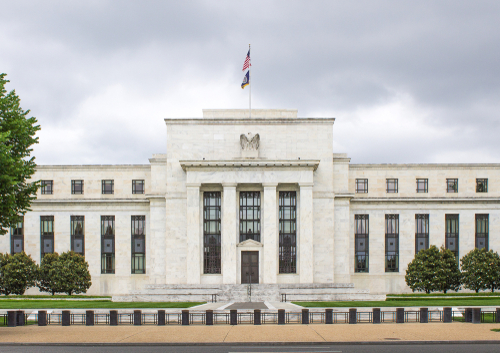
Federal Reserve Bank

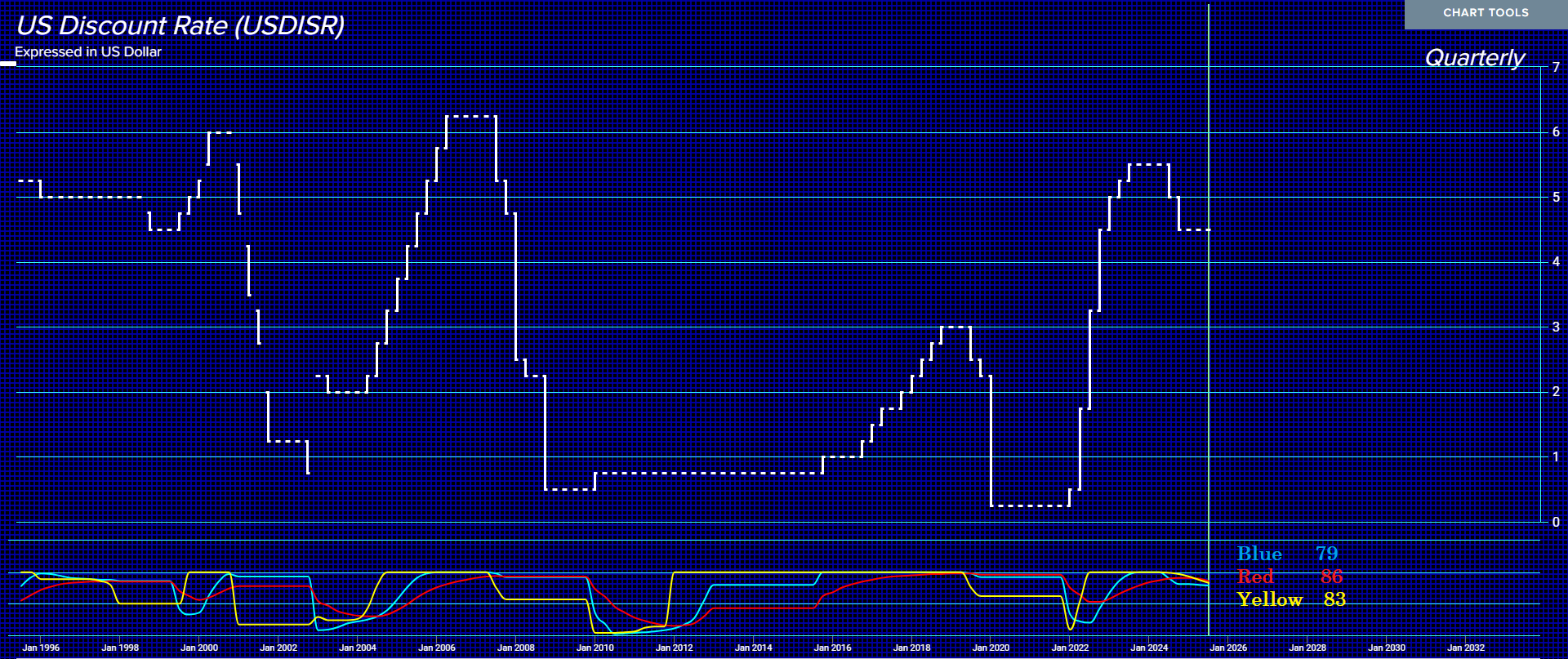
Members of the Federal Open Market Committee (FOMC) voted to reduce the benchmark federal funds rate by 25 basis points, setting the new target range at 4 percent to 4.25 percent. The Fed statement was clear, with one dissenter, Stephen Miran, who recently joined.

“Recent indicators suggest that the growth of economic activity moderated in the first half of the year. Job gains have slowed, and the unemployment rate has edged up but remains low. Inflation has moved up and remains somewhat elevated,” the FOMC said in a statement.

The market was widely expecting a 25 basis point cut in rates, as our computer has been forecasting for months that any cut would be in September, not before. However, there were the typical groups of questionable analysts touting that a 50 basis point cut could lead to a more significant market rally.

With the prospect of war on the horizon and a sovereign debt crisis brewing in the EU, there are realistic expectations for a continued decline. The risk is that Trump will interfere in the Fed, leading to a loss of confidence worldwide, which would result in unrealistic interest policy into early 2026. There remains the risk of another cut during the next quarter.

Fed Discoint CBDR Q 9 17 25

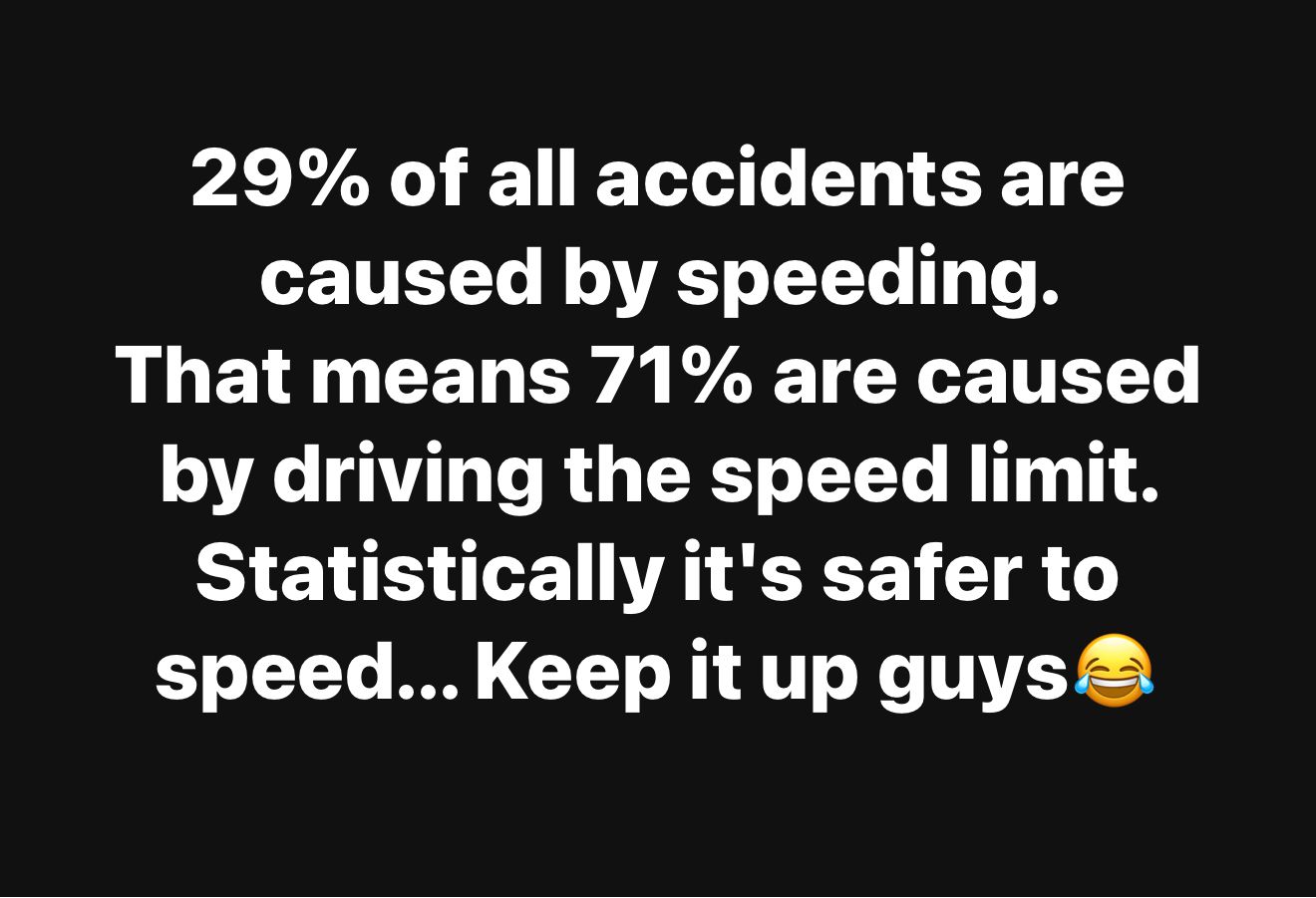
It is Safer to Speed than Do the Speed Limit!


Posted originally on Sep 16, 2025 by Martin Armstrong |  

Speeding

Most people have no idea, but the entire speed limit is a scam simply to raise money. On January 2, 1974, effective January 6, 1974, during the whole OPEC oil crisis, to conserve gasoline during the 1973 oil embargo and resulting energy crisis, Congress came up with the nonsense of reducing the speed limit to reduce fuel consumption. They repealed the federal law in 1995, returning speed limit authority to the individual states. They did not change in most cases because they would collect fewer fines.

If you drive for 5 hours at 55 mph, consuming 30 mpg, and then at 75 mph, you get there in 3.6 hours at 24mpg, you used 11.46 gallons compared to 9.17 for the same distance, but you saved about 1.5 hours.

Nevertheless, nobody cares about safety. The idea that you are travelling at 65 instead of 55 has nothing to do with safety. It is all about money.

DeGrasse On The Redistricting Fight In Indiana: “I’m Optimistic But We Need To Kee


Posted originally on Rumble on By Bannon’s War Room on: September, 15, 2025

Quarterly vs Semi-Annual Earnings Reports


Posted originally on Sep 16, 2025 by Martin Armstrong |  

Balance Sheet

President Donald Trump believes that companies should cease reporting on a quarterly basis and switch to semiannual reports instead. Trump said that the concept is “subject to SEC approval” and would “save money, and allow managers to focus on properly running their companies.”

JPMorgan Chase CEO Jamie Dimon and Warren Buffett also once voiced support for semiannual reporting. “In our experience, quarterly earnings guidance often leads to an unhealthy focus on short-term profits at the expense of long-term strategy, growth and sustainability,” the pair wrote in an op-ed piece for the Wall Street Journal in 2018.

The SEC currently has a 3-1 Republican voting majority, but why does this seem to be a bipartisan issue? The issue is global, in fact, as Norway’s sovereign wealth fund recently proposed switching to semiannual reporting, and the UK and Europe do not currently require quarterly reports. Providing the consumer and investor with less, infrequent information alludes to bad news. Companies would willingly share praise of quarterly earnings with the public if they were bullish on their future, but in the current stagflationary trend, companies are cautious. Those at the top are losing confidence in their company’s ability to meet or exceed expectations.

Dimon and Buffett argued that the public’s attention should be on the long-term results. That aligns with Buffett’s buy and hold strategy but does not work for most portfolios that require investment strategy changes based on incoming data. In Trump’s personal predicament, the price adjustments due to tariffs are a reason to halt quarterly reporting.

Still, lowering transparency raises market risk, and the markets do not respond well to volatility. Columbia Law School published an article that looked at the 2017 regulatory adjustment on the Tel-Aviv Exchange (TASE) when small-cap firms switched from mandatory quarterly reports to semi-annual updates. “The  stocks of firms that chose that option dropped an average of 2 percent in price in a window of (-5,+5) days,” the analysis found. “Conversely, the stock of firms that chose to continue quarterly reporting rose an average of 2.5 percent over an immediate window of (-5,+5) days.”

The study also noted that while compliance costs dropped by 19.8% by eliminating two annual reports, the firms that chose to maintain four annual reports did not see a significant change in audit fees. There was a clear trade-off between cost reduction and maintaining investor confidence, the study noted.

The US markets cannot be compared to the TASE, and that 2% reduction in investment would likely rise for US firms, as consumer confidence is absolutely paramount. The proposition of semi-annual reports stems from the belief that companies will be unable to provide optimistic earnings reports. Reducing reporting fees is not the concern, and the repercussions are vast as massive portfolio shifts would ensue as investors and money managers need to reduce risks and would be less likely to take short-term risks if the data is unavailable to them. Reducing transparency would shake up confidence in the markets overall, and as mentioned, capital does not like volatility.

The Freedoms Lost Under the Patriot Act


Posted originally on Sep 11, 2025 by Martin Armstrong |

Surveilence

The Patriot Act was drafted and pushed through with lightning speed, something that could not have been written overnight. This was the beginning of warrantless surveillance, indefinite detention, and a wholesale reversal of constitutional rights. I have said many times: governments do not waste a good crisis. They wait for the right moment to impose measures that would never pass during normal times. Americans may be unaware of the freedoms that have been stripped away from them after October 26, 2001, when the Patriot Act was signed into law.

The Patriot Act, officially titled “the Uniting and Strengthening America by Providing Appropriate Tools Required to Intercept and Obstruct Terrorism Act of 2001,” provided the government with unlimited surveillance powers. Terrorism became the premise to bypass the checks and balances of the legal system. Need a warrant? One could be obtained in any district or area where terrorism was suspected. Of course, warrantless searches were permitted under the guise of terrorism and deemed “sneak and peek” searches, where the government could enter a business or personal residence immediately and without warning to conduct an investigation.

NSA Chip

Neither party has repealed the Patriot Act, and politicians on both sides of the aisle will NEVER relinquish these powers. The Patriot Act destroyed the Fourth Amendment and legally permitted the NSA to spy on all Americans. October 26, 2001, marked the day that the United States of America officially became a surveillance state. We The People were branded as potential terrorists, and “the land of the free” was permanently placed under the watchful eye of government. “The War on Terror” has no clear end or defined enemy. The real target was always domestic — the American people themselves. By creating an atmosphere of fear, Washington justified trillions in spending, the invasion of foreign countries, and the slow strangulation of the very liberties the terrorists supposedly hated.

911

Surveillance spread to the financial sector, naturally, as the government can control the masses by controlling their spending. The government is legally permitted to seize funds from foreign and domestic bank accounts if terrorism is suspected. As we saw under the Biden Administration, banks openly share transaction data with the government, and the government can mandate that banks halt any activity under the premise of money laundering or terrorism. The government requires banks to file Suspicious Activity Reports (SAR) to FinCEN to track any “suspicious” financial activity. The scope is deliberately vague. As mentioned, under the Biden Administration, purchases of Bibles or donations to conservative parties were cause for “suspicion.”

Law enforcement agencies have no barriers to sharing information. In Florida, for example, all law enforcement agencies can see every citizen’s personal data, including medical history and any pharmaceuticals they have been prescribed. They can see where a person lives, has lived, and where they commonly visit. Law enforcement agencies can monitor phone calls, text messages, emails, and internet searches. GPS and cell tower tracking can pinpoint an individual’s current location and any previous movement. As the law as progressed, law enforcement agencies have been provided access to social media activity.

AI technology has enabled the government to utilize facial recognition to identify individuals in crowds or track their day-to-day whereabouts. It is not an exaggeration to say that there are cameras everywhere. Some nations openly promote the use of public surveillance cameras, but most Americans are unaware that they are constantly under the government’s watchful eye.

The Patriot Act was far more than merely increased security at the airport. The true nature of the act was to provide the government with unrestrained power to spy on the people. The government can obtain any banking record without judicial oversight and freeze funds without notice. “Terrorism” or “money laundering” can be used to attack citizens for any reason or without reason. Suspicion is the only criterion, and under the Patriot Act, everyone is considered a terrorist and a threat to the established order.

REVOLUTION – Youth Overthrows Nepal’s Government


Posted originally on Sep 10, 2025 by Martin Armstrong |  

Nepal’s Prime Minister Khadga Prasad Oli resigned immediately after massive youth protests swept the nation and led to deadly clashes with police that left over 20 dead. Anger over government corruption has been rising. Youth unemployment surpassed 20% and people aged 15 to 40 compose 43% of Nepal’s population. The final straw was a nationwide ban on social media imposed on September 4, 2025. The youth took to the streets to demand immediate change.

Nepal’s Finance Minister, Bishnu Paudel, was chased through the streets by an angry mob. Paudel was beaten, stripped naked, and paraded through the streets in his underwear. RT posted the above video shortly after the incident, although it is unverified whether or not the man in the video is Paudel. PM Oli’s residence in Bhaktapur was set on fire, as was the residence of President Ram Chandra Paudel. Spectators say that the youth were continuously throwing petrol bombs at the residences as they burned to the ground.

Politicians are becoming increasingly concerned over the growing discontent sweeping the world as the cost of living continues to soar. When we examine what has occurred in Nepal, it is not an isolated, random event. Governments are collapsing worldwide due to economic instability. My models have been showing that confidence in governments is collapsing everywhere, from Europe to South America, and Nepal is simply another example of this global trend.

NepalParliamentonFire

Undeterred by police tear gas, rioters breached Nepal’s Parliament building and burned it to the ground. Kathmandu’s Tribhuvan International Airport came to a standstill. The destruction lasted for two days until Oli accepted defeat and allegedly fled the country. Over 90 people have been hospitalized for wounds related to clashes with the police who were far outnumbered by persons and sheer rage.

Nepal has always been a buffer state caught between India and China. Every time we see economic decline, corruption, or outside meddling, the population eventually turns against the political class. The overthrow of the Nepalese government is simply part of this larger cycle of anti-establishment movements that will continue to spread.

Governments fall when the people no longer believe in their competence to govern. It does not matter if the system is a monarchy, a democracy, or a dictatorship—the cycle remains the same. We are heading into 2032, the culmination of the Economic Confidence Model, which marks a period of rising civil unrest, political fragmentation, and the overthrow of governments globally.

Nepal may seem small on the geopolitical map, but its fall is part of the domino effect. From Pakistan to Sri Lanka, from Latin America to Europe, the same pattern is unfolding. The loss of faith in government as an institution has become a worldwide phenomenon and the people are beginning to direct their anger at government rather than against one another.

Bureau of Labor and Statistics Announces 911,000 Fewer Jobs Created April ’24 through March ’25


Posted originally on CTH on September 9, 2025 | Sundance

Treasury Secretary Scott Bessent noted, when you add the previous Biden revision of -577,000 to the current revision of -911,000 the Bureau of Labor and Statistics (BLS) had overreported Biden’s job growth by almost 1.5 million jobs.

The BLS reports today [SEE DATA HERE] an annual revision of 911,000 fewer jobs that previously reported.  These further puts President Trump’s decision to fire the head of the BLS into context.

[SOURCE]