Labor Report, 528,000 Jobs Gained in July, Large Gains in Restaurants and Services, Unemployment Rate 3.5%


Posted originally on the conservative tree house on August 5, 2022 | Sundance 

A few days ago, we were discussing the disconnect within the economy as it relates to corporate valuations.  The Bureau of Labor Statistics report today [DATA HERE] highlights another economic disconnect, this time with labor.  According to the BLS survey 528,000 jobs were added to the economy in July, the unemployment rate drops to 3.5%.

The household data [Table A] shows the number of eligible workers unemployed dropped 242,000; however, the number of eligible workers no longer in the workforce increased by 239,000.  The total labor force is shrinking as unemployment drops.

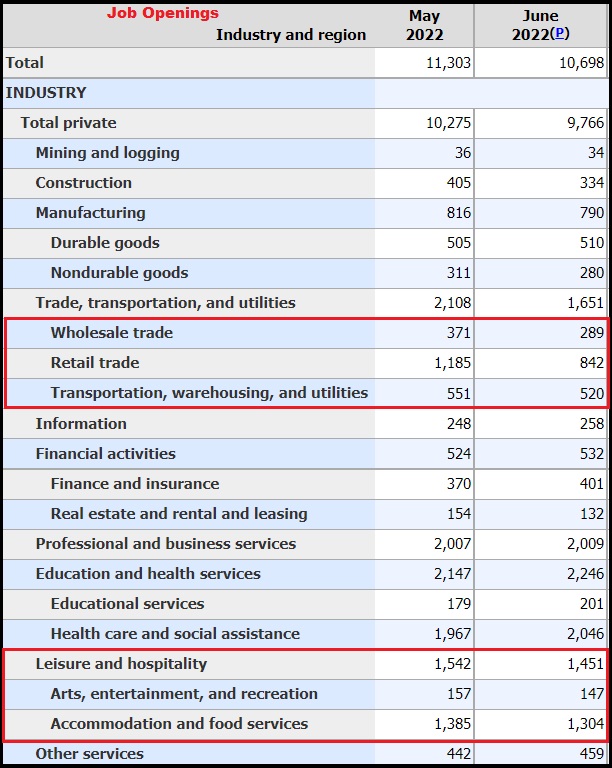
Keep in mind the previous BLS survey of job openings (JOLTS report) showed available jobs dropped 605,000 in July.  “On the last business day of June, the number and rate of job openings decreased to 10.7 million (-605,000) and 6.6 percent, respectively. The largest decreases in job openings were in retail trade (-343,000), wholesale trade (-82,000), and in state and local government education (-62,000).” [JOLTS survey]

Going back to today’s release, 303,000 part-time jobs were added in July; these are workers working part-time for economic reasons.  The Household Data shows that within the leisure and hospitality sector [Table B-1] restaurants and bars added 74,000 jobs.

If we combine both BLS surveys two days apart is: 605,000 job openings cancelled, and 528,000 new jobs gained.

Of the 528,000 new jobs gained, 303,000 were part time jobs with the largest growth in the jobs in restaurants and bars.

Again, blending data from both reports and focusing on retail.  The retail sector cancelled 343,000 job openings in July, and the retail sector added 21,600 jobs in July.  Within the retail sector (table B-1), jobs at automotive dealers, furniture stores and clothing/apparel stores dropped by a combined 7,200 jobs.
BIG PICTURE:  ♦Energy prices are squeezing consumers and paychecks. ♦Energy driven inflation is high.  ♦Rising housing costs, food costs, gasoline costs and energy costs have hit the consumer hard.  ♦Credit card balances have jumped (highest increase since ’02).  ♦Consumer sales on non-essential items have dropped.  ♦Factory activity around the world (Asia and Eurozone) is slowing or has stopped.  ♦Durable goods inventories have climbed everywhere.  ♦Shippers of durable goods are not shipping. ♦Employment in auto sales, furniture and clothing have all declined.  All of these datapoints align.

Everything in that “big picture” is fact based on current data, and it all makes sense.  However, there is still a disconnect in the big picture.

How does an economy add over 4 million jobs this year, while simultaneously shrinking?

The value of those jobs has to diminish in proportion to the economic contraction.  The disconnect only reconciles if the wages which lead to eventual spending.  With wage growth at 5.2% and the cost of everything up 9.1% (inflation), the difference between the two is how the economy shrinks even with more jobs added.

Think of all the activity (buying stuff, eating out, ordering food etc) as units. All of the unit activity costs more money, but the earnings of the workers is only keeping pace with half of the increase in price.  Therefore, less units are being engaged made, sold and purchased.

The GDP, which measures the value of everything created in the economy (minus imports) dropped 1.6% in the first quarter and 0.9% in the second.  The unit economy is contracting.

As I have said before, “an intentionally managed decline of western economic activity should have a direct impact on the private corporations within those economies.  If the politicians are collectively going to stop energy development, raise energy prices (inflation), then use monetary policy to shrink the economy down to the level of energy available, we would normally think corporations were going to make less money.

However, in our current scenario, as long as price increases (energy inflation) can be passed along and wage gains can remain low, the profitability remains strong.  Here’s the worst part of this dynamic.  The people investing in the profit get richer, the workers creating the profit get poorer.

Our Joe Biden economy, and the economy of the western nations that are following this same climate change agenda, is getting smaller.  Within the smaller economy, the rich are getting richer and the workers within the Joe Biden economy are getting poorer.


Waking Up From a Coma in 2022


Awaken With JP Published originally on Rumble on July 30, 2022

Imagine you woke up from a 19 year coma and it’s the year 2022…

Celebrities Normalizing Bug Consumption


Armstrong Economics Blog/Disease Re-Posted Aug 3, 2022 by Martin Armstrong

In my interview with Maria Zeee, you may have heard us mention the propaganda efforts to make eating bugs seem normal. In 2018, actress Nicole Kidman made a video for Vanity Fair in which she eats “micro livestock” from a fancy silver platter. This is an insult to the people of food-deprived nations who are forced to eat bugs to survive. Notice how she uses chopsticks, a nod to some Asian cultures where this practice is not seen as abnormal. Numerous celebrities have stated that they incorporate bugs into their diets.

Canada has already begun to build an “alternative protein manufacturing facility” where they will farm crickets for human consumption. This is completely in line with Schwab’s agenda to reduce emissions (blame the livestock and not the factories) and control the world population. There is a reason that they are making farming increasing difficult across first-world nations.

In fact, the WEF released an article in 2021 entitled “Why we need to give insects the role they deserve in our food systems.” The article cites the growing population, a constant concern among the globalists, and claims that there will not be enough farmland to cultivate food for the estimated 9.7 billion people who will be stuck on this planet by 2050. The article continues:

“Now we need to overcome the last major barriers: preconceived ideas about insects as a source of food and legislation with regard to the use and consumption of proteins derived from insects. The ban on the use of insect as a source of protein has begun to evolve in Europe. In 2017, the authorization of the use of insect proteins was expanded from feed for pet food to include feed for aquaculture animals. This year the European Food Safety Authority (EFSA) reported that mealworms are safe for human consumption and a decision is expected to be made regarding the use of insects in pork and poultry feed.”

The European Union did in fact approve the use of some insect consumption in 2021. Even Forbes published an article praising the European Food Safety Authority (EFSA) for passing the measure. All proponents cite the same benefits that all come down to “sustainability” and saving the environment. Enjoy the mealworms and crickets. I cannot see this as a normal menu item and refuse to consume bugs for some madman’s agenda of ruling the world.

Klaus Schwab – How to Rule the World – Maybe!


Armstrong Economics Blog/Civil Unrest Re-Posted Aug 3, 2022 by Martin Armstrong

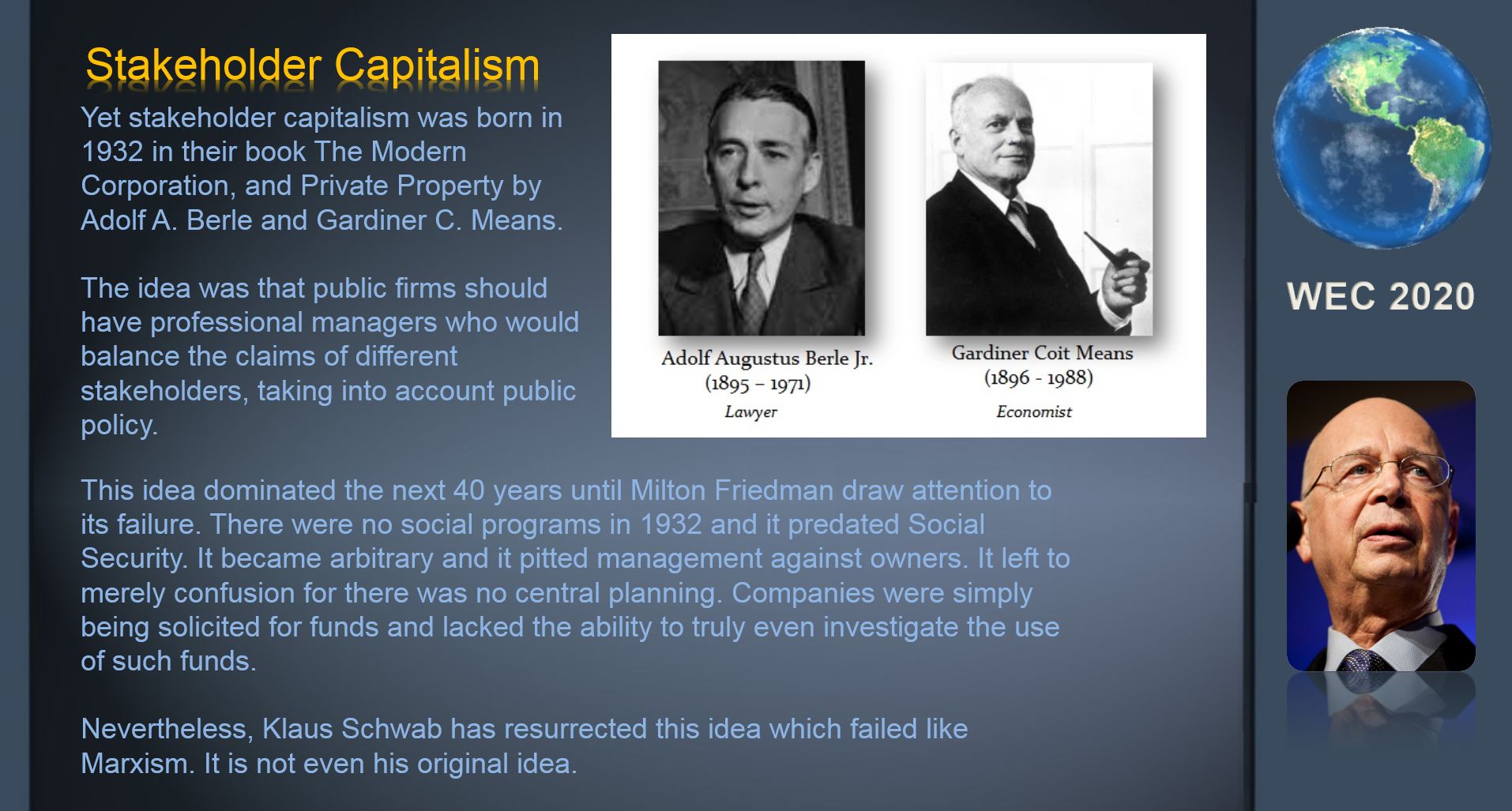
Klaus Schwab does not understand human nature or how the world economy functions. He preaches Stakeholder Economics which failed and was instituted during the Depression BECAUSE there were no government programs. The theory then was that companies should contribute to saving society. It failed because there was no coordination, for every company was independent, and they would contribute to what they saw or had a bias toward.  His “Stakeholder Economics” is not his own idea. He took it from Berle and Means.

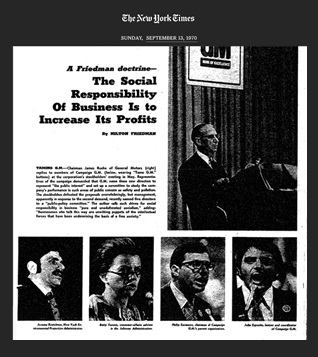
Milton Friedman, back in 1970, exposed how Stakeholder Economics was inefficient and stupid. He laid out that such a role was that of government, not corporations, whose #1 fiduciary obligation was to its shareholder. Under Schwab, I could say, “OK I will go public; everyone sends in money. I will give you shares in return and then say — OMG, there are people starving in Africa!” So, I decide to give 50% of all the profits to them and not my investors. This is Stakeholder Economics.

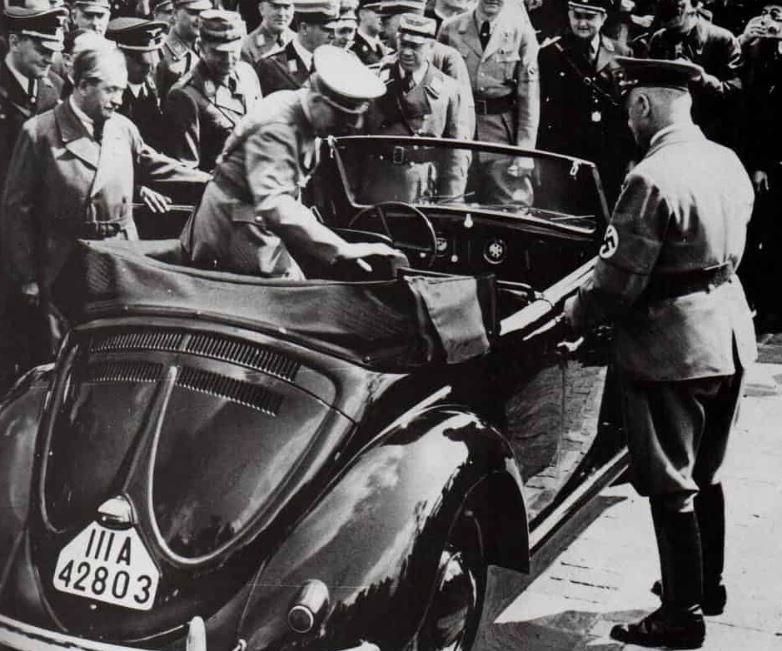
The history of the Volkswagen brand began with the “Käfer”; development work on this Nazi prestige project began in 1934. On May 28, 1937, it was formally established. The name was changed to “Volkswagenwerk GmbH” in 1938. With the outbreak of war, it became the arms industry. But it was produced under the direction of Hitler was called the Volkswagen (“people’s car”). This is the Stakeholder Economics of Schwab today. I can tell you that, personally, Schwab is a control freak. He runs the WEF with an Iron Fist. Errors are not tolerated.

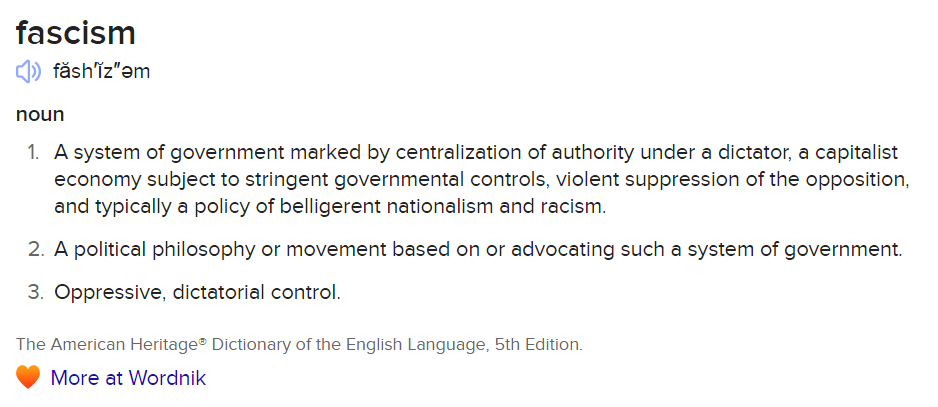
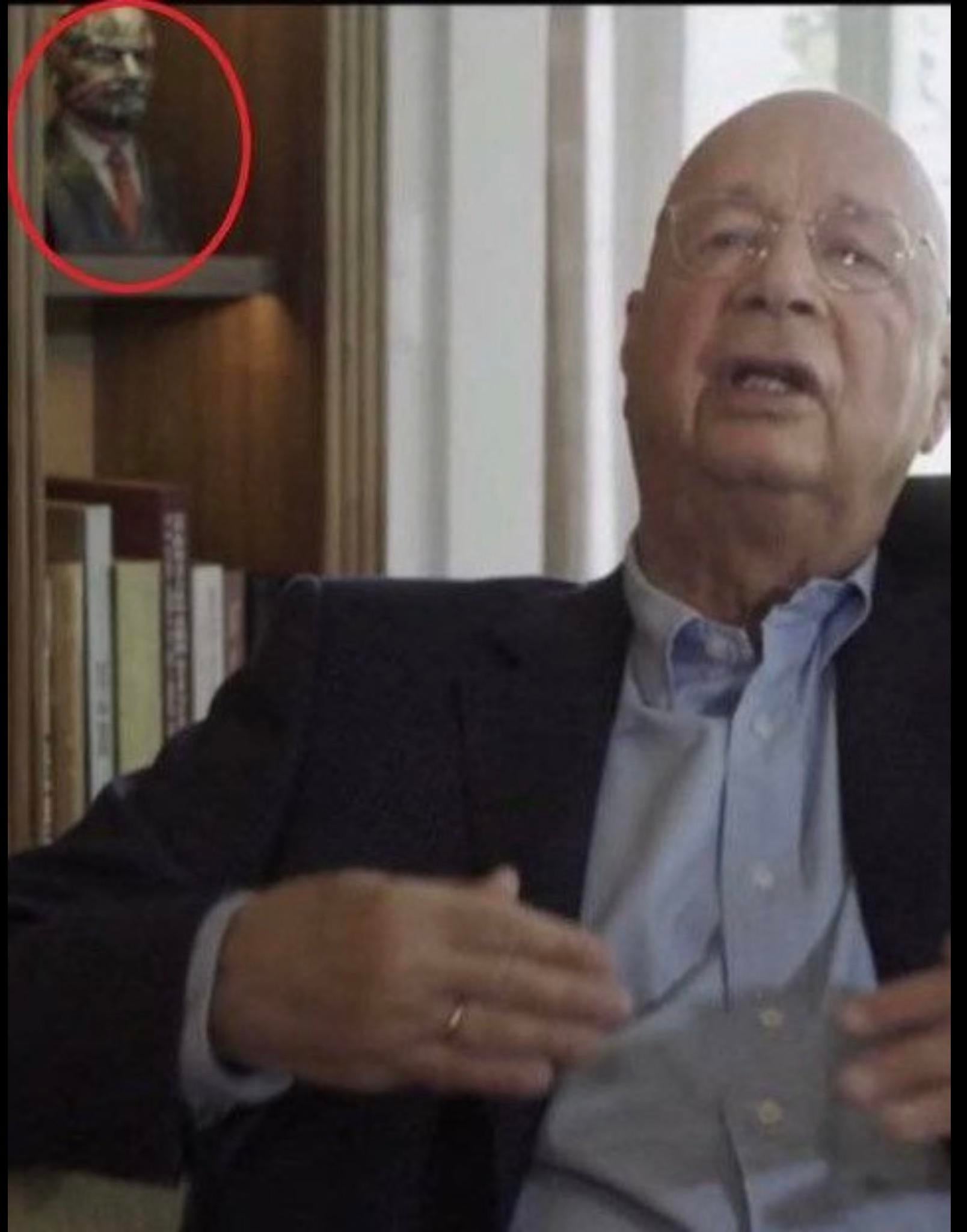
Schwab is actually advocating fascism where he wants to control the future by controlling the production of all corporations. His dream of world domination is much deeper than simply communism, where his hero remains Lenin.

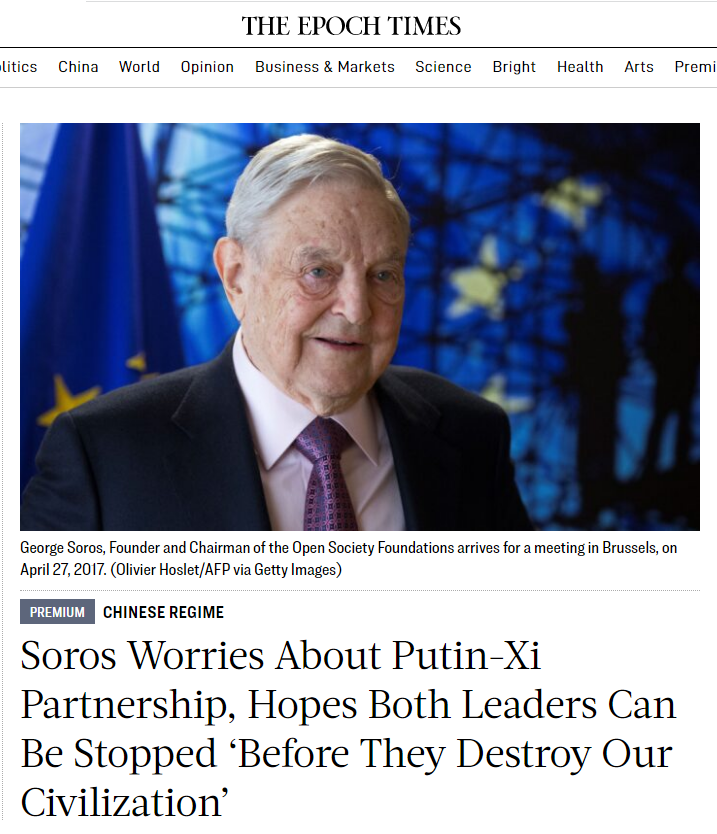
Lenin nationalized all manufacturing and industry throughout Soviet Russia. This is what Schwab is advocating to get them to “voluntarily” surrender their fiduciary duty to his one-world government to end the potential war as was structured in the EU. Schwab pushed for that and his bedfellows, George Soros, poured money into Britain to try to storm BREXIT.

The one-world government of the Roman Empire did not prevent civil war and uprisings. Julius Caesar said men believe what they want to believe. That certainly applies to Schwab and Soros. They only look at what they want to hear from the dead economic theories.

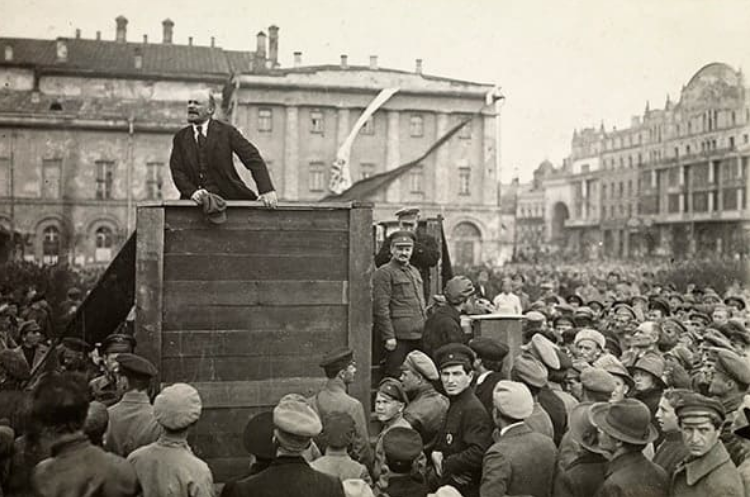
Lenin failed to understand human nature. He requisitioned surplus grain from peasant farmers to feed his Red Army in addition to nationalizing all manufacturing. These measures proved disastrous. Under the new state-owned economy, both industrial and agricultural output completely plummeted. The very people who understood how to run their companies or when to plant crops were capitalists who were typically killed or imprisoned. This policy led to an estimated five million Russians who died of famine in 1921 alone. The living standards across Russia plunged into abject poverty. This is the hero worshiped by Schwab!

There began a massive uprising, as we see in Sir Lanka. The civil unrest threatened the very existence of Lenin’s Soviet government. Lenin used the secret police (Cheka) to silence all political opposition. This was a rein of terror targeting both his opponents and challengers within his own political party. Schwab sees this as a necessary tool, and thus this is why he wants total digital ID to restrict movement using pandemics that will most likely be created for control. What they did with COVID may not have established a precedent. It may have hurt so many people that the attempt to initiate a repeat performance itself is more likely to erupt in civil unrest next year on a major scale.

Indeed, there was an attempted assassination on Lenin by Fanya Kaplan, who shot him in the shoulder and neck as he was leaving a Moscow factory in August 1918. Lenin was badly injured. This unleashed the Red Terror carried out by his secret police. They unleashed a campaign of mass executions against supporters of anyone who supported the czar. Russia’s upper classes and any Socialists who weren’t loyal to Lenin’s Communist Party found themselves on the target list.

Augustus (27 BC-14 AD) established the Praetorian Guard to protect the emperor. When Caligula was assassinated on January 24, 41 AD, the Praetorian Guard made Claudius Emperor, who had always been a Republican and played the role of the fool. He did not want to take the throne. He was advised by his Jewish friend Herod Agrippa to take it or he would be killed, for there were those in the Senate who would love to be emperor. So here you see a gold aureus of Claudius with the reverse showing the Praetorian camp. For you see, without an emperor, they were unemployed. They made Claudius emperor, and neither he nor the Senate had any choice.

Consequently, once Lenin created his Secret Police (Cheka), they were not about to let Russia slip back into a monarchy or a democracy, for that would have ended their power, as was the case with the Praetorian Guard upon the assassination of Caligula. The Cheka (Secret Police) is believed to have executed at least 100,000 so-called “class enemies” during the Red Terror between September and October 1918 following the assassination attempt of Lenin.

As a result, Lenin was forced to back down from his authoritarian government, instituting his New Economic Policy, which was a temporary retreat from complete nationalization. The New Economic Policy created a more market-oriented economic system, “a free market and capitalism, both subject to state control.” Lenin’s Red Army eventually won Russia’s civil war, and then in 1922, he formed the USSR with a treaty between Russia, Ukraine, Belarus, and the Transcaucasus (now Georgia, Armenia and Azerbaijan). Lenin thus became the first head of the USSR.

Between 1922 and his death in 1924, Lenin suffered a series of strokes that impacted his ability to speak, and it had been his charismatic delivery of speeches that gave him power, as was the case for Adolf Hitler. Both spoke with a passion that moved the crowds. This opened the door for Joseph Stalin, who was the Communist Party’s new General Secretary, and he quickly began to consolidate his power. Lenin resented Stalin’s growing political power and saw his ascendency as a threat to the USSR. Lenin’s Treaty for the USSR was one built upon mutual respect, whereas Stalin saw it all as one nation with all power at his fingertips.

Lenin died on January 21, 1924, at the age of 53. Knowledge of his death came after Stalin had already come to power. It was Stalin who stole all the food from Ukraine, killing some seven million, and he unleashed the Great Purge of 1936-38. He strengthened the Cheka (Secret Police) to firmly retain power in the same fashion that the Roman Praetorian Guard supported the emperor to retain their jobs.

Beware, this is the same power being crafted by Klaus Schwab. The digital ID for everyone and to create a “social” index of people is the exact way to instill control as well as fear.

Foreboding Data, Second Quarter Credit Card Balances Jump 13 Percent, Largest Increase in Twenty Years


It’s not just the scale of the increase that is surprising; it’s the history of how long it has been since this scale of debt increase happened in a single quarter.

(CNBC) – […] Although average hourly earnings are up 5.1% from a year ago, prices have been rising much faster. The Consumer Price Index, which measures the average change in prices for consumer goods and services, jumped a higher-than-expected 9.1% in June, the fastest pace in over four decades.

To bridge the gap, more consumers are relying on credit cards to get by, which has helped propel total credit card debt to $890 billion.

Overall, credit card balances rose 13% in the second quarter of 2022, notching the largest year-over-year increase in more than 20 years, according to a report from the Federal Reserve Bank of New York. (read more)

This doesn’t sound like a good economic omen.

Posted originally on the conservative tree house on August 2, 2022 | sundance

Job Openings in June Decreased 605,000, Retail Sector Dropped 343,000


Posted originally on the conservative tree house on August 2, 2022

The Bureau of Labor Statistics (BLS) produces a monthly report of available job openings.  The Job Openings and Labor Turnover Summary (JOLTS report) shows the number of available jobs at a captured moment in time.  This JOLTS report [DATA HERE] is a summary of the last day in June.

As you can see within modified Table-1, the number of available jobs dropped by 605,000 in this report.

Hires and separations were little changed, so too was the number of people who quit their jobs.  The big change in this JOLTS survey was the removal of available jobs.  Employers cancelling job openings.

BLS – “On the last business day of June, the number and rate of job openings decreased to 10.7 million (-605,000) and 6.6 percent, respectively. The largest decreases in job openings were in retail trade (-343,000), wholesale trade (-82,000), and in state and local government education (-62,000).”

If we monitor the JOLTS report as an indicator of employment strength reflecting the general pattern of consumers, we can see a pullback in both the goods and service sector.

Retail job openings dropping 343,000 as consumer spending tightens even more due to inflation, and now we see the service side with leisure and hospitality dropping 91,000 openings.

EU Energy Panic Cycle to Begin


Armstrong Economics Blog/Energy Re-Posted Jul 26, 2022 by Martin Armstrong

On August 1, the European Commission will begin to reduce its demand for gas with no alternative in place. Unsurprisingly, our computer states that a Panic Cycle will begin in August or September and go into Q1 of 2023. Europe must reduce its gas consumption by 15% (45 billion cubic meters). In comparison, Russia delivered 150 billion cubic meters to the EU last year. Russia’s largest gas provider, Gazprom, has threatened to cut off Europe from gas entirely. Europe has no alternative solutions at this time. Therefore, they’re implementing a “Save Gas for a Safe Winter” plan in Brussels.

Commission chief Ursula von der Leyen claims that all member states will suffer from their proxy war with Russia, albeit some more than others (e.g., Germany). “It’s important that all member states contribute in the saving, the storing and are ready to share gas,” she said. Let us see how friendly this bloc really is when it comes to sharing an essential resource in limited supply.

Member states are now required to submit energy plans to the Commission by the end of September and update plans every two months until March 2023. There is proposed legislation that would allow the Commission the authority to declare a “Union alert” and impose mandator gas caps on member states.

The bloc plans to fill its gas storage capacities to 80% by November, but that may be a lofty goal. European Commissioner for Energy Kadri Simson expressed pessimism in interviews.  “We risk ending this winter with empty storage, which will be impossible to refill in time for the next heating season,” she warned, as this crisis is only beginning.  Simson and others are calling on the public sector to reduce demand.

This will fall back to the citizens, who will be asked to limit their consumption and abandon comforts for a proxy war they never voted on. Frans Timmermans, the Executive Vice-President of the Commission in charge of the European Green Deal, has already suggested people switch off lights and electrical appliances and reduce AC/heater usage. No one will stop these politicians from flying around on their jets, surrounded by bodyguards in numerous SUVs, while they make the people suffer for their poor policies.

Worldwide Inflation in June 2022


Armstrong Economics Blog/Inflation Re-Posted Jul 26, 2022 by Martin Armstrong

There is a common misconception that the United States has the highest rate of inflation in the world. I see it questioned in numerous emails The United States does have a major problem when it comes to inflation, but its currency has not depreciated to the point where it is weak. Let us compare data on inflation from other nations.

According to data compiled by Trading Economics, the following countries are suffering the most from runaway inflation as of June 2022:

  1. Lebanon 210%
  2. Zimbabwe 192%
  3. Venezuela 167% (last compiled May 2022)
  4. Sudan 149%
  5. Syria 139% (last compiled in August 2021)
  6. Turkey 62%
  7. Argentina 64%
  8. Suriname 55.6% (last compiled May 2022)
  9. Sri Lanka 54.6%
  10. Iran 52.5%

These depreciated currencies are all but useless at the moment. As we have seen throughout history, the prospect of revolution rises when the people are unable to afford basic needs. Numerous countries on this list are already in the middle of ongoing civil wars and political turmoil. Barter becomes essential as trading goods and services are often the only available option.

Here is how the G20 nations rank as of June 2022:

  1. Turkey 62%
  2. Argentina 64%
  3. Russia 9%
  4. Brazil 89%
  5. Spain 2%
  6. United Kingdom 9.4%
  7. United States 9.1%
  8. Euro Area 8.6%
  9. Netherlands 8.6 %
  10. Canada 8.1%
  11. Italy 8%
  12. Mexico 99%
  13. Germany 7.6%
  14. South Africa 7.4%
  15. India 7.01%
  16. Singapore 6.7%
  17. South Korea 6%
  18. France 8%
  19. Australia 5.1% (compiled in March 2022)
  20. Indonesia 4.35%
  21. Switzerland 3.4%
  22. China 2.5%
  23. Japan 2.4%
  24. Saudi Arabia 2.3%

Turkey tried but failed to gain access into the EU and swap its lira for the euro. They would have been in insurmountable debt regardless, but their initial attempt failed. Is it any wonder that Turkey is trying its best to keep diplomatic relations with both the West and Russia amid the proxy war? They cannot afford to lose trading partners and have failed to impose tough sanctions on Russia. Turkey enjoys its NATO status but attempted to block Finland and Sweden from joining. They cited their reasoning as those countries supported Anti-Turkish terrorist groups, but part of the reason was not to anger Russia.

All of the other G20 nations are experiencing high inflation, none at the common 2% target, but some are faring much better than others as they are not involved in the ongoing proxy war and have maintained strong trade. The US sitting at 9.1% is alarming. As I have warned, other nations will fold before the US as the dollar remains unchallenged.

Tucker Carlson Outlines the Ukrainian Blacklist of American Critics, Including Rand Paul, Glenn Greenwald, Tulsi Gabbard and Col Douglas McGregor


Posted originally on the conservative tree house on July 26, 2022 | Sundance

The non-democratic, socialist and totalitarian Ukraine government of President Volodymyr Zelenskyy has created a blacklist of western voices that are considered “Russian propagandists” for their criticism of the Ukraine-Russia conflict. [Details Here]

The overwhelming commonality of the people on the list is their advocacy for citizens of nations who are providing support for Ukraine to have a democratic voice on the issue. The Zelenskyy government has stated it will not permit any criticism of their country and demands that all western nations continue to send billions of dollars to provide an appropriate lifestyle for all Ukrainian government officials.

Currently the burden of financing the continuation of the Ukraine government has fallen upon U.S. taxpayers who have provided approximately $60 billion so far for the pay and pension benefits of Ukraine officials and their families. President Zelenskyy says we have a moral obligation to continue this funding, and any voice who would question the process is now blacklisted within Ukraine and labeled a Russian propagandist.

Tucker Carlson discussed the issue with two of the people targeted by Zelenskyy, former Congresswoman Tulsi Gabbard and journalist Glenn Greenwald. WATCH:

.