Posted originally on Apr 8, 2025 by Martin Armstrong
Some believe that Donald Trump is deliberately attempting to cause a sharp downturn in equities to force a flight into treasuries. If so, the Federal Reserve would have more of a reason to slash interest rates—Trump’s longstanding desire. Trump has stated that the markets are undergoing an “operation” of sorts, but I would not underestimate his long-term plan here.
Trump openly states that he wants companies to move manufacturing to the US to avoid tariffs. This will also promote domestic trade as companies will seek to avoid levies. US farmers will be incentivized to sell domestically, which could lower the price of groceries much to the pleasure of the American public.
The idea that a decline in the stock market could actually cause a flight into treasuries sounds counterintuitive on the surface, but when you understand how capital flows and confidence operate globally, it makes perfect sense. Capital moves globally and always seeks the safest place to park. Unexperienced and retail traders tend to panic at larger downturns and sell off.
Everything comes down to CONFIDENCE. A downturn in equities could cause a kneejerk reaction into treasuries because people still trust that the government will make good on their payments. Big institutional money began fleeing the public sector for the private sector years ago. What we have seen since the implementation of Trump’s tariffs is a new demand for treasuries.
The 10-year treasury yield dropped from 4.25% in late March 2025 to 4.01% by April 1, while the two-year fell to 3.68%. Billions have fled into the bond market since these tariffs were announced. JPMorgan, for example, said that there is now a 60% risk of a recession and is shifting toward the bond market.
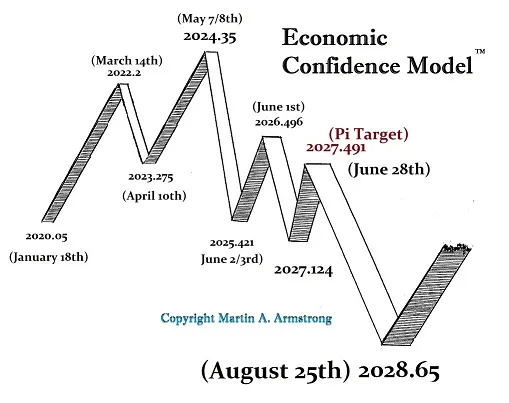
Lowering treasury rates will make homes more affordable by decreasing mortgage rates. Individual nations were fleeing US treasuries, creating a massive risk for an eventual default. Suddenly, at least temporarily, the stock market no longer seems like a safe place to park money. The Trump Administration first showed the world that it was cutting spending and attempting to reduce the deficit. A downturn in rallies DOES NOT guarantee a rally in the bond market, but we are witnessing a short-term flow into treasuries. However, the computer has warned that 2028 will mark a major turning point in confidence where any remaining confidence in government vanishes. For now, we may enjoy a temporary decline in treasury yields due to these tariffs.
Posted originally on Apr 8, 2025 by Martin Armstrong
PART II
QUESTION: Is he breaking the London metals dealers’ hold to suppress the gold price?
ANSWER: I am tired hearing the same constant bullshit about gold is suppress intentionally by dealers and that is why it is not $10,000. I have traded against these people for years. Here is a clip from the Forecast with Barclay, who used to work for me years ago, talking about how he checked me out before taking the job with Goldman Sachs.
Every manipulation that these dealers ever pull off was to the upside – not to suppress gold. They sell 10x more when people think gold is rising, not declining. This BS claim was explained that they were suppressing gold to help the government keep inflation in check. This is total BS!!!!!
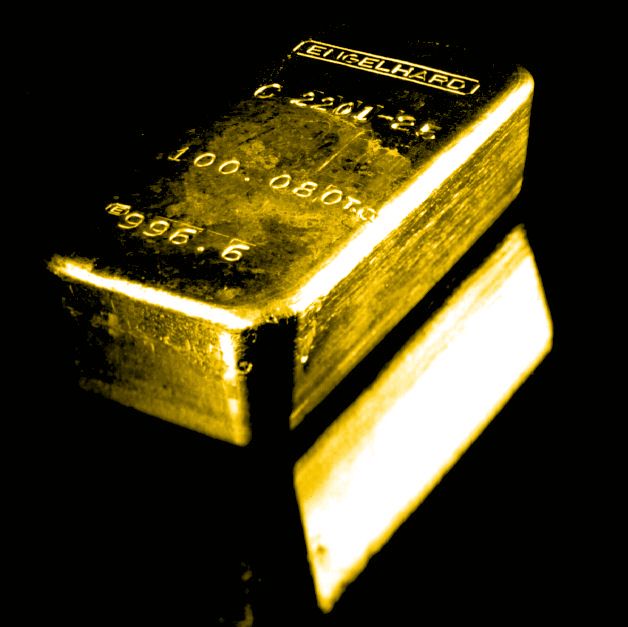
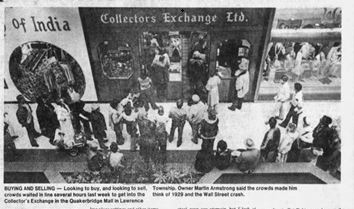
Back in the 1970s when I was one of the largest market-makers in gold, I was buying the scrap gold from stores in the country that people were selling to back then and refining it at Engelhard into 100-ounce bars for delivery into COMEX. PhiBro was who you would call to sell to Engelhard, locking in the prices. PhiBro made so much money that they bought Solomon Brothers, the bond house on Wall Street, and took the manipulation tactics to Wall Street, and then that blew up. That is when Warren Buffett stepped in to save the company, and that is how he got pulled into silver manipulation scams of the day.
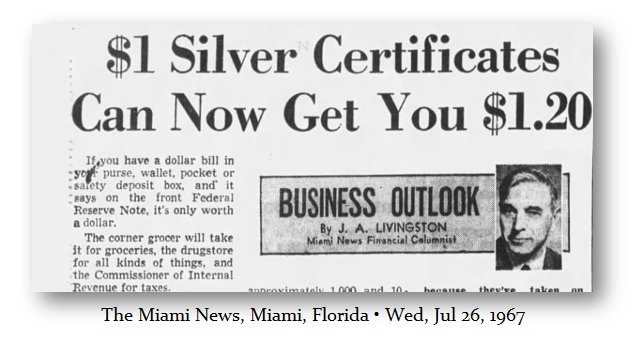
Nelson was one of my customers. In the early days, we bought silver certificates and redeemed them at the Treasury for 1,000-ounce bars. They generally had a permanent marker applied, often with two numbers, 102.6 and 120. The first implied it was 102.3 oz., and the second may have been the number of silver certificates it represented. Nelson was buying them when silver was $1.29. The U.S. Treasury primarily used 1,000-troy-ounce silver bars for the redemption of silver certificates. These bars were standardized for commercial and governmental use, aligning with industry practices for efficient storage and handling.
Historical Context: During the redemption period (late 1800s–1968), the Treasury managed large silver stockpiles, often stored in bulk. The 1,000-ounce size was practical for large-scale transactions and storage.
Commercial Standards: The 1,000-troy-ounce bar was (and remains) a common “good delivery” standard in precious metals markets, ensuring consistency in domestic and international trade.
Legislation and Practices: Acts like the Pittman Act (1918) and the Silver Purchase Act (1934) involved melting silver coins or purchasing bullion, likely using standardized bar sizes. The Treasury’s silver reserves, including those backing certificates, were held in forms compatible with industrial and monetary needs.
Thus, 1,000-troy-ounce bars were almost certainly the standard, though smaller denominations (e.g., coins) were also available for individual redemptions.
A funny story, I had $1 million credit line by the time I was 21 with the bank. It was funny because you did not have to deal with age or things like that. I had a business with employees and inventory, as well as sales. They granted you credit based on those things. They would assume I was older and just say, “You look good for your age.” I would just reply: “Thank you.”
I went to my local bank and wanted to borrow $2 million to buy silver. I told them I had a client, Nelson, who was going to take silver up dramatically. I may have even said $50 – I don’t recall. I told the bank they could hold the silver, which I thought made sense. I was turned down, and my banker called me in and explained that I should have just said it was for inventory, and I would have been approved. It was illegal for them to lend for speculation. For years, he told people that if he had bought silver himself, he could have retired by 1980.
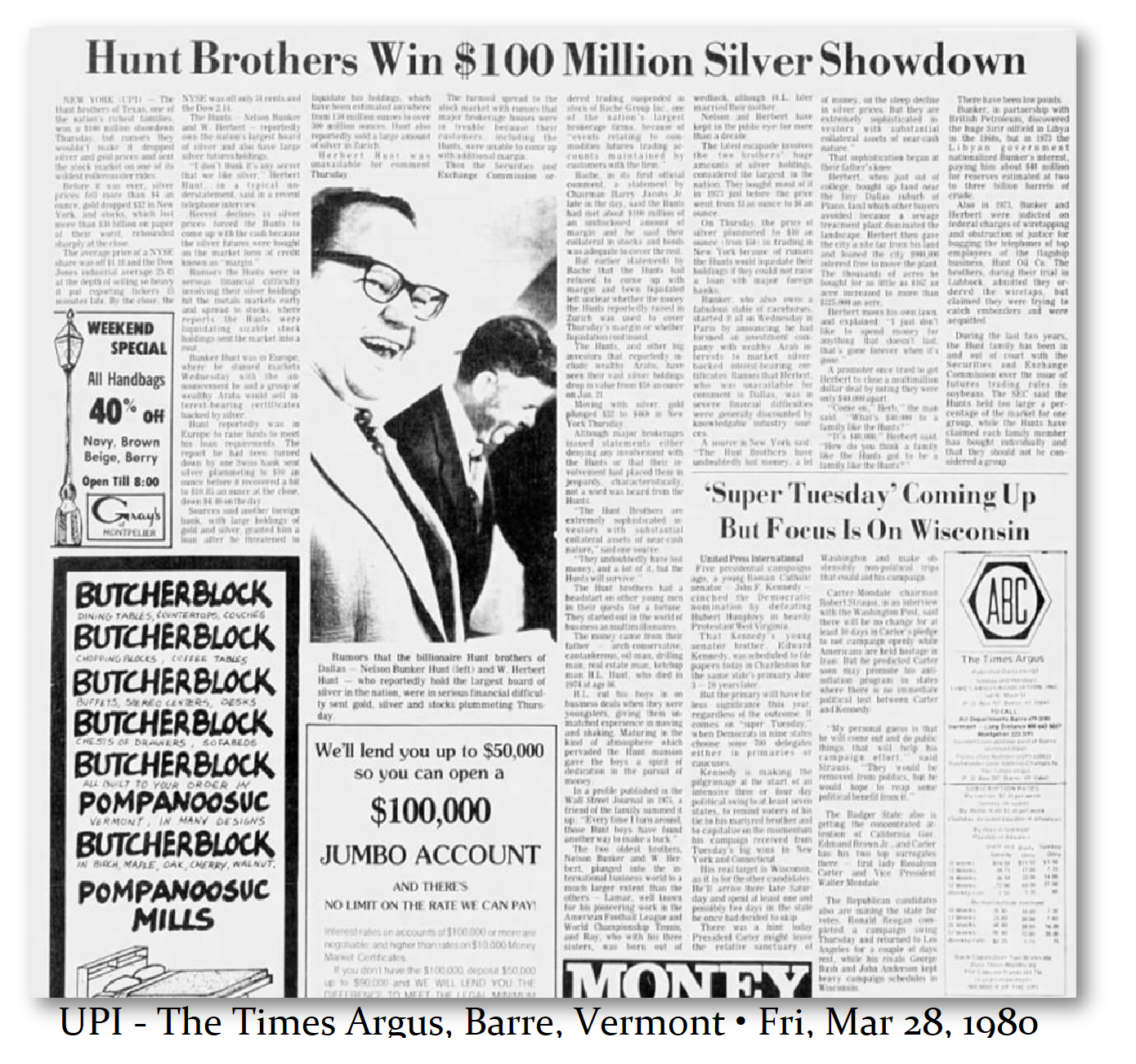
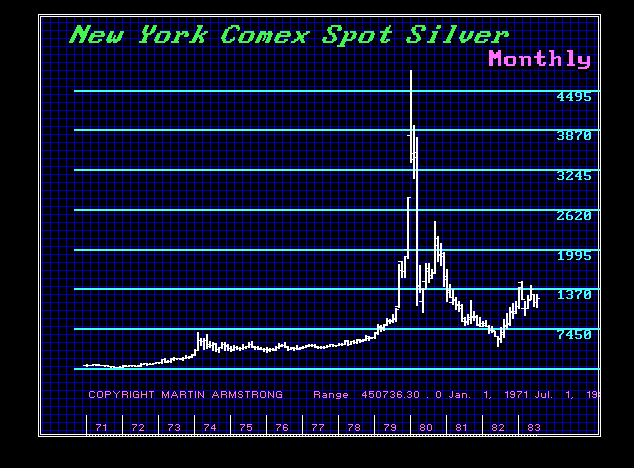
By February 1979, Hunt’s name was being thrown around all over the place, and they were saying silver was going to $100. That lured people in to buy, and they took silver up to test the $50 between February 1979 and January 1980. All the manipulations I have witnessed in the metals have been to lure people to buy, not sell, and suppress the prices. That is just stupid. Do they not make money by suppressing silver or gold to help the government? Come on.
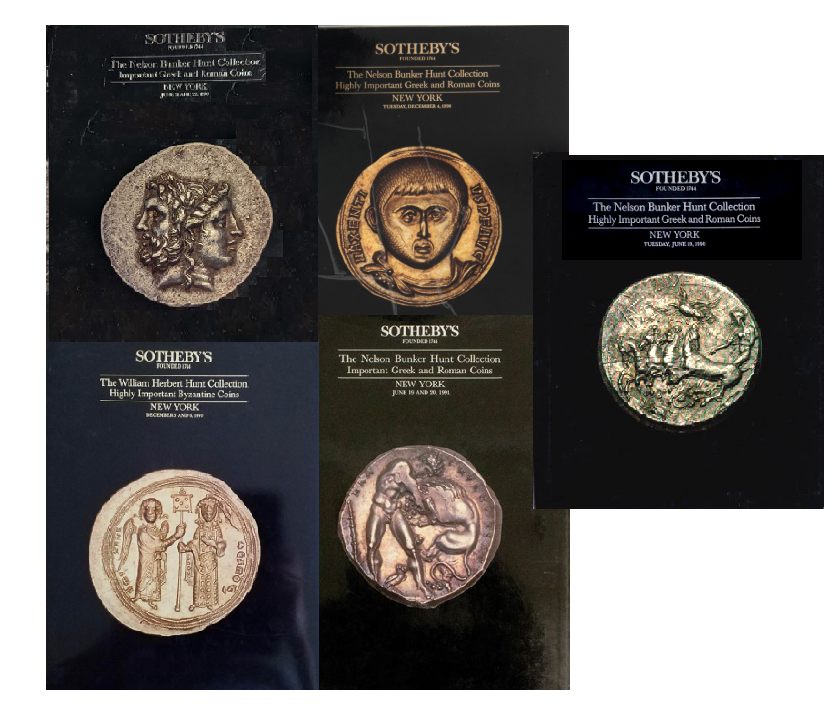
Nelson was also an avid ancient coin collector. Sotheby’s sold his collection, and it remains a significant sale often referred to. His collection ranked up there with J.P. Morgan and King Faruk.
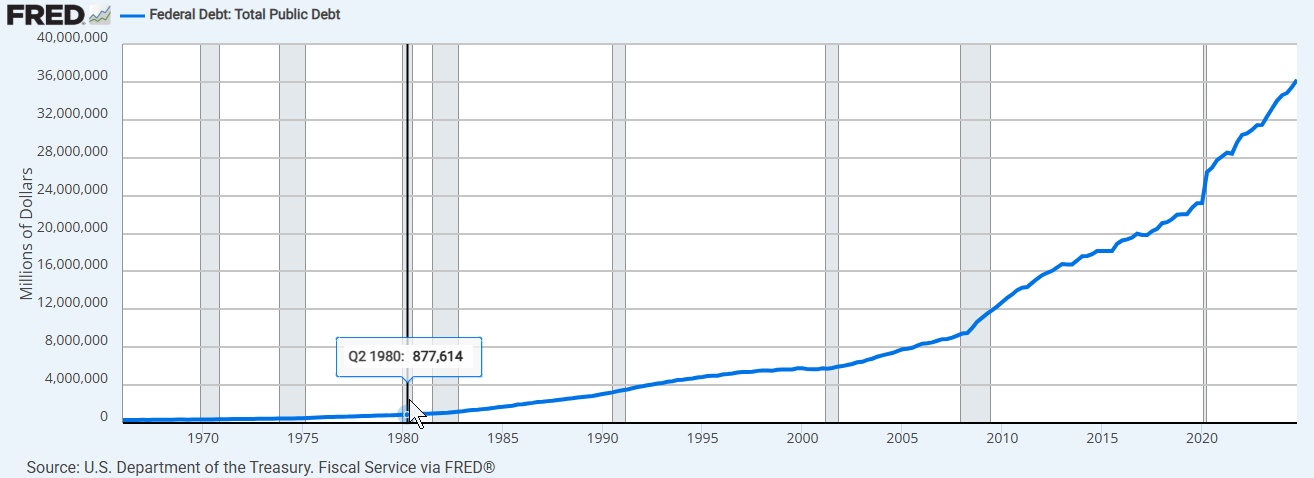
I have said countless times, gold rises NOT with inflation, but with geopolitical issues. Here was the National Debt Q2 1980 at $877.614bn. As of Q2 2024, it stood at $36,218bn. The debt has risen 40.29% since 1980. Gold hit $875 on January 21, 1980, in the cash market. If gold rose because of inflation or the debt level, then it should be $35,260 per ounce. The gold dealer could buy all of Wall Street with that price.
These people who make up these excuses are unbelievable. Gold pays no interest, which is why they lease it out. Otherwise, it is a dead asset that brings in no income. It is a hedge against the government in times of uncertainty—that’s it. It is not a hedge against inflation or the size of the debt. That has been a great sales pitch, but that is it.
COMMENT: My hats off to you if your call for today’s low holds for a few weeks and/or for the year.
I would have thought a retracement to the 62-fibo would have been more likely.
Thank you. SH
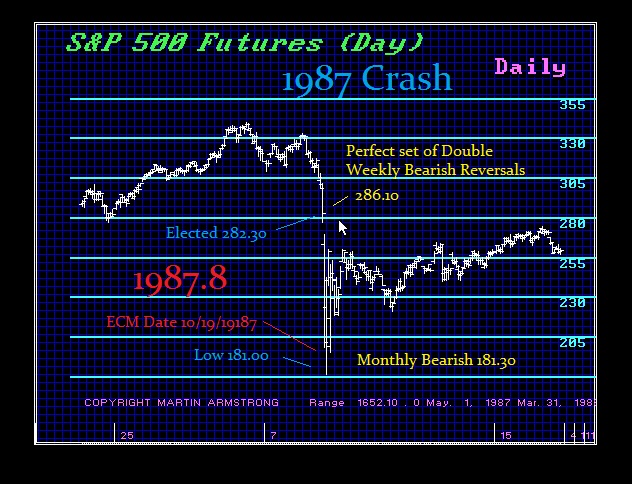
REPLY: As I said on the private blog, back in 1987, I could not find any technical support between the two Weekly Bearish Reversals at 286 in the S&P 500 and the Monthly at 181. That was not the case here, and we did not have an isolated high like in 1987. Here we elected two Weekly Bearish the week of March 24th. The setup was different.
Posted originally on Apr 7, 2025 by Martin Armstrong
QUESTION: Mr. Armstrong, when you were here in New Zealand, you talked about how earthquakes clustered. Is this happening again?
YD
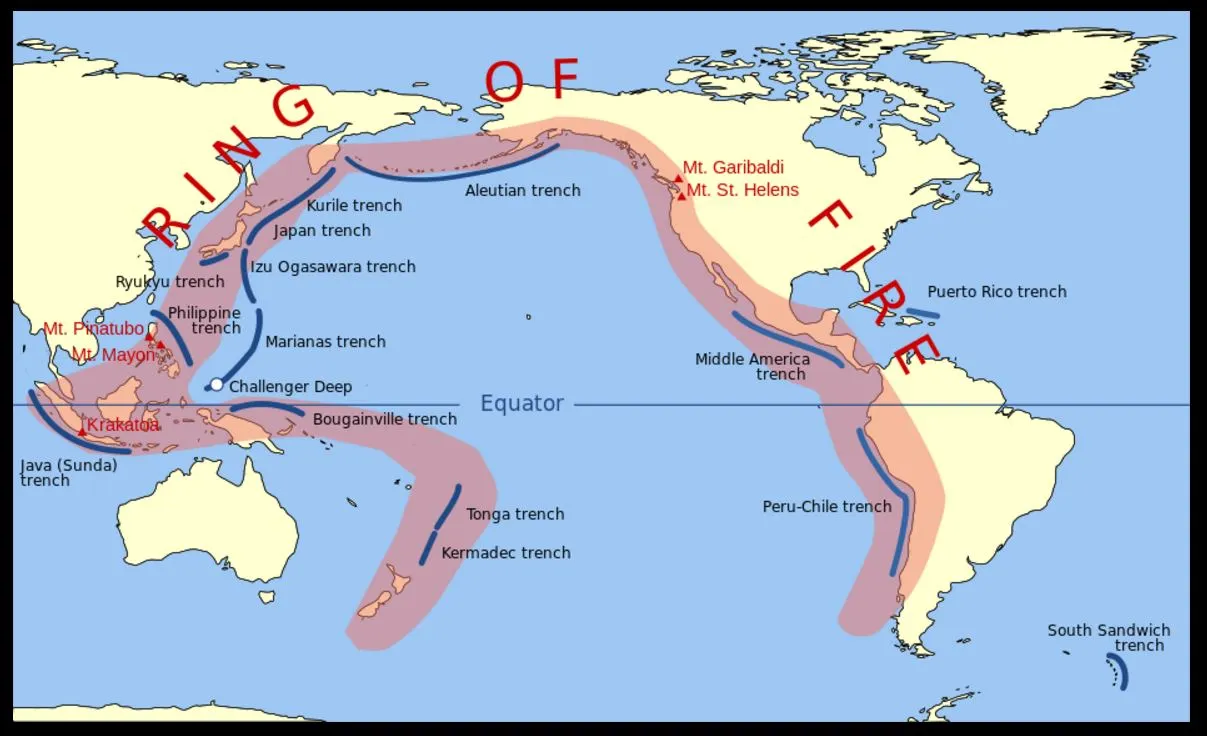
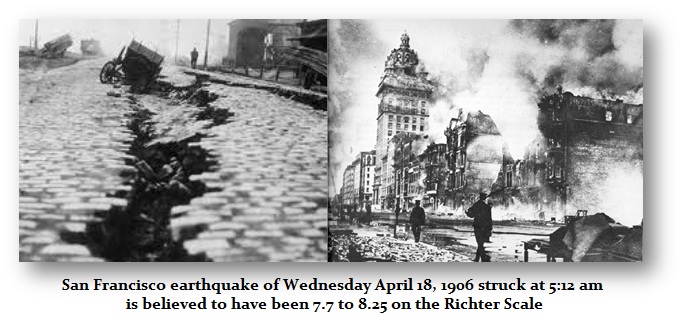
ANSWER: Oh yes. It’s been a while. Precisely. Here is a list of the top 20 earthquakes, and you will see a cluster of closely related quakes. The Pacific Ring of Fire is very active with volcanoes and earthquakes all coming alive and clustering. We will probably see even a 9.0 quake off the coast of Japan, most likely soon, perhaps between April and July. These events tend to cluster. Moving the plate in one area results in pressure in another region. This is just 8.0 or higher. The 1906 San Francisco April 18, 1906, quake was devastating, but it was 7.9.
1. Valdivia, Chile; 1960; magnitude 9.5 2. Prince William Sound, Alaska; 1964; magnitude 9.2 3. Sumatra-Andaman Islands, 2004, magnitude 9.1 4. Tōhoku, Japan; 2011; magnitude 9.1 5. Kamchatka Peninsula, Russia; 1952; magnitude 9.0 6. Offshore Maule, Chile; 2010; magnitude 8.8 7. Off the coast of Ecuador, 1906, magnitude 8.8 8. Rat Islands, Alaska; 1965; magnitude 8.7 9. Assam-Tibet, 1950, magnitude 8.6 10. Off the west coast of northern Sumatra, 2012, magnitude 8.6 11. Northern Sumatra, Indonesia; 2005; magnitude 8.6 12. Andreanof Islands, Alaska; 1957; magnitude 8.6 13. Unimak Island, Alaska; 1946; magnitude 8.6 14. Banda Sea, Indonesia; 1938; magnitude 8.5 15. Atacama, Chile; 1922; magnitude 8.5 16. Kuril Islands, Russia; 1963; magnitude 8.5 17. Near Kamchatka Peninsula, 1923, magnitude 8.4 18. South of Sumatra, 2007, magnitude 8.4 19. Arequipa, Peru; 2001; magnitude 8.4 20. Sanriku-Oki, Japan; 1933; magnitude 8.4
Posted originally on Apr 7, 2025 by Martin Armstrong
QUESTION: Mr. Armstrong, you have said that we have lost manufacturing because of taxes rather than tariffs. I believe you also said that a trade deficit is not a bad thing under your capital flow analysis. Can you please explain this? The press seems to say the opposite, but they are political fake news.
Thank you
GG
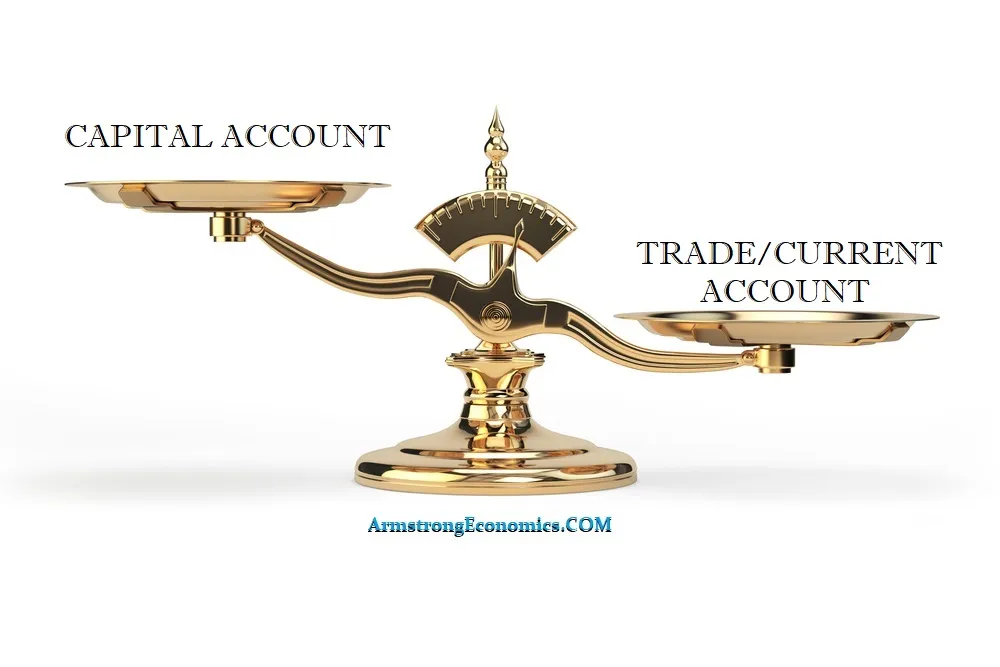
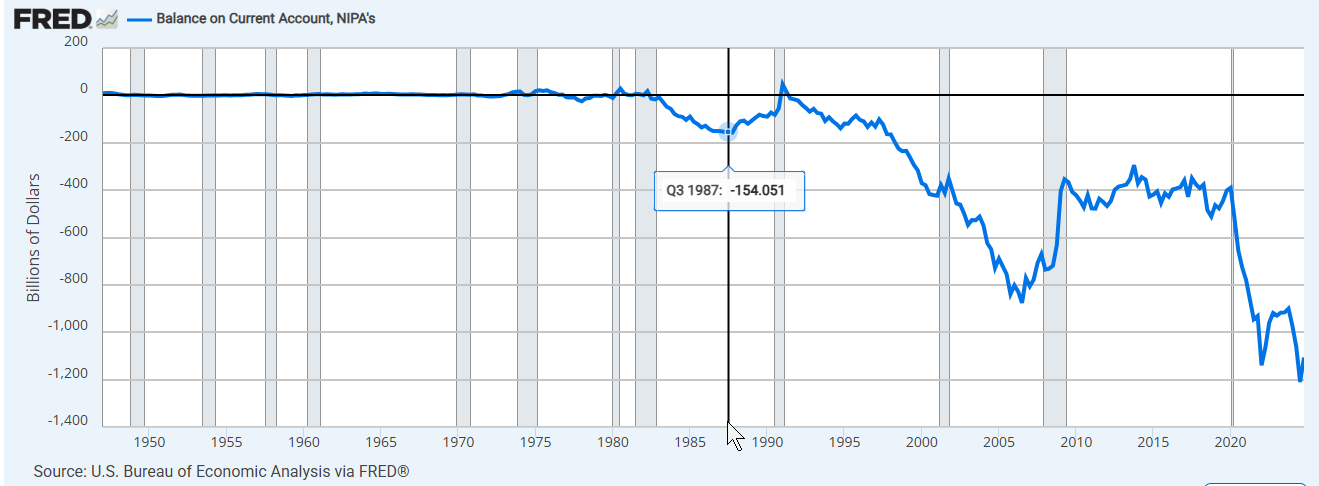
ANSWER: There are two account balances: the capital account and the trade/current account. Just because we have a trade deficit does not mean that it is negative for the economy. That is offset by the capital account, which is money coming in that is (1) foreign capital investing in the USA, from treasuries, shares, to real estate, and (2) US companies bringing capital home. Under Ronald Reagan, we had a rising trade deficit, but the economy was booming.
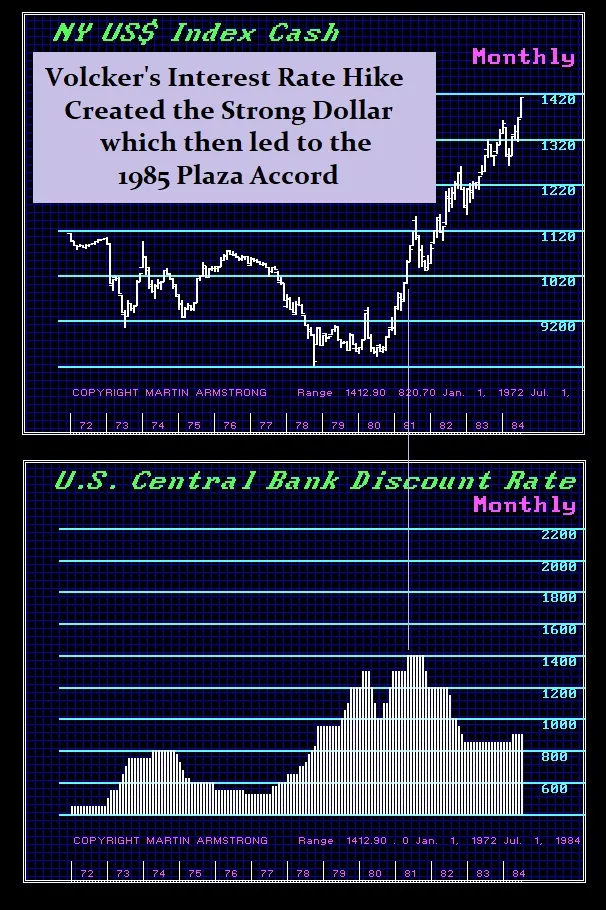
Volcker’s insane interest rates attracted foreign capital, causing the dollar to rise dramatically and sending even the British pound to nearly par in 1985. As the dollar rose, that brought down inflation, but it attracted foreign capital inflows. Interest expenditures flow through the current account when they flow outside the USA. That had nothing to do with goods or even services. It was interest payments on the debt.
The corporate tax rate in Michigan is a flat rate of 6% on federal taxable income (with certain adjustments) for C-corporations under the Corporate Income Tax (CIT), which replaced the Michigan Business Tax in 2011. The City of Detroit imposes a corporate income tax on businesses operating within its jurisdiction, a 2% tax on net income for corporations, and Michigan’s state corporate income tax rate of 6%.
If you look at where the US manufacturing hubs were, the local and state income taxes on top of federal taxes were the primary cause for manufacturing fleeing the USA. Add the fact that the Supreme Court ruled that because the federal income tax did not expressly exempt overseas income, that stupid decision meant Americans were subject to worldwide income on every level. I left New Jersey because if I held a conference in Hong Kong, I had to pay New Jersey 10% on top of the Feds for what? We held a conference in Philadelphia, and never again would I ever hold one there, for then I had to pay Philadelphia taxes, although I did not live or work there.
The Democrats make it sound like these corporations are greedy, and they go offshore because they get to pay $10 an hour instead of $20. That is the LEAST of the problem. It is always the taxes. You need accountants, and then lawyers, all to make sure to have crossed every “t” and dotted every “i” and all of these expenses are far more than anything you pay an employee. Now the latest is auditing you to see if you have “contract” employees instead of employees, since you do not take out taxes and match taxes on a contract employee. I just went through that audit, and it cost me $25,000 IN LEGAL AND ACCOUNTING FEES to prove I did not owe anything.
When the government looks in the mirror, it sees itself as all-powerful. It has no idea about humanity. It’s always about them and never the people. Just look at all the states where manufacturing used to be. They left, and it was not because they were paying someone else cheaper wages. The Democrats have blamed the “rich” and corporations for the damage that they have done to society, all for their corruption and greed.
The current account of the United States is a critical component of its balance of payments, reflecting the nation’s economic interactions with the rest of the world. It comprises four main elements. As you look at this list, you will see what I am talking about that this is by no means simply goods and services. All dividends, interest, and profits from multinational corporations that flow out to foreign investors. Thus, selling US Treasuries to foreigners expands the “trade” deficit as interest is paid. Since China has 10% of the US national debt and interest expenditures of $1 trillion, in theory, we send them $100 billion in interest. Tariffs are not going to reduce that, but they could result in selling domestic assets and returning that investment home, which would then go through the Capital Account, reducing the Trade/Current Account Deficit. The Press and even most Congressmen do not understand this.
1. Trade in Goods and Services (Net Exports)
Goods:
Exports: Physical products sold abroad (e.g., machinery, aircraft, agricultural goods).
Imports: Physical products purchased from other countries (e.g., consumer electronics, oil, automobiles).
The U.S. typically runs a trade deficit in goods due to high imports.
Services:
Exports: Financial, educational, tourism, and intellectual property services provided globally.
Imports: Services purchased from abroad (e.g., foreign travel, software licensing).
The U.S. often has a surplus in services, partly offsetting the goods deficit.
2. Primary Income (Net Income from Abroad)
Investment Income:
Earnings from U.S.-owned foreign assets (e.g., dividends, interest, profits from multinational corporations).
Payments to foreign owners of U.S. assets (e.g., interest on Treasury bonds held by foreign governments).
Compensation of Employees:
Wages paid to foreign workers in the U.S. (outflow).
Wages earned by U.S. residents working abroad (inflow).
3. Secondary Income (Net Current Transfers)
Government Transfers:
Foreign aid, grants, and donations (e.g., U.S. financial assistance to other countries).
Private Transfers:
Remittances sent by foreign workers in the U.S. to their home countries (outflow).
Gifts or inheritances received from abroad (inflow).
Current Account Balance
The sum of these components determines whether the U.S. has a surplus or deficit:
Deficit: The U.S. has run a persistent current account deficit, driven by:
A large goods trade deficit (imports > exports).
Outflows from secondary income (e.g., foreign aid, remittances).
Partial offsets come from services surpluses and primary income (e.g., returns on U.S. overseas investments).
Key Implications
Reflects the U.S. role as a net borrower globally, financing consumption and investment through foreign capital inflows.
Highlights structural economic factors, such as reliance on imports and the dollar’s role as a reserve currency, and exporting dividends and interest on US investments.
Posted originally on CTH on April 8, 2025 | Sundance
Timing his visit with a stock market “pump and dump”, executed by his friend Bill Ackman and intended to create domestic political turmoil, Israeli Prime Minister Benjamin Netanyahu visits President Trump in the White House.
Smartly, the strategic team in the White House saw the Ackman ‘pump and dump’ as it was triggered and cancelled the formal bilateral press conference in favor of a sit-down open presser in the Oval Office. Recovering from the failure of the strategic headline narrative effort (irrelevant questions about the fake news 90-day tariff pause), Netanyahu was then forced to retreat and outline his remarks unscripted.
President Trump then sat back (semi-detached) and watched Netanyahu discuss tariffs, “the subject of great interest today.” Netanyahu proclaimed that Israel agrees with President Trump about the exploitative use of tariffs against American interests, and President Trump wondered if the viewing audience noticed that if one-way Israeli tariffs were so bad for the “good friend of Israel” then why were they in place? WATCH:
President Trump noted his administration was having direct talks with Iran about their nuclear ambitions. Stating “we cannot be the stupid people anymore,” the coded messages of geopolitical gamesmanship were very visible from President Trump.
The media questions come at the 9:00 minute mark. This is the Big Leagues folks. This is where the major league geopolitical power moves and counter-moves take place, trillions are at stake and generational change is afoot. As President Trump rightly says, “we have one shot at this folks,” and I believe he is the great American leader to do it.
Posted originally on CTH onApril 7, 2025 | Sundance
President Donald J Trump announcing the end of the 80-year-old Marshall Plan (aka The European Recovery Program) of one-way tariffs against American imports has triggered a very predictable response from the European Union.
While saying the EU is prepared to enter negations toward a zero-tariff trade reciprocity, Comrade Ursula von der Leyen simultaneously announced that Brussels is prepared to launch countermeasures against The United States, in an effort to retain economic control and access to a U.S. consumer market they must exploit for their economic survival.
Speaking in very deliberate terms, the EU Komisar states the U.S. decision to demand reciprocity, and fairness will deliver “immense” and “dire consequences” for the New World Order and “global trading system.” von der Leyen proclaims that global citizens will be impacted with higher grocery bills, shortages of medication and increased costs for transportation.
The leader of the world’s largest bureaucracy stunningly proclaims President Trump’s tariffs will increase the “burdens of bureaucracy.” The one-sided benefits and “interests of the European Union” will be protected at all costs. WATCH:
.
Regarding “countermeasures.” Again, we repeat the predicable response. Together with their unelected ally in Canada controlling the North American response, watch for the EU to target Big USA Tech companies and financial service sectors.
The goal of the EU will be to assemble a tariff countermeasure response that will deliver political pain, not economic consequences. That’s just how they roll. The EU will leverage disgruntled Wall Street, banking and Technocracy sectors in order to put political pressure on Donald Trump to back down.
Optically this is the worst possible type of pontificating EU spokesperson to generate internal American opposition. Frankly comrade Ursula, MAGA don’t give a damn. [Pinky Finger Salute]
Posted originally on CTH on April 7, 2025 | Sundance
President Trump is swinging the BIG UGLY hammer against the panda and the Beijing dragon behind it.
President Trump (Via Truth Social) – “Yesterday, China issued Retaliatory Tariffs of 34%, on top of their already record setting Tariffs, Non-Monetary Tariffs, Illegal Subsidization of companies, and massive long term Currency Manipulation, despite my warning that any country that Retaliates against the U.S. by issuing additional Tariffs, above and beyond their already existing long term Tariff abuse of our Nation, will be immediately met with new and substantially higher Tariffs, over and above those initially set.
Therefore, if China does not withdraw its 34% increase above their already long term trading abuses by tomorrow, April 8th, 2025, the United States will impose ADDITIONAL Tariffs on China of 50%, effective April 9th. Additionally, all talks with China concerning their requested meetings with us will be terminated! Negotiations with other countries, which have also requested meetings, will begin taking place immediately. Thank you for your attention to this matter!” [LINK]
It must also be noted, this global reset and tariff system is visibly the fracture point between the Tech Bros and MAGA economic nationalists. Elon Musk and Bill Ackman are now directly in opposition to President Trump and the global trade reset.
You know that ‘cleaving’ I was talking about? The issue of the Tech Bros -vs- MAGA? Well, tariffs are the trigger.
Tech Bros do not know borders. Their industry and business sector are borderless. Tariffs are bold economic lines around a border.
Musk vs Navarro
Ackman vs Lutnick
Sacks vs Hassett
Tariffs are where the interests of the Tech Bros financially diverge from MAGA. The globalists and multinational corps who know this, specifically the EU team, will exploit this fracture point. They will target U.S. Tech industry in their tariff avoidance strategy to create division. This is what EU Commission President Ursula von der Leyen is talking about when she says “countermeasures”. Watch for it.
Posted originally on CTH onApril 7, 2025 | Sundance
White House senior policy advisor for Manufacturing and Trade, Peter Navarro, appears on CNBC television for an almost 20-minute long debate of Wall Street vs Main Street.
Navarro represents MAGAnomic nationalism, the rest of the CNBC panel represent the interests of Wall Street and their friends and neighbors who manage hedge funds and connected financial instruments. Navarro held his own. WATCH:
I have created this site to help people have fun in the kitchen. I write about enjoying life both in and out of my kitchen. Life is short! Make the most of it and enjoy!
This is a library of News Events not reported by the Main Stream Media documenting & connecting the dots on How the Obama Marxist Liberal agenda is destroying America