The UK has a Refugee Problem


Armstrong Economics Blog/BRITAIN Re-Posted Aug 19, 2022 by Martin Armstrong

Migrants are risking their lives by boarding small boats to cross the English Channel to the UK. Over 600 people on 14 ships reached Britain last Saturday alone. About 1,843 illegal immigrants crossed into the UK in 2019, but that number quickly multiplied to 28,526 in 2021. Now, the nation is bracing for 60,000 undocumented illegal immigrants in 2022.

The government does not know how to handle the giant influx. Former Prime Minister Boris Johnson did recognize the problem, but his strategies failed. Brexit allowed us to take back control of legal immigration by replacing free movement with our points-based system, we are also taking back control of illegal immigration, with a long-term plan for asylum in this country,” Johnson said in a prepared speech. Yet, the woke crowd will not let the UK expel immigrants despite not having the capacity to handle such a sharp uptick in arrivals.

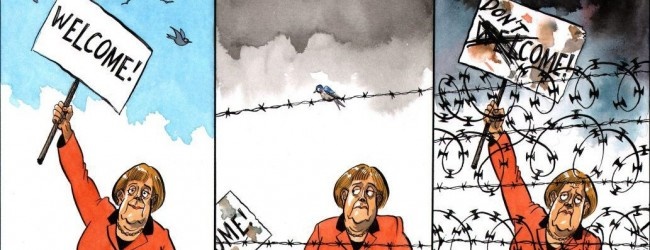
There was the failed flagship Rwanda policy that suggested flying migrants to Rwanda, Africa. One flight was attempted before it was grounded at the last minute by the European Court of Human Rights. Some in the UK blame France for allowing migrants to pass their waters into the UK. The real culprit is former German Chancellor Angela Merkel, who opened Germany up to all Syrian refugees and, therefore, the EU’s borders to any asylum seeker years ago. The Mediterranean nations in the EU have been asking for help to no avail.

The UK has more options since Brexit but must tread lightly. The Royal Navy cannot simply sink ships filled with women and children. Smugglers are running the seas and navigating these small boats to UK shores from the EU or Turkey. The potential of a life sentence for smuggling does not seem to be enough of a deterrent. The UK has a broken asylum system that needs to be fixed as the radical uptick in undocumented arrivals is unsustainable.

Oliver’s Twist, Policymakers Legislating Against the People – It’s Not About Going Green, It’s About Going Without


Posted originally on the conservative tree house on August 18, 2022 | Sundance

Last Saturday’s weekly monologue by Neil Oliver was a tremendous hit, helping to awaken millions of people from multiple nations about the true intent of this new governing system as promoted by policymakers on behalf of corporate interests [SEE HERE].

Earlier today (UK time) GBNews host Mark Steyn had Mr Oliver appear in studio to expand the conversation.  What results from Steyn and Oliver is a brilliant segment outlining the nature of this new governing system.  A system structured on the standard that disconnected policymakers are legislating to the needs of corporations.

When you remove the old “representative democracy” scales from your outlook and replace the lens with an understanding that representation now means representing the needs of multinational interests, almost all of the contradictions reconcile.

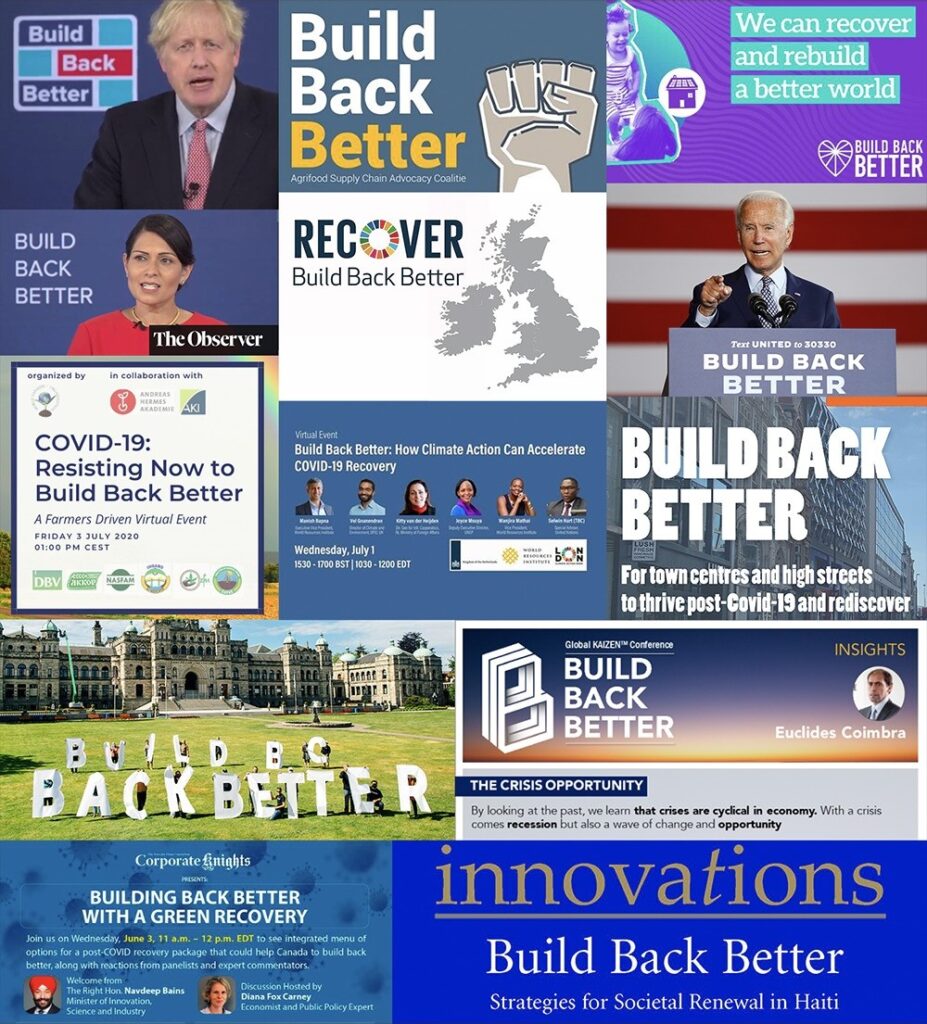
From that perspective, the Build Back Better or Green New Deal (climate change) agenda is not about replacing the system of energy production with a green system that duplicates the output. The intent of the new program is to produce less energy and then modify the uses of the now limited resource.  In one of the examples given, 30 million gasoline powered cars are not expected to be replaced by electric vehicles, a personal transportation system of far fewer vehicles is the goal.  WATCH (prompted):

.

Something is Looming Geopolitically, and We Better Start Taking It Seriously


Posted originally on the conservative tree house on August 18, 2022 | Sundance 

As a result of western governments’ taking collective action under the auspices of a ‘climate change’ agenda, we are on the cusp of something happening with ramifications that no one has ever seen before.

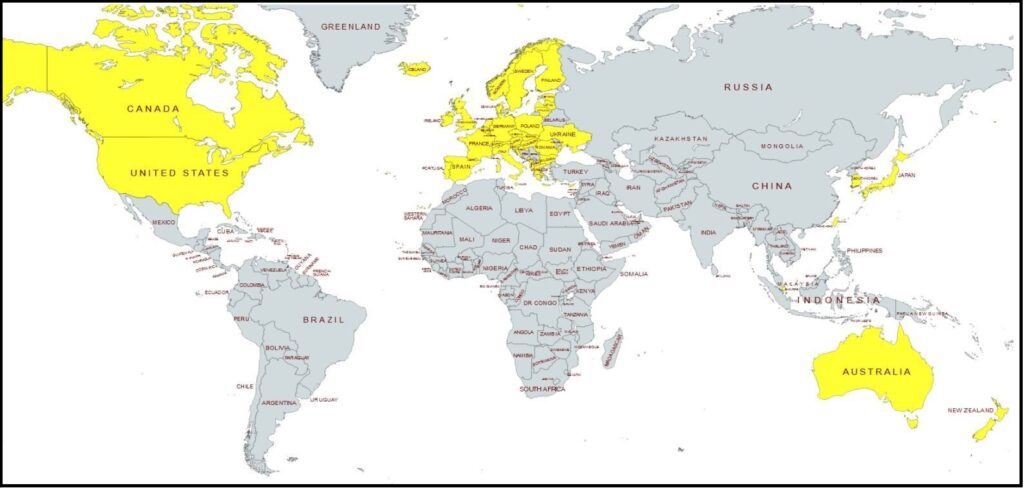
Western governments’, specifically western Europe, North America (U.S-Canada) and Australia/New Zealand, are intentionally trying to lower economic activity to meet the intentional drop in energy production.

This is the core consequence of the Build Back Better agenda as promoted by the World Economic Forum.

Anyone who says there is a reference point to determine both the short-term and long-term consequences is lying. There is no precedent for nations’ collectively and intentionally trying to reduce economic activity.

Hiding behind the false justification that current inflation is driven by too much demand, central banks in Europe, the Bank of England, Bank of Canada and U.S. federal reserve are raising interest rates.  The outcome we are currently feeling is an intentional economic contraction and global recession.

The Build Back Better monetary policy is successfully shrinking western economic activity; however, the impacted nations that produce goods for markets in North America and Europe, specifically southeast Asia, Japan and China, are not raising interest rates in an effort to try and offset the drop in demand.  China has announced they are dropping their central bank rates in a desperate effort to lower costs and keep their export dependent economy working.

Underneath all of this, is a drop in energy production in the same nations trying to lower economic activity.  The political policymakers are attempting to manage this process without informing the citizens of the unspoken goal.   Shortages of oil, coal and natural gas are self-inflicted problems, all part of the BBB agenda.

Beyond the massive increases in energy costs, which is the true source of inflation and a direct/intentional outcome of the BBB effort, Europe is now facing a looming winter without the energy resources to heat homes and sustain people.  Things are going to be very uncomfortable in Europe this winter as roaming brownouts are now predicted.

As the collective west attempts to, using their words, “manage the transition,” they do not have mechanisms to control an outcome of this magnitude.  It is simply too big a situation to manage.  Where the rubber meets the road, the think-tanks and high-minded climate change ideologues do not have the ability to manage a transition and still meet the needs of people.  Beyond the esoteric thinking, there are real consequences from these actions.

Many people have discussed the potential for longer-term food shortages and recently, shorter-term winter heating.  However, beyond that, the downstream geopolitical consequences are seemingly being ignored.  Instead, what we see is an effort to keep pretending the climate change ends will justify the means (disruption of energy production).

In this connected world, when the western nations stop buying things, we find ourselves domestically with economic trouble.  Businesses fail, unemployment rises, financial stress ripples throughout the economy, dependency on government subsidy increases and real pain is felt.  However, beyond the domestic issues the supplier nations run into even bigger problems.

Unemployment in Malaysia, Vietnam, South Korea, Japan, Taiwan and even China, creates an entirely different set of regional stability issues on a geopolitical level.

There is no precedent for this.  Never before in the history of industrialized nations has any government intentionally tried to lower its economic activity.  It has never been done with intent before because within the contraction nations get more poor, people suffer.

Not only has no single nation ever tried to intentionally shrink its wealth, but there is no precedent whatsoever for an alliance of nations to join together with the same purpose. While this might seem like an academic economic modeling exercise, unfortunately it is very real.  What I am describing is happening right now, and we had better start talking about it before the unforeseen consequences start to become a crisis.

In North America (U.S-Canada), Europe and Australia, there will continue to be massive increases in food prices as a result of the collapse in energy production.  Beyond the western nations there will be food shortages as a result of lowered harvest yields and less industrial food production.  This is not controversial.

It is also not controversial that regions with harsh winter climates are going to be paying much more for scarce heating resources.

That being accepted, what happens geopolitically, even militarily, when the entire global economy starts to feel the impacts from western nation economic contraction on a scale -created by collective action- that has never been seen before.

I have no idea what that big picture consequence looks like, but whatever “that” is, will be happening at the same time as people everywhere will be more desperate as an outcome of their economic position.  I don’t have the answers, but I sure as hell can see the problem coming.

Political leadership in the aforementioned western nations are seemingly, perhaps intentionally, keeping people distracted with domestic shiny things to occupy time.  However, someone needs to start talking about, and seriously challenging, the big picture consequence of this Build Back Better future, before it’s too late.

Canada to Launch Digital Identity Program


Armstrong Economics Blog/Canada Re-Posted Aug 18, 2022 by Martin Armstrong

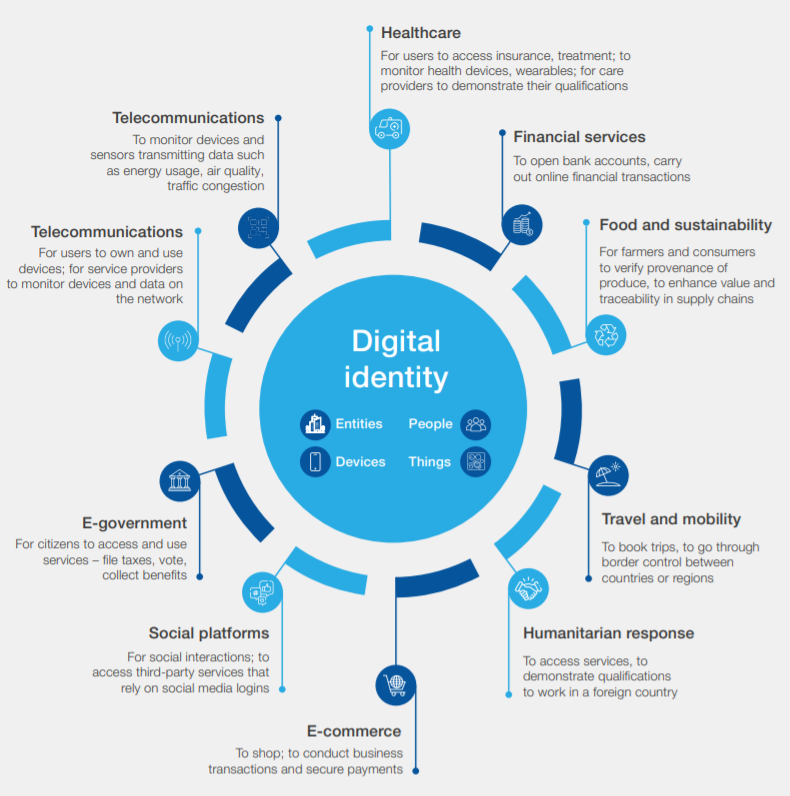
Trudeau is pushing forth the Great Reset at any cost. Canada will impose a federal “Digital Identity Program” to help the World Economic Forum develop a global ID system. Since the COVID passports failed, they are outright demanding that everyone carry proof of their digital identity.

Canada’s Digital Ambition 2022 report revealed the details of its plan:

“Now more than ever, we have work to do to make it easier for Canadians to interact with the Government of Canada, and we are committed to better serving Canadians in a digital age. This will require modern, integrated systems and an unwavering focus on the needs and experience of citizens. We have made progress, but we must continue to improve.

During the pandemic, the government quickly deployed new and innovative programs to support Canadians, but we have also seen examples where we can do more to deliver secure, reliable, and easy to use digital services.

Building on the vision outlined in Canada’s Digital Government Strategy, I am pleased to introduce the Government of Canada’s Digital Ambition (GC's Digital Ambition) which has been developed with this service imperative in mind… The GC's Digital Ambition will provide a solid foundation for the ever-evolving digital transformation of government. It will serve as an important tool to support the focus shared across ministers and departments to identify and implement better ways to ensure Canadians receive high quality, accessible, and efficient government services.”

We saw the power that digital IDs provided to governments. China was able to freeze bank accounts and prevent the freedom of movement by simply changing a QR code. As we saw in numerous countries with the COVID passport, people were unable to access public buildings and facilities. They were unable to leave their countries or provinces. Governments can effectively banish people from participating in society with digital IDs. This is simply one step away from actually microchipping the people as if we were owned by the government.

The Canadian government will be able to track every citizen’s movement. They will surely implement digital IDs into every facet of government, so the people will be required to carry their digital ID as if it were Nazi Germany. Freedom and privacy have been lost to tyranny.

South Korea Offers Olive Branch to the North


Armstrong Economics Blog/War Re-Posted Aug 17, 2022 by Martin Armstrong

Russia recently claimed that it had been a close friend of North Korea since World War II, when Japanese forces were expelled from the peninsula. In a celebratory speech, South Korean President Yoon Suk Yeol mentioned how the end of Japan’s colonization was a win for both Koreas, albeit leading to their nasty divorce. Yoon said he would like to strengthen relations with Japan, as well as North Korea.

South Korea is requesting the same demand – denuclearization.  “We will implement a large-scale program to provide food, providing assistance for establishing infrastructure for the production, transmission and distribution of electrical power, and carry out projects to modernize ports and airports to facilitate trade,” Yoon said. Furthermore, Yoon said that they would modernize North Korea’s hospitals and infrastructure, and “carry out initiatives to allow for international investment and financial support.”

North Korea will never abandon its nuclear program for fear of retaliation. Without nuclear power, the small, impoverished country would be completely vulnerable. I warned in March 2018:

“The entire world is going to go nuts 2031/2032. There will not be a country that is spared from political and economic events. The risk a serious famine in North Korea which could result in the people rising up will arrive in 2023. That pressure will begin here this year 2018.70 – which will be September 13th, 2018. This appears to the turning point that is not just concerning North Korea. It is appearing around the world in many markets. The risk for political change in North Korea comes into play as soon as 2019/2020.”

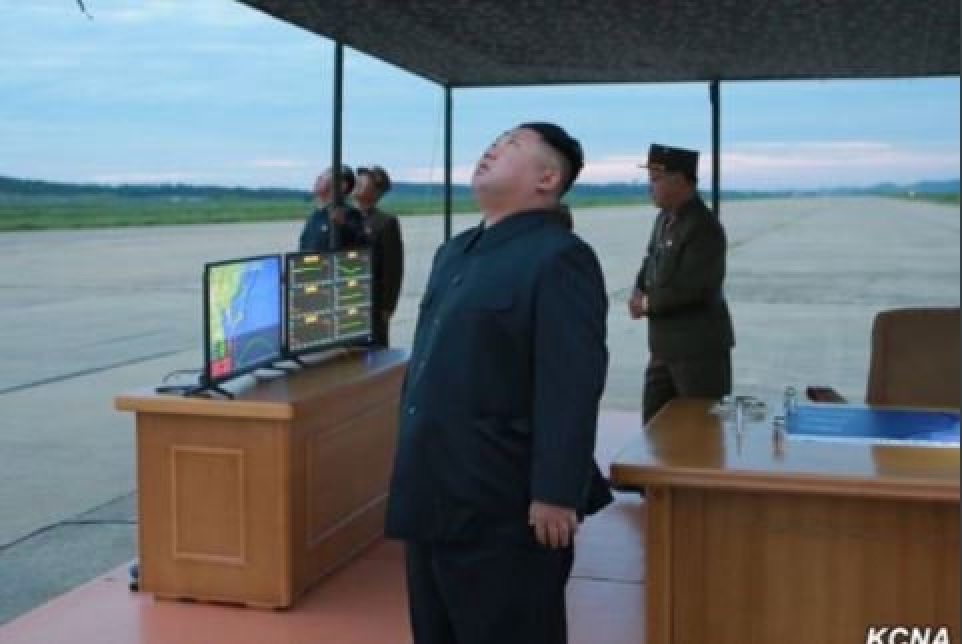
We saw political destabilization in North Korea in 2020 when Kim Jong-Un went missing from the public eye. Many thought he was dead, and reports circulated that his sister, Kim Yo-Jong, had become the Supreme Leader. It has now come to light that Jong-Un was “seriously ill” during the pandemic. “Even though he was seriously ill with a high fever, he could not lie down for a moment thinking about the people he had to take care of until the end, in the face of the anti-epidemic war,” his sister recently revealed.

Kim Jong-Un declared complete victory over the coronavirus. “For a country that has yet to administer a single vaccine shot, our success in overcoming the spread of the illness in such a short period of time and recovering safety in public health and making our nation a clean virus-free zone again is an amazing miracle that would be recorded in the world’s history of public health,” KCNA quoted him as saying. However, he blames South Korea for contaminating his country with the virus.

North Korea will never abandon its nuclear power, nor will it make amends with South Korea. The hatred runs too deep. Although the nation needs financial assistance, it is turning to its new ally, Russia, with the help of China. Our models state that there could be civil unrest in the hermit kingdom next month. Civil unrest will not be tolerated and cannot occur without a full-scale uprising. Could involvement in the Russia-Ukraine war be the final straw?

National Bank of Romania Hires Fortune Teller


Armstrong Economics Blog/Central Banks Re-Posted Aug 17, 2022 by Martin Armstrong

The National Bank of Romania (BNR) is turning to ancient rituals to predict future economic movements. Gabriela Dima, 64, often referred to as Minerva, holds two majors in psychology and cinematography. She also happens to be a popular fortune teller, a Bucharest fairy, and the newest hire of Romania’s central bank.

Inflation in Romania reached 15.05% this June. Last month, the National Bank of Romania voted to raise interest rates by 100 basis points to 4.75%. What will the bank do next? Perhaps Minerva knows.

Fortune telling has been a long tradition in Romani culture that dates back hundreds of years. Although the church shunned the practice, people remained superstitious and often looked to tellers for advice. Minerva has not disclosed her position at the central bank, but BNR declared that she is indeed employed there. So perhaps she will lighten the sentiment and give some of the population a boost of confidence regarding the future. Either way, her advice will be better than any analyst following Schwab’s Great Reset agenda to topple the global economy.

North Korea Forms Alliance with Russia


Armstrong Economics Blog/War Re-Posted Aug 16, 2022 by Martin Armstrong

On Korea’s liberation day, President Vladimir Putin responded to Kim Jong-Un’s request to join the fight in Ukraine. In a letter to the North Korean dictator, Putin said North Korea had been a friend to Russia since Japan’s defeat during World War II. Kim is calling for “strategic and tactical cooperation, support and solidarity” between the two nations, and Vladimir agrees that it would be in the best interest of both parties.

Putin is seeking to “expand the comprehensive and constructive bilateral relations with common efforts” with the hermit kingdom. North Korea needs Russia and China to survive. In 2011, Kim J0ng-Un’s father, Kim Jong-il, visited Russia and negotiated a contract to send North Korean workers to Russia. US sanctions were intended to reverse this proposal but it was largely ignored. Both Russia and North Korea have been banished from doing business with the West entirely, so all bets are off.

This arrangement is certainly more beneficial for North Korea as it is desperate for allies. The move will undoubtedly anger the West, but this is the result of failing to hold diplomatic talks with Russia and imposing endless sanctions.

Desperate Times in Lebanon


Armstrong Economics Blog/Corruption Re-Posted Aug 16, 2022 by Martin Armstrong

Desperate times drive people to desperate measures. A Lebanese man made international headlines after holding 10 people hostage in a seven-hour standoff with authorities before surrendering. This man was not attempting to steal from the bank and had no intention of harming anyone. He is a victim of Lebanon’s economic catastrophe, and this is a very sad story of what can happen when banks fail.

Lebanese banks have placed harsh limits on withdrawals since 2019. The man, who entered the bank with a gun and gasoline, was pleading for $35,000 of his own money in order to pay for his father’s healthcare.

The Lebanese lira declined by over 90% against the USD. The country’s GDP fell to $20.5 billion in 2021, and real GDP per capita declined 37.1%. The World Bank deemed the crisis a “deliberate depression” that was “manifested by a collapse of the most basic public services; persistent and debilitating internal political discord; and mass brain drain.” Inflation in Lebanon reached 210.08% in June, and the lira is utterly worthless. Food prices have spiked 332.35%, transportation 462.4%, and housing by 132.38%.

Billionaire Prime Minister Najib Mikati, one of the richest men in the Arab world, has done nothing to help the people. Time has run out for Lebanon, and the people need a complete political transformation to regain any quality of life.

Argentina Raises Interest Rate to 69.5%


Armstrong Economics Blog/Socialist Re-Posted Aug 15, 2022 by Martin Armstrong

Argentina is out of options. I reported on the ongoing widespread protests occurring across the country. The majority of the nation is unemployed, and the currency is basically worthless. The people can no longer rely on the socialistic promises as the government is unable to fund its programs. Basic necessities are no longer available, and the people are suffering.

After inflation reached 60%, the nation decided to stop printing money entirely. The central bank just voted to raise the benchmark rate by 950 bps to 69.5%. Inflation now sits at 71% after prices rose 7.4% in July.

Estimates state that inflation could reach 90% in Argentina by the end of the year. The government has run the economy into the ground, 6 feet under, and it will need a complete overhaul for the people to begin living comfortably again.

The IRS Targets the Poorest Americans


Armstrong Economics Blog/The Hunt for Taxes Re-Posted Aug 15, 2022 by Martin Armstrong

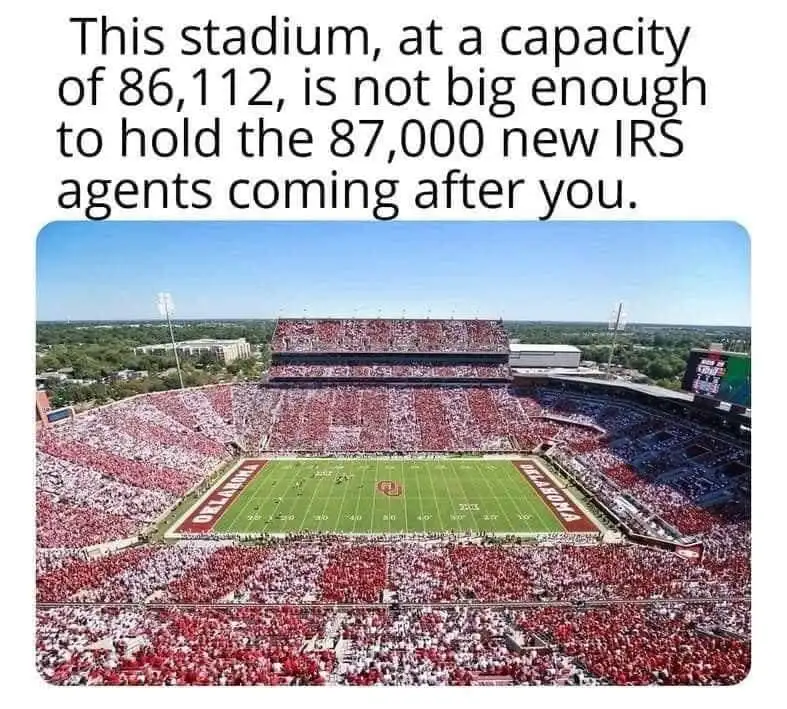
The Internal Revenue Service (IRS) claims that they will not target lower and middle-class Americans under their staff expansion. This is a lie a they already target the poorest households at five times the rate of other income brackets.

Trac IRS examined the audit figures from FY 2021. The IRS audited 659,003 returns last year out of the 160 million filed. So out of every 1,000 filers, four were targeted for audits. This is already an increase from 2020, when three out of every 1,000 filers were investigated. Prior to 2020, audit rates had been declining.

The IRS uses “correspondence audits” to request additional documentation to prove that the filings are accurate. These correspondence audits compiled 85% of all audits conducted last year, marking a 5% increase from the previous two years. Some Americans live on such a small income that they file for an anti-poverty tax credit. Those earning a mere $25,000 annually or less accounted for 54% of all correspondence audits.

The idea that this expanded branch of government will target the dreaded rich is a lie. Around nine million taxpayers in the highest bracket earned between $200,000 to $1,000,000 but were only targeted at one-third of the rate compared to the poorest in the country. In fact, less than 40,000 returns among the top-tier tax bracket were targeted. Only 13,725 people earning over $1 million were targeted. The IRS is basically asking the most desperate among us to prove that they are poor.

With new resources and funding, the IRS will target EVERYONE.