Hurricane Ian Recovery Update


Posted originally on the conservative tree house on October 24, 2022 | Sundance 

I’ve been sharing some of the challenges with site admins; at their suggestion here’s the latest from the impact zone.

First things first.  To establish the context, what made Ian completely different from all other hurricane recovery responses I have been involved in comes down to two issues: strength of the storm (155+ mph winds), and more importantly the duration of the event (8+ hours of peak destruction).

In normal hurricane impacts the worst affected areas generally experience 3 to 4 hours of chaos.  Hurricane Ian was unique in that it was only moving 8 to 10 mph and that made the storm damage completely different.  Structures that survived the first half, completely failed during the second half of the storm.

Almost nothing survived unscathed after 8 to 9 hours of that strength of storm sitting, almost stationary, in one place; nor was anything ever designed to withstand that duration of storm with winds from the South, then East, then West as Ian meandered inland from the gulf toward the north northeast.

After this storm, and having been through four previous direct impacts, including Homestead AFB, I would say this….  If there is even a remote chance you would ever encounter this type of a hurricane event, EVACUATE.  Do not try and hunker down if there is a looming possibility of having to rely on a structure to withstand 150+ mph wind for a full day.  Just leave.  With all of my preparations in place, and all of the knowledge I possess in storm survival, I would never attempt that again.

That said, I will put a better word image together at a later date to share, along with specific recommendations learned as an outcome of this event.  In the interim, just accept my most strenuous advice. If this specific type of storm was ever predicted to come near you, GET OUT.

♦CURRENT STATUS – Electricity and water restoration efforts continue as we near the one-month anniversary 10/28.  Thankfully, both services have been restored for me personally, and I carry deep empathy -and my most sincere prayers- for those still waiting.

Regarding stable -if any- internet service, it remains elusive for everyone.

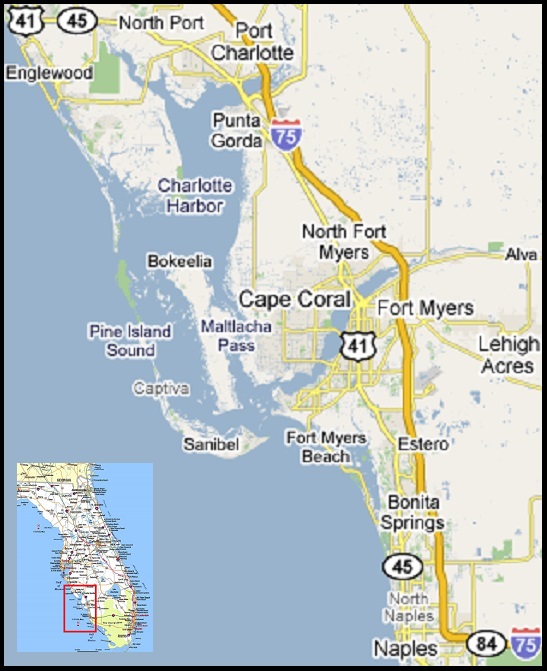
The biggest impacts upon the outer islands of Fort Myers Beach, Sanibel, Captiva and Pine Island/Matlacha are still in first stage recovery efforts. Completely new civil infrastructure is being built in these areas.

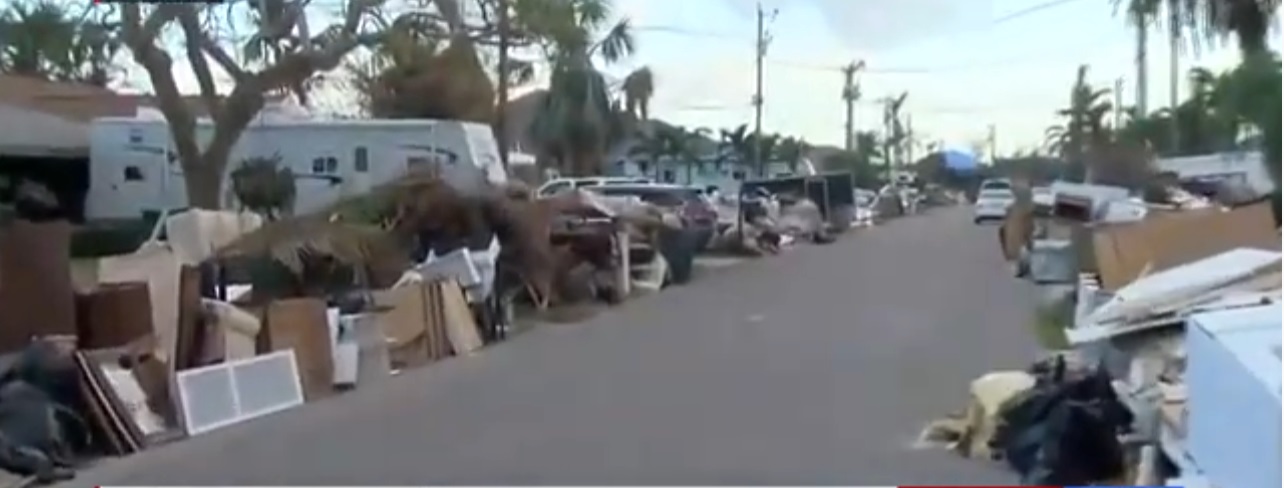
♦DEBRIS – The scale of physical debris is jaw dropping.  FEMA reimburses local municipalities for the first 30 days of debris removal effort and costs.  The 30-day limit is intended as a financial incentive to kick municipalities into fast action.  This incentive is not a bad concept.  Factually, it’s one of the better FEMA legislative standards because it forces local government to act quickly.  However, the scale of what they are trying to do is just intense.

The various municipal governments in the severe impact zones appear to have a strategy to use the 30-day window to just collect as much as possible in interim geographic locations.  Large empty lots are being utilized as fast dumps for massive piles of debris in this 30-day window.  A claw truck can make a dozen fast runs (per day) locally to these interim dump sites, as opposed to driving long distances to landfills 30 to 50 miles away.

One of these 10-acre dump sites is less than a mile from me.  I do not know how many of these exist; however, to see a full ten acres piled high with 10 to 20′ of debris gives me a sense of the scale of damage in this one small area within a region that must have hundreds of these interim sites.  I have been to a dozen post-hurricane recovery areas and never seen debris like this.

Everything from destroyed construction material, to home furnishings, beds, appliances, parts of boats, roof parts, toys, patio furniture, pieces of cars, clothing, you name it, it’s all there.  All now defined under the term “debris.” However, each piece of debris representing the former life of a family impacted by this storm.  The trucks just keep coming, day and night 24/7.

In the bigger picture, when you think about what is represented, it’s a sullen site to bear witness to… Any person of reasonable Christian disposition would just cry.  They have fenced off these interim dumping sites, and they have erected lights and temporary crane towers to seemingly assist the logistics of what goes where, but my God the scale of it is humbling.  This is just one site utilized for an area of what seems to be approximately 5 square miles.  Expand that scale to hundreds of similar 10-acre sites. Yeah, tears.

Eventually I assume these interim sites will be cleared one truckload at a time to the inner state landfills and recycle facilities. That phase will likely take years.

~ An ordinary neighborhood street awaiting pickup ~

♦PEOPLE – Thousands of people have been displaced. To give a context for the longer-term issue let me tell you a few stories.

In the past several weeks I have visited a number of businesses like Home Depot (hardware etc) and industrial repair shops.  These places are packed with working-class people attempting to patch life back together.  My best guess is you could put between 10,000 and 50,000 skilled construction workers and general laborers into the impact zone, and they would have continuous work for a year or more.

That said, businesses are failing because just as many people have given up and quit as the number that are trying to rebuild.

Most of the service workers involved in the hotel, restaurant and tourist industry on/near the SWFL beaches are out of work. The physical buildings are gone or heavily damaged and closed. Those ordinarily invisible workers are just picking up what may have remained and leaving; because they have no work, and everyone needs a paycheck.  Consider this vulnerable population #1.

Additionally, thousands of people who work regular jobs, including retail and hospitality, have been wiped out or heavily impacted at a personal level.  Whether it be due to direct loss of their homes, housing rentals, vehicles or belongings, or just stress amid the rubble, they too are leaving.  Without those workers businesses are unable to operate and are modifying operations or folding completely.

This subsequent worker shortage puts more pressure on the small to medium businesses and employees that remain….. In turn that creates longer shifts and even more stress on the remaining employees. The result is a cascading impact upon every business from supermarkets to McDonalds, to convenience stores, to garages and mechanics, to just about everything including hospitals and elder care facilities.

SELF SUFFICIENCY – If you cannot fix it yourself, life is even more difficult.

An odd aspect I note is the destruction on garages, light industrial facilities and auto repair shops.  Numerous places are closed for repairs as the exterior big garage bay doors (doors on the physical buildings of these places) failed, creating damage internally to the facility and equipment.  If you need a vehicle lift or specialized light to medium industrial equipment repair, you have to travel inland, quite a considerable distance, looking for an open location.

Open hotels for 50+ miles are full of relief and recovery workers and still hundreds more rooms or temporary housing are/is needed for those who travelled to help.  I talked with one six-man recovery crew who are housed at a hotel in Tampa and drive to Pine Island.  That’s a minimum 4 to 5-hour round trip.  Drive 2 hours, work 10, drive 2 hours back, eat/sleep, repeat.

Out of state recovery crews (for just about anything you can imagine) are generally doing two to four-week stints, then they are replaced -take a week off- then return.  SWFL locals take every opportunity to thank them, but no one knows how long this level of assistance will remain available.

It sounds like I’m painting a pretty bleak picture, but that’s the reality of recovery life in an impact zone like this.  It’s also why I don’t like writing about it.  However, amid all of the stress and chaos there are incredible people who will give the shirt off their back to a stranger.   Focusing on this aspect is what fuels the soul daily.

Exiting a 7-11 I ran into Dionne, his wife and 3 kids, including a 6-month-old.

Dionne originally from Indiana, like a bazillion other working-class folks, had a flat tire (roofing nail) and was desperate to get to WalMart for baby formula and diapers.  As he explained the situation, I gave him my keys and said, “just go, I’ve got the tire.”  By the time he came back both problems were solved.  Dionne had the stuff for the baby, and a bunch of strangers – who were also just passersby overhearing the problem – stopped everything, chipped in and the tire was repaired and replaced.

Hurricane Ian certainly brought a mess, but the storm also brought buckets of ordinary opportunities to meet random strangers – reminding us constantly at our spiritual core there are overwhelming numbers of fundamentally good people that non-crisis life would have us miss.

I am intensely thankful for those moments a loving God is providing.  Without Ian those moments may not exist, and each of them is an opportunity for an affirmation.

Now, to be sure, there are self-centered affluent knuckleheads in post hurricane life; but I can also tell you something with a spiritual certainty…

…..Those knuckleheads don’t shop at 7-11’s near me.

Love to all,

~ Sundance

A Technical Study of Relationships in Solar Flux, Water and other Gasses in the upper Atmosphere, Using the September, 2022 NASA & NOAA Data


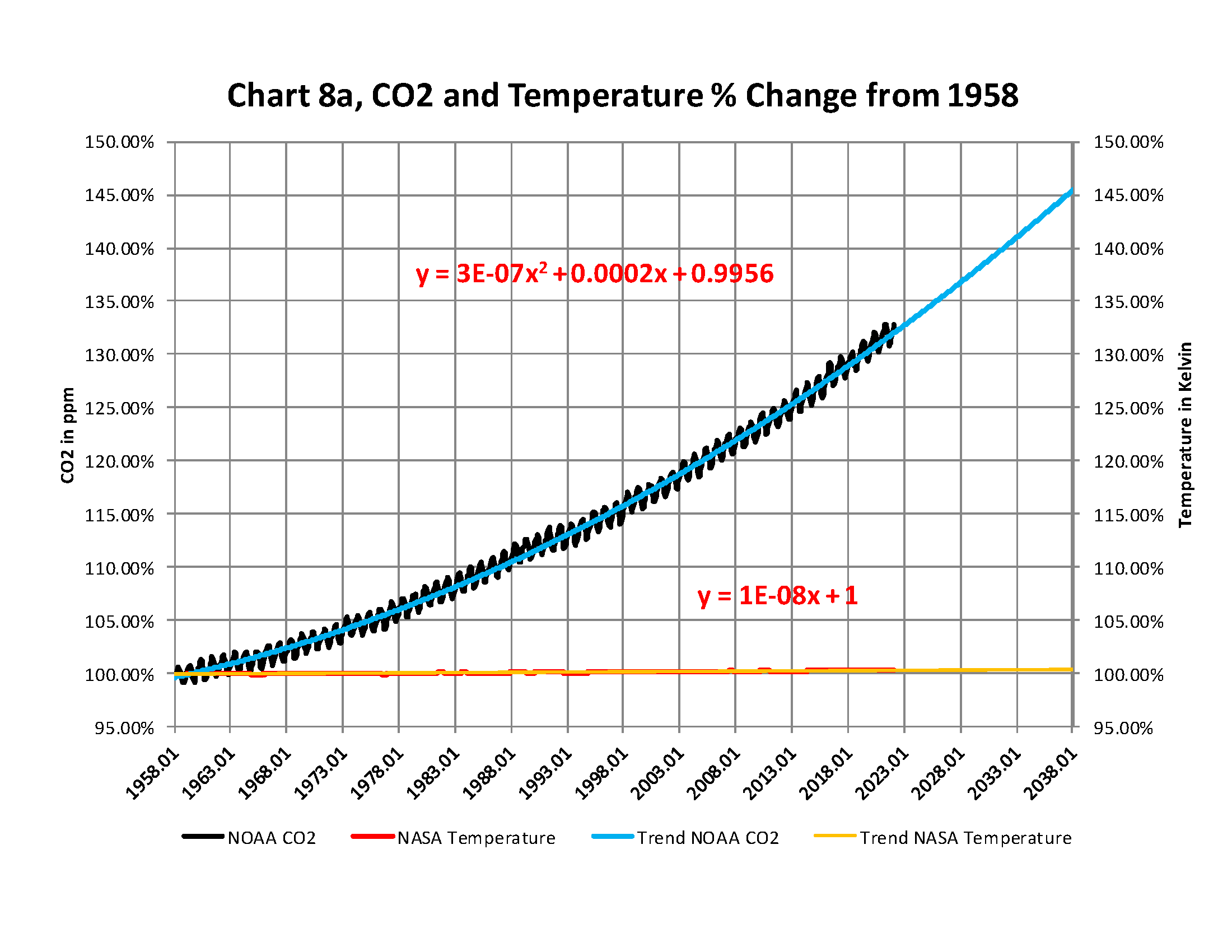
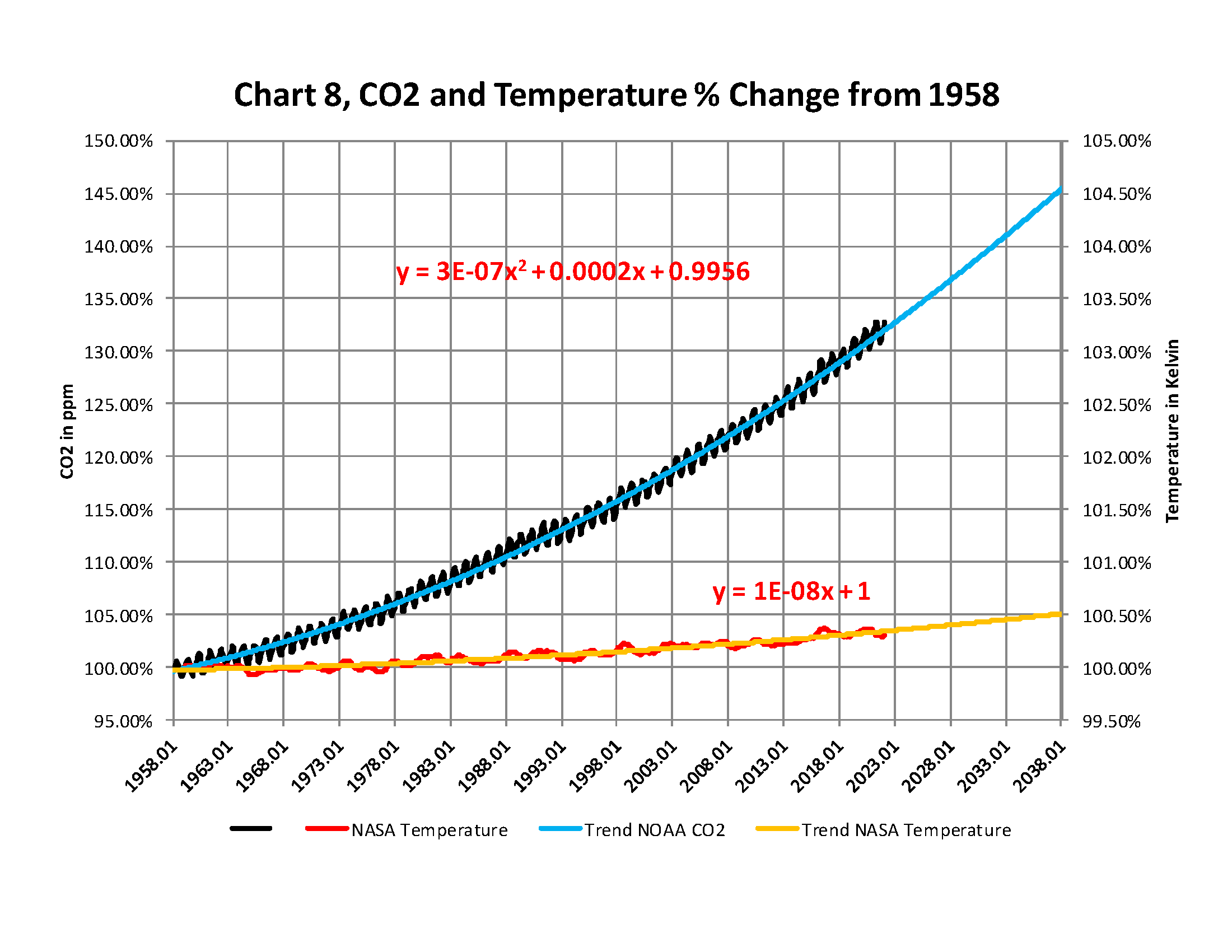
From the attached report on climate change for September 2022 Data we have the two charts showing how much the global temperature has actually gone up since we started to measure CO2 in the atmosphere in 1958? To show this graphically Chart 8a was constructed by plotting CO2 as a percent increase from when it was first measured in 1958, the Black plot, the scale is on the left and it shows CO2 going up by about 32.4% from 1958 to September of 2022. That is a very large change as anyone would have to agree.  Now how about temperature, well when we look at the percentage change in temperature also from 1958, using Kelvin (which does measure the change in heat), we find that the changes in global temperature (heat) is almost un-measurable at only .4%.

As you see the increase in energy, heat, is not visually observably in this chart hence the need for another Chart 8 to show the minuscule increase in thermal energy shown by NASA in relationship to the change in CO2 Shown in the next Chart using a different scale.

This is Chart 8 which is the same as Chart 8a except for the scales. The scale on the right side had to be expanded 10 times (the range is 50 % on the left and 5% on the right) to be able to see the plot in the same chart in any detail. The red plot, starting in 1958, shows that the thermal energy in the earth’s atmosphere increased by .40%; while CO2 has increased by 32.4% which is 80 times that of the increase in temperature. So is there really a meaningful link between them that would give as a major problem?

Based to these trends, determined by excel not me, in 2028 CO2 will be 428 ppm and temperatures will be a bit over 15.0o Celsius and in 2038 CO2 will be 458 ppm and temperatures will be 15.6O Celsius.

The NOAA and NASA numbers tell us the True story of the

Changes in the planets Atmosphere

The full 40 page report explains how these charts were developed .

<object class="wp-block-file__embed" data="https://centinel2012.com/wp-content/uploads/2022/10/blackbody-temperature-2022-09.pdf&quot; type="application/pdf" style="width:100%;height:600px" aria-label="<strong>blackbody-temperature-2022-09blackbody-temperature-2022-09Download

Sweden Will Not Meet Agenda 2030


Armstrong Economics Blog/Climate Re-Posted Oct 24, 2022 by Martin Armstrong

New Prime Minister Ulf Kristersson is not heeding to the Green agenda. He promptly eliminated the entire Ministry of Climate and Environment, marking the first time in 35 years that Sweden does not have a specific climate ministry. People are crying that the world will crumble without funding bureaucrats who pretend they have the ability to alter the weather cycle with enough funding.

Klaus Schwab’s plans for Agenda 2030 are in jeopardy. “Environmental issues are going to be given a disadvantage at the same time when we have a huge challenge in Sweden when it comes to biodiversity and forestry,” stated Stockholm University professor Karin Bäckstrand. “We won’t meet the Agenda 2030 goals on biodiversity.”

Democratic leader Ebba Busch will serve as the new Minister for Energy, and 26-year-old Liberal Romina Pourmokhtari will serve as the Minister of Climate and Environment, The Nationalist Sweden Democrats do not support the goal of achieving net zero emissions.

Instead, the new government is prioritizing nuclear power initiatives that will make it increasingly difficult to shut down existing plants while using €36 billion to build new nuclear power stations. The new government is also considering reopening two nuclear power plants that discontinued operations in recent years. Yet another example of how Agenda 2030 and Schwab’s plan to alter the world will fail.

Florida Agriculture Losses from Ian


Armstrong Economics Blog/Agriculture Re-Posted Oct 21, 2022 by Martin Armstrong

The damages from the hurricane are still being evaluated, but preliminary estimates state that Ian caused Florida’s agriculture industry to lose up to $1.56 billion. Around five million acres of farmland were destroyed by the hurricane, 60% of which was grazing land for cattle. An additional 500,000 acres were affected but not destroyed. Florida produces around $8 billion in agricultural goods per year, so this is a significant blow to the industry.

The Sunshine State was already experiencing hardships prior to Hurricane Ian, with some estimates saying the industry would decline by a third this year due to temperatures and disease.

“The impact on Florida’s affected commodities cannot be understated, especially the heartbreaking damage to Florida citrus, an industry already facing significant challenges,” state Agriculture Commissioner Nikki Fried declared. Orange juice alone is expected to cause a $304 million loss. The US Department of Agriculture said that orange production was already 32% down YoY, marking the smallest harvest in eight decades.

Up to $393 million may be lost from destroyed vegetable crops, while horticultural crops may experience a $297 million decline. Cattle is expected to decline by over $220 million.

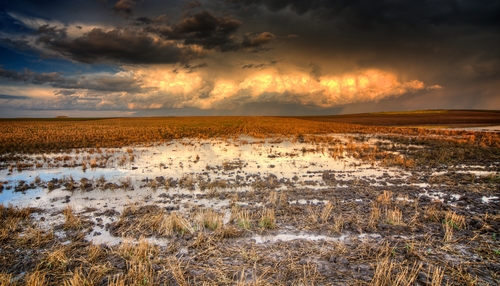
The true damage cannot be assessed until the fields dry up. None of these figures account for inflation. Natural disasters will only contribute to rising food prices and shortages.

Remarkable Progress – Recovery Update, Sanibel Bridge and Causeway Opens to Residents, Pine Island Electricity Grid Complete


Posted originally on the conservative tree house on October 19, 2022 | Sundance

Did you know that during hurricanes asphalt roofing shingles act like flying blades?  More on that momentarily….

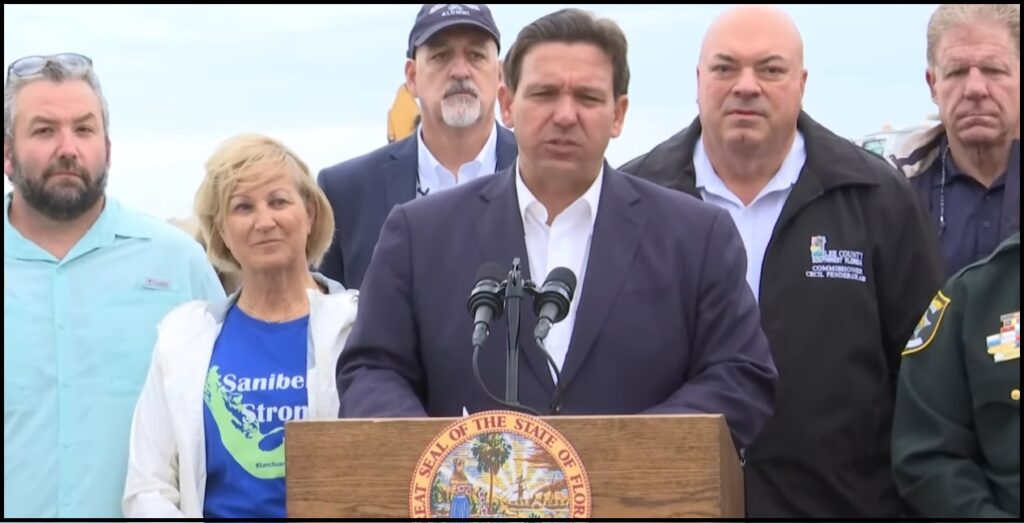
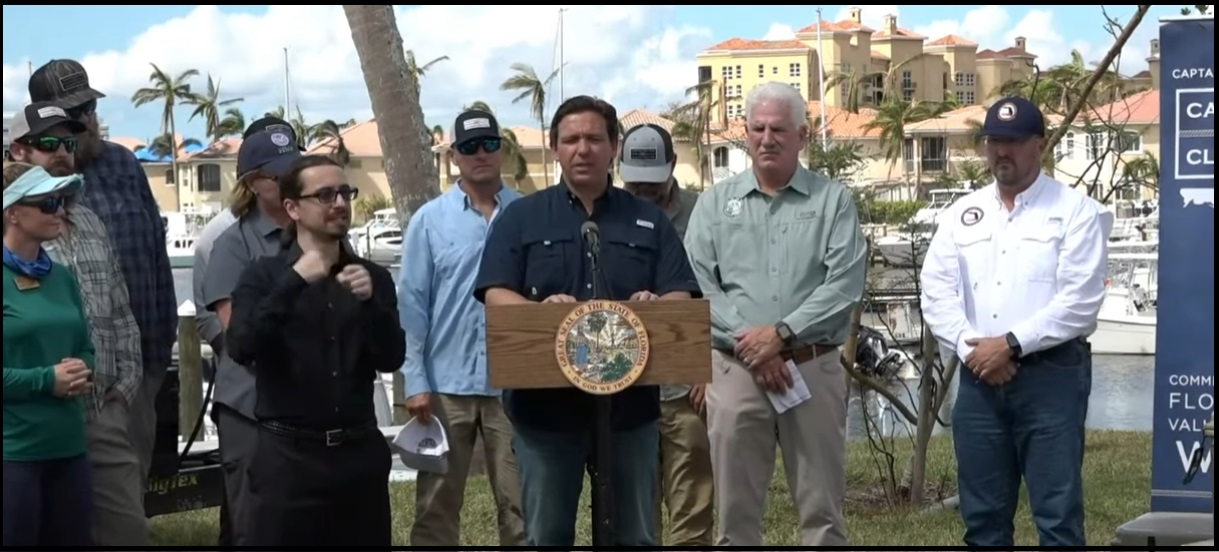
Today Florida Governor Ron DeSantis was in the Punta Rassa area of South Fort Myers to celebrate a remarkable accomplishment.  The Sanibel bridges and causeway are open to civilian traffic. {Direct Rumble Link}

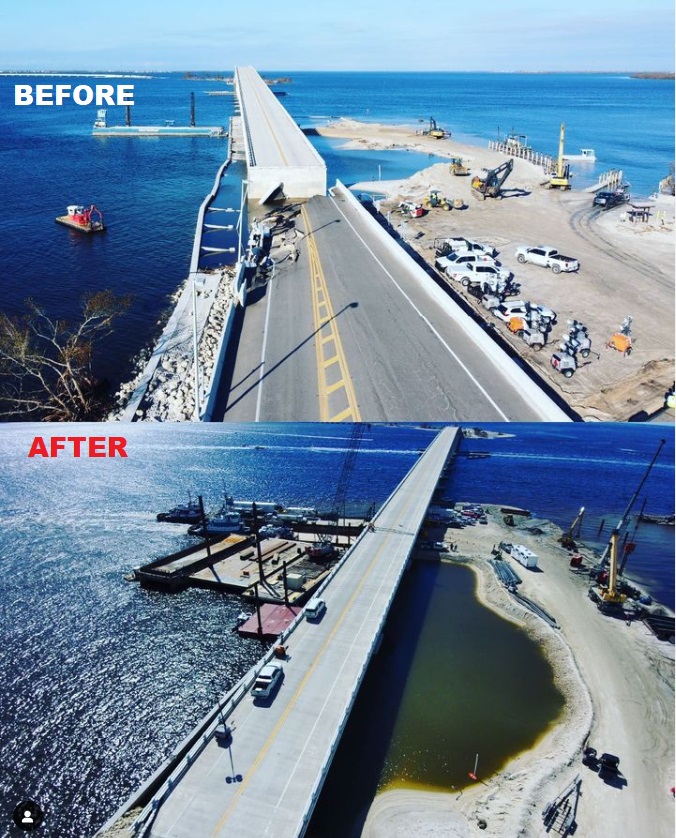
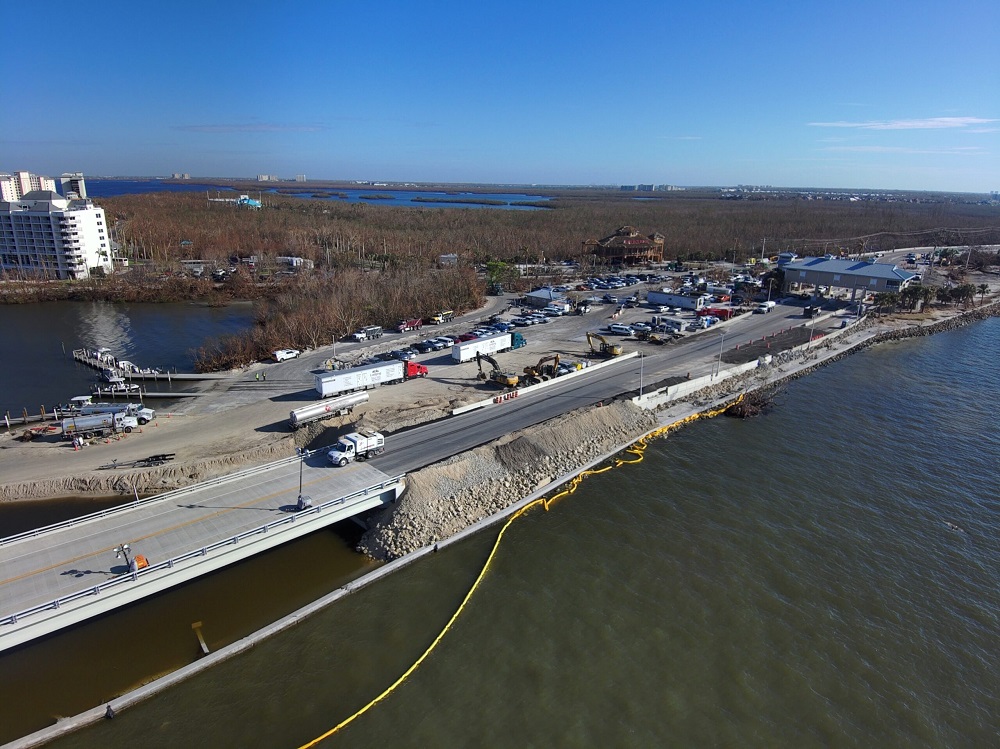
The massive, albeit temporary, repairs to the three spans and spoil islands have been completed three weeks after Hurricane Ian wiped them out.  A genuinely remarkable feat of engineering and git’ r done roughneck effort.  Truly an incredible accomplishment.  To check out the scale of it see PICTURES HERE.

TALLAHASSEE, Fla. — Today, Governor Ron DeSantis announced that emergency repairs to the Sanibel Causeway have been completed in 15 days, more than a week ahead of schedule. As of this morning, access to Sanibel Island has been restored for residents, reconnecting Sanibel Island to the mainland. WATCH:

“The work that has been done to restore vehicle access to Sanibel Island has been historic,” said Governor Ron DeSantis. “Cutting through bureaucratic red tape and delivering on our promise to get Sanibel Island up and running has been a top priority. By restoring access over the causeway, repair crews, first responders, emergency vehicles, business owners and residents will be better able to expedite recovery from this storm.”

“I am grateful for our dedicated team members who quite literally built a road in the Gulf in 15 days,” said FDOT Secretary Jared W. Perdue, P.E. “While the bridges were largely undamaged by the storm, portions of the causeway which connect bridge structures together were washed away by Hurricane Ian, leaving the bridges unconnected to the mainland or the island.

A project like this, under normal circumstances, could take months. However, FDOT, along with our law enforcement partners at the Florida Highway Patrol, Lee County and Florida Department of Emergency Management made use of strategic and innovative techniques to rebuild the causeways quickly. Under Governor DeSantis’ leadership, and thanks to the hard work of hundreds of FDOT employees and contractors, we were able to relink Sanibel Island to the mainland.”

On October 4, Governor DeSantis directed FDOT to prioritize repairs to the Sanibel Causeway with an estimated completion date by the end of October. On October 11, the Governor announced that due to steady progress on repairs to the causeway, a one-time convoy of more than 350 vehicles for utility restoration would be able to safely cross the bridge onto Sanibel Island.

Damage from Hurricane Ian prevented vehicles from being able to cross the 3-mile-long bridge, delaying the delivery of needed services and supplies to the hard-hit Sanibel community. Crews worked around the clock to restore drivable access for the over 6,000 residents of Sanibel Island. With the completion of the temporary emergency repairs to the Sanibel Causeway, FDOT will now work with Lee County on plans for permanent repairs on the causeway.

FDOT, in partnership with Lee County, has completed emergency repairs to several other damaged bridges in the Lee County area, including repairs to the Pine Island Bridge in less than three days in addition to Big Carlos Pass, Big Hickory, Little Carlos Pass, and New Pass Bridges.

Access to Sanibel Island via the Sanibel Causeway will be managed by Lee County. For more information, please visit www.leegov.com or follow Lee County on Facebook at www.facebook.com/leecountyflbocc.

[More Pictures Here]

Governor Ron DeSantis has done a great job, and those who wash with Lava soap and degreaser are inspiringly awesome.  Check Out This Video:

On the home front a few expected and unexpected challenges remain.

First, my apologies for not being able to post more content at CTH.  Electricity and water service have been restored, but internet service is still a considerable challenge. Most of the current CTH articles are written from weak hotspots or travel to temporary business centers which have been established for use.

It is a wee bit challenging, not just for my efforts here but much more so for businesses in SWFL that rely on stable internet to process business transactions.  Remember the pre-hurricane advice about having cash and not relying on electricity and internet?…  Yeah, in some areas that aspect is still an ongoing issue.

Then there’s the goofy stuff.  Just about everyone who was fortunate enough to have a stable structure remaining, has some form of a tarp roof.  It’s like living in a tent, but a house, with plywood.  Think about Bagram AFB with cinder block walls… lol…  Hey, it’s home.  Permanent installation roofers will be busy here for years; however, on a positive note our insurance adjuster (cool guy) said they were expecting 200,000+ claims, and so far only had 30,000.  So, perhaps the major structural issues are more isolated.

On a directly related note, did you know that asphalt shingles are like flying razor blades in hurricanes?  Ask me how I know this, and I will show you a shingle about 6 inches squared that sliced through the front grill of the truck and we found embedded in the radiator today.  She was overheating, and now I know why.  Crazy stuff.

Also, any gearheads out there with good advice on the best quality long-term patches for tires let me know.  Roofing nails are hobbling everyone (also raises hand), tire shops look like the entrance to Trump rallies….

….which also look like the line for internet service appointments.

Apparently, whoever at Comcast/Xfinity came up with the script, “to report your internet outage, please go on-line to http://www.”, didn’t quite think through the process.

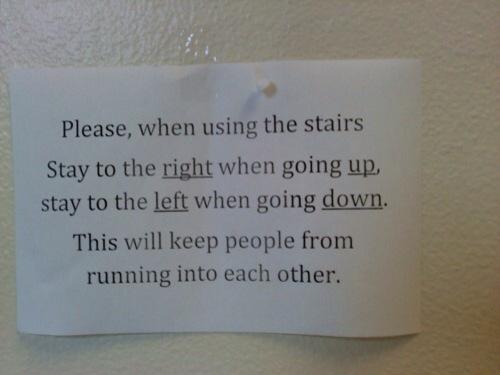
It reminds me of that sign I saw on the stairs years ago that I just had to take a picture of (see above). Hey, we need to laugh because the alternative isn’t healthy.

Back to the hurricane tip part.  You can always tell those people who have been through hurricanes before by how they parked their cars.  I have never included this in the hurricane advice before so it’s worth a mention.

Regarding hurricane damage, if you lose your Florida garage door you will more than likely lose your roof.  That’s just the reality of having a massive opening in your structure to 150 mph winds that will lift the trusses.

First tip, if you have two vehicles, put one vehicle inside the garage with the front bumper against the door to help stop the flex (do this carefully).  Put the other vehicle outside blocking the garage door facing down the driveway.  Use the aero dynamics of the car to push the wind up away from the door.

Second tip, if you live in a flood zone, or if you are concerned about storm surge, the day before impact take your #1 car to the nearest airport or hotel with a parking garage and park in the upper levels.  Take an uber back home if you don’t have a friend or partner to help you.  This way you know you will have one workable vehicle, just in case.

I’m going to compile a list of oddball prepper stuff after learning even more from this event, and I will share it.

Stay strong; keep a good thought and be thankful. Again, the alternative provides no value.

Love to all,

~ Sundance
Lord, I cherish the lessons in patience, but please remove the blue circle of misery from my computer screen.

New England Power Officials Warn of Pending Winter Crisis as Natual Gas Prices Skyrocket and Electricity is Likely to be Rationed


Posted originally on the conservative tree house on October 18, 2022 | Sundance

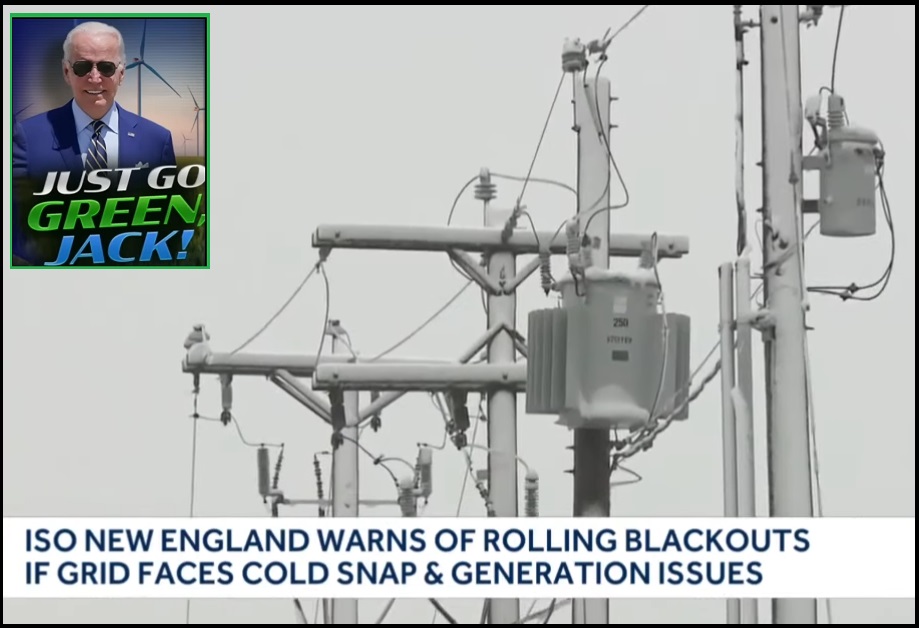
New England consists of six states in the US Northeast, Connecticut, Maine, Massachusetts, New Hampshire, Rhode Island, and Vermont.  The states have been warned by regional ISO electricity providers for several years about their vulnerability if the winter weather is harsh and there is a significant increase in demand for home heating.  Those warnings are now multiplied by the massive price increases for natural gas.

Keep in mind as all these natural gas and LNG issues surface, the U.S. has been exporting natural gas to Europe as part of the Biden effort to subsidize the NATO effort against Russia.  Prices for natural gas have skyrocketed, and now shortages of the fuel source for energy production may create even bigger problems for New England.

[Via Zero Hedge] – […] The region’s power mix changes have left it increasingly reliant on international NatGas spot markets. State governors have asked US Energy Secretary Jennifer Graholm to waive the Jones Act and allow foreign-owned tankers to ship LNG from the US Gulf region. 

All of this has led to New England residents facing some of the highest electricity bills in years. Heating season is already underway. 

New England ISO expects the grid will be stable if there’s a mild-to-moderate winter. However, if there’s an extreme cold spell across the Northeast, then grid chaos could unfold: “The grid overall is in a much tighter position.

“If we get a sustained cold period in New England this winter, we’ll be in a very similar position as California was this summer,” Nathan Hanson, a senior vice president of energy and commercial management of LS Power Development LLC, which has two NatGas power plants in New England, warned. (more)

According to the U.S. Energy Information Association (IEA), U.S. storage of Liquified Natural Gas (LNG) is 12% below the five-year average (LINK).  Additionally, the IEA is expecting the U.S. to export 11.7 billion cubic feet of LNG per day during the fourth quarter of 2022 — up 17% from the third quarter. The destination of that export is Europe.

Consider that 43% of U.S. households use natural gas for home heating, and power suppliers use natural gas to create electricity.  With the massive 2022 exports of LNG to Europe (+17% in fourth quarter alone), that means lower domestic supplies and increased prices here in the United States for electricity and home heating.  We are seeing and feeling these massive price increases right now.

Barrons – […]  If you need more evidence of the impact of natural gas exports on prices, just compare supply and demand fundamentals for the year leading up to February 2020 (the last pre-pandemic month) versus the year leading up to this May (the most recent month with full federal data). Annualized production rose over the period, while domestic consumption remained roughly flat. Yet LNG exports almost doubled—a surge that tightened U.S. gas markets and doubled the price that U.S. consumers pay for the fuel. 

The growth of global demand for U.S. LNG can be tied to many market forces, including the shortfalls in Europe due to Russia’s manipulation of European Union gas markets. Sustained high demand in wealthy Asian nations has contributed to export growth as well. And so has the U.S. gas industry’s dogged determination to ship its wares to the highest bidder, foreign or domestic. 

Russia’s role has been particularly critical in the rise of global LNG demand. As Russia choked off gas shipments to Europe, EU buyers have turned to global LNG markets to make up the shortfall. Global LNG prices rose in response, and U.S. LNG companies ramped up output, shipping more cargoes to Europe. But Russia responded by further clamping down on gas supplies to the EU—a vicious circle that has hurt Europe’s economy even more severely than it has harmed America’s.

There’s little sign that U.S. gas prices will ease in the coming years. Freeport’s demand will be back online soon enough, and there are three other massive LNG export projects under construction, with more than a dozen of others waiting for financing.

[…] Curiously, federal regulators have consistently found that the gas export projects are in the public interest—meaning they were in the economic interest of LNG companies and gas drillers. But now, exports are creating sky-high costs for U.S. consumers, and drillers are reluctant to boost gas output lest prices fall back to earth. So, it’s high time to consider whether soaring U.S. LNG exports are actually in America’s interest—or if, instead, runaway LNG exports are fueling energy inflation and undermining the nation’s economic competitiveness. (read more)

Not only are U.S. taxpayers directly paying for the majority of costs in Ukraine, but we are also subsidizing the European Union by exporting LNG and driving up the price for energy here at home.  Here’s the Wall Street Journal talking about the risks to New England:

[Via Wall Street Journal] – New England power producers are preparing for potential strain on the grid this winter as a surge in natural-gas demand abroad threatens to reduce supplies they need to generate electricity.

New England, which relies on natural-gas imports to bridge winter supply gaps, is now competing with European countries for shipments of liquefied natural gas, following Russia’s halt of most pipeline gas to the continent. Severe cold spells in the Northeast could reduce the amount of gas available to generate electricity as more of it is burned to heat homes.

The region’s power-grid operator, ISO New England Inc., has warned that an extremely cold winter could strain the reliability of the grid and potentially result in the need for rolling blackouts to keep electricity supply and demand in balance. The warning comes as executives and analysts predict power producers could have to pay as much as several times more than last year for gas deliveries if severe weather creates urgent need for spot-market purchases.

“The most challenging aspect of this winter is what’s happening around the world and the extreme volatility in the markets,” said Vamsi Chadalavada, the grid operator’s chief operating officer. “If you are in the commercial sector, at what point do you buy fuel?”

Power producers in New England are limited in their ability to store fuel on site and face challenges in contracting for gas supplies, as most pipeline capacity is reserved by gas utilities serving homes and businesses. Most generators tend to procure only a portion of imports with fixed-price agreements and instead rely on the spot market, where gas prices have been volatile, to fill shortfalls. (more)

.

Florida Governor Ron DeSantis Provides Update on Hurricane Ian Recovery Efforts


Posted on the conservative tree house on October 15, 2022 | sundance 

Florida Governor Ron DeSantis has spent the past several days in/around the western impact zone of Hurricane Ian, the areas hardest hit.

Restoration and recovery work continues overcoming serious obstacles with infrastructure destruction particularly around Fort Myers Beach, Sanibel Island, Captiva Island, Cape Coral, Pine Island and up toward the Boca Grande pass. These western coastal areas were impacted by sustained 150+ MPH winds for multiple hours as slow-moving Ian crept inland; hence the scale of the destruction.

The power infrastructure is slowly returning to Fort Myers Beach, however, most of the properties are a total loss and/or so heavily damaged power restoration to the structure is unsafe. The work on Sanibel Island is reconstructing the physical power transit system, which will take a long time. According to state officials, approximately 80% of the mainline power grid on Pine Island is now rebuilt; however, many homes are heavily damaged (like FMB) so lines to structures will take longer.

Governor Ron DeSantis gives an update from Burnt Store Marina, which is located between Cape Coral and Punta Gorda on the west. WATCH:

.

Governor Ron DeSantis also announced an official request to The Dept of Commerce and NOAA to declare a federal fisheries disaster which would provide relief to families and businesses impacted by the loss of economic activity in the fishery sector.

Gore v Limbaugh (1992 – Part 2)


Armstrong Economics Blog/Climate Re-Posted Oct 15, 2022 by Martin Armstrong

Gore v Limbaugh (1992 – Part 1)


Armstrong Economics Blog/Climate Re-Posted Oct 15, 2022 by Martin Armstrong

Thirty years later, the world continues to thrive. The climate zealots claimed we had about 10 years left on this Earth. Limbaugh calls out Gore for blaming global warming on capitalism and fear-mongering in this two-part debate. Also noteworthy is how two sides of the spectrum were able to hold a civil debate on a hot topic.